12 min read

SMS Recall for Athenahealth: Book Wellness Visits With One Text

SMS Recall for Athenahealth: Book Wellness Visits With One Text
💡 Athenahealth patient recall text messaging through Curogram's Wellness Nudge sends a personal SMS to patients overdue for care — with a one-tap link to book, no portal needed.
  • Reaches patients overdue for annual wellness visits, flu shots, and chronic care follow-ups
  • Sends a named, specific text with a direct booking link — no phone call or hold time
  • Patients book in under two minutes from their phone
  • Based on our internal data, 35% of patients who got an SMS recall booked within a month
  • Includes a reply option for patients who prefer to speak with staff
For practices on Athenahealth, the Wellness Nudge closes the gap between a patient's intent to schedule and actually booking. It turns months of overdue care into a confirmed visit — in about 75 seconds.

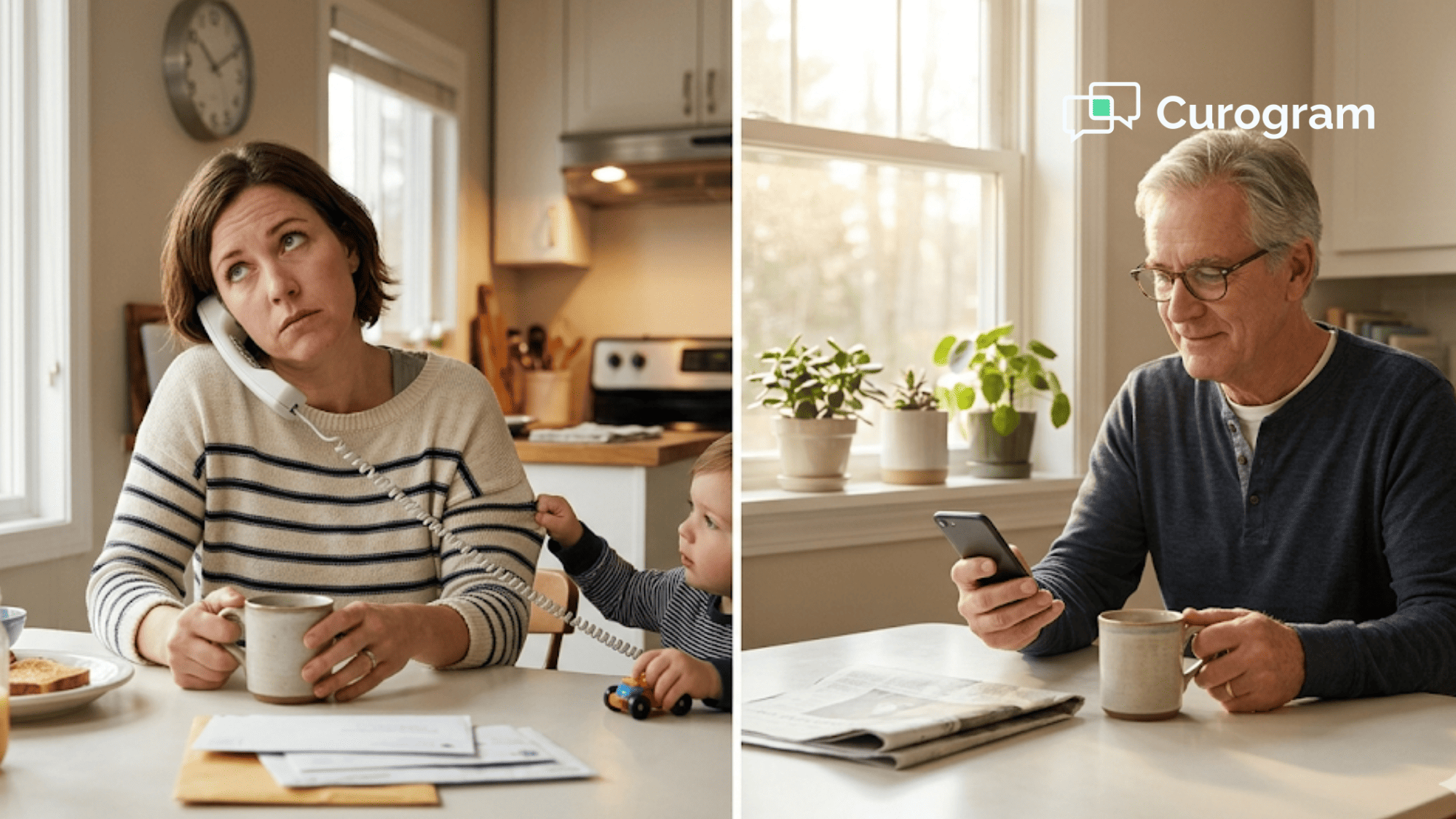
Your patient meant to call last week. She saw the fridge magnet with your office number. She even thought about it while stuck in traffic. But the call never happened.

This is the story of nearly every overdue patient on your recall list. They don't skip care because they don't want it. They skip because the path to booking is full of small hurdles that add up fast.

Think about what it takes to schedule by phone. The patient has to find time during your office hours. They call, hit a phone tree, and wait on hold. Then they check their own calendar. By the time they get through, lunch break is over — and so is their drive to book.

Now picture this instead. A text lands on their phone at 9 AM. It says their name. It says they're due for a wellness visit. It has a link. One tap, pick a time, done. The visit is booked before their coffee gets cold.

That's what Athenahealth patient recall text messaging looks like when powered by Curogram's Wellness Nudge. It's a simple, personal SMS that gives patients a straight line from "I should schedule that" to a confirmed visit — no portal login, no phone call, no hold time.

Based on our internal research, 35% of patients who received an SMS recall through Curogram booked an appointment within a month. That's not a small bump. That's a shift in how patients engage with preventive care.

In this article, we'll break down why patients delay care, how the Wellness Nudge closes that gap, and what it means for your practice's revenue, quality scores, and patient outcomes.

The Intention Gap: Why Patients Mean to Schedule But Never Do

There's a name for what happens between "I need to book that visit" and the visit never getting booked. We call it the Intention Gap. It's the space where good plans go quiet — not because patients don't care, but because life gets in the way.

Let's start with a common scene:

A diabetic patient hasn't had an A1C check in eight months. He knows he's overdue. His doctor told him to come back in three months. But three months turned into five, and five turned into eight. He's not ignoring his health. He just hasn't carved out 10 minutes during office hours to sit on hold and schedule.

Now think about a Medicare patient who skipped last year's annual wellness visit:

She planned to call in January. It's now July. Or the parent who keeps meaning to bring their child in for a flu shot SMS reminder keeps landing in a pile of things to do "later." These aren't careless people. They're busy people stuck behind a wall of small friction.


What Creates the Intention Gap?

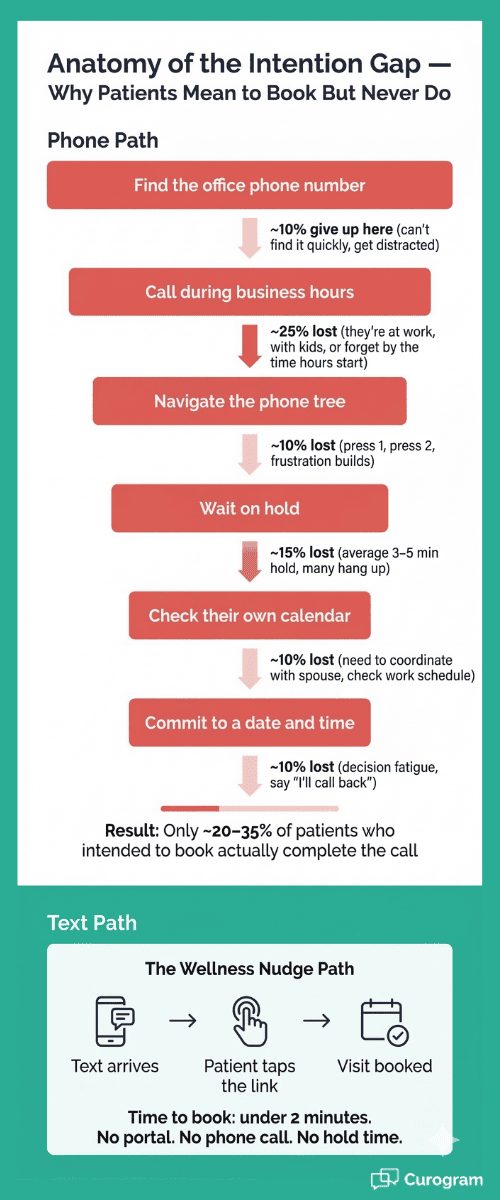
The friction isn't one big thing. It's a stack of small ones. Each step in the phone-based booking process chips away at the patient's drive to act.

Friction Point

What Happens

Finding the number

Patient has to search for it or look it up online

Calling during office hours

They're at work, in class, or with their kids

Waiting on hold

Average hold time can be 3–5 minutes or more

Navigating a phone tree

Press 1 for this, press 2 for that

Checking their own schedule

They need to find a date that works

Committing to a date

Decision fatigue kicks in


Each of these steps is small on its own. But stacked up, they form a wall. And for preventive care — where there's no sharp pain or urgent symptom pushing the patient to act — that wall is enough to delay the visit by weeks or months.

Why Preventive Care Suffers Most

Here's the key issue. Patients with a broken arm will push through any amount of hold time. They're in pain. They need help now.

But a patient who is due for a preventive care text reminder about their annual screening? There's no fire. No urgency. Just a quiet "I should do that" that fades a little more each day.

This low urgency, paired with high friction, leads to what we see across practices every day — indefinite deferral. The patient never says "no." They just never say "yes."

The Intention Gap isn't a patient problem. It's a process problem. And it hits hardest in the areas where your practice needs patients most: wellness visits, chronic care follow-ups, and preventive screenings.

What the Gap Costs Your Practice

Every patient who delays care is a missed visit on your schedule. For practices running on Athenahealth, that gap shows up as open recall lists that never shrink. It shows up as quality measure gaps that stay open at year end. And it shows up as lost revenue from visits that should have happened months ago.

The only way to close the Intention Gap is to remove the friction. That means meeting the patient where they are — on their phone, at a time that works for them, with a path to booking that takes seconds, not minutes. No portal. No phone call. Just a text with a link.

That's exactly what the Wellness Nudge does. And in the next section, we'll show you how it works.

Anatomy of the Intention Gap infographic showing why patients delay scheduling preventive care visits

The Wellness Nudge: Right Message, Right Moment, Right Channel

Curogram's Wellness Nudge is built to do one thing well: close the gap between a patient's intent to schedule and a booked visit. It does this through a patient SMS health nudge that feels personal, arrives at the right time, and makes booking as easy as tapping a link.

Let's walk through what makes it work.

A Personal Message, Not a Blast

The text arrives with the patient's name and a clear reason to act. For example:

"Hi Maria, it's time for your annual wellness visit at Greenfield Family Medicine. Tap here to schedule: [link]."

This isn't a bulk marketing message. It's a recall text tied to that patient's specific care need. When patients see their name and their doctor's office, it signals trust. It tells them this message is about them — not a mass ad.

For a patient overdue for a flu shot, the message might read:

"Hi James, flu season is here. Your flu shot is ready at Greenfield Family Medicine. Tap to book: [link]."

Each message is built around the patient recall booking they need. The tone is warm. The ask is clear. And the path forward is one tap away.

One-Tap Booking — No Portal, No Phone Call

This is where most recall systems fall short. They send a reminder, but still expect the patient to call or log into a portal. That's like telling someone the door is open and then locking it.

The Wellness Nudge includes a direct link that opens a simple scheduling page on the patient's phone. They see open times. They pick one. They confirm. Done.

No app to download. No password to remember. No portal login. The entire patient recall booking schedule flow takes under two minutes. For many patients, it takes less than 90 seconds.

This is what it means to offer preventive care text scheduling with no portal. The fewer steps between the patient and the booked visit, the more patients follow through.

Timing That Matches the Patient's Day

When the text arrives matters almost as much as what it says. Curogram lets practices time their campaigns for peak windows. Weekday mornings — when patients check their phones during their commute — tend to work well. Early evenings, when people settle in after work, also see strong results.

The goal is to reach the patient at a moment when they have 60 to 90 seconds to spare. Not during a meeting. Not at midnight. Just a calm window where one tap feels easy.

A Reply Option for Patients Who Want to Talk

Not every patient wants to book online. Some have questions. Can I bring my child? Is this covered by my plan? Do I need to fast before the lab?

The Wellness Nudge handles this too. Patients can reply to the text, and the message routes to the office for a live response. This keeps the door open for patients who need a human touch before they commit to an annual wellness text reminder follow-through.

This two-path design — self-book or reply — captures more patients than either method alone. It meets people where they are, however they prefer to engage.

Why This Works Better Than Portals or Phone Calls

Text messages have a 98% open rate. Emails hover around 20%. Portal messages? Many patients never log in at all. The Athena patient wellness visit recall text works because it uses the channel patients actually check — their text inbox.

Based on our internal data, 1,240 patients were seen from recall messages alone at one multi-location practice. That's real volume from a simple text.

The Narrative: How Mr. Whitfield Finally Got His Wellness Visit

Numbers tell part of the story. But to see the Wellness Nudge in action, let's follow one patient from overdue to booked — and what happened after.

Meet Mr. Whitfield

Robert Whitfield is 68 years old. He's a retired teacher and a Medicare patient at a 14-provider group in suburban Chicago. The practice runs on Athenahealth. He has Type 2 diabetes (well-managed) and high blood pressure. He's been with the same practice for nine years.

By every measure, Mr. Whitfield is a loyal patient. He likes his doctor. He fills his prescriptions. He means to show up. But his last annual wellness visit was 14 months ago.

The Intention Gap in Action

Mr. Whitfield knew he was overdue. His wife reminded him. Twice. He even thought about calling the office while sitting in the dentist's waiting room last month. But here's where the gap kicks in.

Calling the office meant dialing the main number. That meant a phone tree. Then hold time. Then he'd need to have his wife's calendar nearby so they could pick a day that worked for both of them (she drives). He told himself he'd call Monday.

Monday came. He mowed the lawn. He picked up groceries. He watched the news. No call.

Two weeks passed. Still no call. Not because Mr. Whitfield doesn't care about his health. He does. But the effort needed to book — during a narrow window of office hours — kept losing to the ease of "I'll do it tomorrow."

This is the Intention Gap at work. The patient wants to act, but the process demands too much at the wrong time.

The Nudge Arrives

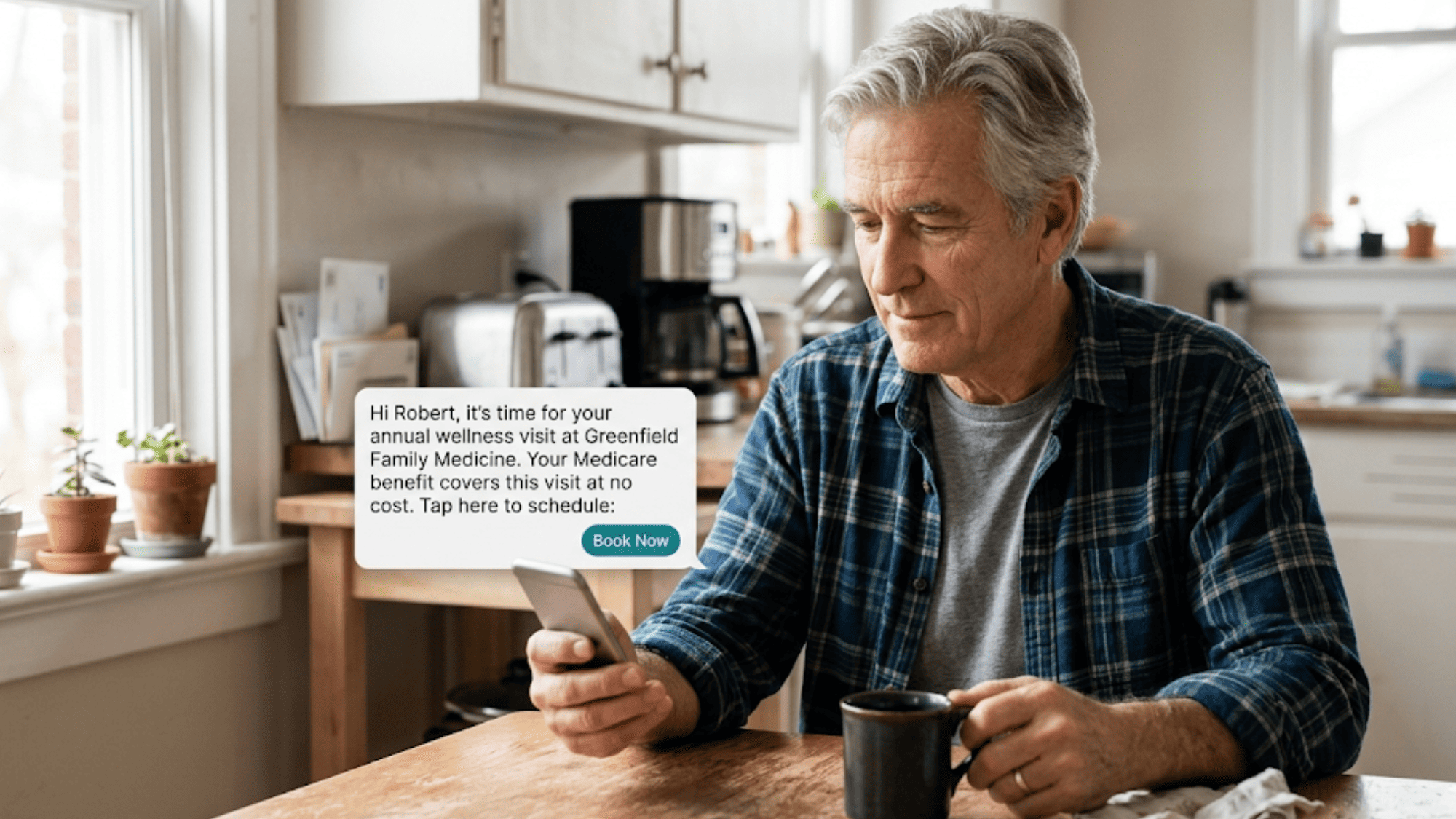
On a Wednesday morning at 9:12 AM, Mr. Whitfield's phone buzzed. He was at the kitchen table, halfway through his coffee. The text read:

"Hi Robert, it's time for your annual wellness visit at [Practice Name]. Your Medicare benefit covers this visit at no cost. Tap here to schedule: [link]."

He tapped the link. A simple page loaded with open times for the next two weeks. He picked Thursday at 10:30 AM. A confirm screen popped up. He tapped "Confirm."

A second text arrived: "You're confirmed for Thursday, Oct 17 at 10:30 AM with Dr. Adeyemi. Reply C to confirm or R to reschedule."

He replied C. Done.

Total time from text to booked visit: 75 seconds.

No phone tree. No hold time. No portal login. Just a text, a tap, and a time slot.

What Happened at the Visit

Mr. Whitfield showed up on Thursday. His care team ran through the standard wellness check. Here's what came out of that one visit:

Check

Result

Follow-Up

A1C test

Slightly elevated (7.2%)

Medication dose adjusted

Blood pressure review

Stable on current meds

No change needed

Depression screening (PHQ-2)

Negative

Documented for quality

Fall risk assessment

Low risk

Brief counseling done

Advance care planning

Updated

Documented for quality


That single visit closed a care gap that had been open for 14 months. It generated a Medicare Annual Wellness Visit billing code. And it triggered a follow-up lab in three months to recheck the A1C — which means another visit on the books.

Older man reading a wellness visit recall text message on his phone at a kitchen table with coffee

The Preventive Care Revenue Opportunity: Every Nudge Generates a Visit

For practice leaders, the Wellness Nudge isn't just a patient engagement tool. It's a revenue engine that starts with a text and ends with a billed visit — plus the follow-up care that comes after.

Annual Wellness Visit Revenue

Medicare AWVs are fully covered for patients. There's no copay, no cost barrier. That means the only thing standing between your practice and that revenue is whether the patient books. When you send an Athenahealth patient recall text with a direct link, you remove the one obstacle that kept them from showing up.

Based on our internal data, one multi-location practice saw 1,240 patients from recall messages alone. Each of those visits was a billable event that would not have happened without the nudge.

Follow-Up Visits Multiply the Impact

Wellness visits rarely stand alone. When a patient like Mr. Whitfield comes in, the visit often reveals needs that lead to more appointments. A slightly high A1C means a follow-up lab. A new concern means a referral. A lapsed screening gets ordered.

On average, each wellness visit generates 1.5 to 2.0 follow-up visits. So a campaign that brings in 175 patients doesn't just fill 175 slots. It can fill 260 to 350 slots over the next few months through downstream care.

Quality Scores Get a Boost

Every wellness visit that closes a quality measure gap helps your MIPS score or value-based contract results. For many practices, the financial value of hitting quality benchmarks goes beyond the direct visit revenue.

A strong recall campaign powered by a flu shot SMS reminder or annual wellness text doesn't just bring patients in — it moves the needle on your quality metrics at the same time.

Patient Experience Metrics That Drive Recall Success

If you run patient engagement for your practice, you need clear metrics to know if the Wellness Nudge is working. Here are four to track.

Nudge-to-Booking Rate

This is your top-line number. What share of patients who get the text actually book a visit? This metric tells you how well text-based recall works compared to phone calls, letters, or portal messages.

Time from Nudge to Booking

How fast do patients book after the text lands? Same-day bookings mean the message hit at the right time. If bookings trickle in over days, you may need to adjust your send window or add a follow-up text.

Show Rate for Nudge-Booked Visits

Do patients who book through the text actually show up? A high show rate means the booking was real intent — not just an impulse tap. Based on our internal research, patients who self-book through SMS tend to have strong show rates because the act of choosing a time creates a sense of ownership over the visit.

Patient Feedback on Text Recalls

Most patients welcome text-based health reminders when they're personal and not too frequent. Track opt-out rates to make sure your campaign pace feels right. If opt-outs stay low, your patient SMS health nudge is landing well.


How Curogram's Wellness Nudge Turns Recall Lists into Booked Visits

Most practices have a recall problem that isn't really about the list — it's about the follow-through. The names are there. The care gaps are flagged. But turning that list into real visits means getting patients to act. That's where Curogram steps in.

Curogram's Wellness Nudge works as a direct add-on to your Athenahealth setup. It pulls from your recall data and sends each patient a named, personal text tied to their specific care need.

What sets this apart from a basic reminder is the booking link baked into the text. Patients don't have to call. They don't need to log into a portal. They tap the link, pick a time, and confirm — all from their phone. The whole process takes under two minutes.

For practices that need scale, the Wellness Nudge runs as a campaign. You can target specific groups — Medicare patients, diabetics overdue for labs, patients who missed their last visit — and send the right message to the right group at the right time.

And for patients who prefer to talk, the reply option routes them to your staff for a live text chat. No one falls through the cracks.

Curogram ties into Athenahealth through the Athena Marketplace, so setup is smooth and data stays in sync. There's no double entry. No extra logins. Just a layer of patient outreach that turns idle recall lists into filled appointment slots.

If your recall list keeps growing but your schedule doesn't, the Wellness Nudge is the missing link.

Next Step: Send the Nudge Your Patients Have Been Waiting For

Your overdue patients aren't ignoring their health. They're waiting for the easy path. The Wellness Nudge gives them that path — a text with their name, their care need, and a link to book in seconds.

A single text — sent at the right moment, with the right name, and a direct link to book — can do what months of recall letters and voicemails couldn't. It can bring a patient back in under two minutes.

We've seen this play out in real numbers. Based on our internal data, 35% of patients who received an SMS recall booked within a month.

One practice saw 1,240 patients from recall texts alone. Each of those visits closed a care gap, filled a schedule slot, and often triggered follow-up care that kept the patient engaged for months after.

The Wellness Nudge works because it respects how patients live. They're busy. They're on their phones. They want things to be easy. When you send a preventive care text with no portal required and a clear link to book, you match the care to the way people actually move through their day.

For practice leaders, this isn't just about patient engagement. It's about revenue that was already yours — sitting on the recall list, waiting for someone to make it easy to say yes.

If your Athenahealth patient recall text strategy still relies on phone calls and portal messages, you're leaving visits on the table. The Wellness Nudge fills that gap.

Your recall list has hundreds of patients who mean to schedule but never cal. Book a demo to turn that list into booked visits with one text campaign.


Frequently Asked Questions

How does the Wellness Nudge work with Athenahealth?
Curogram connects through the Athena Marketplace and pulls recall data directly. It sends personalized texts to overdue patients with a booking link — no manual list uploads needed.
Why do patients respond to text recalls more than phone calls or portals?
Texts have a 98% open rate and arrive on the device patients check most. There's no hold time, no login, and no app to download — just a tap to book.
How quickly do patients typically book after receiving a Wellness Nudge?

Many patients book within minutes of getting the text. Based on our internal data, 35% of those who received the recall booked within a month, with a large share acting on the same day.

Why is the Wellness Nudge better for preventive care than acute care reminders?

Preventive visits like wellness checks and flu shots lack urgency, so patients delay them the most. The nudge removes friction at the exact moment patients have a few seconds to act, which is critical for low-urgency care.

How can practices measure whether their text recall campaigns are working?

Track four things: the share of patients who book after getting the text, how fast they book, whether they show up, and your opt-out rate. Together, these show if your campaign timing, message, and frequency are right.


Patient Recall Campaigns for MD Systems That Fill Schedules

Patient Recall Campaigns for MD Systems That Fill Schedules

💡 Patient recall campaigns for MD Systems help practices reach overdue patients in minutes, not weeks. Instead of mailing letters, staff send mass...

Read More
Athenahealth Mass Messaging: Close Care Gaps with SMS Recall

Athenahealth Mass Messaging: Close Care Gaps with SMS Recall

💡 Athenahealth mass messaging through Curogram's Recall Engine lets practices send targeted SMS recall campaigns to thousands of patients at once,...

Read More
Mass Patient Texting for MD Systems: Stop Losing Slots

Mass Patient Texting for MD Systems: Stop Losing Slots

💡 Mass patient texting for MD Systems clinics lets you fill open slots in minutes — not hours — by texting your whole waitlist at once. Sync with...

Read More