

Skip to the main content.

13 min read

Building Patient Trust Through Digital Communication in Healthcare

Building Patient Trust Through Digital Communication in Healthcare
💡 Building patient trust through digital communication requires the same care and intent as in-person visits. Healthcare practices can earn trust online by using warm, clear language, responding promptly, and being transparent about next steps.

Research shows that 83% of patients value fast response times as a key trust factor in patient messaging. A strong digital bedside manner combines empathy, consistency, and plain language.

Practices that focus on trust building in virtual healthcare see higher patient retention, better reviews, and fewer no-shows. The key is to treat every text, email, or portal message as a chance to show patients they matter.

Think about the last time you texted your doctor's office. Did you feel heard? Did the reply feel rushed or robotic? That split-second reaction shapes how you view the entire practice.

For patients, trust starts long before they sit on the exam table. It begins the moment they reach out, whether by text, patient portal, or online chat. In a world where most of us check our phones over 100 times a day, digital channels are often the first point of contact.

Here's the challenge. Building patient trust through digital communication is harder than doing it face-to-face. There are no warm smiles, no eye contact, and no reassuring tone of voice. Words on a screen can feel cold if you're not careful. Yet the stakes remain just as high.

Studies show that 72% of patients now prefer to communicate with their providers through digital channels. That number keeps climbing. Practices that ignore this shift risk losing patients to clinics that make the effort to connect online.

The good news? Trust isn't limited to face-to-face visits. With the right approach, you can build just as strong a bond through a text message as you can through a handshake. It takes purpose, consistency, and a clear understanding of what makes patients feel safe.

This guide breaks down the science and strategy behind earning patient trust in healthcare technology-driven settings. You'll learn practical frameworks, real phrasing techniques, and tools to measure whether your efforts are working. Whether you run a solo practice or manage a multi-location group, these principles apply.

Let's explore how to turn every digital touchpoint into a trust-building moment.


Why Trust is Harder (But Not Impossible) to Build Digitally

Trust has always been the backbone of healthcare. Patients share private details, follow treatment plans, and return for follow-ups because they trust their provider. But when that interaction moves to a screen, something changes.

The Missing Cues in Digital Conversations

In person, trust builds through body language, tone of voice, and facial cues. A doctor who leans in while listening sends a signal: I care about what you're saying. A nurse who smiles while greeting a patient sets the mood for the visit.

Text-based exchanges strip all of that away. Without those human signals, patients fill in the blanks on their own, and not always in your favor. A short reply might seem efficient to you. To the patient, it may feel dismissive.

Why Brevity Can Backfire

Quick replies save time but can feel cold. A message that reads "Your lab results are normal" gives the facts. But it doesn't address the worry the patient carried all week. Adding a single line, such as "We know waiting for results can be stressful," makes a real difference.

The Tone Gap Between Sender and Reader

Research on digital exchanges shows that readers tend to assume a more negative tone than the sender intended. This is called the negativity bias in text.

In healthcare, this means a neutral message can easily be read as cold or uncaring. Knowing this helps you adjust your approach.

Why Digital Trust Still Works

Despite these hurdles, healthcare trust through online communication is very much possible. In fact, some patients feel more open in digital settings.

They may share concerns over text that they'd hold back in person due to embarrassment or time pressure.

Younger patients, in particular, expect digital-first care. For them, a practice that texts reminders and follow-ups is more trustworthy than one that only calls. The shift toward digital doesn't weaken trust. It just changes how you earn it.

The Comfort of Asynchronous Exchange

Not every patient wants to call. Many prefer to send a message and hear back at a pace that suits them.

This low-pressure format lets patients think through their words. It also gives your team time to craft clear, thoughtful replies.

Meeting Patients Where They Are

When you offer secure texting or portal access, you show patients you respect their time. That alone builds goodwill. For more on making this process professional, see our guide on professional text communication in healthcare settings. 

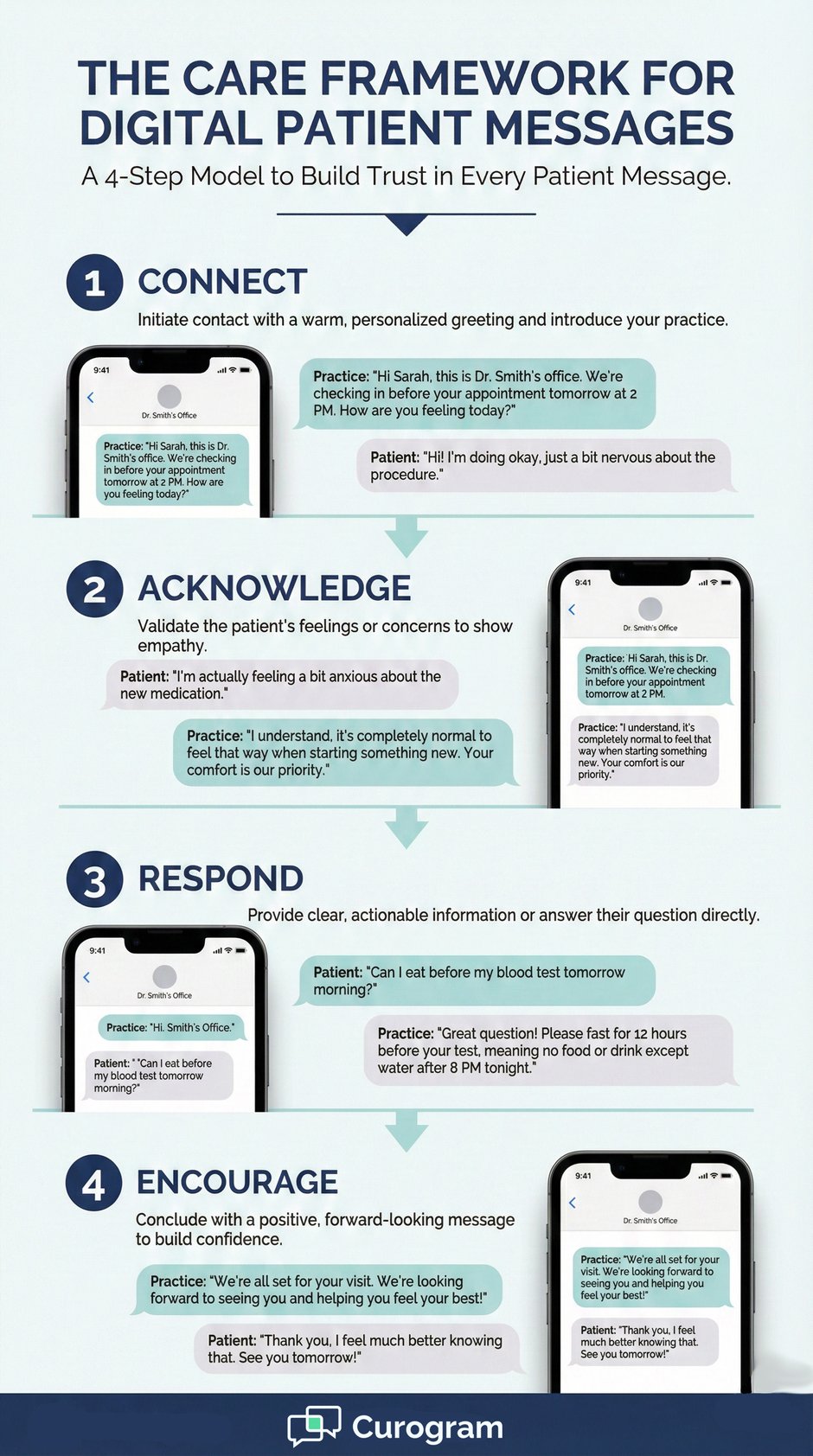
Infographic: CARE Framework for digital patient messaging and building healthcare trust


The Psychology of Trust in Healthcare Communication

Trust isn't random. It follows patterns rooted in how the human brain processes risk, connection, and safety. Understanding these patterns helps you design messages that earn patient confidence in digital health interactions.

The Three Pillars of Trust

Decades of research point to three core elements: ability, kindness, and honesty. Patients ask themselves whether you're skilled, whether you care, and whether you'll tell the truth. Your digital messages need to answer all three.

Ability: Showing You Know What You're Doing

Patients trust providers who seem capable. In text, this means using clear language, giving precise instructions, and following up when you say you will.

A sloppy or vague message can make patients question your competence, even if your clinical skills are excellent.

Kindness and Honesty: The Emotional Core

Being kind in text means choosing words that show you see the patient as a person. Being honest means not hiding bad news behind jargon.

Both of these traits come across in small choices, like using the patient's first name or explaining a delay rather than ignoring it.

How the Brain Decides to Trust

The brain uses two systems when deciding whether to trust. The fast system makes snap judgments based on first impressions. The slow system weighs evidence over time. Your first message triggers the fast system. Consistent, quality follow-up builds the slow one.

First Impressions in the Digital Space

The first text or email a patient gets from your practice sets the tone. A warm welcome message after scheduling creates a positive anchor. A generic, impersonal note does the opposite. You rarely get a second chance at a first digital impression.

Building Long-Term Trust Through Patterns

One great message won't create lasting trust. Patients need to see a pattern. Timely replies, consistent tone, and reliable follow-through all contribute.

Over time, these patterns form the foundation of a strong patient relationship through digital communication. For deeper insight into empathy's role, explore our pillar article on expressing empathy in healthcare.


7 Trust Triggers for Digital Patient Interactions

Certain actions create trust faster than others. These seven triggers are backed by research and tested across real healthcare settings. Use them as a checklist for every patient touchpoint.

Speed, Clarity, Personalization, and Transparency

The first four triggers focus on the basics that patients notice right away. Getting these right builds a strong base of trust before you even address clinical concerns.

Speed and Clarity in Your Replies

Trigger one is response speed. Patients who wait more than an hour for a reply report lower trust scores. Aim for under 30 minutes during office hours.

Trigger two is clarity. Avoid medical jargon. Write the way you'd explain something to a friend.

For example, instead of "Your HbA1c is elevated," try "Your blood sugar average is higher than we'd like." Patients who understand their health feel more in control and trust you more.

Personalization and Transparency

Trigger three is using the patient's name and referencing their specific situation. A message that says "Hi Sarah, here's your follow-up for Tuesday's visit" beats a generic "Your appointment reminder."

Trigger four is being upfront about wait times, costs, or next steps. Patients handle bad news better when they see it coming.

Consistency, Empathy, and Follow-Through

The final three triggers address what keeps trust alive over time. These are the trust factors in patient messaging that turn one-time visitors into loyal patients.

Consistency Across Every Channel

Trigger five is tone consistency. If your website sounds warm but your texts sound robotic, patients notice. Every channel should reflect the same voice. Trigger six is empathy. Even a brief line like "We understand this can be worrying" shows you care.

For a deeper look at empathetic language, check out our collection of over 40 ways to express empathy over text.

The Power of Follow-Through

Trigger seven may be the most important of all: doing what you said you'd do. If you tell a patient you'll send their referral by the end of the day, make it happen.

Broken promises erode trust faster than any other mistake. Reliable follow-through is the strongest signal you can send.


The Digital Bedside Manner Framework

Most providers learn bedside manner in clinical training. But nobody teaches a digital bedside manner for text messages and online chats. This framework fills that gap with a practical model you can apply today.

The CARE Model for Digital Messages

CARE stands for Connect, Acknowledge, Respond, and Encourage. This four-step model works for nearly any patient message, from simple appointment questions to complex clinical concerns.

Connect and Acknowledge

Start by using the patient's name and a warm opener. This is the Connect step. Next, Acknowledge their reason for reaching out.

A simple "Thank you for letting us know about your concern" shows you read the message with care.

These first two steps only take a few seconds. But they transform a dry reply into a human exchange. Patients who feel seen at the start are more open to whatever comes next.

Respond and Encourage

The Respond step is where you give the actual answer or the next step. Be clear and specific. Avoid vague language like "We'll be in touch."

Instead, say "You'll hear from us by 3 PM tomorrow with your results."

Finally, Encourage. Close your message with a line that invites further contact.

Something like "Don't hesitate to reach out if you have more questions" keeps the door open. This step reinforces that the patient's voice matters.

Adapting CARE for Different Channels

The CARE model works across text, email, and patient portals. But you'll need to adjust length and tone based on the channel. Texts should be shorter and more direct. Emails can include slightly more detail.

CARE in Text Messages

In a text, you may combine Connect and Acknowledge into one sentence.

"Hi Maria, thanks for reaching out about your prescription," covers both.

Keep the Respond step to two or three sentences max. End with a quick Encourage line. Building rapport through text messaging works best when you keep things brief but warm.

CARE in Portal Messages and Emails

Portal messages and emails allow more room. You can add context to the Respond step. You can also use the Encourage step to share helpful links or resources. Just make sure every word earns its place. Patients stop reading when messages feel long-winded.


Trust-Building Language and Phrasing Techniques

The words you choose carry weight. Small shifts in phrasing can turn a cold message into a caring one.

These techniques help your team communicate in ways that strengthen the patient relationship through digital communication.

Words That Build Trust

Certain words and phrases carry a positive charge. Others trigger worry or distance. Knowing the difference helps your staff write better messages without spending extra time.

Use 'We' Language

Replace "you need to" with "let's work on this together." The word "we" signals partnership. It tells the patient they're not alone in their care journey.

For example, "We'd like to schedule a follow-up to check on your progress" feels far warmer than "You need to schedule a follow-up."

Soften Clinical Language

Medical terms make patients anxious.

Instead of "Your imaging shows an abnormality," try "We noticed something on your scan that we'd like to take a closer look at."

This doesn't hide facts. It delivers them with care. The goal is to inform without alarming.

Phrases to Avoid in Patient Texts

Some common phrases damage trust without you realizing it. Review your templates regularly and remove any language that feels impersonal or demanding.

'Per Our Policy' and Other Cold Phrases

Phrases like "per our policy," "as previously stated," or "you were informed" sound like they come from a legal team, not a care team.

Replace them with human language. "Here's how we can help with that" works much better.

Avoiding the 'No' Trap

When patients ask for something you can't provide, lead with what you can do. Instead of "We can't see you until next week," try "The soonest we can get you in is next Tuesday. Would morning or afternoon work better?"

This reframes the situation and keeps trust intact.


Visual and Technical Elements That Build (or Break) Trust

Trust isn't only about words. The design, layout, and technical setup of your digital tools also shape how patients feel. A clunky portal or confusing interface can undo even the best-written message.

Design Choices That Signal Trustworthiness

Patients judge digital tools within seconds. Clean design, familiar layouts, and easy-to-read text all boost patient confidence in digital health platforms. Cluttered screens or tiny fonts send the wrong message.

Readable Fonts and Clear Layouts

Use fonts that are easy to read on mobile. Keep button labels simple. Make sure patients can find the "reply" or "message" function without hunting for it.

If older patients are part of your base, larger text and high-contrast colors help. For specific tips on reaching elderly patients, see our guide on communicating with older patients digitally.

Branding That Feels Consistent

Your texts and portal should look and feel like they come from the same practice. Use your logo, colors, and a consistent sender name.

When patients see a text from an unknown number with no branding, their guard goes up. Branded messages feel official and safe.

Technical Trust Signals

Behind the scenes, technical setup plays a big role. Patients may not know the details, but they notice when something feels off.

HIPAA Compliance as a Trust Builder

When patients know their messages are secure and HIPAA-compliant, they feel safer sharing personal health details. Make this visible.

A brief note like "This message is sent through a secure, HIPAA-compliant platform" adds a layer of reassurance without being pushy.

Uptime, Speed, and Reliability

If your platform goes down or runs slowly, patients lose faith. They start to wonder: if the tech isn't reliable, is the care? Choose tools with strong uptime records.

Fast load times and smooth performance build trust in ways most practices overlook. For more on how digital tools support virtual care, visit our resource on telemedicine communication.

Handling Mistakes: Maintaining Trust When Things Go Wrong

Mistakes happen. A message goes to the wrong patient. A follow-up gets lost. A reply comes three days late. What matters most isn't the mistake itself. It's how you handle it.

The Trust Recovery Playbook

Research shows that trust can actually grow stronger after a mistake, but only if the recovery is handled well.

This is called the service recovery paradox. Patients who see you own and fix an error may trust you more than if the error never happened.

Own It Fast and Be Specific

Don't wait for the patient to point out the error. Reach out first. Say exactly what went wrong and what you're doing to fix it. Vague apologies like "Sorry for any inconvenience" feel hollow.

"We're sorry your test results were delayed. Here they are, along with the next steps," is much stronger.

Explain the Fix and Prevent Repeats

After admitting the mistake, tell the patient what you've done to prevent it from happening again. This shows that you take their experience seriously.

Even a line like "We've updated our system to make sure this doesn't happen again" can restore faith.

When Trust Breaks Down Completely

Sometimes a single mistake isn't the issue. It's a pattern. If a patient has lost trust due to repeated problems, a standard apology won't cut it.

Escalate to a Human Conversation

When trust is badly damaged, switch from text to a phone call or video chat. Digital channels are great for building trust, but they have limits when repairing it.

A personal call from the provider or office manager shows a level of care that text alone can't match.

Document and Learn from Failures

Track every trust-related issue. Look for patterns. Are mistakes clustered around certain staff, times, or processes?

Use this data to train your team and adjust your workflows. Trust building in virtual healthcare requires ongoing effort, not just one-time fixes.


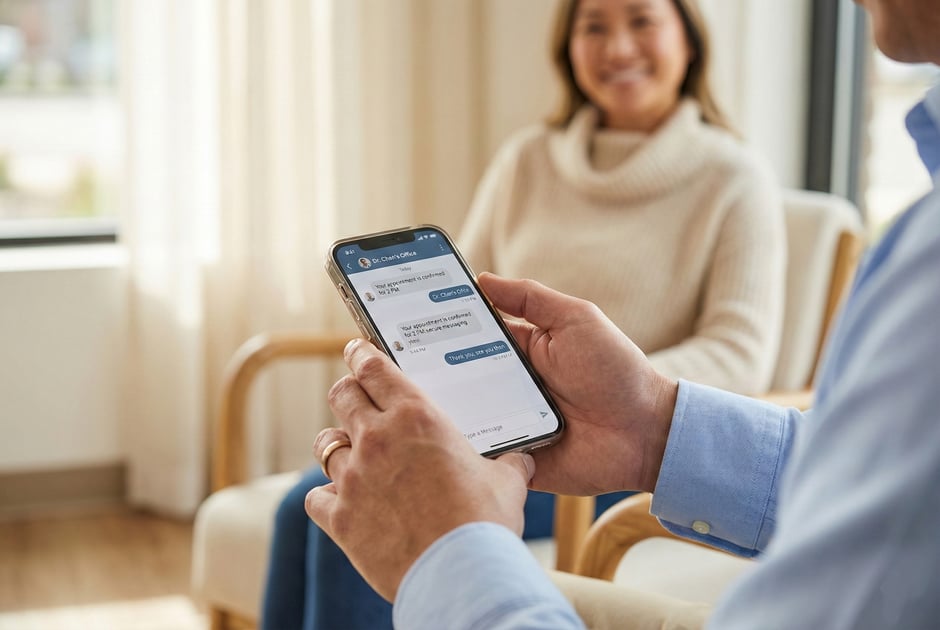
 Patient using a secure healthcare messaging app on a smartphone in a modern clinic


Measuring and Monitoring Patient Trust Levels

You can't improve what you don't measure. Many practices assume patients trust them without ever checking. Here's how to track trust so you can spot problems early and build on what works.

Direct Trust Metrics

Direct metrics come from asking patients how they feel. These give you the clearest picture of whether your digital efforts are landing.

Post-Interaction Surveys

Send a one-question survey after key digital interactions. "How confident did you feel after our last message exchange?" works well.

Keep it simple. Response rates drop when surveys get long. Even a five-star rating system gives useful data.

Net Promoter Score for Digital Channels

Ask patients: "How likely are you to recommend our practice based on your messaging experience?"

This NPS-style question links trust to loyalty. Track this score monthly to see trends.

Indirect Trust Indicators

Not all trust signals come from surveys. Some of the most telling data hides in your daily operations.

Response Rates and Engagement Patterns

Patients who trust you reply to messages more often and faster. Track open rates, reply rates, and time-to-response. A drop in engagement can signal a trust problem before any complaint comes in.

Retention, Reviews, and Referrals

Patient retention rates tell a clear story. If patients keep coming back, trust is likely strong. Online reviews also reflect trust levels.

A spike in negative reviews about communication is a red flag. Referrals are the ultimate trust signal. Patients only send friends and family to providers they truly believe in.


Conclusion 

Building patient trust through digital communication isn't a side project. It's the core of how modern healthcare works. Every text, portal message, and email is a chance to show patients they matter to your practice.

Think about the ground we've covered. Trust is harder to build on a screen, but it's far from out of reach. The psychology is clear.

Patients look for ability, kindness, and honesty in every exchange. They form snap judgments from your first message and build deeper trust over time through patterns.

The seven trust triggers give you a roadmap. Speed, clarity, and a personal touch get you started. Transparency, consistency, empathy, and follow-through keep you going. None of these require a big budget. They just require intent.

The CARE framework turns that intent into action. Connect with patients by name. Acknowledge their concerns. Respond with clear next steps. Encourage them to keep the lines open.

This simple model works across text, email, and portal messages. It takes seconds to apply and makes a lasting mark.

Language matters more than most practices realize. Small shifts, like swapping "you need to" for "let's work on this together," change the entire feel of a message.

The tools you use matter too. Clean design, secure platforms, and fast load times all send quiet trust signals.

Mistakes will happen. That's a given in any busy healthcare practice. What sets great teams apart is how they recover.

Own the error fast, explain the fix, and learn from it. Patients respect honesty far more than a perfect track record.

Finally, don't guess about trust. Measure it. Use post-visit surveys, track reply rates, and keep a close watch on your online reviews. The data will show you where to double down and where to adjust.

Trust building in virtual healthcare is not a one-time task. It's an ongoing daily practice that grows stronger with each message you send.

The practices that will lead in the years ahead are the ones that treat every digital touchpoint as a real moment of care. Start today.

Pick one section from this guide and put it to work. Review your templates. Train your front desk. Set a response time goal. Small steps add up fast.

Trust takes time to earn and seconds to lose. Make every message count.

Ready to transform your patient communication? Schedule a demo to see how it works in action.

Frequently Asked Questions

How can healthcare practices build trust with patients through text messaging?

Start by responding quickly and using the patient's name. Keep your language warm and free of jargon. Follow the CARE model: connect, acknowledge, respond, and encourage. Over time, consistent and caring messages create strong trust.

Why do patients sometimes distrust digital communication from their providers?

Digital messages lack the body language and tone cues found in face-to-face visits. Short or vague replies can feel cold.

Patients also worry about privacy and whether their messages are truly secure. Addressing these concerns head-on helps close the trust gap.

How does response time affect patient trust in healthcare messaging?

Fast replies signal that you value the patient's time and concerns. Studies suggest responses within 30 minutes boost trust scores.

Delays beyond a few hours make patients feel ignored. Setting clear expectations about reply times also helps manage trust.

What role does empathy play in digital patient communication?

Empathy is one of the strongest trust triggers in digital healthcare. A single empathetic line can shift how a patient feels about an entire exchange.

It shows the patient you see them as a person, not just a chart number. Even brief phrases like "We understand this is stressful" make an impact.

How can practices recover patient trust after a digital communication mistake?

Act fast, be specific about what went wrong, and explain what you're doing to fix it. Avoid vague apologies.

If the mistake was serious, escalate to a phone call or video chat. Research shows that a strong recovery can make trust even stronger than before.


How to Handle Difficult Patient Conversations Over Text

How to Handle Difficult Patient Conversations Over Text

💡 Handling difficult patient conversations over text requires a clear process. Without tone of voice or body language, text messages can lead to...

Read More
Professional Text Communication in Healthcare: A Complete Guide

Professional Text Communication in Healthcare: A Complete Guide

💡 Professional text communication in healthcare refers to the use of secure, HIPAA-compliant patient texting to manage appointments, share...

Read More
Text vs Phone Calls in Healthcare: Data-Driven Comparison

Text vs Phone Calls in Healthcare: Data-Driven Comparison

💡 When comparing text vs phone calls in healthcare, data shows that text messaging wins on speed, cost, and patient preference, while phone calls...

Read More