
1 min read
Best HIPAA-Compliant Patient Texting Platforms 2026
 Jo Galvez : 3/7/26, 11:00 AM
💡 Patient texting software helps medical practices send secure, HIPAA-safe messages to patients for reminders, follow-ups, and two-way chats. The...
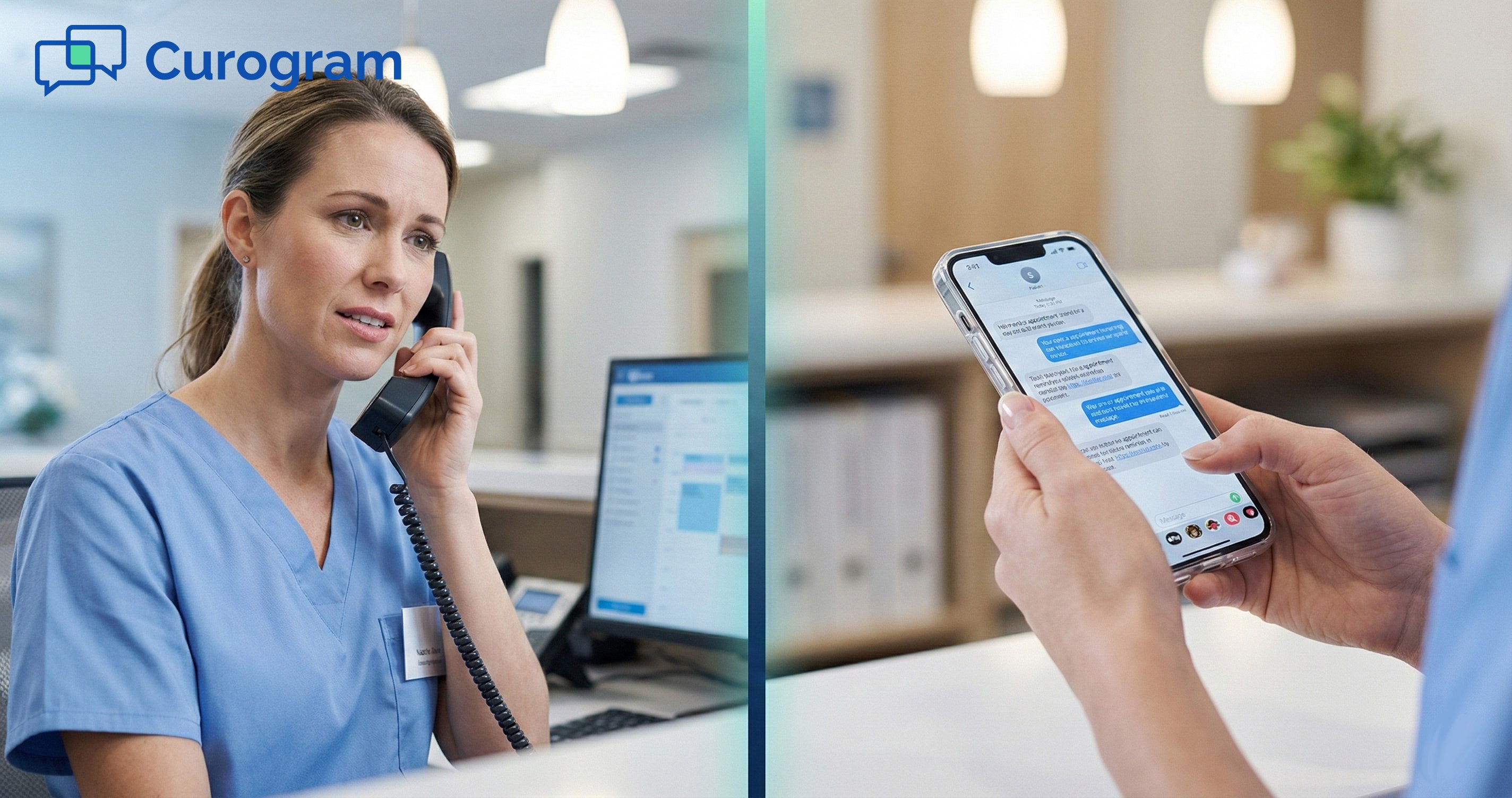
Your front desk phone rings again. A patient needs to confirm tomorrow's visit. Another wants a refill update. A third is on hold, growing restless. Meanwhile, your staff juggles these calls while checking in the patient standing right in front of them.
This scene plays out in thousands of medical offices each day. Phone calls have been the backbone of patient contact for decades. But the way people prefer to connect has shifted. Today, most of us reach for our phones to send a text, not make a call. And patients are no different.
So, how do text messaging vs phone calls stack up in a medical setting? Which one saves your practice more time and money? And which one do patients actually prefer? These are the questions that drive the debate around text vs phone calls in healthcare.
The answer, as you might guess, is not black and white. Each channel has clear strengths. Each has limits. The goal of this guide is to lay out the real data so you can make a smart choice for your practice.
We will walk through patient preferences, cost breakdowns, response rates, use cases, and the technology behind each channel. By the end, you will have a clear picture of how to use both methods in a way that works for your team and your patients.
The way medical offices talk to patients has changed a lot in recent years. What was once a phone-only world is now a space where texts, emails, and portals all play a role.
To make a fair healthcare communication methods comparison, it helps to see where things stand right now.
For most of the last century, calling was the only way to reach a doctor's office. Patients would phone in, wait on hold, and talk to a staff member to book visits or ask a question. That model worked fine when there were few other options.
But the rise of mobile phones and messaging apps changed what people expect. By 2020, the COVID-19 pandemic pushed many practices to try new tools out of pure need. Virtual visits, online forms, and text messaging grew almost overnight.
Today, more than 80% of patients say they want to get texts from their doctors. Yet many practices still rely on phone calls for most of their patient contact. This gap between what patients want and what practices offer is one of the biggest missed chances in healthcare right now.
A recent survey found that about 65% of medical offices now use some form of text messaging. But most of these limit texts to basic reminders. Only about 30% offer true two-way texting, where patients can reply and hold a real conversation.
The gap matters. Practices that use full two-way texting report up to 50% fewer phone calls. Those that stick to one-way reminders still face heavy call volumes and long wait times for both staff and patients.
Any healthcare communication methods comparison must address HIPAA compliance. The rules are clear: you cannot send protected health details through a standard text. You need a secure, HIPAA-compliant platform.
Phone calls have their own rules, too. Staff must verify who they are speaking with before sharing any health data. Both channels carry risk if not handled well. The good news is that modern texting platforms are built with these rules in mind. They use encryption, access controls, and audit trails to keep patient data safe.
The pandemic forced a rapid shift in patient contact preferences. Studies show that 70% of patients who started using digital tools during COVID still prefer them today. This trend holds true across age groups, though it is strongest among adults under 50.
For practices, this means the move toward text messaging is not a passing fad. It is a lasting shift in how people want to interact with their doctors. Practices that fail to adapt risk losing patients to those that already have.
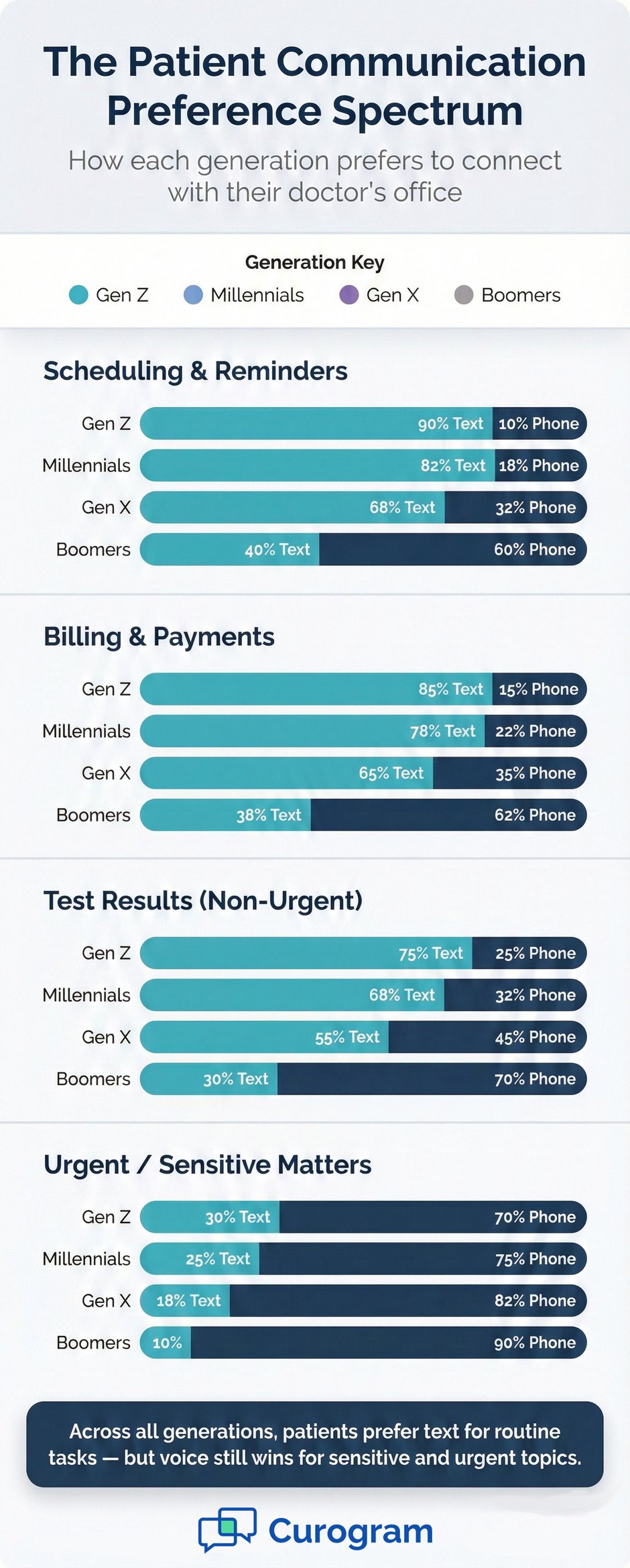
Numbers tell a clearer story than opinions. The debate around text messaging vs phone calls in medical settings has real data behind it. When you look at patient communication preferences for text or phone, some trends are hard to ignore. Let us break down what patients really want and why.
Polls show that about 72% of patients prefer texts for simple tasks like booking and reminders. Phone calls still rank first for complex health talks, with about 65% of patients choosing voice for those moments.
Age plays a big role. Gen Z and Millennials choose text over phone calls at a rate of nearly 85%. Gen X leans toward text as well, at around 70%. Boomers are more split, with about 55% still preferring a phone call for most interactions.
Where a patient lives also matters. Urban patients tend to favor texts more than rural patients. This is partly due to broadband access and partly due to comfort with technology. Still, the overall trend is clear: most patients want the option to text their doctor's office.
There is a gap between what patients say they prefer and how they actually act. Some patients who claim to prefer phone calls will still respond faster to a text. In one study, response rates to text reminders were three times higher than voicemail callback rates, even among those who said they preferred calling.
This matters because it shows that patient convenience drives behavior more than stated choice. When the easy option is a quick reply by text, most people will take it.
The patient texting advantages in healthcare are easy to understand. Texts are fast, flexible, and do not require sitting on hold. A patient can reply during a break at work, while picking up kids, or late at night.
There is also less anxiety. Many patients dread phone calls, especially about medical topics. Texting gives them time to think before they respond. They also get a written record of the exchange, which helps them remember details.
For younger patients in particular, texting is just how they communicate. Asking them to call feels outdated. Offering text as an option sends a signal that your practice values their time and comfort.
Hold times are a top source of frustration for patients. The average medical office hold time is over four minutes, and many calls go to voicemail. Texts eliminate this problem entirely. A patient can send a message in seconds and get a reply when the staff is free.
This is where patient convenience in communication really shines. No phone tag, no missed calls, and no guessing when the office will call back.
Phone calls are far from dead. For complex medical discussions, most patients still want to hear a real voice. Think about a doctor explaining a new treatment plan or sharing abnormal test results. These moments need tone, empathy, and the chance for back-and-forth questions.
Older patients, in particular, often feel more at ease with a phone call. Some have vision or hearing challenges that make texting hard. Others simply trust a voice conversation more than a written one.
Urgent matters also demand a call. If something needs quick attention, a phone call is the fastest way to have a two-way talk in real time. The key takeaway is that phone calls vs SMS in a medical practice is not a contest. Each serves a different need.
Tone of voice carries meaning that text cannot fully match. When a patient is scared, upset, or confused, hearing a calm and caring voice can make all the difference. This is why many practices keep phone calls as the go-to for sensitive topics.
That said, skilled staff can convey empathy via text as well. Using warm language, timely replies, and follow-up messages can show patients that you care even when you are not on the phone.
Money talks, and so does data. A clear communication cost comparison between text and phone reveals some surprising numbers. Here is what each channel really costs your practice.
The average phone call at a medical office takes 8 to 12 minutes. That includes hold time, the actual conversation, and any notes the staff must enter after. At an average front desk wage of $18 per hour, each call costs roughly $2.40 to $3.60 in staff time alone.
But the hidden costs add up fast. Phone tag, where staff and patients trade missed calls, can double or triple the time spent on a single issue. One study found that offices lose up to 30% of inbound calls to voicemail, many of which never get returned.
Then there is the infrastructure. Phone systems, on-hold music, voicemail boxes, and multi-line hardware all carry monthly fees. For a mid-sized practice with 10 providers, these can run $500 to $1,500 per month. Factor in the time staff spends managing voicemails, and the real cost grows even more.
Add it all up, and a busy medical practice can spend well over $50,000 a year just on phone-based patient contact. That number may shock you, but it is backed by real data from practices across the country.
Every missed call is a missed chance. It could be a new patient who calls another office instead, or a current patient who skips a visit because they could not get through. Studies show that up to 20% of new patient calls go unanswered during peak hours.
This is an often-overlooked part of the communication cost comparison. Phone calls are not just expensive to handle. They are expensive to miss.
A text exchange usually takes 2 to 4 minutes of staff time. That is less than half the time of a phone call. At the same $18 per hour wage, each text costs about $0.60 to $1.20. The savings per interaction add up fast when your office handles hundreds of patient contacts a week.
Platform costs for HIPAA-compliant texting run from $200 to $400 per month for most practices. This is often less than what practices pay for phone systems. Because staff can handle multiple text threads at once, you need fewer people to manage the same volume.
Automation is where the real savings kick in. Platforms like Curogram can send reminders, collect forms, and process payments without any staff input. This frees your team to focus on patients who are in the office. Many practices that switch to texting see their phone call volume drop by 40% to 50%.
Over 12 months, a practice with 15 providers could save $30,000 or more by shifting routine contact to text. The ROI often shows up within the first two to three months.
Here is a quick look at the numbers. A phone call costs $2.40 to $3.60 per interaction. A text exchange costs $0.60 to $1.20. An automated text, like a reminder or payment link, costs almost nothing in staff time. For practices that send hundreds of reminders per week, this alone can save thousands each year.
A small practice with 2 providers might handle 300 phone calls a week. Moving half to text could save roughly $200 per week, or about $10,000 a year. The texting platform pays for itself within the first month.
A mid-sized group with 15 providers might field 2,000 calls per week. Shifting 60% to text can save over $25,000 a year in staff time alone. Add in fewer missed calls and lower no-show rates, and the true value is even higher.
A large multi-location practice with 50-plus providers deals with massive call volumes. These groups often save $100,000 or more per year by using a texting platform. Their break-even point is often within weeks, not months. The scale of savings grows in step with the size of the practice.
Most practices see a full return on their texting investment within 60 to 90 days. By month six, the savings far exceed the cost. At the 12-month mark, the typical ROI is 3x to 5x the initial spend. These figures come from real-world practice data, not just theory.

Time is one of the most precious things in a medical office. The way you handle patient contact has a direct impact on practice efficiency and overall output. Let us look at how text and phone compare on speed, response rates, and the ability to scale.
On average, a phone call takes 8 to 12 minutes. A text exchange takes 2 to 4 minutes. Over a week, a practice that handles 500 patient contacts could save 30 to 40 hours by moving half of those to text. That is nearly one full-time staff member's worth of time.
Text also allows staff to manage more than one conversation at once. A front desk worker can reply to three or four text threads while waiting for a patient to check in. Phone calls, on the other hand, are one-at-a-time. This is a key factor in practice efficiency when it comes to daily workflows.
After-hours communication is another win for text. Patients can send a message at any time, and staff can respond the next morning. With phone calls, after-hours messages often get lost in voicemail or require costly answering services.
The daily effect is clear. Offices that use texting for routine tasks report that their front desk staff spend 25% to 35% less time on the phone. This means shorter patient wait times in the lobby, faster check-ins, and less burnout among team members.
Healthcare communication efficiency goes up across the board when text handles the simple stuff, and calls are saved for what truly needs a voice.
Text messages have a 98% open rate. Compare that to voicemail, where only about 30% of patients call back. The response rate for text vs phone is not even close. This makes text the clear winner for tasks where you need a fast answer.
Appointment reminder texts have been shown to cut no-show rates by up to 40%. When patients can confirm or cancel with a quick reply, they are far more likely to do so. Phone reminders, by contrast, often go to voicemail and get ignored.
Beyond reminders, text also boosts action on forms, payments, and surveys. Patients who get a text link to a form are twice as likely to fill it out as those who are asked to do so on a phone call. These patient engagement methods lead to smoother workflows and better data collection.
No-shows cost the average practice tens of thousands of dollars each year. Text reminders sent 24 to 48 hours before a visit can cut that loss sharply. Some practices report a 50% to 75% drop in no-shows after adding text reminders. Phone reminders just cannot match those numbers.
Phone systems have a hard ceiling. Each phone line can only handle one call at a time. During peak hours, patients hear busy signals or sit on long holds. Adding lines means adding cost and hardware.
Text scales far more easily. One staff member can handle 10 or more text threads at the same time. Automated messages, like reminders and payment links, can go out to hundreds of patients at once without any manual effort.
This is where the communication channel comparison between text and phone becomes most stark. As your practice grows, phone systems struggle to keep up. Texting platforms grow with you at little added cost. For multi-location groups, this scalability is a major plus.
Practices that adopt texting often find they can serve more patients with the same team. Instead of hiring more front desk staff to handle rising call volumes, they route simple tasks to text. This keeps labor costs flat while patient volume grows.
The quality of each exchange matters just as much as speed or cost. Healthcare communication effectiveness depends on clarity, trust, and the patient's overall feeling about their care. Here is how text and phone compare on the experience side.
Written messages reduce the risk of errors. When a patient gets a text with their visit date and time, they can read it again anytime. There are no misheard details, no garbled instructions, and no need to call back to double-check.
Texts also let practices send links, images, and forms. This is useful for pre-visit prep, post-visit care tips, and payment options. Phone calls cannot match this level of detail in a single exchange.
That said, phone calls allow for real-time back-and-forth. If something is unclear, the patient can ask a follow-up right away. This is why medical office communication channels should include both options.
Every text exchange creates an automatic record. This audit trail is useful for compliance, dispute resolution, and quality checks. Phone calls can be recorded, too, but doing so adds cost and storage needs. For most practices, texts offer a simpler way to document routine exchanges.
Studies show that patient satisfaction with communication is higher when text is offered as an option. Practices that use text see their satisfaction scores rise by an average of 10 to 15 points. This boost in patient satisfaction communication leads to better reviews and more referrals.
Convenience is the top driver. Patients rate "ease of reaching the office" as one of their most important factors. When they can text instead of calling, that score jumps. At the same time, patients who need a phone call and can get one quickly also report high satisfaction.
The lesson is simple. Meeting patients where they are, whether by text or phone, is what drives the best scores. Offering only one channel limits your potential for high marks.
Patients who are happy with how your office communicates are more likely to stay. Retention rates are 20% to 30% higher at practices that offer multi-channel contact. When patients can choose between text and phone, they feel more in control of their care.
One common concern about texting is that it lacks warmth. Voice carries tone, pauses, and inflection that a written message cannot fully replicate. For sensitive news or emotional moments, a phone call often feels more caring.
However, empathy can come through in text as well. Thoughtful wording, prompt replies, and follow-up messages all show patients that you care. In fact, there are more than 40 ways to express empathy over text, from simple phrases to follow-up check-ins. Investing in this skill pays off.
The best approach is to train your staff for both channels. Teach them when to call and when to text. A hybrid model lets your team show empathy in the way that best fits each situation.
Role-playing exercises can help staff learn to convey warmth over text. Templates for common scenarios also ensure a consistent tone. When staff feel confident in both channels, the overall quality of patient care improves.
Knowing when to use each channel is the key to getting the most out of both. This use case breakdown will help you decide where text messaging and phone calls fit best in your daily workflows.
Text messaging excels at routine, low-complexity tasks. Appointment reminders and confirmations are the most common use cases. A quick text the day before a visit gives patients an easy way to confirm or reschedule. This alone can cutdown on no-shows and free up your schedule.
Billing and payment reminders are another strong fit. A text with a payment link gets faster results than a phone call or a mailed statement. Practices that use text-to-pay often see payment times drop from weeks to days.
Form and document requests also work well by text. Instead of asking a patient to download something from a portal, send a direct link. Completion rates are much higher when the path to the form is just one tap away.
Other good use cases include prescription refill alerts, post-visit follow-ups, health tips, and mass announcements. For all of these, the patient texting advantages in healthcare are clear: speed, simplicity, and high engagement.
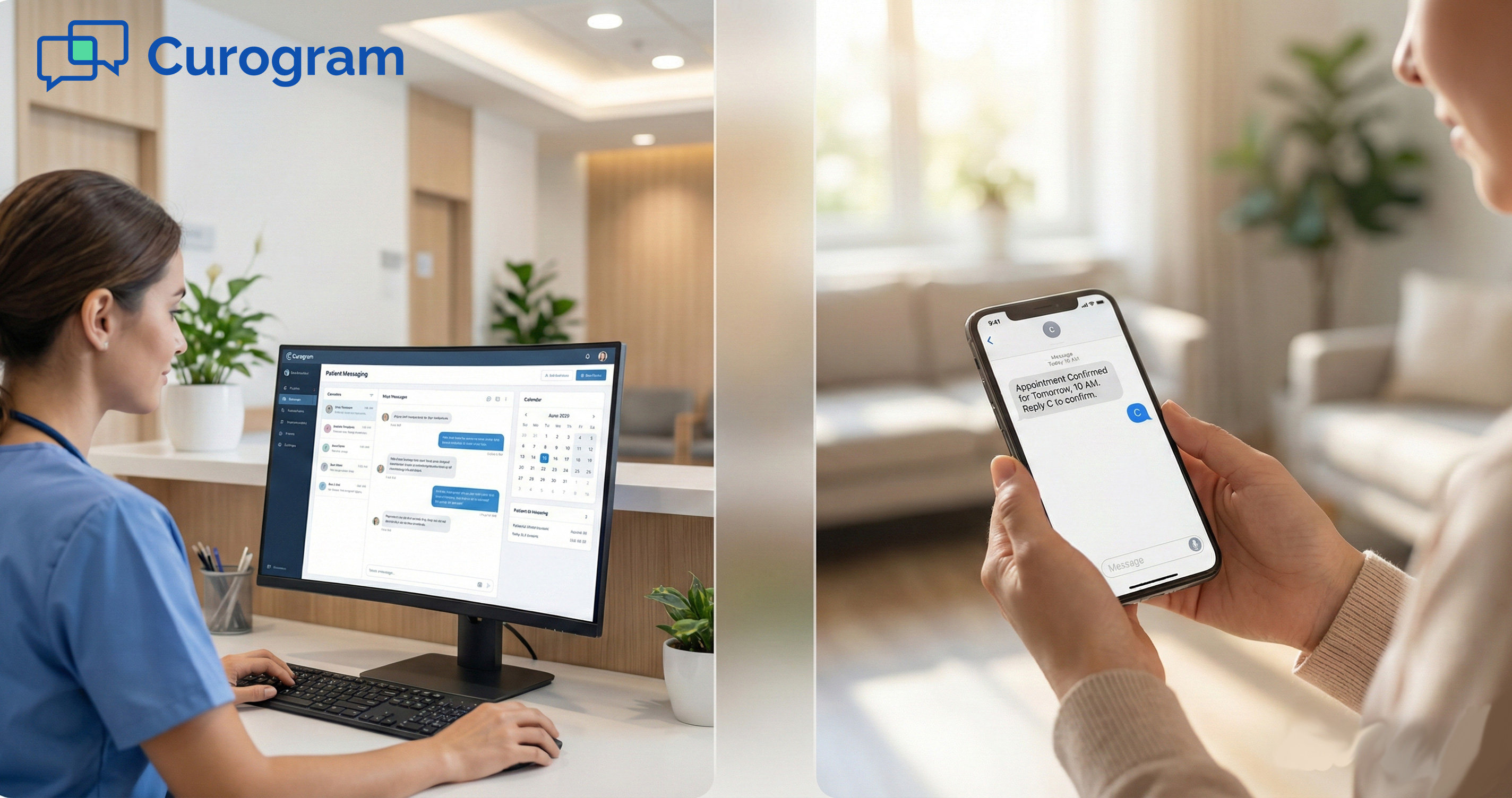
Many of these tasks can be fully automated. Platforms like Curogram let you set up rules that send the right message at the right time with no manual input. This means your staff stays focused on in-person care while the system handles routine outreach.
Phone calls shine when the topic is complex or sensitive. Explaining a new treatment plan, walking through lab results, or discussing a referral all benefit from the nuance that voice provides. Patients can ask questions and get answers in real time.
New patient intake is another strong fit for calls. A first-time caller wants to feel welcome and heard. A warm phone greeting can set the tone for the entire relationship. While follow-ups can shift to text, that first contact often works best by voice.
Urgent or emergency matters always warrant a call. If something needs quick action, a phone call is the fastest way to reach someone and confirm they understand. Text works for follow-ups, but not for crises.
Elderly or less tech-savvy patients may also do better with calls. If a patient struggles with texting, forcing them to use it creates frustration, not efficiency. This is where a strong approach to phone calls vs SMS in a medical practice means reading each patient's needs.
Written words can be misread. A patient who is upset may take a text the wrong way. For complaints and unresolved issues, a phone call lets you de-escalate with tone and empathy. Resolve the issue by voice, then follow up by text with a summary.
Many situations work best when you combine both channels. Send a text to remind a patient about an upcoming procedure. Follow up with a call to walk them through prep steps. After the visit, text a summary and a link to any post-care instructions.
This multi-channel flow meets patients at every stage. It also gives your team the flexibility to adjust based on how the patient responds. If a patient replies to a text with a complex question, escalate to a call. If they prefer to keep things in writing, stay on text.
The goal of any patient contact strategy is to be where the patient needs you. Combining text and phone gives you the best shot at doing that well.
Set clear rules for when a text thread should move to a phone call. Common triggers include clinical questions, signs of distress, and topics that need a rapid two-way exchange. Having these protocols in place keeps your team aligned and your patients safe.
The tools you choose shape how well each channel works. Understanding the technology behind phone systems and texting platforms helps you make a smarter investment.
Traditional phone systems require on-site hardware, wiring, and ongoing maintenance. These landline setups can cost $500 to $2,000 per month for a mid-sized practice. VoIP systems are cheaper and more flexible, but still need a stable internet connection and some setup.
Phone systems have built-in limits. Each line handles one call. Peak hours often mean long holds or busy signals. Adding lines adds cost. Training staff on phone etiquette, call routing, and voicemail management also takes time and effort.
Integration is another challenge. Most phone systems do not connect to your EMR or scheduling software. This means staff must enter data by hand, which increases the risk of errors and slows down workflows.
As your practice grows, phone systems hit a wall. More patients mean more calls, which means more lines, more staff, and more cost. Scaling a phone-based workflow is expensive and slow. This is a core weakness in any phone-only communication setup.
A solid text messaging platform must be HIPAA-compliant. This is non-negotiable in healthcare. Look for features like encryption, access controls, consent management, and a full audit trail. Platforms built for healthcare, like Curogram, check all of these boxes.
EMR integration is a big deal. When your texting platform syncs with your EMR, patient data flows without double entry. This saves time and reduces mistakes. Curogram, for example, integrates with almost any EMR system, making setup simple and fast.
Staff training on a texting platform usually takes minutes, not days. The interface is much like the messaging apps your team already uses. Most staff are up and running within a single short session. Beyond the basics, look for features like automated reminders, survey requests, electronic forms, and text-to-pay.
A good platform gives you data on message volume, response times, and engagement rates. These insights help you fine-tune your approach and prove the value of texting to your leadership team. Phone systems rarely offer this level of detail.
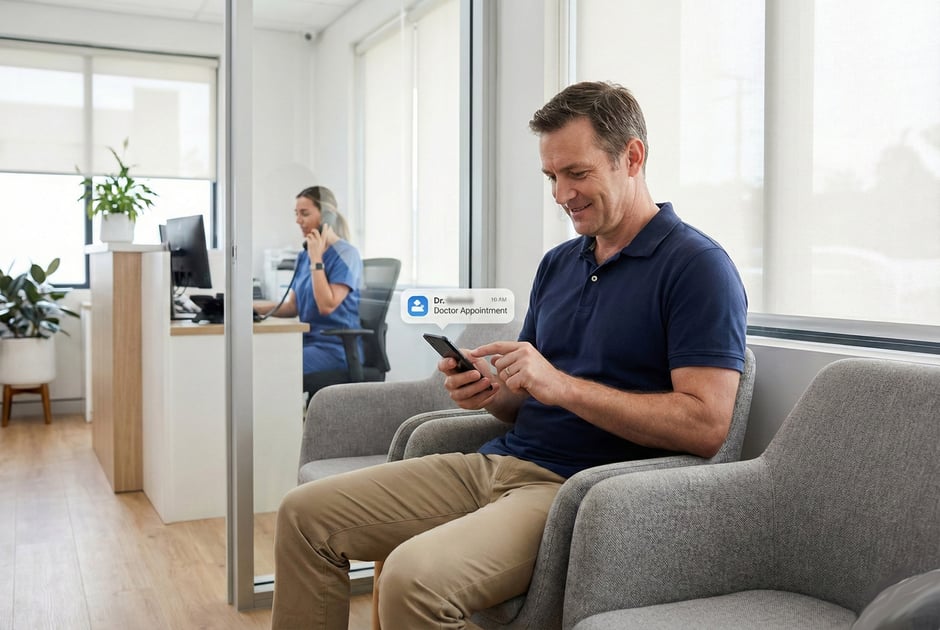
Rules around patient data are strict, and for good reason. Both phone calls and text messaging carry legal duties. Here is what your practice needs to know to stay compliant.
HIPAA applies to both channels, but the requirements differ. Phone calls must be taken in private areas. Staff must verify patient identity before sharing any health details. Recording calls requires consent in many states, and stored recordings must be secured.
Text messaging faces even tighter scrutiny. Standard SMS is not secure enough for protected health information. You must use a HIPAA-compliant texting platform that encrypts messages in transit and at rest. Patients must also give written consent before you text them about health matters.
Consent rules are a key part of this. For phone calls, verbal consent is often enough. For texts, written or electronic opt-in is the standard. Your platform should track and store these consents in case of an audit. Failing to get proper consent can lead to fines that range from $100 to $50,000 per violation.
One major edge that text has over phone is the built-in audit trail. Every message is logged with a timestamp, sender, and recipient. Phone calls only create records if you actively log them or record them. This makes text exchanges easier to document for compliance.
State-specific rules add another layer. Some states have their own texting and telehealth laws that go beyond federal HIPAA rules. It is smart to check your state's guidelines before launching a texting program. A HIPAA-compliant platform will help, but it does not replace knowing your local laws.
The bottom line: both channels can be used safely if you follow the rules. But text messaging platforms built for healthcare make compliance simpler. They handle encryption, consent tracking, and record-keeping so your team can focus on patient care.
Adding text to your practice does not mean dropping phone calls. It means giving your team and patients a better mix of tools. Here is a step-by-step approach to making the switch smooth.
Start with a pilot program. Pick one department or one type of message, like appointment reminders, and test it for 30 days. Track the results: how many texts go out, how many get replies, and how does it affect call volume? This small-scale test gives you real data before a full rollout.
Patient education is the next step. Let your patients know that texting is now an option. Include the info on your website, in the waiting room, and during check-in. Make it easy for patients to opt in. Many will be glad to hear about the new option, especially those who have been frustrated by long hold times.
Staff training is essential. Even though texting platforms are simple to use, your team needs to know when to text and when to call. Set clear guidelines. Routine tasks go to text. Complex or sensitive topics stay on the phone. Review these rules often and adjust them as your team gains experience.
Set clear expectations for response times. Patients should know that a text does not mean an instant reply. Let them know your typical window, such as "We aim to respond within two hours during business hours." This prevents frustration and keeps your team from feeling rushed.
Measure your results at regular intervals. Look at call volume, no-show rates, patient satisfaction scores, and staff workload. Share these numbers with your team. When they see the positive impact, buy-in grows. This measurement loop is how you continuously improve healthcare communication efficiency at your practice.
Finally, be patient with the process. Change takes time. Some patients will adopt texting right away. Others will stick with the phone. Your job is to offer both and let each patient choose what works best for them. Over time, you will find the right balance.
The real winner in the debate around text vs phone calls in healthcare is not one or the other. It is a hybrid model that uses the strengths of both. Here is how to build that approach.
A smart channel routing strategy is the foundation. Set rules that guide each type of message to the right channel. Reminders, confirmations, and payment links go by text. Clinical discussions, complaints, and new patient intake go by phone. This keeps things simple for staff and patients alike.
Patient preference tracking takes your hybrid model further. Let patients state which channel they prefer during intake. Log it in your system. When a patient who prefers text contacts you, start there. If they prefer calls, pick up the phone. This builds trust and improves satisfaction.
Automation handles the high-volume, low-complexity tasks. Set up text reminders, form requests, and survey links to go out without staff lifting a finger. Your team then focuses on the calls and texts that need a human touch. This is where the true gains in practice efficiency communication come through.
Escalation protocols connect the two channels. When a text thread gets complex, your team knows to switch to a call. After the call, they send a text summary. This multi-channel patient journey gives each person the right type of contact at the right moment.
Success stories back up this approach. Practices that use a hybrid model report higher patient satisfaction, lower costs, and better staff morale. They also tend to grow faster because they can serve more patients with the same team. The future of patient communication is not one channel. It is the right channel at the right time.
Looking ahead, new tools like AI chatbots and voice assistants will add more options. But the core idea stays the same: use data to guide your choices, put the patient first, and stay flexible. A hybrid approach today sets you up for whatever comes next.
Difficult patient conversations over text are part of running a modern medical practice. They will not go away. But with the right framework, they become manageable and even productive.
The core process is simple. Pause before you reply. Validate what the patient feels. Take responsibility when it fits. Offer a clear solution. Then follow through. These five steps, practiced over time, will change how your team handles every tough moment.
Skills grow with use. The more your staff practices these techniques, the more natural they become. Scripts give your team a starting point, but real confidence comes from training, support, and experience.
Every complaint is a chance to build a stronger relationship. When a patient sees that your team listens, responds with care, and follows through, their trust deepens. That trust keeps them coming back and telling others about your practice.
Take the next step. Build your protocol, train your team, and equip them with tools that support their best work.
Schedule a demo to explore what is possible for your practice.
Frequently Asked Questions
1 min read
Jo Galvez : 3/7/26, 11:00 AM
💡 Patient texting software helps medical practices send secure, HIPAA-safe messages to patients for reminders, follow-ups, and two-way chats. The...

1 min read
Jo Galvez : 2/21/26, 3:00 PM
💡 Professional text communication in healthcare refers to the use of secure, HIPAA-compliant patient texting to manage appointments, share...
1 min read
Jo Galvez : 2/28/26, 11:00 AM
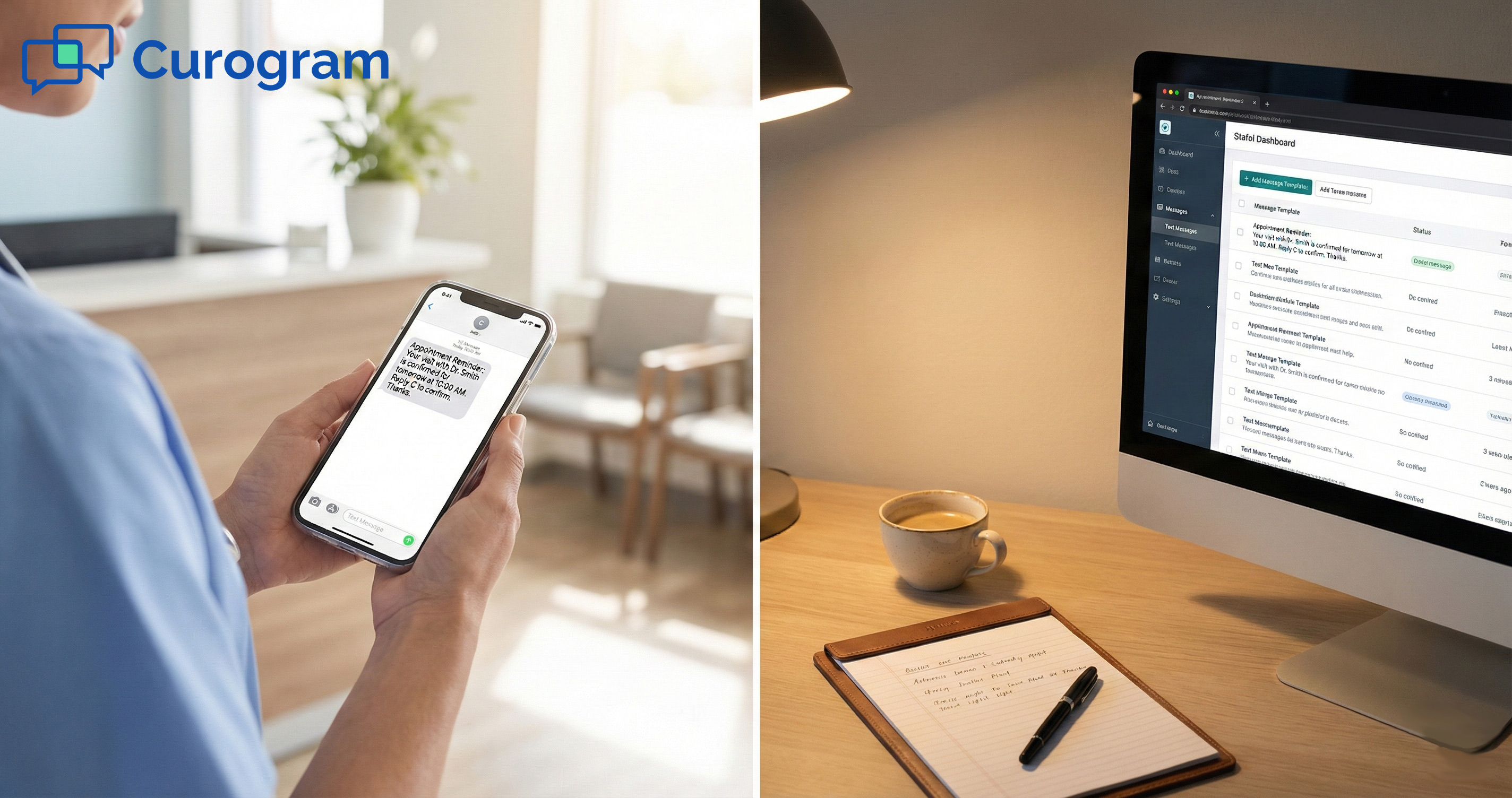
💡 Patient text message templates are pre-written messages that medical offices use to reach patients by SMS. They cover key touch points like...