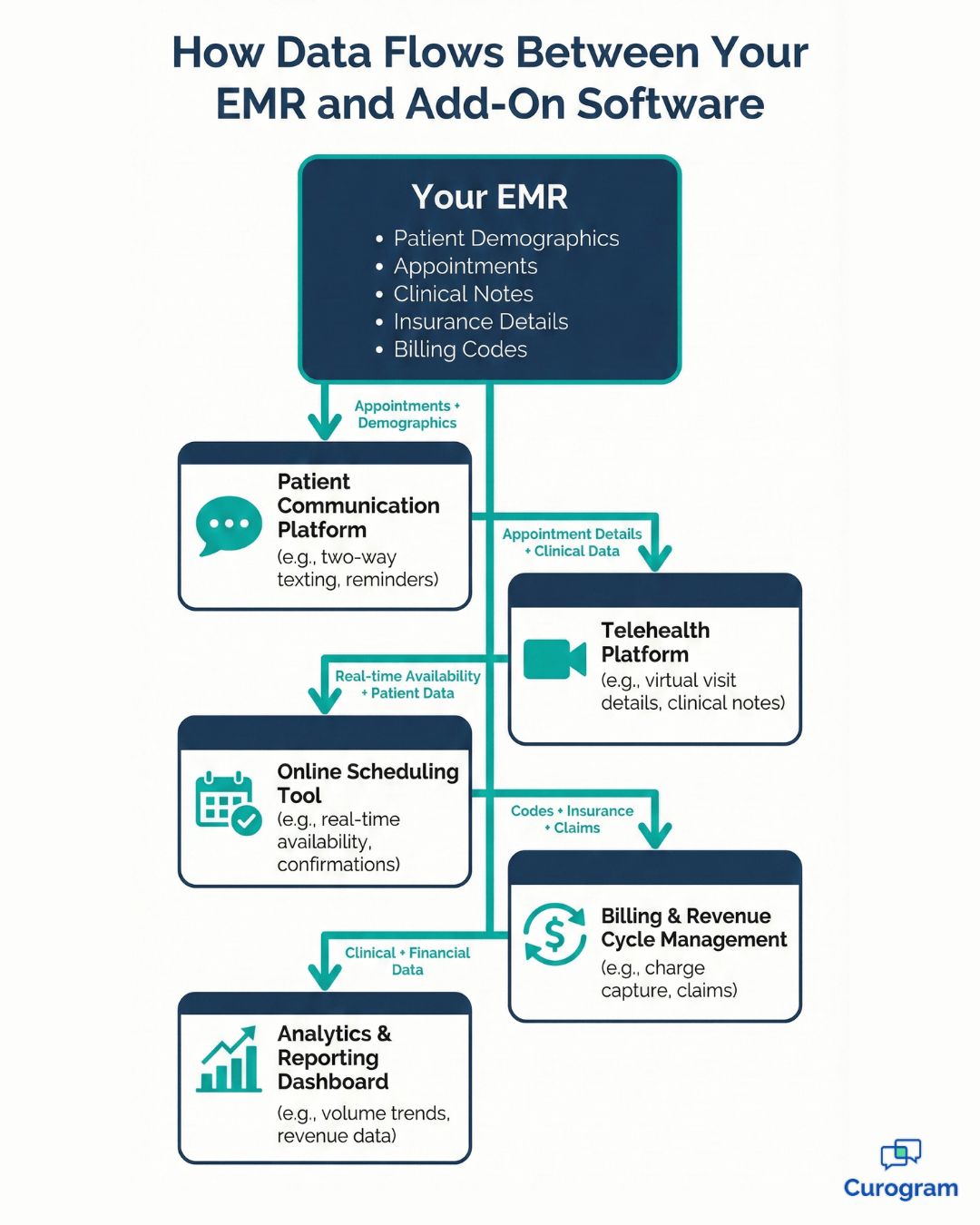

Your EMR is the backbone of your medical practice. Every patient chart, every appointment, and every clinical note runs through it. So when you add new software to your tech stack, the most important question is simple: will it actually work with your EMR?
Too many practices learn this lesson the hard way. They invest in a shiny new tool only to discover it does not connect to their existing system.
The result is double data entry, frustrated staff, and errors that put patient safety at risk. In fact, poor software integration is one of the top reasons medical practices abandon new technology within the first year.
The good news is that you can avoid these problems. When you choose healthcare software with EMR integration as your top priority, you set your practice up for long-term success. The right tools will share data smoothly, save your team hours of manual work, and help you deliver a better experience for your patients.
This healthcare software buying guide walks you through everything you need to know. You will learn why EMR integration matters more than any other feature, what to look for during your medical practice software selection process, and which red flags should send you running.
We will also cover the exact questions to ask vendors, how to evaluate integration quality, and what to do when direct integration is not an option.
Whether you are shopping for a patient communication platform, a telehealth solution, or a scheduling tool, this guide gives you a clear framework. By the end, you will feel confident in your ability to pick software that fits seamlessly into your workflow without creating new headaches for your team.
Strong integration reduces duplicate work, minimizes errors, and keeps your team focused on patient care instead of administrative tasks. It also protects your revenue by ensuring documentation, scheduling, and billing data stay aligned across systems.
Most importantly, integrated tools create a smoother patient experience. When forms, messages, and appointments sync automatically with your EMR, your practice feels organized, responsive, and professional — exactly what today’s patients expect.