

Skip to the main content.

6 min read

The Top 7 Ways to Fight Burnout in Your Healthcare Practice

Front desk coworker handing a coffee to a tired colleague at a clinic reception desk
💡Burnout in healthcare is long-term job stress that leaves staff drained, cynical, and less sure their work helps. In 2025, 41.9% of physicians reported at least one burnout symptom, per the AMA. Front desk staff and medical assistants are among the roles practices lose most.

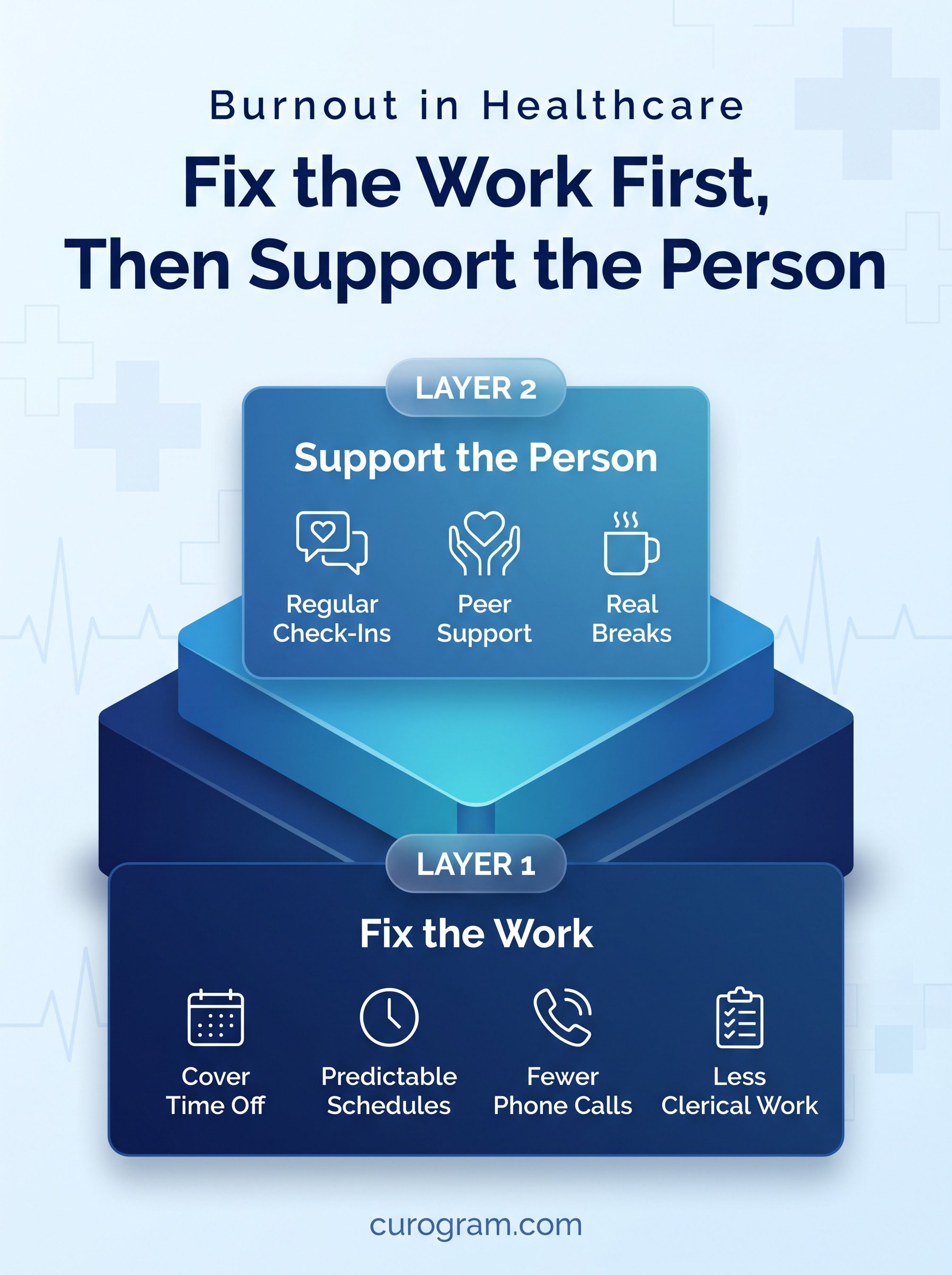
Federal safety experts say to fix staffing, schedules, and paperwork first. Start by covering time off, keeping schedules steady, and moving repeat calls to text. Then add regular check-ins, less clerical work, peer support, and real breaks.

Dr. Patel calls in sick at 7:15 on a Monday. By 7:30, the front desk has a list of 22 patients to reach before their visits, and the phones open in 30 minutes.

Two staff members split the list. They leave voicemails, take callbacks, and reschedule as they go. By noon, the morning's check-ins are behind, the portal inbox is full, and nobody has taken lunch.

Burnout in healthcare grows out of days like that one. It builds slowly, then shows up as a sick call, a short reply to a patient, or a resignation letter.

This guide covers what burnout is, how to spot it, what causes it, and seven ways to fight it in a working practice.

Our view, which federal safety researchers share: fix the work first, then support the person doing it.

What is Burnout?

Burnout is a response to long-term stress at work that hasn't been managed well. It's tied to the job, so it can't be fixed with a long weekend alone.

How the WHO Defines It

The World Health Organization lists burnout as an occupational phenomenon in its disease classification, not a medical condition. It describes three parts:

  • Feeling drained or exhausted
  • Growing distance from the job, or feeling cynical about it
  • Less sense of getting things done well at work

All three tend to show up together. A nurse who's exhausted but still proud of the work is tired. Once the pride fades too, that's closer to burnout.

How Common It Is in 2026

Physician burnout has eased from its pandemic peak but remains high. In the AMA's April 2026 report, 41.9% of physicians reported at least one symptom of burnout in 2025. That's down from 43.2% in 2024 and 48.2% in 2023.

Only 56.2% of physicians said they felt valued by their organization. Those figures cover doctors. Medical assistants and front desk staff often carry the same load with less pay and less say over their day.

What Are The Warning Signs of Burnout?

Burnout rarely announces itself. It shows up in small changes that are easy to explain away one at a time.

Signs in the Person

Watch for these in yourself or a colleague, especially when several show up over weeks:

  • Tired all the time, even after days off
  • More colds and more sick days
  • Dread before shifts, or trouble getting started
  • Cynical or short comments about patients and coworkers
  • Pulling away from the team at lunch or in huddles

Some of these signs overlap with depression and anxiety. If they're severe or won't lift, a doctor or counselor is the right next step. An employee assistance program can be a quick place to start.

Signs in the Practice

Burnout leaves tracks in the schedule and the inbox too. Charts get closed at 10 p.m. Portal messages wait three days for an answer. The same two staff members volunteer for every extra shift until one of them quits.

A stressful week passes. Burnout sticks around when the work that caused it stays the same, which is why the patterns above matter more than any single bad day.

What Causes Burnout?

Burnout comes mostly from how the work is set up. Personal habits play a role, but the bigger drivers sit in staffing, schedules, and paperwork.

Staffing Gaps and Turnover

CDC's National Institute for Occupational Safety and Health (NIOSH) points to root causes like staffing levels and demanding schedules. It urges leaders to fix those first and lean less on personal resilience.

Turnover feeds the cycle. In a May 2026 MGMA Stat poll, 28% of practices said staff turnover was higher than the year before. Medical assistants, clinical support staff, and front desk roles were the most common churn points.

Each departure lands on whoever stays. One open front desk seat can mean a second person answering two phone lines through flu season.

Paperwork and the Phone Queue

Administrative burden shows up in the AMA's list of factors behind burnout rates. In a practice, that means prior authorizations, portal messages, forms, and phone calls that pull people away from patients.

Phones are the worst of it for the front desk. Every closure notice, provider absence, or flu clinic announcement turns into dozens of one-at-a-time calls, plus the callbacks after that.

Little Control Over the Day

Schedules that change at the last minute leave staff with no way to plan. When people can't predict their day or fix what slows them down, frustration turns into cynicism.

Seven ways to fight burnout in a healthcare practice, grouped into work fixes and personal support

The Top 7 Ways to Fight Burnout

These seven steps start with the work itself and end with the person. Most cost little and can start this month.

1. Cover Time Off So It's Real

A day off doesn't help if work waits on the desk. An MA who comes back to 60 unread portal messages pays for that day twice.

Name a backup for each role before anyone leaves. Hand off inboxes and task lists, and set an out-of-office message for patient messages.

2. Make Schedules Predictable

Steady schedules came up among the retention tactics in MGMA's 2026 poll. Post schedules early, limit last-minute changes, and spread extra shifts across the team.

When someone does cover, say so in the huddle. The same two names shouldn't fill every gap.

3. Take Repeat Calls Off the Phone

Go back to Dr. Patel's sick day. One text to 22 patients, with a link to reschedule, replaces 22 calls and most of the callbacks.

Practices on Elation use broadcast messaging for closures and provider changes, and the same approach works for mass texting in GE Centricity clinics. Start with operational notices like closures and weather delays, since those carry the most phone volume.

Plan the message before the send. Our best practices for bulk SMS campaigns cover consent, timing, and how to keep replies manageable.

4. Check In With Staff on a Schedule

Problems surface faster when someone asks. Hold a short monthly one-on-one with each team member and ask two questions: what slows you down, and what should we stop doing?

Then act on one answer and report back. Only 56.2% of physicians felt valued in the AMA data. Acting on what staff tell you is a direct way to show they matter.

5. Cut Clerical Work Clinicians Don't Need to Do

Look at who does each task. Physicians finishing refill requests and form letters at night are doing work a trained staff member could prepare.

Move intake forms and insurance updates online so they arrive before the visit, not at the window. Every form a patient completes at home is one less clipboard to retype.

6. Build Peer Support Into the Week

Isolation is one of the warning signs, so make connection part of the schedule. A 10-minute morning huddle, a shared lunch once a week, or pairing new hires with a peer all count.

Clinicians often find it easier to talk with colleagues who know the work. Make room for that during work hours, when people can actually attend.

7. Make Breaks and Self-Care Possible

Advice to sleep more and exercise helps only if the job allows it. Protect a real lunch break with phone coverage, and end the day on time when you can.

Share your employee assistance program details in more than one place, and remind staff it exists before a crisis. Leaders who take their own breaks give others permission to take theirs.

Get rid of burnout with Curogram

Curogram works alongside your EHR to take routine patient contact off the phone. The front desk sends one message instead of making 40 calls.


Curogram Highlight: Mass Texting for Practice Notices

Curogram's Mass Text Messaging sends one message to anywhere from 100 to more than 10,000 patients. Lists come straight from your EMR, and you can target groups by appointment history or patient details.

Patients who opted out of marketing are skipped automatically, while closure and health alerts still go out. Replies land in one shared inbox, and delivery reports show who received each message and which ones failed.

Patients read texts in their phone's normal messaging app, with no download. Curogram is HIPAA-compliant and SOC 2 Type II certified.


Conclusion

Burnout in healthcare hasn't gone away, even as physician rates dip. Front desk and clinical support roles still turn over faster than anyone would like.

The fixes that last change the work. Cover time off, steady the schedule, and take repeat calls off the phone before asking anyone to try harder.

Pick one step this month. Count how many calls your team made for the last closure or provider absence, and decide whether a single text could have done the job.

 Want to see how one text can replace a morning of phone calls? Book a demo with Curogram and we'll show mass texting working with your EHR's patient lists.

Frequently Asked Questions

How can a manager tell burnout from a hard week?

A hard week ends when the workload drops. Burnout lasts for weeks and shows up as exhaustion, cynicism, and a sense that work doesn't matter. Watch for patterns, such as rising sick days or late charting.

Why does burnout hit front desk staff so hard?

Front desk staff handle phones, check-ins, and patient frustration at the same time, often with little control over the day. In 2026, MGMA found front desk roles among the most common turnover points.

What can a small practice do about burnout with no budget?

Start with free changes. Post schedules early, cover time off, hold short monthly check-ins, and protect lunch breaks. Then look at which phone tasks could become one text instead of dozens of calls.

How does mass texting reduce staff workload?

One message reaches every affected patient at once, so staff skip dozens of calls and voicemails. Replies come back to one inbox. Closures, provider absences, and weather delays are good first uses.

When should someone with burnout get professional help?

Seek help when symptoms are severe, last for weeks, or affect sleep, mood, or safety. A doctor or counselor can check for depression or anxiety. An employee assistance program can be a quick first step.


Telemedicine in Georgia: Law, Rules, Regulations, and Policies | Blog

Telemedicine in Georgia: Law, Rules, Regulations, and Policies | Blog

Starting to practice telemedicine in Georgia? Learn how the top providers in Georgia are deploying telemedicine practices profitably and efficiently.

Read More
3 Strategies That Will Chart Your Practice on the Path to Success

3 Strategies That Will Chart Your Practice on the Path to Success

This article discusses the 3 major strategies for keeping your practice prepared to maintain a positive connection with patients.

Read More
True Cost of Administrative Inefficiency in Medical Practices (2026)

True Cost of Administrative Inefficiency in Medical Practices (2026)

Discover hidden costs of administrative inefficiency in medical practices. Data on time waste, revenue loss, and solutions with ROI calculations.

Read More