
 Joshua Inciso
Automated Patient Communications Can Keep Your Patients Healthy
 Joshua Inciso : 4/26/22, 7:00 AM
Automated tools in healthcare make processes more effective and efficient. Learn how to automate communication and enhance patient engagement.

Patients don't just show up for care anymore. They compare providers, research their conditions online, and expect answers on their own schedule.
That shift has changed what it takes to run a successful practice. Excellent clinical care is still the heart of the job, but when patients feel left out of their own care, they gradually drift away. They miss follow-ups, skip refills, and eventually find a provider who keeps them in the loop.
This is where patient engagement comes in, and it's no longer an optional extra reserved for large health systems. Hospitals and small practices alike now depend on it to keep patients healthy, loyal, and coming back.
Consider your regular patients. The ones who read your messages, ask about their options, and follow their care plans usually achieve better results. They're also easier to schedule, quicker to respond, and more likely to recommend you to friends and family.
Less involved patients tell a very different story. They're harder to reach, more likely to miss scheduled visits, and slower to respond to reminders. Some end up in urgent care for something your team could have caught early.
Engagement closes that gap. Whenever you share health information clearly, explain treatment options, and make it easy for patients to reach you, they become active members of the care team. That creates accountability on both sides and builds the kind of trust that keeps patients with your practice for years to come.
The practices that thrive over the next decade will treat engagement as part of care, not an afterthought. The rest will keep losing patients without understanding why.
In this article, you'll learn what patient engagement really means and how it benefits your practice and your patients. You'll also
Patient engagement is the partnership between you and your patients when making decisions about their care. In an engaged relationship, patients understand their treatment choices, recovery plans, and medication options. They also feel comfortable speaking up when something doesn't seem right.
That partnership builds trust. Over time, it leads to stronger relationships and better health outcomes.
Here's a quick look at the difference engagement makes:
| Passive Patient | Engaged Patient | |
|---|---|---|
| Gets health information | Only during visits | Before, during, and after visits |
| Role in care decisions | Follows instructions | Asks questions and weighs options |
| Follow-up visits | Often missed | Usually kept |
| Contact with your team | Phone calls and voicemail tag | Quick texts and secure messages |
Engagement takes two sides: proactive patients and supportive, open-minded providers. To make it work at scale, most practices rely on patient engagement solutions that simplify communication and daily workflows. The right patient engagement software helps you deliver more personal care. It also raises accountability, since patients take part in their own care decisions.
Patient expectations are pushing this change, too. The COVID-19 pandemic sped up the move toward remote care, and that habit has stuck. A study from Accenture found that 60% of patients want to use digital tools to talk with their providers and keep accessing care through telehealth.
In practice, many of your patients would rather send a quick text than sit on hold or drive to your office. With text messaging tools, your team can answer questions in real time. Patients get the help they need without making a trip.
Healthcare providers must prioritize patient engagement more to help their practice further.
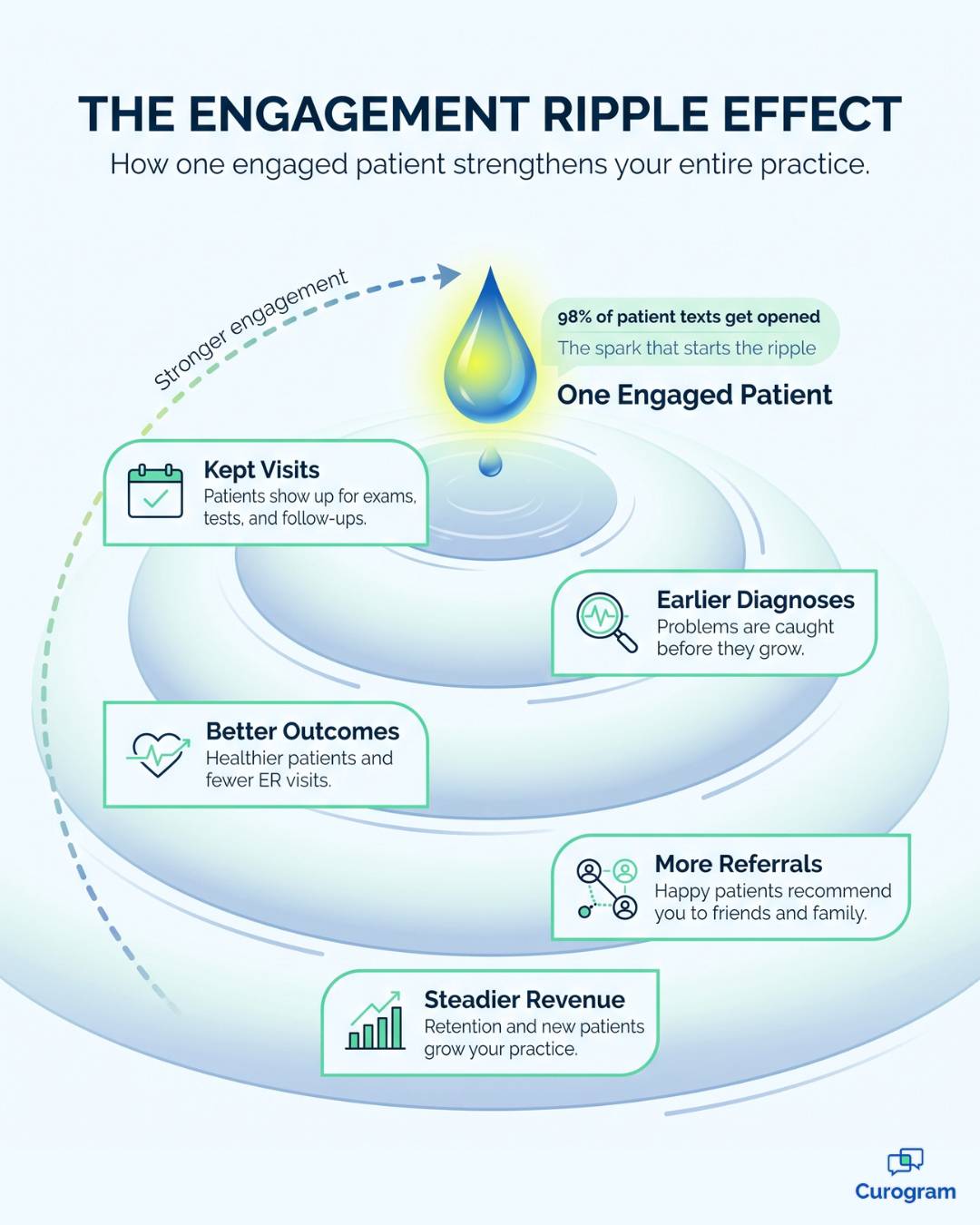
Here are five ways that patient engagement can help healthcare organizations and other medical practices.

When you and your patients work together, both sides notice problems sooner. Engaged patients are less likely to end up back in the hospital after they go home. Open communication also means small issues get caught and treated before they turn into emergencies.
Engaged patients stick with their provider and keep up with preventive care. When they manage their health well, they need fewer costly services, like trips to the ER. Over time, that adds up to real savings for them.
Patients take more ownership of their health when they can view their records anytime, anywhere. They can track their conditions, medications, and treatment plans without waiting for a call back. With secure online portals, you can share sensitive information and stay connected without worrying about security breaches.
Patient engagement isn't a side project, because it's a key driver of your practice's long-term growth.
As you build your plan, focus on these five key elements:
Putting these steps in place takes discipline and commitment. Once your team finds its rhythm, engagement becomes part of how your practice runs every day, not one more task on the list.
For years, healthcare ran on a provider-centered model. The provider made the decisions, and the patient followed along. That approach overlooked something important: patients play a huge role in their own health.
Today's forward-thinking practices are moving toward value-based care, and patient engagement sits at the center of that shift. A Global Health Care Outlook report from Deloitte found that healthcare groups worldwide want cost-effective, creative ways to deliver patient-centered, tech-enabled care. That care needs to reach patients both inside and outside the clinic walls.
The message is clear. The practices that engage patients today are the ones best prepared for tomorrow, whatever changes the industry brings next.
When patients feel informed and accountable, they make better choices about their health. They keep appointments, follow care plans, and stay with providers who treat them as partners. For your practice, that adds up to stronger outcomes, steadier revenue, and a team that spends less time chasing patients down.
Still, engagement doesn't happen by accident. It takes a clear strategy that fits your practice's goals. It also takes tools that make communication easy for patients and staff alike.
That's where a HIPAA-compliant platform like Curogram can help practices of every size. It brings two-way texting, automated reminders, and secure messaging together in one place. With a 98% open rate on text messages, your updates actually get read, and your team can answer questions without being tied to the phone.
The result is a better patient experience and a practice that's built to last. Small changes in how you communicate can lead to big gains in patient loyalty and care quality.
Ready to see what stronger patient engagement could look like for your growing team? Book a demo to see how Curogram helps practices connect with patients and start building stronger relationships today.
 Joshua Inciso : 4/26/22, 7:00 AM
Automated tools in healthcare make processes more effective and efficient. Learn how to automate communication and enhance patient engagement.

Explore 15 patient engagement strategies that help practices cut no-shows, recover lapsed patients, and keep their schedules reliably full every week.
 Carylee Gali : 6/3/22, 8:45 AM
Explore the key benefits of evaluating patient feedback, learn which survey questions to ask. Book a Curogram demo to send review requests to...