
5 Ways Affordable Text-to-Pay Reduces Billing Costs for Clinics
💡 Billing costs drain clinic budgets through paper, postage, and staff time, but affordable text-to-pay systems cut these costs by 90% while...

10 min read
Jo Galvez
:
January 18, 2026
Picture this: your clinic provides great care, but months later, patient bills sit unpaid. Your team spends hours chasing down payments. Your cash flow suffers.
You're not alone. Late patient payments plague healthcare practices across the country. Even after insurance processes claims, patients delay paying their share.
The problem goes deeper than just slow payments. Your staff wastes time on billing tasks instead of patient care. Your practice carries high accounts receivable. Patient confusion about bills damages their trust in your clinic.
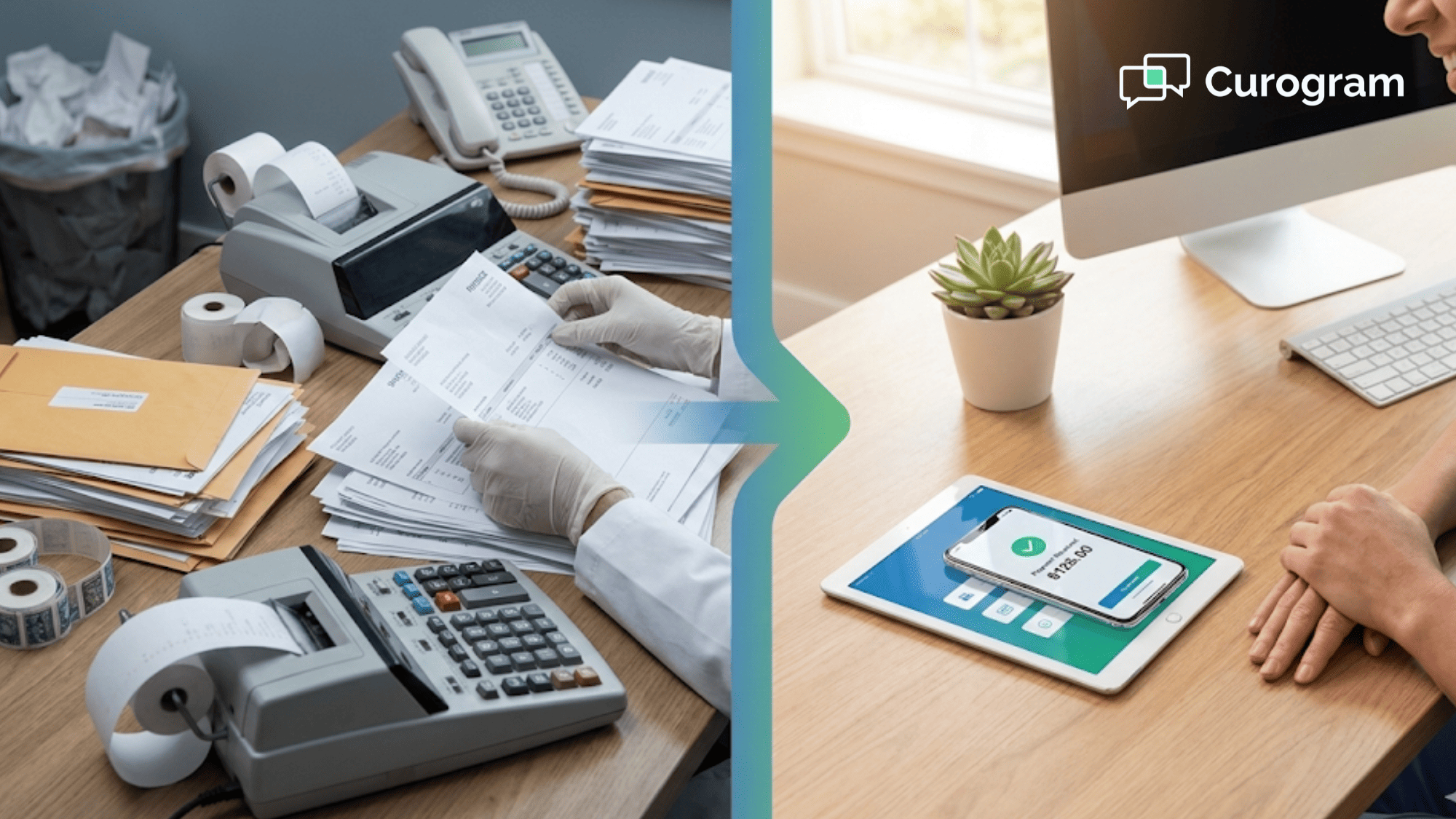
Paper-based billing systems make things worse. Statements get lost in the mail. Patients forget about bills. Your team manually tracks who owes what. Follow-up calls and letters add more work to your already busy day.
But here's good news: digital billing solutions can fix these patient payment challenges in healthcare. Text-to-pay stands out as the most effective option. This simple tool sends secure payment links straight to patients' phones. They can pay in seconds without logging into portals or finding paper bills.
Modern text-to-pay systems meet all HIPAA rules. They work with your current EMR. Best of all, they're now affordable for small and mid-size practices. No more paying premium prices for basic payment features.
Mobile payments in healthcare aren't just convenient. They solve real business problems. Faster collections mean better cash flow. Less admin work frees up your team. Clearer billing improves patient satisfaction.
This guide shows you why patient payments get delayed. More importantly, it reveals how affordable text-to-pay can transform your billing process. You'll see real data on faster collections and happier patients
Late patient payments create serious financial strain for healthcare practices. The impact reaches far beyond simple cash flow issues. Understanding these costs helps explain why solving payment delays matters so much.
Most U.S. clinics wait 30 to 90 days for patient payments after providing service. Some practices see this stretch even longer. This delay means you've already paid staff, rent, and supplies while your revenue sits uncollected.
Your accounts receivable (A/R) days keep climbing. High A/R days signal poor financial health. Lenders notice this when you need credit. Investors worry about your ability to manage cash.
Consider the real math: a $50,000 monthly revenue clinic with 60-day A/R has $100,000 tied up in unpaid bills. That money could cover payroll, equipment, or expansion. Instead, it sits frozen in your billing system.
Payment delays create a domino effect throughout your practice. Your staff spends hours each week on billing tasks. They send statements, make reminder calls, and chase down payments. This time could go toward patient care or practice growth.
Administrative costs pile up fast. Paper statements need printing and postage. Phone calls eat staff time. Your team processes checks and credit card payments manually. Each step adds labor hours to your overhead.
Your billing staff faces daily frustration. They call patients about overdue bills. Some conversations turn uncomfortable. Others leave voicemails that never get returned. This emotional labor drains your team's energy and morale.
Patients feel confused and stressed, too. They receive bills weeks after their visit. The charges look unclear. They can't remember what service the bill covers. This confusion damages their trust in your practice.
Some patients avoid your calls because they can't pay right away. Others simply forget about the bill. Good patients with honest intentions fall behind through no fault of their own. Your relationship with them suffers.
Every hour spent on billing tasks is an hour not spent growing your practice. Your team could be improving patient experience. They could be planning new services. They could be building relationships with referring providers.
Poor cash flow limits your options. You can't invest in new equipment. You hesitate to hire needed staff. Marketing budgets get cut. Your practice stays stuck while competitors move forward.
Patient billing automation could free your team from these chains. Digital billing solutions cut the time spent chasing payments. They improve cash flow so you can focus on growth. They restore positive patient relationships by making payment simple and clear.
The costs of delayed payments compound over time. Each day of delay means another day of lost opportunity. Each frustrated call means another strained relationship. Understanding these costs makes the case for change crystal clear.
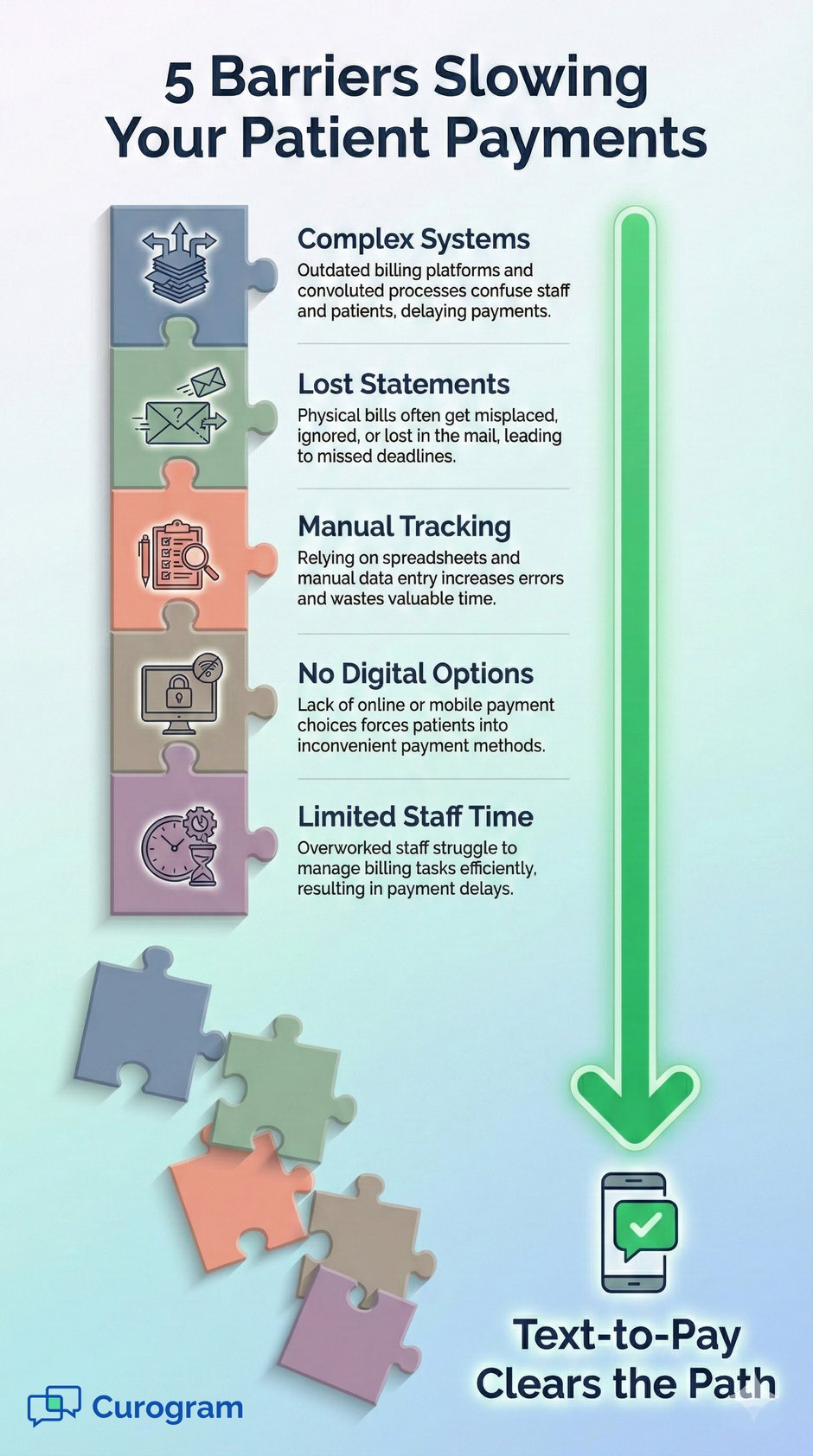
Patient payment delays rarely happen for just one reason. Multiple factors combine to slow down collections. Recognizing these barriers helps you understand why traditional billing fails and why modern solutions work better.
Paper billing creates friction at every step. Your team prints statements. They stuff envelopes. They pay for postage. The mail system adds several days of delay before patients even see the bill.
Patients then face another challenge: understanding the statement. Medical bills confuse most people. Insurance adjustments, copays, and service codes blur together. Many patients set aside these bills to figure out later. Later never comes.
Payment requires even more effort. Patients must find their checkbook or credit card. They need to address an envelope. They have to remember to mail it. Each step increases the chance they'll delay or forget.
Life gets busy. Medical bills arrive and disappear into piles of mail. Patients genuinely intend to pay but lose track of the statement. Weeks pass before they remember or receive a second notice.
Some patients move between when you provide service and when the bill arrives. The statement goes to their old address. By the time it forwards, more delays stack up. Your practice sees this as a late payment when the patient never received a timely notice.
Your team tracks payments manually or through basic software. They send the first statements. They wait weeks. They send second notices. They wait again. Each cycle adds 30 to 45 days to your collection time.
Follow-up calls take time to schedule and complete. Staff play phone tag with patients. Voicemails go unreturned. The back-and-forth drags on. Meanwhile, your A/R ages and becomes harder to collect.
Patients live on their phones. They pay for everything else digitally. But your practice still requires checks or in-person card payments. This disconnect frustrates modern patients.
Some clinics offer online portals. But patients must remember their login credentials. They need to navigate clunky interfaces. Many give up and default back to paper or simply delay payment. Mobile payments in healthcare should be as easy as paying for coffee.
Small practices run lean. Your team juggles patient care, scheduling, and administrative work. Billing tasks get squeezed into spare moments. This means delayed follow-up on unpaid accounts.
Even dedicated billing staff face limits. They can only make so many calls per day. They can only process so many payments. Manual systems create bottlenecks. Your collection rate suffers not from lack of effort but from lack of efficient tools.
These five barriers work together to trap your revenue in limbo. Complex systems confuse patients. Lost statements delay awareness. Manual processes slow your response. Limited digital options add friction. Staff constraints prevent timely follow-up. Each problem feeds the others. Breaking this cycle requires addressing all these factors at once. That's where patient billing automation through text-to-pay makes such a powerful difference.
Text-to-pay directly addresses each barrier that slows down patient payments. This digital billing solution transforms complex processes into simple, fast transactions. Let's see how it solves each problem we just discussed.
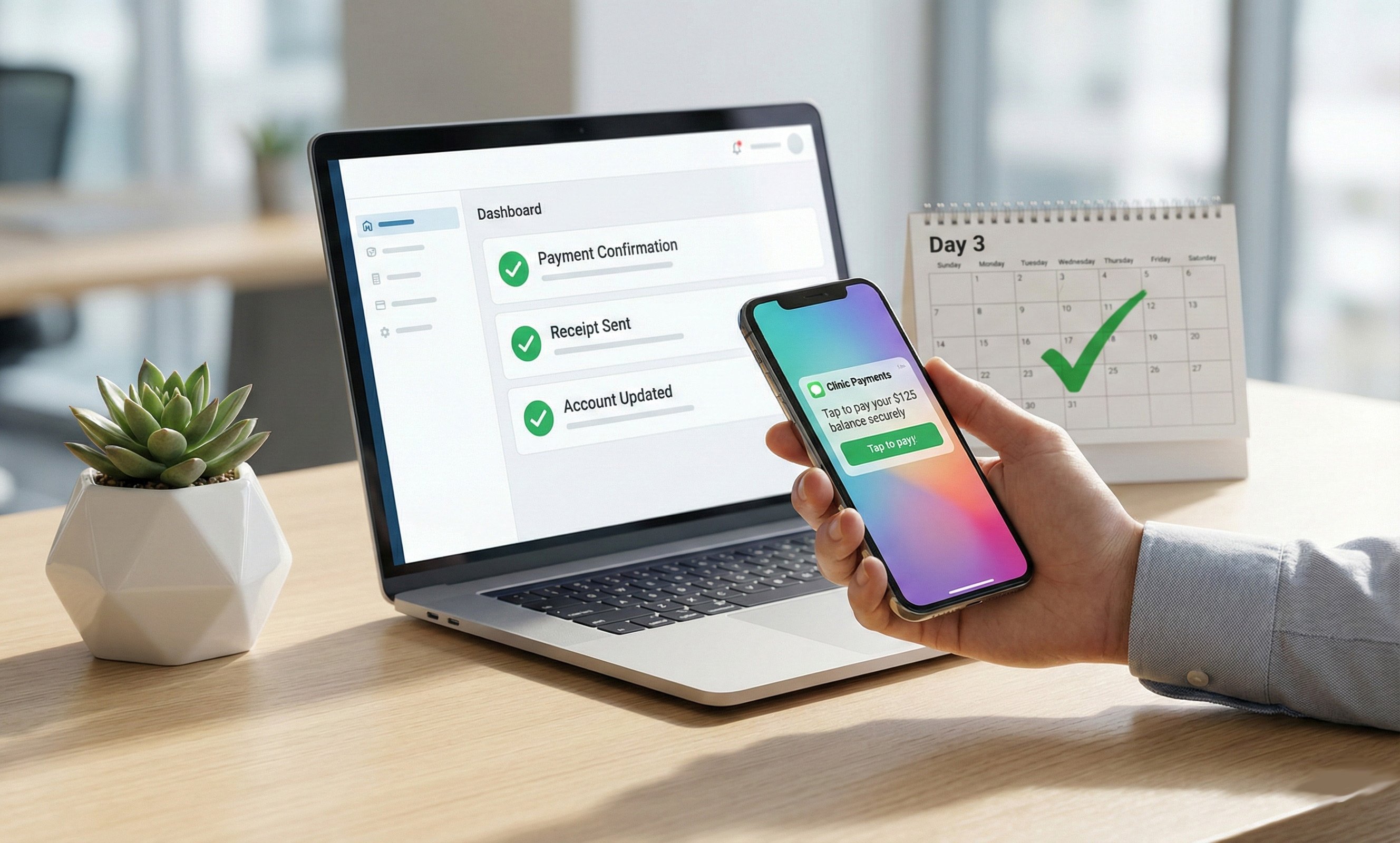
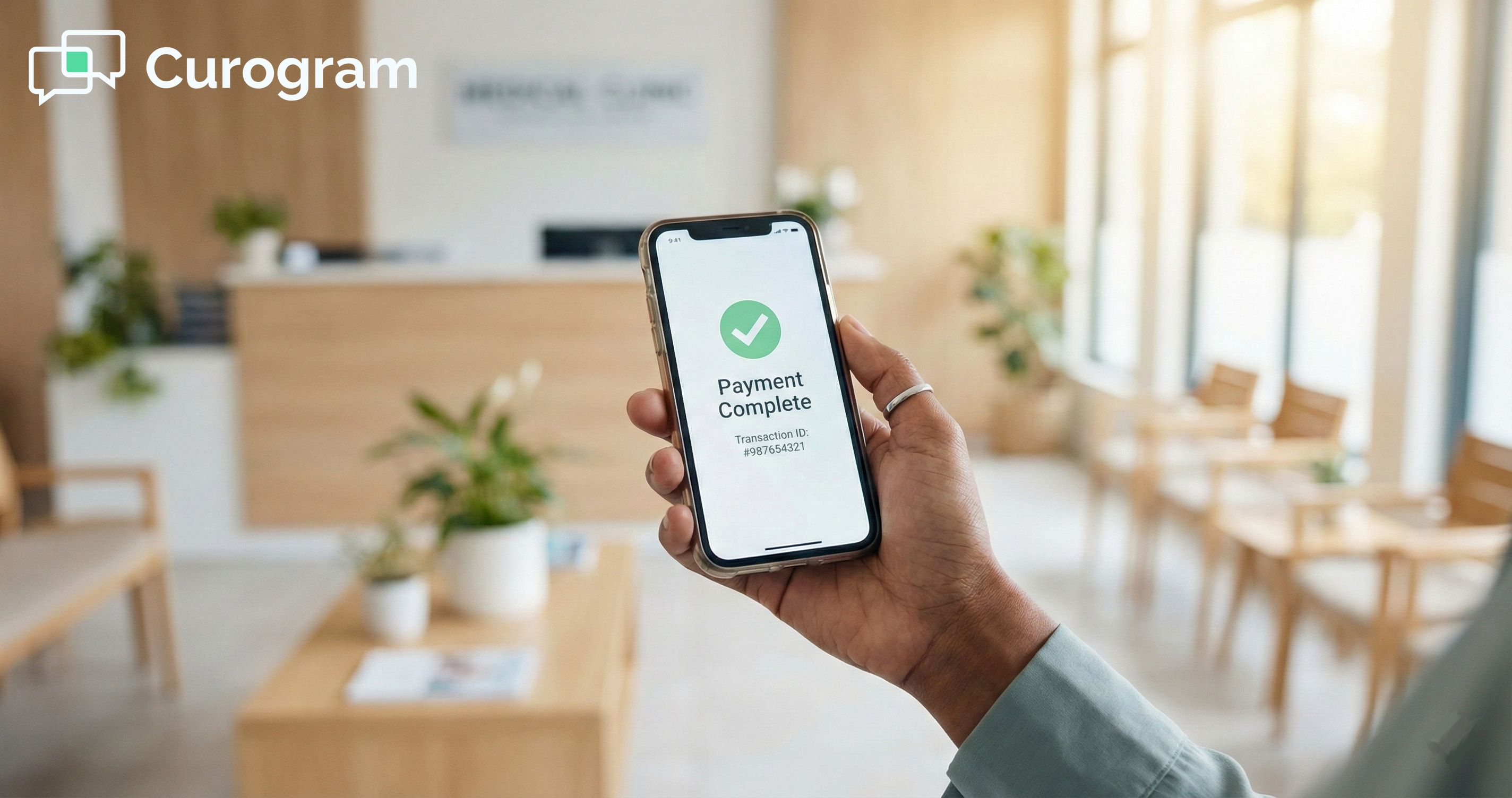
Text-to-pay sends a secure payment link straight to the patient's phone. No waiting for the mail. No printing or postage. The message arrives in seconds after service or when the bill is ready.
Patients tap the link and see their bill right away. The amount is clear. The service date shows up. They can pay immediately while the visit is fresh in their mind. This immediacy cuts collection time dramatically.
The speed works both ways. Your practice sends bills faster. Patients receive and act on them faster. What used to take weeks now happens in minutes. This acceleration improves cash flow right away.
The Mobile Advantage
People check their phones constantly. They respond to texts quickly. By meeting patients where they already spend time, text-to-pay removes the friction of separate portals or paper bills. Payment becomes as easy as replying to a message.
Modern text-to-pay platforms prioritize security. They encrypt all data. They meet HIPAA requirements. Patients can trust the process with their payment information.
The interface works perfectly on phones. Large buttons. Clear text. Simple steps. Patients don't need computer skills or portal passwords. They just tap, enter their payment method once, and confirm. The whole process takes under a minute.
This simplicity matters enormously. Complex payment systems frustrate patients and delay collections. Text-to-pay removes every obstacle between the patient and paying their bill.
Your staff no longer needs to manually track and chase payments. Text-to-pay systems send automatic reminders. A gentle message goes out if the bill remains unpaid after a set time. Another follows if needed.
These automated reminders work without human intervention. Your team saves hours each week. Patients appreciate the gentle nudge rather than phone calls. Many pay after the first reminder simply because it made payment so convenient.
Good text-to-pay solutions integrate with your existing EMR. Patient data flows automatically. Payments post without manual entry. Your team avoids duplicate work and data entry errors.
This integration means adoption takes days, not months. You don't replace your whole system. You simply add a better payment layer on top. Your workflow improves without disrupting current operations.
Healthcare data protection isn't optional. Quality text-to-pay platforms build HIPAA compliance into every feature. Your patient information stays secure. You avoid regulatory risks.
Cost used to be a barrier for small practices. Enterprise payment systems charged premium prices. Now, affordable text-to-pay options serve clinics of all sizes. You get the same powerful features without the enterprise price tag.
This affordability democratizes access to digital billing solutions. Every practice can now benefit from faster collections and reduced admin work. The return on investment shows up quickly in better cash flow and staff efficiency.

The benefits of text-to-pay go beyond theory. Real clinics see measurable improvements in both financial performance and patient satisfaction. These outcomes prove that solving patient payment challenges in healthcare directly impacts your bottom line and reputation.
Clinics using text-to-pay collect payments up to 40% faster than those relying on paper bills. This isn't a small improvement. It's a transformation of your cash flow cycle.
Think about what 40% faster means for your practice. If you typically wait 60 days for payment, text-to-pay cuts that to 36 days. That's 24 days of improved cash flow. That's nearly a month of revenue available sooner for payroll, supplies, and growth.
The speed comes from removing delays at every step. Instant delivery replaces mail time. Immediate payment replaces check writing. Automated reminders replace manual follow-up. Each improvement compounds into dramatic overall acceleration.
More patients pay on the first notice. They see the text right away. Payment takes seconds. They complete it before moving on with their day. This eliminates the need for second and third notices that waste time and money.
Your billing team spends less time on collections. Automated systems handle routine reminders. Digital payments post automatically. Staff focus on exceptions rather than every single transaction.
This efficiency shows up in multiple ways. Your team makes fewer collection calls. They print and mail fewer statements. They spend less time entering payment data. The hours saved add up to thousands of dollars in reduced labor costs annually.
Staff morale improves, too. Nobody enjoys chasing patients for money. When patient billing automation handles the routine work, your team can focus on more meaningful tasks. They help patients with real billing questions. They improve processes. They feel less frustrated and more valued.
Patients appreciate the convenience of mobile payments in healthcare. They pay on their schedule. They avoid forgotten bills and late fees. They never miss statements that get lost in the mail.
The clarity helps too. Text-to-pay systems present bills in simple, clear language. Patients understand what they owe and why. This transparency builds trust. It reduces the confusion that damages patient relationships.
Patient feedback consistently highlights the ease of text-to-pay. They describe it as "effortless," "quick," and "so much better than before." These comments reflect genuine appreciation for a system that respects their time and preferences.
Better cash flow, lower costs, and happier patients create a powerful growth cycle. You can invest in your practice. You can expand services. You can hire quality staff. Meanwhile, satisfied patients refer friends and family.
Your reputation improves in the community. Modern, convenient billing signals that your practice values patient experience. This perception attracts new patients who expect digital options in all aspects of their lives.
The numbers tell the story: faster collections, lower costs, plus higher satisfaction equals sustainable growth. Text-to-pay isn't just a billing tool. It's a growth strategy that transforms how your practice operates and competes.

Adopting text-to-pay is simpler than you think. Modern platforms are built for quick setup and easy scaling. Your practice can start seeing benefits within days, not months.
Quality text-to-pay solutions integrate with your current systems. The provider handles technical setup. Your team learns the basics in a short training session. You can send your first payment texts within a few days.
No need to overhaul your entire billing process. You add text-to-pay alongside existing methods. Patients who prefer paper can still use it. Those who want digital convenience get that option. You transition at your own pace.
Start small if you prefer. Use text-to-pay for certain types of visits. Test it with a subset of patients. See the results. Then expand to more billing scenarios as you gain confidence.
The system grows with you. Whether you see 50 patients per week or 500, the technology handles the volume. Pricing scales appropriately. You pay for what you use. No massive upfront investments required.
Your first week using text-to-pay will show faster payment rates. Your staff will report less time on follow-up calls. Your patients will comment on the convenience. These quick wins build momentum for full adoption.
Ready to transform your billing process? Discover why practices are switching to affordable, effective text-to-pay solutions that solve real problems and deliver real results. Book a free demo to see how fast your clinic can collect.
Text-to-pay sends secure payment links directly to patients' phones right after service. Patients receive bills instantly instead of waiting for the mail.
They can pay in seconds with a few taps. Automated reminders follow up if needed. This removes all the delays built into paper billing systems.
Most clinics save 10 to 15 hours per week on billing tasks. Automated reminders replace follow-up calls. Digital payments eliminate manual data entry.
Staff focus on exceptions instead of processing every transaction. These hours translate to thousands of dollars in annual labor savings.
New platforms offer flexible pricing that scales with practice size. You pay for actual usage rather than enterprise fees.
No massive upfront costs required. The fast return on investment through improved collections makes the solution cost-effective even for small clinics.
💡 Billing costs drain clinic budgets through paper, postage, and staff time, but affordable text-to-pay systems cut these costs by 90% while...
💡 Text-to-pay ROI checklist calculations help clinics decide if billing automation makes financial sense. The process reveals hidden costs in staff...
💡 Text-to-pay pricing healthcare makes payment automation affordable for clinics of all sizes. This technology cuts billing costs while speeding up...