Integration 101: Let Your EMR Connect to a HIPAA-Compliant Platform
💡Connecting your EMR system to a HIPAA-compliant platform is no longer optional. With a solution tailored to medical practices of all sizes,...
12 min read
Jo Galvez
:
January 17, 2026
Every month, your clinic loses hours chasing payments that should arrive faster. Staff make calls that go nowhere. Patients toss bills in the mail pile. Cash flow slows down right when you need it most.
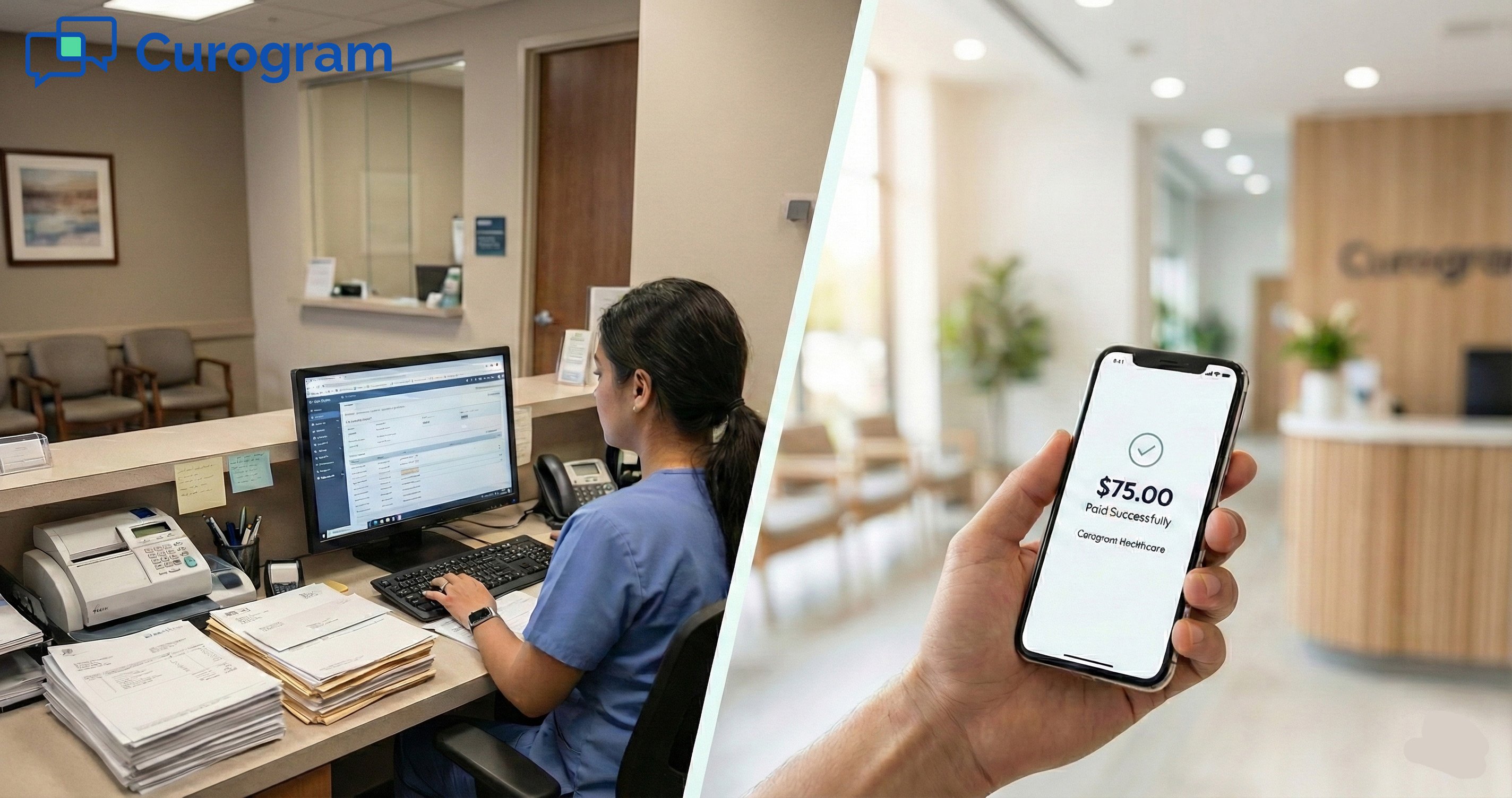
The old billing system fails everyone. The paper gets ignored or lost. Patient portals sit empty because nobody wants to log in. Phone calls bounce to voicemail. Your team wastes time on work that machines should handle.
Patients expect better now. They tap their phones to pay for everything else in life. Food delivery, streaming services, online shopping—it all happens in seconds. Why should medical bills be harder to pay than pizza?
There's a smarter path forward. HIPAA-compliant payment texting sends bills straight to patient phones. They tap once and pay. No app downloads. No password resets. No friction blocking the payment.
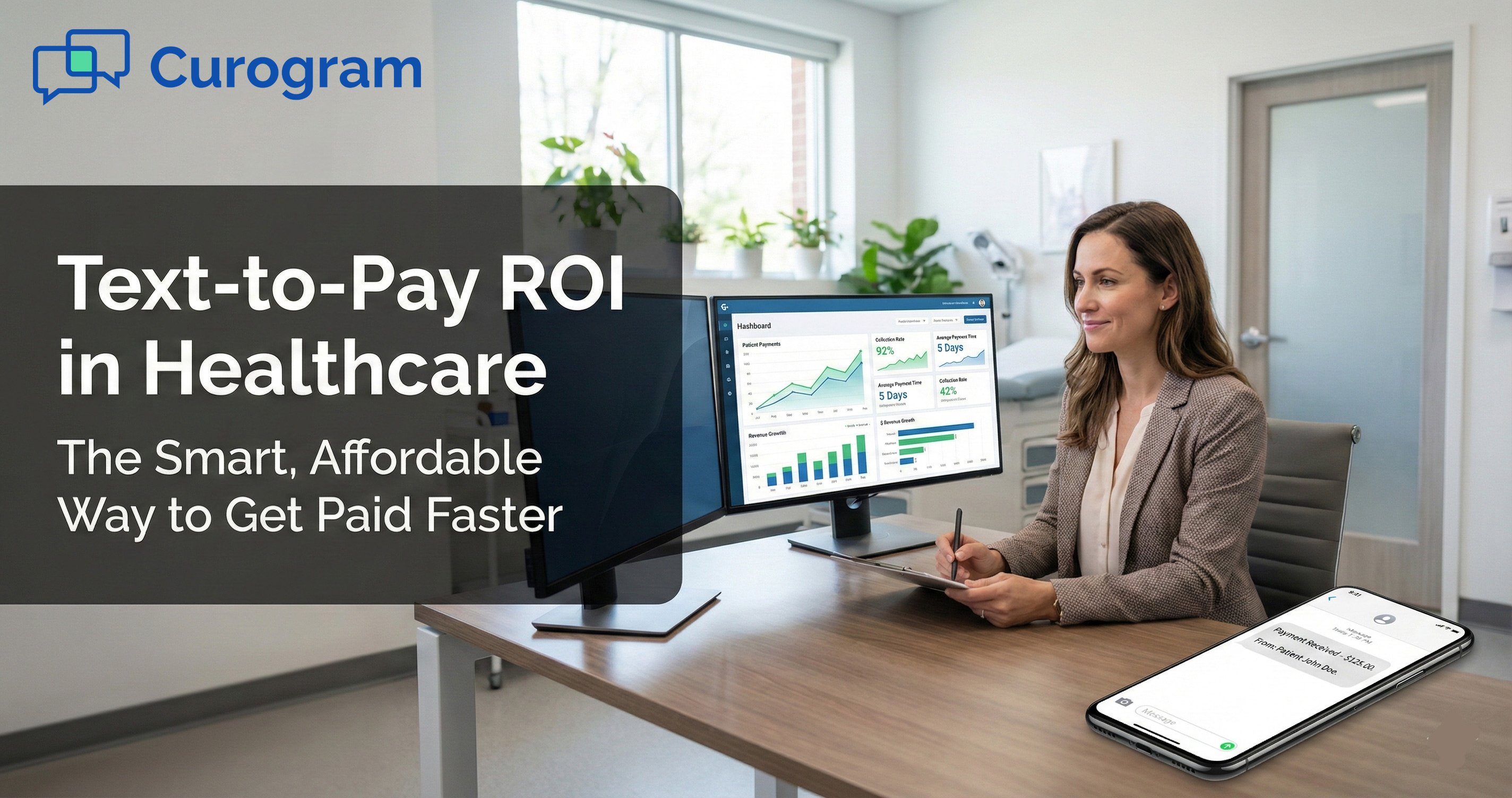
Text-to-pay ROI healthcare data proves this works. Clinics using these systems collect faster, spend less, and keep patients happier. The return shows up quickly in both numbers and daily operations.
This matters more than ever right now. Costs keep climbing while margins shrink. Staff shortages make every hour count. Patients demand modern service. Affordable text-to-pay solves all three problems at once.
Curogram built its platform just for healthcare practices. It combines HIPAA rules with a simple design that works for staff and patients. The system plugs into your current tools and starts working right away.
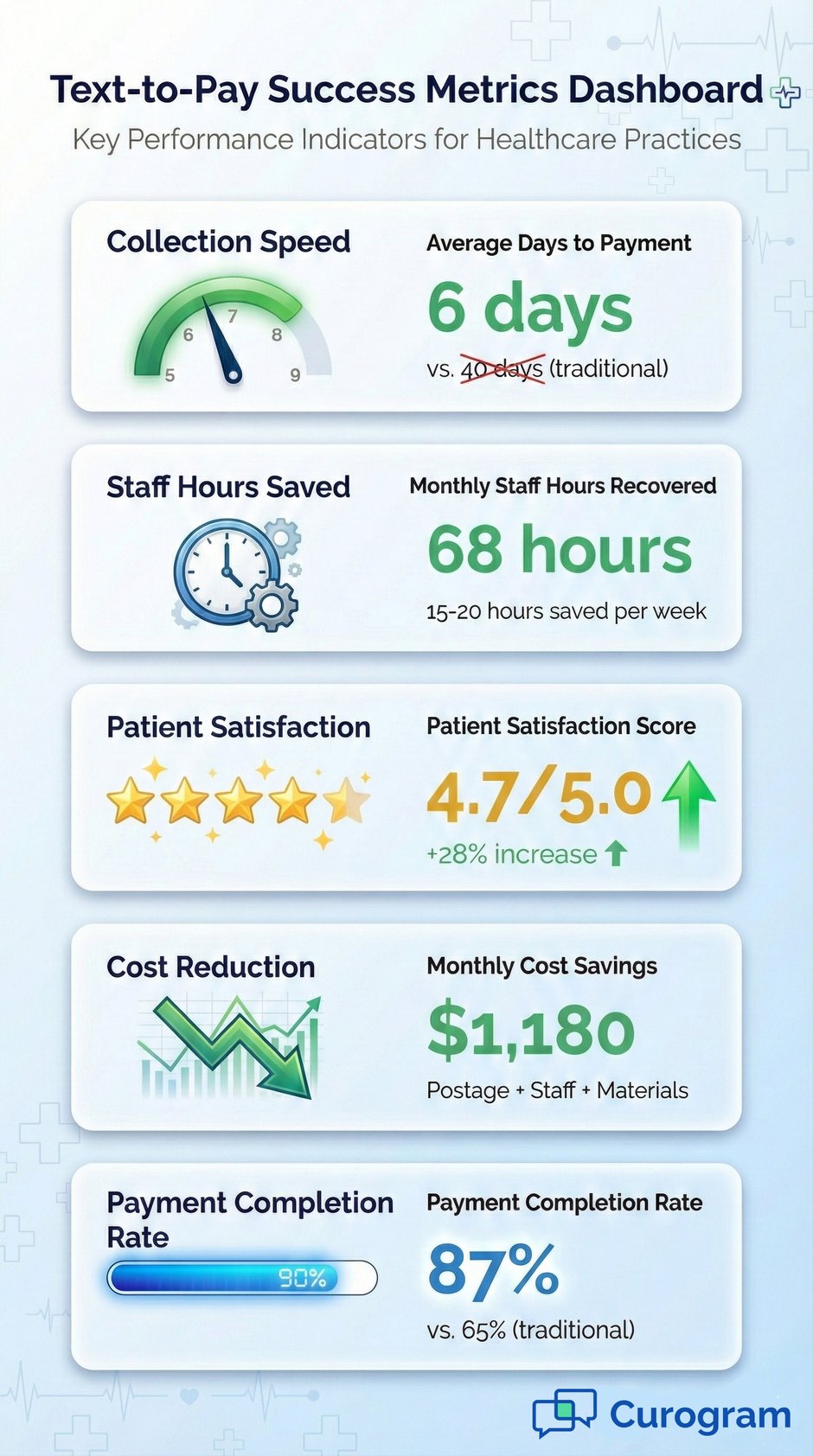
The proof comes from real clinics. Payments that took 45 days now arrive in 3. Billing teams get back 15 hours each week. Patient scores go up. Best of all, the system pays for itself in weeks through saved time and faster money.
Let's look at how affordable text-to-pay creates real ROI for any size healthcare clinic.
Old-style billing drains your resources in ways you might not fully count. The visible costs show up clearly—stamps, paper, envelopes. But hidden expenses cut much deeper into your bottom line.
Think about one paper statement's full journey. Staff print the bill, fold it, stuff an envelope, add postage, and mail it out. Then everyone waits. Industry data shows each statement costs about $7 just in admin work. That's before you add stamps or supplies.
Patients get these bills days or weeks later if they arrive at all. Many ignore the envelope completely. Some open it but set it aside to handle later. Others lose it in the mail stack. Your clinic then starts calling—more hours, more effort, more stress for everyone.
Money delays hurt your practice when you need cash flow most. You can't pay vendors on time or buy new equipment while waiting on old balances. Each slow payment creates problems that spread across your whole operation.
No-shows and missed visits cost even more. Patients who owe money often skip future appointments. Your schedule has gaps that waste time and lose revenue. The billing team chases debts that get older and harder to collect each month.
Staff burnout speeds up under this pressure. Your team signed up to help patients, not chase bills all day. They want to focus on care, not endless phone tag about past-due amounts. The stress shows in turnover rates and team morale.
Manual work also creates mistakes that cost time and money. Someone enters the wrong number. An envelope goes to an old address. A payment gets applied to the wrong account. Each error needs investigation and fixes that frustrate patients and delay money even more.
The highest hidden cost might be lost opportunity. Every hour spent on manual billing is an hour not spent on patient care or practice growth. Your team could be doing valuable work instead of repetitive tasks.
Medical payment automation ROI becomes obvious when you add up all these costs. The real question isn't if you can afford to upgrade. It's whether you can afford to keep losing money on outdated systems. Clinics stuck with old billing lose thousands monthly to problems that automated systems fix completely.
Text-to-pay makes healthcare payments simple through three easy steps. Understanding how it works shows why both clinics and patients prefer it over old methods.
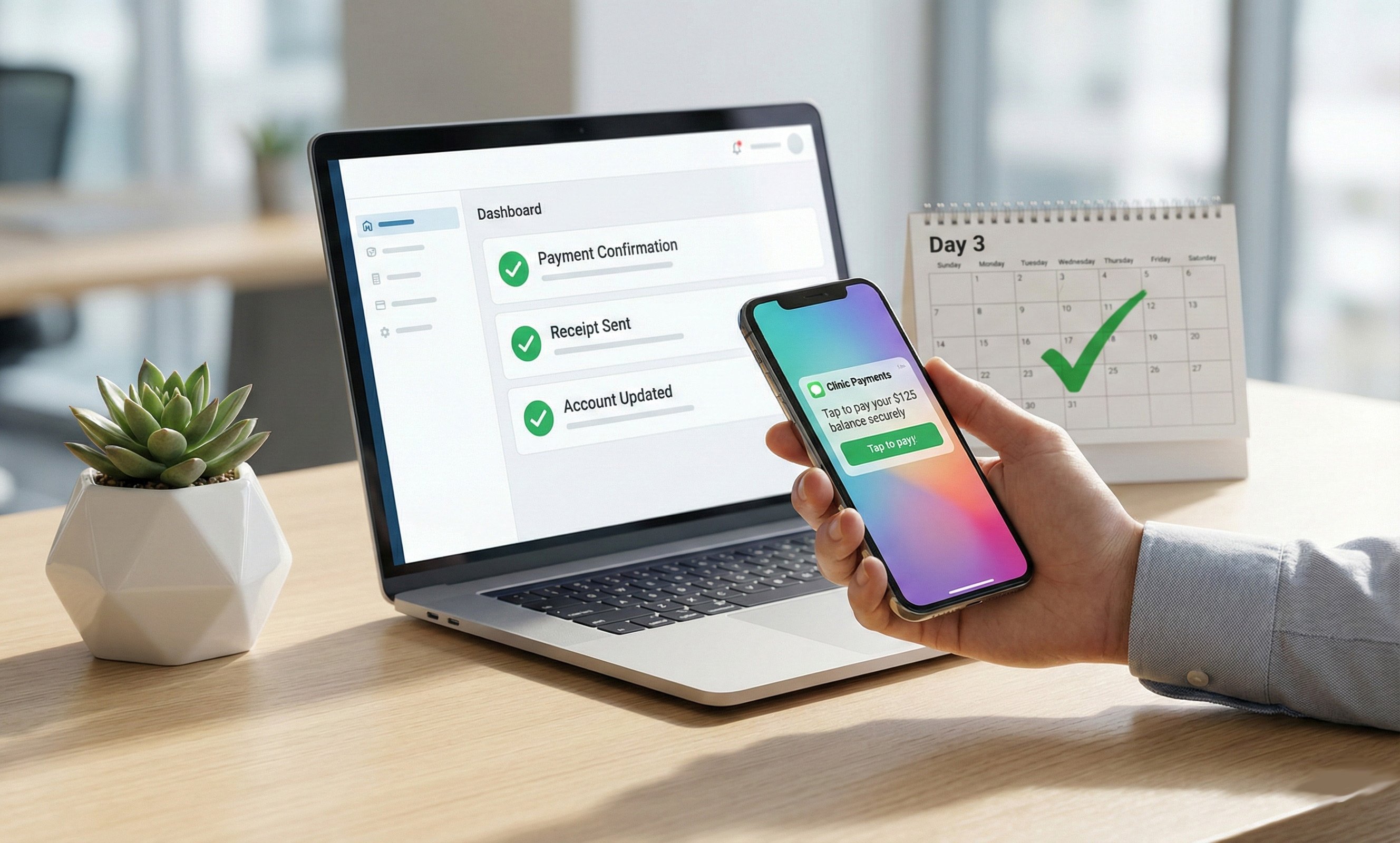
Patients get a text with a secure payment link inside. They tap the link, check their balance, and pay from their phone. The whole thing takes under a minute from start to finish.
Nobody downloads anything or makes new accounts. The payment link opens in any phone browser. This removes the main barrier that stops people from using portals. Because, honestly, who wants another app to track?
Your staff sends payment texts from Curogram's system. It connects with your practice software and EMR. You can send one request or batch texts to many patients at once.
Set up automatic texts that send after visits or when balances hit certain amounts. Your system handles this without staff touching it. Billing time drops fast when the process runs itself.
Here's the full flow in action. Send the payment text to the patient. Patient taps the secure link in the message. Payment goes through and posts to your system right away.
Old billing takes weeks from statement to payment arrival. Text-to-pay cuts this to days or even hours. Many patients pay the same day they get the text. This speed transforms your cash flow starting immediately.
Every text and payment meets HIPAA rules and SOC 2 Type 1 standards. Patient data stays encrypted throughout the whole process. Your clinic keeps full compliance without extra work or risk.
The system accepts credit cards, debit cards, and bank transfers. Patients pick their favorite payment method. Some platforms even let you manage payment plans through text. This flexibility makes patients more likely to complete payment.
Healthcare billing automation through text-to-pay removes friction at every stage. Patients get the convenience they expect. Clinics get money faster. Everyone saves time and avoids stress.

Calculating text-to-pay ROI healthcare returns means looking at three key parts: money gained, costs saved, and what you invested. The math stays simple, and the results stay positive.
The basic ROI math works like this. Take your gains plus savings, subtract your investment, divide by investment, then multiply by 100. This gives you a percentage showing your return.
Clinics using text-to-pay see 40% faster collections than old methods. A practice collecting $50,000 monthly in patient balances now gets that money in 18 days instead of 30. Better cash flow alone justifies the cost.
Start with stamps you don't buy anymore. A clinic mailing 500 statements monthly at $0.73 each saves $365 on postage. Add printing costs, paper, envelopes, and stuffing time—monthly savings hit $800-1,200 for most practices.
Manual billing eats 15-20 staff hours weekly in typical clinics. Follow-up calls, statement prep, and payment entry all need human hands under old systems.
If your billing worker earns $20 hourly and spends 15 hours weekly on manual tasks, that's $300 in labor just for billing. Automated text payment systems cut this by 60% or more. Staff use those hours for patient care or revenue work instead.
Think about getting money sooner rather than later. Cash in 3 days versus 30 days means you have funds available for expenses, investments, or emergencies.
Getting paid faster means less money tied up in receivables. You can cover costs without dipping into reserves. Better cash flow creates options when unexpected expenses hit.
Manual billing averages 35-45 days to collect. Text-to-pay drops this to 5-8 days. That 30+ day difference gives you working capital that old systems locked up.
Text-to-pay cuts the number of balances aging past 90 days. Old debts get harder to collect and often need write-offs or collection agencies. Stopping them from aging saves thousands each year.
Most clinics see rates improve 15-25% after adding patient payment efficiency tools. If you collected 70% of balances before, text-to-pay might push that to 85%. On $600,000 in annual patient revenue, that's $90,000 more collected.
Let's use a small practice example. Annual cost: $3,600. Time savings: $15,600. Postage and materials: $4,800. Better collections: $30,000. Total benefit: $50,400.
ROI formula: ($50,400 - $3,600) ÷ $3,600 × 100 = 1,300% annual return. Even with half those gains, ROI still tops 600%.
Most clinics hit breakeven in 60 to 90 days after starting. After that point, every dollar saved or collected faster improves your profit. This quick payback makes text-to-pay one of the best returns available to healthcare practices.
These results repeat across practices of different sizes. Small solo practices and large multi-location clinics both see similar percentage improvements. The technology works regardless of patient volume.
The math proves itself month after month. Digital billing ROI shows up in faster payments, lower costs, and staff who can focus on what matters most.
Text-to-pay ROI healthcare gains go past dollars and cents. The human impact on your staff and patients creates value that spreadsheets can't fully capture.
Billing workers and front desk staff face constant pressure under old systems. They juggle phone calls, enter payments by hand, track missing info, and handle frustrated patients. This load leads to mistakes and burnout.
Staff turnover costs thousands in hiring and training. When you cut billing stress through automation, your team stays happier and works longer. They focus on meaningful tasks instead of repetitive work. Happy employees create better patient experiences naturally.
People want healthcare to match their other daily experiences. They order food with apps, bank from phones, and shop online without thinking. Medical bills should be just as easy.
Text-to-pay meets patients on their phones, where they already spend time. No special trips to mail checks. No forgotten portal passwords. No calls during work hours. Just a quick tap whenever it fits their schedule.
Patients worry about financial data safety more each year. Knowing that payments go through HIPAA-compliant payment texting builds confidence. They trust their info stays safe throughout the whole transaction.
Text-to-pay systems show exactly what patients owe and why. Simple itemization stops the confusion that paper statements often create. When patients understand bills, they pay them faster.
Offering modern payment options signals your clinic stays current with technology. This professional image attracts patients who value convenience and quality. It shows you're forward-thinking, not stuck in the past.
Patients notice when clinics make their lives easier. They tell friends and family about good experiences. This word-of-mouth marketing costs nothing but creates a steady new patient flow.
One practice shared its results after switching to billing automation for clinics. "Our payments went from 45 days to 3 days on average. But the bigger win was our front desk staff smiling again."
Patient satisfaction scores usually jump 20-30% after adding text-to-pay. Staff satisfaction follows the same pattern. These gains show up in reviews, referrals, and patients who stay with your practice.
Better benefits create a cycle that feeds itself. Happy staff give better service. Better service makes patients happier. Happy patients pay faster and refer others. This positive loop keeps going once you escape old billing traps.
The human side of text-to-pay matters as much as the financial side. Both work together to transform how your practice operates daily.
Not all text-to-pay platforms work well for healthcare. Generic payment systems lack features that medical practices actually need. Understanding what makes a solution healthcare-focused helps you choose wisely.
Healthcare billing automation requires specialized tools built for medical workflows. Curogram designed every feature with clinics in mind, not as an add-on to business software.
Curogram created its platform only for medical practices from the start. Every feature considers healthcare workflows, compliance needs, and patient communication standards. This medical-first approach shows in the details.
HIPAA compliance isn't added later; it's in the foundation. All messages are encrypted automatically without the staff doing anything special. Patient data stays protected at every single step. The platform maintains SOC 2 Type 1 certification, proving security meets tough standards.
Curogram connects smoothly with popular EMR and practice management systems. You don't export data by hand or switch between platforms constantly. Patient info, appointment details, and billing amounts sync on their own.
Most practices go live within days of signing up. The system's easy design means staff learn quickly and see benefits right away. No long training periods or complex rollouts needed.
Large hospital systems can buy expensive enterprise software. Small and mid-size practices need solutions that deliver results without crushing budgets. Curogram's affordable text-to-pay works for solo doctors and multi-location clinics alike.
No hidden fees pop up later. No surprise charges for extra users or messages. Practices know exactly what they'll pay each month. This clarity helps with budgeting and makes ROI math simple.
Text-to-pay works best as part of broader patient communication. Curogram combines payment requests with appointment reminders, recall messages, and two-way patient messaging.
Automated reminders sent by text drop no-show rates by 30-40%. When patients confirm appointments through text, your schedule stays full and productive. Lost appointment slots cost practices thousands in lost revenue annually.
They tap to confirm, reschedule, or cancel right from the reminder text. Your staff sees these responses instantly and can adjust schedules accordingly. This automation stops phone tag and keeps everyone informed.
Patients can text questions or concerns straight to your clinic. Staff respond when convenient, creating a communication record that connects to patient charts. This ongoing dialogue builds stronger patient-provider bonds.
All messages follow HIPAA rules while feeling like normal texting. Patients get the convenience they want without giving up privacy. Staff have access to one central inbox that keeps all patient talks organized.
When patients can text simple questions, they call less often. Your phone lines stay open for urgent matters and new patient calls. Staff handle more communication in less time through messages they answer between tasks.
Track payment patterns, collection rates, and system usage through Curogram's dashboard. See which messages get the best response rates. Spot trends in payment timing that help you improve.
Staff turnover costs thousands in hiring and training. When you cut billing stress through automation, your team stays happier and works longer. They focus on meaningful tasks instead of repetitive work. Happy employees
Some patients need payment arrangements for larger balances. Curogram's platform handles payment plans through automated text reminders and simple installment processing.
Set up a payment schedule once, and the system handles reminders automatically. Patients get texts when installments are due and pay with one tap. This automation ensures plan compliance without constant staff monitoring.
Access help through chat, email, or phone whenever you need it. Curogram's support team understands healthcare workflows and fixes issues quickly. This responsive support keeps your text-to-pay system running smoothly.
The mix of healthcare focus, affordable pricing, and full features makes Curogram stand out in a crowded market.

Text-to-pay ROI healthcare gains go past dollars and cents. The human impact on your staff and patients creates value that spreadsheets can't fully capture.
Billing workers and front desk staff face constant pressure under old systems. They juggle phone calls, enter payments by hand, track missing info, and handle frustrated patients. This load leads to mistakes and burnout.
Staff turnover costs thousands in hiring and training. When you cut billing stress through automation, your team stays happier and works longer. They focus on meaningful tasks instead of repetitive work. Happy employees
The case for text-to-pay ROI healthcare solutions is clear. Payments arrive in days instead of weeks. Lower costs free up budget for patient care. Staff focus on meaningful work instead of chasing bills all day.
Old billing methods can't keep up with modern expectations anymore. Patients want convenience at their fingertips. Your practice needs efficiency that saves time and money. Text-to-pay delivers both while keeping the security and compliance that healthcare demands.
The numbers tell the same story every time. Practices see 40% faster collections, 60% lower admin costs, and big jumps in staff satisfaction. These gains stack up month after month, creating returns that far exceed what you invested.
ROI goes beyond just money, though. Think about the billing worker who stops dreading collection calls. Consider the patient who pays right away instead of letting the balance sit. Picture the practice manager who finally has accurate cash flow forecasts.
These human benefits count as much as financial metrics do. They create a better workplace and stronger patient bonds. This positive cycle builds on itself as your practice becomes known for modern, patient-friendly service.
Getting started is easier than you think. Curogram's platform needs minimal setup and works with systems you already use. Your team learns the basics in minutes. Patients need zero training—they just tap and pay.
The question isn't whether text-to-pay will help your finances. Data from thousands of clinics proves it will. The real question is how much longer you'll wait while competitors move ahead with better systems.
Ready to see how fast your clinic can get paid? Book a free demo of Curogram's affordable text-to-pay platform today. See exactly how much time and money your practice will save with your own data.
Ready to see how fast your clinic can get paid? Book a free demo of Curogram’s affordable Text-to-Pay.
Most practices break even in 60-90 days through time saved and faster money. The instant cut in postage and staff hours creates clear savings from month one. Better cash flow from quicker payments adds to these benefits fast. Practices typically see 600-1,300% annual ROI once fully running.
💡Connecting your EMR system to a HIPAA-compliant platform is no longer optional. With a solution tailored to medical practices of all sizes,...
💡When patient information lives in silos, providers make decisions without the full picture. Unified data enables faster diagnoses, safer care, and...
The first step in learning how to get patients to pay is understanding that it’s one of the most critical challenges facing healthcare practices...