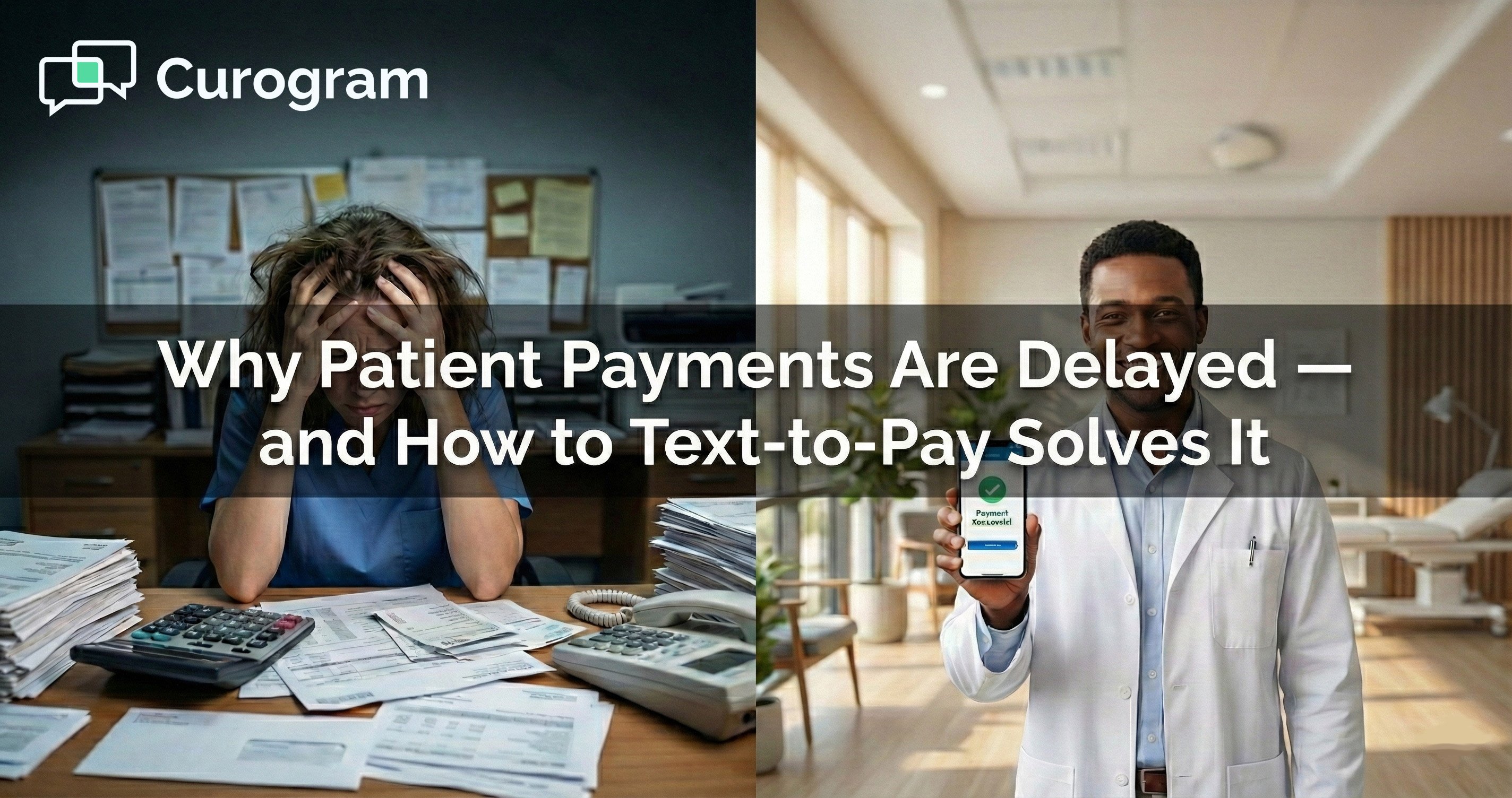
Healthcare Text-to-Pay ROI: Smart, Affordable Way to Get Paid Faster
💡 Text-to-pay ROI healthcare systems help clinics get paid faster while cutting costs. The results are clear and quick. Clinics see payments arrive...
9 min read
Mira Gwehn Revilla
:
January 17, 2026
What if your clinic could reduce billing costs by 90% without adding more software headaches?
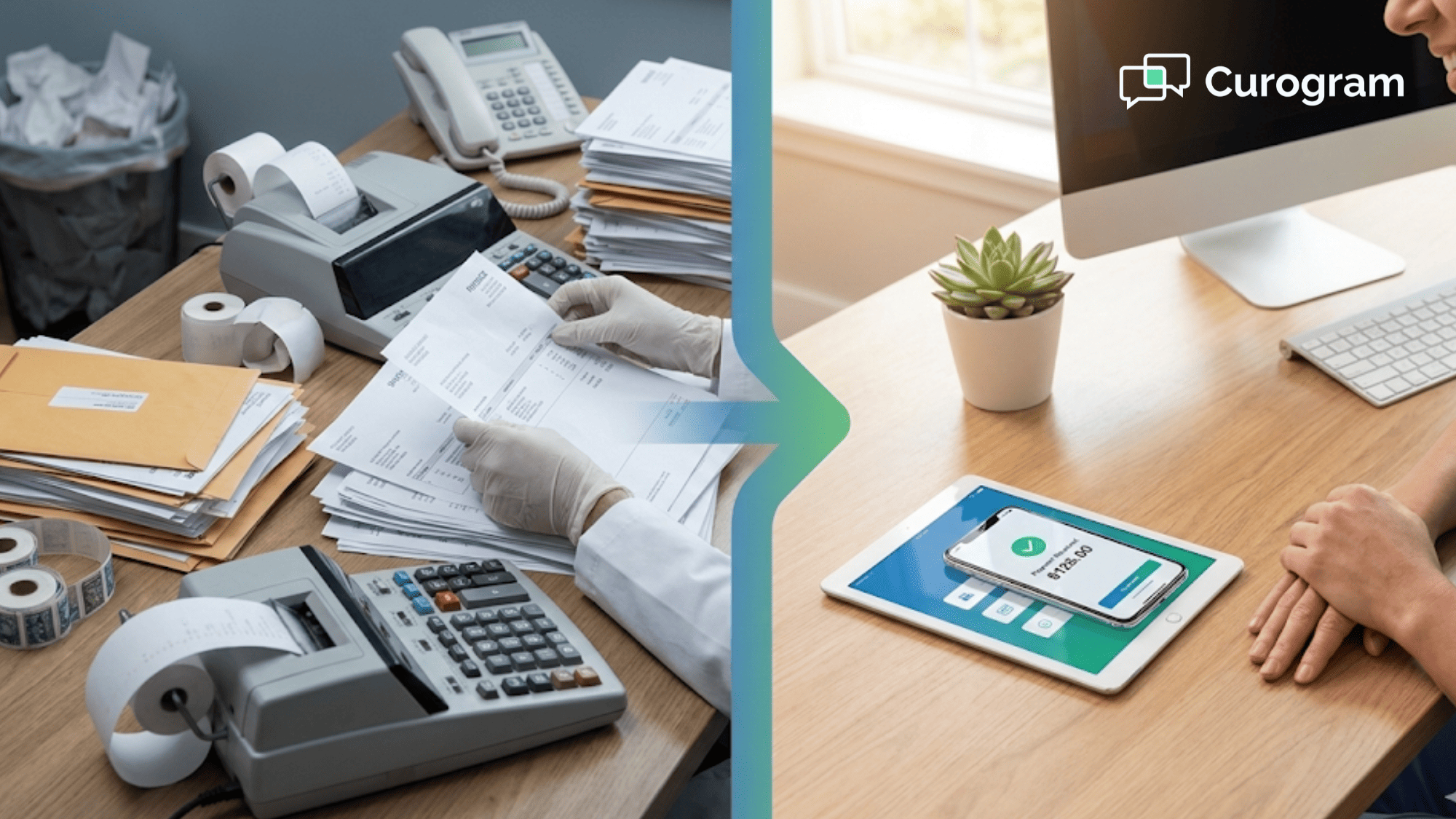
Many medical practices lose thousands of dollars each month on outdated billing methods. Paper statements, postage stamps, and endless follow-up calls add up fast.
The average clinic spends $5 to $7 per paper statement. This includes printing costs, envelopes, postage, and staff time.
If you send 200 statements monthly, that's $1,200 to $1,400 gone before you collect a single payment. Multiply that over a year, and you're looking at nearly $17,000 in billing overhead alone.
Manual billing creates other problems too. Staff spend hours printing invoices, stuffing envelopes, and making phone calls to chase payments. These tasks pull your team away from patient care. Meanwhile, payments trickle in slowly, creating cash flow gaps that strain your operations.
There's a better way. Curogram's Text-to-Pay offers an affordable, HIPAA-compliant solution that modernizes how clinics collect payments.
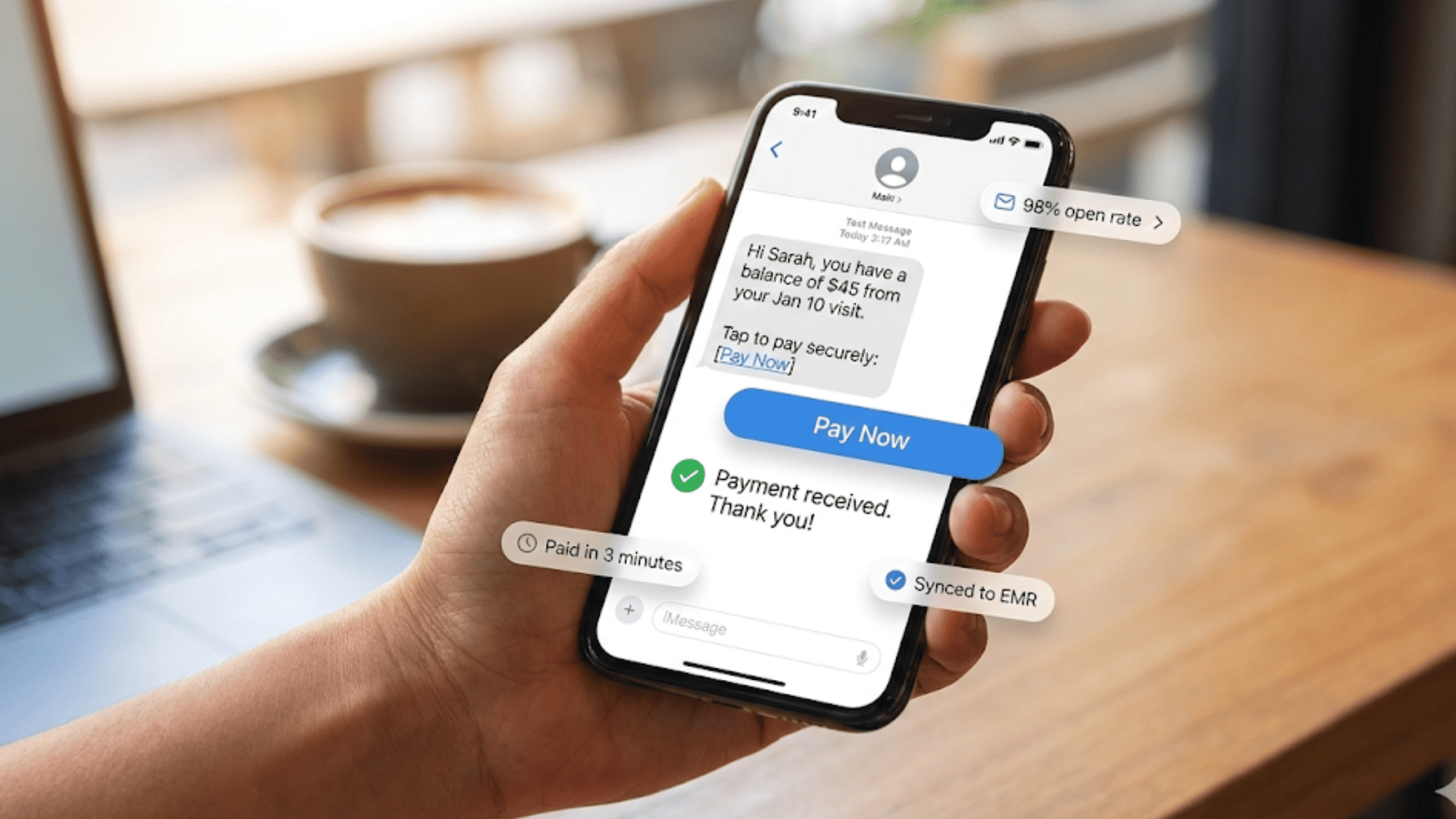
Instead of mailing paper bills, you send secure payment links via text message. Patients can pay instantly from their phones. No apps to download, no complicated portals to navigate.
This shift is about real cost savings that impact your bottom line. Text messages cost pennies compared to paper statements.
Automation handles reminders and payment tracking without extra staff effort. Collections speed up dramatically because 98% of text messages get opened within minutes.
In this article, you'll discover five proven ways that affordable text-to-pay reduces billing costs for clinics. Each method comes with real-world examples and practical data.
Whether you run a small practice or manage multiple locations, these cost-cutting strategies can transform your billing process starting today.
Imagine a scenario without text-to-pay. Paper billing drains clinic budgets faster than most administrators realize. Every statement you mail involves multiple costs that stack up quickly. First, there's the paper itself, plus toner or ink for printing.
Additionally, you need envelopes, often with return envelopes included. Postage adds another layer of expense, especially as postal rates keep climbing.
|
💡 Let's break down the real numbers: A single paper statement typically costs between $5 and $7 when you factor in all materials and labor. This includes 50 cents for paper and printing, 60 cents for postage, and about $4 to $6 in staff time for processing. If your clinic sends 200 statements per month, you're spending $1,000 to $1,400 monthly just on paper billing. |
Text-to-pay eliminates these costs almost entirely. Sending a text message costs pennies per transaction. Even with payment processing fees included, the total cost per digital statement rarely exceeds 50 cents. The savings compound quickly across hundreds or thousands of patients.
Consider a mid-sized clinic sending 300 paper statements monthly. At $6 per statement, that's $1,800 in monthly billing costs or $21,600 annually. Switching to text-to-pay drops that cost to roughly $150 per month, saving $1,650 monthly or $19,800 yearly. That's real money you can reinvest in patient care or staff salaries.
Storage costs are also eliminated. Paper billing requires filing cabinets, document storage, and eventually secure shredding services.
Digital records take up zero physical space and remain searchable for years without degradation. Many clinics save an additional $500 to $800 annually just by reducing physical storage needs.
The environmental benefit is a bonus. Going paperless aligns with sustainability goals that matter to modern patients. When you cut printing, postage, and paper costs instantly, those savings flow directly to your bottom line every single month.
Manual billing workflows consume enormous amounts of staff time. Think about everything involved in traditional billing.
Someone must generate invoices from your system, print them, fold them, stuff envelopes, apply postage, and take them to the post office. Then, your team tracks who paid and who didn't. Finally, staff spend hours making follow-up calls to patients with overdue balances.
A typical billing coordinator spends 2 to 3 hours daily on these tasks. That's 10 to 15 hours weekly just managing paper billing logistics. If that employee earns $20 per hour, you're spending $200 to $300 weekly on billing labor alone. Over a year, that's $10,400 to $15,600 in payroll costs for tasks that automation handles instantly.
Text-to-pay automates the entire workflow. The system sends payment requests automatically after appointments or on scheduled billing dates.
Reminders go out at preset intervals without any staff involvement. When patients pay, the system records transactions immediately and syncs with your EMR. Your team receives notifications of completed payments, eliminating the need for manual tracking.
One small practice shared their experience. "We freed up 10 hours weekly by automating billing reminders," their office manager reported.
Those 10 hours now go toward patient scheduling, care coordination, and other high-value activities. The practice didn't need to hire additional staff as their patient volume grew because billing automation absorbed the extra workload.
The impact goes beyond pure time savings. Staff morale improves when they're not stuck doing tedious, repetitive tasks. Your team chose healthcare to help people, not to chase payments.
Automation lets them focus on meaningful work. Patients notice the difference too. Instead of getting annoying collection calls, they receive polite text reminders they can act on immediately. This creates a better experience for everyone involved while cutting your labor costs significantly.

Slow payments create serious cash flow problems for medical clinics. Traditional paper billing means patients receive statements days after their appointments.
Many bills get buried in mail piles at home. Patients intend to pay but forget or postpone. The average payment cycle for paper statements stretches to 30 days or longer.
Text-to-pay changes this timeline dramatically. Patients receive payment requests via text within hours of their visit. The message arrives directly on their phone, where they're already checking dozens of times daily.
Text messages have a 98% open rate compared to just 20% for emails. This means nearly every patient sees your payment request right away.
Convenience drives faster action. When patients can pay instantly by clicking a link, they do. There's no need to find checks, stamps, or envelopes. Just a few taps on their phone screen, and the payment is done. This friction-free process shortens collection time from 30+ days to as little as 3 days on average.
Faster collections mean healthier cash flow. When payments arrive within days instead of weeks, you can cover payroll, rent, supplies, and other expenses without delay. You're not floating costs while waiting for revenue to catch up. This stability helps practices avoid credit lines or emergency funding that comes with interest charges.
Outstanding balances drop significantly with automated reminders. Patients who miss the first text reminder receive follow-ups at scheduled intervals. These gentle nudges keep payments top of mind without requiring staff phone calls. Money that was stuck in aging balances finally flows into your bank account where it belongs.
Manual payment entry creates opportunities for costly mistakes. When staff hand-enter payment information, they might transpose numbers, assign payments to wrong accounts, or miss entries entirely.
These errors cause headaches during reconciliation. Balances don't match between your payment records and bank deposits. Finding and fixing these mistakes wastes hours of staff time each month.
Paper-based systems make tracking even harder. Physical checks can get lost, misplaced, or deposited to wrong accounts. Paper receipts fade or get damaged.
When questions arise weeks later about whether a patient paid, tracking down proof becomes a time-consuming investigation. These reconciliation delays frustrate both staff and patients.
Text-to-pay with EMR integration solves these accuracy problems. When patients pay through the text link, the transaction data flows directly into your practice management system.
There's no manual entry required. The payment amount, date, patient account, and confirmation code all sync automatically. This eliminates human error from the equation.
Every transaction creates a complete digital audit trail. You can see exactly when the payment request was sent, when the patient opened it, and when they completed payment.
All confirmation numbers and receipts are stored digitally and linked to the correct patient account. If questions arise, you have instant access to complete documentation.
Insurance reconciliation also becomes simpler. When your system tracks exactly what patients owe after insurance adjustments, text-to-pay requests reflect accurate balances.
Patients aren't confused by mismatched amounts. They pay the correct balance, and the transaction records automatically. Your month-end reconciliation that once took days now takes hours. The time saved and reduced error rate protect your clinic from compliance risks while making your billing department far more efficient.

Many clinics avoid billing automation because they assume it's expensive or complicated. They picture costly software licenses, expensive hardware, and weeks of IT setup.
This misconception keeps practices stuck with manual processes that drain budgets. The reality is that modern text-to-pay solutions are designed specifically for small and mid-sized clinics with limited budgets.
Curogram's Text-to-Pay requires no special hardware or complex infrastructure. The system works through your existing internet connection and integrates with most major EMR platforms.
Setup typically takes a few hours, not weeks. Your staff can start sending payment requests the same day without extensive training. The interface is simple enough that anyone comfortable with texting can use it effectively.
Pricing scales with your practice size and needs. You're not locked into flat fees that waste money if you're a small clinic. Instead, you pay based on usage.
A solo practitioner might spend $30 to $50 monthly, while a larger practice with multiple providers pays proportionally more. Either way, the costs remain far below what you'd spend on paper billing and manual labor.
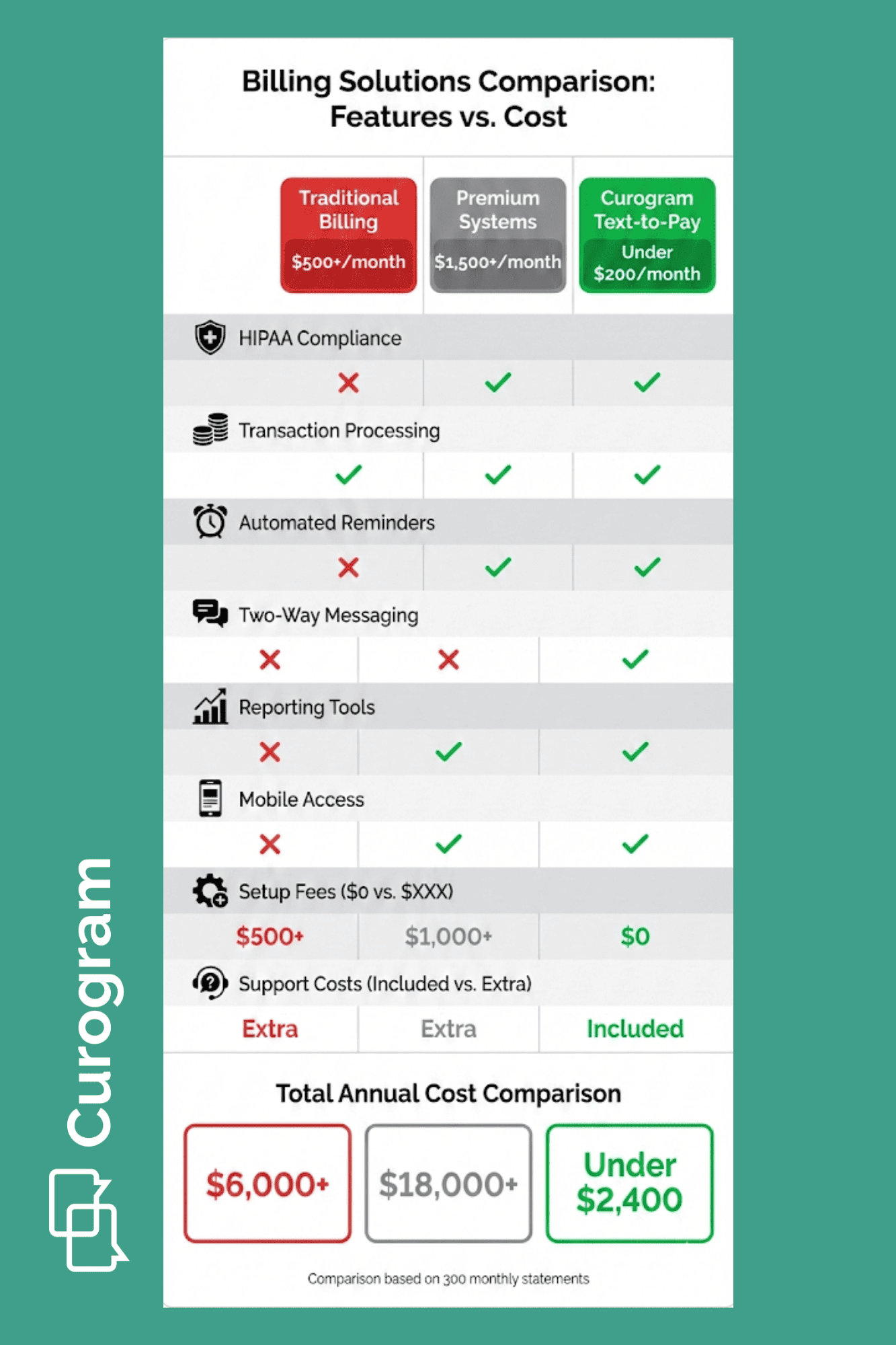
Consider this comparison:
A three-provider clinic spending $1,200 monthly on paper billing switches to text-to-pay for $150 monthly. That's $1,050 in monthly savings or $12,600 annually. The system pays for itself in the first month and continues delivering savings every month after.
The system grows with your practice. Adding new providers or locations doesn't require new software purchases or hardware installations. You simply adjust your plan to match your volume.
This flexibility matters for practices planning to expand. You're not investing in systems you'll outgrow or paying for capacity you don't use yet.
Billing cost reduction delivers benefits that financial reports don't always show. The real-world impact touches your entire practice in surprising ways.
Paper billing creates constant small frustrations. Staff run out of envelopes mid-cycle. Printers jam during busy periods. Postage rate increases arrive without warning. These daily hassles add stress and interrupt workflow.
Text-to-pay removes these friction points completely. Your team never worries about supply orders or equipment failures. Billing happens smoothly in the background while staff focus on patients.
Patient satisfaction improves too. Nobody enjoys receiving paper bills or collection calls. Modern payment options show patients you respect their time and preferences, strengthening loyalty to your practice.
Reducing billing costs doesn't require major investments or complex overhauls. The five strategies outlined here show how affordable text-to-pay creates immediate, measurable savings.
You eliminate thousands in printing and postage expenses. Your staff reclaims 10 to 15 hours weekly for patient-focused work instead of paperwork. Collections speed up from 30+ days to just 3 days, strengthening your cash flow.
Error reduction saves both time and compliance headaches. When payments sync automatically with your EMR, reconciliation becomes straightforward. You're not hunting for missing checks or fixing data entry mistakes. Everything tracks digitally with complete audit trails.
The technology overhead stays minimal. Curogram's Text-to-Pay works without special hardware or complicated setup. You're up and running within hours, not weeks.
The system scales perfectly whether you're a solo provider or managing multiple locations. You pay only for what you need and adjust as you grow.
Most importantly, the savings are real and recurring. Faster collections reduce your accounts receivable and improve financial stability. These benefits compound month after month, year after year.
HIPAA compliance comes built-in, so you're never choosing between cost savings and patient privacy. The secure platform protects sensitive health information while making payments effortless for patients. They appreciate the convenience, and you appreciate the efficiency.
Your clinic deserves billing processes that support your mission instead of draining resources. Text-to-pay automation isn't just affordable.
It actively pays for itself through eliminated overhead, saved labor, and faster revenue collection. The question isn't whether you can afford to automate. It's whether you can afford not to.
Ready to cut your billing costs? Book your demo today and see how Curogram's Text-to-Pay can save your clinic time and money.
The system syncs payments directly with your EMR, eliminating manual data entry where errors occur. Each transaction includes complete digital records with timestamps, amounts, and confirmation codes. This automatic tracking prevents mismatched accounts, lost payments, and reconciliation problems that waste staff time.
You're not buying expensive licenses or hardware. Text-to-pay uses your existing internet and devices. Pricing scales with usage, so small clinics pay small amounts. You avoid the fixed costs of paper supplies, postage, and storage. The system typically costs 80-90% less than manual billing processes.
Faster collections mean revenue arrives within 3 days instead of 30+ days. This shortened payment cycle reduces the gap between providing services and receiving payment. You're not floating costs while waiting for checks to arrive. Outstanding balances drop significantly, converting aging receivables into usable cash.
💡 Text-to-pay ROI healthcare systems help clinics get paid faster while cutting costs. The results are clear and quick. Clinics see payments arrive...
💡Covina Arthritic Clinic boosted revenue by streamlining appointment confirmations with Curogram’s integrated system. By automating reminders and...
💡EMR integration reduces no-shows by making reminders automatic, accurate, and actionable. Disconnected systems leave gaps in communication,...