
From Reminders to Payments: A Fully Connected Patient Journey
💡 A connected patient journey healthcare system brings all patient touchpoints into one platform.Curogram unifies reminders, online forms,...
15 min read
Jo Galvez
:
February 7, 2026
Your practice just delivered great care. The patient smiled, said thank you, and walked out the door. And that was the last you heard from them.
No review. No rating. No online proof that the visit ever happened.
This scene plays out hundreds of times each week at clinics across the country. Happy patients leave without sharing their stories. Meanwhile, the rare unhappy patient rushes to post a one-star rant. The math works against you.
Medical practice reputation management has become the make-or-break factor for growth. Patients now search online before they ever pick up the phone. They scroll through Google reviews for doctors the same way they check ratings before booking a hotel. If your practice lacks fresh, positive reviews, you vanish from local search results.
Many practices assume they need AI chatbots or fancy software to compete. The truth is simpler. What you need is a smart system that asks for feedback at the right moment and makes it easy for patients to respond.
Automated patient surveys solve this problem by reaching out right after visits. The experience is still fresh. The patient still feels grateful. A quick text message arrives asking about their care. Happy patients click through to leave a review. Those with concerns get routed to your team first, giving you a chance to fix issues before they go public.
This approach creates a steady flow of 5-star ratings. It builds trust with new patients who find you online. It takes work off your staff's plate. And it does all of this without adding more tasks to anyone's day.
In this guide, you will learn how to use healthcare reputation automation to increase medical practice visibility, attract more patients, and grow your revenue.
Your online presence tells a story whether you write it or not. When that story stays stale, your practice pays the price. A static profile with old reviews sends the wrong signal to patients who expect fresh proof of quality care. Let us explore the three forces that keep your profile stuck in place.
Most patients who walk out of your office feel satisfied. Studies show that over 80% of visits end with positive outcomes. Yet only a tiny fraction of these happy patients ever leave a review.
Why the gap? Life moves fast. People get busy. The moment passes. Without a prompt, even your biggest fans forget to share their praise online.
This silence creates a skewed picture of your practice. The small group who does speak up often includes the most upset patients. One bad day can spark a one-star review that sits at the top of your profile for months. Happy patients stay quiet while angry ones grab the mic.
The result is a rating that does not reflect your true quality. New patients see a handful of old reviews, half of which might be negative. They click away and book with a competitor who has dozens of recent 5-star ratings.
Front desk staff juggle a dozen tasks every hour. They check patients in, answer phones, handle insurance questions, and manage schedules. Asking for reviews falls to the bottom of the list.
Even when staff remember to ask, the moment feels awkward. Handing someone a card and asking them to leave a Google review can seem pushy. Most staff skip it to avoid discomfort.
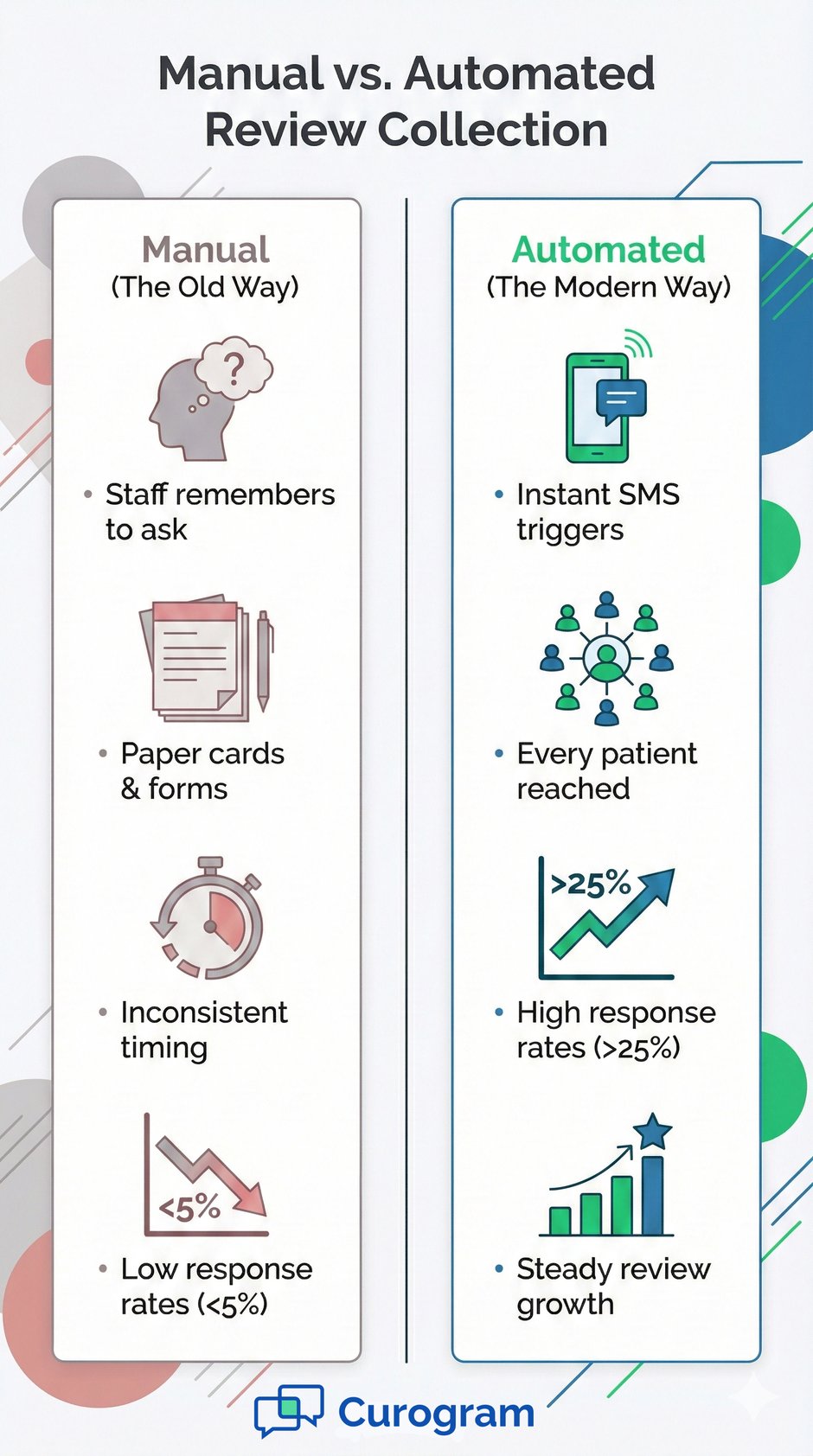
Some practices use paper forms or QR codes on receipts. These methods rarely work. Patients lose the paper. They forget by the time they get home. The friction between receiving the request and taking action is too high.
Manual processes cannot match the speed and scale of smart systems. Every missed ask is a missed chance to build your online presence.
Google rewards practices that have fresh, frequent reviews. The search engine looks at how many reviews you have, how recent they are, and what ratings they show. A low volume of outdated reviews tells Google your practice may not be active or popular.
This hurts your spot in local search rankings. When someone types "best doctors near me," practices with strong review profiles rise to the top. Those with thin profiles sink below the fold where few patients scroll.
Think of your online reputation as a funnel. At the top, thousands of patients search for care in your area. The funnel narrows based on what they find. Practices with high ratings and many recent reviews capture the most clicks.
If your profile lacks volume, you lose patients at the very first step. They never call. They never visit. They choose someone else because that someone else looked more trustworthy online.
This bottleneck effect compounds over time. Fewer new patients mean fewer chances to earn reviews. Fewer reviews mean even lower rankings. The cycle feeds itself until breaking it requires major effort.
Medical practice reputation management breaks this cycle by creating a steady stream of feedback. Instead of hoping patients remember to review you, smart systems prompt them at the perfect moment. The result is a profile that stays current, ranks higher, and converts more searchers into booked visits.
The next section explores how automated patient surveys deliver results that no manual process can match.
Everyone talks about AI in healthcare. Practices hear they need machine learning, chatbots, and smart algorithms to stay ahead. But when it comes to building your online presence, the most powerful tool is not a robot. It is a simple, smart system that captures feedback at scale.
Many practice owners search for AI solutions to manage their brand. They want something that feels modern and high-tech. The irony is that most of these tools add layers of complexity without solving the core problem.
What practices really need is a system that does one thing very well: ask every patient for feedback and route that feedback to the right place.
A chatbot might sound impressive in a sales pitch, but it cannot make a satisfied patient write a review. It cannot catch a complaint before it becomes a public post. It cannot send a text message three minutes after checkout while the good feelings are still fresh.
Smart automation does all of these things. It works in the background without needing human input. It triggers based on real events in your EMR. And it produces results you can measure in new reviews, higher ratings, and better search rankings.
Healthcare reputation automation focuses on outcomes, not gimmicks. The goal is not to impress patients with technology. The goal is to increase medical practice visibility and attract more new appointments.
Manual review requests produce random results. Some weeks you get a few reviews. Other weeks you get none. The pattern depends on which staff member remembers to ask and which patients happen to comply.
Automated patient surveys remove this luck factor. Every patient who completes a visit receives a prompt. The system never forgets, never feels awkward, and never skips a day.
This steady approach builds momentum over time. Ten reviews this month lead to fifteen next month. Your average rating stabilizes as more data points smooth out outliers. One bad review no longer tanks your score because it sits among dozens of good ones.
Predictable results also make planning easier. You can set goals, track progress, and tie review growth to your marketing spend. The numbers become part of your practice metrics, not a mystery.
Google rewards this kind of fresh, consistent activity. Practices that add reviews every week signal that they are active and popular. The algorithm bumps them higher in local results, which brings even more patient volume.
The best systems connect directly to your EMR. When a visit ends, the record updates. That update triggers the survey. No extra steps. No manual exports. No staff time wasted.
This link ensures timing is perfect. The message goes out while the patient still remembers their visit. It also ensures accuracy. The survey goes to the right person at the right contact number.
Practices that try to bolt on separate tools often face gaps. Data falls through cracks. Patients get missed. The whole process becomes another task to manage instead of a hands-off system.
EMR-integrated tools let you act like a much larger, more advanced organization. You gain the consistency of a hospital network without the overhead. You look innovative and knowledgeable to patients who receive timely, professional follow-ups.
This kind of integration also supports HIPAA rules. Patient data stays inside secure channels. No one needs to copy information into outside platforms. The workflow respects privacy while still delivering results.
Automated patient surveys turn the dream of AI-level marketing into a reality you can achieve today. The next section breaks down the features that make this engine run.

Building a strong online presence requires more than good intentions. You need tools that work without adding to your staff's workload. Curogram offers a suite of features designed to capture patient sentiment and turn it into public proof of your quality care.
The moment a visit ends, the clock starts ticking. Patient feelings fade fast. A survey that arrives two days later catches someone who has moved on to other concerns.
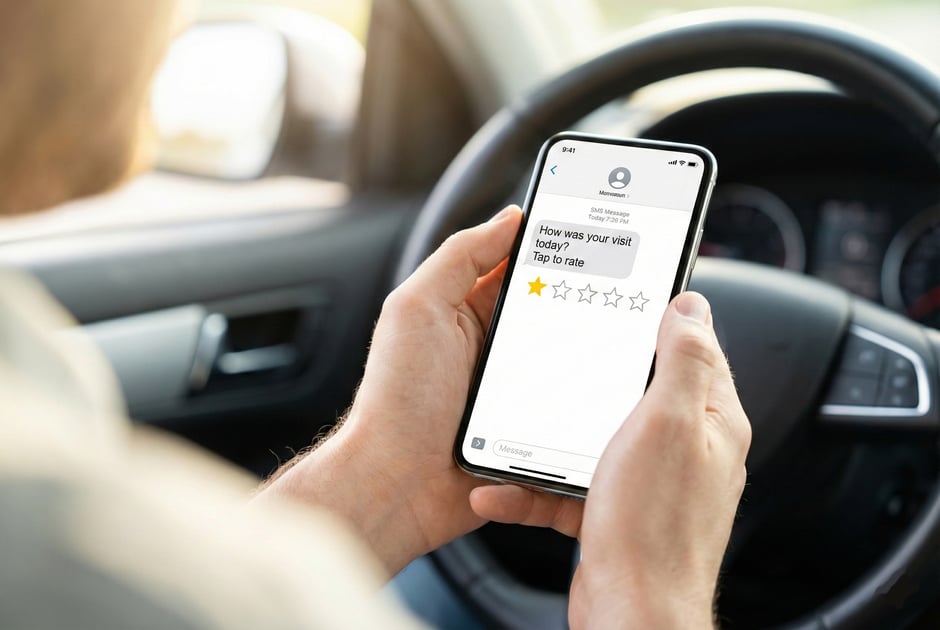
Curogram sends surveys via SMS right after checkout. The message lands on the patient's phone while they still sit in the parking lot or ride home. This timing captures honest, warm feedback before daily life takes over.
Once you connect Curogram to your EMR, the triggers run on their own. No staff member needs to remember to send anything. No manager needs to pull lists or schedule blasts. The system watches for completed visits and acts within minutes.
This hands-off approach means your busiest days produce the most outreach. High patient volume no longer overwhelms your review process. Instead, it fuels it.
Positive feedback only helps if it reaches the right place. A glowing comment buried in your internal files does nothing for your search rankings. Patients need a clear path from feeling happy to posting that happiness online.
Curogram guides satisfied patients straight to your Google Business Profile. When someone rates their visit highly in the survey, they see a prompt to share that rating publicly. One tap opens the review form with your practice already selected.
This smooth path removes every barrier. Patients do not need to search for your profile. They do not need to remember your exact business name. They click, write a few words, and post. The whole process takes under a minute.
Google reviews for doctors carry huge weight in local search. Each new review signals to the algorithm that your practice is active and trusted. Over time, this steady flow pushes you higher in results for searches like "best doctors near me."
The best automated texting platforms come from watching actual clinic workflows. They're built by people who understand the challenges front-desk staff face every day. This practical focus shows in every feature and design decision.
Staff members can master the system in less than 10 minutes. The interface uses familiar concepts and clear labels. Common tasks require just one or two clicks. There's no thick manual to study or complex training program to complete.
A quick phone call can change everything. When a patient feels heard, their frustration often melts away. Some even update their view of your practice after a caring follow-up.
This loop protects your public profile. Patients who might have posted a one-star rant instead feel respected and valued. Many choose not to post at all once their issue gets resolved. A few even become loyal advocates who praise your service later.
Internal feedback also reveals patterns. If multiple patients mention long wait times or rude phone interactions, you spot the trend early. You can train staff, adjust workflows, or address root causes before small problems grow.
Healthcare reputation automation is not just about collecting good reviews. It is about building a system that listens, responds, and improves. Curogram gives you the tools to do all three without adding hours to your week.
The features above form the engine that powers your growth. Next, we will look at the real impact this engine has on your business and your team.
Numbers tell part of the story. More reviews lead to higher rankings. Higher rankings bring more clicks. More clicks produce more booked visits. But the full picture includes something harder to measure: how growth feels for your practice and your people.
Every practice wants more patients. The math is simple. More visits mean more revenue. More revenue means better equipment, higher wages, and room to expand.
A strong online reputation acts like a magnet. Patients searching for care see your 5-star average and dozens of recent reviews. They trust what they read. They click to learn more. They call to book.
This growth compounds over time. New patients who have good visits become future reviewers. Their reviews attract even more new patients. The cycle feeds itself as long as you keep delivering quality care and capturing feedback.
Practices that commit to healthcare reputation automation often see double-digit jumps in new patient calls within the first few months. The investment pays back quickly because each new patient brings years of potential visits and referrals.
Volume also spreads risk. When you depend on a small base, losing a few patients hurts. When you have a steady stream of newcomers, your revenue stays stable even if some patients move away or switch providers.
Trust takes years to build and seconds to lose. Patients make snap judgments based on what they find online. A thin profile with mixed reviews raises doubts. A rich profile full of praise earns instant confidence.
Your online reputation extends beyond search results. Patients share links with friends. Family members research options before giving advice. Insurance portals show ratings when members browse for care.
A trusted practice becomes a community anchor. Local businesses refer employees to you. Schools list you as a resource. Other providers send referrals because they know their patients will be treated well.
This standing creates a moat around your practice. Competitors may open nearby, but patients stick with the name they trust. Price wars matter less when your reputation speaks for itself.
Brand trust also helps when things go wrong. If a mistake happens, patients give you the benefit of the doubt. They assume it was a one-time slip, not a pattern. That goodwill comes from the hundreds of positive stories they read before becoming your patient.
Your team sees every review. They read the praise. They feel the thanks. Positive feedback reminds them why they chose healthcare in the first place.
A steady flow of kind words boosts morale. Staff who feel valued stay longer. Turnover drops. Training costs shrink. The culture shifts toward pride instead of burnout.
Automated systems also remove a source of stress. When staff do not have to ask for reviews, they avoid awkward moments. They focus on patient care instead of marketing tasks.
This relief matters more than many owners realize. Front desk roles carry heavy loads. Every task you remove frees mental space for better service.
Staff who see their work praised in public reviews often go the extra mile. They know their effort shows up online. They take ownership of the patient experience because they want to earn more good words.
Medical practice reputation management delivers results you can deposit and results you can feel. The numbers grow your business. The emotions keep your team engaged and your patients loyal.
Next, we explore how to bring this same success to every location and specialty in your organization.
Growth looks different depending on your setup. A solo provider faces unique challenges. A multi-site network needs consistency at scale. A specialty practice must stand out in a crowded field. Smart automation adapts to each of these models while keeping the core process the same.
Large clinics juggle many moving parts. Each department has its own staff, workflows, and patient base. Without a standard system, review collection happens in pockets. One team excels while another lags.
Curogram brings every specialty under one roof. The platform sends surveys after visits, no matter which provider the patient saw. Data flows into a single dashboard where leaders can compare results.
Patients do not separate your cardiology wing from your family medicine team. They see one clinic name. A bad review from any department hurts the whole brand.
Standardized automation ensures every patient gets the same follow-up. Wait times and bedside manner may vary, but the request for feedback never does. This levels the playing field and lifts your overall rating.
Leaders can also spot weak links. If one location trails behind, the data shows it. Managers can coach staff, adjust workflows, or dig into root causes. Without consistent tracking, these gaps stay hidden until they become public problems.
Running a practice alone means wearing every hat. You diagnose, treat, bill, and market all at once. Time is the scarcest resource.
Automated patient surveys give solo providers the reach of a larger team. The system handles outreach while you focus on care. Patients receive the same polished follow-up they would get from a hospital network.
Big health systems have marketing budgets you cannot match. But Google does not care about your staff size. It cares about review volume, recency, and quality.
A solo provider who collects steady reviews can outrank a hospital on local searches. The algorithm rewards activity, not headcount. Smart automation lets you punch above your weight.
This matters especially in tight markets. When three practices serve the same zip code, the one with the best profile wins most clicks. Investing in healthcare reputation automation is often the highest-return move a small practice can make.
Niche fields like dermatology, cardiology, or orthopedics face a different challenge. Patients search for specific expertise, not just "doctor near me." They want proof that you excel in their exact condition.
Reviews that mention procedures, outcomes, and experiences carry extra weight. A post saying "Dr. Smith fixed my shoulder and I'm back to tennis" matters more than a vague "great office."
Curogram helps you surface these stories. Survey prompts can ask about specific treatments. Patients naturally write about what mattered most to them. Over time, your profile fills with detailed, relevant praise.
This depth sets you apart from generalists. When someone searches for "best knee surgeon in [city]," your reviews speak directly to their concern. They see others like them who got results. They feel confident booking with you.
Specialized reviews also build referral trust. Other doctors reading your profile see clinical proof, not just friendly comments. They feel safe sending complex cases your way.
No matter your size or focus, standardized workflows create predictable outcomes. Every patient asked. Every response tracked. Every location aligned.
The final sections answer common questions and show you how to take the next step toward smarter growth.

New systems raise new questions. Before you commit to any tool, you want to know how it works, whether it stays compliant, and what you can do with the results. Below are the answers practice owners ask most often.
Many people think reviews only serve marketing. In truth, the data you collect can shape the care you deliver. Every survey response is a signal. Patterns in that data point to problems worth fixing.
Suppose ten patients mention long hold times when calling your office. That trend tells you something real. You can add staff, adjust phone hours, or launch an online booking option.
When you act on feedback, patients notice. Wait times drop. Communication improves. Satisfaction rises. These changes show up in future surveys, creating a loop that keeps pushing quality higher.
Practices that treat surveys as learning tools often see better clinical outcomes too. Patients who feel heard follow care plans more closely. They return for follow-ups. They trust your guidance.
Healthcare reputation automation is not just about stars and rankings. It is about building a system that listens and responds. The reviews are a byproduct of a culture that values patient voices.
Privacy rules shape everything healthcare practices do. Any tool that touches patient data must meet strict standards. Curogram was built for this world from day one.
Surveys go out through secure, encrypted channels. Patient responses stay protected inside the platform. No data leaks to outside servers or third-party vendors.
The EMR integration means information flows through approved pathways. Staff do not need to export lists or copy contact details into separate systems. Everything stays inside the compliant ecosystem.
Curogram also lets you control what questions appear. You can avoid asking about specific diagnoses or treatments in the survey text. Patients share only what they choose to share.
Audits and updates keep the platform current with changing rules. You do not need to track regulations on your own. The system handles compliance so you can focus on care.
Absolutely. Once a patient posts a review on Google, that content becomes public. You can quote it on your website, share it on social media, or feature it in ads.
Verified reviews carry more weight than any copy you write yourself. Prospects trust peer voices over brand claims. A testimonial page filled with real quotes builds instant authority.
Choose reviews that highlight your strengths. If you want to attract more pediatric patients, feature posts from parents praising your kid-friendly staff. If you want to grow your surgical volume, showcase recovery success stories.
You can also respond to reviews publicly. Thanking patients for kind words shows you care. Addressing concerns shows you listen. Both actions signal to future patients that your practice values feedback.
Social proof drives decisions. Patients who see others like them praising your care feel safer choosing you. They convert faster, book sooner, and arrive with higher trust.
Using reviews in marketing multiplies their value. Each post works twice: once on Google to boost rankings, and again in your campaigns to persuade prospects.
Medical practice reputation management answers the questions that keep owners up at night. The process is safe, compliant, and full of upside. The only thing left is to start.
Every day, patients search for care online. They scroll through ratings. They read reviews. They form opinions before they ever speak to your staff.
You can leave that story to chance, or you can shape it yourself.
Medical practice reputation management gives you the tools to build a profile that reflects your true quality. Automated patient surveys capture the feedback that happy patients forget to share. Smart routing protects your profile from public complaints while giving you a chance to make things right.
The results speak clearly. More Google reviews for doctors. Higher local search rankings. Increased medical practice visibility in competitive markets. A brand that patients trust before they walk through the door.
Beyond the numbers, the change reaches your team. Staff feel proud when they see praise posted online. Morale rises. Turnover falls. Everyone works with more energy when they know their effort gets noticed.
Curogram makes this shift simple. The platform connects to your EMR and runs in the background. No extra clicks for staff. No awkward asks at the front desk. Just steady, automatic outreach that produces steady, measurable growth.
Healthcare reputation automation is not a trend. It is the new baseline for practices that want to thrive. Those who adopt it early capture market share. Those who wait watch competitors pull ahead.
You have spent years building your skills, your team, and your patient relationships. Your online presence should reflect that investment. It should tell the story of a practice that listens, cares, and delivers.
Curogram helps you tell that story at scale. One survey at a time. One review at a time. One new patient at a time.
The path forward is clear. Book a demo today and see how smart automation can help you dominate local search results, grow your patient volume, and take control of your practice's future.
Your reputation is your most valuable asset. Protect it. Build it. Let Curogram show you how.
Book a demo to see how Curogram’s "Smart Automation" helps you dominate local search results and grow your practice volume.
💡 A connected patient journey healthcare system brings all patient touchpoints into one platform.Curogram unifies reminders, online forms,...
💡 Multi-location healthcare networks face a common challenge: managing payments across different sites with separate systems. This creates billing...
💡 Healthcare payment automation transforms patient experiences by removing billing friction. When clinics automate payments through text messaging,...