13 min read

Welligent Automated Appointment Reminders SMS | Cut No-Shows

Welligent Automated Appointment Reminders SMS | Cut No-Shows
💡 The best way to set up Welligent automated appointment reminders SMS is through Curogram, a platform that sends text-based reminders to clients with no app needed.
  • Reminders go straight to a client's phone as plain text messages
  • Clients reply "1" to confirm or "2" to cancel, and the status updates in Welligent in real time
  • No portal login, no app download, no password required
  • All messages meet HIPAA and 42 CFR Part 2 rules for privacy
  • Based on our internal data, agencies using this approach see no-show rates drop by up to 50%
By letting you bypass the Welligent Connect portal, Curogram reaches at-risk clients who may lack email or web access, helping reduce no-shows in human services while keeping grant funding safe.

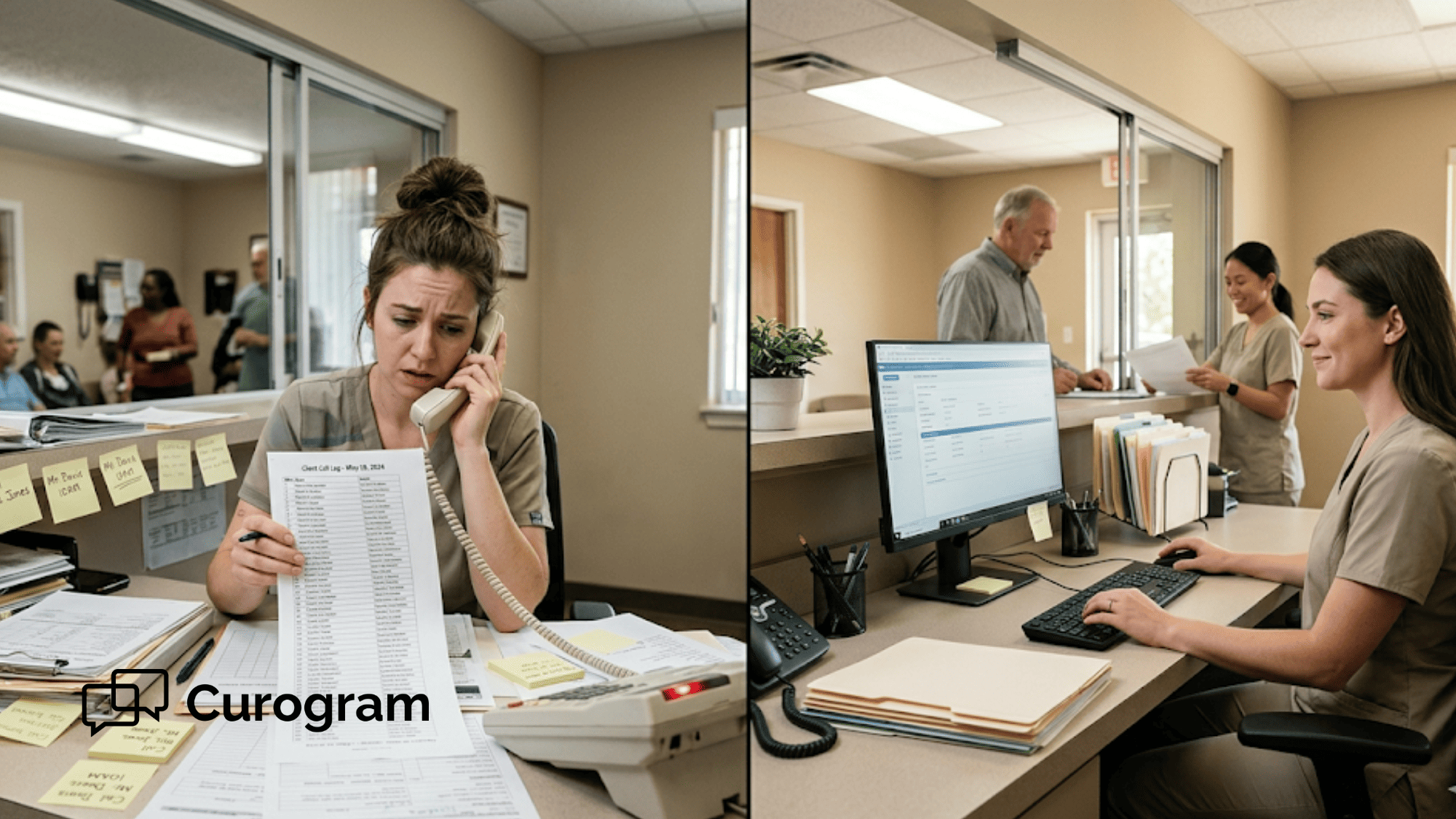
Picture this. A case manager at a county mental health clinic spends all Monday morning on the phone. She calls 40 clients to remind them of their sessions this week. Half don't pick up. A few numbers are out of service. By the end of the day, she has confirmed only 12 visits.

That scenario plays out at agencies across the country every single week. And every missed call chips away at something bigger than just time. It chips away at the care your clients need and the funding your agency depends on.

Here's the truth: the old way of reaching clients isn't working. Phone calls go to voicemail. Emails go unread. Patient portals demand logins that transient or at-risk clients simply can't manage.

The most direct fix? Welligent automated appointment reminders sent by SMS. By plugging Curogram into your Welligent system, your agency can text clients on their own phones with no app, no portal, and no login wall.

Clients reply with a single number to confirm or cancel. That reply writes itself back into your Welligent schedule — no staff touch needed.

Based on our internal research, this kind of setup helps agencies reduce no-shows in human services by up to 50%. That's not just a nicer calendar. That's more clients getting the help they need and fewer gaps in the records your funders review.

In this guide, we'll walk through why missed visits are so costly in behavioral health, how text-based reminders solve the access problem, and what it looks like when every response flows back into Welligent without a single keystroke from your team.

If your agency can't afford to lose another client to a missed call, keep reading.

The True Cost of a No-Show in Human Services

In private practice, a missed visit is a lost billing slot. It hurts, but the clinic moves on. In human services, the stakes are far higher. A no-show in this space often means a person in crisis did not get the care they needed that day.

Think about what a single missed session can trigger. A young person in foster care skips a therapy visit. A client in a substance use program misses a key check-in.

A homeless veteran doesn't show for a wellness screening. Each of these gaps creates a real risk — not just to that person's health, but to the entire care plan built around them.

The Care Gap

When a client misses a session, it's rarely because they "didn't feel like coming." More often, they forgot, lost track of the day, changed phones, or simply never got the reminder.

Many clients served by agencies using Welligent don't have stable access to email or the internet. They can't log into a portal to check their next visit. So the reminder never reaches them at all.

That's the core problem. The agency has a plan. The client needs the care. But the bridge between the two is broken.

The Funding Threat

Now layer in the money side. Most agencies in behavioral health and human services don't run on patient fees. They run on grants.

Federal, state, and local grants often come with strict rules around attendance and service metrics. High "failure to show" rates send a clear signal to funders: this agency isn't meeting its targets.

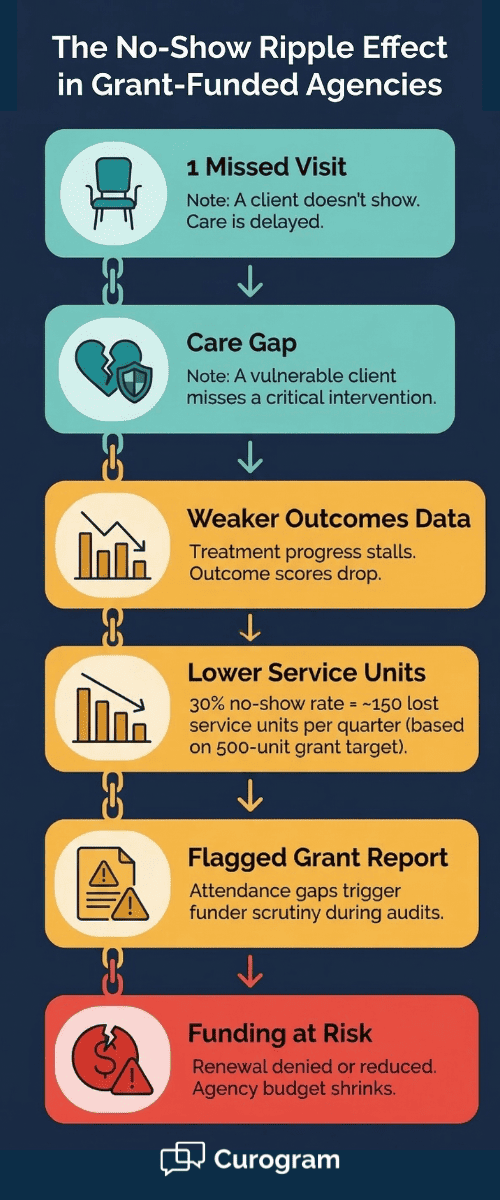
Let's walk through a quick example. Say your agency holds a state grant that requires you to deliver 500 units of service per quarter. Each unit ties to a face-to-face visit.

If your no-show rate hovers around 30%, you need to schedule roughly 715 visits just to hit 500 — and you'll still fall short if cancellations spike. That gap can mean lost dollars in the next funding cycle, or worse, a flag during an audit.

This is why behavioral health attendance tracking matters so much. It's not about keeping score. It's about proving to funders that your agency delivers on its mission, visit by visit.

The Portal Breakdown

So why aren't native Welligent tools enough to solve this? The Welligent Connect portal offers some client-facing features. But it asks users to log in through a browser, enter a username and password, and navigate a digital interface.

That's fine for a tech-savvy patient at a private clinic. It falls apart when your clients are transient youth, people experiencing homelessness, or anyone in a moment of crisis.

These clients may have a phone. They almost certainly have text messaging. But asking them to open a browser, reset a password, and find their next visit in a portal? That's a wall, not a door.

Here's a snapshot of the gap:

Reminder Method

Requires Internet

Requires Login

Works on Basic Phones

Welligent Connect Portal

Yes

Yes

No

Email

Yes

Yes

No

Phone Call

No

No

Yes, but low pickup

SMS Text Message

No

No

Yes


Text messaging is the only channel that meets your clients where they are — on a basic phone, no data plan needed. That's what makes it the right choice to protect grant funding with SMS outreach and close the gap in care.

When every missed visit puts your funding and your clients' well-being on the line, the method you choose to send reminders isn't just a tech decision. It's a mission decision.

Visual chain of the no-show ripple effect in behavioral health agencies from missed visit to funding loss

Bypassing the Login Wall: The Equity of Native SMS

Your clients don't need another portal. They need a text.

That's the core idea behind Curogram's approach to Welligent automated appointment reminders via SMS. Instead of routing clients through a login screen, Curogram sends reminders as plain text messages straight to a client's phone.

Meeting Clients Where They Are

Think about the people your agency serves every day. Many are on prepaid phones. Some share devices. Others switch numbers often. Asking these clients to set up a portal account is like handing them a locked door and hoping they find the key.

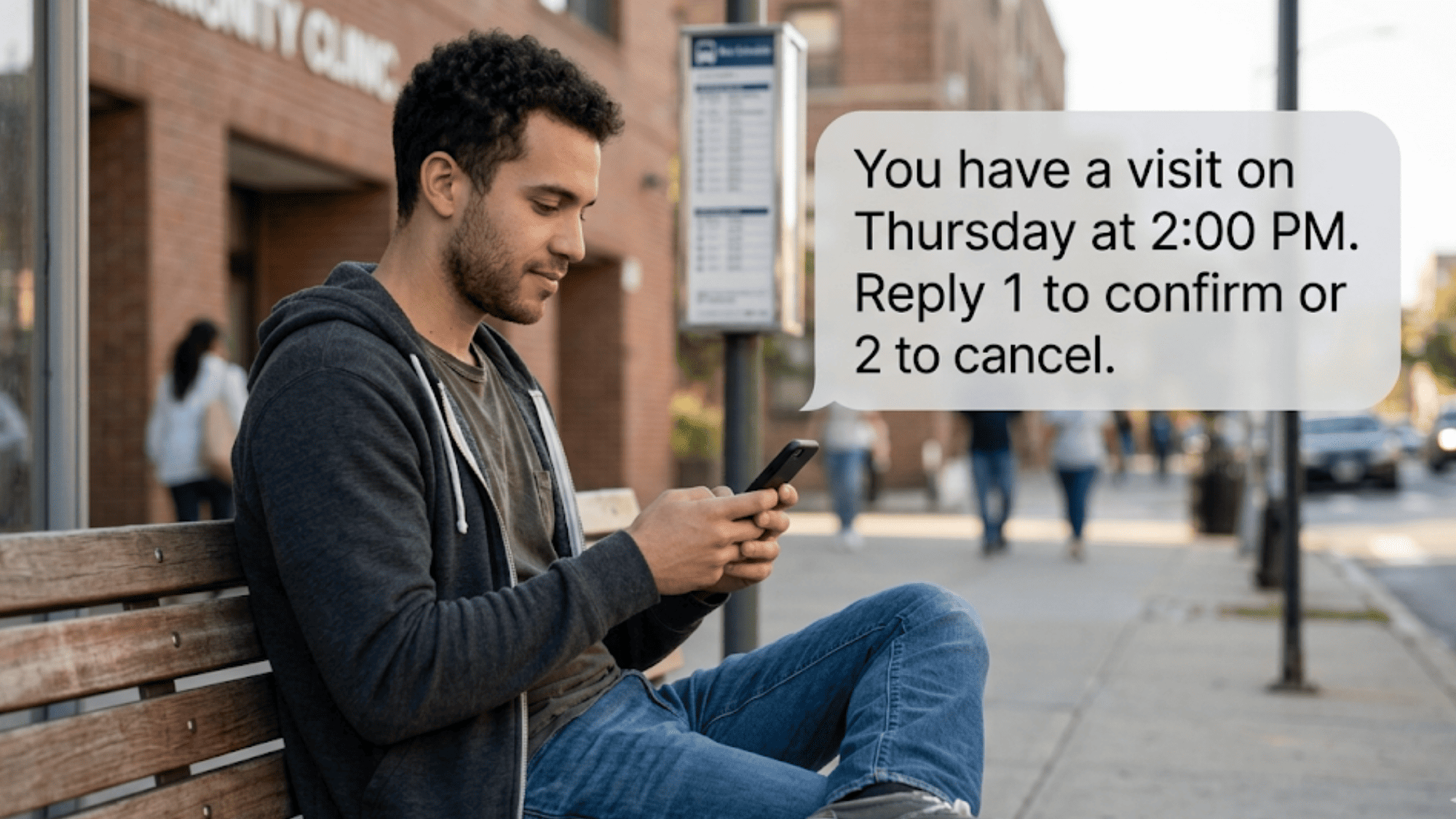
When you bypass the Welligent Connect portal with SMS, you remove every barrier at once. The client sees a text on their lock screen. It says something simple, like: "You have a visit on Thursday at 2:00 PM. Reply 1 to confirm or 2 to cancel." That's it. No steps. No app. No data plan.

This matters because access is an equity issue. When a reminder system only works for people with broadband and email, it leaves out the very clients who need the most support.

How It Works in Practice

Let's say your agency runs a substance use program. On Monday, your staff enter the week's sessions into Welligent. As soon as those visits are saved, Curogram picks them up and starts the reminder cadence. Here's a typical flow:

  1. Two days before the visit, the client gets a first text reminder.
  2. One day before, a second reminder goes out.
  3. The morning of the visit, a final check-in text arrives.

At each step, the client can reply right away. If they confirm, the status updates inside Welligent. If they cancel, the system flags the slot so staff can rebook it. If the client writes back with a question instead — like "Can I come at 3 instead?" — the message routes to your team's dashboard for a live reply.

That last part is key. Curogram isn't a one-way blast tool. It's a two-way texting platform. Staff can carry on a real conversation by text, right from their desk, without ever sharing a personal phone number.

The Read Rate Difference

One of the biggest reasons SMS works so well in human services is the read rate. Studies show that text messages are opened over 90% of the time, usually within minutes. Compare that to email, where open rates in healthcare hover around 20%.

For clients who don't check email at all, that 20% drops to zero. Portal-based alerts face the same wall. If the client never logs in, the reminder may as well not exist.

Here's the real-world impact:

Based on our internal data, Curogram clients see an average appointment confirmation rate above 75%, with the entire process being 100% automated. That means three out of every four visits are locked in — without a single phone call from your staff.


Why This Protects Your Mission

Every confirmed visit is a unit of service delivered. Every unit of service feeds your grant reports. And every clean report helps protect grant funding through SMS outreach and consistent engagement.

When you use a tool that works only for clients who have stable internet and tech skills, you build your mission on shaky ground. When you use native SMS, you build it on the one device almost every client carries: a mobile phone.

The choice to bypass the Welligent Connect portal isn't about avoiding a feature. It's about choosing the path that actually reaches people.

Automated Write-Back: Silencing the Phones

If reminders are the front door, write-back is the engine room. Sending texts is only half the job. The real power is what happens after a client replies.

The Staff Burden

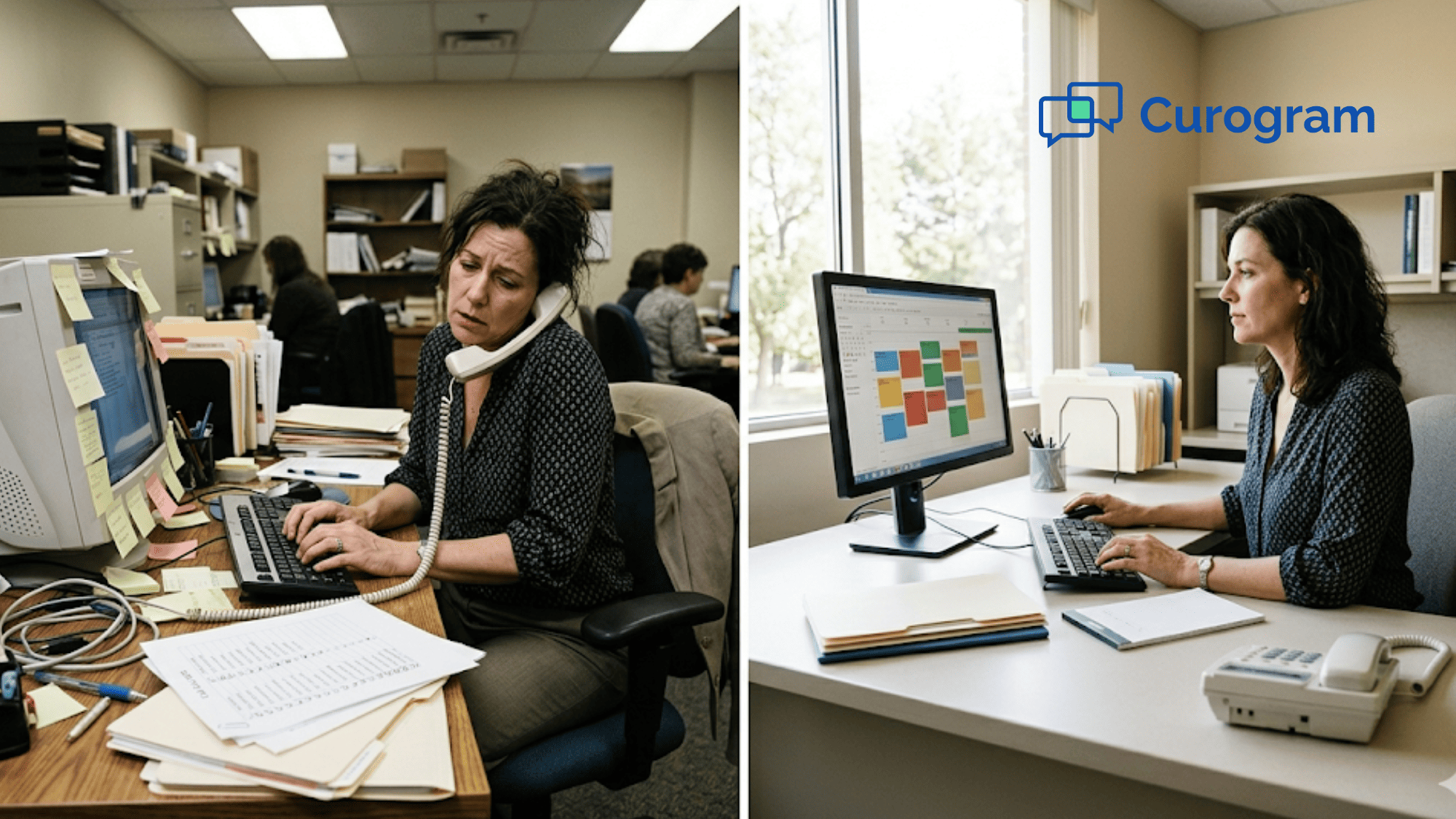
Right now, at many agencies using Welligent, the confirmation process looks like this: a staff member opens the schedule, picks up the phone, and starts dialing.

Client by client, they leave voicemails, call back, and try again. When someone does answer, the staff member writes the status into Welligent by hand.

Based on the outline's estimate, this process can eat up 10 hours per week or more. Think about what that means for a mid-size agency with 200 clients per week.

At three minutes per call — including hold time, voicemail, and notes — that's 10 solid hours of staff time just to confirm visits. And that doesn't count the calls for rescheduling, cancellations, and follow-ups.

Here's a simple way to see the drain:

Task

Time Per Client

Clients Per Week

Total Weekly Hours

Dial + wait + voicemail

2 min

200

6.7 hrs

Manual status entry

1 min

200

3.3 hrs

Total

3 min

200

10 hrs


That's 10 hours your case managers and schedulers could spend on care, outreach, or crisis support — not paperwork.

The Integration

Curogram connects directly with Welligent through HL7 messaging or a secure database link. This means the two systems talk to each other in real time. You don't need to export a file, upload a list, or copy anything between screens.

Here's the flow, step by step:

  1. A staff member creates or updates a visit in Welligent.
  2. Curogram detects the new entry and triggers the reminder cadence.
  3. The client gets a text message (for example: "You have a session on Wednesday at 10 AM. Reply 1 to confirm or 2 to cancel.").
  4. The client replies.
  5. Curogram reads the reply, matches it to the right visit, and writes the new status back into Welligent.

All five steps happen without anyone on your team lifting a finger after step one. That's the write-back in action.

What Write-Back Looks Like Day to Day

Let's make this concrete. Imagine your agency has a group counseling session every Thursday at 1 PM with eight clients.

In the old workflow, a scheduler calls all eight on Wednesday. Maybe four pick up. Two leave voicemails they'll never check. Two confirm. The scheduler logs into Welligent and marks those two as confirmed, leaves the rest as "unconfirmed," and hopes for the best.

With Curogram, here's what happens instead:

  • Tuesday afternoon: all eight clients get a text reminder.
  • Wednesday morning: a second reminder goes out.
  • By Wednesday at noon, six have replied "1" to confirm. One replied "2" to cancel. One replied, "Can I bring my daughter?"

The six confirmations and one cancellation are already in Welligent. Your scheduler never opened the phone. The one question from the client popped up on the staff dashboard, where a team member replied by text in under a minute.

The canceled slot? Staff can now rebook it or reach out to a client on the waitlist. The freed-up time means your team focuses on people, not phones.

Why Manual Entry Is a Risk

Beyond the time cost, manual status entry carries another danger: errors. When staff type confirmation notes into Welligent by hand, mistakes happen. A visit marked "confirmed" may have actually been canceled. A client who said "I'll try to make it" might be logged as a firm yes.

These errors don't just mess up your daily schedule. They ripple into your reports. If your behavioral health attendance tracking data is off, your grant metrics are off too. And when funders see gaps between what your reports say and what actually happened, it raises red flags.

Automated write-back removes that risk. Every reply is matched to the correct visit and logged the same way, every time. No typos. No guesswork. No second entry.

Young man reading an automated SMS appointment reminder on his phone at a bus stop

The Numbers That Matter

Based on our internal data, clinics and agencies using Curogram's automated system confirm an average of more than 1,100 appointments per month, per location.

That volume of confirmations would take a team of staff members multiple full days to handle by phone. With Curogram, it runs in the background while staff do higher-value work.

And the impact goes beyond time savings. When agencies reduce no-shows in human services through consistent, automated outreach, the downstream gains are clear:

  • More visits completed means more units of service delivered.
  • More units means stronger grant reports.
  • Stronger reports mean more secure funding.

Based on our internal research, Curogram users see no-show rates 53% lower than the industry average. In behavioral health, where the standard no-show rate can run from 20% to 30%, that kind of drop changes the math on every grant application.

A Quick Note on Setup

One concern agencies often raise is this: "Will it be hard to connect Curogram to our Welligent system?" The answer is no. Curogram's team handles the setup, and most agencies are live within days, not weeks.

Staff training takes about 10 minutes because the texting interface feels just like using a phone. There's no complex dashboard to learn and no IT team needed on your end.

The write-back feature is what turns a simple reminder tool into a true workflow partner. It doesn't just send messages. It listens, updates, and keeps your records clean — all while giving your team their time back.

Strict Compliance: Protecting Client Privacy

In behavioral health, privacy isn't just good practice. It's the law. And the rules in this space are stricter than in most other areas of healthcare.

The Mandate

Agencies that treat substance use disorders or provide mental health services must follow both HIPAA and 42 CFR Part 2. That second rule — 42 CFR Part 2 — puts an extra layer of protection around client records. It limits who can see treatment details, how data is shared, and what kind of content appears in any outgoing message.

This means a standard reminder system built for a dental office or a primary care clinic won't cut it. If a text says, "Don't forget your substance abuse session tomorrow," that's a violation. The client's treatment type was just exposed on a lock screen that anyone nearby could read.

How Curogram Handles It

Curogram was built with these rules in mind from the start. Every automated reminder is designed to meet the full scope of 42 CFR Part 2 compliant reminders and HIPAA standards. Here's what that looks like in practice:

  • Message content control - Agencies can customize the text of every reminder. You can strip out any reference to the type of visit, the provider name, or the agency itself. A reminder might simply say: "You have an appointment on Friday at 9 AM. Reply 1 to confirm." Nothing on that screen ties the message to a behavioral health clinic.
  • No stored PHI on devices - Messages are plain SMS. They don't pull clients into an app or platform that stores health data on their phone.
  • Audit-ready logs - Every message sent and received is logged in a way that meets audit requirements, so your agency can show compliance at any time.

For agencies that worry about texting and privacy, the key is control. Curogram gives you full say over what the message says, who it goes to, and when it lands. That control is what makes the system safe for even the most sensitive settings.

Why This Matters for Funders

Grant programs in behavioral health often include privacy audits as part of their review. If your agency is flagged for a messaging issue — even an accidental one — it can slow down your funding cycle or trigger a corrective action plan.

With 42 CFR Part 2 compliant reminders baked into the system, Curogram removes that risk before it starts.


How Curogram Keeps Behavioral Health Clients Engaged Without Risking Privacy


The challenge in human services is simple but tough: you need to reach people who are hard to reach, without revealing what you're reaching them about. That balance between access and privacy is where most tools fall short.

Curogram solves this by acting as the access layer between your Welligent system and your clients' phones. It pulls visit data from Welligent, strips it down to only what the client needs to know, and sends it as a plain text.

The client responds. The response flows back to Welligent. And at no point does any protected health information appear in the message.

This is why it works so well for agencies that handle sensitive cases. A foster care provider, a methadone clinic, a crisis intervention team — all of them need the same thing: a way to remind clients without exposing them.

And because the system is two-way, it also opens a channel for clients to ask questions, reschedule, or flag a concern — all through text. That kind of low-barrier access boosts engagement in a way that phone calls and portals simply can't match.

When your reminder system protects privacy by default, your team doesn't have to think about compliance — they just focus on care.

Conclusion

Every missed visit is a missed chance to help someone. In human services, that's not a metaphor. It's a real gap in care for a real person.

The good news is that most no-shows aren't caused by clients who don't want help. They're caused by reminders that never get through. Phone calls go to voicemail. Portals require logins that many clients can't manage. Emails sit unread in inboxes that rarely get checked.

Welligent automated appointment reminders sent by SMS cut through all of that. A text lands on a phone that's already in the client's pocket.

It takes seconds to read and one tap to respond. And when the response goes straight back into Welligent, your team doesn't need to spend hours on follow-up calls or manual data entry.

With Curogram, agencies using Welligent get a system that does three things at once. It reaches clients through the channel they actually use.

It keeps every message within HIPAA and 42 CFR Part 2 rules. And it writes every confirmation or cancellation back into the schedule without staff involvement.

Based on our internal data, the results speak for themselves: over 75% average confirmation rates, no-show rates 53% lower than the industry average, and more than 1,100 appointments confirmed per month at individual locations — all fully automated.

If your agency is still relying on phone calls and portal messages to keep clients on track, you're working harder than you need to. More importantly, you're reaching fewer people than you could.

Your clients deserve a system that meets them where they are. Your staff deserve a tool that gives them their time back. And your funders deserve data that reflects the work you're actually doing.

Stop chasing clients by phone. Schedule a quick demo now to see how Curogram texts, confirms, and updates Welligent for you.


Frequently Asked Questions

How does Curogram update appointment statuses inside Welligent without manual entry?
Curogram connects to Welligent through HL7 or a direct database link. When a client replies to a reminder, the system writes the confirmation or cancellation into the Welligent schedule in real time — no copy-paste or double entry needed.
Why is SMS more effective than the Welligent Connect portal for reaching human services clients?
Many clients served by human services agencies lack stable internet, email, or the ability to manage portal logins. SMS reaches them on any mobile phone with no data plan, no app, and no password, which drives far higher read and response rates.
How does Curogram keep reminder messages compliant with 42 CFR Part 2 and HIPAA?

Agencies have full control over message content. You can remove any reference to treatment type, provider name, or facility. Messages are sent as plain text with no stored health data on the client's device, meeting both HIPAA and 42 CFR Part 2 rules.

What happens when a client texts back a question instead of confirming or canceling?

The message routes to your staff's two-way texting dashboard. A team member can reply by text in real time — for example, to help the client reschedule — without using a personal phone number or making a call.

How does reducing no-shows with automated SMS help protect an agency's grant funding?

Most human services grants require proof of completed visits and service units. When no-show rates drop, your agency delivers more billable encounters, produces cleaner attendance data, and presents stronger reports at renewal and audit time.


Welligent Reminder Write-Back Automation SMS: End Double-Entry

Welligent Reminder Write-Back Automation SMS: End Double-Entry

💡 The best way to cut out manual data entry for scheduling is with Welligent reminder write-back automation SMS through Curogram's native text...
Read More
App-Free Client Communication in Welligent: Bridge the Digital Divide

App-Free Client Communication in Welligent: Bridge the Digital Divide

💡 The best way to set up app-free client communication in Welligent is through Curogram's 2-way SMS add-on, which lets case managers text clients...

Read More
Welligent 2-Way Texting for Case Managers | Barrier-Free Access

Welligent 2-Way Texting for Case Managers | Barrier-Free Access

💡 The best 2-way texting add-on for Welligent is Curogram. It lets case managers text clients by SMS with no app or portal login needed. Clients...

Read More