13 min read

How to Eliminate Paper Statements in Human Services

How to Eliminate Paper Statements in Human Services
💡 The fastest way to eliminate paper statements in human services is by using Curogram's text-to-pay with Welligent.
  • Non-profits can save $800 to $1,000 a month in postage and labor costs
  • Clients pay via a secure SMS link using Apple Pay, Google Pay, or a saved card
  • Payments sync back to the client ledger in Welligent with no manual entry
  • All data transfers meet HIPAA and 42 CFR Part 2 privacy rules
  • Billing staff reclaim hours each week to focus on care, not envelopes
Switching from mailed invoices to mobile text-to-pay helps agencies protect grant funds and put more money back into their mission.

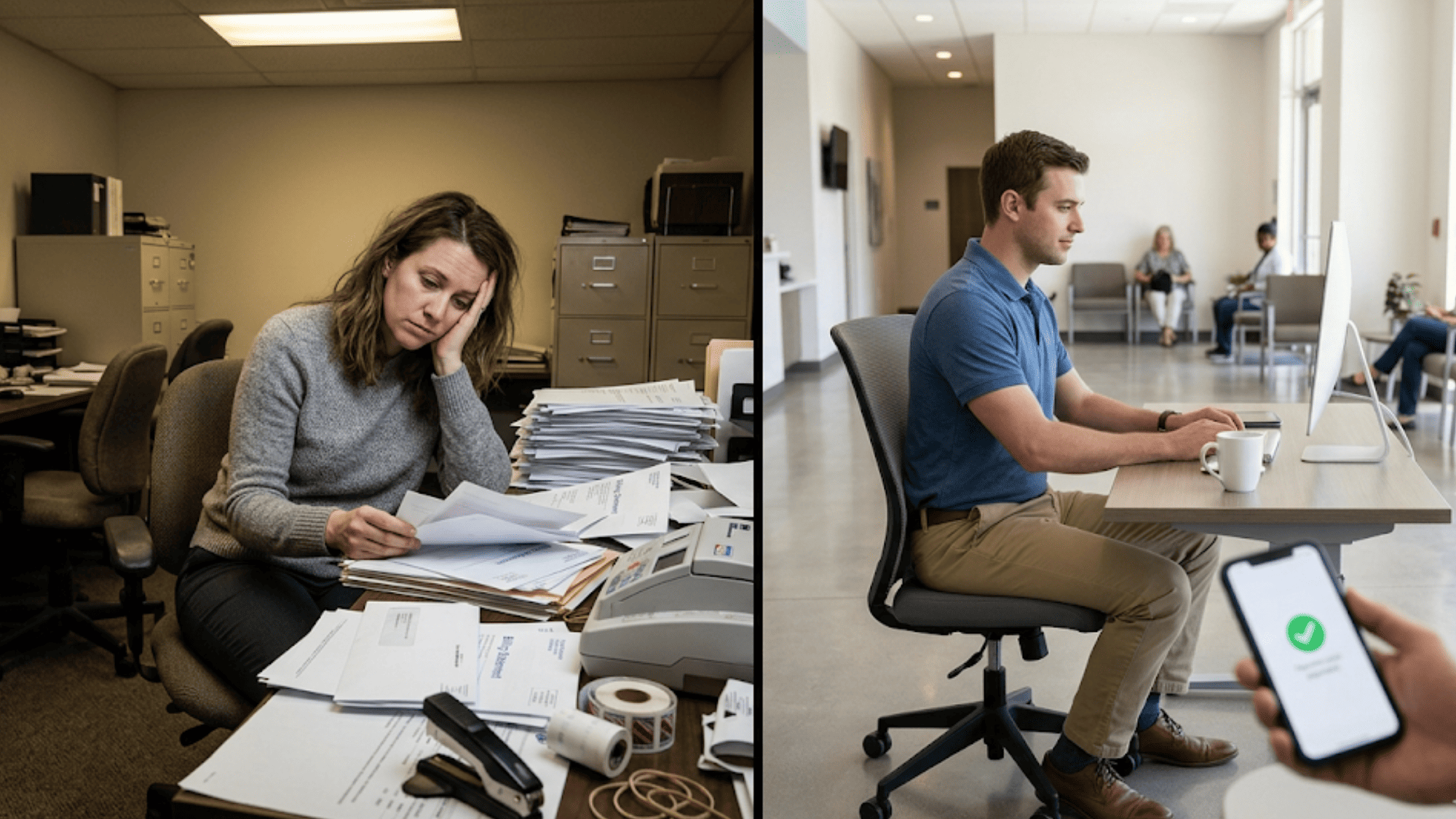
Picture this. Your billing team spends two full days each month printing, folding, and stuffing invoices. They lick stamps. They haul mail bins. And for what? A $10 or $15 sliding-scale balance that most clients never pay.

That's the harsh truth for many human services agencies. Paper billing eats time, burns money, and brings back very little in return.

For non-profits that run on grants and tight budgets, every wasted dollar on postage is a dollar taken from client care. And the math gets worse when you factor in labor, paper, and envelopes for clients who may have moved since their last visit.

There is a better way. When you eliminate paper statements in human services, you stop the leak at its source. You trade stacks of mail for a single text message. You swap weeks of waiting for instant mobile payments. And you free your billing staff to focus on what matters most: the mission.

Curogram's text-to-pay system makes this shift simple. It works with Welligent, the EMR your agency already uses. Instead of printing a paper bill, Curogram sends a secure payment link by text. Clients tap the link.

They pay in seconds. The payment posts to their ledger in Welligent without anyone touching a keyboard.

The result? Agencies save between $800 and $1,000 each month. Collection rates go up. Staff hours come back. Grant dollars stay where they belong: in direct services.

In this guide, we break down exactly how paper billing drains your budget, why SMS beats the patient portal, and how ledger write-back keeps your records clean. If you run a non-profit clinic or behavioral health agency on Welligent, this is the roadmap to a leaner, smarter billing process.

The Hidden Drain of Paper Billing

Non-profits and community clinics don't have the luxury of waste. Most run on grant funding with strict rules about how each dollar gets spent. When admin costs creep up, the money comes straight out of the programs that serve clients.

Paper billing is one of the biggest quiet drains on a human services budget. And very few agencies stop to measure how much it really costs.

The Real Price Tag of a Paper Statement

Let's do the math on a single mailed invoice. You need a printed page (about $0.05), an envelope ($0.03 to $0.05), a stamp ($0.73 for First-Class), and staff time to print, fold, stuff, and sort (roughly $1.50 to $2.00 per piece when you factor in wages).

That puts the true cost of one mailed statement at around $2.30 to $2.80.

Now think about scale. If your agency mails 400 statements a month, you're spending $920 to $1,120 just to ask clients to pay. For a non-profit that collects sliding-scale fees of $10 to $25, the cost of sending the bill can match or even exceed the balance itself.

Cost Item

Per Statement

400 Statements/Month

Paper and printing

$0.05

$20

Envelopes

$0.05

$20

Postage (First-Class)

$0.73

$292

Staff labor (print, fold, stuff)

~$1.50

$600

Total

~$2.33

$932


That's nearly $1,000 each month. And it doesn't count the time your team spends on returned mail, address updates, or re-sends.

The Terrible Return Rate

Here's the part that stings. After all that time and money, the average return rate on mailed invoices for small balances sits around 20%. That means 80% of those statements end up ignored, lost, or tossed in the trash.

The numbers get even worse for agencies that serve clients with unstable housing, foster youth, or people in recovery. Addresses change often. Mail doesn't forward. And a paper bill that arrives at the wrong door will never get paid.

When your agency mails 400 invoices and only 80 come back as payments, you've spent over $900 to collect maybe $1,200. The net gain barely justifies the effort. In many cases, the agency actually loses money on the process.

The Hidden Staff Burden

Beyond the hard costs, think about what paper billing does to your team. Billing staff at small non-profits already wear many hats. They handle intake, track grants, manage claims, and field phone calls.

When you add a two-day print-and-stuff cycle every month, those are two days they can't spend on higher-value work. They can't follow up on denied claims. They can't clean up aging balances. They can't support clinical staff with chart prep.

Based on our internal research, agencies that use 2-way texting to handle routine tasks see a 30% or greater boost in staff output. That kind of gain is a game-changer for a five-person billing team at a small clinic.

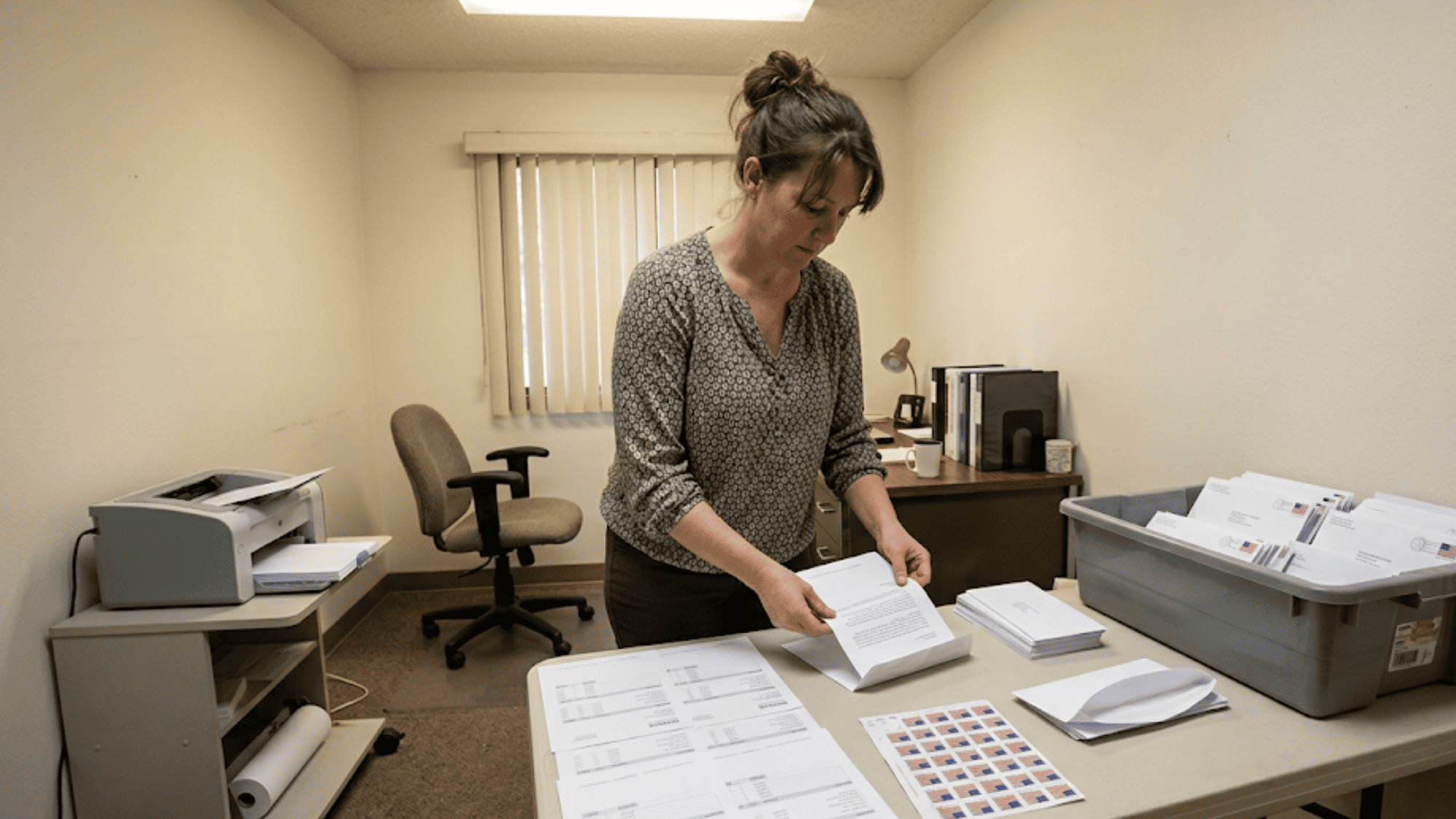
Billing staff member folding and stuffing paper invoices into envelopes at a non-profit clinic office

Why This Matters for Your Mission

Every dollar and every hour spent on paper billing is a resource pulled from direct care. If your agency could redirect $1,000 a month and 16+ staff hours, what would you do with it?

That might fund two more therapy sessions a week. It could pay for a part-time outreach worker. It could cover gas cards for clients who can't get to their next appointment.

The point is simple. Paper billing doesn't just cost your agency money. It costs your community services. And that's the real drain that non-profit billing software should help you fix, not make worse.

Stopping the Leak: The Financial ROI of SMS

You've seen the numbers. Paper billing costs too much and brings back too little. The next question is: what do you replace it with?

The answer is text-to-pay. By sending a secure payment link by SMS instead of a mailed invoice, your agency removes the biggest line items in the billing budget: postage, paper, and manual labor.

How Text-to-Pay Works in Practice

The process is simple. Curogram pulls the client's balance from Welligent. It then sends a short text to the client's phone. The message includes a secure link to pay. No app to download. No portal to log into. No password to remember.

The client taps the link, selects their payment method (Apple Pay, Google Pay, or a card on file), and the balance is settled. The whole process takes less than 30 seconds from the client's side.

From the agency's side, the work is even less. There's no printing. No folding. No stamps. The billing team sets up the batch, and Curogram handles the rest.

The Budget Unlocked

When you stop mailing paper statements, the savings hit your budget right away. Let's revisit that earlier table with the SMS path.

Billing Method

Monthly Cost (400 Clients)

Average Return Rate

Paper statements

~$932

~20%

SMS text-to-pay

~$40–$80 (platform fees)

40–60%+

Monthly savings

$850–$890

2–3x more payments


Those savings land in your operating budget from month one. There's no setup period or long wait for ROI. The Welligent text-to-pay ROI is clear and fast.

Over a full year, that's more than $10,000 saved in hard costs alone. For a small non-profit, that kind of money can fund an entire program line.

Beyond Hard Costs: The Staff Hours You Get Back

Money saved on postage is just the start. The real multiplier is time. Based on our internal data, billing teams that switch from paper to SMS reclaim 15 to 20 hours per month. That's time they used to spend on the print-and-mail cycle.

What can your team do with those hours?

They can chase down denied claims, which often represent far more money than small sliding-scale balances. They can run aging reports and clean up old accounts. They can help with grant reporting or support audits.

In short, they can focus on the work that actually grows your budget instead of tasks that shrink it.

Protecting Grant Dollars

For many agencies, grant funds come with strict spend rules. Admin costs are capped, and every dollar spent on postage has to be justified. When an auditor sees thousands going to mailing invoices for $10 balances, it raises questions.

Switching to SMS helps you reduce administrative mailing costs in a way that's easy to explain and defend. The cost is lower. The return is higher. And the audit trail is built into the system.

Putting the Money Back Into the Mission

This is the core idea behind the "Budget Unlocker" strategy. When you cut $1,000 a month from your billing process, you don't have to fight for new funding to grow. You free up money you're already spending.

That $1,000 can go toward more clinical hours. It can fund outreach to clients who've dropped out of care. It can support staff raises that help you keep your best people.

When your billing process works for you instead of against you, every grant dollar stretches further. Your agency runs leaner. Your team works smarter. And your clients feel the impact where it counts: in the quality and reach of their care.

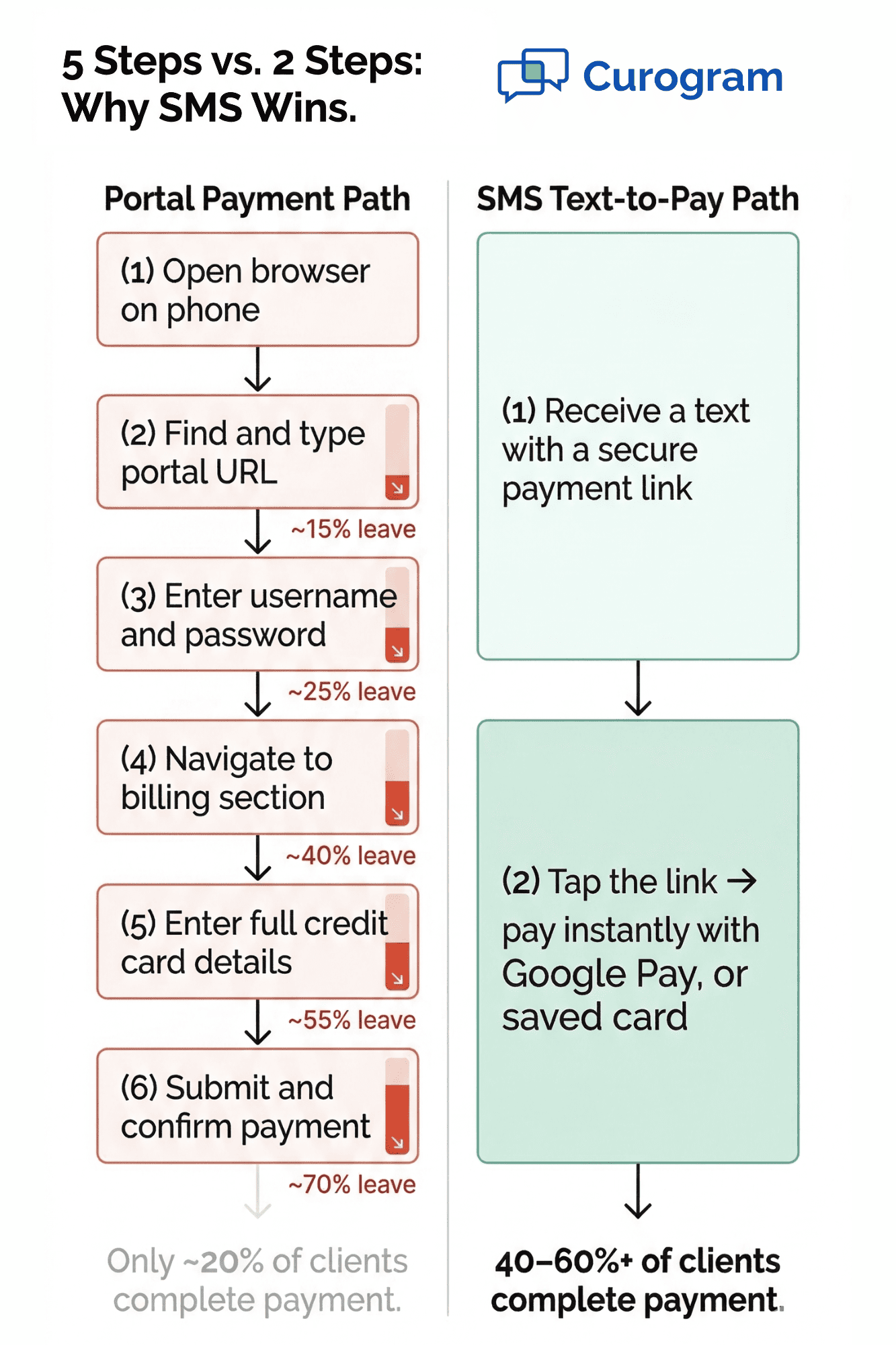
How to Eliminate Paper Statements in Human Services-midFlowchart comparing portal payment steps versus SMS text-to-pay steps for human services billing

Bypassing the Portal for Better Collections

Let's talk about the elephant in the room. Most EMRs already have a patient portal. Welligent has the Welligent Connect portal. So why not just tell clients to log in and pay there?

Because for the clients your agency serves, portals don't work.

The Portal Problem

Patient portals were built for people with steady internet, a laptop or desktop, and the patience to set up an account. They assume the user will create a password, remember it, and come back later to make a payment.

That model falls apart fast in human services. Many of your clients access the internet only through their phones. Some share devices with family members. Others don't have Wi-Fi at home and rely on mobile data.

Now ask that same person to open a browser, go to a portal URL, log in with a username and password, find their balance, and type in a credit card number. Each one of those steps is a chance for them to give up.

And most do give up. That's why portal-based payment rates are so low for small balances. A $15 co-pay is not worth 10 minutes of frustration.

The Equity Problem

There's a deeper issue here, too. When your agency serves clients with housing instability, mental health challenges, or substance use disorders, you're working with people who face real daily barriers.

Asking them to jump through hoops to pay a small balance isn't just a bad business move. It's a gap in access.

Sliding-scale fee collection via text meets clients where they are. It removes the barrier. It treats the payment process as part of the care experience, not a test the client has to pass.

Think about it this way: your counselors don't ask clients to fill out a 10-page form to check in for a session. They make it as simple as they can. Your billing process should match that same level of care.

How SMS Closes the Gap

When Curogram sends a payment link via text, the client gets a short, clear message on their phone. Something like: "You have a balance of $15. Tap here to pay securely." No login. No username. No password.

The client taps the link. A secure page opens right in their phone's browser. They see the amount due and can pay using Apple Pay, Google Pay, or a saved card. The whole thing takes 15 to 20 seconds.

Let's compare the two paths side by side:

Step

Portal Payment

SMS Text-to-Pay

1

Open browser, go to portal URL

Receive text on phone

2

Enter username and password

Tap the secure link

3

Navigate to billing section

See balance and tap "Pay"

4

Find the open balance

Use Apple Pay, Google Pay, or card

5

Enter full card details

Done (15–20 seconds total)

6

Submit and confirm

Friction level

High

Very low


The fewer steps between "I owe money" and "I paid it," the more likely the client pays. This is basic human behavior, not theory.

Real-World Impact on Collection Rates

When you remove friction, payments go up. Agencies that switch from portal-only or paper-only billing to SMS text-to-pay typically see collection rates jump from around 20% to 40–60% or higher.

Let's put that in dollar terms. Say your agency has 400 clients with an average balance of $15.

With paper billing at a 20% return rate, you collect about $1,200. With SMS at a 50% return rate, you collect about $3,000.

That's $1,800 more each month from the same group of clients, on top of the $900+ you save by not mailing. The combined impact is close to $2,700 a month, or over $32,000 a year.

For a small non-profit clinic, that can make the difference between cutting a program and keeping it alive.

The same logic applies to copay collection at the front desk. When you make it easy for clients to pay at the time of service through an automated text request, you close the loop before a balance ever hits your ledger. Agencies that streamline this step often see a noticeable lift in same-day copay rates without adding any extra work for staff.

Reaching Clients Others Can't

One of the biggest wins with SMS is reaching clients who've "fallen off the radar." These are people who moved, changed phone numbers, or stopped coming to appointments.

A mailed invoice to an old address does nothing. But a text message often still lands, even after a move. People keep their phone numbers far longer than they keep their mailing addresses.

This matters a lot for agencies that serve foster youth aging out of the system, people in transitional housing, or clients moving between counties for treatment. For these groups, SMS is often the only channel that still reaches them.

Keeping It Discreet

There's another angle that agency staff appreciate. A text-based payment request is private. It shows up on the client's phone like any other text. There's no branded envelope from a behavioral health clinic arriving at a shared mailbox.

For clients in substance use treatment or court-ordered programs, that level of privacy makes a real difference. The process keeps their care and their finances between them and the agency.

This is a key part of 42 CFR Part 2 compliant billing, which protects the identity and treatment records of people in substance use programs.

The Bottom Line on Portals vs. SMS

Portals have their place. They work for clients who are tech-savvy and engaged. But for the bulk of sliding-scale collections in human services, they create more friction than they solve.

SMS text-to-pay is faster, simpler, and more accessible. It reaches clients where they are. It respects their time and their privacy. And it brings in more money with less effort from your team.

If your agency still relies on the Welligent Connect portal for small balance collections, you're leaving money on the table and making life harder for the clients you're trying to help.

"The Door" Meets "The Vault": Ledger Automation

Getting clients to pay is only half the battle. What happens after the payment comes in matters just as much.

The Double-Entry Trap

In many agencies, the billing team collects a payment on one system and then has to manually type it into the EMR. This means opening the client's record in Welligent, finding the right balance, entering the amount, and posting the transaction.

When you handle dozens of payments a day, that manual process eats hours. Worse, it invites errors. A wrong amount, a typo in the date, or a payment posted to the wrong client can throw off your whole ledger.

How Curogram's Write-Back Works

This is where Curogram's deep link with Welligent changes the game. When a client pays through the text link, Curogram doesn't just collect the money. It writes the payment data straight back into the client's financial ledger in Welligent.

No copy-paste. No manual entry. No second system to check. The transaction shows up in Welligent as if your billing team posted it by hand, but without the labor or the risk of human error.

This is what true EMR write-back looks like. It turns the "door" (the payment) and the "vault" (your billing record) into one seamless flow.

Compliance Built In

For behavioral health and substance use agencies, data security isn't optional. HIPAA sets the baseline, but 42 CFR Part 2 adds another layer of protection for clients in substance use treatment.

Curogram encrypts all payment data in transit and at rest. The system is built to meet both HIPAA and 42 CFR Part 2 standards. That means your agency can collect payments by text without worrying about a compliance gap.

Your auditors see clean, auto-posted records. Your clients' data stays protected. And your billing team doesn't have to toggle between systems to keep everything straight.


How Curogram Helps Non-Profits Protect Their Budgets and Serve More Clients


Curogram was built to solve a specific problem: the gap between how healthcare agencies want to communicate and how they're forced to. For non-profits on Welligent, that gap shows up most clearly in billing.

Your agency runs lean. Your grants come with strings. Your clients face real barriers to payment. And yet, your billing process still depends on paper, postage, and portals that don't fit your population.

Curogram changes that by giving your agency a non-profit billing software solution that works with Welligent, not around it. The text-to-pay feature sends secure payment links by SMS. Clients pay in seconds. The money posts to your ledger without manual entry.

But Curogram is more than just a payment tool. Based on our internal data, agencies that use Curogram's full platform see phone call volumes drop by up to 50% and staff output rise by 30% or more.

Those gains come from 2-way texting, automated reminders, and digital forms that replace slow, paper-based processes.

For human services agencies, this means fewer missed appointments, faster intake, and more time for direct client care. It means your front desk isn't buried in phone calls and your billing team isn't buried in envelopes.

Curogram integrates with Welligent at the database level, so data flows both ways. You're not adding another silo to your tech stack. You're adding a layer that makes your current system work harder and smarter.

And because Curogram is HIPAA-compliant and supports 42 CFR Part 2 standards, you can use it for even your most sensitive client groups without putting their privacy at risk.

Conclusion

Paper billing is a relic that non-profits can no longer afford. Every envelope your team stuffs and every stamp they stick is money that could go toward serving clients. The math is clear. Mailing invoices for small sliding-scale fees costs more than it returns.

Text-to-pay through Curogram and Welligent flips that equation. Your agency saves up to $1,000 a month in hard costs. Your collection rates double or triple. And your billing team gets back hours each week to focus on the work that actually drives your mission forward.

The shift isn't just about savings. It's about access. When you send a secure text link instead of a mailed bill, you meet clients where they are.

You remove the friction of portals, passwords, and paper. You respect their time and their privacy, which matters even more in behavioral health and substance use settings.

And with Curogram's write-back to Welligent, every payment posts to the client's ledger on its own. No double entry. No data errors. No compliance gaps.

Non-profits exist to serve people, not to spend grant money on postage. When your billing process is lean, fast, and client-friendly, your entire agency benefits. Staff morale improves. Grant funds stretch further. Clients stay engaged in their care.

If your agency is still mailing paper statements through Welligent, the time to switch is now. The savings start from day one, and the impact compounds every month.

Stop the paper drain and put more money back into your mission. Schedule a quick demo to see how text-to-pay works with Welligent.


Frequently Asked Questions

How much money can a small non-profit agency save each month by switching to text-to-pay?
Most agencies save between $800 and $1,000 a month by cutting postage, paper, and staff labor tied to manual billing. That figure does not include the extra revenue from higher collection rates through SMS.
How does Curogram's text-to-pay handle sliding-scale fee collection for clients with small balances?
Curogram sends a secure SMS link for the exact balance owed. Clients pay with one tap using Apple Pay, Google Pay, or a stored card, which makes it easy to collect even $5 or $10 balances that would never justify the cost of a stamp.
Why is text-to-pay better than using the Welligent Connect portal for payment collection?

The portal requires a login, password, and multiple steps. Many human services clients don't have stable internet or the patience for that process. A text link removes all of those barriers and puts payment one tap away on their phone.

How does Curogram keep payment data compliant with 42 CFR Part 2 rules for substance use treatment agencies?

All payment data is encrypted in transit and at rest. Curogram's system is built to meet both HIPAA and 42 CFR Part 2 standards, so no client treatment details are exposed in the text message or the payment flow.

How does the automatic ledger write-back to Welligent save billing staff time?

When a client pays through the text link, Curogram posts the payment directly to the client's financial record in Welligent. Your staff doesn't have to re-enter the data manually, which eliminates double entry and cuts posting time to zero.


Welligent Text-to-Pay Integration for Behavioral Health

Welligent Text-to-Pay Integration for Behavioral Health

💡 The best text-to-pay solution for Welligent in behavioral health is Curogram, which lets agencies collect co-pays and fees by secure SMS. Sends...

Read More
Text a Link and Get Paid: One-Tap Billing for Athenahealth Practices

Text a Link and Get Paid: One-Tap Billing for Athenahealth Practices

💡 Athenahealth patient mobile payment via text through Curogram lets patients pay their balance with one tap — no portal, no app, no paper check.

Read More
Collect Copays Upfront in Prime Clinical | Zero-Touch Check-In

Collect Copays Upfront in Prime Clinical | Zero-Touch Check-In

💡 When you collect patient copays upfront with Prime Clinical, you can stop chasing small balances after the visit. Curogram lets practices send...

Read More