
How to Cut No-Shows with Automated Appointment Reminders for Lytec
💡 Automated appointment reminders for Lytec practice workflows help medical offices cut no-show rates by up to 53% and remove the need for manual...
8 min read
Jo Galvez
:
February 27, 2026
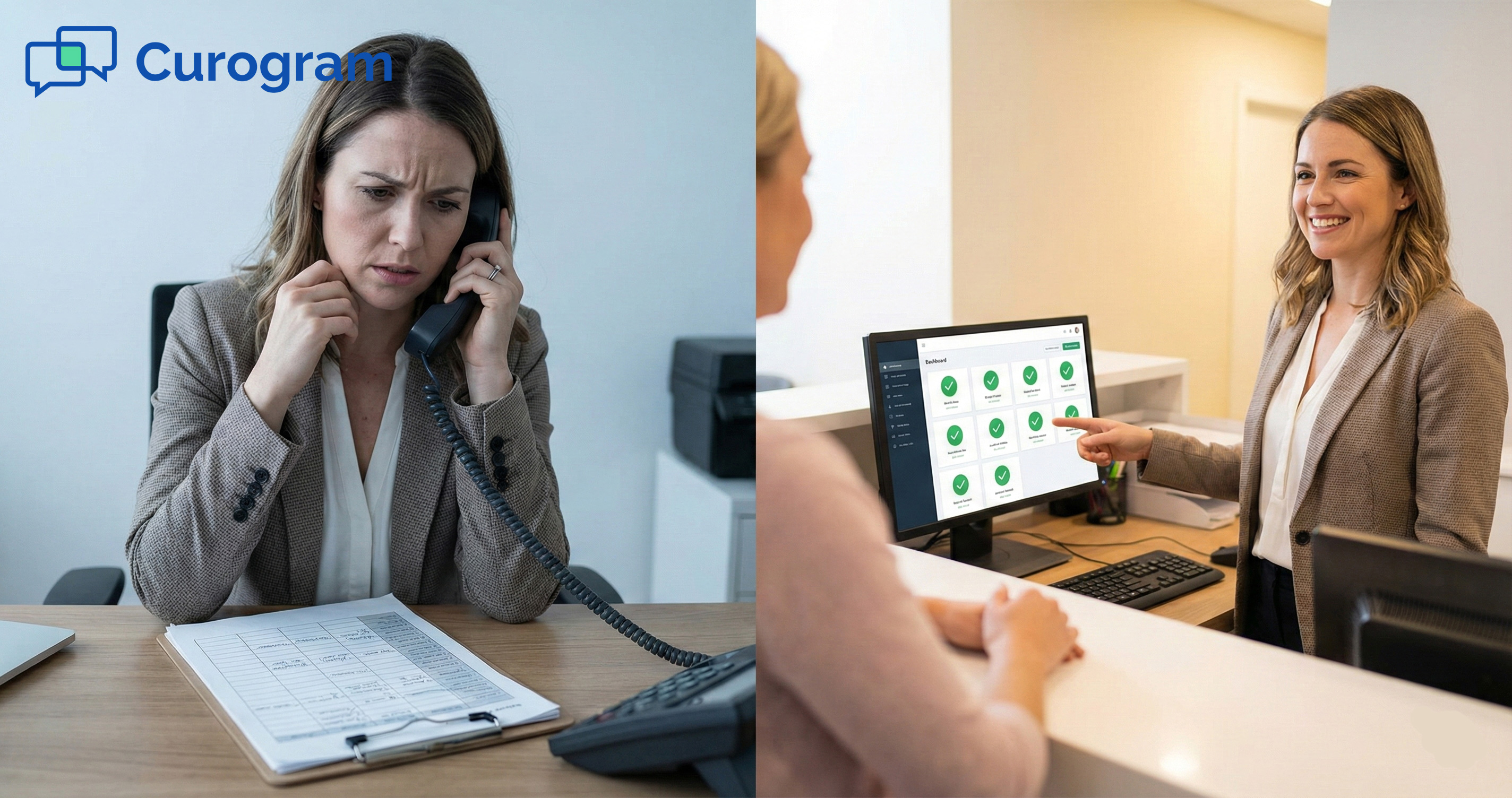
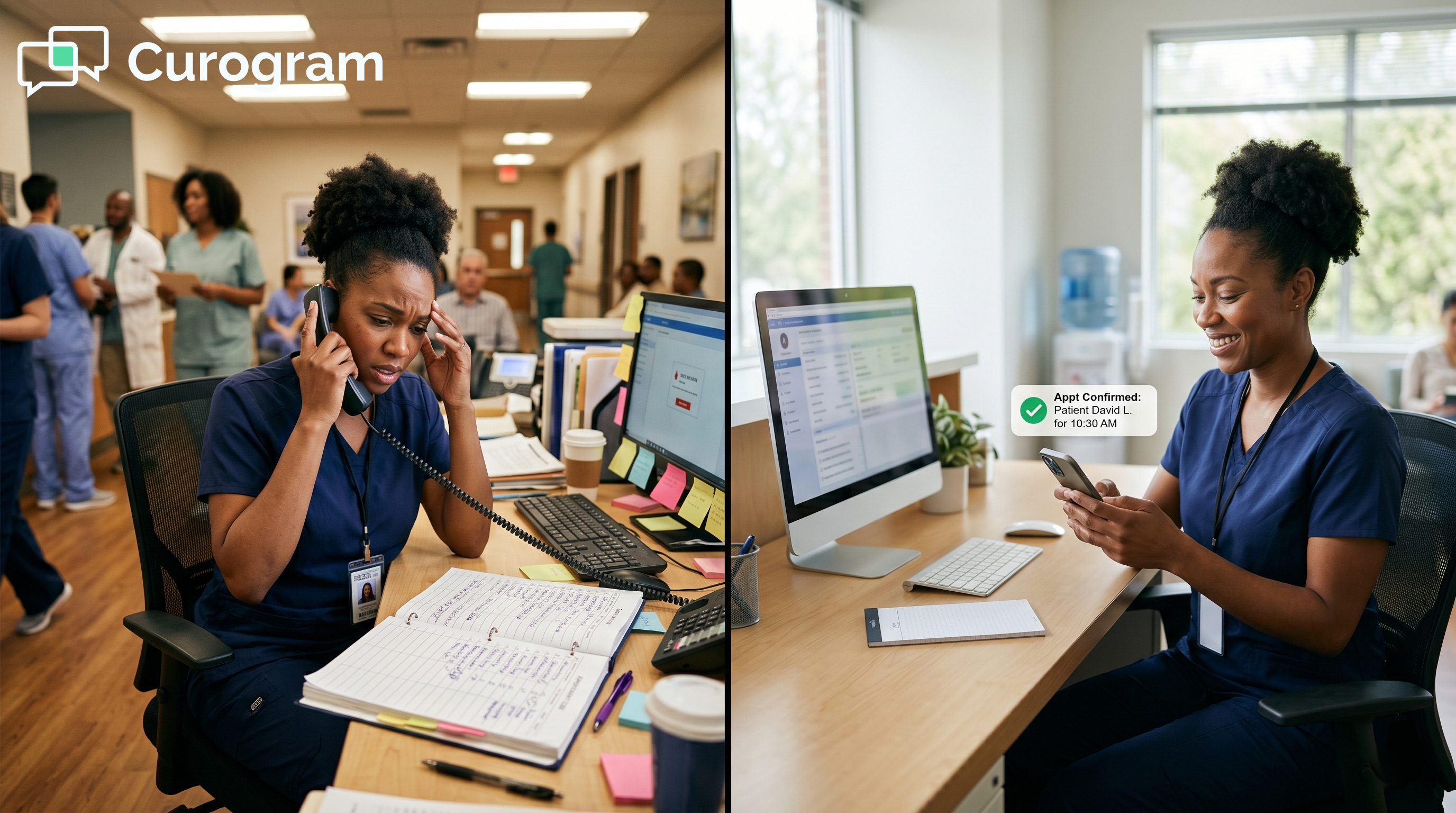
It's 2:05 PM. The printer spits out tomorrow's schedule. Forty-five names stare back at you. And just like that, the next two hours of your life belong to the phone.
This scene plays out every day in rehab clinics across the country. The front desk pulls up the list. They start dialing. Most calls go straight to voicemail. A few patients pick up, say "yes," and hang up.
Others need to reschedule, which starts a whole new round of back-and-forth. By the time it's done, the lobby is backed up, and the staff looks drained.
It's a cycle that feeds front desk burnout in PT clinics of every size. Good people doing rote work that a simple text could handle.
The worst part? Most of those voicemails are never even heard. The entire effort yields a fraction of the results it should.
If you've ever tried to reduce confirmation calls in a WebPT practice, you know the pain. WebPT does a great job showing who's on the books.
But it doesn't do the heavy lifting of making sure those patients actually show up. That gap between "scheduled" and "confirmed" is where hours vanish each week.
There's a better path. One that doesn't ask your team to act like a call center. What if your schedule could confirm itself? What if your staff only had to pick up the phone for the two or three patients who didn't reply to a text?
That's the promise of a text message appointment confirmation system built for rehab. And it's not a dream. It's already running in clinics that decided the daily call list had to go.
In this article, we'll walk through the problem, the fix, and the real results practices are seeing when they automate patient reminders in physical therapy.
Every rehab clinic has a version of this story. The clock hits a certain hour, and the mood shifts.
What should be a calm close to the day turns into a race against the phone. Let's break down why this daily grind costs more than you think.
Picture the scene. The schedule prints. There are 45 slots filled for tomorrow. The front desk picks up the phone and starts at the top. Dial, ring, voicemail. Dial, ring, voicemail. Over and over.
Out of those 45 calls, roughly 30 go straight to voicemail. Ten patients pick up and say a quick "yes."
Five people need to move their time, which means a game of phone tag that can drag on for the rest of the day. The math is brutal.
Each call takes about two to three minutes when you count the dial, the wait, the message, and the notes.
Multiply that by 45, and you're looking at close to two hours. That's two hours of a trained team member doing a job that adds almost no value.
Those are hours that could go toward checking in patients, handling intake forms, or sorting out billing. Instead, the front desk is stuck playing the role of a robocaller.
And most of the messages they leave? Patients delete them without ever pressing play.
WebPT is built to manage your clinical workflow. It tracks visits, stores notes, and keeps the schedule in order.
But it stops short of one key step. It shows you who is supposed to come in. It doesn't make sure they actually do.
That gap is where WebPT scheduling efficiency breaks down for the front office. The data is there. The outreach is not. Someone still has to pick up the phone and do the work by hand.
Rehab is unique. Patients often have long treatment plans with visits two or three times a week.
That means more slots to confirm, more chances for no-shows, and more strain on staff. The daily call list only grows.
Without a way to eliminate manual phone tag in rehab, the front desk becomes a bottleneck. Staff morale drops. Errors creep in.
The patient experience suffers because the person who should be greeting them at the door is stuck on hold.
The fix isn't hiring more people. It's letting software handle the task your staff dreads.
Here's how a virtual assistant built into your WebPT workflow takes over the daily call list and gives your team their time back.
Curogram connects to your WebPT calendar and scans the next day's slots. It pulls patient names, times, and provider details.
No one has to print a list or open a spreadsheet. The system reads the schedule on its own.
This happens on a set timer, usually 24 to 48 hours before the visit. You choose the window that works best for your clinic. Once it runs, the outreach begins without a single click from your team.
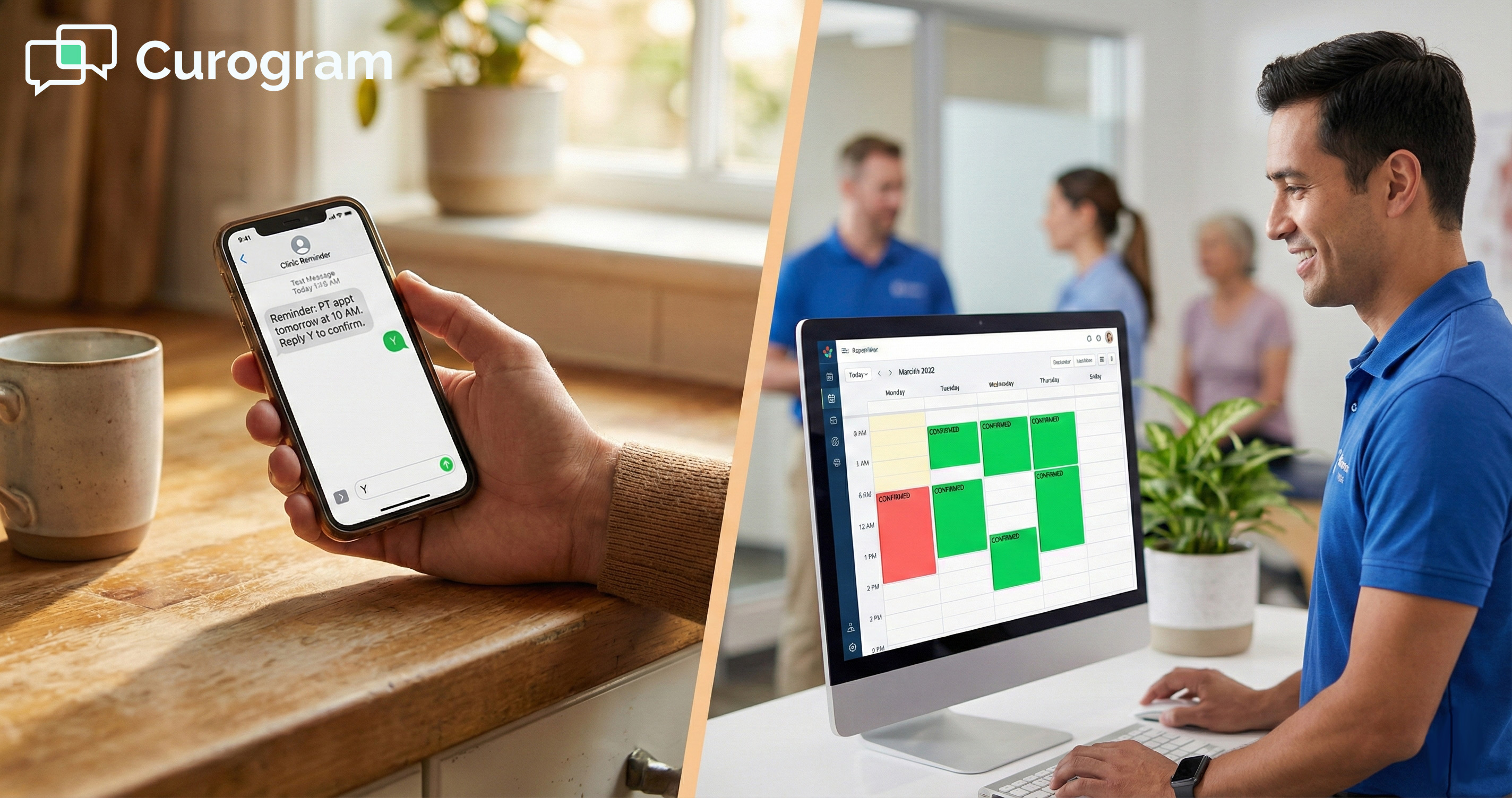
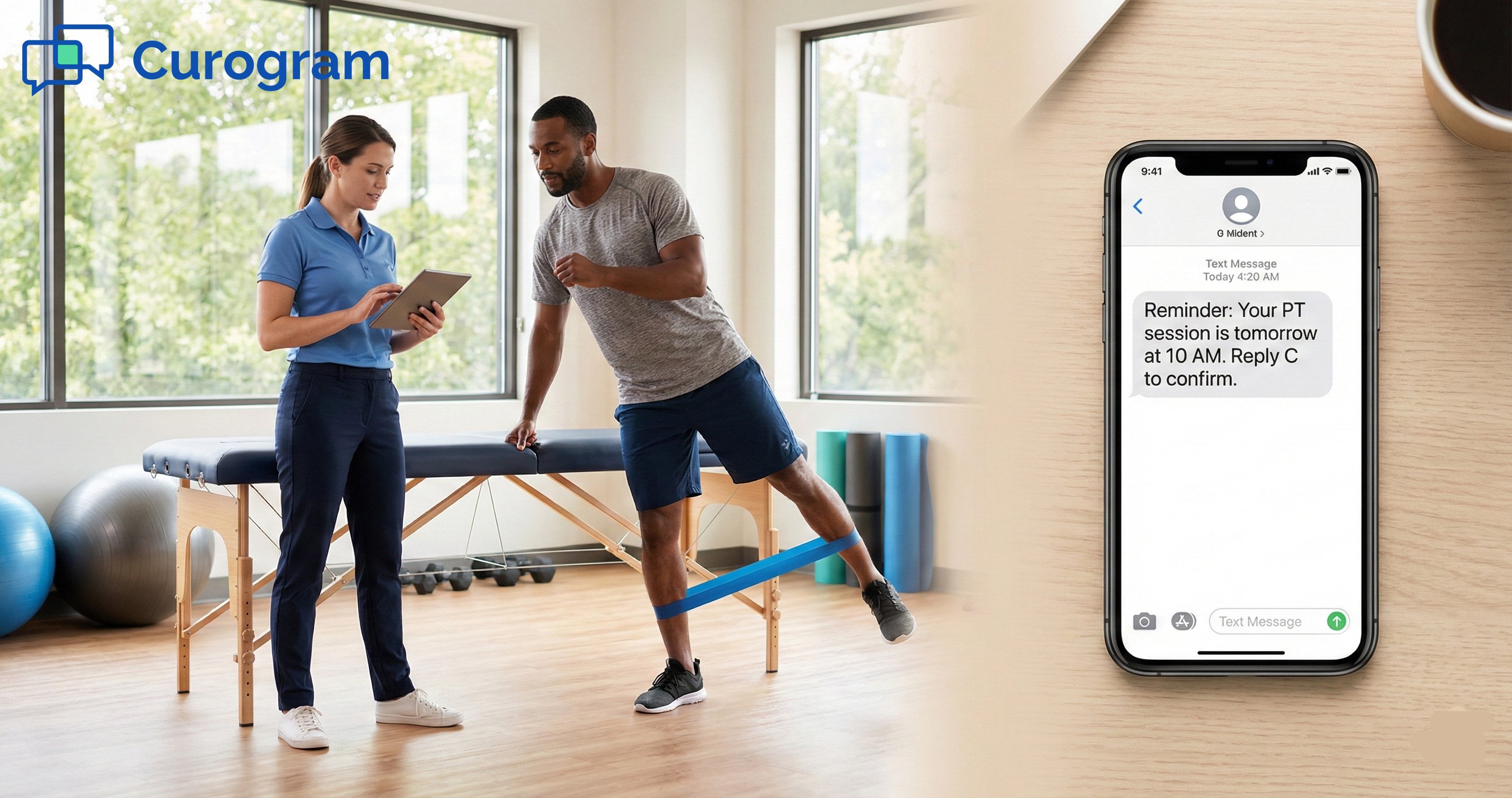
Each patient gets a short, clear message. Something like: "Hi Jane, confirming your PT with Dr. Smith tomorrow at 10 AM. Reply Y to confirm."
It's personal. It's direct. And it takes the patient about three seconds to respond.
The text goes out from your clinic's own number, not a random code. Patients see a name they trust. That small detail drives higher response rates than a cold call from an unknown line ever could.
When a patient replies "Y," Curogram writes back to WebPT. The slot color changes to confirmed. No one has to log in and update it by hand. The loop closes on its own.
If a patient replies that they need to reschedule, the message routes to your dashboard. A staff member can handle it from there. But the key point is this: that's one person, not 45. The workload drops by roughly 90%.
Not every patient will reply. Some will miss the text or forget to respond. That's fine. The system flags them.
Your front desk now has a short list of three to five people to call instead of a full page of 45.
This is where the real shift happens. Staff go from spending two hours on the phone to spending ten minutes. The rest of their day opens up.
They can greet patients, handle walk-ins, and manage tasks that require a human voice. That's what it means to truly automate patient reminders in physical therapy.

Saving time is only part of the story. When you stop forcing your team to make dozens of calls each day, the whole clinic runs better.
Here's what changes when you turn your front desk from a call center into a care center.
Two hours a day, five days a week. That's 10 hours your front desk spends on calls that mostly go nowhere. When you hand that task to a text message appointment confirmation system, those hours come back.
Think about what 10 hours means. It's a full quarter of a front desk worker's week. Some clinics use that time to cross-train staff.
Others use it to improve the check-in flow or catch up on claims. The point is, you get to choose how to use it.
Most practices that switch to automated text reminders see outbound calls drop by 90% or more. That's not a guess. It's based on the math. If 42 out of 45 patients confirm by text, your staff only needs to call three.
Fewer calls also mean fewer mistakes. No more writing down the wrong time. No more "I left a message, but I'm not sure they got it." A text is a clear record. Both the clinic and the patient can see it.
Front desk burnout in PT clinics is real. People don't take admin jobs to sit on the phone all day. They want to help patients.
They want to solve problems. But when half their shift is spent leaving voicemails, the joy drains fast.
When you take the call list away, morale goes up. Staff can greet patients with a smile instead of a "hold please."
They can answer questions in person. They can be present. That shift in energy shows up in the patient experience, too.
A phone call is a he-said-she-said moment. A text is proof. When a patient replies "Y" to confirm, there's a record. No more "I never got the voicemail" disputes. No more confusion about who said what.
This matters for your front desk and for your billing team. Confirmed visits are tracked. No-shows are flagged. The data flows clean.
When you can reduce confirmation calls in WebPT with a clear audit trail, the entire office runs more tightly.
Below are some of the most common questions rehab clinics ask before switching to an automated reminder system.
Yes. You can set a patient's preferred language in WebPT, and Curogram will send the reminder in that language. Spanish is the most common second option, but the system supports others as well.
This helps clinics serve diverse patient bases without asking staff to translate on the fly. Clear messages in the right language lead to better response rates and fewer missed visits.
Language gaps are a top reason patients miss or ignore reminders. When a message arrives in a language they read with ease, they're far more likely to act on it.
If a patient sends back something like "Is parking free?" the message goes straight to your dashboard. A staff member can reply in real time. The message doesn't vanish or get lost in a queue.
This two-way setup means your text message appointment confirmation channel doubles as a quick-reply helpline. Patients get answers fast, and staff stay in control.
Every reply is logged and linked to the patient record. Nothing slips through the cracks. It's one more way to keep front desk burnout in PT clinics low by giving staff clear, sorted tasks instead of chaos.
Yes. Curogram can tag patients who have a history of missed visits. These patients can be set to receive extra reminders, such as a text three days out and again the morning of the visit.
You can also require a deposit through Curogram's Text-to-Pay feature. This holds the slot and gives the patient a financial reason to show up.
Extra touchpoints work. Studies show that adding a second or third reminder cuts no-show rates by up to 30%.
For a rehab clinic running a tight schedule, that can mean several more billable visits each week.

Your front desk team has a voice that matters. It should be used to help patients, not to leave messages that no one hears. The daily call list was never a good use of anyone's time. It just felt like the only option.
Most patients don't want a phone call to confirm a visit. They're at work, in a meeting, or driving. A text is quick and quiet.
They see it, tap a reply, and move on. No need to call back. No voicemail to sit through.
Texts also give patients something to look back on. The time, the provider, the address. It's all right there in their message thread. That alone cuts down on late arrivals and wrong-location mix-ups.
Over 90% of texts are read within three minutes. Compare that to voicemail, where the open rate is closer to 20%.
If the goal is to confirm visits and boost WebPT scheduling efficiency, text is the clear winner.
Patients who feel reached in a way that respects their time are more likely to show up. And when they do, the front desk is ready for them.
Not stuck on the phone trying to reach someone else. That shift matters more than most clinics expect.
It also changes how patients view your practice. A clean, fast text message appointment confirmation feels modern.
It signals that your clinic values their time as much as their health. That kind of touch builds trust before they even walk through the door.
The daily call list doesn't have to be part of your clinic's routine. There is a way to eliminate manual phone tag in rehab for good.
The tools exist. They work with WebPT. And they take less than a day to set up.
When you automate patient reminders in physical therapy, you're not cutting corners. You're giving your staff the space to do what they were hired to do.
Greet patients. Answer questions. Handle the things that need a human touch. The phone was never the right tool for bulk outreach.
Your team's voice is a premium asset. Don't spend it on voicemails that get deleted. Let the software handle the grunt work so your people can focus on care.
The clinics that have made this switch aren't looking back. They have calmer afternoons, happier staff, and higher show rates. The front desk went from a call center to a care center. The patients would notice the difference.
Start Your 30-Day Free Trial and enjoy a quiet afternoon at the front desk.
💡 Automated appointment reminders for Lytec practice workflows help medical offices cut no-show rates by up to 53% and remove the need for manual...
💡 Automated appointment reminders for WebPT help rehab clinics protect Plan of Care adherence through interactive 2-way SMS.By syncing with the...
💡 Independent practices can set up automated appointment reminders for Elation Health through Curogram's direct integration. This system sends...