11 min read

Stop The Call Down: 2-Way Texting Integration for WebPT Cancellations

Stop The Call Down: 2-Way Texting Integration for WebPT Cancellations
💡 A 2-way texting integration for WebPT cancellations lets front desk teams fill open slots in minutes instead of hours.

Rather than calling down a paper waitlist and leaving voicemails, staff sends one text to all waitlisted patients at once. The first person to reply “YES” gets the spot.

This approach helps physical therapy practices reduce phone calls by up to 50% and recover lost Plan of Care revenue the same day.

Curogram connects with WebPT to give the front desk a true 2-way texting layer built for daily scheduling needs—not marketing campaigns. Staff can learn the system in under five minutes, and the result is a calmer, more focused front office.


It’s 9:07 on a Monday morning. Your front desk just got the call—a 2:00 PM patient won’t make it.

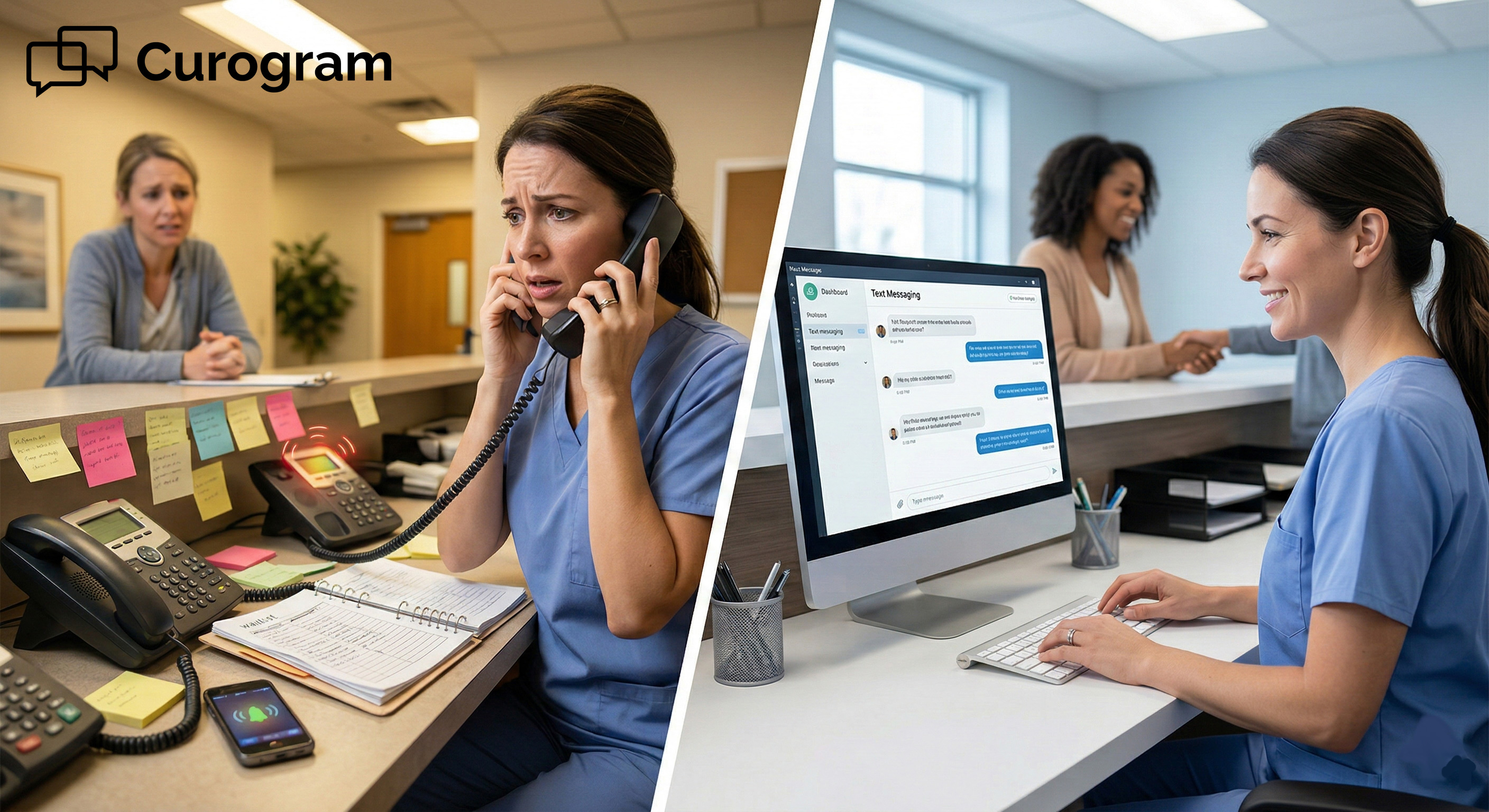
Now the clock starts ticking. Someone has to grab the waitlist, pick up the phone, and start dialing.

One ring. Two rings. Voicemail. Next number. Voicemail again. By the fifth attempt, the front desk has burned through 15 minutes and still has an empty slot on the books. Sound familiar?

This is “The Call Down,” and it haunts physical therapy clinics every single day. It’s the process of working through a paper or sticky-note waitlist one call at a time, hoping to fill PT cancellations fast before the revenue is gone for good. For high-volume rehab practices using WebPT, these lost slots add up quickly.

The real cost goes well beyond dollars. Your front desk staff ends up glued to the phone, unable to greet the patients walking through the door. Intake forms pile up. The lobby gets backed up. And morale takes a hit day after day.

But here’s the thing: this problem isn’t about your team’s work ethic. It’s about using the wrong tools for the job. Phones were never built to handle fast, one-to-many outreach. Text messaging was.

A 2-way texting integration for WebPT cancellations gives your staff the power to reach every waitlisted patient at once with a single tap.

No more dialing. No more voicemails. No more rounds of phone tag. Just a quick broadcast text, and the first patient to reply claims the slot.

In this article, we’ll break down exactly how The Call Down drains your WebPT front desk workflow. We’ll also show you how replacing it with smart, 2-way texting can transform your practice from the inside out.

We’ll cover the real cost of phone-based outreach, the better path forward, and the results you can expect when you make the switch.

The Villain: The Call Down & Voicemail Purgatory

Every PT clinic knows the drill. A slot opens up, and the race to fill it begins. But the tools most front desks rely on—phones, paper lists, sticky notes—were never designed for speed.

Let’s look at why “The Call Down” is one of the biggest drains on your practice.

The Reality of 80+ Calls a Day

High-volume rehab clinics live and die by their schedules. A full book means steady revenue.

An empty slot means lost income that can never be clawed back. For many PT offices, the front desk handles upwards of 80 phone calls each day.

That number alone is staggering. But it gets worse when you factor in holds, transfers, and voicemails that eat up even more time.

The phone becomes the center of every front desk task, and everything else takes a back seat.

And these aren’t quick calls. Many involve scheduling changes, insurance questions, and patients who just need to vent about a billing issue.

Each one pulls your staff deeper into the phone and further from the work that keeps the clinic running smoothly.

Where the Time Actually Goes

Think about what each call involves. There’s the dial, the wait, the greeting, the ask, the scheduling, and the goodbye.

A single call can take three to five minutes. Multiply that by 80, and your staff has spent over six hours on the phone in a single shift.

That doesn’t leave much room for anything else. Intake paperwork in physical therapy clinics can run 15 to 20 pages per patient. When the phone never stops ringing, those forms fall behind fast.

The Ripple Effect on Patient Care

When staff are stuck on calls, they can’t focus on the patients standing right in front of them. Lobby wait times creep up. Check-ins get rushed. Patients feel ignored before they even see a therapist.

This cycle feeds on itself. Frustrated patients are more likely to cancel future visits, which creates—you guessed it—more open slots and more calls. It’s a loop that’s hard to break without changing the core process.

The 9:00 AM Cancellation Nightmare

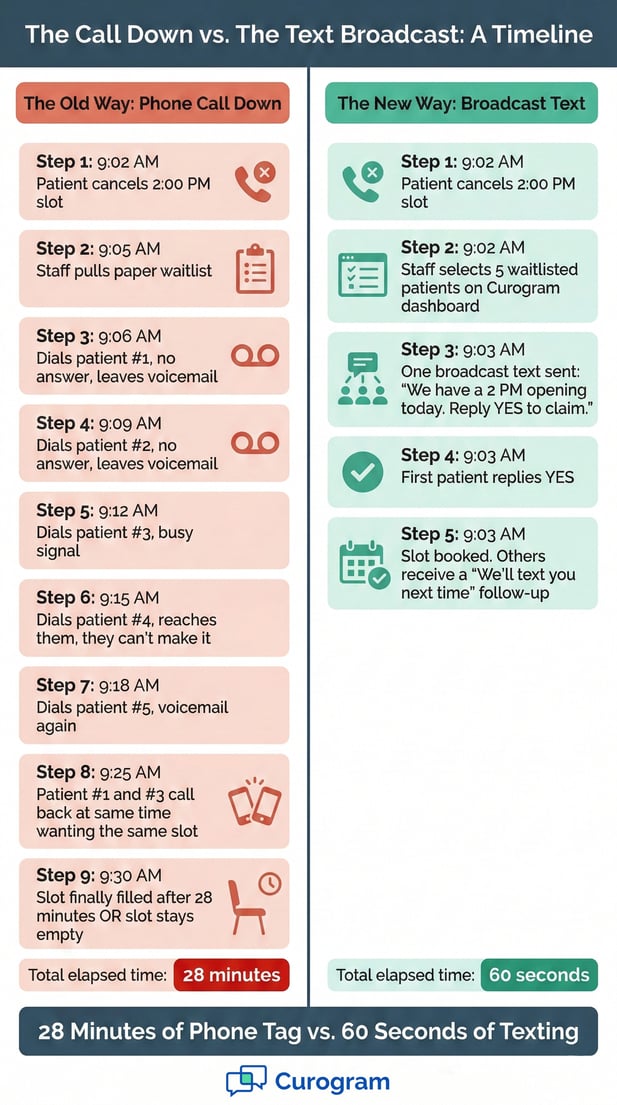
A patient drops out of a 2:00 PM recurring slot. The front desk sighs, pulls out the paper waitlist, and starts dialing.

This scene plays out in PT practices across the country, and the outcome is almost always the same.

Five voicemails. Two callbacks that come too late. And one slot that sits empty because no one picked up in time.

The revenue from that visit? Gone. The Plan of Care progress for the waitlisted patient? Delayed.

The Callback Collision

Here’s where things get truly messy. After leaving five voicemails, three patients call back at the exact same time—all wanting the same slot. Now your staff has to manage the awkward task of telling two of them they’re too late.

This kind of phone tag is a daily headache for any PT practice trying to stop phone tag and keep the schedule full. It wastes everyone’s time, and it leaves patients feeling like they lost a race they didn’t know they were running.

Burned-Out Staff, Empty Chairs

The end result is a front desk team that’s burned out, buried in phone tasks, and unable to do the work that actually matters.

They’re playing Schedule Tetris all day long, and the puzzle never seems to come together.

Meanwhile, your clinical team is ready to treat. The room is open. The therapist is waiting. But the chair stays empty because the WebPT front desk workflow still leans on a method that hasn’t changed in decades.


Infographic comparing medical phone call down waitlist process vs. broadcast text patient scheduling

The Guide: The 1-to-Many Texting Solution

The problem isn’t your staff. It’s the process. When a single cancellation triggers a chain of 10 phone calls, you’re using a one-to-one tool for a one-to-many job.

The fix isn’t to make faster calls. It’s to stop calling altogether and start texting.

Why Marketing Tools Don’t Solve This

A lot of clinics try to solve scheduling chaos with tools that weren’t built for it. Newsletter platforms, mass email blasts, and reactivation campaigns are great for bringing patients back over time.

But they’re not designed for the fast, real-time response your front desk needs when a slot opens at 9:00 AM and needs to be filled by 2:00 PM.

What your team needs is a dedicated, 2-way front-desk texting layer that’s built for daily operations—not quarterly campaigns.

The Difference Between Marketing and Operations

Marketing tools send messages out. That’s it. They’re built to broadcast, not to listen. A true operational tool lets patients reply in real time, and your staff can act on those replies right away.

This is the core gap in most PT practices. They have great clinical software in WebPT, but the front desk is still stuck with phones and paper for the daily grind of filling slots and chasing callbacks.

What Operational Texting Actually Looks Like

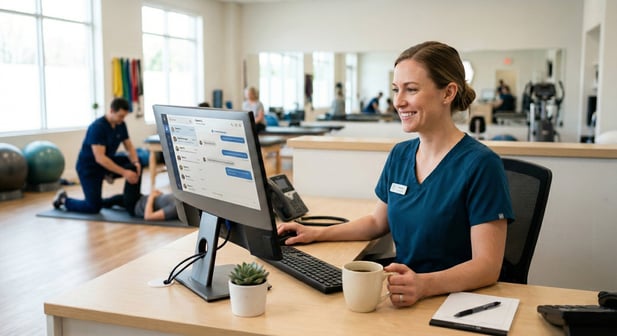
Think of it as a live conversation channel between your staff and your patients. When a slot opens, your team doesn’t pick up the phone.

They send a short, clear text. When a patient replies, the response shows up instantly on a dashboard—no phone call needed.

This is what it means to automate waitlist outreach in WebPT. It’s not about removing the human touch. It’s about giving your humans better tools.

Broadcast Waitlist Messaging in Action

Here’s how it works in practice. A recurring 2:00 PM slot opens up. Your front desk staff selects five patients on the waitlist who need that time.

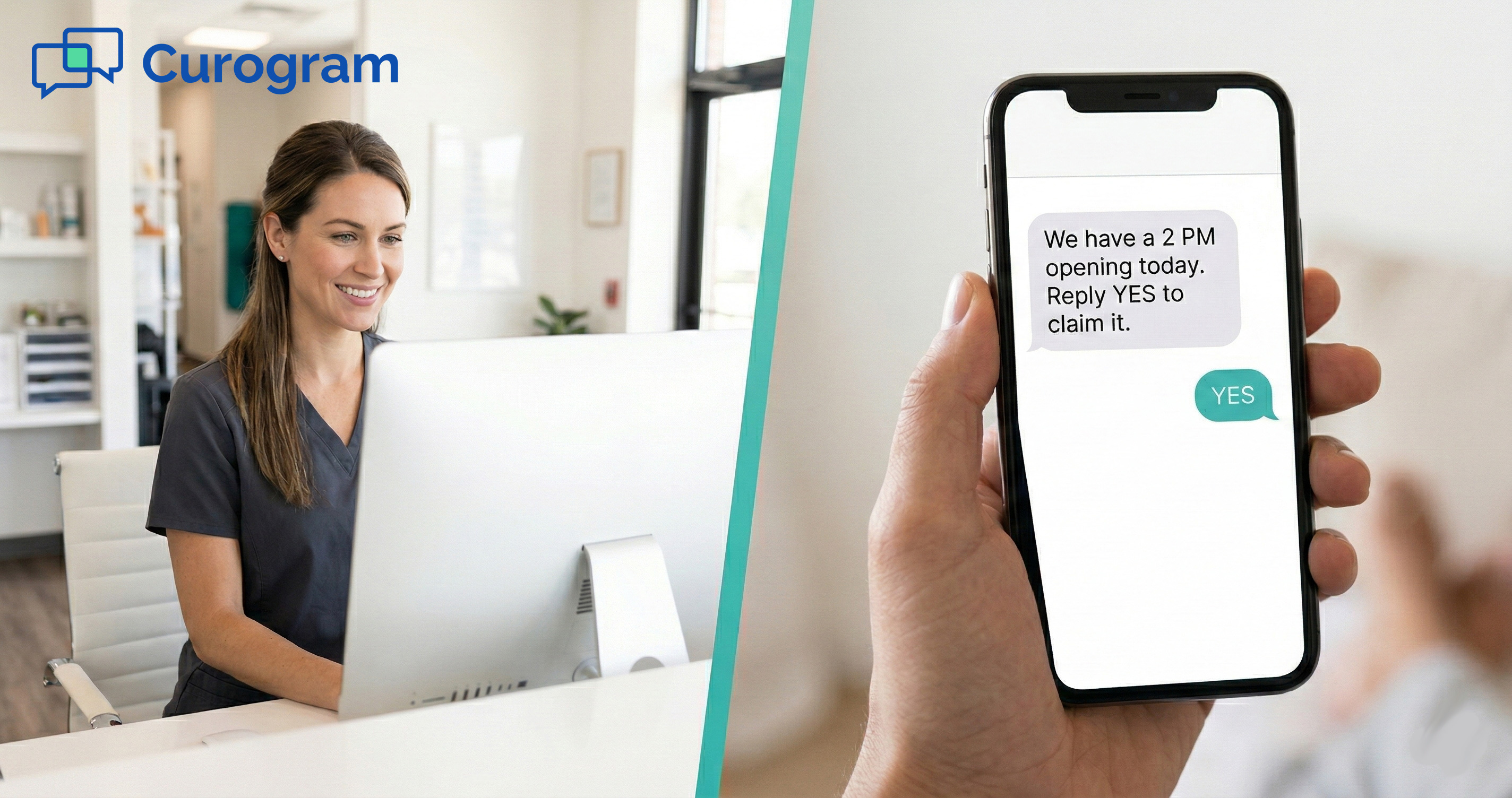
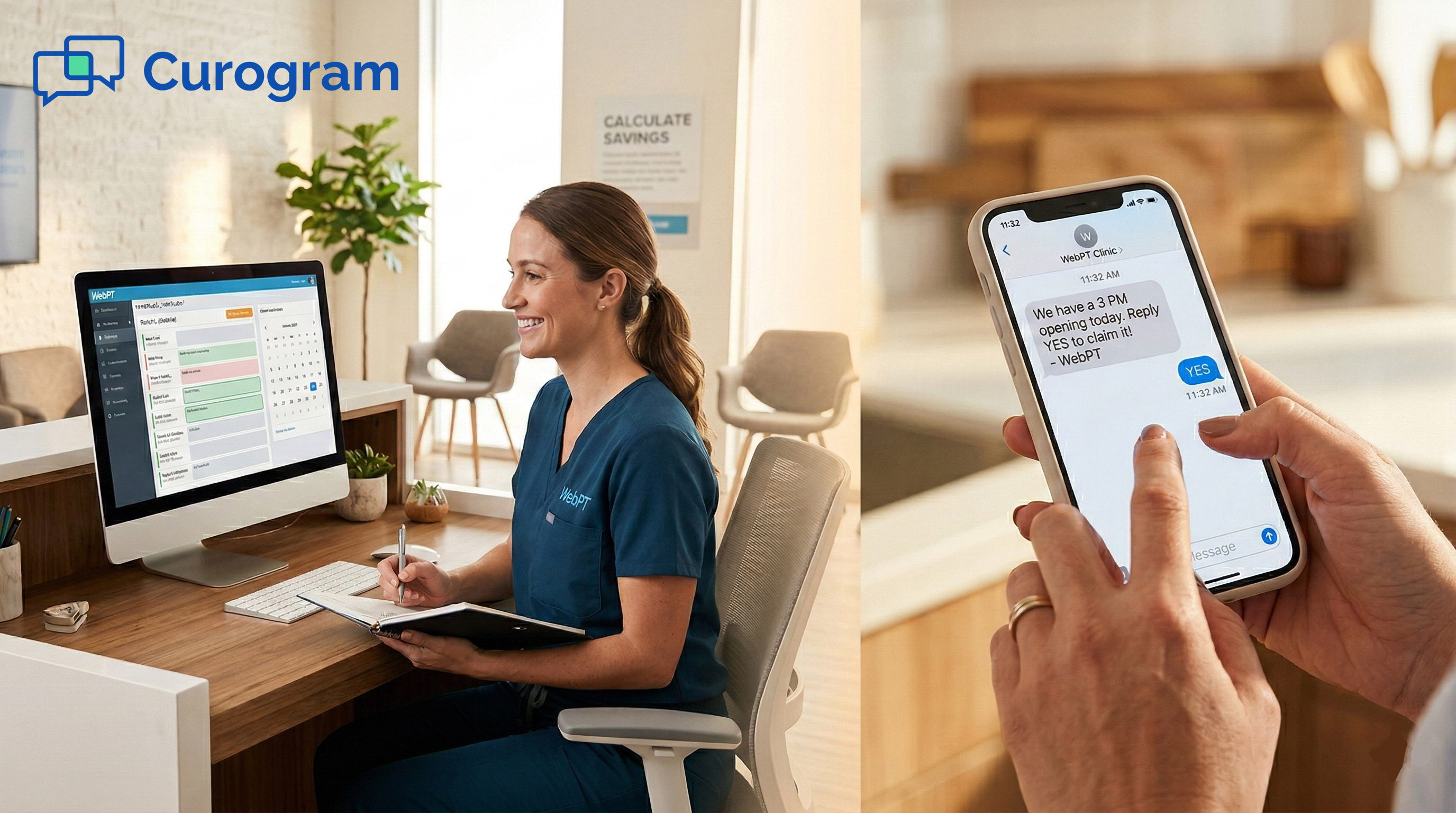
They hit send on a single message: “We have a 2 PM opening today. Reply YES to claim.”

Within seconds, the first patient replies. That patient gets booked. The rest receive a quick follow-up from a saved template: “That spot was just claimed, but we’ll text you next time!”

Done. The whole process takes less than a minute.

Compare that to the old routine. Five separate phone calls. Five chances to land in voicemail. Five windows where a callback might come too late.

The broadcast text method is not just faster. It’s fairer, cleaner, and far less stressful for everyone involved.

One Text Replaces Ten Phone Calls

The math is simple. One broadcast text reaches five patients in the time it takes to dial a single number. No voicemails. No waiting by the phone. No callback chaos.

Based on our internal data, practices that adopt this approach reduce phone calls in physical therapy offices by up to 50%.

That’s not a small change. That’s a complete shift in how the front desk spends its day.

Reclaiming Staff Bandwidth

PT front desks manage massive amounts of intake paperwork and complex scheduling. When you replace a 15-minute phone tag session with a 15-second text broadcast, you give your team critical hours back every week.

Based on our internal research, practices using 2-way texting see staff productivity improve by more than 30%.

That freed-up time goes straight back into patient care, intake processing, and the kind of face-to-face service that builds loyalty.

It also means fewer overtime hours, less burnout, and a front desk team that actually enjoys coming to work. When you remove the most tedious task from someone’s day, everything else gets easier. 


The Success: Silence is Golden

What happens when you swap phone calls for text messages? The front desk gets quieter. The schedule stays full. And the team finally has room to breathe. Here’s what that shift looks like in real numbers and real outcomes.

Cut Phone Volume by 50%

The most obvious change is the silence. When practices roll out a 2-way texting integration for WebPT cancellations, the phones stop ringing off the hook.

Based on our internal data, clinics that switch to text-first outreach see daily call volume drop by as much as 50%.

That’s not just fewer rings. It’s fewer holds, fewer transfers, fewer missed calls, and fewer voicemails clogging up the system. The front desk goes from chaotic to calm—almost overnight.

What 50% Fewer Calls Actually Means

If your clinic handles 80 calls a day, cutting that to 40 frees up roughly three hours of staff time. That’s three hours that can go toward greeting patients, processing forms, or simply catching a breath between tasks.

The impact on morale is just as big. Front desk staff who aren’t glued to the phone all day report feeling less stressed and more in control of their work.

Revenue Recovery in Real Time

Speed matters when it comes to filling open slots. A text gets read within minutes. A voicemail might sit for hours—or never get returned at all.

Based on our internal research, practices using automated reminders and 2-way texting see a 10–20% increase in revenue from recovered appointments alone.

That revenue adds up fast. A single filled slot might be worth $150 or more. Over the course of a month, recovering just one extra appointment per day can mean thousands of dollars back on the books. It’s money your practice already earned the right to collect—you just need the tools to capture it.

Phone Calls vs. Text Messaging: A Side-by-Side Look

Factor

Phone Call Down

Broadcast Text

Time to reach 5 patients

15–25 minutes

15 seconds

Response rate

Low (voicemail)

High (instant reply)

Callback conflicts

Frequent

None (first reply wins)

Staff stress level

High

Low

Slot fill success rate

Unpredictable

Fast and reliable


Proactive vs. Reactive Scheduling

The old way is reactive. A slot opens, and you scramble. You dial, you wait, you hope. The new way flips that script.

With broadcast texting, your staff moves from begging patients to fill a slot to simply watching the dashboard for the first “YES.”

That shift—from reactive to proactive—changes the entire feel of the front office. Staff aren’t chasing problems anymore. They’re managing solutions.

Patients notice the difference, too. A calm front desk creates a calmer lobby, which sets the tone for the entire visit.

A Self-Healing Schedule

When your waitlist outreach runs on text, gaps in the schedule fix themselves almost as soon as they appear. There’s no lag. No guesswork.

The slot opens, the text goes out, and the reply comes back. It’s the closest thing to a self-healing schedule your practice can have.

Over time, patients learn the pattern too. They know that when they get a text from your office, it means a real slot is open right now.

That kind of trust speeds up response times even further and keeps your book tight all day long.

Empowered, Not Overwhelmed

The biggest win isn’t always on the balance sheet. It’s in the break room. Front desk staff who feel empowered—instead of buried—stick around longer. They engage more with patients. They bring energy to the office instead of dread.

And in an industry where staff turnover is a real threat, that kind of morale boost is worth more than any single filled slot. .


Physical therapy clinic interior with a receptionist using front desk texting software and patients exercising

Rescue Your Front Desk

Your clinical work inside WebPT is state of the art. Your charting is precise. Your treatment plans are detailed.

But none of that matters if the patient chair sits empty because the front desk couldn’t fill a cancelled slot in time.

The gap isn’t in your care. It’s in your process. Every minute your staff spends dialing down a waitlist is a minute taken away from the patient standing in your lobby.

Your team already works hard. They manage complex schedules, mountains of paperwork, and a constant stream of patient needs.

They handle check-ins, verify insurance, and keep the whole operation moving. They deserve tools that match their effort—not sticky notes and voicemail boxes.

A 2-way texting integration for WebPT cancellations doesn’t replace your staff. It empowers them. It takes the most draining part of their day—the call down—and turns it into a single tap.

The result is a team that has more energy, more focus, and more time for the work that truly matters.

Your practice invested in WebPT to raise the bar on clinical care. Now it’s time to raise the bar on front desk operations, too. The gap between great charting and great scheduling doesn’t have to exist.

What used to take 15 minutes of phone tag now takes 15 seconds. What used to cause stress now brings relief. And what used to be lost revenue now turns into a booked appointment and a patient on the table.

Based on our internal data, practices that adopt this approach see over 75% of appointments confirmed through automated messaging. That’s a schedule that practically runs itself—with your staff in control, not the phone.

If you’re ready to stop phone tag at your PT practice and give your front desk the tools they’ve been waiting for, the path forward is simple. You don’t have to overhaul your systems or retrain your entire team.

You just need to add the right layer on top of what you already have. It takes minutes to set up, and the impact starts on day one.  

Book a demo today and let your front desk experience a full week without The Call Down. 


Frequently Asked Questions

We already have WebPT Reach. Why do we need this?

Great question—and one we get a lot. WebPT Reach is a solid marketing tool. It helps your team send newsletters, run reactivation campaigns, and stay in front of past patients. That work matters for your long-term growth.

But Reach wasn't built to handle the real-time chaos of a cancelled 2 PM slot. Curogram is an operations tool designed for your front desk.

It's built to stop the phone from ringing 80 times a day by moving urgent, time-sensitive tasks to text. They solve completely different problems—and they work even better together.

Do patients need to log into a portal to claim the waitlist spot?

Not at all. Patients simply reply "YES" to your text message. There's no app to download and no portal to access.

Curogram's HIPAA-compliant 2-way texting routes their reply straight to your dashboard so you can book them right away.

This matters because portal fatigue is real. Most patients don't check their health portals regularly.

But they do check their texts—usually within three minutes. That speed is what makes automated waitlist SMS so effective at filling last-minute gaps.

Will this work for multi-location, high-volume PT clinics?

Yes. Curogram is designed for high-volume rehab teams managing complex, recurring schedules across multiple providers and locations.

Whether your patients come in two or three times a week, the platform handles the volume without breaking a sweat.

Each location can manage its own waitlist and text threads from one central dashboard.

That means your admin team gets a bird's-eye view while each clinic keeps full control of its own schedule. It scales with you as you grow.

How long does it take to set up Curogram with our WebPT system?

Most clinics are up and running within a day. Curogram works as an add-on that syncs with WebPT, so there's no need to rip out your current system or change how your team charts.

The platform pulls in your schedule data and lets your staff start texting right away.

Training is fast, too. Based on our internal data, staff learn the platform in about ten minutes because it works just like the texting apps they already use on their own phones. There's no steep learning curve and no complex setup to slow you down.

Is texting patients through Curogram HIPAA-compliant?

Yes. Curogram is built from the ground up to meet HIPAA standards. All messages sent through the platform are logged, tracked, and managed through a secure dashboard.

Your staff never uses personal phones or unsecured channels to reach patients.

For general texts like waitlist alerts and appointment reminders, standard SMS works fine because no protected health information is shared.

When a conversation does need to include sensitive details, Curogram offers an encrypted messaging option so you stay compliant without switching to a separate tool.

Fill Cancellations Fast: 2-Way Texting Waitlist Integration for WebPT

Fill Cancellations Fast: 2-Way Texting Waitlist Integration for WebPT

💡 High-volume rehab clinics lose $80–$120 or more every time a patient cancels and the slot stays empty.A 2-way texting waitlist integration for...

Read More
2-Way HIPAA Texting for eClinicalWorks

2-Way HIPAA Texting for eClinicalWorks

💡 eClinicalWorks 2-way HIPAA texting with smart routing for enterprise networks gives patients a direct SMS channel — no app download, no portal...

Read More
Secure Messaging for Lytec | Protecting Staff Privacy & Sanity

Secure Messaging for Lytec | Protecting Staff Privacy & Sanity

💡 Secure text messaging for Lytec staff workflows keeps patient data safe and shields your team from burnout. When front desk staff use personal...

Read More