
9 min read
Why Clients Don’t Pay Statements | SMS Text-to-Pay for TherapyNotes
Jo Galvez
:
June 19, 2026
Mailed statements often collect only about 20% of what clients owe. Stigma is a big reason. An envelope with the practice name can reveal that someone is in therapy. So the bill sits unpaid.
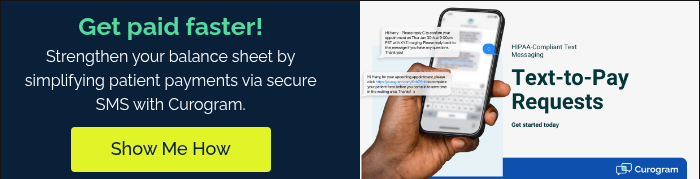
Curogram sends a private, secure payment link by text right after the session. There is no envelope, no practice name on paper, and no portal login. The client taps twice and pays in seconds. The result is faster collection, lower mailing costs, and more privacy for clients.
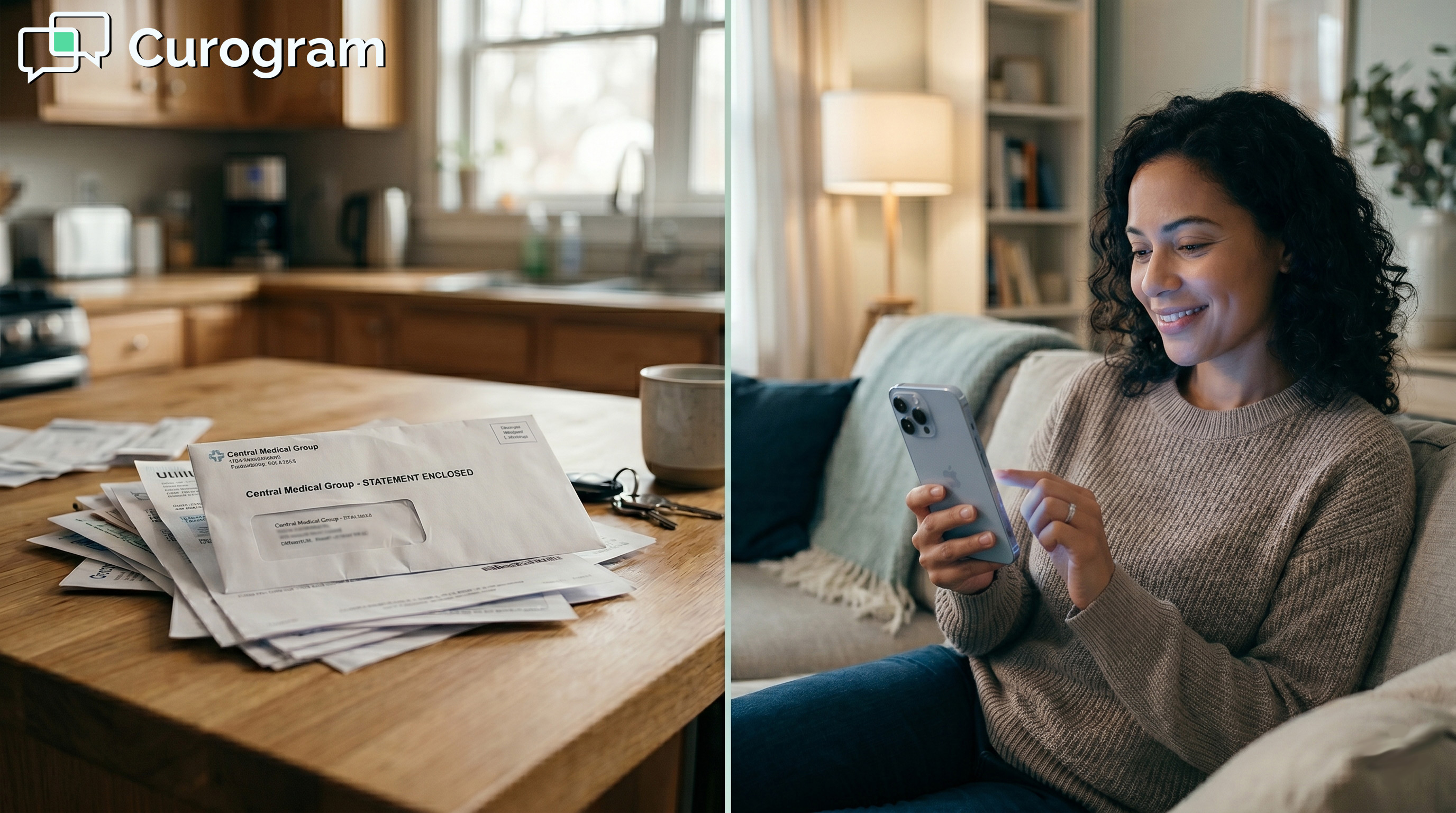
Picture a client who just left a hard therapy session. They feel lighter. Then, days later, an envelope shows up at home. The practice name is printed right on it.
Their partner grabs the mail and asks, “What’s this?”
Suddenly, a private choice feels exposed. That envelope did more than ask for money. It put their care on display.
This is one big reason why therapy clients don’t pay statements. The bill is not just a bill. It is a small risk to their privacy. So it lands on the counter, then in the junk pile.
Behavioral health client billing stigma is real. Clients in trauma care, couples work, or substance use treatment guard their privacy closely.
A mailed statement can break that trust without meaning to. The payment method itself becomes the problem.
There is also plain friction in the old way. The statement arrives weeks after the session. Paying means writing a check or calling during work hours. For a $35 copay, that effort feels too big, so the balance waits.
Here is the hard part. Mailed statements often collect only about 20% of what clients owe. That is not because clients refuse to pay. It is because the old way makes paying slow, public, and easy to forget.
The good news is that there is a better path. A private text with a secure link can replace the envelope completely. The client pays in seconds, from their own phone. No mail, no phone call, no one else knows.
This article shows how SMS payment links give therapy clients a private, simple way to pay. We will look at the real cost of paper statements.
Then we will see how a private text channel works. Last, we will show what changes when paying feels normal again.
The Villain: The Paper Statement Black Hole
Most unpaid therapy bills are not a money problem. They are a design problem. The paper statement creates friction and risk at the same time.
Let us look at why this old system fails clients and practices alike.
The Hidden Privacy Problem
An Envelope That Talks
A mailed statement shows the practice name on the outside. For a counseling center, that name says a lot.
Anyone who handles the mail can guess what it means. That single envelope can speak louder than the client wants.
A partner, a roommate, or a parent might see it. The client never chose to share that detail. The mail did it for them. That can feel like a breach.
For someone in trauma care or couples work, the sting is real. The bill quietly reveals the care. A payment reminder should never out a client. Yet paper does it all the time.
Why the Bill Sits Unpaid
Even without stigma, the workflow drags. The statement shows up two to four weeks after the session. By then, the visit feels far away. The urgency is already gone.
To pay, the client must write a check or call during work hours. A small copay does not feel worth that effort. So the statement waits on the counter.
Each step adds a small reason to delay. Find the checkbook later. Call the office tomorrow. Soon, the bill is weeks old and lost in the junk pile.
None of this means the client is careless. The system simply rewards delay. Every barrier nudges the bill further down the pile.
Small Bills, Big Losses
The Copay Paradox
Behavioral health copays are usually small, around $25 to $50. But they repeat across hundreds of sessions. Here is the strange part of the pattern.
The smaller the balance, the less likely it is to be paid by mail. Clients see $35 as too minor to chase down. So they let it slide. Yet those small sums are major practice revenue.
Volume is the hidden story here. One unpaid copay looks tiny. A thousand unpaid copays become a budget crisis. The math turns small bills into big gaps.
Small bills also feel easy to skip without guilt. A client may plan to pay later and then forget. The amount never feels urgent enough to act.
Not a Deadbeat, Just Stuck
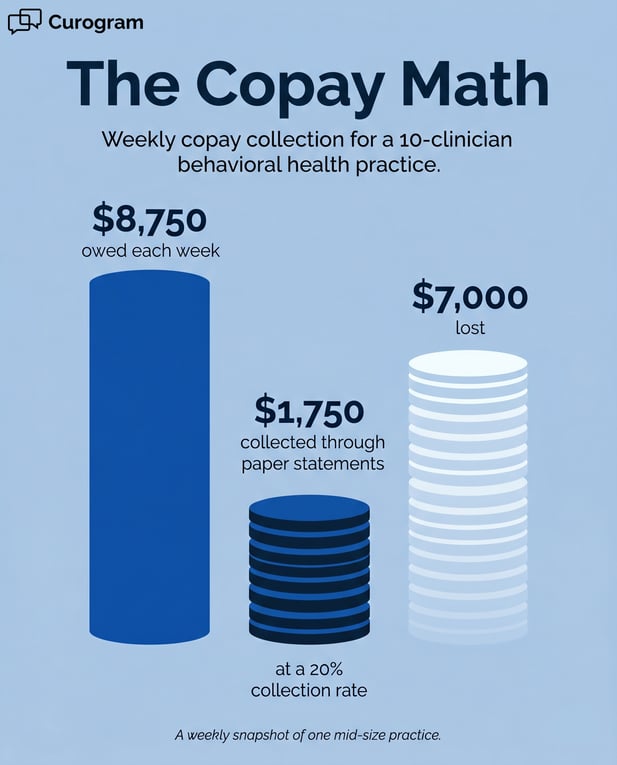
Picture a 10-clinician practice with 250 sessions a week. At a $35 average copay, that is $8,750 owed each week. At a 20% collection rate, the practice keeps just $1,750.
That leaves about $7,000 lost every single week. Now multiply that across a full year. The gap becomes lost staff hours and slower growth.
The client is not refusing to pay. The process is just too slow and too public. Make it simple, and most people pay right away.
Speed and privacy are what turn intent into payment. Give clients a path that respects both, and the money shows up. The will to pay was there all along.
|
Weekly snapshot |
Amount |
|---|---|
|
Client-owed copays |
$8,750 |
|
Collected on paper (20%) |
$1,750 |
|
Lost to the paper system |
$7,000 |
A weekly snapshot of one mid-size practice

The Guide: The Private Payment Channel
Curogram fixes the last step without replacing your billing engine. It sends a private payment link by text, right after the session.
The client pays in seconds, with full privacy. This is the private payment channel that paper can never offer.
A Text, Not an Envelope
How the Private Channel Works
The link goes straight to the client’s phone. The text does not mention therapy or any diagnosis. It simply shows a balance and a secure link to pay.
There is no envelope with the practice name. There is no phone call about a therapy bill. The client pays on their own time, in their own space.
Discretion is the whole point. The message looks like any other text. Only the client knows what it is for. Nothing about it stands out in a shared home.
Privacy here is not a feature bolted on later. It is built into the channel itself. The text never exposes why the client owes a balance.
Two Taps and Done
The flow is built for speed. Tap the link, confirm the amount, choose a payment method, and done. The whole thing takes under 30 seconds.
That speed matters more than it sounds. For clients with ADHD or low energy, a 30-second task gets done. A 10-minute check-and-mail task often does not.
Friction is what kills payment. Remove the steps, and the bill gets paid. The link does the heavy lifting, not the client. That is the core idea behind it.
Speed also protects the moment of intent. Right after a session, clients are most willing to pay. A quick link captures that willingness before it fades.
Built for Behavioral Health
Works Alongside TherapyNotes
Curogram runs next to TherapyNotes without a complex setup. The client never logs into a portal or learns a new system. They just get a secure link from a practice they trust.
This gives you a client-friendly payment option alongside TherapyNotes. Payments process through Curogram’s secure platform. Each one is recorded for your financial records.
Your team keeps the billing tools they know. Curogram just adds a fast, private way to collect. Setup stays light, and the daily workflow feels familiar.
There is no second system for clients to manage. The link arrives, they pay, and the record updates. The experience stays clean from end to end.
Payment That Feels Normal
For these clients, payment is also an emotional touchpoint. A mailed bill feels clinical and exposing. A collection call feels intrusive and tense.
A simple text feels normal, like splitting a dinner bill. The goal is a private payment method for behavioral health that fits modern life. It helps reduce payment friction in counseling billing for good.
When the bill feels routine, the stress fades. Clients stop dreading the practice name in their mail. The relationship can stay focused on care.
This is where comfort and collection meet. A calm payment step keeps clients coming back. It protects both the balance and the bond.
The Success: Pay Like You Live – From Your Phone
When payment is instant and private, clients pay faster. The numbers and the day-to-day both get better. The shift is simple but powerful. Here is what changes when the envelope disappears.
Faster Collection, Lower Cost
Instant Beats Mailed
SMS links beat paper because they arrive fast and open in seconds. A client can pay before they reach the parking lot. Paper statements, by contrast, collect only about 20%.
The channel is the difference. Texts reach people where they already look all day. The same SMS approach proves itself at scale, too.
Curogram client data from clinical settings backs this up. One practice sent over 1,100 confirmations a month. That is the kind of reach paper can never match.
Timing is the quiet advantage of text. The bill lands while the visit is still fresh. Clients act before the balance fades from memory and slips away.
Cutting Statement Costs
Paper also costs real money. Printing and postage run about $800 to $1,000 a month for many practices. Text-to-pay erases that cost completely.
You collect more while spending less. The same client base pays a bigger share, faster. The mailroom workflow simply goes away.
Think about what that frees up. No printing runs. No stamps. No staff time stuffing envelopes each month.
Those savings show up every single month. Over a year, they add up to real money. That budget can go toward care instead of postage.
|
Factor |
Paper statement |
Text-to-pay link |
|---|---|---|
|
Speed to client |
2 to 4 weeks |
Seconds |
|
Privacy |
Name on envelope |
No name, private link |
|
Effort to pay |
Check or phone call |
Two taps |
|
Collection rate |
About 20% |
Much higher |
|
Monthly cost |
$800 to $1,000 |
Near zero |
Paper statement vs text-to-pay link
The Payment Non-Event
Pay and Move On
The best payment is one no one thinks about. The text arrives. The client taps. The client pays and moves on.
There is no pile of statements on the counter. No privacy worry. No dread of a billing call. Paying becomes a non-event, the way it should be.
That calm is good for clients and staff alike. Fewer balances age past due. Fewer awkward calls land on the daily schedule.
Less friction also means less follow-up work. Staff stops chasing tiny balances by phone. They get hours back for higher-value tasks.
A Real Client Moment
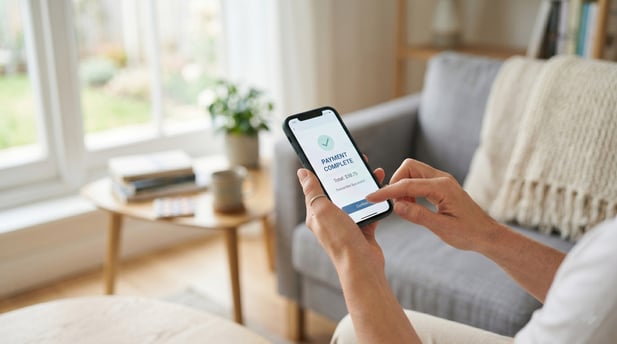
Picture a client walking to their car after a session. Their phone buzzes with a short note: a thank-you, a $40 balance, and a link to pay. They tap, confirm, and pay with Apple Pay in about 12 seconds.
They drive off with a clear balance. No statement will reach their home. No one in the house will see an envelope from the counseling center.
Paying felt as easy as the rest of their day. That is what a private text channel makes normal. You can see this same flow in a short demo.
That whole moment took less time than buckling a seatbelt. No envelope will follow them home. The bill closed the instant the session ended. Payment became part of the visit, not a chore after it.
Conclusion: Make Payment as Private as the Session
Therapy sessions are private. Payment should be too. That simple idea sits at the heart of text-to-pay for behavioral health.
Paper statements were built for a slower world. They arrive late, cost too much, and risk a client’s privacy.
Worse, they collect only about 20% of what clients owe. The system was never the client’s fault.
A private text fixes all of that at once. The link is discreet, fast, and easy. Clients pay in seconds, and the bill stops being a source of stress.
The stigma piece matters most of all. A discreet text removes the practice name from the mailbox. The bill no longer outs anyone at home.
Clients feel that respect right away. Paying stops feeling like a risk. It becomes a quick, normal task that they barely notice.
Think of it this way. TherapyNotes protects your clinical records. Curogram protects your clients’ financial privacy. Together, they cover the full client journey, from the first note to the final payment.
This split of duties is the whole point. Your EHR keeps the clinical side safe. Curogram keeps the money side private and fast.
These same SMS payment links ride on the channel your clients already trust. The two-way texting that handles reminders and questions also delivers the bill. A client can even reply to ask about a charge before they pay.
Cleaner intake helps too. When insurance details are captured early through secure online forms, billing surprises shrink. Fewer surprises mean fewer unpaid balances down the line.
Picture the change across a full quarter. More copays collected within hours, not months. Fewer aging balances on the books. Less time spent chasing small amounts.
It also lightens the load on your team. No more printing, stuffing, and mailing each month. No more dreaded collection calls that go to voicemail.
Behavioral health asks a lot of the people you serve. The least the billing can do is stay gentle. A private text keeps the focus on healing, not paperwork.
Adoption is easy because clients already text. There is nothing new to download or learn. The link feels familiar from the very first message.
The payoff also compounds over time. Each fast payment trims your accounts receivable. Steady habits keep balances from piling up again.
Small changes like this shape how a practice feels. Clients leave calm, not chased. Staff spend less time on busywork and more on people.
Your clients trust you with their hardest moments. You can trust them with a simple text link. When paying is this easy and private, people pay faster and feel better about it.
That is the real win. Faster collection, lower costs, and a payment step that respects the client. It is good for your revenue and kind to the people you serve.
Want to see how text-to-pay works with your TherapyNotes billing? Book a personalized demo.
Frequently Asked Questions
Two reasons stand out: privacy and effort. A mailed envelope shows the practice name, which can reveal private care. Paying also takes work, like writing a check or calling during business hours. For a small copay, many clients simply put it off.
The link goes straight to the client’s phone, not their mailbox. The text shows only a balance and a secure link, with no mention of therapy. No one else in the home sees an envelope from the practice. The payment stays as private as the session itself.
Curogram runs next to TherapyNotes without a complex setup. Clients never log into a portal or learn a new tool. They just tap a secure link and pay in seconds. Each payment is recorded for your financial records.
Curogram’s two-way texting lets clients reply right in the same thread. Your billing coordinator sees the question in one shared inbox. They can clear it up by text, with no phone call needed. This makes billing questions faster and far less stressful.
Most people see a text within minutes of getting it. A link sent right after the session reaches clients while their willingness is high. Many pay the same day, often within hours. That speed shrinks the wait that paper drags out for weeks.