
9 min read

Replace Paper Statements With Text-to-Pay

Replace Paper Statements With Text-to-Pay
💡Azalea Health text-to-pay to replace paper statement billing lets your team collect balances by text instead of mailing and calling. Curogram sends a secure one-tap pay link by SMS. Patients pay in the same thread where they read your messages.

This helps lean billing teams at rural clinics, FQHCs, and community hospitals. These teams are stuck in the balance chase. They print statements, mail them, then phone patients who have not paid.

Each mailed statement can cost $1 to $7 once you add paper, postage, and staff time. Most balances are not paid on the first paper bill. Text-to-pay removes the mailing step and helps balances clear faster.
Staff stop chasing money. Cash flow improves. And the front desk gets time back.

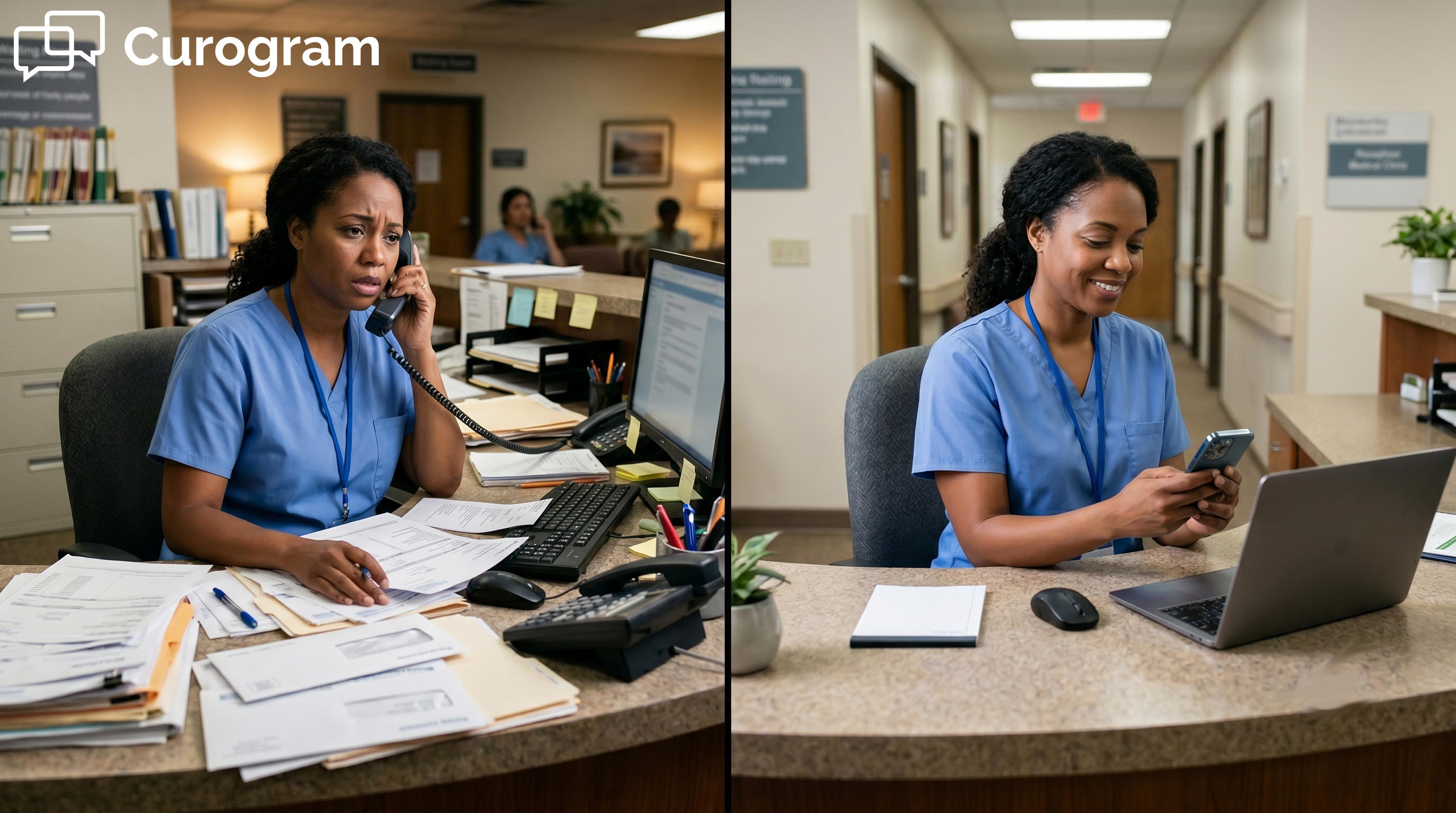
Picture the last week of the billing cycle at a small clinic. One person prints statements, folds them, and stuffs envelopes.

The same person schedules patients and answers the phones. Then the unpaid bills come due, and the calls begin.

These are the calls nobody wants to make. Staff ask patients for money they meant to pay weeks ago. The work is slow, awkward, and easy to put off. Meanwhile, the unpaid balances keep climbing.

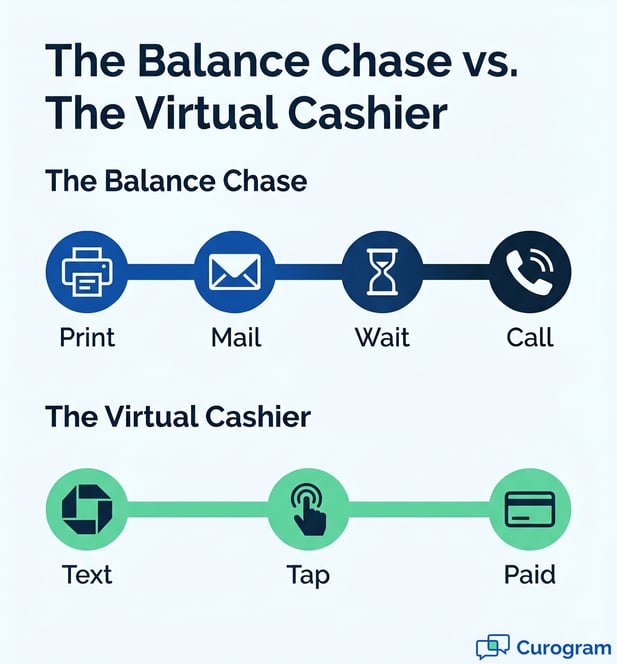
This is the balance chase. Paper goes out, payment trickles in, and the rest gets a phone call. For a lean team, it eats whole afternoons. It also drains cash a thin-margin practice cannot spare, month after month.

There is a better way to collect. Azalea Health's text-to-pay to replace paper statement billing moves the bill to the place patients already check. Curogram sends a secure pay link by text. Patients tap it and pay in seconds.

Azalea Health still holds your billing record. Curogram handles the patient-facing step of getting paid.

Together, they let you stop mailing paper statements at the clinic and start collecting by text. No envelopes, and no more follow-up calls.

This article takes the staff and operations view. It is written for front-desk leads, billing clerks, and office managers. These are the people who feel the chase most each cycle. They are also the ones who gain the most time back.

We will name the villain first, in plain terms. Then we will show the fix and the payoff. You will see how text-to-pay cuts the paper statement cost and lifts collection. You will also see how it fits beside your Azalea Health workflow.

The goal is simple. Help your team clear balances without the chase. Help your practice get paid faster. And give the front desk its month back.

The Villain: The Balance Chase

The balance chase is the print-mail-and-call routine for unpaid bills. It feels like normal work, yet it quietly drains time and cash.

For a thin-margin clinic, that drain is hard to absorb. Here is how the cycle traps a lean team, step by step.

How The Print-Mail-And-Chase Cycle Works

With paper as the default, collection starts at the printer. Each cycle, staff run statements, fold them, and stuff envelopes. Then they add postage and drop the stack in the mail.

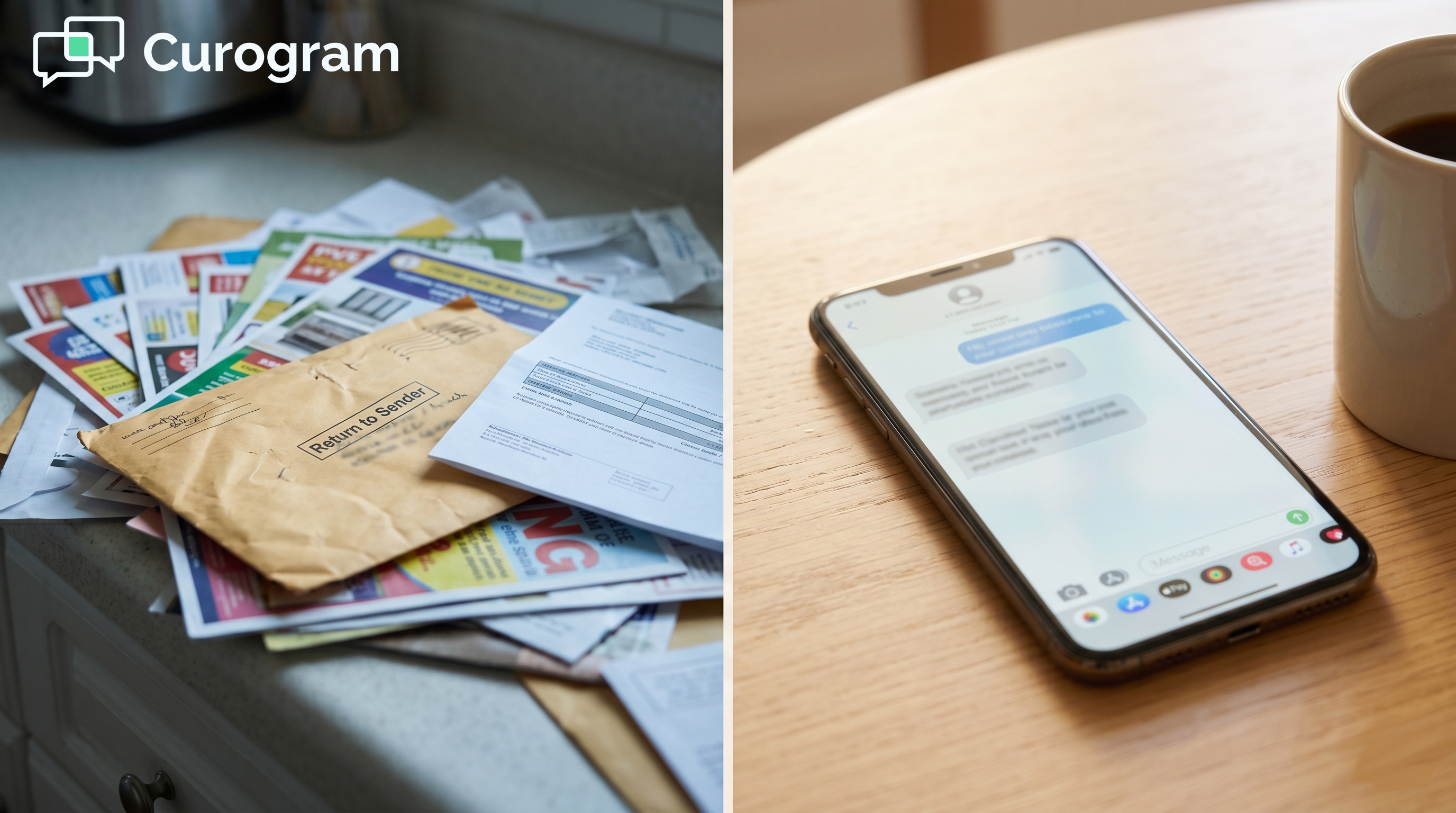
After the mail goes out, the waiting begins. Some patients pay, but many do not act at all. The bills that come back unpaid pile up for the next cycle.

Print, Fold, Mail, Repeat

This is manual work, and it returns every single cycle. Most practices send three to four rounds before they write a balance off.

Each round costs paper, ink, envelopes, and postage. The paper statement cost climbs with every mailing you send.

The cost is easy to overlook because it hides in small pieces. A stamp here, a sheet of paper there, a few minutes each. Across a full month, those pieces become real dollars.

Then Chase By Phone

Mailing is only step one of the job. Whatever stays unpaid moves to the phone queue. Staff call patients to ask for the money they meant to pay. These calls are awkward, and few people enjoy making them.

Phone follow-up also pulls staff off other work. Each call takes time to dial, wait, and explain. While they chase one balance, the front line goes unwatched.

Why The Chase Ages Your Accounts Receivable

Paper is a slow way to collect what you are owed. A large share of mailed balances are not paid on the first bill. So the unpaid total sits while the clock keeps running.

Time is the hidden enemy in this cycle. The longer a balance waits, the harder it is to collect. Old bills are the ones most likely to be written off.

Mailed Bills That Do Not Convert

Collection rates for patient balances have been falling for years. Many bills need several cycles before any payment lands.

Until then, the accounts receivable at a rural clinic keeps aging. Cash that should sit in the bank stays stuck on paper.

A low first-pass rate forces more cycles to collect the same dollar. Each extra cycle adds cost and pushes payment further out. The math works against a small clinic every time.

The Human Cost At The Desk

Behind every cycle is one busy person doing it all. The billing lead bills, schedules, and answers phones at once. Spending the month nudging patients is a poor use of that time. It is work that should run on its own, in the background.

Morale takes a hit when the month means money calls. Asking patients for payment is nobody's favorite task. Over time, that pressure wears a small team down.


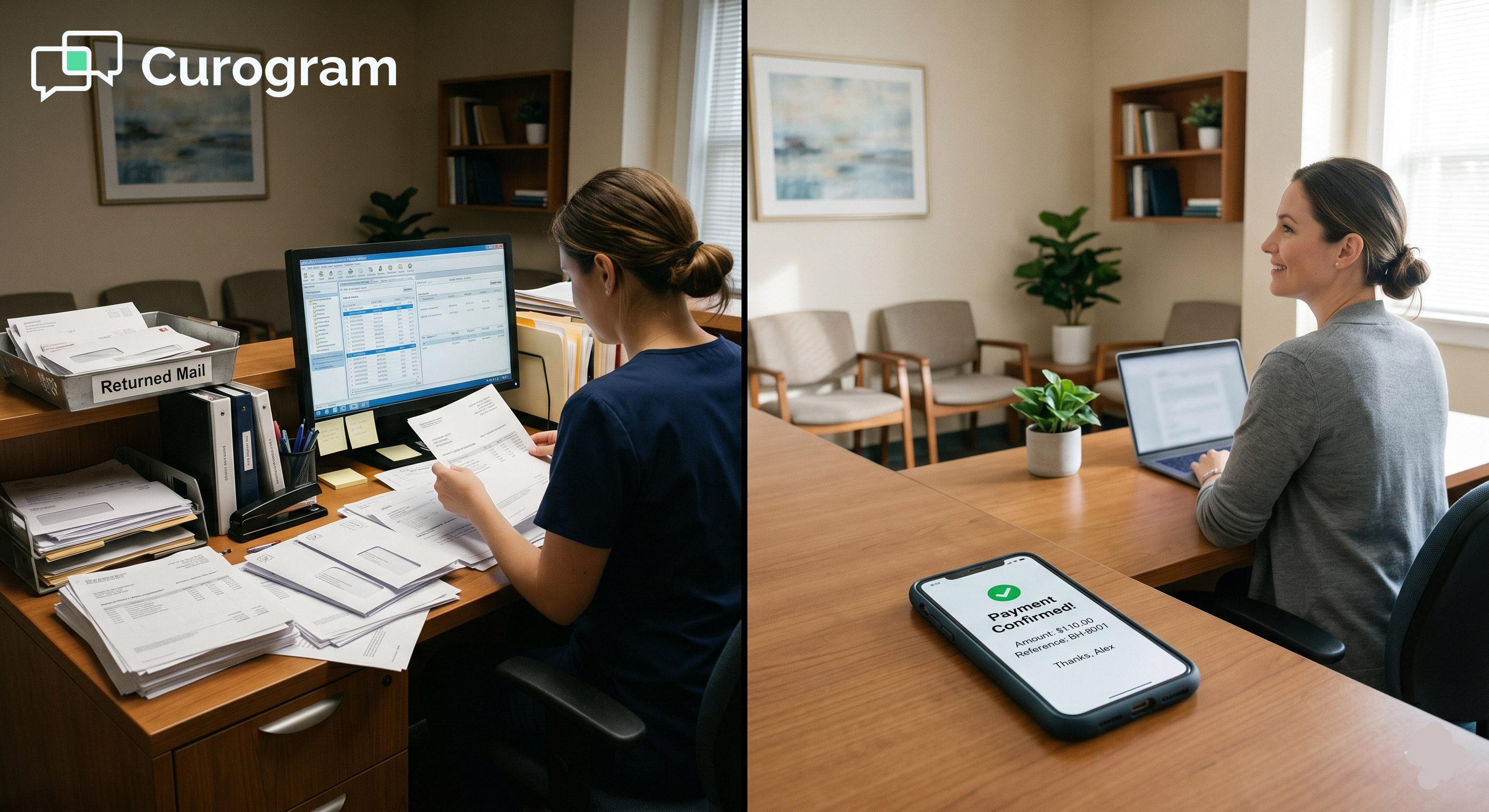
Infographic comparing paper billing (slow) to text-to-pay (fast) at a medical clinic

The Guide: The Virtual Cashier

Curogram works like a virtual cashier for your front desk. It sends the bill where patients reply and collects without the chase. There are no envelopes to stuff and no calls to dread. Here is how it runs beside Azalea Health, day to day.

Text-To-Pay Requests That Collect By Sms

Curogram sends a text-to-pay request straight to the patient's phone. The message holds a secure, one-tap link to pay. There are no stamps, no envelopes, and no follow-up calls.

The request goes out the moment a balance is ready. Patients see it next to the texts they already read. That placement is why text earns a faster response than mail.

One-Tap Pay Links By Text

Patients read texts far more than they open mailed letters. A pay link in that thread is easy to act on. They tap, pay, and move on in seconds. That speed is how you end the balance chase phone calls.

There is no portal login or password to slow things down. The link opens, the amount shows, and the patient confirms. Fewer steps mean more bills get paid the same day.

Copay At Intake Or Balance After The Visit

You can request a copay at check-in by text. You can also send the balance right after your automated appointment reminders and confirmations go out. Either way, the patient pays in the same thread. Staff never have to ask for the money twice.

This flexibility fits how a real clinic day flows. You collect upfront when it makes sense to. You send the rest once the claim is settled.

Built To Run With Azalea Health

Text-to-pay is not a bolt-on tool you have to babysit. It runs alongside your Azalea Health billing workflow. Collection lives in the same platform as your texts and reminders.

That close fit keeps the whole process tidy. Your billing record and your collection step share one home. There is nothing extra to sync by hand at the end of the day.

One Platform, Not A Separate Vendor

There is no separate payments tool to match up each week. You skip the RevSpring-style vendor sitting on the side.

One login covers texting, reminders, and collection. That keeps your day simple and your tabs few.

Fewer tools also means fewer logins and fewer bills to pay. Your team learns one system, not three. That lowers training time for every new hire.

Right-Sized For Lean Billing Teams

This fit matters most for a small office. When one person bills, books, and answers phones, every minute counts.

Curogram helps a small practice automate patient collections. It also helps reduce billing costs for Azalea Health users.

Automation does the repeat work so people do not have to. The system sends, tracks, and records each request. Your staff step in only when something needs a human.


The Success: Collections Without the Chase

With text-to-pay in place, the chase winds down for good. Staff handle exceptions, not envelopes and phone calls.

The change shows up in your costs, your cash, and your calendar. Here is what shifts once the paper stops.

Lower Cost, Higher Collection

Two things move at once when you switch to text. Your mailing spend drops, and your collection rate climbs. Text simply works better than paper for patient bills.

The gain is not a small tweak at the edges. It changes both sides of the ledger at the same time. You spend less to collect, and you collect more.

Cut The Paper And Postage Spend

Every text request you send replaces a printed one. That trims paper, ink, envelopes, and postage at once. For a practice mailing hundreds of bills a month, the savings add up fast. The paper statement cost shrinks toward zero.

Postage rates keep rising, so the paper bill grows each year. Text requests are not exposed to that increase. The more you send by text, the more you save.

From Chasing To Handling Exceptions

Most patients pay from the very first text link. So your team stops working the full unpaid list. They handle only the few who still need a nudge. That is the shift from the balance chase to managed exceptions.

This frees your best people for higher-value work. They can sort tricky claims or help patients in person. The routine asks run on their own in the background.

Faster Cash And A Calmer Front Desk

Speed is the quiet win in this whole switch. A tapped link pays in minutes, not weeks. Your cash flow improves, and the aging slows down.

A calmer desk is the second win, and it is real. The dread of money calls fades from the day. Staff get to focus on patients instead of payments.

Balances That Clear Sooner

Paper can take weeks to land and longer to pay. A text lands in seconds and gets a quick reply. Balances clear sooner, so the accounts receivable stops piling up. Money moves from paper into the bank.

Faster payment also means cleaner books at month end. You spend less time tracking what is still owed. The aging report gets shorter, week after week.

The Month Back For Your Team

The biggest gain of all is time itself. Staff stops spending the month on statements and money calls. They focus on patients and the work that matters. The front desk finally gets its month back.

That time goes back into care and service. Staff answer patient questions and greet people warmly. The desk feels less like a collections office.

Paper statements vs. text-to-pay

Factor

Paper statements

Text-to-pay

Cost per bill

$1 to $7 with paper, postage, and labor

One text, no print or postage

Speed to pay

Days or weeks by mail

Seconds by one-tap link

Staff effort

Print, mail, then call

Send, then handle exceptions

Follow-up

Phone calls on unpaid bills

Automatic request, fewer calls

Cost figures reflect industry estimates of patient statement costs.

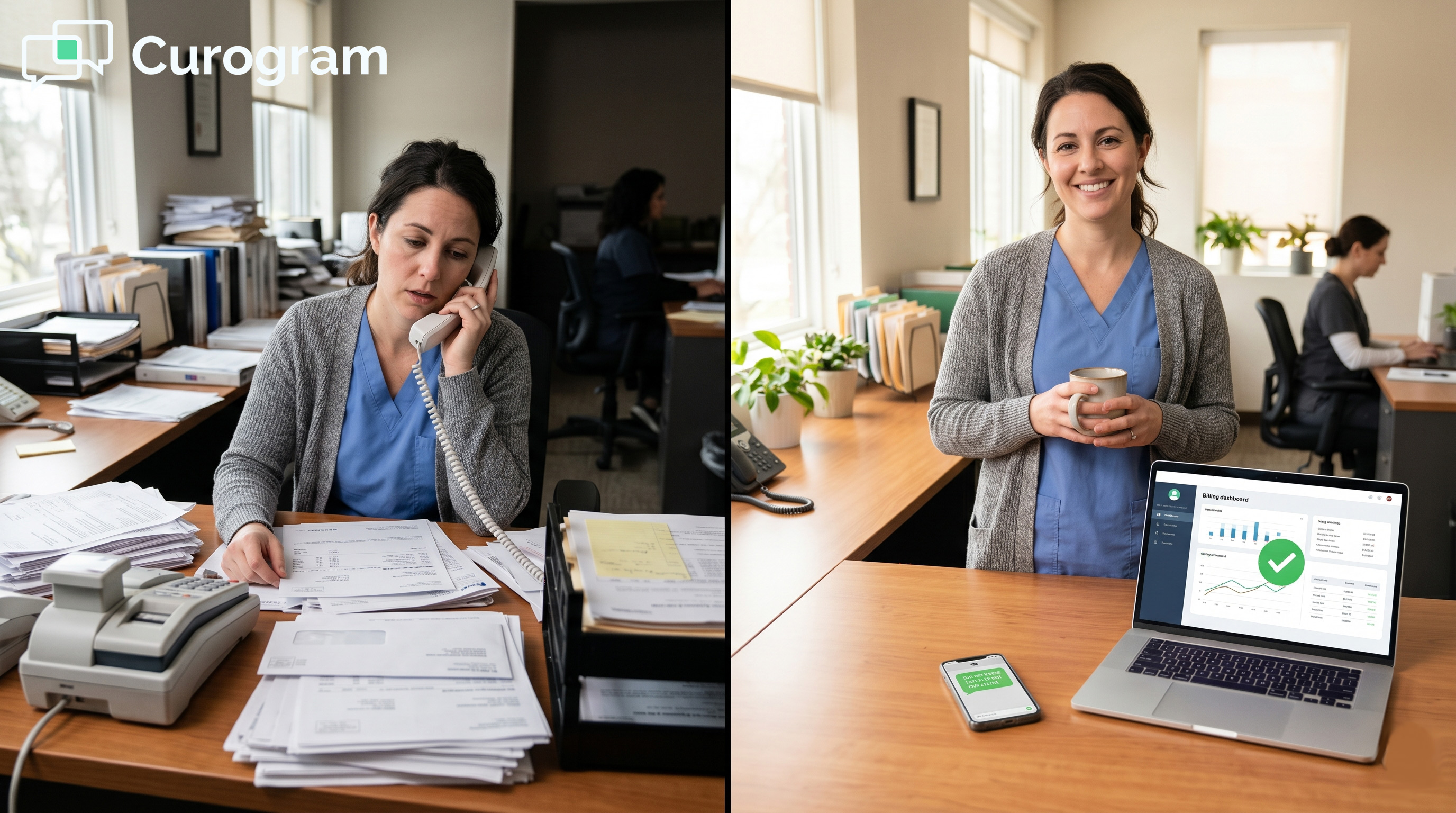
Medical billing staffing looking at a computer monitor containing billing matters

ConclusionStop Mailing and Chasing

The balance chase is a choice, not a rule. It only continues because paper is the default. Swap that default, and the chase ends.

Azalea Health is built for your billing record. It tracks what each patient owes with care. But that record is for you, not for the patient's payment.

Curogram covers the other half of the job. It is the virtual cashier that collects the bill by text. The patient gets a one-tap link and pays in their own thread.

Together, the split is clean and simple. Azalea Health bills the balance. Curogram collects it. No printing, no mailing, and no chasing.

Think about what that frees up each month. Your team stops folding statements and stuffing envelopes. They stop dialing patients to ask for money. They handle the few exceptions and move on.

The money side improves too, and it shows fast. You cut the paper statement cost down to a text. You lift collection above what mailed paper ever reached. And you do it without adding any staff.

This is how a lean team gets ahead. One person can bill, book, and still collect on time. Text-to-pay does the asking, so your people do not have to. That is real relief for a busy front desk.

The fit with Azalea Health keeps it simple. There is no extra payments vendor to learn or manage. Collection sits in the same platform as your texting and reminders. One tool, one login, one calmer workflow.

Picture next month without the chase at all. The printer sits quiet during billing week. The phone is for patients, not payment reminders. The work that drained your afternoons is mostly gone.

Getting there is not a heavy project. There is no rip-and-replace and no long rollout. You turn on text-to-pay and start sending requests. The savings and the time begin to show up right away.

Your patients will notice the difference too. They get a clear bill on the device they use most. Paying takes one tap, not a check and a stamp. That ease makes them more likely to pay on time.

If you want the full picture, start with the pillar guide, Text-to-Pay Patient Billing for Azalea Health. To see the patient's side of the flow, read Let Azalea Health Patients Pay Bills by Text. Both show how the pieces fit together.

So here is the bottom line. Stop mailing paper statements at your clinic, and stop the money calls that follow. Let the bill collect itself by text. Your cash flow and your staff will both feel the change.

The best way to see it is live. Watch a single text-to-pay request collect a balance with no staff follow-up. You will see how fast a tapped link turns into cash. And you will see how little your team has to do.

Then you can decide what fits your practice best.

Book a demo to watch a text-to-pay request collect a balance with no staff follow-up, and bring your busiest billing week to mind.


Frequently Asked Questions

How does text-to-pay replace our paper statement mailing?

Curogram sends a secure pay link by text instead of a printed bill. The patient taps the link and pays in the same thread. Your team skips printing, folding, mailing, and the follow-up calls. The balance clears without the paper trail.

Why does text collect better than mailed paper statements?

Patients read texts far more than they open mailed letters. A one-tap link removes the friction of logins and checks. So payment happens in seconds, not weeks. Faster action means fewer unpaid balances sitting on your books.

How does text-to-pay work alongside our Azalea Health billing?

Text-to-pay runs beside the Azalea Health billing workflow through Curogram. Azalea Health keeps your billing record, as it always has. Curogram handles the patient-facing step of collecting the payment. The two work together with no double entry to manage.

How much does sticking with paper actually cost a small practice?

Each mailed statement can cost about $1 to $7 once you add paper, postage, and staff time. Most practices send several cycles before a balance is paid or written off. That spend grows every month a bill goes uncollected. Text-to-pay removes the mailing cost and helps balances clear sooner.

Why is text-to-pay safe for our billing staff to use?

Curogram is HIPAA compliant and provides a signed BAA. Payments are processed through a secure link, not over the phone. Your team automates collection without taking on new compliance risk. The patient's data stays protected at every step.


Patient Payment Experience for Opus EHR | Pay via Text in 30 Seconds

Patient Payment Experience for Opus EHR | Pay via Text in 30 Seconds

💡 The patient payment experience Opus EHR behavioral health programs offer today is full of friction. Paper statements miss patients who move...
Read More
Text-to-Pay for Opus EHR Behavioral Health | Collect Copays via SMS

Text-to-Pay for Opus EHR Behavioral Health | Collect Copays via SMS

💡 Text-to-pay for Opus EHR behavioral health payment swaps paper statements for a secure link sent by SMS. Patients tap the link and pay in 30...

Read More
Opus EHR Billing Text Payment for Behavioral Health

Opus EHR Billing Text Payment for Behavioral Health

💡 Opus EHR billing text payment behavioral health programs face one shared pain point: paper statements that drain $800 to $1,000 a month and pull...

Read More