
1 min read
Let Azalea Health Patients Pay Bills by Text
 Jo Galvez : Jun 29, 2026, 5:00:00 PM
💡Pay medical bills by text for Azalea Health patients turns a paper statement into a one-tap payment. The patient taps a secure text link and...
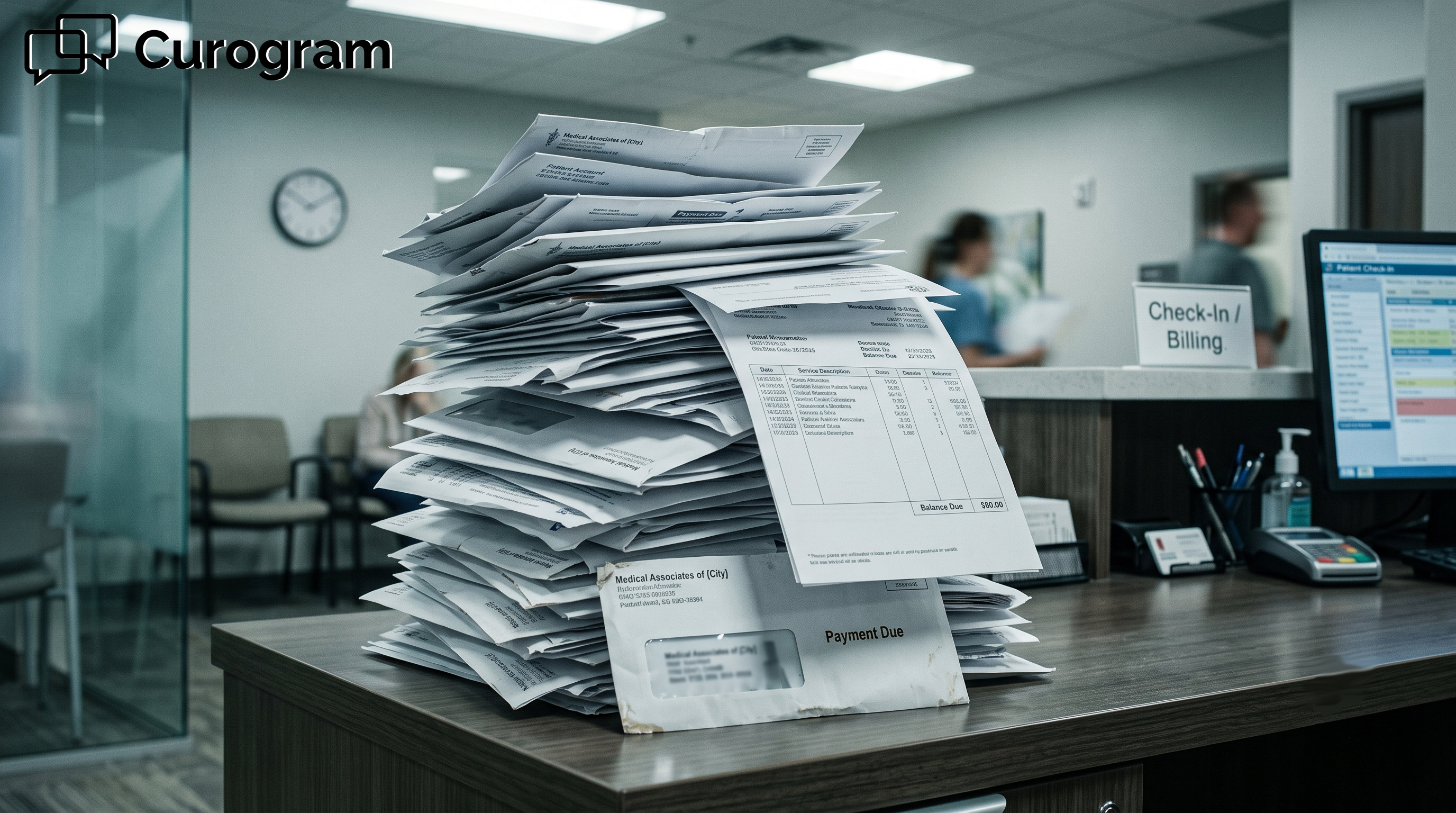
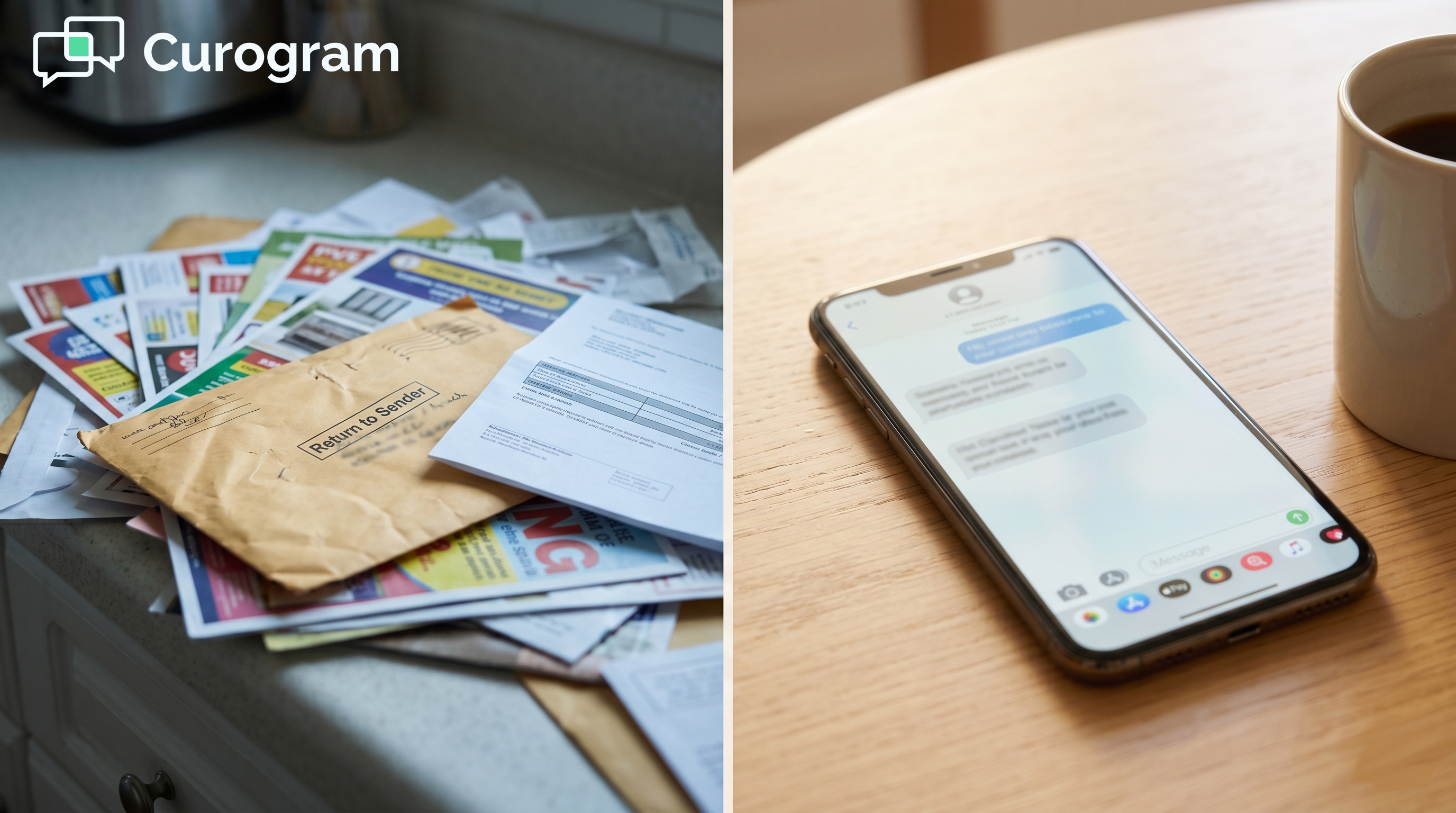
Your front desk just printed a thick stack of patient statements. Each one costs real money to print, stuff, stamp, and mail.
Most of them will never get paid, no matter how many you send. That is the quiet drain on a rural practice running Azalea Health.
Azalea Health does its job well. It calculates the balance, tracks the claim, and keeps your billing record clean.
But the last step, getting the patient to pay, still leans on a mailed sheet of paper. The paper goes out, lands on a counter, and just sits there.
Here is the hard part. The care was delivered, and the balance is owed. The patient is not refusing to pay; the bill arrived through a channel they ignore. A mailed statement competes with junk mail, and a portal login asks for a forgotten password.
There is a faster, simpler way to close that costly gap. Text-to-pay patient billing for Azalea Health practices turns the balance into a one-tap text payment.
The patient gets a secure link by text and pays in just seconds. No app, no portal account, and no call from your busy staff.
This guide walks you through three key things in plain, simple terms. First, the villain: the paper statement trap that floats four out of five bills.
Next, the guide: a single text that meets patients where they already are. Last, the payoff: faster cash and a front desk that stops stuffing envelopes.
We keep it concrete and tied to rural clinics, FQHCs, and community hospital practices. These are the places where thin margins make every collected balance matter.
By the end, you will clearly see why a text beats a stamp every single time. You will also see how Azalea Health patient payments can land in days, not weeks.
Azalea Health gets the billing right. It calculates the balance and tracks the claim with care. The trouble starts at the last step, when the bill has to reach the patient. For most rural practices, that step still means a mailed paper statement, and paper is slow.
The handoff from billing to payment is where money slips. Azalea Health builds an accurate bill, and then the practice has to collect it.
Your billing record is clean and correct. The balance is real, and the patient owes it. But a mailed sheet is a weak way to ask for money. It lands on a counter and waits while the balance quietly ages.
Paper moves at the speed of the post office. A statement can take 30 to 60 days to draw a response. Many bills never draw one at all.
Speed is the whole problem here. The longer a bill waits, the less likely it is to get paid. After 90 days, the odds of collecting drop sharply.
Some practices bolt on a standalone payments tool to collect. That means one more contract, one more login, and one more bill to track. Staff end up juggling two systems instead of one.
The patient feels the friction, too. They still have to find a portal and recall a password. Each extra step is another reason the balance never gets paid.
None of this is the patient's fault. The tools simply ask too much of them. Every barrier you remove lifts the odds of payment.
Paper looks cheap until you add up what it truly costs. The price shows up in postage, in staff hours, and in cash that lands late.
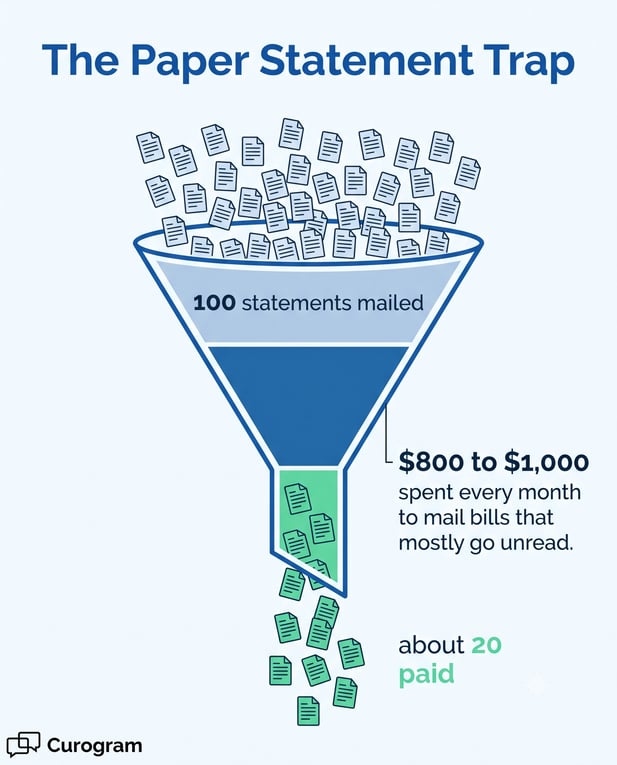
Across the industry, only about 20% of mailed statements get paid. The other four in five sit unpaid, and many never convert at all. So you float most of the care you already delivered.
Mailing those bills is not free, either. Printing, stuffing, and stamping can cost a practice $800 to $1,000 each month. You pay real money to send bills that mostly go unread.
Those costs repeat every single month. You print the same unpaid bills again and again. The spend climbs while the cash stays stuck.
Rural clinics, FQHCs, and community hospitals run on thin, encounter-based margins. A balance earned but not collected is real money left on the table. When cash waits in the mail cycle, the practice floats care it already gave.
Unpaid bills are a wide problem, not a local one. The Consumer Financial Protection Bureau reports that about one in five households carries unpaid medical bills. Slow paper billing only makes that gap harder to close.
For a small clinic, a few thousand dollars in float is a strain. It can delay payroll, supplies, or staffing. Slow billing turns earned money into a waiting game.
Curogram acts like a virtual cashier for your practice. It turns a balance into a one-tap text the patient can pay anywhere. The request rides the same two-way patient texting channel you already use for reminders. Collection happens where the patient lives, on their phone, not in a portal they skip.
The whole point is to make paying simple. A patient should clear a balance in seconds, not in a maze of logins.
Curogram sends the patient a secure pay request by text. They tap the link and pay in a couple of taps. There is no portal login and no app to download.
The link is built for safety as well as speed. Each payment runs through a trusted, encrypted processor. Patients get a smooth checkout with the protections their data needs.
The patient never leaves their text app to start. They tap, pay, and get a quick receipt. The whole task takes less than a minute.
The same channel works before and after the visit. You can collect a copay at intake using digital intake forms while the patient is engaged. You can also collect patient balances by SMS once the claim is done.
This range matters for busy front desks. One tool covers payments at intake and after the visit. Fewer steps for staff means more balances actually get paid.
You set the timing that fits your workflow. Send at check-in, after the claim, or both. The channel adapts to how your practice runs.
Text-to-pay should sit beside your billing, not bolt onto it. Curogram runs payments alongside the Azalea Health workflow your team already knows.
Azalea Health holds your billing record and the claim detail. Curogram handles the patient-facing ask for one-tap bill pay for Azalea Health practices. The two work side by side, so collection lives in the patient's text thread.
Nothing about your Azalea Health setup has to change. You can let Azalea Health patients pay bills by text without a new billing routine. The pay request rides on top of the record you already keep.
Your staff keep their normal billing habits. The ask simply goes out on a channel patients check. Patients act on texts far more than on mail or portals.
Adding a separate payments vendor means another contract and another fee. Weighing text-to-pay versus RevSpring, the real win is fewer moving parts. Payments, texting, and reminders all live on one platform.
For a clinic watching every dollar, that is the real value. One login, one bill, one place to manage patient messages. Folding payments in helps a rural clinic improve patient collections without new overhead.
You also avoid training staff on yet another system. The team manages messages and payments in one familiar place. Less sprawl means fewer things that can break.
The payoff of text-to-pay is simple to feel. More balances get paid, and they get paid sooner.
Cash that used to wait in the mail cycle starts landing in days. The shift moves you from chasing bills to collecting them.
A bill that never gets seen can never get paid. Text puts the request in front of the patient at the right moment.
Paper statements convert at roughly 20%, a baseline most practices know well. Text messages get opened far more often than mailed bills. Across the industry, SMS open rates sit near 98%.
When patients see the bill, more of them act. A pay request they can tap beats a statement they toss. That is the core of text-to-pay versus paper statements.
The gap is not about willingness to pay. It is about whether the bill ever gets seen. Text closes that visibility gap fast.
Paper billing can take 30 to 60 days to draw a payment. Text-to-pay often collects within a day or two of the request. Money arrives while the visit is still fresh in mind.
That speed steadies a practice's cash flow. You can forecast revenue with more confidence when payments land fast. Steady cash is exactly what thin margins need.
Quick payment also shrinks your stack of unpaid balances. Money comes in before a bill ages into bad debt. Your revenue cycle gets healthier with less effort.
Faster collection is not just a finance win. It changes the daily work and the patient experience too.
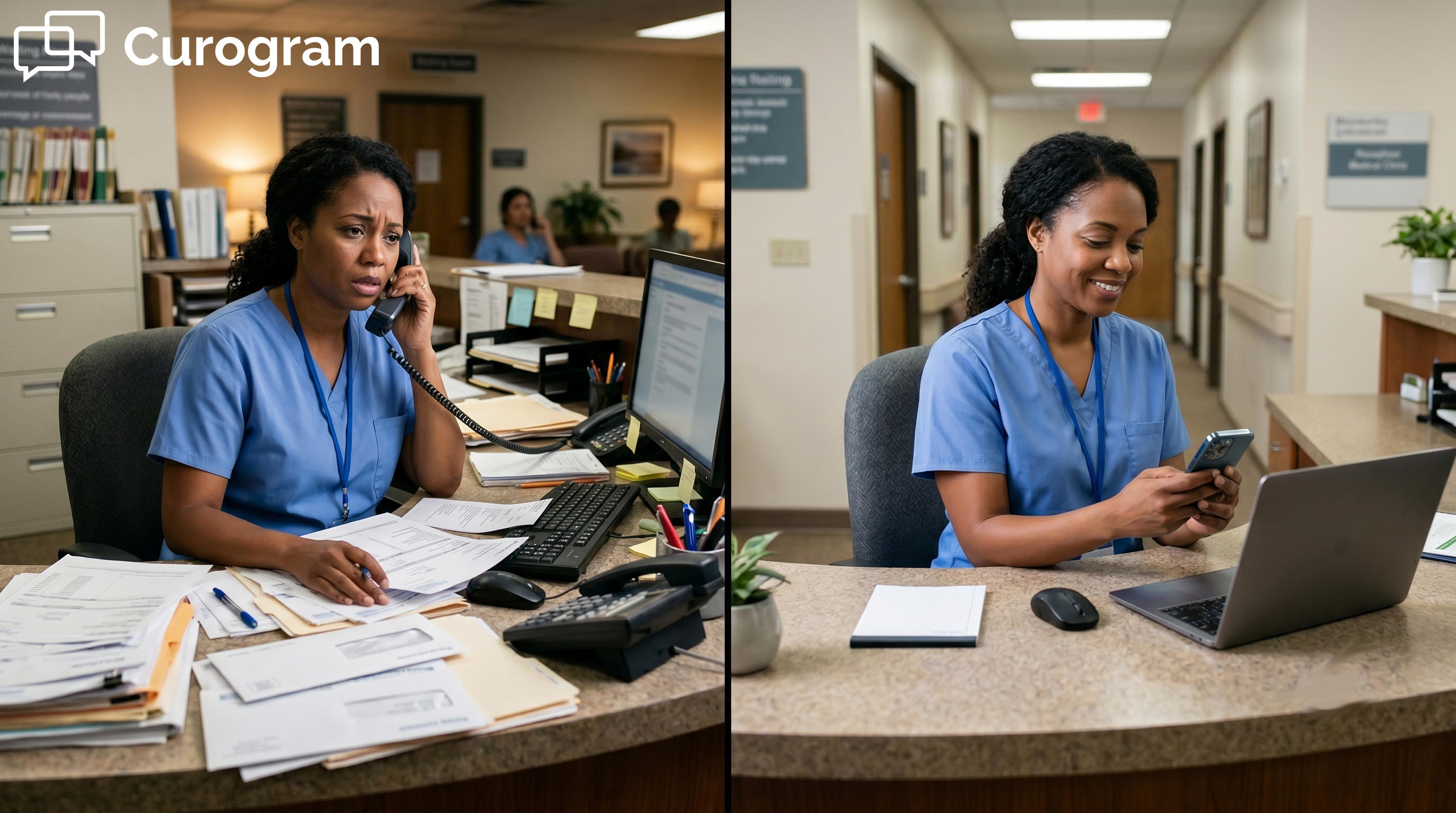
The front desk stops printing and stuffing stacks of statements. Fewer reminder calls and re-sent bills free up real hours. Staff spend that time on patients in front of them.
Patients also engage more with a text than a portal. Based on Curogram client data from clinical settings, more than 75% of text messages get a response. That same habit carries straight over to payment links.
That time adds up across a busy week. Staff burnout often comes from chasing money, not caring for patients. Text-to-pay takes that grind off their plate.
When more balances get paid, your books reflect reality. The clinic finally sees the cash for the care it has already delivered. Aging balances shrink instead of piling up.
Many practices that replace paper statements with text-to-pay notice the change in the first billing cycle. The table below sums up that shift in plain terms. It lines up paper statements against text-to-pay side by side.
Text-To-Pay Versus Paper Statements At A Glance
|
What you measure |
Paper statements |
Text-to-pay |
|---|---|---|
|
Time to get paid |
30 to 60 days |
Often 1 to 2 days |
|
Typical payment rate |
About 20% |
Several times the paper rate |
|
Patient effort |
Mail a check or find a portal |
Tap a link, pay in seconds |
|
Monthly mailing cost |
$800 to $1,000 to send |
No print or postage |
|
Where it lives |
A separate vendor or portal |
The patient's own text thread |

Azalea Health calculates the balance; Curogram collects it. One keeps an accurate billing record, the other gets the patient to pay. The split is simple, and for a rural practice, it matters a great deal.
Azalea Health is built for your billing record, and Curogram is built for their payment. Together, they make a bill so easy to pay that patients actually do. That single change can turn four floated bills out of five into real cash.
Think about what a mailed statement really asks of a patient. Open the envelope, find a checkbook or a portal, then recall a forgotten password.
Most people set the bill aside with good intentions and never come back. A text asks for one tap, and one tap is easy to finish on the spot.
The math favors the text on nearly every line you can measure. You get faster payment, lower mailing cost, and far less staff time chasing money.
For a rural clinic, an FQHC, or a community hospital, those gains stack up fast. You stop floating the care you delivered and start collecting it sooner.
Speed is the quiet hero of this whole story. The sooner a bill reaches the patient, the more likely it gets paid at all.
Every day a balance ages, the odds of collecting it slowly slip away. Text-to-pay shrinks that window from weeks down to hours.
Safety does not have to be the price of that convenience. Curogram is HIPAA compliant and runs every payment through an encrypted processor.
Patients get a frictionless checkout, and their private data stays protected throughout. You collect faster without trading away the safeguards your practice must keep.
It also lifts a real weight off your front-desk team. No more printing, stuffing, and stamping stacks of bills that mostly go unread.
No more awkward evening calls about a past-due balance. Staff win back hours they can spend on the patients in front of them.
There is a quieter benefit worth naming before you decide. Payments, texting, and reminders all live together on a single platform.
You skip another vendor, another contract, and another login to manage. For a lean team, that simpler setup is a real and lasting win.
You do not have to keep paying to mail bills that nobody opens. Let patients pay the moment they get the request, on the phone in their pocket. The switch tends to show up in the very first billing cycle.
The next step is simple, and it starts with your own numbers. Bring your own statement volume and let us run the numbers with you.
Book a free demo, and we will estimate what faster text-to-pay collection recovers for your practice.

1 min read
Jo Galvez : Jun 29, 2026, 5:00:00 PM
💡Pay medical bills by text for Azalea Health patients turns a paper statement into a one-tap payment. The patient taps a secure text link and...
1 min read
Jo Galvez : Jun 29, 2026, 4:00:03 PM
💡Azalea Health text-to-pay to replace paper statement billing lets your team collect balances by text instead of mailing and calling. Curogram...
1 min read
Jo Galvez : Jun 1, 2026, 12:00:01 PM
💡 The patient payment experience Opus EHR behavioral health programs offer today is full of friction. Paper statements miss patients who move...