
8 min read

Follow-Up Imaging Reminders That Patients Actually Receive

Follow-Up Imaging Reminders That Patients Actually Receive
💡 When patients receive a radiology patient follow-up imaging recall notification text from RamSoft and Curogram, they schedule. 

Unlike reports buried in portals or recommendations lost in referral chains, direct SMS reaches patients where they already are — their phones.

RamSoft's AI-powered workflows flag which patients need follow-up imaging. 

Curogram delivers that information as a clear, actionable text message with a scheduling link attached. No app download. No portal login required.

The result: 35% of patients who would otherwise be lost to follow-up actually schedule their scans — protecting early detection opportunities and improving clinical outcomes across the board.


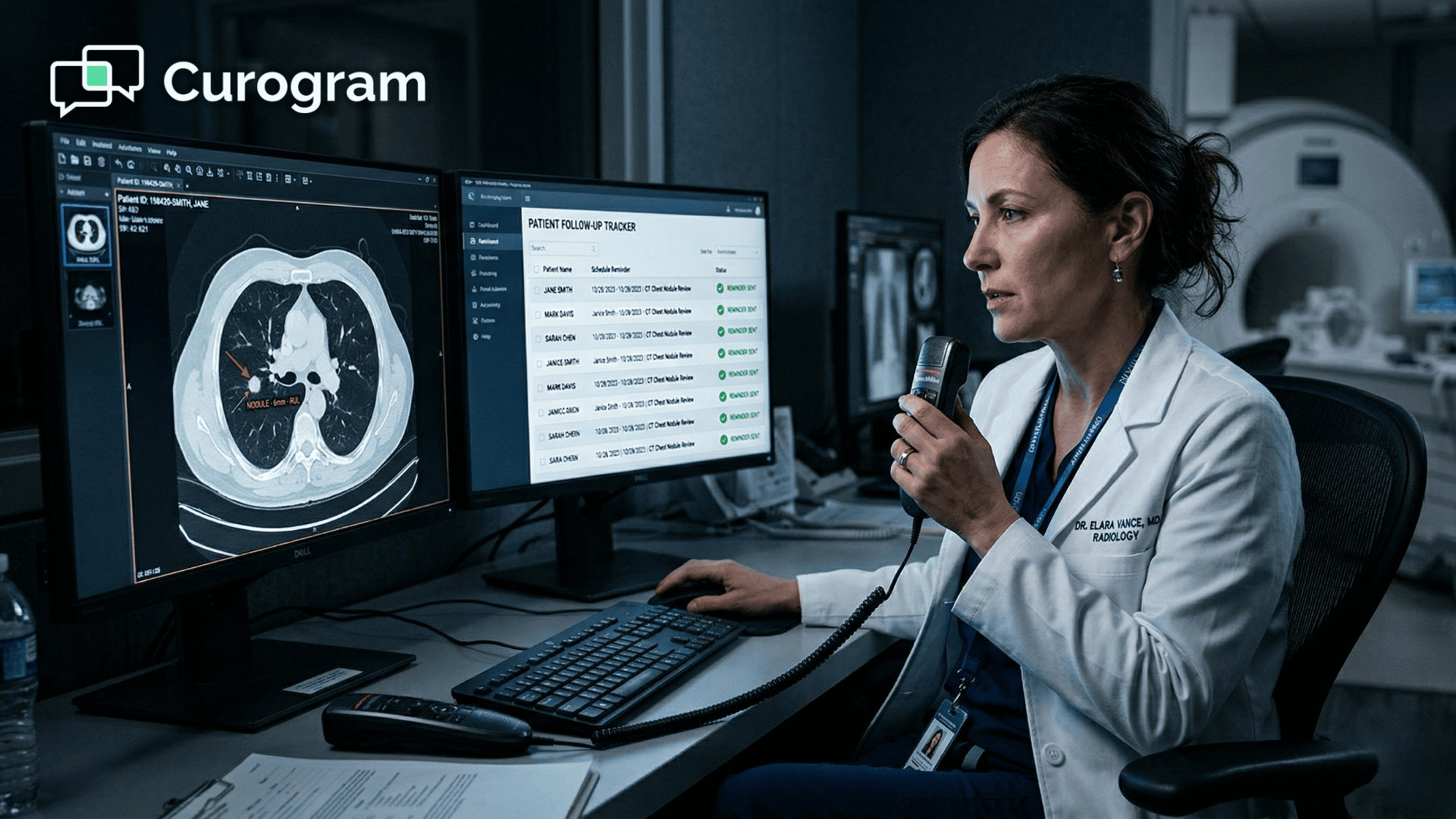
Imagine this. A patient comes in for a chest CT.

She's short of breath, a little anxious, and just wants answers. The radiologist finds an incidental lung nodule — small, probably nothing, but worth watching. The report says so, clearly. "Recommend 6-month follow-up CT."

And then? Nothing.

No text. No call. No reminder on the calendar.

Maybe her primary care doctor mentioned it briefly at the next visit. Maybe they didn't get the chance.

Either way, she left the clinic with a vague sense that "we'll check it again sometime" — but no date, no link, no nudge. Six months became seven. Seven became twelve.

A year later, she's back for an unrelated scan. The nodule has grown.

She didn't refuse care. She didn't ignore a warning. Nobody told her clearly enough, at the right moment, in a way she could act on.

This happens every single day across radiology practices everywhere. And it's not because radiologists aren't thorough. RamSoft's AI-powered radiology workflows generate precise diagnostic reports with clear follow-up recommendations.

The clinical work is done. But between that report and the patient actually scheduling their next scan, there's a gap — and most patients fall right through it.

The problem isn't detection. It's delivery.

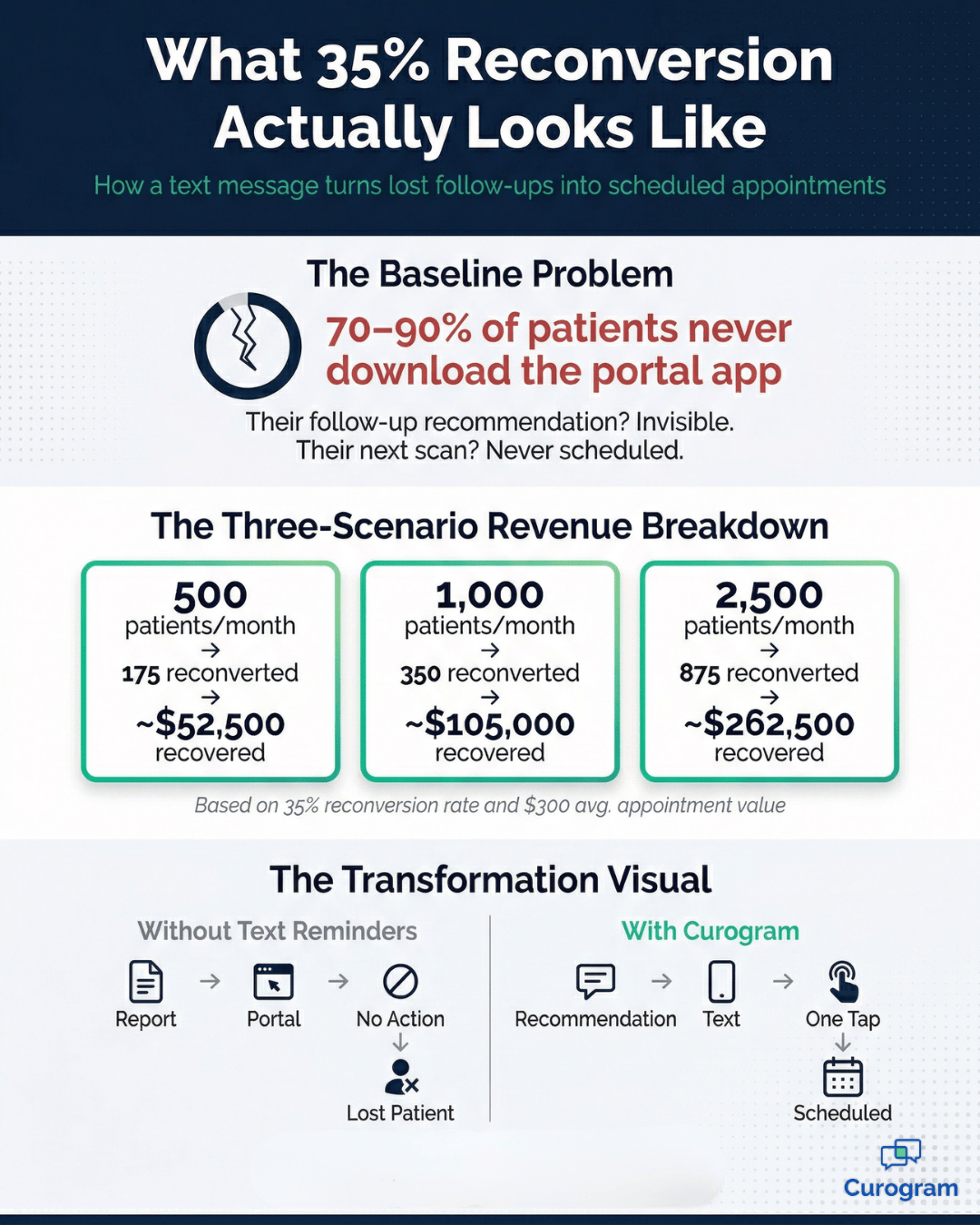
Between 70–90% of patients never download a patient portal app, which means any follow-up recommendation locked inside that app is effectively invisible to them.

The patient leaves without knowing what happens next. The imaging center loses the opportunity.

And the outcome that could have been caught early gets delayed.

The good news?

Closing that gap doesn't require a new workflow, a new hire, or a complicated system overhaul. It requires a text message — sent at the right time, with the right information, and a direct path to book.

The Follow-Up Nobody Actually Told You About

Here's the reality most radiology practices don't talk about out loud: the clinical recommendation was made. The follow-up imaging was documented. And the patient still didn't come back.

It's not negligence on anyone's part. It's a system problemone that's been quietly creating missed IMA for years.

The Portal Isn't Reaching Them

RamSoft's radiologists and AI-powered analysis tools do their job well. They identify findings, flag follow-up intervals, and document recommendations with precision.

RamSoft's Blume patient portal even gives patients in-app access to their reports and imaging history. But here's the catch — patients have to download the app first.

Most don't.

When 70–90% of patients never install the app, follow-up recommendations stay locked in a clinical document they never open.

There's no push notification. No scheduling prompt. No reminder that six months have passed.

When Delays Have Clinical Consequences

The gap between "recommended" and "scheduled" isn't just an operational inconvenience.

For certain findings, timing is everything:

  • A BIRADS 3 mammography follow-up delayed by six months can shift the diagnosis pathway entirely.
  • A lung nodule follow-up missed by a year changes how the finding is staged.
  • A bone density scan that never gets scheduled closes the window on preventive intervention.

These aren't minor oversights. They're the difference between Stage 1 and Stage 3 — between treatment with a strong prognosis and treatment that's already a step behind.

The referring physician may mention the recommendation at the next visit. Or they may have a packed schedule and get to it briefly. Or not at all. The patient leaves with good intentions and no clear next step.

And here's what makes this especially frustrating:

The patient wanted to do the right thing.

"I would have scheduled my follow-up if I'd known when it needed to happen" is not an uncommon thing to hear.

"Why didn't anyone tell me?" is a fair question.

Because somewhere between the radiology report, the referral chain, and the patient's daily life, the message got lost.

The missed follow-up imaging is not a patient compliance problem. It's a communication gap — and one that's entirely solvable.

Patient reading a follow-up imaging reminder text in a medical waiting area

How a Text Message Becomes a Patient's Follow-Up Navigator

The fix isn't complicated. But it does require meeting the patient where they already are.

Most people check their phones within minutes of receiving a text.

They don't log into portals before breakfast. They don't call imaging centers to ask when their next scan is due. But they do read texts — especially ones that feel clear, helpful, and easy to act on.

That's the foundation of what RamSoft and Curogram built together. RamSoft's AI-powered workflow identifies which patients have documented follow-up recommendations and when those reminders should trigger.

Curogram then delivers a follow-up imaging reminder text directly to the patient's phone at exactly the right moment — whether that's at the 6-month mark, 12-month mark, or annual interval.

No App. No Portal. No Friction.

The message doesn't ask the patient to download anything or remember a password. It arrives the way every other important message in their life arrives.

Something like:

"Your radiologist recommended a follow-up MRI of your shoulder. It's time to schedule. Tap here to book your appointment."

Clear timing. Clinical context. One tap to act.

That's a very different experience from hoping the patient remembers, or waiting for their PCP to bring it up, or trusting that a portal notification got noticed.

Automated Sequences That Stay on Schedule

A single reminder doesn't always do it — and that's okay. Curogram handles multi-touch campaigns that mirror how real follow-up works. The initial patient recall notification SMS goes out at the recommended interval. If the patient hasn't scheduled within 30 days, a gentle follow-up text goes out.

A confirmation message checks in. A scheduling link is always included.

Every step is timed to that specific patient's unique follow-up interval — not a blanket blast to everyone in the system. This is personalized outreach, not mass noise.

The Conversation Doesn't Have to Stop There

What makes this especially effective is the two-way component.

Patients can reply with questions — "Do I need to fast before this scan?" or "What should I bring?" — and the imaging center responds directly.

A follow-up imaging reminder text becomes a care conversation. The patient feels heard. The imaging center captures real-time engagement before the appointment even happens.

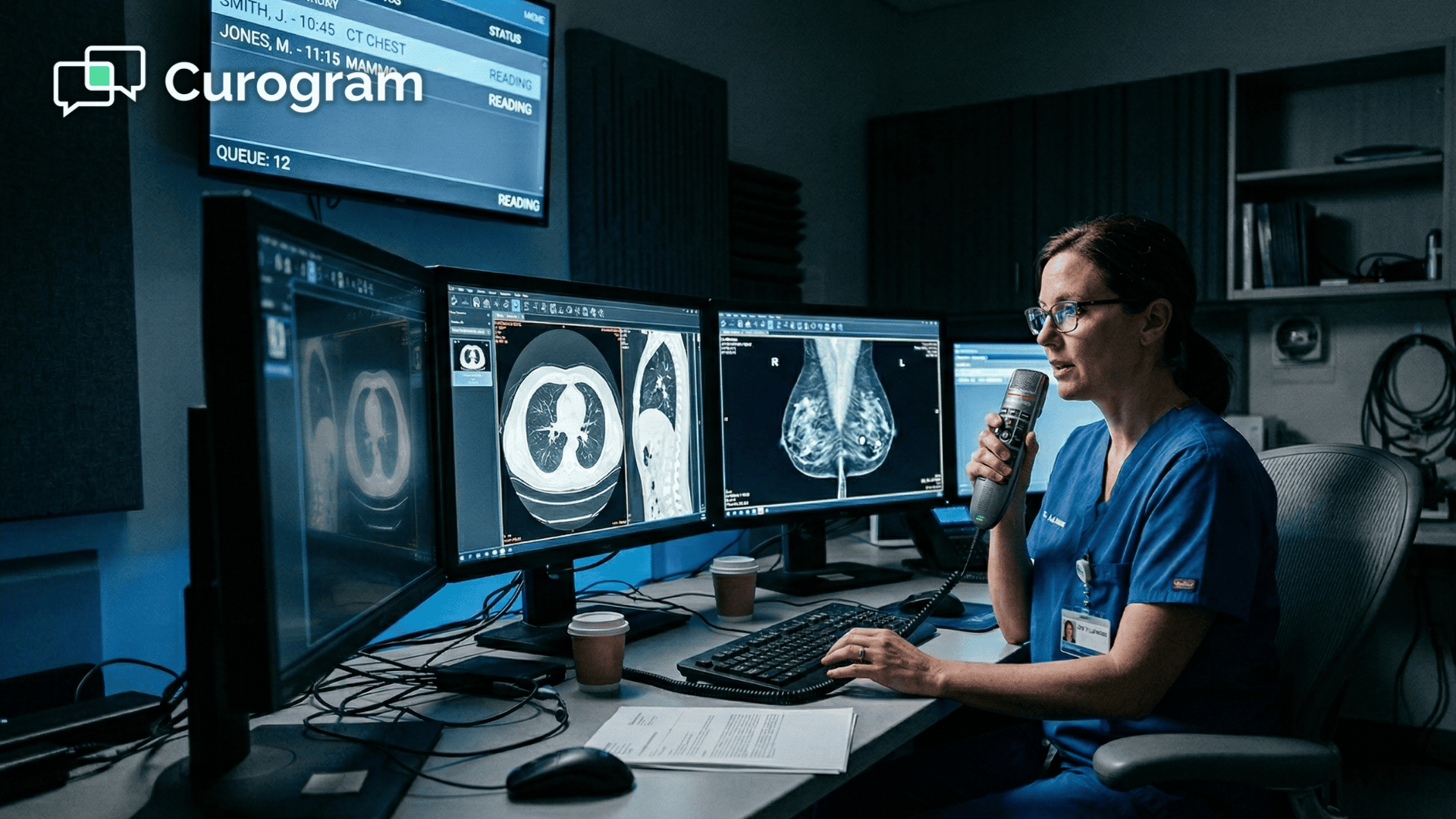
Radiologist reviewing follow-up imaging recommendations on a workstation dashboard

Positioning the Imaging Center as a Health Partner

There's a broader benefit here too. When patients receive an annual mammography reminder, or a lung LDCT screening alert for high-risk populations, or a bone density scan follow-up text, the imaging center stops being a place they go when something's wrong.

It becomes a proactive part of how they manage their health. That shift in perception matters — not just for outcomes, but for referrals, loyalty, and long-term patient volume.

What Happens When Every Patient Knows Their Next Step

Here's where the numbers get interesting.

For every 1,000 patients with a documented follow-up recommendation, 350 of them schedule their follow-up scan after receiving a radiology patient follow-up imaging recall notification text.

That's a 35% reconversion rate — from patients who had no clear pathway back, to patients who booked an appointment.

Reach every patient in seconds. Use mass messaging for urgent closures, health alerts, or clinic news with a 98% open rate with Curogram.

An imaging center handling even modest follow-up volumes can recover tens of thousands of dollars in appointment revenue that would otherwise walk out the door — not because patients refused, but because the reminder never reached them.

The Clinical Win Is Just as Real

Earlier detection and better staging aren't abstract benefits.

In practice, they translate to:

  • Preventive interventions completed on schedule instead of years late.
  • Referring physicians impressed by proactive radiology follow-up scheduling — and more likely to send future referrals.
  • Patients who feel the imaging center cared enough to follow through, building trust that's hard to replicate.

That last point matters more than most practices realize. The imaging center that remembered a patient six months later, sent a clear message, and made booking easy? That's a facility patients recommend to their doctors and their families.

From Information Gap to Scheduled Appointment

The transformation this creates is straightforward.

Before: patients have a recommendation they don't know about, don't know when to act on, and have no clear way to schedule.

After: a single text arrives with the right timing, clinical context, and a direct booking link.

The information gap closes. The follow-up happens. The outcome improves.

That's not a small win. For a practice trying to grow patient volume and maintain clinical quality, it's one of the most direct levers available — and it runs automatically in the background while your team focuses on the patients in front of them.

Stop Letting Follow-Ups Fall Through the Cracks

RamSoft identifies what needs watching. Curogram makes sure the patient comes back to watch it.

Together, these two platforms close the gap that costs imaging centers both revenue and clinical credibility — the gap between a recommendation that was made and a follow-up that actually happened.

Direct text communication, timed to each patient's unique follow-up interval, means no recommendation gets buried in a portal, no patient is left guessing what happens next, and every follow-up becomes an opportunity for earlier detection and better outcomes.

This isn't about retention strategy or marketing tactics. Radiology follow-up scheduling is a clinical safety issue.

When a radiologist documents a follow-up recommendation, that recommendation has a time value.

A BIRADS 4 finding at 6 months means something different than a BIRADS 4 finding at 14 months. The interval matters. And the patient can only act on that interval if they know about it.

Curogram's imaging center patient communication tools make sure they do. The message goes out automatically, on schedule, directly to the patient's phone — with no app download required, no portal barrier in the way, and no staff member manually tracking who needs a reminder.

For your team, that means less chasing and more caring. For your patients, it means they feel genuinely looked after — not just scanned and sent home. For your practice, it means recovered appointments, stronger referral relationships, and a clinical reputation built on follow-through.

The patients who fall through the cracks today are patients who could have been caught early. They're also appointments your schedule doesn't currently have.

Both problems have the same solution.

Ready to turn follow-up recommendations into scheduled appointments? Schedule a Demo with a RamSoft and Curogram specialist today and see how automated follow-up imaging reminders can work for your practice.


Frequently Asked Questions

Is it HIPAA-compliant to send clinical follow-up recommendations via text?

Yes — with proper consent and secure delivery. Text-based follow-up reminders must be sent with opt-in patient consent, use encrypted delivery, and include patient authentication where clinically appropriate. Curogram integrates with RamSoft's secure workflows to ensure every patient recall notification SMS meets HIPAA requirements for protected health information. Patients always retain the right to opt out of future messages at any time.

Won't patients feel scared or pressured by a follow-up text?

Not when the message is framed around care rather than urgency. A message like "Your radiologist recommended a follow-up MRI in 6 months. It's time to schedule — tap here to book" reads as a helpful reminder from a provider who's paying attention, not an alarm. Patient feedback consistently shows that when imaging center patient communication is framed as proactive health management rather than an emergency, patients appreciate being remembered. Because these texts are recommendation-based and clinically grounded, they feel supportive — not alarmist. Opt-out is always available.

What if the patient already completed their follow-up imaging at a different facility?

Curogram's two-way messaging capability handles this cleanly. If a patient replies "Already done at another location," the imaging center can acknowledge that, update their records, and remove the patient from future reminder sequences. Some imaging centers also integrate with regional imaging networks to verify whether follow-up imaging was completed elsewhere. This keeps communication relevant and prevents repeat messaging for patients who've already completed their care.

How does Curogram know when to send each reminder?

Curogram integrates with RamSoft's AI-powered radiology workflow to pull each patient's specific follow-up interval — whether that's 6 months, 12 months, or annual. The system then triggers outreach automatically at that interval, meaning every reminder is timed to the individual patient's recommendation, not a generic schedule. This is personalized follow-up, not bulk messaging.

Can imaging centers customize the message content?

Yes. Imaging centers can tailor message templates to reflect their brand, clinical context, and preferred patient communication style. Whether it's a radiology follow-up scheduling reminder, a mammography recall, or a lung LDCT screening prompt for high-risk patients, the message can be written to match how your team would naturally communicate with patients.