

7 min read
Self-Pay Ketamine Patient Billing | Text-to-Pay via Osmind
Aubreigh Lee Daculug
:
June 10, 2026
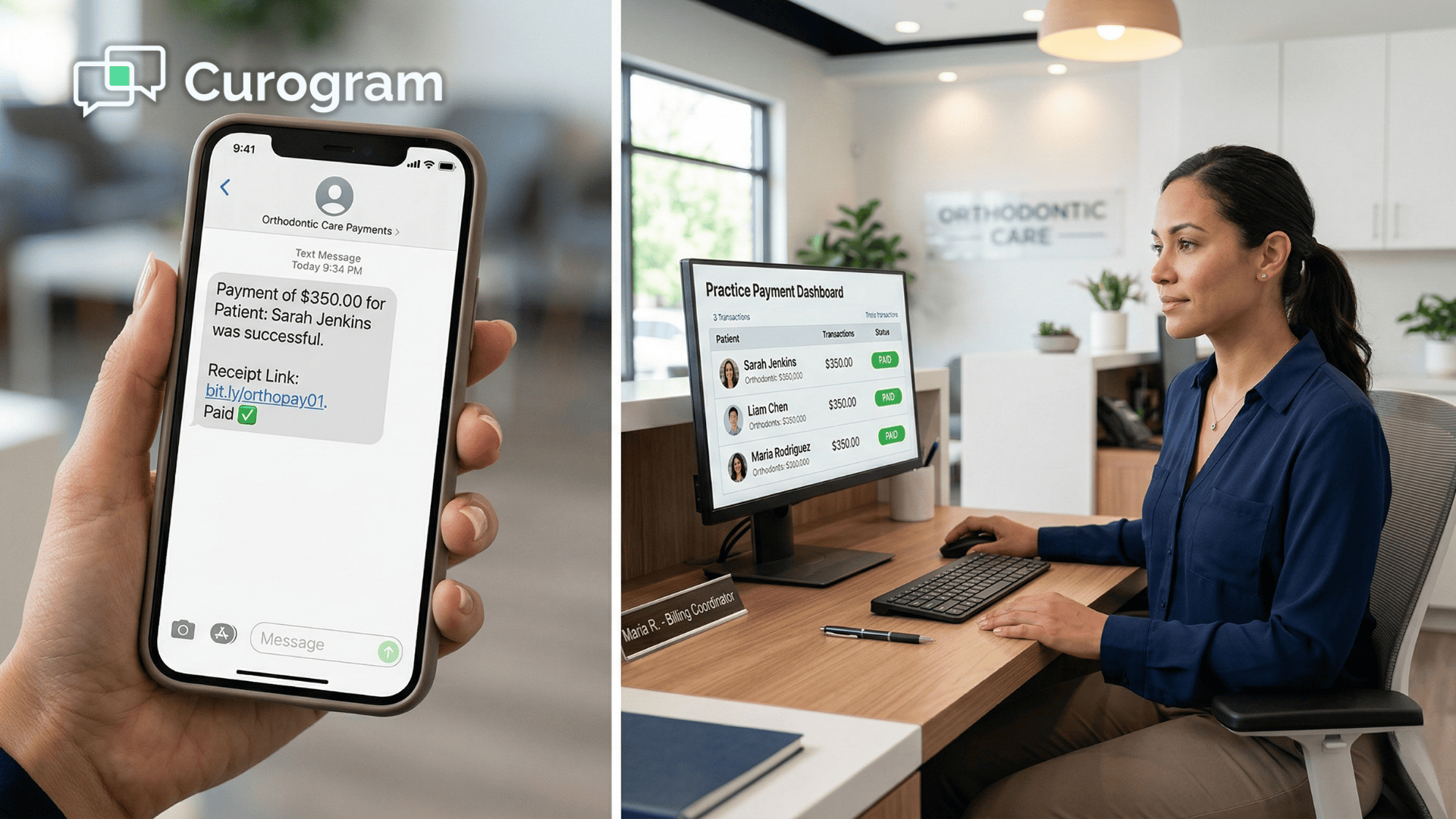
Curogram's text-to-pay, working alongside Osmind, sends a one-tap payment link.
The patient sees the amount, taps "Pay Now," and finishes in under 60 seconds. No portal, no phone call, no paper.
Patients who pay by text complete payment at 3 to 4 times the rate of portal invoicing. The result: faster collections, less payment anxiety, and a financial experience that finally matches the quality of care.
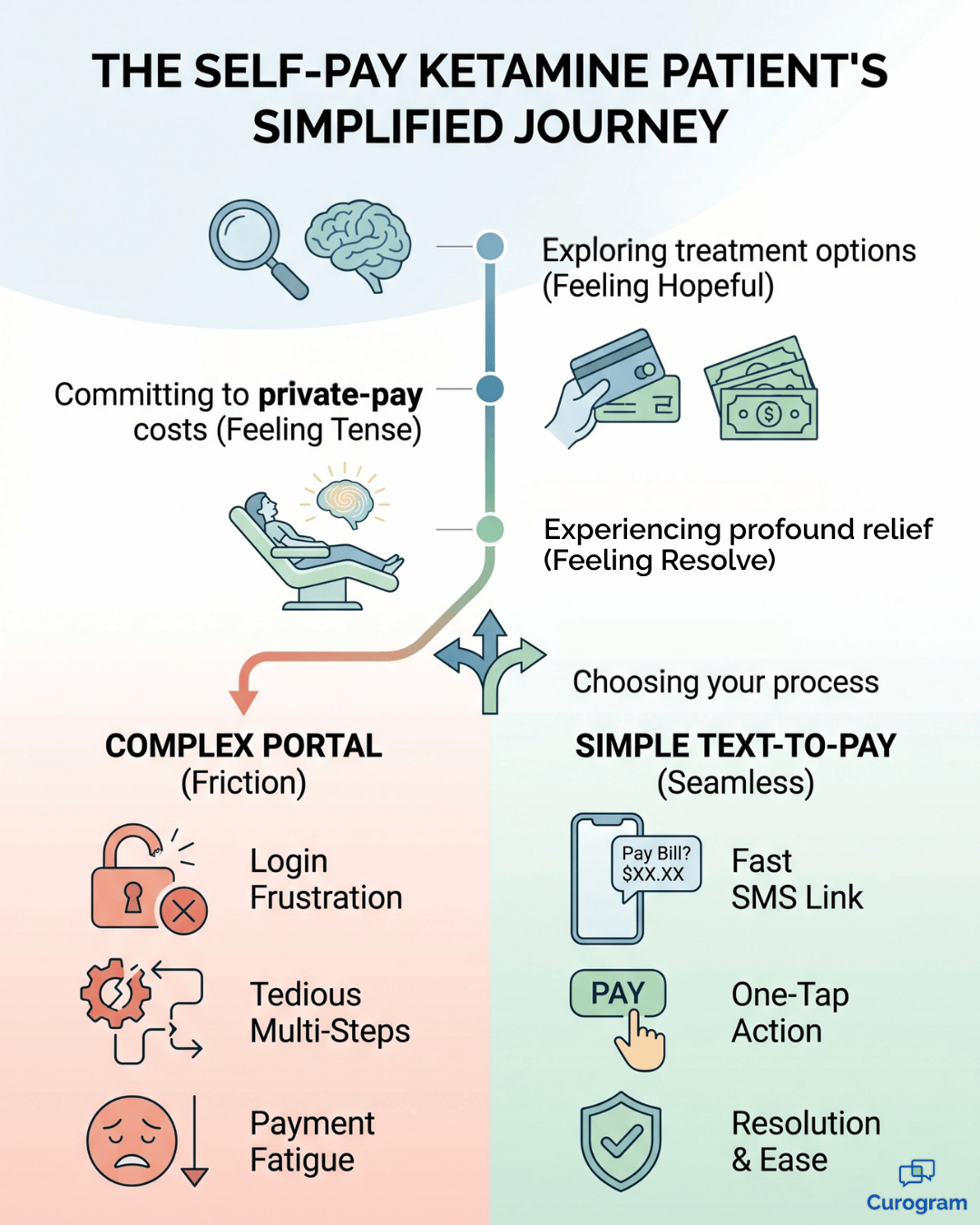
Your patient just finished their first ketamine infusion. For the first time in years, something shifted. The depression that shrugged off four different medications loosened its grip, even just a little. They drive home feeling hopeful.
Then they reach the front door and find a paper statement waiting.
Or a portal invoice tied to a login they can't remember. Or a voicemail asking them to call back with a card number. The breakthrough moment quietly fades into a chore.
This is the overlooked problem inside interventional psychiatry. The clinical care is cutting-edge. The payment process feels stuck in 2010. You have likely seen it.
Self-pay ketamine patients are not casual buyers. Many spend $2,400 to $3,600 on a six-session series because insurance won't touch it. That is a courageous financial commitment, often made by someone whose condition makes focus and follow-through genuinely hard to manage day to day.
So when paying you means hunting for a portal password, the friction lands harder than it would for almost anyone else. It isn't laziness. For a patient with treatment-resistant depression, "log in and pay your bill" is one more task their illness makes heavier.
That friction costs you, too. Payments stall. Balances linger. Some patients put off booking their next infusion because they haven't sorted out the last bill yet. Payment friction quietly turns into a treatment-adherence problem.
There is a simpler path. The self-pay ketamine patient payment experience improves dramatically when Osmind handles the clinical side and Curogram text-to-pay handles the money.
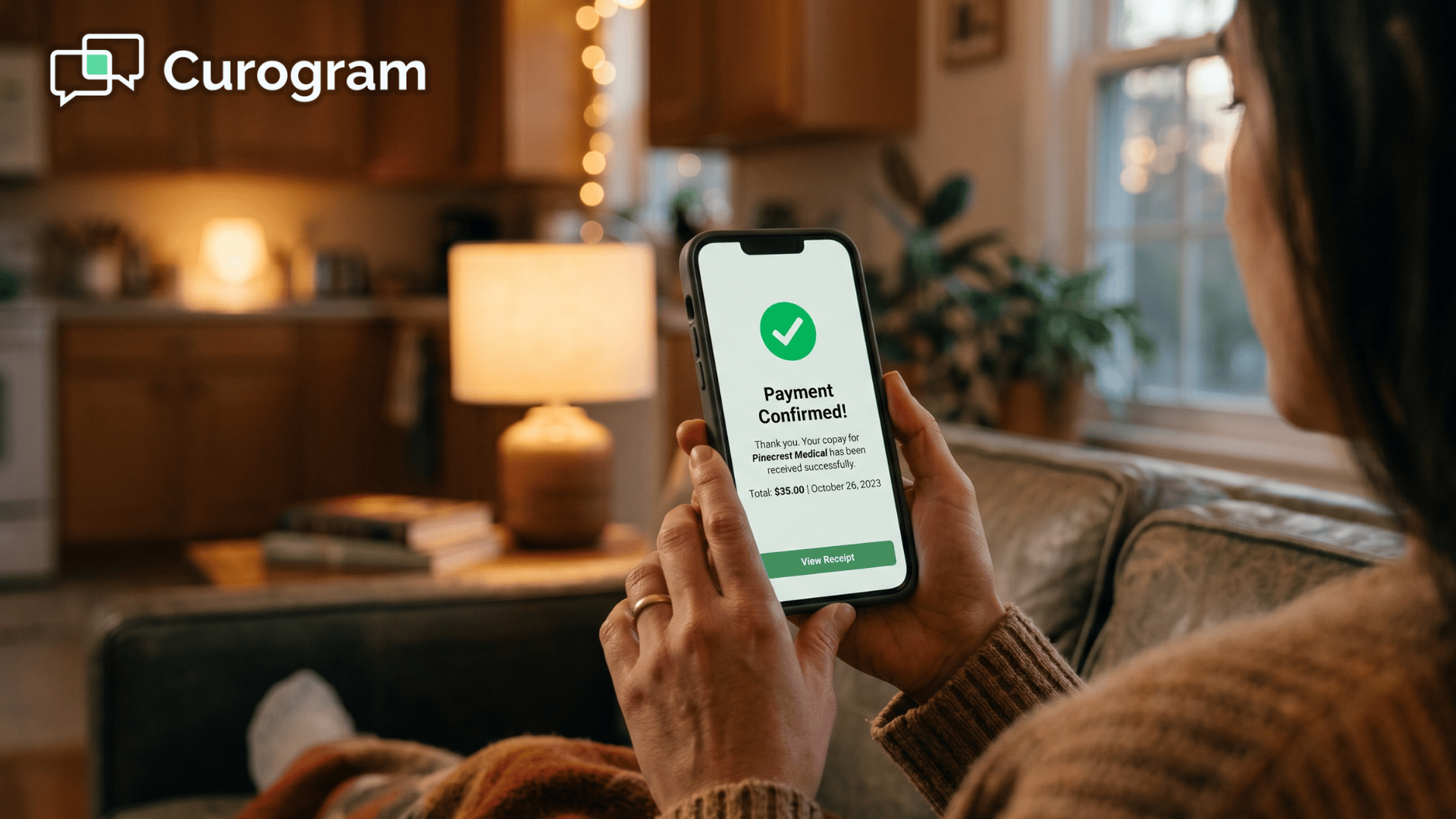
A text arrives. The patient taps. Done.
This article shows you why text beats the portal, how the workflow runs, and what reducing payment anxiety for self-pay ketamine patients does for both your revenue and your patient relationships.
Let's start with the real, hidden cost of the current process.
The Hidden Weight of a Clunky Bill
Osmind was built with real care for interventional psychiatry. The clinical experience is thoughtful and modern. The payment experience usually isn't built to the same standard.
Think about what you're really asking a patient to do right after a carefully managed infusion:
- Find a portal app they may have already deleted
- Recover a login they probably don't remember
- Hunt for the right billing section
- Enter card details and submit
The treatment is cutting-edge. The checkout is anything but.
Now add the emotional layer. Your patient has treatment-resistant depression. They tried four medications. They researched ketamine for months. They committed thousands of dollars because insurance said no.
They finish that first infusion and feel something move for the first time in years. Then they get home to a paper statement, a confusing portal invoice, or a voicemail asking for a callback.
The high of a breakthrough is followed by the low of a clumsy bill. The practice that just gave them hope can suddenly feel like it's chasing them for money.
Friction doesn't just slow payment, it strains the relationship
When paying is hard, patients form a quiet negative association with your practice. Some delay scheduling the next infusion because last time's balance is still unresolved. Others feel embarrassed about an open bill and avoid calling at all.
That's the real link between out-of-network ketamine billing and patient satisfaction. The dissatisfaction often has nothing to do with the price. It's the process.
Your patients aren't avoiding the bill on purpose
These are not deadbeats. They're people managing serious conditions who made a brave financial choice to try something new.
They deserve a payment experience that honors that effort, not one that adds another item to an executive-function checklist they're already fighting to keep up with.
A Payment Channel Built Around the Patient
Curogram's patient-first payment channel lines the payment experience up with the clinical one you already deliver. A text arrives shortly after the visit. The patient sees the amount. They tap "Pay Now." Done.
The whole thing happens on the phone they're already holding. Nothing to download. Nothing to log into. Nobody to call.

One tap, by design
Curogram's one-tap payment is built for cognitive simplicity.
The mobile-optimized page strips the screen down to only what matters:
- Your practice name, so they know it's you
- The exact amount owed
- A secure payment form
Most patients finish in under 60 seconds. For someone dealing with cognitive fog or post-infusion processing, that simplicity isn't a nice-to-have. It's a necessity.
And if they're not ready to pay in the moment, the link saves for later, so the convenience never turns into pressure.
It comes from a number they already trust
Payment texts arrive from your established Curogram number, the same one patients use for appointment confirmations and two-way texting. That consistency builds trust.
They recognize the sender, understand the context, and feel safe tapping the link.
This is why a mobile payment link reflects a genuine patient preference in psychiatric treatment. It meets people on familiar ground instead of sending them somewhere new and unfamiliar to hand over money.
A fit made for this specialty
In interventional psychiatry, a patient's relationship with payment is uniquely sensitive. Many are spending thousands out of pocket on care their insurance rejected. The process should honor that investment, not pile onto it.
Text-to-pay captures payment at the natural moment, right after a positive treatment experience, when willingness and ability to pay are both at their highest.
It doesn't chase. It doesn't nag. It offers a calm, dignified way to handle the money side of care.

When Paying Feels as Smooth as the Treatment
Here's the headline number.
Patients who get a payment link by text complete payment at 3 to 4 times the rate of portal invoicing or paper statements.
It's not that they're more willing to pay. The text simply removes every step between willingness and action. The same patient who ignores a portal invoice for three weeks often pays within hours by text.
Let's make that concrete with a simple example. Imagine a practice that bills $500 per ketamine session and runs about 40 self-pay sessions a month. That's $20,000 in monthly self-pay charges, or $240,000 a year.
| What you're tracking | Portal / paper statement | Curogram text-to-pay |
|---|---|---|
| Typical time to payment | About 3 weeks | Under 1 hour |
| Relative completion rate | Baseline | 3–4x higher |
| Staff follow-up per balance | Calls, re-sends, reminders | Usually none |
| Monthly self-pay billed (example) | $20,000 | $20,000 |
| How fast that cash lands | Trickles in over weeks | Mostly same-day |
Here's what that means in plain terms. The same $240,000 a year either drips in slowly, tying up staff time and inflating your accounts receivable, or it lands almost as fast as the visits happen.
For your team, that's fewer collection calls and far less time spent tracking who still owes what.
From a chore to a non-event
The bigger shift is emotional. Payment stops being something patients have to "deal with." It just happens, a text, a tap, a confirmation.
The money side becomes as seamless as the clinical side, so patients can stay focused on their progress instead of their balance.
What This Looks Like for One Patient
Sarah finishes infusion #4 of 6. She's responding well, the first treatment to work in three years. She drives home, makes dinner, and checks her phone.
There's a text from your practice: "Hi Sarah, here's a secure link to pay your $500 session balance." She taps. Enters her card. Paid. Total time: 45 seconds.
She doesn't think about billing again until infusion #5, when the same easy process repeats. At the end of her series, she tells a friend about your practice. She mentions the treatment, the staff, and how easy everything felt. The billing never comes up, because it was never a burden.
That's the quiet goal of a strong text-based billing patient experience in Osmind practices: a bill so smooth nobody remembers it.
Make Paying You as Easy as Trusting You
Here's the simplest way to think about it. Osmind takes care of the clinical experience. Curogram takes care of the financial one. One delivers innovative treatment. The other makes sure paying for it feels just as considered.
Your patients have already done the hard part. They researched the treatment. They accepted that insurance wouldn't help. They handed over thousands of dollars and a great deal of hope.
The least the billing process can do is stay out of their way.
Text-to-pay does exactly that. It turns payment from a stressful errand into a quiet, one-tap moment. The patient gets a text, sees the amount, and pays in under a minute. No portal, no phone tag, no paper. The financial side of care finally matches the clinical side.
The payoff runs both ways. Patients feel respected instead of chased. You collect faster, with fewer awkward calls and fewer aging balances.
The text-based billing patient experience in Osmind practices becomes something patients barely notice, which is exactly the point.
Think about the message it sends. You worked hard to treat your patient. You shouldn't make them work harder to pay you. A frictionless payment experience for interventional psychiatry patients quietly tells them that their effort and their trust matter here.
So stop letting a clunky bill undo the goodwill your care just earned. Give your patients a payment experience worthy of the courage it took to walk through your door in the first place.
Schedule a Demo to see the patient-side flow for yourself. You'll watch exactly what your patients see when a payment link arrives, and feel how simple it is to go from text to tap to paid. Seconds, not weeks.
Frequently Asked Questions
Not when it's timed and worded well. The text is fully customizable, and most practices send it a few hours after the visit, or even the next day, to leave appropriate space after treatment. The message reads as a gentle reminder, never a demand. Patients consistently say they'd rather get a simple text they can act on whenever they're ready than a phone call interruption or a paper statement they have to dig up and process.
Yes. Your billing team can send a link for any amount, whether that's a single session, a multi-session package, or a custom balance. Patients who want to prepay an entire ketamine series can do it with one link. Those who prefer to pay session by session can get an individual link after each visit. The flexibility matches the range of payment preferences you see across interventional psychiatry.
It does. Patients get instant payment confirmation by text, and your billing team can provide detailed receipts on top of that. For out-of-network patients submitting superbills for partial reimbursement, the payment confirmation serves as proof of patient-responsibility payment. Your team can pair that receipt with the superbill to make the patient's reimbursement submission cleaner and faster.
Yes. The text is just a notification with a secure link; no card details ever travel by SMS. When the patient taps through, they land on an encrypted payment page to enter their information. Curogram is SOC 2 Type II certified and fully HIPAA compliant, so both your practice and your patients are protected at every step.
Nothing awkward, and no phone calls. You can schedule gentle automated reminders to go out on your own timeline, so a balance never slips through the cracks. Because the original link stays active, the patient can simply tap and pay whenever they're ready. That steady, low-pressure follow-up is a big reason text balances close so much faster than portal invoices.