7 min read

Text-to-Pay for Osmind Practices | Collect Payments via SMS

Text-to-Pay for Osmind Practices | Collect Payments via SMS
💡 Text-to-pay payment collection for Osmind interventional psychiatry practices replaces slow paper statements and portal logins with a secure link sent straight to the patient's phone. The patient taps, pays, and the balance clears—often within hours.           

Osmind tracks what patients owe. Curogram helps you actually collect it. A single text closes the gap between treatment and payment.


Practices moving from paper statements (around 20% conversion) to text-to-pay report 60–80% same-week collection.  


For a clinic with $30,000 in monthly balances, that can recover $12,000–$18,000 every month.


Your patient just finished their sixth ketamine infusion. They thanked your team on the way out. They meant every word. And a month later, they still haven't paid the $2,400 they owe.

This isn't a story about a difficult patient. It's a story about a broken payment process.

The willingness to pay is there. The money is there. What's missing is an easy way to hand it over.

Here's the quiet truth most psychiatric practices live with: getting paid is harder than getting results. Your clinical outcomes are excellent. Your collection process is stuck in 2005.

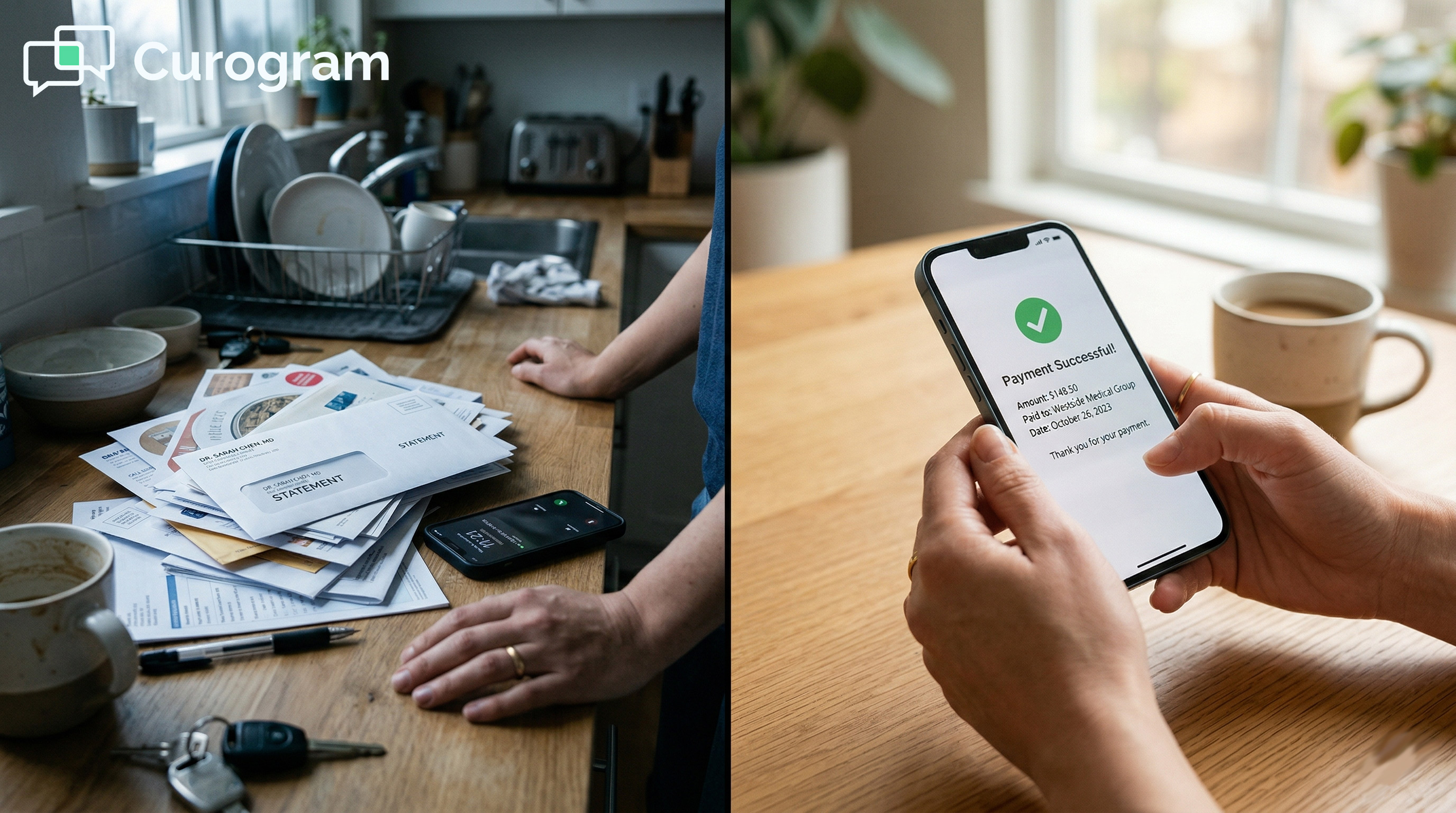
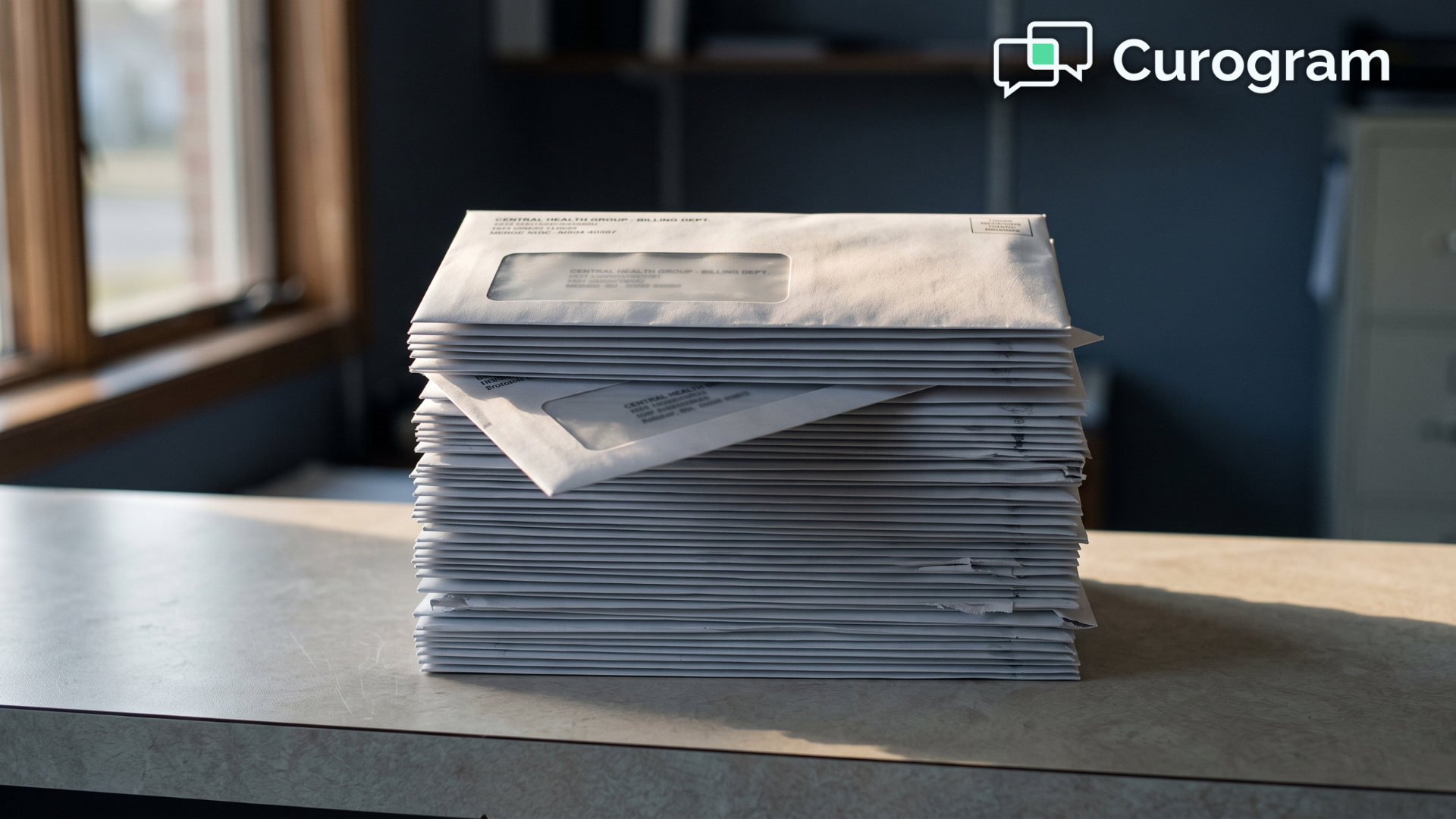
You mail a paper statement. It lands on a kitchen counter and stays there. You send a portal invoice, but the patient deleted the app the day treatment ended. Your billing coordinator calls and reaches voicemail. Again.

Weeks pass. The balance ages. The aging receivables report grows.

Osmind does its job beautifully. It tracks treatment, documents outcomes, and records what each patient owes. But recording a balance and collecting it are two very different things.

That gap—between "balance owed" and "payment received"—is where revenue quietly disappears. Here's the frustrating part: your patients aren't avoiding you. They're just busy.

It sounds small. It isn't. For a practice juggling self-pay ketamine fees, TMS copays, and out-of-network superbills, that gap can hold tens of thousands of dollars hostage at any moment.

The good news? You don't need a bigger billing team or a tougher policy. You need a faster path to "Pay Now."

That's the promise of text-to-pay payment collection for Osmind interventional psychiatry practices. Send a secure link by text. The patient taps, pays, and the balance clears—often the same day.

Where Your Revenue Quietly Goes Missing

Osmind holds all your billing data—procedure codes, claims, patient balances. But collecting payment is a separate act entirely. It means a portal the patient must log into, a statement you mail, or a phone call where staff read a card number out loud.

None of these meet patients where they actually are: on their phones.

One balance, six weeks of friction

Walk through one typical balance. A self-pay patient wraps up a six-session series and owes $2,400. You send a portal invoice; they never log in. You mail a statement; it sits unopened for three weeks.

Your coordinator calls twice and finally hears, "I'll pay this weekend." Two more weeks vanish.

Six weeks later, you've spent staff hours chasing one balance—and it's still open.

Now multiply that by your whole panel. The costs pile up fast, and most stay invisible until you actually tally them.

The hidden cost of the old way

What it costs you The paper-and-phone process
Statement printing and postage $800–$1,000 per month
Billing staff time on phone collections 5–10 hours per week
Paper statement conversion rate About 20%
Outstanding balances at any time (50+ active patients) $30,000–$60,000

Read that bottom row again. For a practice with 50 or more active self-pay or out-of-network patients, $30,000–$60,000 can sit uncollected at any given moment.

This means a large slice of money you've already earned is parked in limbo—not because patients refuse to pay, but because paying takes more effort than they'll spend.

Your billing specialist knows the feeling. Half the report is patients who had great outcomes, said thank you, and fully intend to pay. The money is there. The willingness is there. The easy button is not.

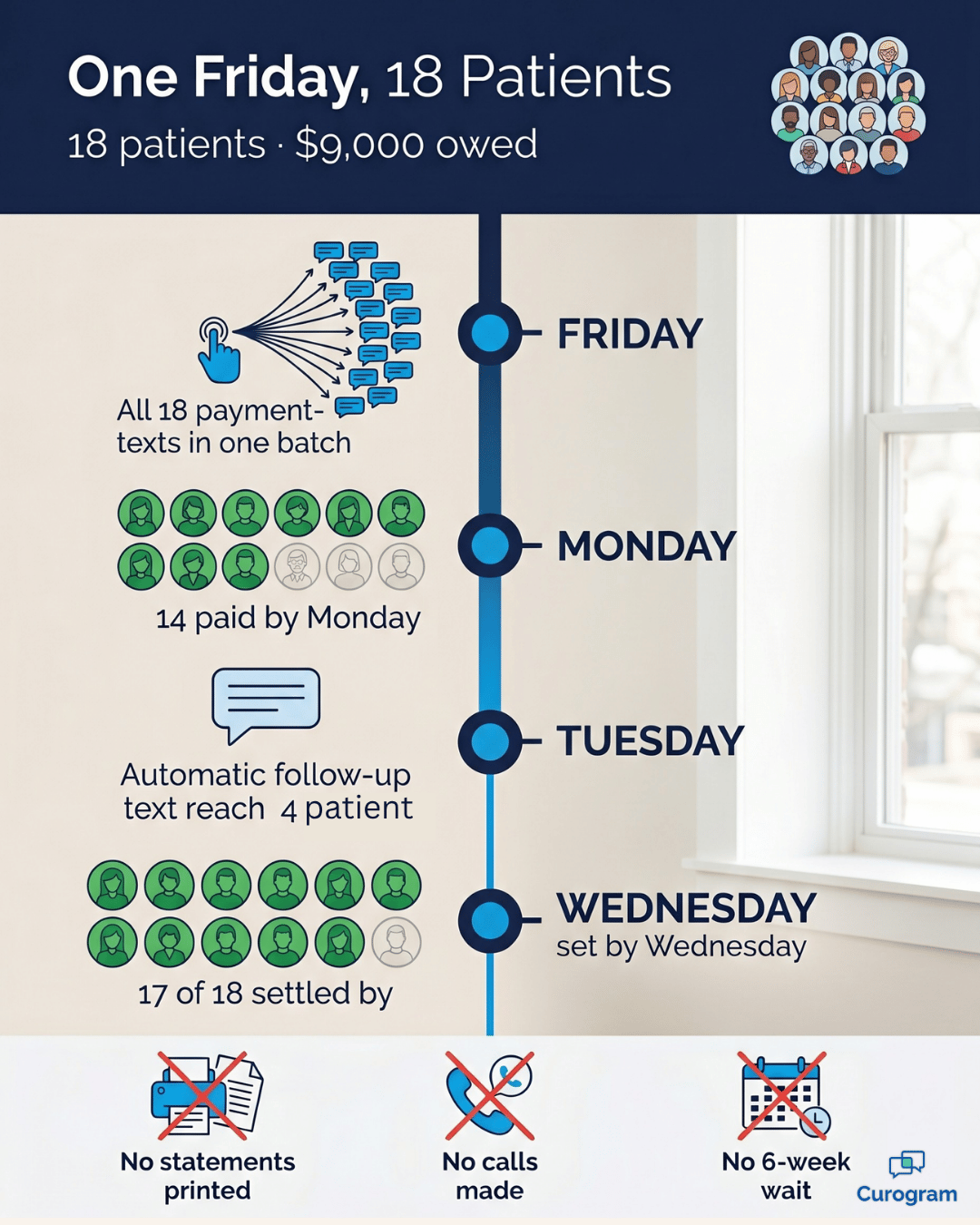
Text-to-pay timeline: 18 patients pay $9,000 over one Friday-to-Wednesday week

What If Getting Paid Took One Text and One Tap?

This is the exact problem mobile payment collection for interventional psychiatry was built to solve.

Curogram removes every step between "balance owed" and "payment received"—except the one that matters. The patient taps "Pay Now."

Here's how simple it gets.

A secure link arrives by text. The patient opens it—no app, no portal, no password.

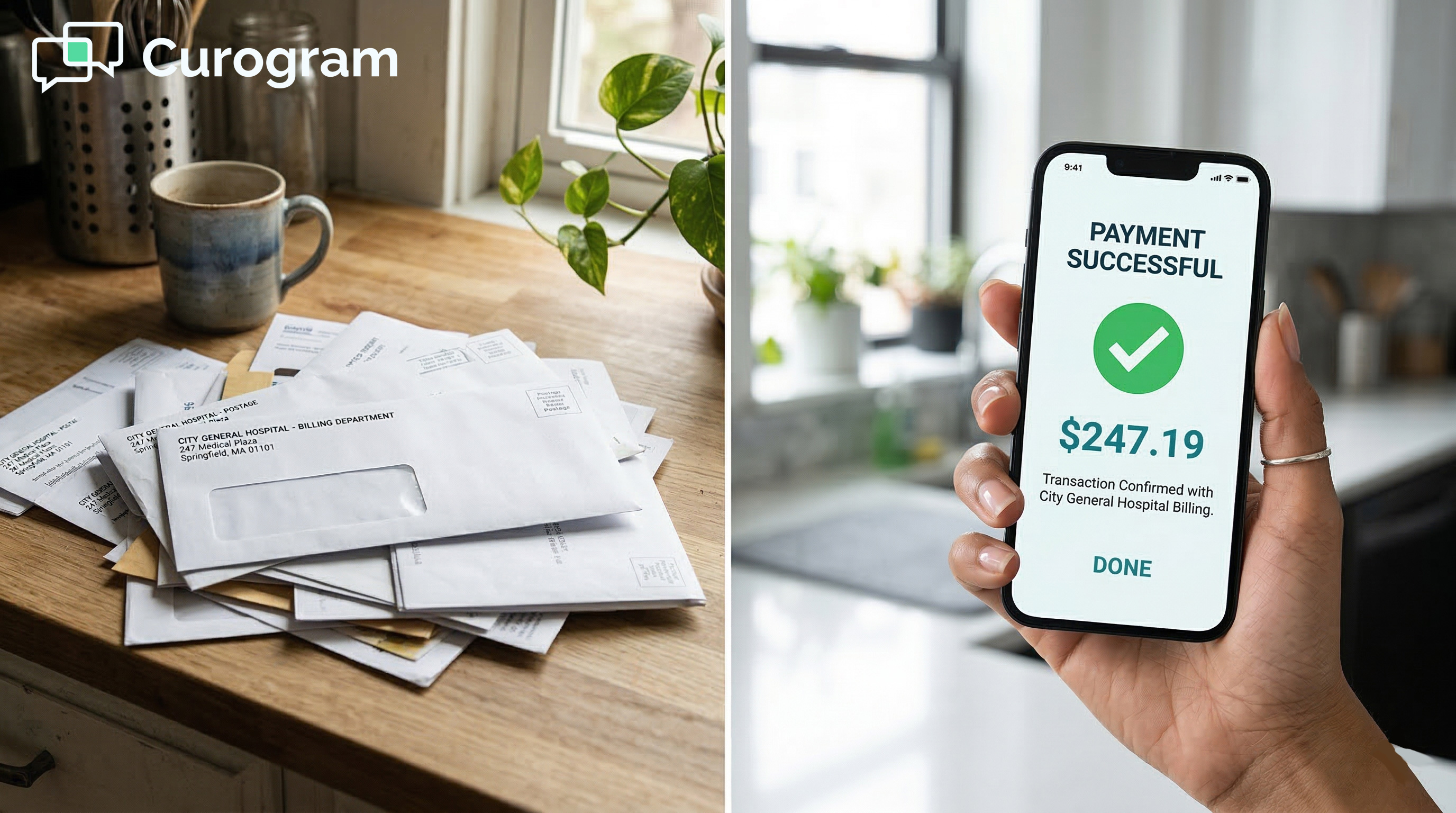
They see the amount, enter a card, and they're done. Start to finish, it takes under 60 seconds.

A payment link built for phones

Curogram's secure SMS payment links are PCI-compliant, mobile-friendly, and branded to your practice. Each link shows the patient's balance, your practice name, and a secure payment form. The instant they pay, both the patient and your billing team get a confirmation.

You can send links by hand or trigger them automatically once a session ends. An SMS payment link sent from your Osmind ketamine clinic reaches patients on the device they check dozens of times a day.

It fits right into your Osmind workflow

Text-to-pay runs alongside your existing Osmind billing. Your team spots the balance in Osmind, sends the link through Curogram, then records the payment once it clears.

You're adding one small step—sending a text—that replaces an entire cycle of statements, calls, and follow-ups.

Interventional psychiatry has a famously messy payment landscape, and that's exactly why timing matters here.

Billing coordinator explaining a bill to a patient in a bright clinic

Look at what your team handles:

  • Ketamine infusions are often self-pay at $400–$600 a session.
  • TMS needs prior authorization, with copays that vary by plan.
  • Spravato carries REMS billing requirements.
  • Many patients are out-of-network and file superbills for partial reimbursement.

Each of these shares one truth:

A patient's willingness to pay peaks right after treatment, when they feel the benefit.

A text sent within hours of a session captures payment at that exact moment.

For text-based copay collection in TMS practices, that timing turns "I'll get to it" into "Done."

The same logic powers digital payment for self-pay ketamine patients in your Osmind practice. They felt the result. The link arrives while it's fresh. They pay before the moment fades.

From Six-Week Waits to Same-Week Cash

The numbers tell the story plainly. Practices that switch from paper statements (around 20% conversion) to text-to-pay report 60–80% same-week payment completion. That's a 3–4X jump in collection efficiency.

For a practice with $30,000 in monthly outstanding self-pay balances, that shift recovers $12,000–$18,000 every month. This means money that used to leak away now lands in your account—without adding a single staff hour.

Look at what actually changes once the link replaces the statement:

  • Same-week payment climbs from about 20% to 60–80%.
  • Time to collect drops from a 4–6 week slog to the same week.
  • Staff effort shrinks from 5–10 hours a week on the phone to a few clicks.

Put together, those three shifts turn a leaky billing cycle into a predictable one. Your billing team's job changes shape too. Instead of chasing payments, they confirm them. Aging balances drop from six-week averages to same-week resolution.

What a single week looks like

Here's what a single week can look like. Your coordinator pulls this week's completed ketamine sessions—18 patients, $9,000 owed. She sends all 18 payment links in one batch.

By Monday, 14 have paid. The four stragglers get an automatic follow-up text. By Wednesday, 17 of 18 are settled.

No statements printed. No calls made. No six-week wait. The revenue that once took a month is in the bank in days.

Your Revenue Is Already Earned. Go Collect It.

Let's bring it home. The collection gap isn't a patient problem. It's a process problem—and process problems are fixable.

Text-to-pay closes the distance between treatment and payment. You send a secure link by text. Patients tap, pay, and clear their balance in under a minute. Balances that used to age for weeks now resolve in days.

Think about the contrast. Osmind is where you track what patients owe. Curogram is how you actually get paid. One records the balance. The other collects it—through the channel patients already trust and answer: a text message.

And it works because it respects how people behave. Nobody wants to log into a portal or dig out a checkbook. But almost everyone will tap a link and enter a card from the couch. You're not changing your patients—you're meeting them where they already are.

The payoff is real and measurable. Higher same-week collection. Less staff time on the phone. Tens of thousands in balances that stop slipping through the cracks.

For a clinic with $30,000 in monthly balances, that can mean $12,000–$18,000 recovered every month. No new hires. No awkward calls. Just a faster way to get paid.

So here's the choice in front of you. Keep mailing statements that patients toss in the recycling. Or start sending links they finish in 60 seconds.

Schedule a Demo with Curogram to watch text-to-pay fit into your Osmind billing workflow. Most practices send their first batch of payment links the same day they set up.


Frequently Asked Questions

Is text-to-pay secure enough for medical payments?

Yes. Curogram's payment links run on PCI DSS-compliant processing with end-to-end encryption. The text itself holds no financial data—just a secure link to a payment page. Card details move through the secure gateway and are never stored on Curogram's servers or shown to your staff. Curogram is also SOC 2 Type II certified and fully HIPAA compliant, which makes it a HIPAA-compliant text-to-pay option for any psychiatric practice. In short, it meets or beats the security patients see when they shop online.

Does the payment data sync back to Osmind automatically?

Curogram gives your team instant payment confirmations to reference when updating Osmind. Direct automated write-back depends on your integration setup, but the workflow stays fast: your team gets notified the moment a payment clears and updates Osmind in seconds. Compared to phone-based collections, that quick manual step saves far more time than it costs.

What if a patient has questions about their bill before paying?

That's built in. Because the link arrives through Curogram's two-way texting, patients can reply right to the payment text. Your billing team sees the message in the same inbox and can explain charges, clarify insurance adjustments, or set up a payment plan—all in the thread. The patient gets answers and pays without ever picking up the phone.

What happens if a patient doesn't pay after the first text?

Nothing falls through the cracks. You can set up automatic follow-up texts that go out on a schedule you control—say, a gentle nudge two days later, then again at the end of the week. Each reminder carries the same one-tap link, so the patient never has to hunt for the balance. Most stragglers pay on the second or third touch, and your team never has to pick up the phone to make it happen.

Can we use text-to-pay for partial payments or payment plans?

Yes. You can send a link for the full balance or break it into smaller amounts that fit the patient's budget. For self-pay ketamine series that run into the thousands, that flexibility often means the difference between getting paid and getting ignored. Patients reply in the same text thread to set up an arrangement, and you send the next link when each installment is due—keeping the whole plan moving without spreadsheets or phone tag.


Office Ally Patient Text Payment | Pay in 60 Seconds

Office Ally Patient Text Payment | Pay in 60 Seconds

💡 Most patients do not refuse to pay their medical bills. They just find it too hard. Paper statements sit on counters for weeks. Patient Ally...
Read More
eClinicalWorks Text-to-Pay | SMS Payment Links for Enterprise RCM

eClinicalWorks Text-to-Pay | SMS Payment Links for Enterprise RCM

💡 eClinicalWorks text-to-pay SMS patient payment billing sends secure links to patients right after a visit. Patients pay in seconds from their...

Read More
Why Patients Pay Faster via Text | Meditab IMS Text-to-Pay

Why Patients Pay Faster via Text | Meditab IMS Text-to-Pay

💡 Meditab IMS patients pay faster when you text them a payment link because text removes the friction that causes delays. Portal logins stop...

Read More