8 min read
Why Patients Pay Faster via Text | Meditab IMS Text-to-Pay
Aubreigh Lee Daculug
:
May 22, 2026
A text link arrives instantly, opens in one tap, and collects payment in about 30 seconds.
The same phone patients used for appointment reminders becomes the channel for paying — no password, no app, no statement to dig out of the mail pile.
Practices using text-to-pay report 2–3X higher conversion than paper, with collection windows shrinking from 45–90 days down to 3–7 days.
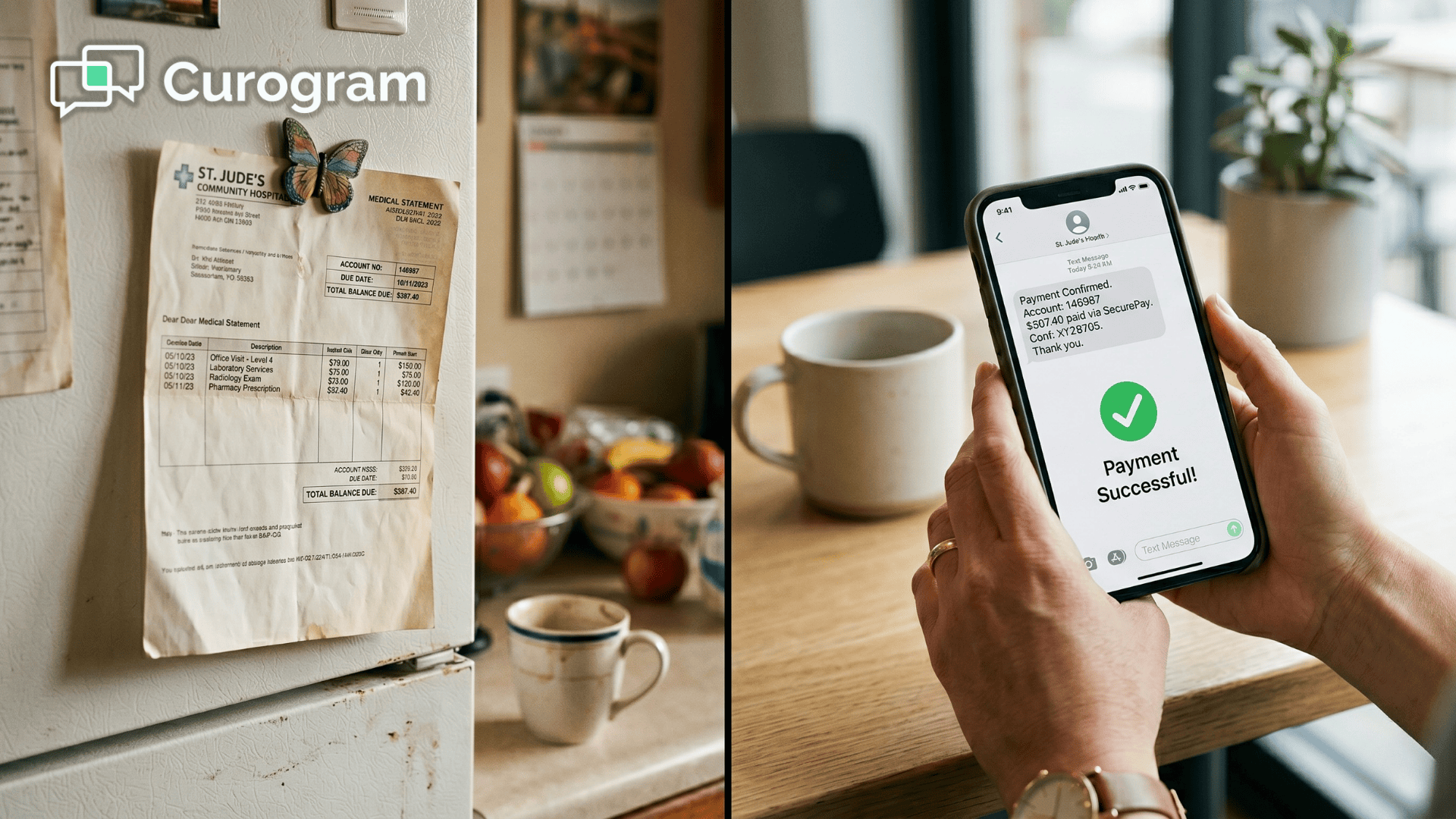
A patient hands over a card at the grocery store, taps the chip reader, and walks out in under a minute. Two weeks later, that same patient gets a paper statement for a recent doctor visit. It lands on the kitchen counter and stays there for a month.
That gap — between how fast people pay everywhere else and how slowly they pay your practice — is exactly where your accounts receivable lives.
For practices running Meditab IMS, the math is brutal. CarePortal bill pay through Global Payments Integrated works, but it asks the patient to log in. Paper statements work, but they take weeks to arrive. Phone calls work, but your staff burns hours chasing $80 balances.
And patients?
They are not refusing to pay. They are refusing to be inconvenienced.
Roughly 70% of patients drop off before completing a portal payment. Paper statements convert at around 20%.
That means for every 100 patients with a balance, 80 never pay through paper, and 70 of the ones who try the portal give up halfway through.
The dollars are real. A primary care office with $50,000 in monthly patient responsibility could be leaving $25,000–$35,000 stuck in the slow lane every single month.
This is the patient billing friction CarePortal Meditab IMS practices keep running into. It is not a technology problem. It is a friction problem.
The fix is simpler than most billing teams expect. Meet patients inside their text messages.
A payment link delivered by text turns a 5-step process into a 30-second one. This article unpacks why your patients ignore portals and paper, what they actually expect now, and how the text-to-pay patient experience Meditab IMS practices are adopting cuts collections from months to days.
What's Really Stopping Your Patients From Paying
Most billing teams assume non-payment is about money. Sometimes it is. Most of the time, it is about effort.
Patients want to pay. They just want to pay the way they pay for everything else.
The Hidden Drop-Off Inside CarePortal Bill Pay
CarePortal bill pay through Global Payments Integrated is a 5-step journey for the patient:
- Receive a bill or notification
- Navigate to CarePortal
- Log in (or create an account if they don't have one)
- Find the billing section
- Enter payment and confirm
Each step loses patients. Industry data on payment funnel drop-off shows that every added step reduces completion by 20–30%.
By the time a patient reaches step 5, you have lost most of the people who started.
That funnel is the single biggest reason why patients ignore medical bills portal Meditab practices send out. It is not a portal failure. It is a step-count failure.
The Mail Pile Problem
A patient gets a paper statement for $85. They mean to pay. They set it on the counter.
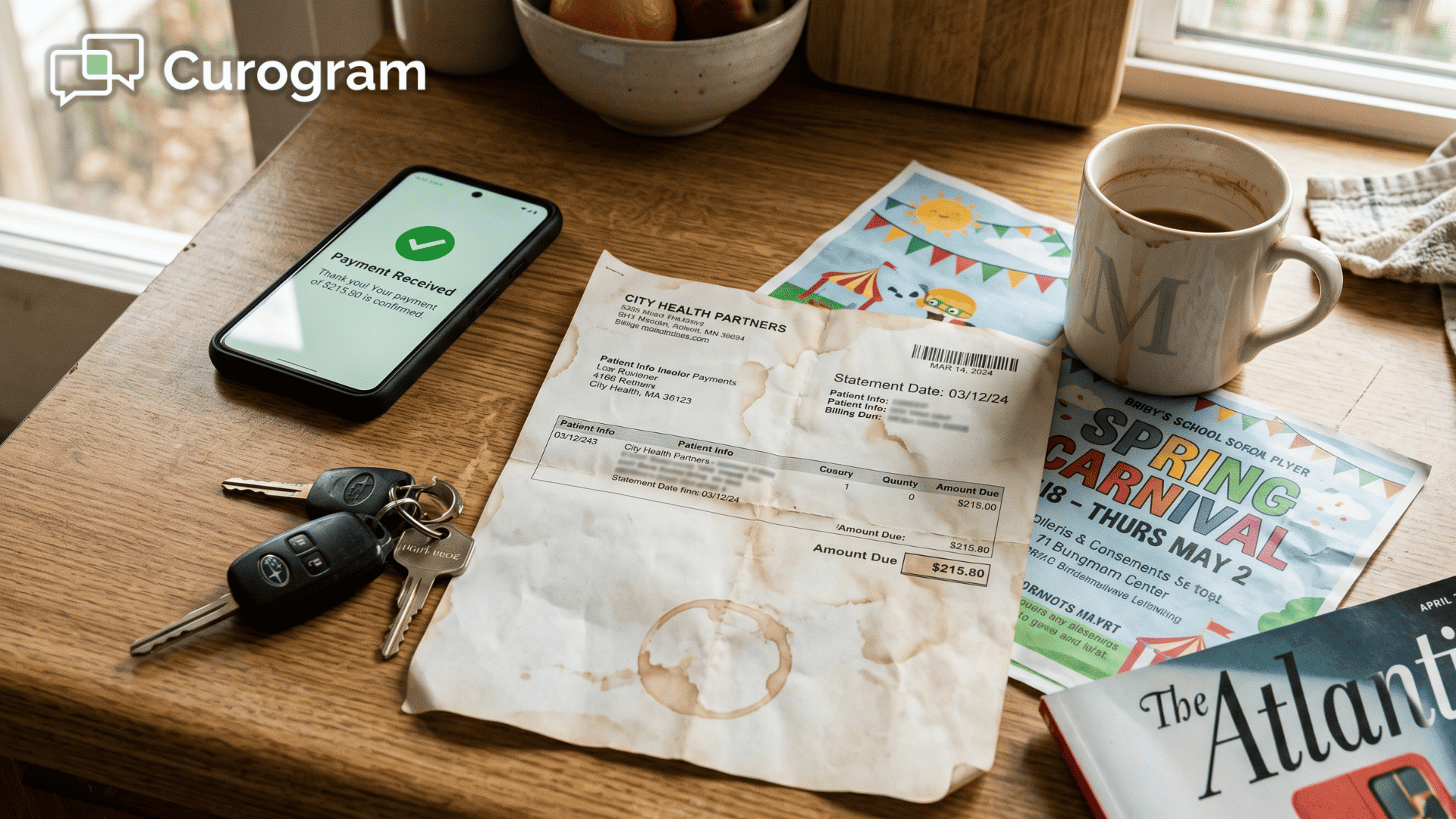
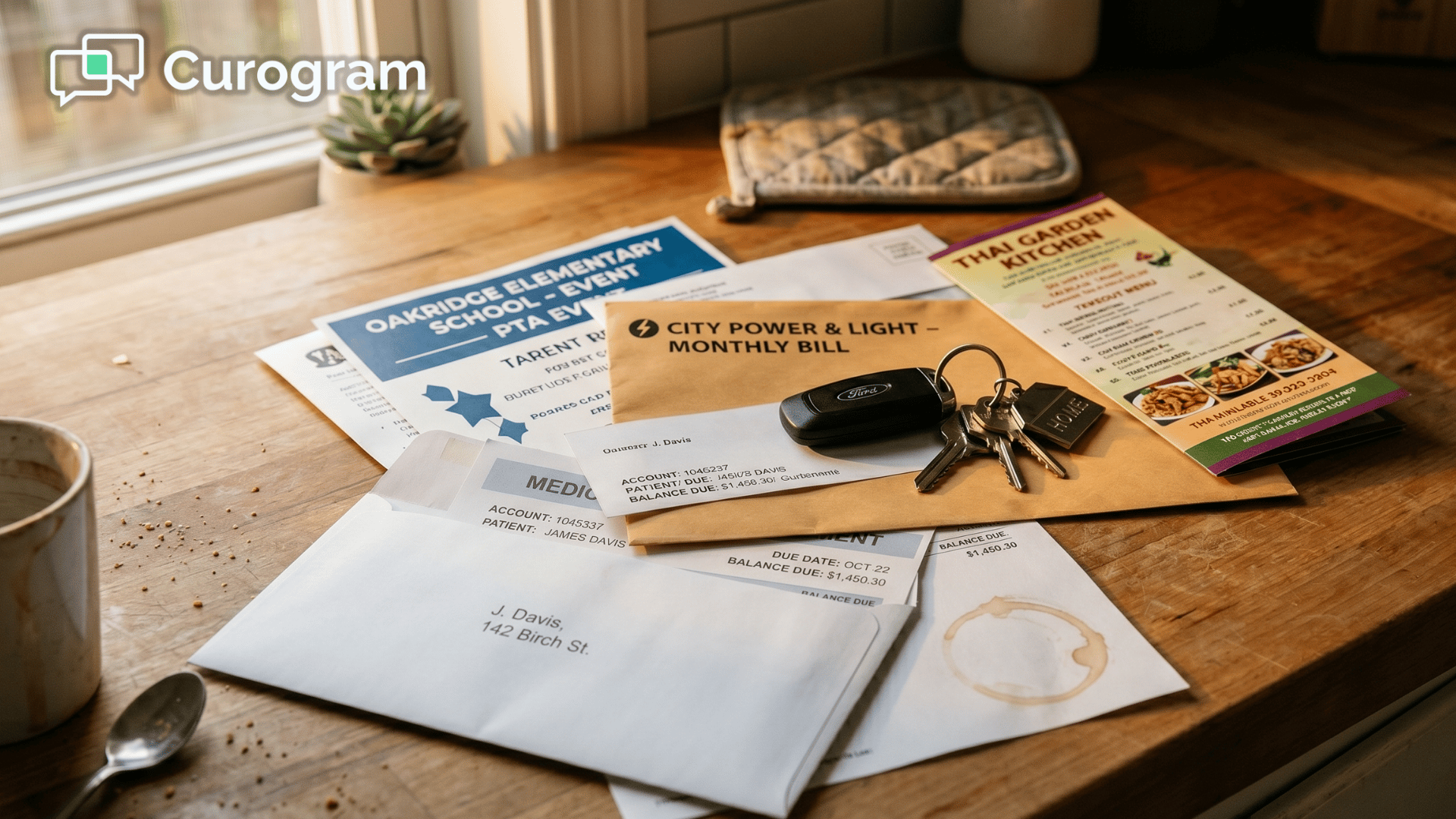
The weekend gets busy. The statement slides under a school flyer and a tax form. Two weeks pass. They remember they owe the doctor, but now they have to find the statement, hunt for their portal password, or call the office during business hours.
The $85 they were happy to pay becomes a chore they keep putting off. This is the difference between patient payment preferences text vs paper medical practice teams need to understand. The willingness was always there. The path was the problem.
What Patients Have Been Trained to Expect
Consumer technology has rewired payment expectations across every age group. Patients under 55 split dinner on Venmo, pay babysitters on Zelle, and tap their phones at the grocery checkout. A bill that requires a portal login feels stuck in 2010.
Patients over 55 may not use Venmo, but they text every day with their kids, doctors, and pharmacies. A tappable link inside a text is far simpler than navigating a portal they rarely visit.
Mobile payment healthcare patient convenience is not a generational issue. The expectation is universal — only the format varies.
By the time a patient sees your bill, they have already done a dozen one-tap payments that week:
- Tapped a phone at the grocery store or gas pump
- Sent rent or split a dinner check on Venmo or Zelle
- Paid the babysitter from the car on the way home
- Refilled a prescription with a single text reply
If they can pay a small business with one tap, they assume their doctor's office works the same way.
The Emotional Weight of a Medical Bill
A medical bill is not like a phone bill. It can trigger anxiety about cost, frustration about insurance, or guilt about a visit a patient is not sure they should have made.
Any extra step in the payment process makes that emotional weight heavier. A portal login adds three or four chances for a patient to second-guess and close the tab.
A text that says "Tap to pay your balance" shrinks the emotional load to a single action. The bill still exists. The friction does not.
.png?width=1080&height=1350&name=Meditab%20IMS%20patients%20pay%20faster%20text%20payment%20link%20mobile%20billing%20-%20mid%20(1).png)
How Text-to-Pay Turns Five Steps Into One Tap
Curogram's text-to-pay delivers the payment experience patients already expect.
The full flow is short enough to finish during a TV commercial:
- Receive a text with the balance and a secure payment link
- Tap the link; the page opens with the amount already filled in
- Enter card details and confirm
- Get an instant text receipt
About 30 seconds, start to finish. No portal, no password, no app, no statement to dig out of the mail pile.
The patient pays from the same text thread where they confirmed their appointment and completed their intake forms.
One Familiar Channel for Everything
This is what separates digital patient payment Meditab IMS text message workflows from bolt-on payment tools. Patients are not learning a new system. They are using the same number, the same thread, and the same one-tap behavior they already use with your practice.
When the channel is familiar, the behavior follows. No new accounts. No new logins. No "where do I find this?" calls to your front desk.

Instant Confirmation Closes the Loop
The moment a patient pays, they get a text confirmation with a receipt. There is no waiting to see if the charge went through. No "did my payment post?" call the next morning.
For your billing team, the payment lands in the system in real time.
For the patient, the loop closes in seconds.
That confidence matters — patients who feel certain about their payment are far more likely to pay the same way next time.
A Payment Method That Adapts to the Patient
Different patients have different reasons for putting off a bill. Text-to-pay handles all of them inside one workflow.
| Patient Situation | What Used to Happen | What Happens With Text-to-Pay |
|---|---|---|
| Elderly patient avoids portals | Bill goes unpaid for weeks | Taps link in text; pays in under a minute |
| Busy parent juggling family bills | Skips 15-minute portal session | Pays in 30 seconds on a lunch break |
| Specialty patient on a payment plan | Misses installments, calls reschedule | Gets a recurring reminder with payment link |
| Patient with a billing question | Avoids paying until they call | Replies to text; staff answers in inbox |
The payment channel adapts to the patient. That is the whole point.
Same Patients, Same Balances, Faster Money
Here is the most useful way to think about this shift. The patients are the same people. The balances are the same numbers. The only thing that changes is how you ask them to pay.
That single variable decides whether the money lands this week or next quarter.
The Numbers Practices Are Actually Seeing
| Payment Method | Typical Conversion | Average Time to Collect |
|---|---|---|
| Paper statement | ~20% | 45–90 days |
| CarePortal login | ~30% | 14–30 days |
| Text-to-pay link | 60–70% | 3–7 days |
Apply that to a real practice. Take a multi-specialty group with $80,000 in monthly patient responsibility.
At a 20% paper conversion rate, $16,000 collects in 60+ days. Add text-to-pay at a 65% conversion rate, and that same monthly responsibility delivers $52,000 in the first week.
For your team, that is roughly $36,000 in additional cash flow per month — money you were already owed, just collected on a different timeline.
From "Annoying Bill" to "Modern Practice"
When paying gets easy, the emotional relationship with billing changes. Patients stop dreading the statement and start seeing your practice as one that respects their time.
That shift shows up in small but consistent ways:
- Fewer calls to the front desk asking "did my payment go through?"
- Fewer awkward balance conversations at check-in
- More patients who actually open the next text you send
Mobile billing convenience is not a marketing message. It is something patients feel every time they pay you in 30 seconds instead of 30 minutes.
A positive billing experience builds loyalty in the same way a positive clinical visit does.
A Real Patient Moment
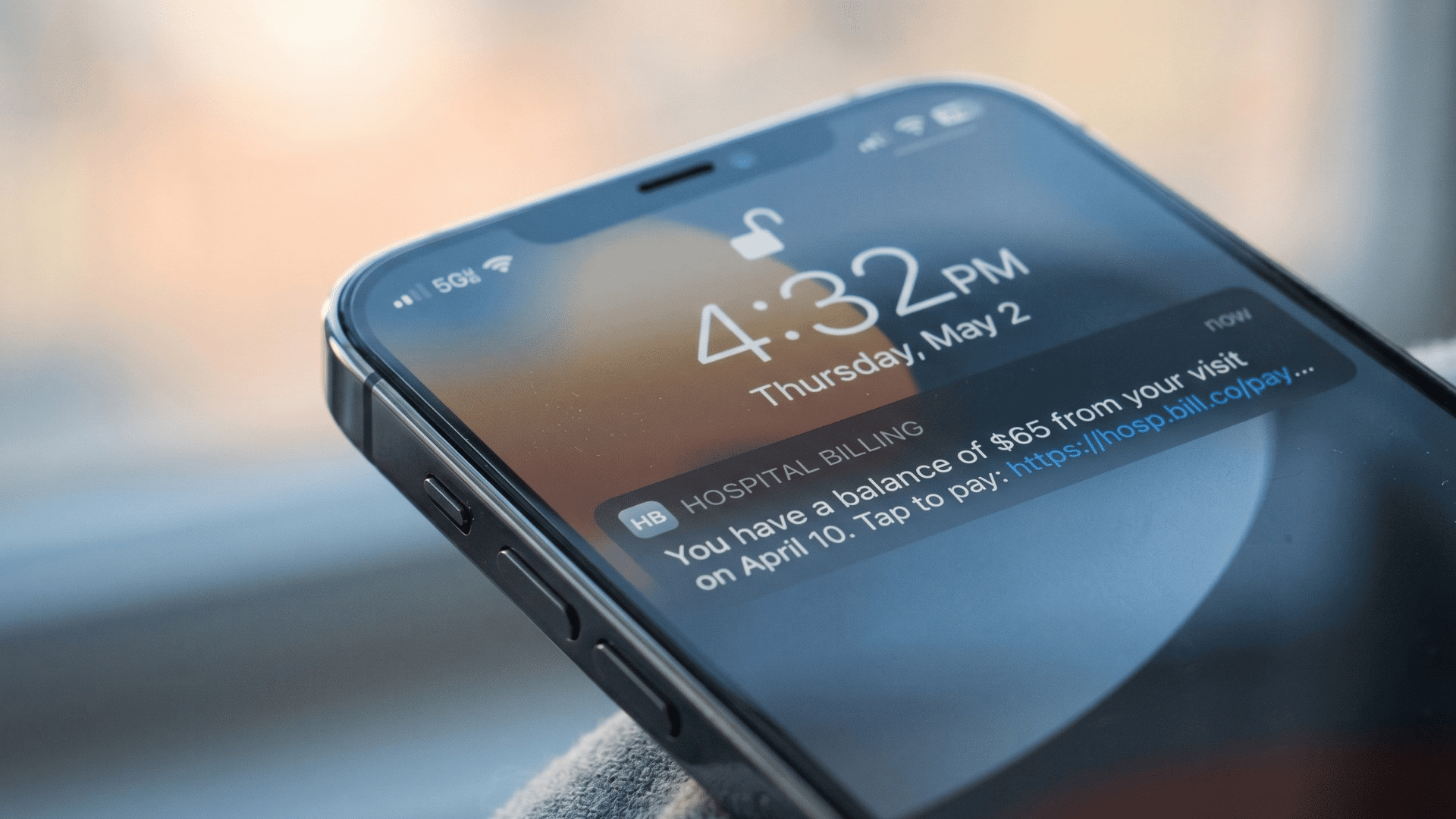
A patient gets a text at 3:47 PM: "You have a balance of $65 from your visit on April 10. Tap to pay: [link]."
She is on the couch with a coffee. She taps the link, sees the balance, enters her card, and confirms. At 3:48 PM, the balance is paid.
She did not search for a statement. She did not log into a portal. She did not call the office. She paid in the time it takes to send a text — because that is exactly what it was.
That is why Meditab IMS patients pay faster when you text them a payment link. The dollars were never the issue. The path was.
Make Paying as Easy as Sending a Text
Meditab IMS patients delay payments not because they cannot afford to pay. They delay because paper and portals make the act of paying inconvenient. Remove the inconvenience, and you collect the same dollars in days instead of months.
CarePortal asks patients to navigate the practice's payment system. Curogram sends the payment to the patient's phone. The money owed is the same. The path to collecting it is radically different.
Your patients want to pay you. Your billing team wants to spend less time chasing balances. Your CFO wants AR days to drop. A text payment link is the rare workflow change that satisfies all three.
If your current month-end AR report shows 30, 60, or 90-day balances stacking up, the issue is almost never patient willingness. It is the channel you are asking them to use. Shift the channel, and the report changes.
You do not need to rip out your existing billing setup to fix this. Curogram works alongside Meditab IMS and your current revenue cycle workflow. Patients use one familiar text thread for reminders, forms, and payments. Your team works inside one inbox. The collections curve flattens because the friction does.
The fastest way to see how this works is to watch it run with your own billing data. We will show you a real text-to-pay flow from the patient's screen — the link, the balance, the confirmation, all in under a minute.
Schedule a Demo with Curogram and see the payment experience from your patient's perspective. No long-term contract. HIPAA-compliant and PCI-compliant.
Frequently Asked Questions
Yes. The text message contains only a link — no financial or health information. The link opens a PCI-compliant payment page with bank-level encryption. Patient payment data is never stored in the SMS or on the device. The experience is as secure as any online payment patients already use daily, from shopping to banking to ride-sharing.
The text-to-pay message can include a reply option for questions. If a patient texts back with a billing question, your staff sees it inside Curogram's inbox and responds via text. This is faster and less tense than a phone call. Many billing disputes get resolved in a 2–3 message text exchange that would have taken a 10-minute phone call.
Yes. The payment page allows partial payments for patients who want to pay a portion right away. For patients who need a payment plan, Curogram supports recurring text reminders with payment links on a schedule your billing team configures. Each installment is as easy to pay as the first — one tap, about 30 seconds.
It works alongside it. CarePortal stays available for patients who prefer logging in to view full statements and history. Curogram simply adds a faster, easier channel for the patients who would never make it through the portal. Most practices see the majority of payments shift to text within the first 60 days, while CarePortal handles the smaller share of patients who want the deeper detail view.
Curogram supports automated follow-up reminders on a schedule your billing team sets — for example, a second text at 7 days, a third at 14 days, and an escalation to staff outreach at 30 days. Each reminder includes the same one-tap payment link. Most balances that get paid are paid on the first or second text, so the follow-up sequence is short and predictable rather than an endless chase.