
9 min read

Pay Your Modmed Doctor Via Text | Quick & Secure

Pay Your Modmed Doctor Via Text | Quick & Secure
💡 Modmed patients can pay their balance via text in about 30 seconds — statement to payment with one tap. The practice sends a secure SMS with the amount owed and a payment link.        

The patient taps, enters a card, and confirms. No app to download. No portal password to remember.


Curogram powers this flow alongside Modmed, giving specialty clinics a faster way to collect from patients who already intend to pay but get stuck on the steps.

The link opens in any mobile browser. Payments are PCI-compliant and encrypted, matching the standards used by major online retailers.


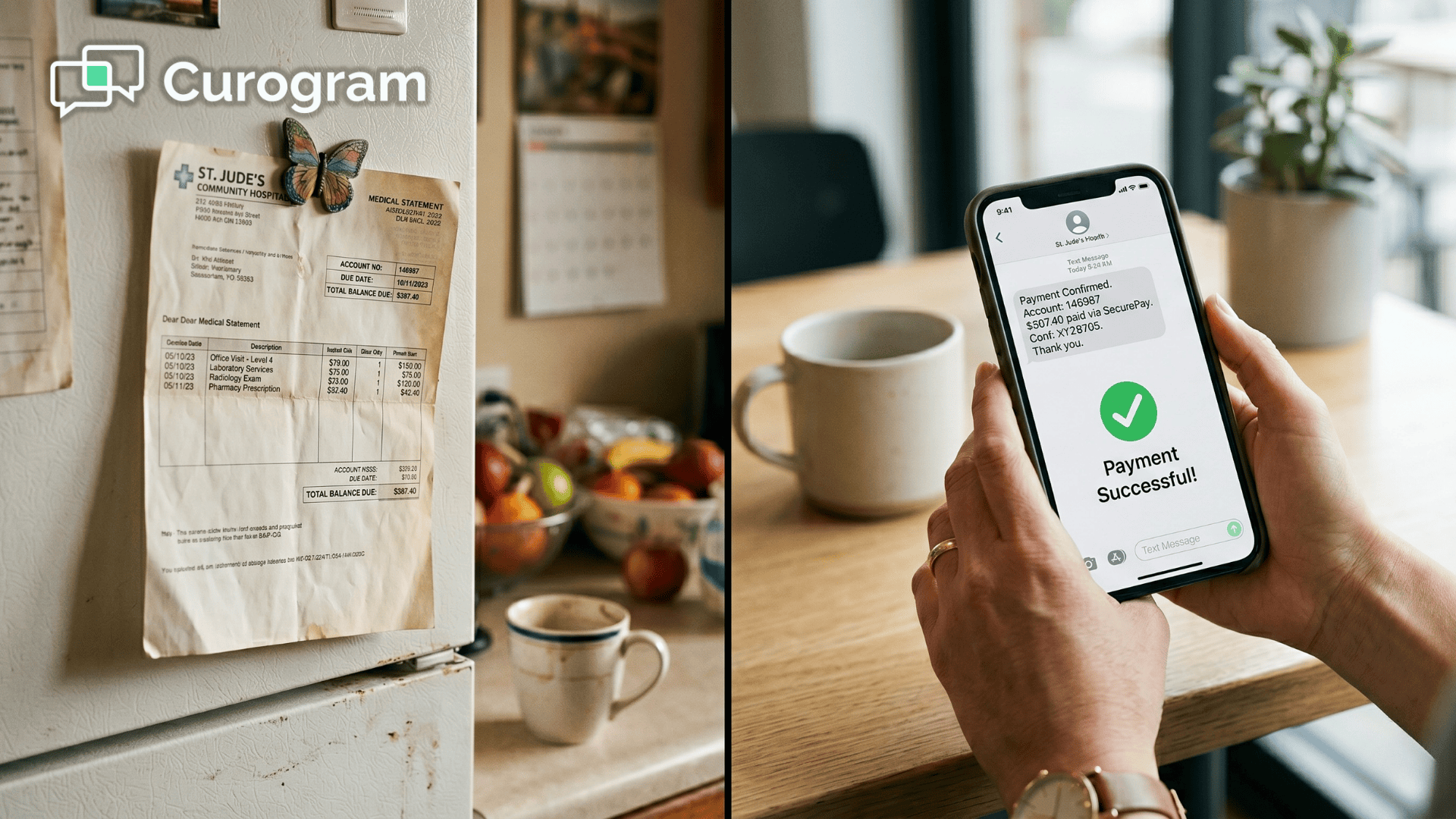
There is a stack on the kitchen counter.

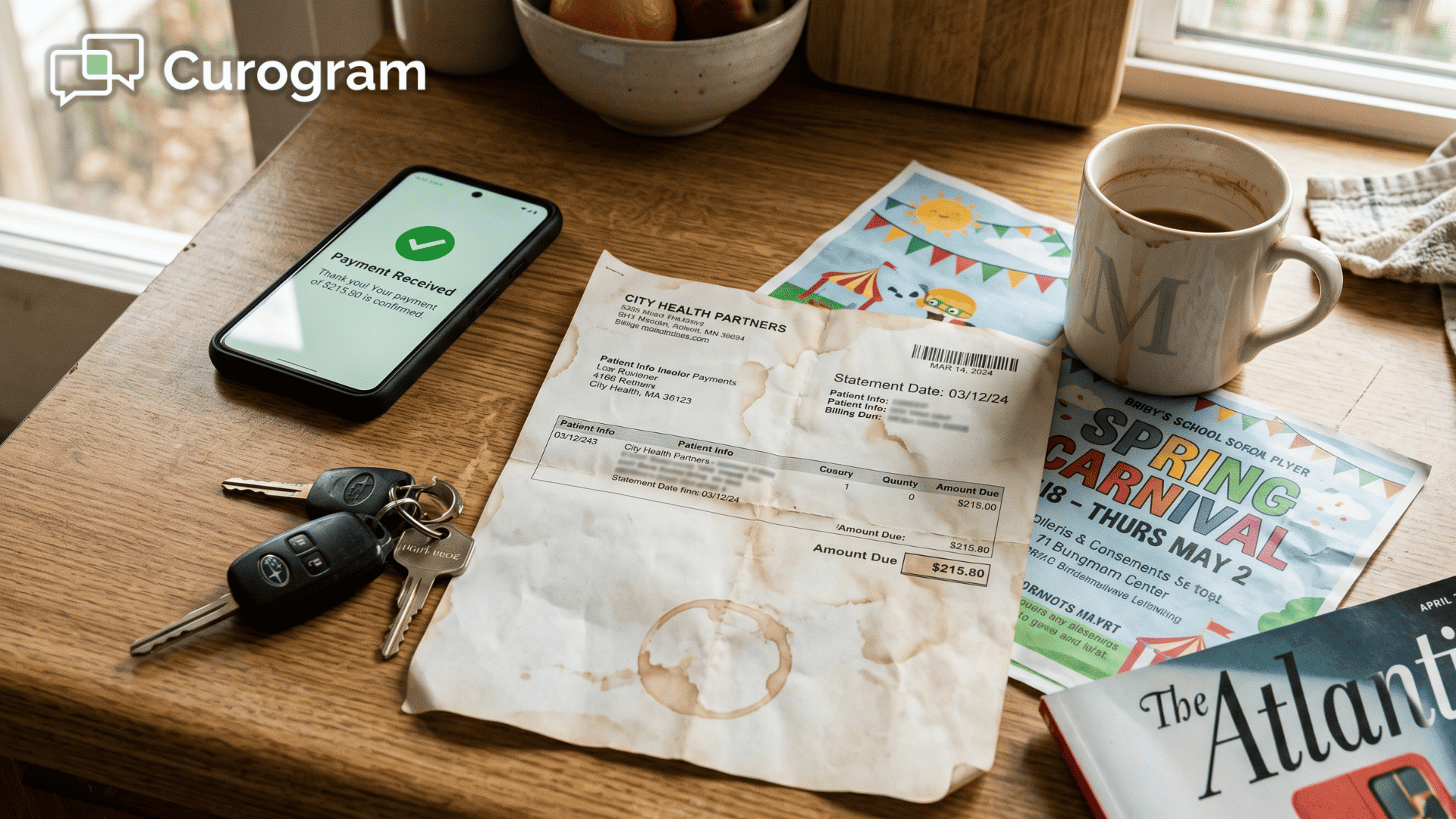
A magazine. A school flyer. A coupon book. And buried under all of it, a paper statement from a dermatologist that has been sitting there for nineteen days.

The patient is not dodging the bill. They opened it. They saw the amount — $350 — and told themselves, out loud, that they would handle it tonight. Then tonight became tomorrow. Tomorrow became next week.

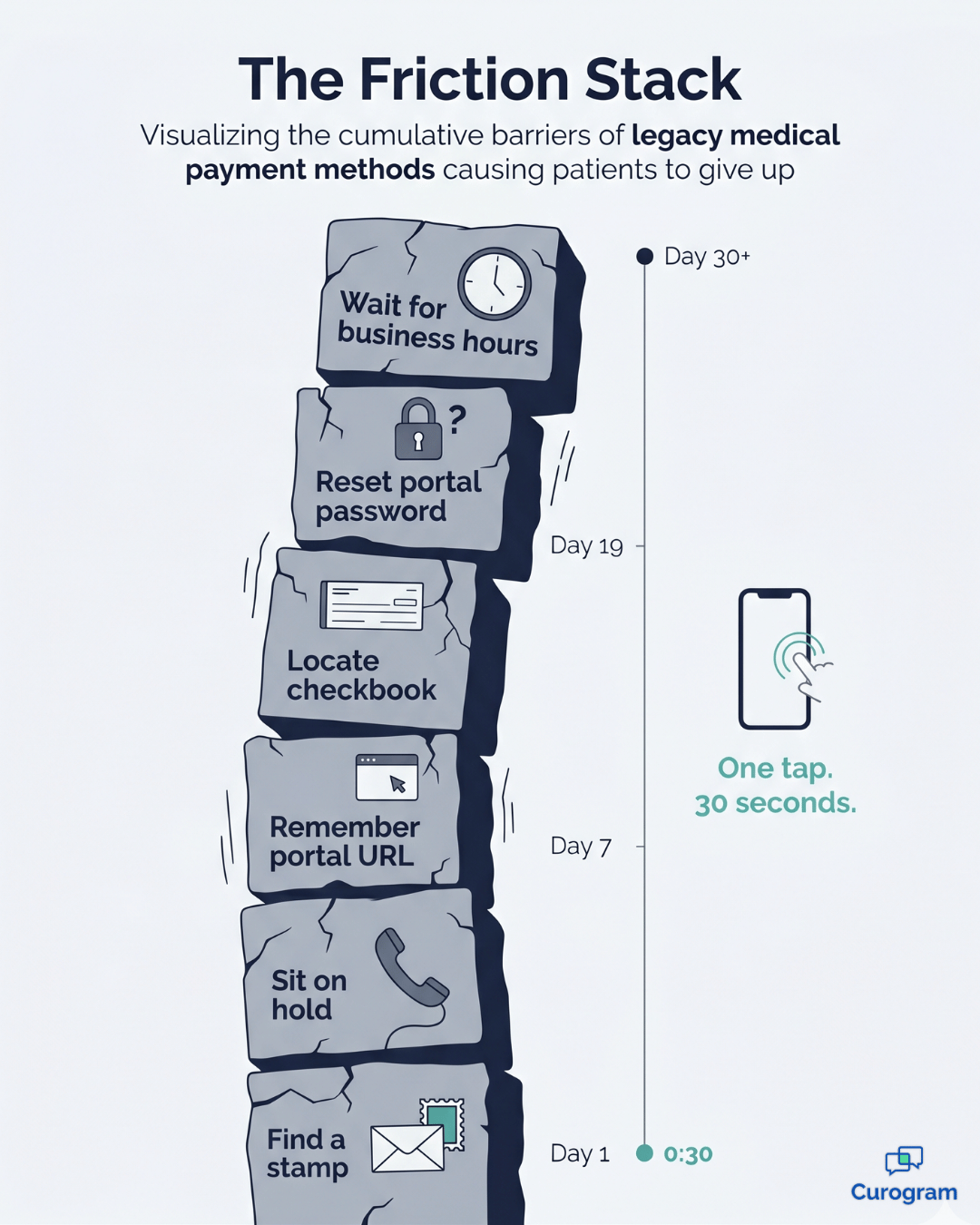
This is how most medical balances die a quiet death. Not from refusal, but from friction. The check needs a stamp. The phone call needs business hours. The patient portal needs a password they reset two visits ago.

Each barrier looks small on its own. Stacked together, they form a wall between good intention and completed payment.

Specialty practices feel this on the revenue side. Balances age into 30, 60, and 90 days. Billing coordinators chase second and third statements. Collections rates dip below what the practice earned the right to expect.

The clinical work was done. The bill went out. The patient meant well. And yet, the cash sits somewhere between intention and action.

There is a faster way. Send the request the moment it matters, to the device patients check dozens of times a day, with a link that takes one tap to act on. This is the idea behind how Modmed patients pay balance via text — statement to payment in 30 seconds, no portal, no phone tag.

For specialty clinics running on Modmed, that shift is not just convenience. It is the difference between revenue collected today and revenue chased next month.

Why the Bill Sits on the Counter

Before introducing the fix, it helps to see what patients actually do with a paper statement. Most pay eventually. But "eventually" is the problem. Your accounts receivable does not run on intent. It runs on completed transactions.

The Good-Intentions Trap

Most patients who owe a balance are not trying to dodge you. They are trying, in their busy lives, to get around to it. A patient receives a paper statement for $350 from their dermatologist.

They open it. They note the amount. They think, "I will pay this tonight."

Then tonight comes and they need their credit card, which is in the other room. They set the statement on the counter. By Saturday, it is under a magazine. By the next week, they have forgotten about it entirely.

When the second statement arrives, they feel a small wave of guilt and tell themselves, "I really need to call them." But calling means sitting on hold during business hours that conflict with their work schedule. Payment is delayed not by unwillingness but by friction.

What the Old Way Actually Costs

Walk through the experience without a mobile payment link.

An orthopedic patient owes $1,800 after a surgical consultation. They receive a paper statement in the mail and now have three options. Each one is slower than it should be.

Payment Method Time Required Hidden Conditions
Mail a check 5–10 minutes + delivery Find a checkbook and a stamp
Call the office 10–15 minutes Available only during business hours
Patient portal login 10–15 minutes Remember password, find the site

Every option above demands roughly 10–15 minutes and specific conditions. The patient will pay — eventually. But "eventually" means the practice waits 30–60 days for revenue it could have collected today. On a $1,800 balance, a 45-day delay is real money sitting outside the bank.

For your team, that delay translates into more statement runs, more outbound calls, and more billing coordinator hours per dollar collected.

The cost per dollar collected creeps up. The patient is annoyed. Nobody wins.

The Portal Paradox

Practices that offer portal-based payments often assume patients will use them. In reality, portal use among patients is famously low. Patients create an account during their first visit and never log in again.

When a bill arrives, the breakdown happens in predictable places:

  • Forgotten usernames and passwords from a single past login
  • Reset emails landing in inboxes the patient does not actively check
  • Portal URLs that require a separate search to find
  • Mobile views that were not really built for a phone screen

Each step looks minor on its own. Combined, they push the payment off another week.

The portal was supposed to make payment easier. Instead, it added a technology barrier on top of the existing payment friction.

A no portal payment option for Modmed text-to-pay patients removes that barrier completely.

Two Patients, One Solution

The payment problem also splits along generational lines.

A 35-year-old patient would pay instantly if you let them tap a link on their phone. They already pay rent, utilities, and Amazon orders that way.

A 65-year-old ophthalmology patient is willing to pay but finds portals confusing. They do not want to read a credit card number out loud to a stranger on the phone, either.

Both patients pay easily with a text payment link. The 35-year-old because it matches their everyday habits. The 65-year-old because tapping a link and filling in a simple form is easier than logging in or calling.

How One Tap Closes the Loop

Once you understand why the bill sits on the counter, the solution writes itself. Reach the patient where they already are, with the smallest possible action between them and a settled balance. That is the design principle behind text-to-pay.

The Curogram Approach

Curogram sits alongside Modmed as a patient engagement layer. For payments, it sends a text message to the patient with their balance and a secure link.

They tap. They see the amount. They enter a card. They confirm.

The full sequence takes about 30 seconds, from anywhere, at any time. No business-hour restriction. No portal password. No phone hold time.

The patient pays when they want to pay — which, for most patients, is the moment they see the text.

This is the heart of the Curogram patient payment experience with Modmed:

Meet intent with action while intent is still fresh.

The Five-Step Patient Flow

The patient text payment experience for a Modmed specialty practice unfolds in five small steps.

Each one was designed to feel lighter than the last.

  1. Patient receives a text: "Hi [Name], your balance of $350 from [Practice Name] is ready. Pay securely here: [link]."
  2. Patient taps the link. A mobile-optimized payment page opens showing the practice name and balance.
  3. Patient enters credit card, debit card, or HSA/FSA card information in a clean form built for phone screens.
  4. Patient taps "Pay $350."
  5. A confirmation screen appears and a confirmation text follows.

Total time: About 30 seconds.

Total effort: less than ordering a coffee on a delivery app.

That is the bar to beat, and that is the bar this flow clears.

Friction Stack infographic: stacked barriers of legacy payments vs one-tap Modmed text-to-pay flow

When to Send the Text

Timing is the second half of the equation. A mobile payment link gives Modmed patients an easy billing experience, but only if it arrives when payment intent is at its peak. Send it too late and you are back to the counter-stack problem.

Most practices send payment texts in one of three windows.

Each window catches a different kind of balance.

  • Immediately after the visit, for copays and same-day amounts owed.
  • Right after insurance processing, for patient-responsibility balances.
  • As a follow-up to outstanding balances that did not clear with the first statement.

The principle is the same in every case. Reach the patient when they remember the visit and make the action small enough that delaying it feels silly.

Where Specialty Practices See the Biggest Lift

How patients pay via text at a Modmed specialty clinic depends on the practice type. The bigger the balance, the bigger the lift from removing friction. Four specialty contexts stand out.

Ophthalmology practices see strong results with premium lens upgrade balances,

Which often land between $1,000 and $3,000. A text sent while the patient is still thrilled with their new vision tends to close fast. The emotional context matters as much as the technical ease.

Cosmetic dermatology lives in a similar lane,

With full-responsibility balances that can run from $500 to $3,000 or more. Sending the link the same day as the procedure — when satisfaction is at its peak — catches the patient before doubt or distraction sets in.

Orthopedic post-surgical patients are a different story.

Their balances vary, mixing copays and deductibles in less predictable amounts. The win here is timing: text them during home recovery, when they are on their phone anyway and ready to close out the financial side of their care.

Pain management practices deal with smaller recurring amounts,

Often in the $25 to $75 range. Sending a text after each visit prevents balances from quietly stacking up across months. Small, frequent, and frictionless beats a single large statement every time.

Across all four, the pattern repeats. You ask for payment at the moment care feels most valuable, with the lightest possible interaction. That is when patients say yes, and that is when cash actually moves.

When Paying Becomes Faster Than Putting It Off

The point of a 30-second flow is not just speed for speed's sake. It is changing the math on procrastination. When acting is faster than ignoring, ignoring stops being the default.

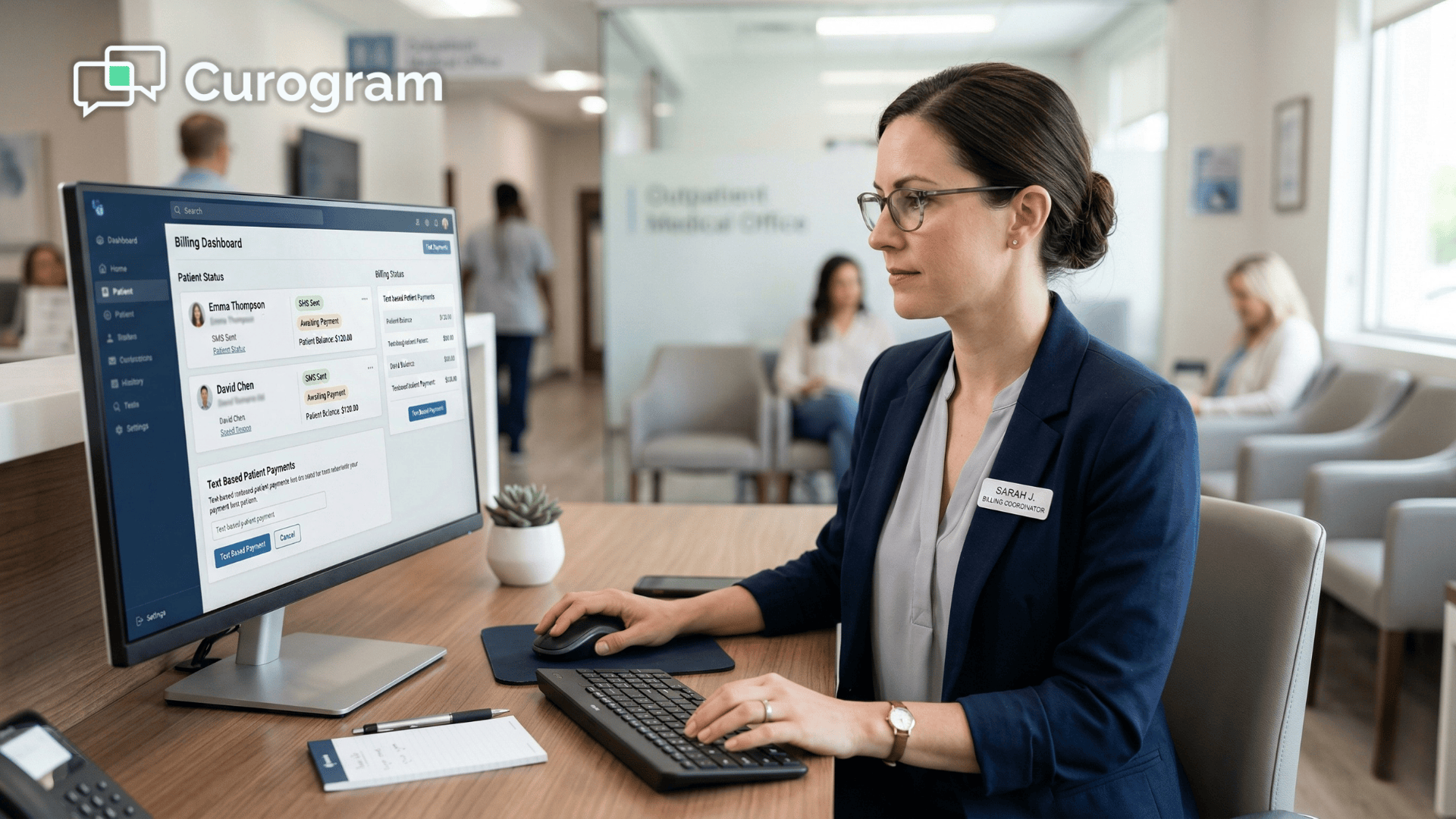
Tidy specialty practice billing desk at the end of a workday after adopting Modmed text-to-pay collections

The Speed Math

Patients who receive a text payment link pay much faster than those who receive a paper statement. Most text-based payments are completed within 24 hours of receipt.

SMS open rates sit around 98%, which means the request is almost certainly seen — and the one-tap design ensures that patients who see it act on it.

Compare that to the paper-statement world, where a meaningful share of balances drift past 30 days before the first payment lands.

A practice that shifts even 40% of statements to text-based can pull weeks out of the average payment collection cycle.

For your team, the downstream effects are concrete:

  • Fewer follow-up phone calls chasing balances
  • Fewer reprinted and re-mailed statements
  • A healthier accounts receivable aging report
  • A lower cost per dollar collected

The money owed is the same. The path to collecting it is just shorter — and shorter paths get walked.

From Dread to Done

The patient's relationship with medical billing also changes.

A paper statement on the counter generates guilt every time the patient walks by.

A text takes 30 seconds to resolve and disappears from the to-do list.

Payment stops being a chore that lingers for weeks. It becomes a quick interaction that is done before they finish their coffee. Patients describe the experience as "easy," "quick," and "how every bill should work."

Get paid faster! Strengthen your balance sheet by simplifying patient payments via secure SMS with Curogram.

That total shift matters more than it sounds. Billing is one of the few parts of healthcare patients still talk about with friends and family.

A frictionless payment makes the whole practice feel modern.

A Tuesday at 4:15 PM

Here is what the new flow looks like in practice. A dermatology patient receives a $275 balance text at 4:15 PM on a Tuesday — a moment when the office is closed for phone payments and the patient would normally wait until they "got around to it."

They tap the link during a commercial break. They enter their card. They pay in 25 seconds.

A confirmation text lands a few seconds later. The balance is settled. The practice receives the payment before the billing coordinator arrives Wednesday morning.

A week later, that patient tells a friend, "My dermatologist just texts me the bill and I pay on my phone. Takes 30 seconds. Why can't everyone do this?"

That single sentence is a referral, a five-star review, and a billing win all rolled into one. Clinical excellence and modern convenience are now sitting in the same package.

Make Paying Feel as Light as Tapping Twice

Patients at Modmed specialty practices want to pay their bills. They do not want to call during business hours, hunt for a stamp, or reset another portal password. The barrier is not willingness. It is friction.

Every other service in your patients' lives accepts mobile payment. Rideshare. Groceries. Streaming. Pizza. Their doctor's office should not be the holdout.

Letting patients pay a doctor bill via text message through Modmed makes the experience match the rest of their day. Thirty seconds, from their phone, anytime. The payment intention they already have finally meets a path short enough to act on.

For your billing team, the win is just as clear. Faster collections. Fewer outbound calls chasing balances. A shorter accounts receivable aging report. More cash in the bank for the same clinical work you already did this month.

For your patients, the win is dignity. No password resets. No hold music. No statement guilt. Just a short text, a quick tap, and a confirmation that the balance is closed.

This is the entire point of a modern patient text payment experience for a Modmed specialty practice. The technology stays out of the way. The patient finishes their coffee. Your revenue stops aging out.

If you are ready to see this happen inside your own workflow, the next step is short. Walk through the patient side of the flow yourself. See the link your patients will tap.

See the page they will land on. See the confirmation they will receive.

Schedule a demo and see why patients call text-to-pay "how every bill should work." One text. One tap. 30 seconds. Their balance is settled, and your revenue is collected — today, not next month.


Frequently Asked Questions

Is it safe to pay a medical bill through a text message link?

Yes. The text message itself contains no financial information — only the practice name, the balance amount, and a secure link. The payment page is PCI-compliant with encrypted data transmission, the same security standard used by major online retailers and payment platforms. Card information is entered on a secure web page, not in a text message, and is processed with bank-level encryption.

Do I need to download an app or create an account to pay?

No. The payment link opens directly in your phone's web browser. There is no app to download and no account to create. You tap the link, enter your card information, confirm the amount, and pay. The process takes about 30 seconds and does not require remembering a username, password, or portal URL.

Can I pay a partial amount or set up a payment plan through text-to-pay?

That depends on what your practice has configured. Some practices allow partial payments through the text-to-pay link, while others send the full balance. If you need a payment plan, reply to the text — your message goes directly to the practice's billing team through Curogram's two-way messaging, and they can set up a plan and send you individual payment links for each installment.

What payment methods are accepted on the text-to-pay link?

The mobile payment page accepts major credit cards, debit cards, and HSA or FSA cards. Patients enter the card information directly into the secure form on their phone. There is no need to call the office to confirm card type, and no need to mail a check or money order. If a card is declined, the patient sees a clear error message and can try a different card without leaving the page.

What happens if the patient deletes the text or never sees it?

The original text payment link stays active until the balance is paid or the practice expires it, so deleting the message does not block payment on your end. If a patient cannot find the text, your billing team can resend the link in seconds through Curogram. Many practices also set up automatic reminder texts at set intervals — for example, three days and seven days after the original send — so patients who missed the first message get a second chance without any manual work from your team.