9 min read

Closing the Gap: 2-Way HIPAA Texting for Oracle Health

Closing the Gap: 2-Way HIPAA Texting for Oracle Health

💡 An Oracle Health 2-way texting integration connects Cerner Millennium's FHIR APIs to a secure SMS platform, letting patients confirm appointments by text while scheduling systems update in real time.          

This replaces HealtheLife portal logins, general mailboxes, and manual call-backs.     


Health systems using this approach have cut no-show rates from 14.2% to under 5%, removed 80+ daily confirmation calls per location, and recaptured more than $1M monthly in lost revenue.


Curogram fills the gap Oracle leaves behind, with department routing, encrypted messaging, and no app download required on the patient side.


Picture a Monday morning at a busy cardiology clinic.

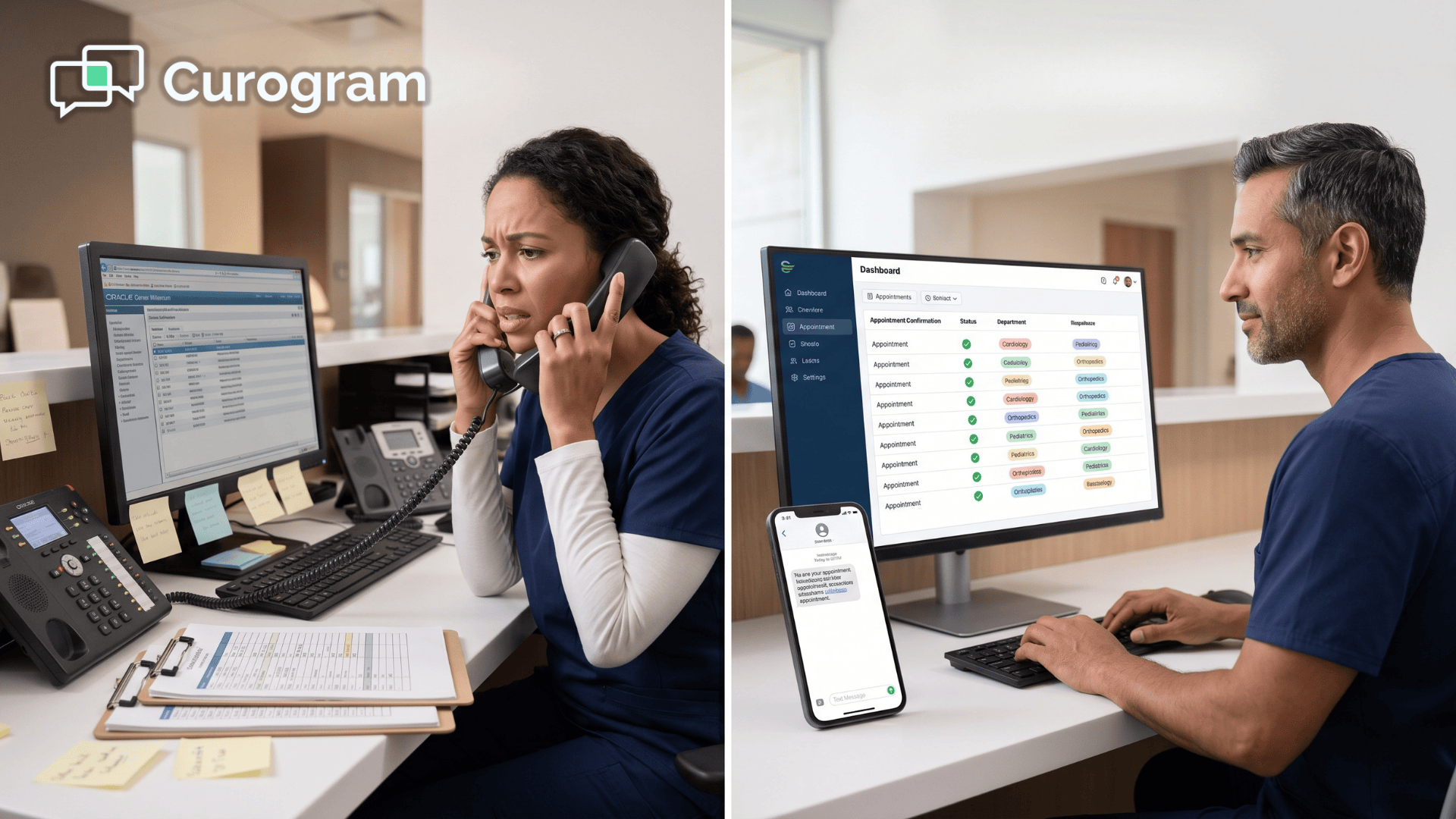
The phones start ringing at 7:58 a.m. By 9:30, your front desk has made 62 confirmation calls. Half went to voicemail.

Meanwhile, four patients never showed up. Two chairs stayed empty all afternoon. That's roughly $600 in lost revenue before lunch.

Now multiply that across 40 locations. Every day. Every week.

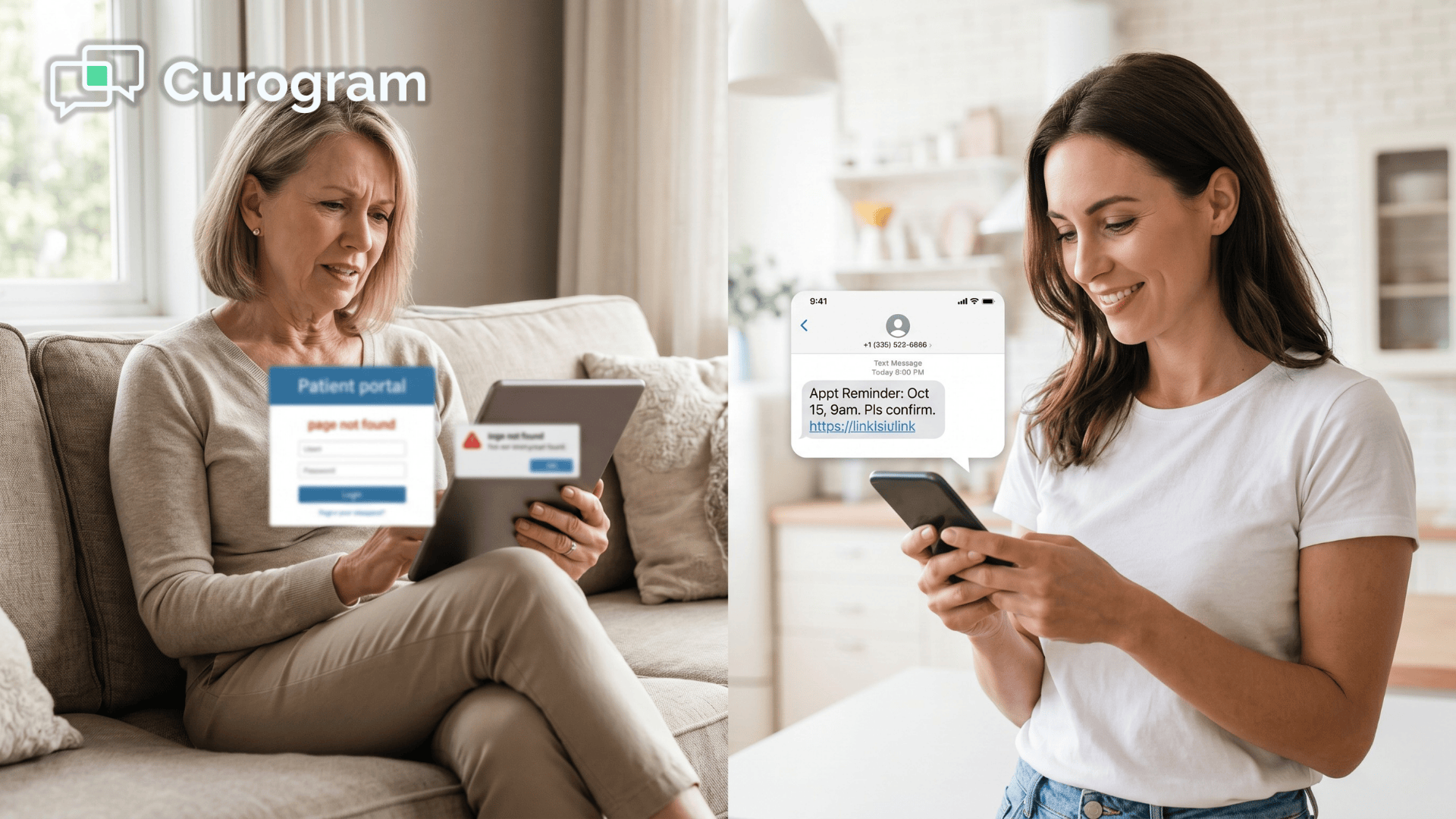
This is the quiet leak draining enterprise health systems running Oracle Health. You invested in Cerner Millennium expecting world-class scheduling. What you got was HealtheLife, a portal that patients forget the password to and staff can't route by department.

It sounds simple. It isn't.

Patients want to tap "yes" on their phone. Your team needs that "yes" to flow back into the schedule automatically. And HIPAA won't let you cut corners.

So what actually happens? Appointment reminders land in a general inbox. Confirmations don't close the loop.

Your schedulers keep dialing. Your no-show rate hovers above 14%. And somewhere in a board meeting, a CFO asks why patient engagement spend keeps climbing while revenue leaks through empty slots.

Here's the real problem.

Oracle's native tools were built for general communication, not workflow-specific confirmation. Cerner's FHIR APIs are mostly read-only, so third-party tools can look but rarely write.

The result is a gap wide enough to swallow a million dollars a month.

The good news? The gap has a fix.

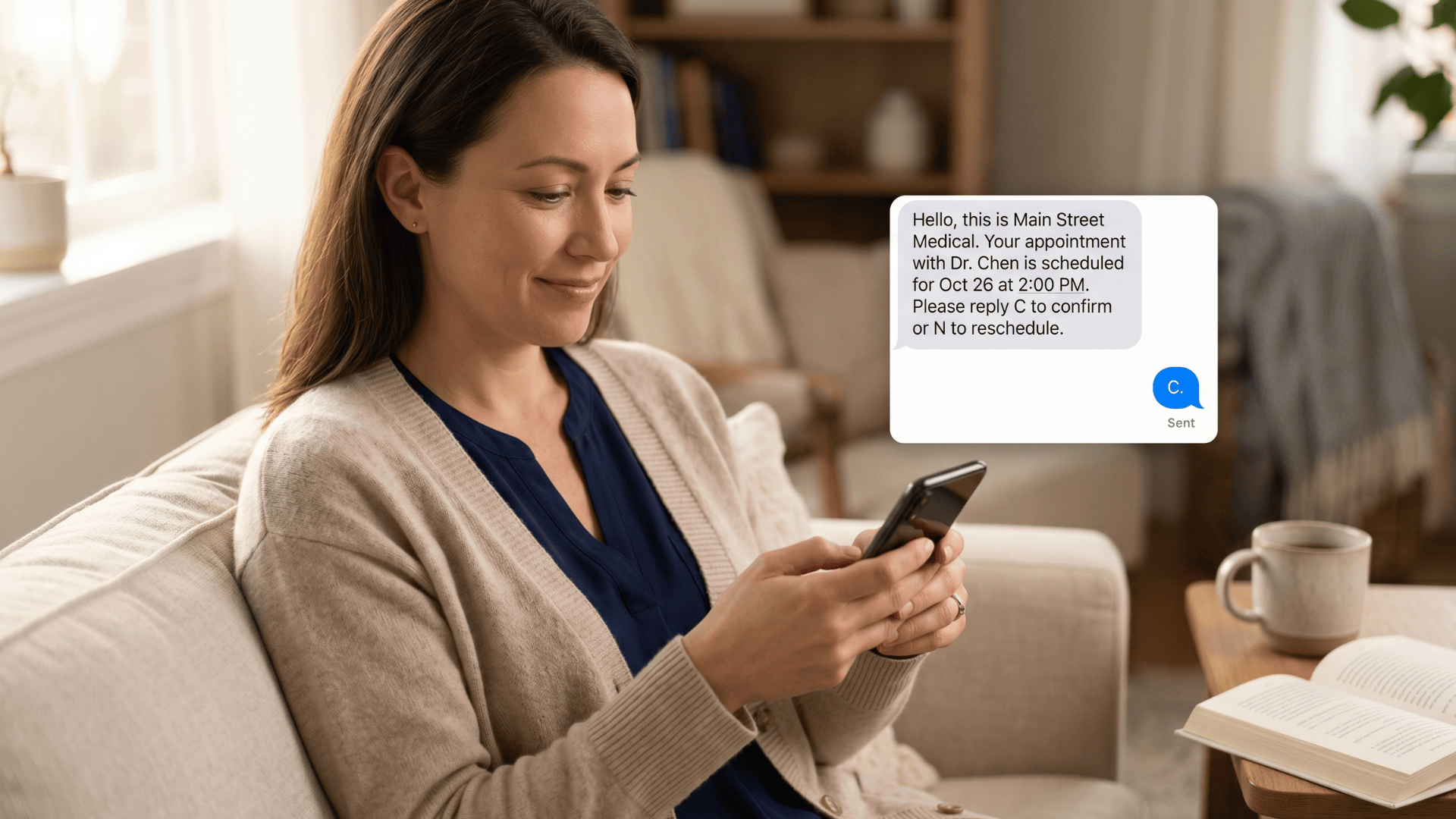
A properly designed Oracle Health 2-way texting integration uses the FHIR layer you already have, adds department routing the portal never offered, and updates the schedule the moment a patient replies "C" to confirm.

This guide shows how it works, what it costs, and what the ROI really looks like at scale.

Why Oracle Health Leaves a Confirmation Gap at the Enterprise Level

Where HealtheLife Breaks Down for Large Ambulatory Networks

HealtheLife was built as a general patient communication hub.

It was never optimized for the one workflow that quietly controls clinic revenue:

Appointment confirmation.

Messages land in a shared mailbox with no department routing. Clinical staff can't see at a glance who confirmed and who didn't. Patients must log into a portal or download an app just to say "yes, I'll be there."

That friction shows up in the data.

25–40%

Portal-based reminder engagement 95%+ — SMS open rate within 3 minutes 98% — Of adult Americans reachable by text

The gap isn't small. It's the difference between reaching 250 patients and reaching 950 out of every 1,000 you contact.

Enterprise networks running 20,000+ active schedules across 20 to 100+ providers can't rely on portal adoption. The math doesn't work.

There's another layer to this. Cerner's FHIR APIs are primarily read-only for outside integrations. That means confirmation data doesn't automatically write back to the scheduling system.

Someone has to reconcile it manually, or the data just sits in a silo—reinforcing broader communication barriers in healthcare systems.

What Enterprise Health Systems Actually Need

Let's be specific. The gap has a shape, and closing it requires a few non-negotiables that Oracle's native stack doesn't fully deliver.

At minimum, your confirmation workflow needs to hit three marks:

  • FHIR-native integration that reads appointment data and writes confirmation status back in real time
  • Department-level routing so the right clinical team is notified instead of a general inbox
  • SMS-first delivery with no portal login, no app download, and no patient training required

That's the baseline. Everything else is bonus.

Now layer in an honest view of the vendor landscape. Oracle promises integration but leaves gaps. Luma Health handles scheduling but not confirmation automation. Phreesia focuses on intake. Relatient covers reminders.

None of them fully close the 2-way confirmation loop at enterprise scale. That's the space a Cerner Millennium SMS integration needs to fill.

What This Looks Like in the Wild

Atlas Medical, a 14-location system with 6,000+ weekly appointments, cut its no-show rate from 14.20% to 4.91% after switching on 2-way texting.

That's a 65% improvement and 53% below the industry average of 5.3%.

Annual revenue recovery across all locations: $1.2M.

Covina Health Center tells a similar story. In 5 months, they scaled from 369 monthly confirmations to more than 1,300. They also picked up 1,064 new 5-star reviews, many mentioning how easy it was to confirm appointments. The weekly phone queue shrank dramatically.

Here's a quick look at what this could mean for a larger system.

Monthly Recovery Potential by System Size

10 locations — Up to $45K recovered 25 locations — Up to $112K recovered 50 locations — Up to $225K recovered

For a 50-location network, that's up to $2.7M recovered per year. No schedule restructuring.

No clinical process change. Just closing a confirmation loop that should have been closed from day one.

How the Technical Integration Actually Works

Connecting to Cerner FHIR APIs Without Custom EHR Code

Curogram connects to Oracle Health through OAuth 2.0 authentication. It pulls appointment and patient contact data from Cerner's FHIR endpoints in real time, then maps the AppointmentResource to SMS workflow rules.

No custom EHR build. No direct OracleDB access. No heavy IT lift.

Deployment Speed

2–4 weeks — Typical rollout for a 40-location system 0 lines — Of custom EHR code required API-first — No OracleDB access needed

Compare that to traditional EHR integrations that can stretch into quarters.

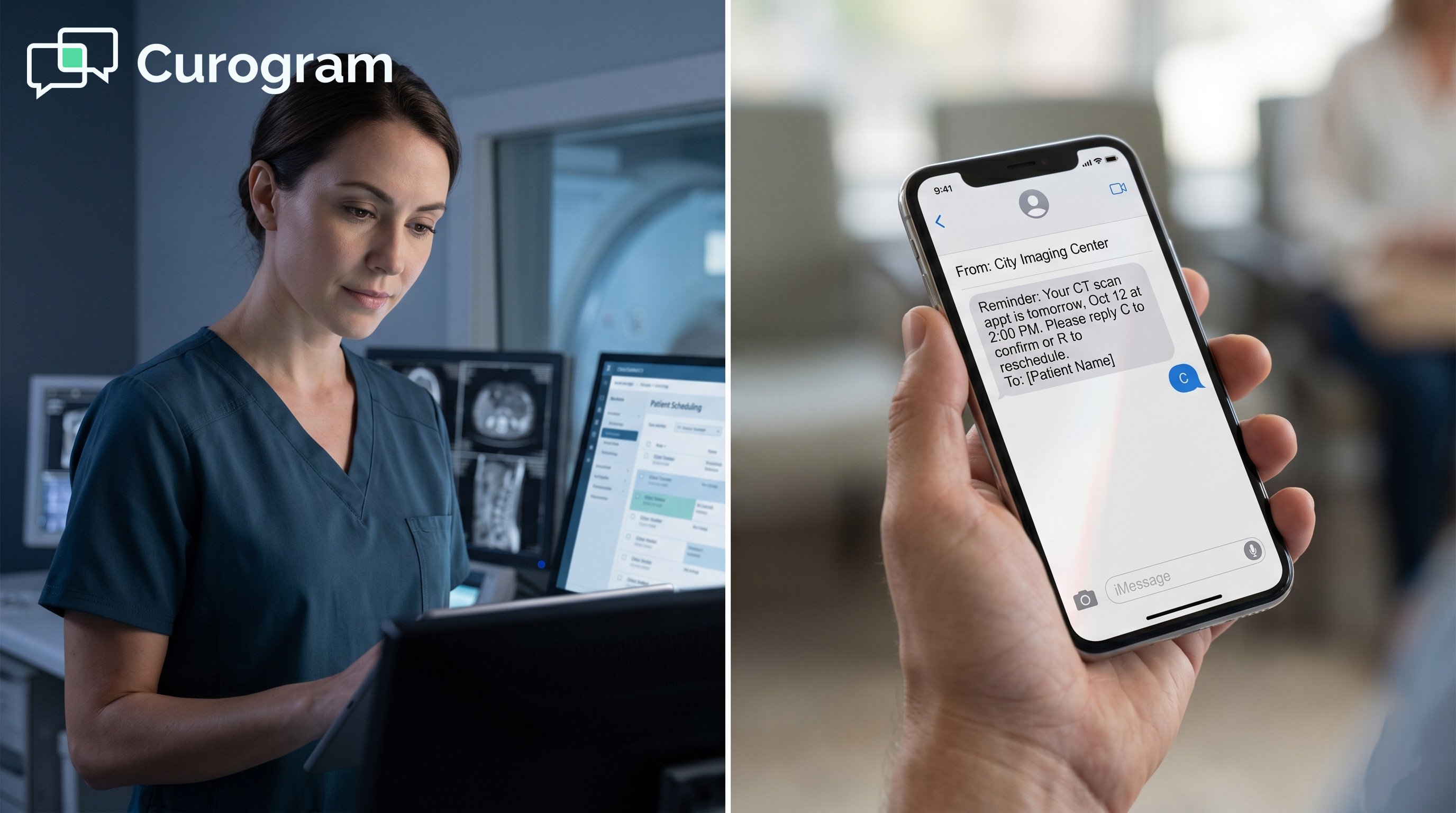
Data moves in both directions, but cleanly. Appointment reads flow one way. Confirmation status flows back through FHIR Appointment.status updates. That means when a patient texts "C" to confirm, Cerner's schedule reflects it within seconds.

No spreadsheet reconciliation. No end-of-day cleanup.

Security holds up at the enterprise level. SOC 2 Type II and HIPAA encryption cover data in transit and at rest. The integration also respects Cerner Millennium's user role hierarchy, so only staff with scheduling rights receive routed SMS confirmations.

That keeps HIPAA access controls intact and prevents information leakage.

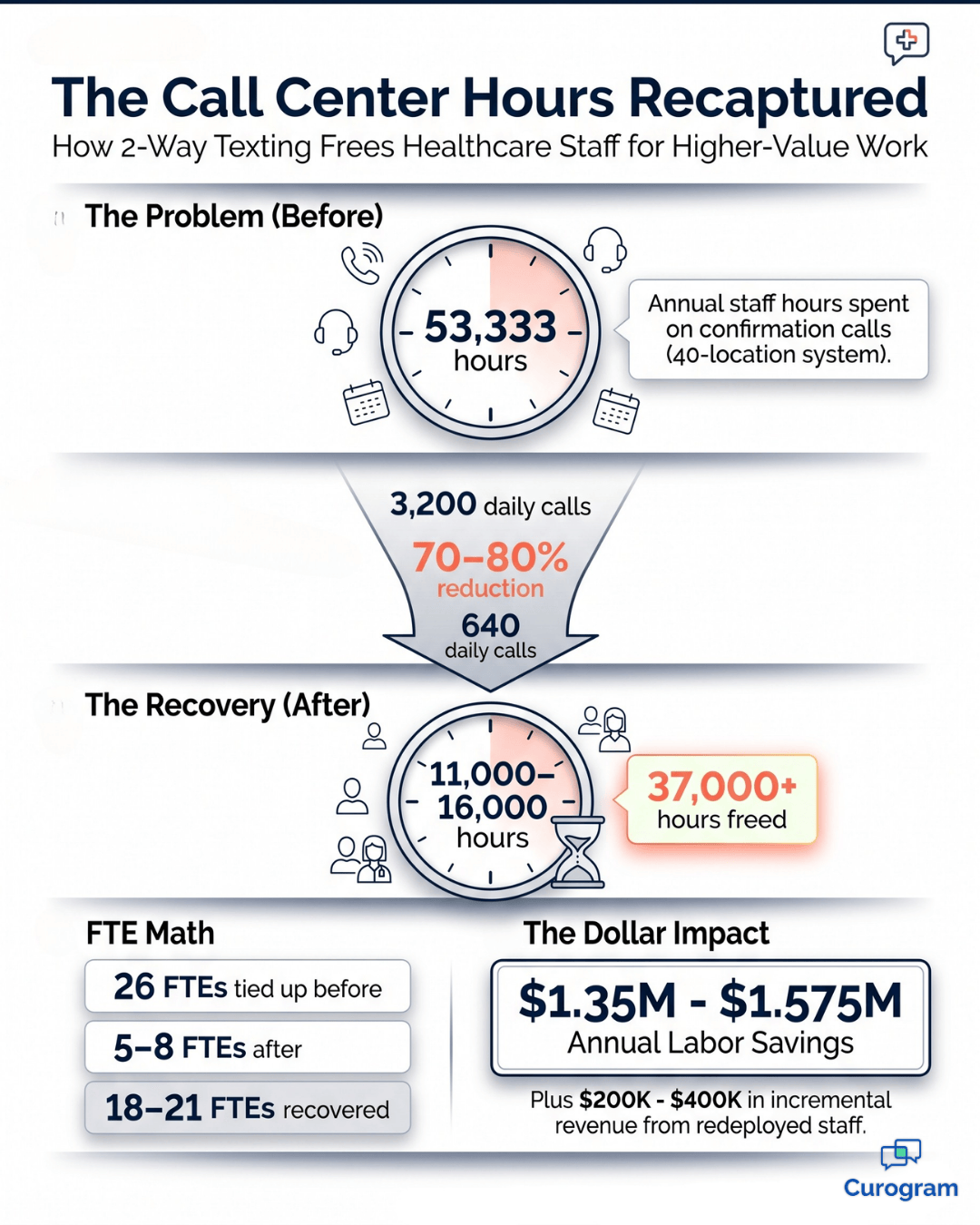
Infographic showing 37,000+ staff hours recaptured with Oracle Health 2-way texting integration.

Department Routing and Real-Time Schedule Updates

This is where the Oracle Health FHIR API integration starts earning its keep.

When a patient replies to confirm, the system identifies the appointment's assigned department by pulling from Cerner's DepartmentResource.

That confirmation gets routed to the right team's SMS inbox and triggers a workflow rule that marks the appointment "Confirmed" in the schedule. All in real time.

If a patient declines or asks to reschedule, clinical staff see that signal immediately. They can call back, send alternative times, or flag the appointment for the revenue cycle team. The right people hear about it first instead of last.

Admin flexibility matters here too. You can configure confirmation triggers at three levels:

  • The clinic level, for site-wide rules
  • The department level, for specialty-specific timing
  • The appointment type level, for unique workflows

Cardiology might need 48-hour lead time. Same-day surgery pre-ops might need 24-hour confirmation. Cerner's ScheduleSlot-based rules engine handles both, and the Curogram layer applies them automatically.

Security, Compliance, and Audit Trails You Can Actually Show a Regulator

HIPAA texting for enterprise health systems isn't just about encryption. It's about proving what happened, when, and to whom.

Every SMS exchange gets logged in a HIPAA-audited database and is accessible through a secure web dashboard. Cerner's own audit trail also captures each confirmation event.

That gives you dual-system accountability, which is exactly what HIPAA's Accounting of Disclosures rules require.

Security Stack at a Glance

TLS 1.2+ — Encryption for API calls to Cerner AES-256 — Encryption for SMS content at rest 6 years — HIPAA-compliant data retention

Carrier-level HIPAA compliance ensures text content is never logged on public telecom infrastructure. When Cerner's patient records are purged, patient contact data on the Curogram side auto-deletes in sync.

That keeps your retention policy consistent across both systems.

What the Numbers Look Like in Practice

No-Show Reduction and Revenue Recovery

Let's talk dollars.

The industry average no-show rate sits at 5.3%. Atlas Medical beat that by half. A conservative modeling exercise shows what that means at scale.

Take a 40-location system with 25,000 annual appointments and a $150 average visit value. Cut your no-show rate from 5.3% to under 5% with Oracle Health patient engagement tools built around 2-way texting.

40-Location Revenue Model

$1.875M — Annual revenue recovered 6–8 weeks — Payback period 3x — SMS confirmation rate vs. portal (75% vs. 25%)

For your team, this means the financial case closes itself inside two months.

Even one additional confirmation per 10 scheduled appointments adds up fast.

For a 40-location system, that's 2,500 extra confirmed visits per year, or $375K in revenue recovery just from lifting the break-even line.

Covina's numbers tell the same story from a different angle. Going from 369 to 1,300+ monthly confirmations added roughly 930 confirmed appointments a month, or 11,160 per year.

At $150 per visit, that's $1.674M in recovered revenue. The 1,064 new 5-star reviews likely doubled the downstream impact by pulling in new patients.

Patient confirming a Cerner Millennium appointment by text message from home on a smartphone.

Call Center Savings and Staff You Can Redeploy

The second revenue lever is labor. Pre-implementation, a typical enterprise handles 80+ confirmation calls per location per day. Across 40 locations, that's 3,200 daily calls, or 800,000 annual call events.

At 4 minutes of average handle time per call, you're looking at roughly 53,333 staff hours per year just confirming appointments. That's 26 full-time positions dedicated to a task a text message can handle.

2-way texting typically eliminates 70% to 80% of those calls. The FTE math is where the savings really compound.

Labor Recapture

26 FTEs → 5–8 FTEs — Tied up in confirmation work 18–21 FTEs — Recovered for higher-value tasks $1.35M–$1.575M — Annual labor savings

In practice, most systems don't eliminate those roles. They redeploy them. Staff move to revenue cycle, insurance verification, or clinical support work. Those tasks carry longer handle times (8 to 12 minutes) and higher strategic value.

The result is an estimated $200K to $400K in incremental revenue on top of the direct labor savings.

Maximizing Your Oracle Health ROI Without Ripping Anything Out

If you invested in Cerner, you expected messaging to be built in. Instead, you got HealtheLife's limits plus licensing costs plus a broken confirmation loop.

That's the feature Oracle should have shipped but didn't.

Why Layering Beats Replatforming

Adding a Curogram 2-way texting layer dramatically improves the return on your existing Oracle Health investment without a rip-and-replace migration.

Cerner's core strengths stay exactly where they are:

  • The EHR you've already trained your clinicians on
  • The scheduling engine handling 20,000+ active appointments
  • The clinical documentation and compliance workflows already in production

You're filling a communication gap, not starting over.

57 health systems — Exited Cerner in the past 36 months Top secondary reason — Communication limitations Replatforming cost — Far higher than filling the gap

Closing that friction with a solid appointment confirmation SMS for Oracle Health workflow directly addresses the cited issue. For CIOs weighing retention versus replatforming, that's a meaningful data point.

Making 2-Way Texting a Natural Next Step for Your Oracle Health Stack

You've already invested in Cerner. Your team knows the system. Your clinicians have adapted to it. A full platform swap isn't just expensive, it's disruptive to the patients you're trying to serve better.

The smarter path is simpler. Add the communication layer Oracle didn't build.

A well-designed Oracle Health 2-way texting integration works with your FHIR APIs, routes messages by department, and updates your schedule automatically. It reaches 98% of your patients without asking them to download anything.

And it does all of this while staying fully HIPAA-compliant, SOC 2 Type II audited, and synchronized with your existing retention policies.

The results show up fast. No-show rates drop from 14% toward 5%. Confirmation calls fall by 70% to 80%.

Your front desk gets 30,000+ hours back. Your revenue cycle team gets stronger. Your patients get the simple "tap yes" experience they already expect from every other part of their digital life.

And the payback window is short. For most 40-location systems, break-even lands inside 8 weeks. Year-one ROI commonly hits 300% to 400%. The numbers are conservative, not aspirational.

If your team is evaluating how to close the confirmation gap without a full platform migration, the next step is a targeted conversation about your workflow, your FHIR setup, and where the revenue leaks are worst.

Schedule a Demo with Curogram to see how a HIPAA-compliant Cerner Millennium SMS integration fits into your Oracle Health environment, how the department routing rules get configured, and what a realistic 90-day rollout looks like for your specific location count.


Frequently Asked Questions

How does 2-way texting integrate with Cerner Millennium's FHIR APIs?

Curogram uses OAuth 2.0 authentication to securely connect to Oracle Health's FHIR endpoints. It pulls real-time appointment and patient contact data through the Appointment and Patient resources, then pushes confirmation status back into Cerner's scheduling layer. The integration is read-optimized for appointment data and confirmation-optimized for status updates, with full audit logging and HIPAA compliance built in. No custom EHR coding is required, and deployment usually takes 2 to 4 weeks for a 40-location system.

What's the difference between HealtheLife and Curogram's 2-way texting?

HealtheLife is Oracle's general patient communication hub. It uses one inbox, offers no department routing, has no feedback loop back to the scheduling system, and requires portal login or app download. Engagement typically lands between 25% and 40%.

What is the typical ROI timeline and payback period?

Based on Atlas Medical and Covina case studies, the typical payback period is 6 to 8 weeks for a 20-location system. A 70% no-show reduction combined with 80% call deflection usually recovers $150K to $300K per month in revenue and labor savings. Implementation requires 2 to 4 weeks of IT time plus Curogram's per-location SaaS fee. Most health systems hit break-even inside 60 days and see year-one ROI of 300% to 400%.

Does 2-way texting require Cerner customization or database access?

No. Curogram connects through Cerner's standard FHIR APIs, which are HIPAA-compliant and don't require database access, EHR table modifications, or custom code deployed inside the Cerner environment. All integration logic lives on Curogram's secure infrastructure. Your Cerner admins only need to grant OAuth permissions and set up department routing rules inside Curogram's admin portal. That's the full technical lift.

Can patients send PHI through 2-way texting, and how is that handled?

No. Standard SMS isn't encrypted, so PHI like medical conditions, treatment details, or test results should never be exchanged over text. Curogram uses SMS strictly for general notifications, appointment reminders, and confirmations, and includes built-in disclaimers reminding patients not to reply with sensitive health information. For anything that requires PHI, the platform routes patients to a secure, encrypted messaging channel that meets HIPAA requirements. Your staff also gets training on the difference between safe SMS use and PHI-restricted communication, so the workflow stays compliant from day one.


RamSoft Patient Texting | 2-Way HIPAA Beyond Blume

RamSoft Patient Texting | 2-Way HIPAA Beyond Blume

💡 RamSoft imaging center patient texting with two-way HIPAA communication solves a critical gap: most imaging patients never download the Blume...

Read More
Azalea Health 2-Way Texting | Reach Rural Patients Easily

Azalea Health 2-Way Texting | Reach Rural Patients Easily

💡 Azalea Health 2-way HIPAA compliant texting for rural clinics bridges the gap between EHR-based care and patients who cannot reliably access a...

Read More
Reducing Revenue Leakage with 2-Way Reminders | Curogram

Reducing Revenue Leakage with 2-Way Reminders | Curogram

💡 Oracle Health appointment reminders work best when they match the appointment type, not a fixed schedule. Routine visits need 48-hour reminders....

Read More