10 min read

Opus EHR Automated Reminders: Improving Retention and Revenue

Opus EHR Automated Reminders: Improving Retention and Revenue
💡 Behavioral health and addiction treatment centers can cut no-shows by up to 30% using Opus EHR automated reminders through Curogram. 
  • Real-time sync between Curogram and Opus EHR triggers SMS alerts based on each visit type
  • Two-way texting lets patients confirm, cancel, or ask to reschedule with a simple reply
  • Custom reminder timing (48 hours, 24 hours, 2 hours before) keeps patients on track
  • All outreach is logged for compliance audits and insurance reviews
  • Staff spend less time on phone calls and more time on high-value patient care
These SUD appointment notifications help reduce behavioral health no-shows while keeping patients in critical recovery phases engaged with their treatment plan.

A missed visit at your treatment center is not just a gap in the day. It is a break in clinical care that can put a patient's recovery at risk.

For staff, it means lost time, lost income, and wasted effort spent on follow-up calls. For patients in early recovery, it can mean falling off their path to wellness. This is the harsh truth for many centers using Opus EHR without a smart reminder system in place.

The good news is that Opus EHR automated reminders can solve this problem. By linking your Opus system with Curogram's two-way SMS platform, you can reach patients where they already are: their phones.

Patients get timely alerts they can act on with a tap. No app downloads. No portal logins. Just a quick text that makes it easy to confirm or reschedule.

Think about what this could mean for your clinic. Your front desk stops playing phone tag. Your providers see full schedules. And your patients stay on track with the care that could save their lives.

In this guide, you will learn exactly how these tools work together. You will see how Opus EHR scheduling automation can reduce behavioral health no-shows and improve treatment retention at your facility. 

Whether you run a detox program, a residential center, or an outpatient clinic, these insights will help you serve more patients and protect more revenue.

The "Cognitive Fog" Villain: Why Recovery Patients Miss Appointments

Understanding why patients miss visits is the first step to fixing the problem. In behavioral health and addiction treatment, the reasons often go deeper than simple forgetfulness.

The Executive Function Barrier

Patients in early recovery often deal with something called "brain fog." This mental haze makes it hard to plan, remember tasks, and follow through on commitments. The fog can last for weeks or even months after a person stops using substances.

Picture a patient who just left your detox unit last week. They want to stay clean. They know their outpatient visits matter.

But when they wake up each morning, simple tasks feel like climbing a mountain. Checking a patient portal or reading through emails may feel like too much effort.

This is why portal reminders and email alerts fail so often in this setting. These methods ask too much of a person whose brain is still healing.

An SMS reminder, on the other hand, pops up right on their phone. It takes seconds to read and respond. This low-effort option meets patients where they are in their recovery.

For many clients, this simple text could be the nudge that keeps them in care. Without it, they may drift away from treatment before they have built the skills to manage their own schedules.

The Phone Tag Burnout

Now, think about your front desk staff. How many hours do they spend each week leaving voicemails that never get returned?

In a busy treatment center, staff may call dozens of patients each day. Many calls go straight to voicemail. Patients may not check their messages for hours or even days. By the time they call back, the appointment slot may already be filled or the clinic may be closed.

This endless cycle drains your team's time and energy. It also keeps them from doing more important work, like helping new patients through intake or handling urgent clinical tasks.

Phone call volumes can drop by as much as 50% when centers switch to two-way texting. That frees up staff to focus on care, not calls.

The Clinical Relapse Trigger

Here is the part that keeps clinical directors up at night: A missed visit is often the first warning sign of a relapse.

When a patient stops showing up, it may mean they are struggling. They could be using again.

They could be feeling hopeless. They could be avoiding the hard work of recovery. Either way, the absence is a red flag that demands quick action.

But without the right tools, your team may not know about the missed visit until hours later. By then, the chance to reach out and offer support may have passed.

This is where addiction treatment appointment SMS alerts become vital. When a patient does not confirm or respond, your staff sees the flag right away. They can reach out before the gap turns into a full relapse.

In this way, SUD appointment notifications serve two roles. They help keep schedules full, and they act as an early warning system for patients at risk.

This dual benefit is why so many treatment centers now see automated reminders as a clinical tool, not just an admin feature.

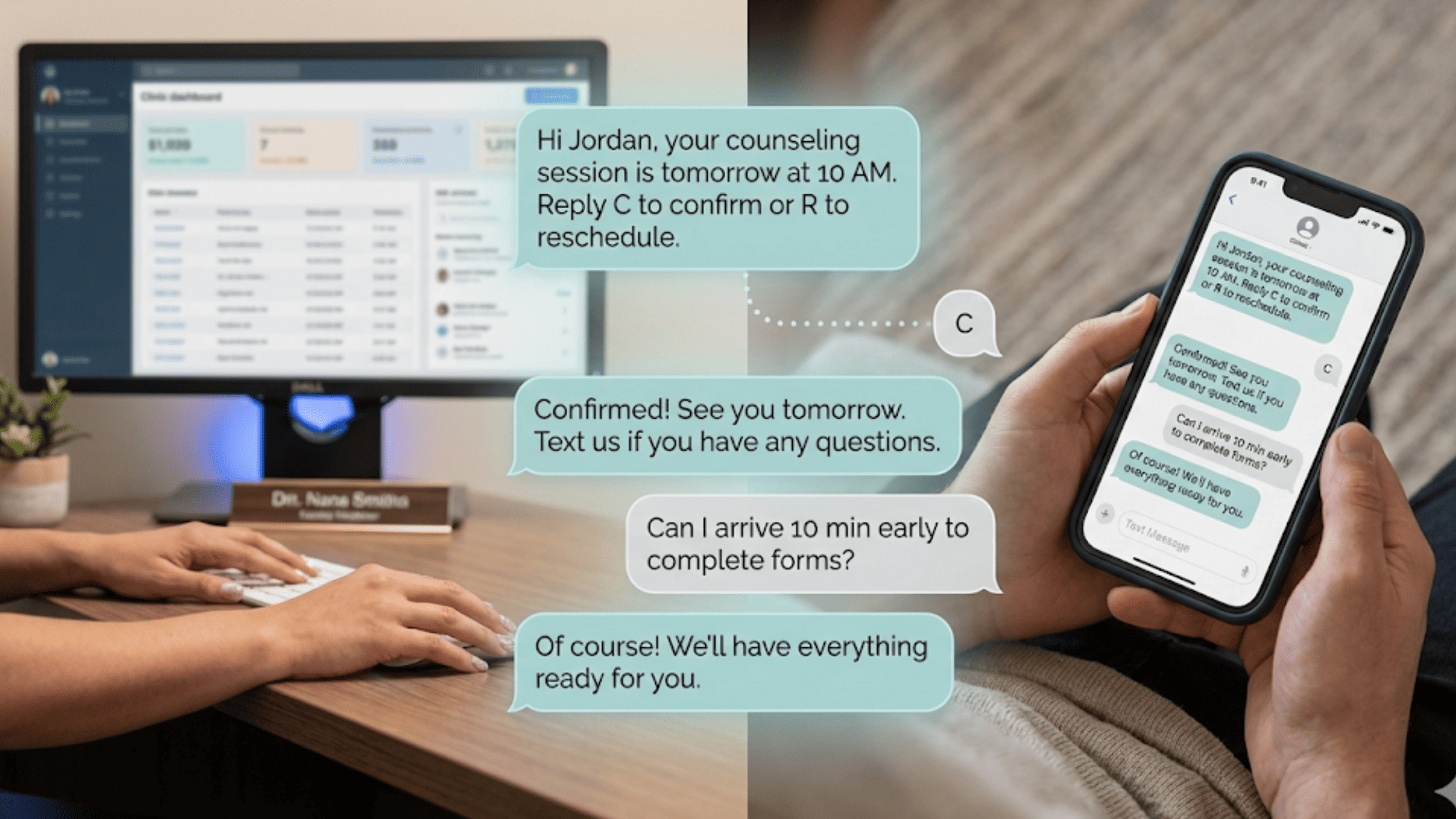
Two-way text message exchange between behavioral health clinic and patient showing appointment confirmation and question response flow

Seamless Opus Integration: How the Automation Works

Knowing why reminders matter is one thing. Seeing how they work in real time is another. Let us walk through the nuts and bolts of how Curogram connects with Opus EHR:

Real-Time Sync

The link between Curogram and your Opus EHR runs in real time. This means that as soon as a visit is booked, changed, or canceled in Opus, the system knows. Curogram reads the Opus EHR schedule and pulls in the details it needs to send the right message.

Here is what makes this useful: The system can tell the difference between visit types. A reminder for a group therapy session will look different from one for a one-on-one counseling session or a medical evaluation. You can set custom language for each type so that patients get the exact info they need.

For example:

A detox patient might get a reminder that says: "Your medical check-in is tomorrow at 10 AM. Please arrive 15 minutes early." An outpatient patient might see: "Your counseling session is at 2 PM. Text C to confirm or R to reschedule."

This kind of detail may seem small, but it makes a big difference. Patients know what to expect, and staff do not have to answer as many "what time was my appointment?" questions.

Two-Way SMS Engagement

Unlike the one-way "do not reply" texts you may have seen from other systems, Curogram lets patients text back. This two-way feature is the key to making reminders work in behavioral health.

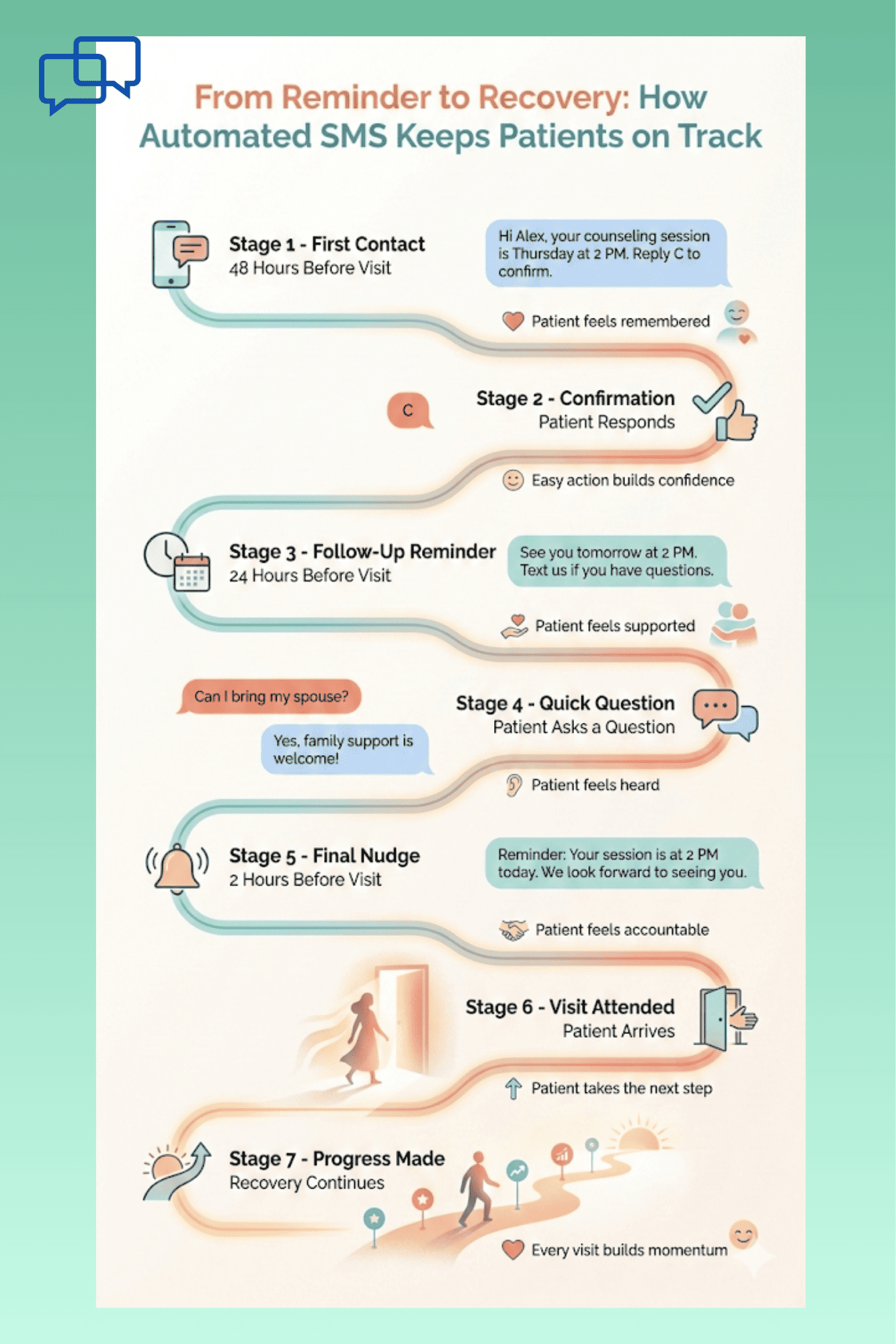
When a patient gets a reminder, they can respond in seconds. A simple "C" confirms the visit. A "Reschedule" request pops up on your staff's dashboard right away. If a patient cancels, the front desk gets an alert so they can fill the open slot from a waitlist.

This back-and-forth also opens the door for quick questions. A patient might ask, "Can I bring my spouse to the session?" or "Do I need to fast before my blood draw?" Staff can respond in the same text thread, saving everyone time.

Two-way texting has another hidden benefit: it builds trust. Patients feel heard when they can reply directly. That sense of connection can make the difference between staying in care and dropping out.

Customizable Cadence

Different patients need different levels of support. That is why Curogram lets you set custom reminder timing based on your clinical needs.

A standard setup might look like this: first reminder 48 hours before the visit, second reminder 24 hours before, and a final reminder 2 hours before. For higher-risk patients—like those in their first week out of detox—you might add a same-day morning reminder as well.

You can also adjust the cadence by visit type. Group sessions might only need a single 24-hour reminder. Medical appointments might need a 48-hour heads-up so patients can prepare.

This level of control means you can meet each patient where they are. Some need more nudges. Others just need one. Opus EHR scheduling automation gives you the tools to tailor your approach.

Patient journey timeline  displaying how two-way text reminders support behavioral health appointment attendance and treatment retention

Operational and Clinical Impact

Now let us look at the results. What changes when you put Opus EHR automated reminders into action?

Maximize Bed and Slot Occupancy

In residential treatment, every empty bed is a missed chance to help someone in need. In intensive outpatient programs, every open slot is lost revenue and wasted staff time.

Consider this:

A 20-bed residential facility. If even two beds sit empty each week due to no-shows or early dropouts, the clinic loses thousands of dollars in potential revenue. Worse, those beds could have gone to patients on the waitlist who needed care.

Automated reminders help fill these gaps in two ways:

  • They reduce the number of patients who simply forget to show up.

  • They catch cancellations early so your team can fill the opening with someone else.

Let us say a patient cancels via text 24 hours before their session. Your staff sees the alert right away. They check the waitlist and reach out to another patient who can take that spot.

The result: Full schedules, steady revenue, and more patients served.

This is especially important in behavioral health, where demand often outstrips supply. In many areas, patients wait weeks or months to get into treatment. A smart reminder system helps you make the most of every open spot.

Reduction in Staff Burnout

Front desk and call center staff are the heartbeat of any treatment center. But when they spend hours each day on repetitive phone calls, burnout sets in fast.

Think about what your staff does now. They call to confirm visits. They call to remind patients about paperwork. They call to reschedule when things change. Each call takes time, and many end in voicemail or missed connections.

Curogram's two-way SMS changes this pattern. Reminders go out without staff lifting a finger. Confirmations come back as text replies. Reschedule requests pop up on the dashboard for quick action.

As a result, staff can cut phone call volumes by up to 50%. That time goes back into higher-value work: greeting patients, helping with intake, handling insurance questions, or simply taking a breath between tasks.

This shift also helps with turnover. Burned-out staff leave. When you reduce the daily grind, your team stays longer and does better work. In a field where good staff are hard to find, that matters.

Documentation and Compliance

If you have ever been through an insurance audit or an accreditation review, you know how much paper trails matter. Regulators want to see that you made real efforts to keep patients in care.

Opus EHR automated reminders create a built-in audit trail. Every text sent, every reply received, and every confirmation logged is saved and searchable.

If an auditor asks, "What did you do to reach this patient before they dropped out?" you have clear records to show them.

This matters for more than just audits. Funders, grants, and contracts often ask for data on patient engagement and retention. With automated tracking, you can pull these numbers in minutes rather than hours.

The compliance benefit goes beyond just having records. It also protects your staff from legal risk.

If a patient claims they never got a reminder, you can show proof that the text was sent and when. This kind of documentation is hard to create with manual phone calls.

Better Treatment Retention

At the end of the day, the goal is not just to fill chairs. It is to help patients get better and stay better.

Patients who attend more sessions have better outcomes. Regular visits build trust with counselors, allow for medication adjustments, and create the structure that many people in recovery need.

When patients miss visits, that structure breaks down. They fall behind on their treatment plan. They may feel ashamed about skipping and avoid coming back. One missed session can snowball into a full dropout.

Automated reminders break this cycle. They keep patients engaged when their own willpower is low. They make it easy to stay on track even when life gets hard.

For patients in early recovery, this support can be the difference between success and relapse. That is why so many clinicians now see Opus EHR automated reminders as a clinical intervention, not just an admin tool. They help improve treatment retention in a real and measurable way.

Protecting Revenue Without Sacrificing Care

Let us address the elephant in the room: money. Treatment centers need revenue to survive. Empty slots and no-shows directly hurt the bottom line.

But in behavioral health, there is sometimes a tension between "running a business" and "caring for patients." Leaders worry that focusing on revenue will make staff feel like they are just filling seats rather than helping people.

The beauty of automated reminders is that they serve both goals at once. When you reduce behavioral health no-shows, you bring in more revenue.

But you also serve more patients and help more people stay in care. It is not a trade-off. It is a win-win.

This is why we call Curogram the "retention engine" for recovery. It protects your income while protecting your patients' progress.


Keep Your Patients on the Path to Wellness

Recovery is a long road. Patients face setbacks, doubts, and obstacles at every turn. Your role is to keep them moving forward, even when the path gets hard.

Automated reminders are one small piece of that puzzle. They cannot replace skilled counselors or evidence-based treatment.

But they can remove friction and make it easier for patients to do the hard work of getting well.

When a patient's phone buzzes with a reminder, it says: "We are here. We have not forgotten about you. Your next step is just a text away."

That simple message can mean everything to someone fighting for their life.


Why Curogram Is Built for Behavioral Health


Curogram is a HIPAA-compliant two-way texting platform made for healthcare. But what sets it apart for behavioral health and SUD treatment?

The platform integrates directly with Opus EHR. You do not need IT staff to build custom connections. The setup is fast, and training takes as little as 10 minutes.

Our two-way SMS feature means patients can reply. This turns reminders into conversations and gives your staff a direct line to patients who might otherwise slip away.

All messages are logged and searchable. This creates the audit trail you need for compliance and accreditation reviews.

The system is flexible. You can set different reminder cadences, create custom messages by visit type, and adjust settings as your programs evolve.

Curogram helps you do more than just send reminders. The platform supports online patient forms, text-to-pay billing, and automated review requests. These tools work together to reduce no-shows, improve cash flow, and build your online presence.

For treatment centers looking to improve treatment retention and protect revenue, Curogram offers a full toolkit in one easy-to-use platform.

Conclusion

Curogram is more than just a reminder tool. It is a full patient engagement platform built for healthcare providers who want to work smarter.

The platform reduces phone call volume by up to 50%. Your staff stops spending hours on hold or leaving voicemails.

Instead, they send texts that patients actually read and respond to. This frees up time for intake, insurance follow-ups, and face-to-face patient care.

No-show rates can drop by as much as 75% with the right reminder setup. When patients get multiple touchpoints—48 hours, 24 hours, and 2 hours before their visit—they are far more likely to show up. And when they do cancel, your team knows right away so they can fill the gap.

The two-way texting feature builds trust and keeps patients engaged. Patients can ask questions, confirm visits, or request changes without picking up the phone. For someone in early recovery, this low-barrier communication style can make all the difference.

All messages are HIPAA-compliant and logged for compliance. Whether you face a state audit, an insurance review, or an accreditation visit, you have clear records of every outreach attempt. This protects your center and your staff.

Curogram also supports online patient forms, text-based payments, and automated Google reviews. These tools help you serve patients better while strengthening your operations.

The setup is simple. Training takes about 10 minutes. And the return on investment shows up fast in the form of fuller schedules, less staff stress, and better patient outcomes.

If you are ready to make Opus EHR scheduling automation work for your center, Curogram is the partner you need.

Ready to make Opus EHR scheduling automation work for your center? Book a demo today to see how automated appointment reminders for Opus EHR can improve your facility's treatment retention.


Frequently Asked Questions

Does this work for group therapy sessions?
Yes. Curogram can send bulk reminders to everyone booked for a specific group session in Opus. This ensures high attendance for community-based healing, which is core to many SUD programs.
Can we customize the message for different programs?
Absolutely. You can tailor reminders for detox, residential, or outpatient programs to include specific instructions.
What happens if a patient cancels via text?

The system alerts your front desk immediately. This allows your team to fill that opening from a waitlist or follow up with the patient to assess their clinical status.

How does two-way SMS help patients in early recovery stay engaged?

Two-way texting lets patients respond to reminders without the mental effort of a phone call. This low-barrier approach meets them where they are and keeps them connected to care.

How can reminder timing be adjusted for higher-risk patients in early recovery?

Curogram lets you set custom reminder cadences. For higher-risk patients, you can add extra touchpoints—like a same-day morning reminder—to give them more support.


Automated Appointment Reminders for Elation Health: Protect Your Time

Automated Appointment Reminders for Elation Health: Protect Your Time

💡 Independent practices can set up automated appointment reminders for Elation Health through Curogram's direct integration. This system sends...

Read More
Reduce No-Shows & Boost Revenue with Allscripts PM Reminders

Reduce No-Shows & Boost Revenue with Allscripts PM Reminders

💡 Missed appointments are one of the most common revenue leaks in healthcare. Practices using Allscripts PM can reduce no-shows with structured...

Read More
Automated Appointment Reminders in AdvancedMD | Reduce No-Shows

Automated Appointment Reminders in AdvancedMD | Reduce No-Shows

💡 Automated appointment reminders in AdvancedMD are a gamechanger. Missed visits cost providers millions each year in lost revenue. They compound...

Read More