10 min read

Simplified Oncology Patient Billing: OncoEMR Text Payment Experience

Simplified Oncology Patient Billing: OncoEMR Text Payment Experience
💡 OncoEMR oncology patient text payment experience billing simplified means turning long paper bills into one short text message. The patient sees a clear balance and a tap-to-pay link.
  • Paper statements show many lines, codes, and insurance edits that confuse cancer patients
  • Most oncology patients never sign in to a portal to check their balance
  • Text-to-pay sends one number, one link, and asks for two taps to finish
  • Based on our internal data, text open rates hit 98%, far above email or portal alerts
  • Patients act faster because the message lands while care feels fresh
This is how OncoEMR-supported practices cut billing friction without losing care quality. Curogram makes the payment moment short, kind, and easy to act on.

Seven line items. Three insurance edits. One total that does not match what the patient expected. That is the bill an oncology patient opens between chemo cycles.

She reads it twice. The numbers swim. Some charges come from her infusion visit. Others come from lab work or drug administration codes she has never seen. The font is small. The math is not hers to do.

She is not refusing to pay. She is just too tired to figure it out today. So the bill goes on the kitchen counter, under the mail. The pile grows. Two weeks later, a collections letter arrives.

This is the quiet failure point in oncology billing. The bill is not too high. It is too hard to read. And cancer patients carry a load that healthy people do not. They face nausea, fatigue, and the brain fog that often comes with treatment.

Paper statements were not built for this reader. They were built for accountants. The OncoEMR oncology patient text payment experience billing simplified approach flips that script. One text. One balance. One link to pay.

This article shows you the cancer patient billing confusion text-to-pay solution that fits inside an OncoEMR workflow. We will start with why paper bills fail oncology patients. Then we will show how a short SMS solves the trust gap and the speed gap at once.

You will see real numbers from text-to-pay programs and clear steps your front office can copy. Most of all, you will see how this respects the patient. Cancer treatment is hard enough. Paying the bill should not be the hardest part of the week.

Let's start with the bill itself, and why it has been failing your patients all along.

The Villain: The Bill That Made No Sense

Cancer billing is its own language. The patient does not speak it, and we keep handing her the brochure.

The Multi-Line Statement Reality

Picture an oncology bill from a single visit. There is a line for the infusion suite. A line for the lab draw. A line for the chemo drug. A line for the nurse's time. A line for the saline. Then come the insurance edits, the deductible note, and the coinsurance code.

That is seven to ten lines for one visit. Each line has its own dollar figure. Each line has its own short code. The patient does not know what those codes mean. She also does not know which charges already went through her plan.

So she stares at a total of, say, $3,200. Her deductible is $2,500. The math does not add up in her head. She has no easy way to ask why without a phone call she does not have energy to make.

The Cognitive Load Problem

Chemo brain is real. It is named in clinical studies and felt by most patients on active treatment. It shows up as slow recall, weak focus, and a short fuse for paperwork.

A patient in this state cannot sit down and decode a bill. She cannot hold five numbers in her head while comparing them to a benefits letter. She picks the small task over the hard one. She sets the bill aside and tells herself she will come back to it later.

Later does not come. Side effects do.

The Portal Option That Doesn't Exist

OncoEMR's CareSpace portal can show patient balances. In theory, that solves the problem. In practice, based on our internal research, around 70%–75% of oncology patients never sign up for the portal at all.

Even those who sign up rarely log in for billing. Many are older. Many are tired. Many use the portal once for a lab result and never come back. To pay through the portal, a patient needs to remember the password, find the billing tab, and trust the steps.

That is too many forks in the road for a patient on day three of a chemo cycle. The OncoEMR patient balance text payment no portal model meets her where she already lives — in her text inbox.

The Collection Notice Consequence

Confusion turns into delay. Delay turns into aging. Aging turns into a collections letter. Now the patient is upset, and your billing team is upset.

She did not refuse the bill. She did not choose to be late. She just could not climb the stairs the system put in front of her. And the practice she trusted with her cancer care now feels like a creditor.

That is a trust break, not a money problem. It also costs the clinic real money. Aged accounts collect at a much lower rate than fresh ones. Staff time spent chasing balances is staff time not spent helping new patients.

The cost shows up in three places at once:

Cost Type

What It Looks Like

Who Feels It

Patient stress

Surprise collections letter, broken trust

The cancer patient

Staff time

Phone tag, payment plan calls, write-offs

Front office and billing team

Lost revenue

Aged AR, lower collect rate, bad debt

The practice owner


The bill that made no sense is not a small problem. It is the leak under every oncology AR report. The next section shows the fix.

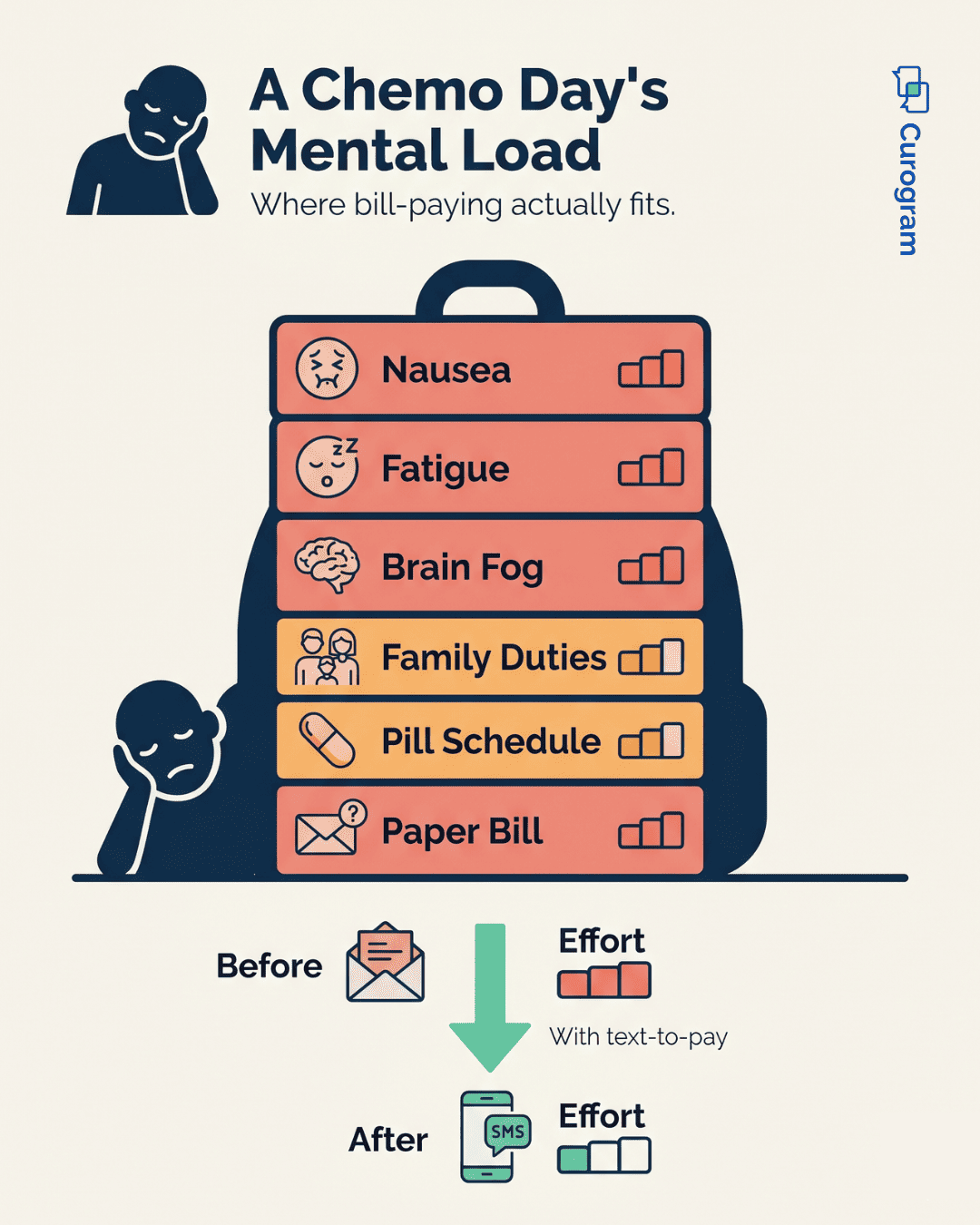
Infographic showing chemo day mental load including nausea fatigue brain fog

The Guide: The Text That Simplifies Payment

The fix is not a longer statement or a clearer portal. It is a shorter message at a better moment.

The oncology patient payment experience simplified mobile model uses one channel patients already trust: SMS. Text-to-pay strips the bill down to one number and one button. That is all the work the patient must do.

Clarity in One Number

Here is what the patient sees on her phone:

"Hi Maria, you owe $950 for your Feb 12 infusion. Tap here to pay: [link]"

That is it. No codes. No edits. No deductible math. One amount, one date, one link.

The clarity does the heavy lifting. The patient does not wonder what she is paying for. She does not need to call to confirm the charge. The message is short enough to read in five seconds while she is making coffee.

Tap-to-Pay in Two Actions

The link opens a secure payment page. She sees the same balance again. She picks a card on file or types in a new one. She taps "Pay."

That is two taps. No login. No app to install. No menu to dig through. The whole flow takes under a minute on most phones.

This is the part that often surprises new clients. The friction in billing is not the dollar amount. It is the steps to act. Cut the steps in half, and the same balance gets paid much faster.

Sent When It Matters

Timing is half the win. A paper statement may arrive 10 to 14 days after a visit. By then, the patient has moved on. The visit feels old. The bill feels random.

A text-to-pay message lands the day after the visit, or right after the insurance edit posts. The visit is still fresh. The patient still feels the link between her care and her cost. She is in "engaged patient" mode, not "stack of mail" mode.

That timing change alone lifts response rates. The Flatiron Health patient billing text message payment workflow uses this same idea. Send the request while the patient still feels close to the care.

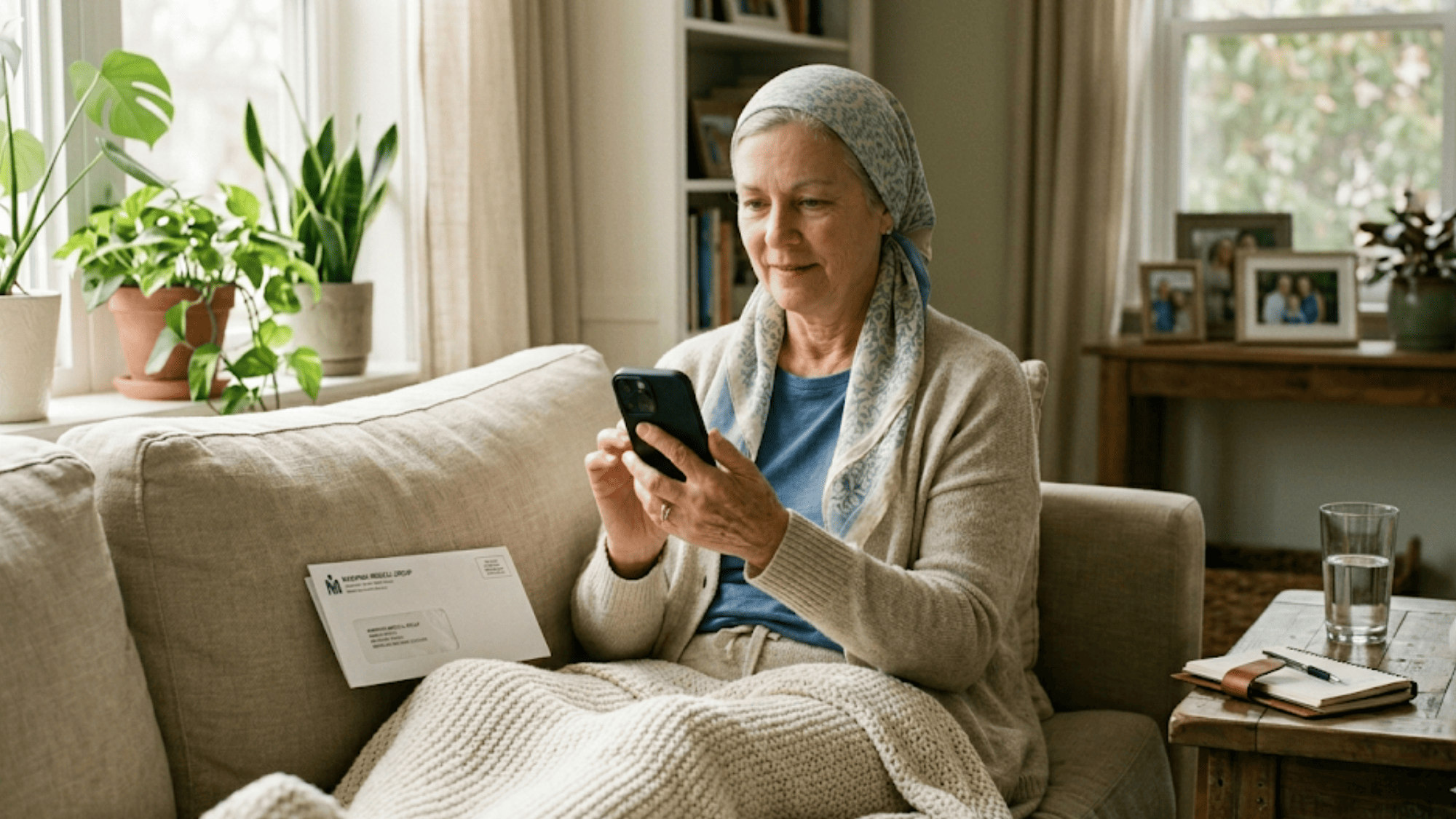
Oncology patient relaxing on couch paying medical bill on smartphone with unopened paper statement set aside next to her

Respects Patient Dignity

Tone matters more in oncology than in any other field. A cancer patient is not a delinquent account. She is a person fighting for her life. The message must sound like it comes from her care team, not a debt collector.

The text uses her name. It names the visit she just had. It thanks her at the end. It gives her one easy way to act, and a way to ask questions if she needs to.

Compare these two lines:

Tone

Sample Text

Collections-style

"FINAL NOTICE: $950 due. Pay now to avoid further action."

Care team style

"Hi Maria, your balance from your Feb 12 visit is $950. Tap to pay or reply to ask a question."


The numbers are the same. The trust is not. The first one feels like a threat. The second one feels like a hand on the shoulder.

That difference is what keeps the patient relationship intact. She still feels seen as a patient first and a payer second. She is more likely to act, and she is more likely to come back for her next infusion without dread.

This is the heart of the cancer patient billing confusion text-to-pay solution. It is not just a faster pipe for money. It is a kinder one. The next section shows what that kindness earns the practice in cold, hard numbers.

The Success: Patients Pay When They Understand

When the bill is clear, patients pay. That is not theory. That is what the data shows when practices switch from paper-and-portal to text-first billing.

Below are the three big lifts most oncology clients see, plus a real-world example you can take to your next leadership meeting.

Open Rates That Actually Lead to Action

The first hurdle is getting the patient to read the bill at all. Paper bills get opened — but often days late, and many get tossed with the junk mail. Portal alerts have it worse. Most patients never log in.

Based on our internal data:

Channel

Open Rate

Days to Open

Text-to-pay SMS

~98%

Same day

Email statement

20%–30%

1–3 days

Portal alert

Under 25%

Often never

Paper statement

Hard to measure

5–10 days


A text gets read in minutes. The phone buzzes, the patient looks. There is no inbox tab to click, no app to launch, no envelope to tear open.

For oncology, this gap is even wider. Older patients use email less. Many cancer patients also avoid logging into the portal, since portals often deliver hard news like lab results. So the portal carries a quiet emotional cost. The text does not.

60%+ Conversion Within 24 Hours

Open rates do not pay bills. Conversion does. This is where text-to-pay shines.

Based on our internal data, more than 60% of oncology patients who get a clear text-to-pay message act within 24 hours. Compare that to 15%–20% for a paper statement, often paid weeks later. That is a 3X jump in same-day collections.

Reduced Patient Anxiety and Fewer Collections Letters

The third lift is harder to measure but easier to feel. When patients pay on time, they do not get collection notices. When they do not get collection notices, they do not lose trust in the practice.

That matters in oncology more than in any other specialty. Cancer patients come back many times. They are not one-off visits.

A patient who feels respected on the billing side keeps showing up for treatment without dread. A patient who feels harassed may delay a visit, switch clinics, or stop care altogether.

So fewer collections letters is not just a billing win. It is a treatment adherence win.

A Workflow That Fits Inside OncoEMR

A common worry from oncology managers is integration. The clinical team uses OncoEMR every day. The last thing they want is a second system that does not talk to the first one.

Curogram's text-to-pay tool plugs into the OncoEMR workflow without forcing a rip-and-replace. The billing team posts the balance as they always do. Curogram pulls the patient phone number from the chart and sends the SMS at the right moment. Payments flow back into the ledger so the books stay clean.

Here is the basic flow:

  1. Patient finishes infusion visit. Charges post in OncoEMR.
  2. Insurance adjusts the claim. Patient responsibility is set.
  3. Curogram sends an SMS to the patient with the clear balance.
  4. Patient taps the link, sees the same balance, and pays in two taps.
  5. Payment posts back into OncoEMR. The account is closed out.

No portal hunt. No envelope. No call back next Tuesday. Just clean, fast, kind billing that mirrors how patients live the rest of their day.


How Curogram Turns OncoEMR Billing Into a Clear Patient Conversation

Curogram is not trying to replace your EMR. OncoEMR runs the clinical side of your practice, from chemo plans to dose tracking. Curogram runs the patient communication side, from text reminders to text-to-pay.

The two work side by side. Your billing team posts charges in OncoEMR as always. Curogram pulls the right patient name, balance, and phone number, then sends the text at the right time. There is no double entry. There is no second login your front desk has to learn from scratch.

What makes the platform work for oncology, in plain terms:

  • HIPAA-compliant SMS, so patient data stays safe
  • SOC 2 Type II certified secure payment links, with the same care as bank apps
  • Two-way texting, so patients can reply with a question instead of calling in
  • Custom message templates, so your tone fits your brand and your patient base
  • A unified inbox where staff handle replies, not a phone tree

The result is a billing flow that feels like a care moment, not a debt notice. The patient gets one short text. She taps. She pays. Your team sees the payment post back into the ledger.

For an oncology practice, that is the whole point. You did not get into cancer care to chase money. You got into it to treat people. Curogram lets your billing channel match that mission.

If you want to see how this looks in your own OncoEMR setup, a 20-minute demo will show you the patient view, the staff view, and the dollar impact for a clinic your size.

Conclusion: Billing That Respects Your Patients

Cancer patients should not need an accounting degree to pay a bill. They should not have to fight chemo brain to read a statement. They should not feel ambushed by a collections letter for a balance they did not understand.

The fix is small in size and big in impact. One text. One number. One tap. That is all.

Paper statements made sense in a world without smartphones. They do not fit a patient who manages her care, her family, and her treatment from her phone. The OncoEMR oncology patient text payment experience billing simplified approach matches the patient where she actually lives.

The numbers speak for themselves. Higher open rates. Faster pay times. Fewer collections letters. Less staff time chasing balances. More cash in the door, sooner, with less stress on both sides of the desk.

But the deeper win is trust. When your billing channel feels like your care channel, the patient stays loyal. She comes back for her next cycle. She tells her family your team is kind. She does not weigh "how do I pay this?" against "how do I get through this week?"

That is the standard cancer patients deserve. That is the standard text-to-pay can deliver inside your OncoEMR workflow.

Keep OncoEMR exactly as it is — and add the text-to-pay layer your patients already wish you had. Book a demo with us and see how fast it plugs in, with zero workflow disruption.


Frequently Asked Questions

How does text-to-pay avoid feeling like a collections call?
The tone, timing, and channel are different. The message comes from your care team, names the recent visit, and offers one easy link. There is no threat language and no aggressive follow-up tone, so patients read it as service, not pressure.
Why do oncology patients respond better to text than to portal alerts?
Portals often deliver hard news, like lab results, so many patients avoid them. Texts feel lighter and live in the same inbox patients use for family. Based on our internal data, text open rates hit around 98%, far above portal alerts.
What happens if a patient does not own a smartphone or prefers another method?

Text-to-pay does not block other paths. Patients can still call your billing line, mail a check, or use the portal if they wish. The text just adds the fastest option, and most patients pick it on their own.

How secure is the payment link in the text message?

Very secure. The link opens a payment page with bank-level encryption, and no card data ever travels through the SMS. Curogram is HIPAA-compliant and SOC 2 Type II certified, so patient and payment data stay protected end to end.

Why does timing matter so much for oncology billing texts?

Patients act on bills when the visit still feels fresh in their mind. A text sent the day after a visit lands during that window, while a paper bill arriving 10 days later often feels random. Faster timing drives faster, kinder payment.