
10 min read

Reducing No-Shows and Protecting Revenue with Appointment Reminders in Office Ally

Reducing No-Shows and Protecting Revenue with Appointment Reminders in Office Ally
💡 Reducing no-shows Office Ally practices face each week is easier when patients receive clear reminders that help them remember their visit.
  • Reduce no-shows by giving patients simple reminders they can see quickly.
  • Improve provider utilization by keeping more appointment slots filled.
  • Help patients stay engaged and confident about their upcoming visits.
  • Protect clinic revenue by increasing completed appointments.
Curogram supports Office Ally practices by delivering secure patient reminders that help schedules run smoothly and predictably. 

Every time a patient does not show up, your schedule takes a hit. A provider waits in an exam room, staff scramble to rework the day, and the slot you already paid for in overhead goes unused. When this happens a few times each day, it starts to feel normal, but the true cost adds up quickly. Many clinics do not realize how much no-shows are holding them back.

If you run a small or mid-sized practice, you probably feel this strain. You rely on a steady flow of visits to cover payroll, rent, and technology. When 10%–30% of appointments disappear, it becomes harder to plan, harder to invest, and harder to keep staff morale high. Patients who could have used those times may be stuck waiting weeks for an opening.

Most practices try to fix the problem with more phone calls, but patients are busy. They may ignore unknown numbers, miss voicemail, or simply forget what was said. In contrast, clear digital reminders are easy to read and hard to lose. They give patients a gentle nudge at the right moment, so planned visits actually happen.

In this blog, you will see why high no-show rates are such a serious business risk, how appointment reminders improve ROI for clinics that use Office Ally, what the gains look like for practice leaders, a simple ROI example, and the next steps you can take. The goal is to help you reduce no-shows Office Ally already tracks on your schedule and turn more of your booked time into completed care.

Business Risks Without Reminders

When a practice does not rely on consistent appointment reminders, no-shows usually stay high. Patients forget dates, confuse times, or lose handwritten cards from the front desk. Others plan to come but run into work or family conflicts and never call to reschedule. Without a clear reminder, it is easy for a visit to slide off their radar.

The first risk is direct revenue loss. Every missed visit represents care you were ready to provide but never delivered. You already paid for rent, staff, and provider time for that slot. When it stays empty, there is no chance to earn that money back, and those costs eat into your margin.

The second risk is poor provider utilization. When no-shows are common, provider schedules become uneven. Some hours are jammed, while others have long gaps. This makes it harder to manage energy, harder to plan around complex visits, and harder to measure productivity fairly. It can also lead to frustration if providers feel their time is being wasted.

No-shows also create hidden costs for staff. Front-desk teams spend time answering calls from patients who missed visits or need to reschedule. They deal with complaints from people who could not get timely appointments, even though parts of the day ended up empty. This back-and-forth juggling makes the job more stressful and can contribute to burnout.

Over time, consistent no-shows weaken patient relationships. Patients who rarely attend scheduled visits are more likely to fall behind on care. They may wind up in urgent or emergency settings that could have been avoided. These patterns can hurt your reputation if families feel the practice is not helping them stay on track.

For clinics that use Office Ally as a core system, letting no-shows continue unchecked is like driving with the parking brake on. Your reports, revenue, and planning all suffer. Appointment reminders are not just a convenience. They are a key tool to reduce no-shows Office Ally can help you monitor, so you can protect the business you worked hard to build.


How Curogram Improves ROI with Smart Reminders

Appointment reminders work because they match how people live today. Most patients carry a phone all day and quickly scan short messages. When they receive a clear reminder that repeats the date, time, and basic details of a visit, it becomes much easier to follow through. This small nudge can change behavior in a big way.

For practices that want to reduce no-shows Office Ally already holds the schedule and patient data you need. When reminder tools use that same information, messages are more accurate and timely. Patients see reminders that match exactly what is in the calendar. Staff do not have to re-enter details or double-check multiple systems.

The ROI starts with more completed visits. If reminders help even a fraction of patients show up instead of disappearing, those extra visits translate directly into revenue. Because you are filling existing time on the schedule, these gains come with very little added cost. You are turning unused capacity into real income.

Another part of the return comes from smoother days for staff and providers. When more patients arrive as planned, front-desk teams spend less time reacting to gaps and surprises. Providers see a steadier flow of patients and can focus on care instead of idle time. This makes work feel more predictable and less stressful.

Finally, strong reminder practices support better long-term relationships. Patients who experience organized, reliable communication are more likely to trust your clinic. They feel that the practice respects their time and is trying to help them keep up with care. That trust leads to higher retention and more word-of-mouth referrals, which both support growth.

Because appointment reminders can be applied across many visit types, their impact scales. Once you have a system in place that works with Office Ally, the same approach can support follow-ups, routine care, and other services. A modest improvement in attendance across all of these areas adds up to a meaningful boost in ROI.

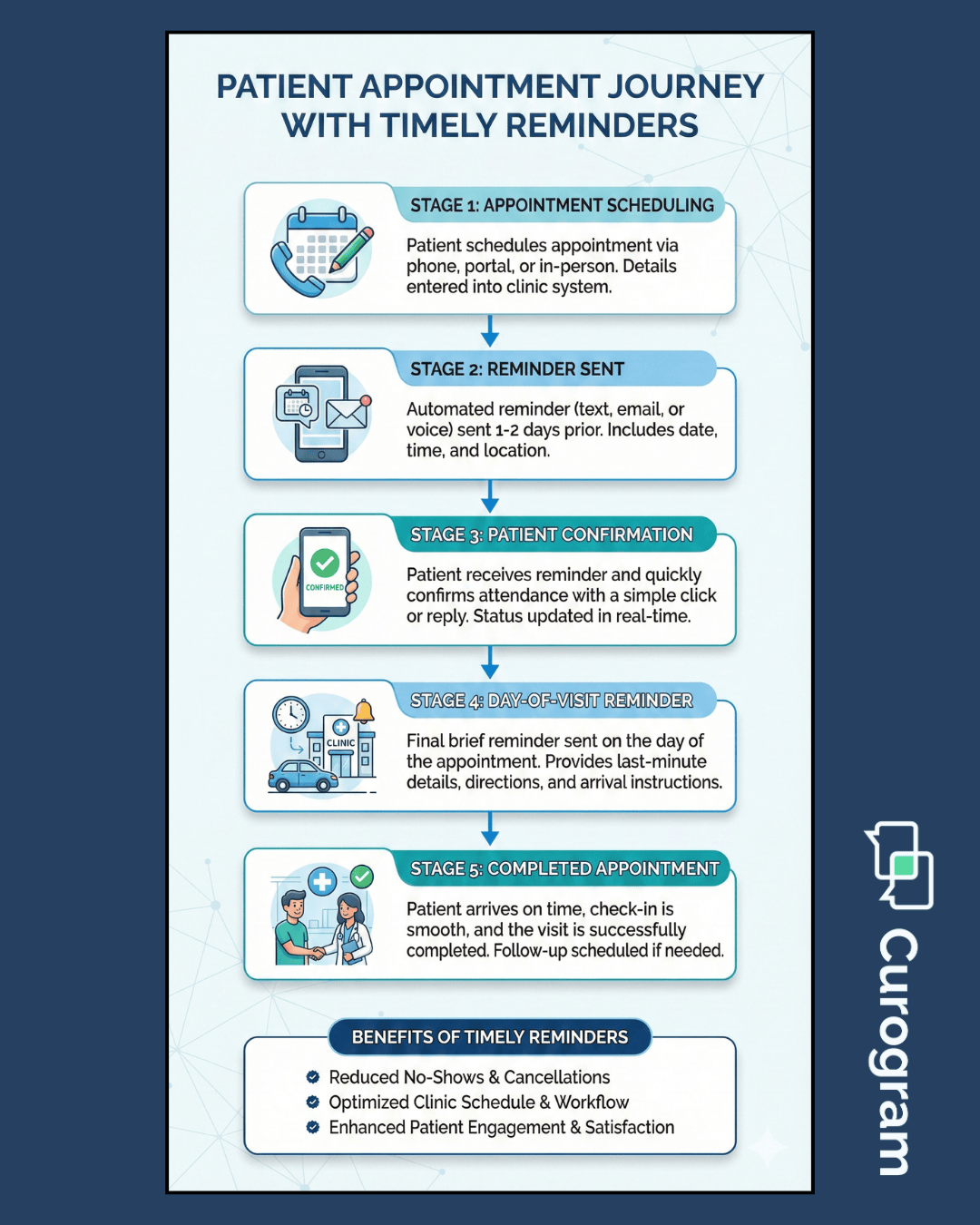
Infographic showing patient appointment journey improved through timely Office Ally reminders.


Benefits for Executives and Practice Owners

From an owner or manager’s perspective, appointment reminders are more than a communication feature. They are a business tool that touches revenue, efficiency, staff satisfaction, and patient loyalty. This section looks at the key benefits you can expect when you focus on reducing no-shows Office Ally tracks in your daily schedule.

1. More predictable revenue without adding extra providers

One of the strongest benefits is steadier revenue. When no-shows fall, more of your scheduled visits actually happen. This means the money you hoped to earn from those hours is far more likely to come in. You do not have to expand your building or hire new providers to see these gains.

Predictable revenue makes planning easier. You can budget for salaries, technology, and upgrades with more confidence. You are less likely to experience painful swings from month to month. That stability helps you support your team and invest in the future of the practice.

2. Better provider utilization and fairer performance metrics

Owners and managers care deeply about how provider time is used. When a day is filled with no-shows, even the best provider looks unproductive on paper. Appointment reminders improve the odds that patients show up as planned. This leads to fuller schedules and a clearer picture of how busy each clinician truly is.

With fewer gaps, it also becomes easier to schedule complex visits or procedures. You can place them at times when providers are most alert and supported. Instead of overbooking to “cover” no-shows, you can book closer to capacity with more confidence. This leads to a healthier balance between productivity and burnout risk.

3. Less chaos and burnout at the front desk

The front desk often absorbs the stress of no-shows. Staff must explain policies, field calls from late or absent patients, and soothe people who cannot find open times. When reminders keep more patients on track, those tense conversations happen less often. Workdays feel calmer and more manageable.

Lower stress helps with retention. Training new staff is costly and time-consuming. Keeping experienced team members in place means smoother operations, stronger relationships with regular patients, and fewer disruptions. Appointment reminders are not the only factor, but they play a real role in how chaotic or calm each day feels.

4. Stronger patient engagement and satisfaction

Patients want care that feels organized and respectful of their time. When your communication is clear, they feel more confident that your practice knows what it is doing. Appointment reminders signal that you are thinking ahead and trying to make their lives easier. This can make a big difference for busy parents, shift workers, or anyone juggling multiple responsibilities.

Better attendance also supports meaningful conversations in the exam room. When patients come to follow-up visits as planned, providers can build on previous discussions. They can track progress, adjust treatment plans, and address concerns before they turn into crises. Patients who feel heard and supported are more likely to stay with your practice and recommend it to others.

5. Better outcomes through consistent follow-up

No-shows are not just a financial problem. They are also a care problem. Missing appointments can delay lab reviews, medication checks, or chronic disease management. Over time, these delays can lead to worse outcomes. By reducing no-shows, you help patients stay on a more reliable path.

For conditions like diabetes, heart disease, or depression, steady contact matters. Appointment reminders make it easier for patients to show up even when life is busy. The more consistently they attend, the more likely they are to benefit from your guidance. This mix of better outcomes and stronger revenue is a rare win-win.

6. Clearer data to guide leadership decisions

High no-show rates make it hard to see true demand. If many patients never arrive, your reports might suggest that certain providers or services are less needed than they really are. Once no-shows drop, the numbers you see in Office Ally become more accurate. You can trust that the schedule reflects real interest and real follow-through.

This clarity helps with decisions about hours, staffing, and service lines. You can see where demand is growing or shrinking and adjust accordingly. Instead of guessing based on incomplete data, you can plan from a stronger foundation. Over time, this makes your practice more resilient and better positioned to adapt to change.

For all these reasons, appointment reminders should be seen as a core part of your business strategy. They are one of the few changes that can support revenue, efficiency, staff morale, and patient health at the same time. For Office Ally practices, aligning reminders with your existing schedule is a practical way to unlock these benefits.


ROI Example

To understand the value in simple terms, picture a three-provider family practice using Office Ally. They are scheduled to see 60 patients each day and have a no-show rate of 18%. That means about 11 visits vanish daily. At an average collected amount of $120 per visit, those missed appointments equal roughly $1,320 in lost revenue every day.

Over a typical 20-day month, that loss reaches $26,400. Across a full year, it rises above $300,000. These numbers are estimates, but they highlight how powerful no-show rates are. Now imagine the practice focuses on reminders and brings the no-show rate down to 9%.

With a 9% rate, only about five or six patients miss their visits each day. The clinic recovers roughly half of the previously lost revenue: about $660 per day, or $13,200 per month. After accounting for the cost of reminder tools, the practice still keeps the majority of that reclaimed income. Providers are busier with real patients, and staff face fewer gaps and surprises.

This example shows how reducing no-shows Office Ally already logs in the schedule can turn into concrete financial gains. You do not have to guess whether reminders matter. The difference in completed visits and monthly revenue tells the story clearly.


Next Steps

Getting started does not have to feel overwhelming. First, measure your current no-show rate across a few months. This gives you a baseline and helps you explain the problem to your team. Once everyone sees the numbers, it is easier to rally around a plan.

Next, set a realistic target. You might aim to cut your no-show rate by one-third within six to twelve months. Share this goal with providers and staff so they understand why reminders matter. Encourage them to notice patterns and share ideas they hear from patients.

Finally, put a reminder strategy in place and track your progress. Watch both your no-show rate and your monthly revenue. Celebrate improvements, even small ones, and adjust as needed. Over time, these changes will help your practice run more smoothly and make better use of every hour on the schedule.


Why Curogram Helps Improve Scheduling and Reduce No-Shows

Curogram is designed to help clinics communicate with patients in a way that feels natural and easy. For practices that already rely on Office Ally, it adds a powerful layer of secure, patient-facing messaging. Together, they make it much easier to reduce no-shows Office Ally reports by keeping patients informed and reminded about upcoming visits.

Instead of spending hours on phone calls, staff can send clear messages that confirm visit details and give patients a simple chance to respond if something changes. This helps catch potential no-shows before they happen. Schedules stay fuller, and the day feels more predictable for both providers and staff.

Patients also benefit from communication that fits their daily routines. When important information arrives on a device they already check, it is far more likely to be seen and remembered. With Curogram supporting Office Ally clinics, more patients arrive on time, more visits are completed, and the practice makes better use of every slot on the calendar.


Conclusion

No-shows may be common, but they are not harmless. They drain revenue, disrupt provider schedules, and make life harder for front-desk teams. Patients who miss visits also miss chances to manage their health more effectively. Over time, this hurts both the clinic and the community it serves.

The good news is that many no-shows can be prevented. By focusing on appointment reminders that work with your existing systems, you can reduce no-shows Office Ally records today and fill more of the time you already have. This leads to more stable revenue, better provider utilization, and a calmer workday for staff.

Taking simple steps—measuring your current rate, setting clear goals, and putting a thoughtful reminder strategy in place—can create a powerful shift. More patients show up. More care is delivered. Your practice becomes stronger and more resilient. With the right support, you can turn missed visits into meaningful progress for both your business and your patients.

Protect revenue and patient satisfaction with Curogram's appointment reminders. Book your demo today.


Frequently Asked Questions

How can I figure out my practice’s true no-show rate?
You can start by picking a recent month and counting all scheduled visits. Then count how many of those visits were marked as missed or “no-show.” Divide the missed visits by the total number of scheduled visits to get a percentage. Repeat this for a few months to see if the pattern is steady or changing over time.
Why do patients miss appointments even when they care about their health?

Many patients do not skip on purpose. They may forget the date, confuse the time, or run into work or family conflicts. Some feel embarrassed about past missed visits and avoid calling to reschedule. Clear, friendly reminders help bridge that gap between intention and action so they can follow through on care.

How do lower no-show rates help my providers and staff?

When no-show rates drop, days become more predictable. Providers see a steadier flow of patients instead of bouncing between very busy hours and idle time. Staff spend less energy juggling last-minute changes and more time helping the patients who are actually present. This leads to a calmer environment and less burnout.

Why should I focus on reducing no-shows instead of just booking more patients?

Booking more patients without improving attendance can make your schedule look full while still leaving providers idle. It also risks longer waits for patients who do show up. Reducing no-shows helps you make better use of the time you have before adding more volume. This is usually more efficient and easier for staff to manage.

How can I talk to my team about no-shows without making them feel blamed?

Frame the conversation around shared goals, not fault. Explain how no-shows affect the entire practice, from revenue to stress levels. Invite staff to share what they see and what they think might help. When people feel included in building solutions, they are more likely to support changes and follow through.


Reducing No-Shows and Boosting Revenue with Appointment Reminders in DrChrono

Reducing No-Shows and Boosting Revenue with Appointment Reminders in DrChrono

💡 Using reminders can reduce no-shows DrChrono clinics face every week. Patients receive helpful prompts that keep visits top-of-mind. Reduce...

Read More
Improving Patient Preparedness with Appointment Reminders in DrChrono

Improving Patient Preparedness with Appointment Reminders in DrChrono

💡 DrChrono appointment prep reminders help patients arrive prepared. With integrated reminders, your staff avoids long calling lists, and you can:

Read More
Reducing No-Shows and Maximizing Chair Utilization with Appointment Reminders in Dolphin

Reducing No-Shows and Maximizing Chair Utilization with Appointment Reminders in Dolphin

💡 Many orthodontic clinics struggle with missed appointments that create empty chair time and lower revenue. Using appointment reminders helps...

Read More