
1 min read
Reduce No-Shows & Boost Revenue with Allscripts PM Reminders
💡 Missed appointments are one of the most common revenue leaks in healthcare. Practices using Allscripts PM can reduce no-shows with structured...
6 min read

No-shows lower clinic revenue.
Inconsistent attendance affects patient outcomes.
Automated reminders help reduce missed sessions.
Curogram helps reduce no-shows in InSync and improve ROI for clinics of all sizes. Through integration, you can make appointment management simple while boosting revenue.
When patients miss appointments, provider time goes unused. Treatment rooms remain empty. Staff still receive pay. Over time, this reduces provider utilization and limits how many patients your clinic can support.
No-shows also affect patient outcomes. Behavioral health care often depends on consistent visits. When sessions are missed, progress can slow or stop. Some patients disengage from care entirely.
Many practices using InSync EMR rely on manual reminder calls or basic email alerts. These approaches take staff time and often fail to reach patients. Calls may go unanswered. Messages may be missed.
This blog explains why missed appointments create financial and operational risk for behavioral health practices. You will learn how Curogram improves ROI with automated appointment reminders for InSync users. We will also review benefits for executives and finance leaders, share a real ROI example, and outline clear next steps.
With the right reminder strategy, clinics can improve attendance, increase provider utilization, and protect revenue without adding pressure on staff.
Missed appointments create risks that affect both care delivery and financial performance. These risks often grow slowly and are easy to underestimate. We covered this in great detail in our complete guide on appointment reminders for InSync EMR users.
When a patient does not attend a scheduled visit, provider time is wasted. That time cannot be recovered later in the day. Even one missed session can disrupt a provider’s schedule.
Over a week or month, missed visits add up. Provider utilization drops. Clinics may appear busy on paper while actual care delivery declines.
Missed appointments result in fewer completed sessions. Most behavioral health practices operate with fixed costs. Rent, staffing, and overhead remain the same.
When visits are missed, billable services decrease. Revenue becomes inconsistent. Over time, this creates financial strain.
Behavioral health treatment depends on regular attendance. Missed visits interrupt care plans. Patients may lose progress.
Inconsistent attendance can lead to disengagement. Some patients stop treatment altogether. This affects outcomes and satisfaction.
Staff must manage last-minute schedule changes. Front-desk teams handle rebooking and follow-ups. Providers experience frustration.
Over time, this stress affects morale. Clinics may spend more time managing no-shows than improving care delivery.
Without a structured reminder system, missed appointments remain a persistent and costly problem.
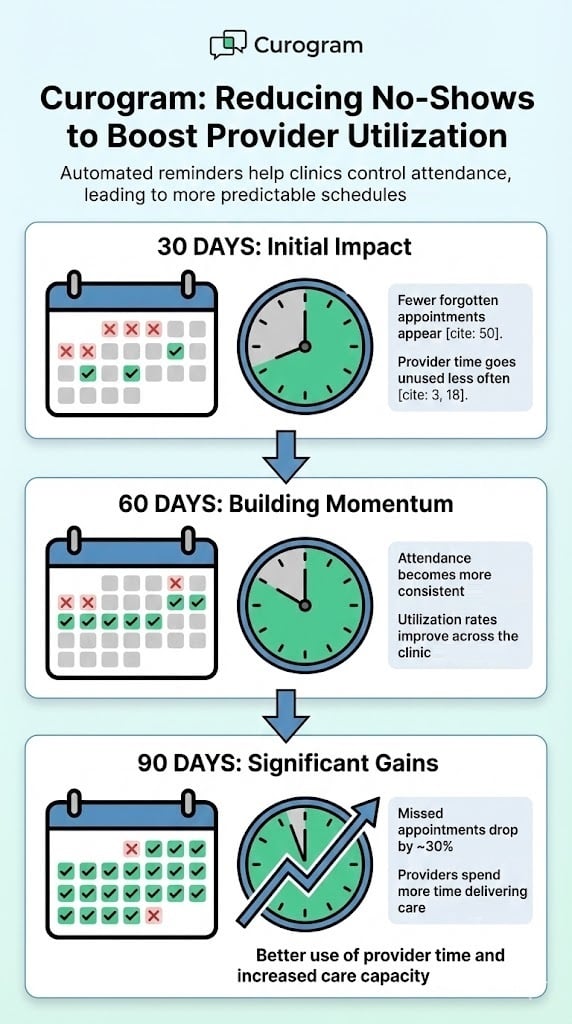
Appointment reminders help clinics control attendance and reduce missed visits. When reminders are reliable, schedules become more predictable. This directly supports revenue and operational planning.
Automated reminders reach patients without staff involvement. Messages are sent at the right time before an appointment. Patients are less likely to forget or miss visits.
For practices using InSync EMR, this helps reduce no-shows that disrupt daily schedules. Over time, attendance becomes more consistent.
When patients attend visits, providers spend more time delivering care. Empty appointment slots decrease. Utilization rates improve across the clinic.
Higher utilization means clinics make better use of existing resources. This supports stronger financial performance without increasing staffing.
Manual reminder calls require staff time. Calls may go unanswered. Follow-ups take additional effort.
Automated reminders remove this workload. Staff can focus on patient support and operations instead of phone outreach.
Completed visits lead to billable services. When attendance improves, revenue becomes more stable.
Finance teams gain clearer insight into daily and monthly performance. Planning becomes more reliable.
Appointment reminders provide value beyond daily scheduling. For executives and finance leaders, improved attendance supports revenue stability, efficiency, and long-term planning.
Fewer missed appointments mean fuller schedules. Providers spend more time delivering care. Utilization rates improve across departments.
Completed visits lead to reimbursable services. Clinics bill for more sessions. Revenue potential increases.
Consistent attendance reduces daily revenue swings. Finance teams can forecast income more accurately. Budget planning improves.
Providers and staff represent fixed costs. Filled schedules ensure these costs generate value. ROI improves without hiring.
No-shows represent lost income. Automated reminders help recover that revenue. Small gains add up over time.
Manual reminder calls take staff time. Automation reduces phone work. Staff can focus on higher-value tasks.
Reliable attendance creates stable schedules. Fewer last-minute gaps appear. Operations run closer to plan.
Reminders keep patients connected to care. Regular attendance supports engagement. Treatment consistency improves.
Missed sessions disrupt care plans. Improved attendance supports ongoing treatment. Outcomes become more reliable.
Patients value clear communication. Reminders reduce confusion. Satisfaction often increases.
Empty schedules frustrate providers. Predictable attendance respects provider time. Morale improves.
Fewer missed appointments free capacity. More patients receive timely care. Access improves without added staff.
Attendance data is easy to track. Leaders monitor no-show trends. Decisions become data driven.
Stable schedules support staffing decisions. Coverage planning improves. Overtime costs may drop.
Consistent visit completion improves forecasts. Finance teams gain confidence. Long-term planning improves.
Fewer missed visits create smoother operations. Workflows become predictable. Daily stress decreases.
Attendance keeps appointments moving. Clinics see more patients per day. Throughput improves.
Attendance affects care and revenue. Shared metrics align operations and finance. Collaboration improves.
Automated reminders work across sites. Multi-location clinics maintain consistency. Growth remains manageable.
Attendance gains compound over time. Revenue improves steadily. Long-term ROI increases.
A multi-site behavioral health organization struggled with frequent no-shows. Providers experienced empty slots throughout the week. Revenue fluctuated month to month.
The organization implemented automated appointment reminders. Messages were sent before each scheduled visit. Staff no longer relied on manual calls.
Within three months, missed appointments dropped by 30%. Provider utilization increased across all locations. Finance teams reported more predictable revenue.
Over one year, the organization generated an additional $400K in revenue. The improvement came from completed sessions that were previously missed.
The ROI from automated reminders was clear. The system paid for itself quickly and continued to deliver value.
Start by reviewing your current no-show rates. Identify patterns by provider, location, and appointment type. Evaluate how reminders are currently sent. Look for gaps or inconsistencies. Consider automation that connects directly with InSync EMR. Focus on tools that reduce staff workload.
Curogram helps behavioral health practices improve attendance without adding work for staff. The platform sends automated appointment reminders that reach patients through familiar channels. Messages are delivered at the right time before scheduled visits.
For practices using InSync EMR, this creates a smoother communication flow. Staff no longer rely on manual calls or last-minute outreach. Reminders are sent consistently, even during busy days.
Curogram supports different reminder schedules based on appointment type. Clinics can tailor messages to match patient needs. This flexibility improves response rates and reduces confusion.
From an operational view, Curogram reduces front-desk workload. Staff spend less time making reminder calls. More time is available for patient support and care coordination.
For leadership teams, the value is measurable. Improved attendance leads to higher provider utilization. Revenue becomes more predictable. Over time, appointment reminders become a reliable tool for protecting both care quality and financial performance.
Automated appointment reminders in InSync EMR offer a clear solution for behavioral practices. They help patients remember visits and plan their schedules. Attendance improves without adding pressure on staff.
Reminder automation also supports smoother daily operations. Schedules become more reliable. Providers spend more time delivering care. Improved attendance also supports better patient outcomes. Consistent visits help maintain treatment progress. Patients stay engaged in care longer.
Curogram makes reminder automation easy to adopt. The platform works alongside existing workflows. Clinics gain better utilization, steadier revenue, and reduced administrative burden.
With the right reminder strategy, behavioral health practices can protect both care quality and financial stability. Attendance becomes predictable. Growth becomes sustainable.
Improve attendance and provider utilization with smart reminders for InSync EMR. Book your demo today.

1 min read
💡 Missed appointments are one of the most common revenue leaks in healthcare. Practices using Allscripts PM can reduce no-shows with structured...
1 min read
💡 Appointment reminders in InSync EMR make it easy for practices to cut no-shows. Behavioral health clinics can save time and improve quality of...

1 min read
💡 Appointment reminders in DrChrono help small clinics cut no-shows. Automation keeps schedules on time through features such as: Automating...