

9 min read

NextGen Patient Recall via Text | One Tap, Back on Schedule

NextGen Patient Recall via Text | One Tap, Back on Schedule
💡 When NextGen Enterprise patients are overdue for annual wellness visits, flu shots, preventive screenings, or chronic care follow-ups, Curogram's one-tap text recall sends a personalized message directly to their phone.    

Patients tap a single link, choose an available time, and the appointment is confirmed inside NextGen PM — in under 30 seconds.  

Smart Recall Sequencing automatically follows up with patients who didn't respond to the first message, without any added work for your team.

One multi-location practice recovered 1,240 lapsed patients through text-based patient recall in NextGen with a 35% reconversion rate — far above the single-digit rates produced by mailed letters and unanswered phone calls.

Your practice knows who's overdue for care. That's not the hard part.

The hard part is getting those patients back through the door.

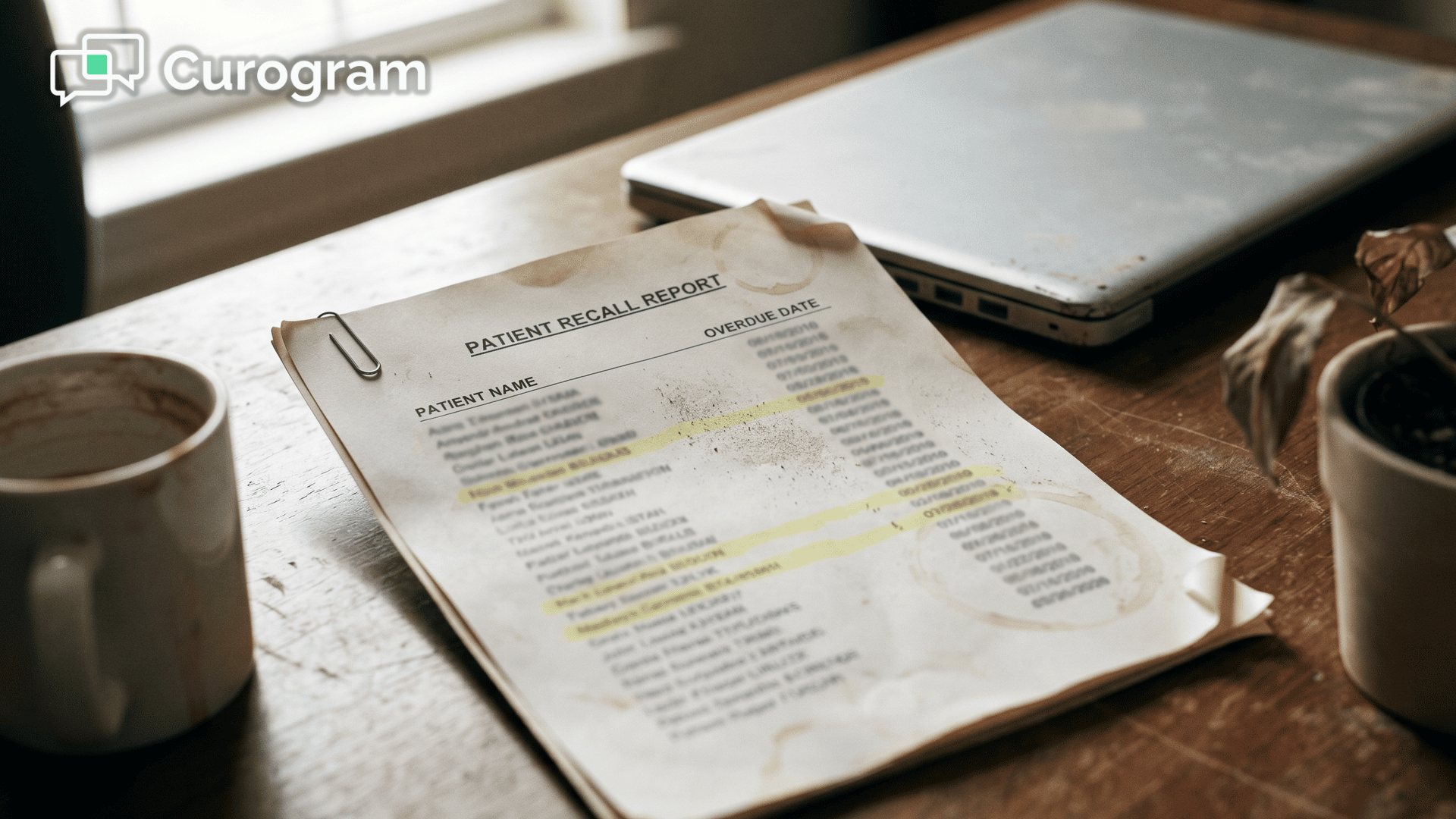
Every year, ambulatory practices invest real time and money reaching out to patients who haven't been seen in 6, 12, or 18 months. Recall letters get mailed. Staff makes phone calls. Portal notifications go out. And for most of those patients, nothing happens.

The letter gets recycled. The call goes to voicemail. The portal message sits unread behind a login screen no one can remember.

This isn't a patient engagement problem. It's a channel problem.

Patients aren't ignoring your practice because they've stopped caring about their health. They're ignoring the outreach because the channels you're using ask too much of them.

Scheduling a wellness visit or flu shot shouldn't require finding a username and password from three years ago. It shouldn't require calling back a number they don't recognize.

And it definitely shouldn't depend on someone opening the right piece of mail.

For large NextGen Enterprise practices, this mismatch hits hard.

When thousands of patients are overdue for annual wellness visits, preventive screenings, and seasonal vaccinations — and your recall response rate is sitting in the single digits — you're leaving significant revenue and clinical quality on the table.

The solution doesn't require a new system, a new portal, or a new app. It requires a text message.

Curogram's one-tap recall sends patients a personalized text from their practice's known number when they're due for care. The patient taps a link, picks a time, and confirms — all in under 30 seconds.

No phone call. No portal. No friction.

One practice used this approach to recover 1,240 lapsed patients with a 35% reconversion rate. Here's exactly how it works.

Why Your Recall Outreach Keeps Getting Ignored

The Mailed Letter That Gets Recycled

The traditional patient recall starts with a stack of envelopes. A list of overdue patients gets pulled, letters get printed, stamps get applied, and the whole campaign disappears into the postal system.

Each letter costs between $0.80 and $1.50 to print and mail. For a campaign targeting 5,000 patients, that's up to $7,500 — before a single appointment is scheduled.

The response rate? Single digits.

A $7,500 campaign might bring back a few hundred patients on a good day.

And you'll never know which patients opened the letter, considered calling, or simply forgot. There's no tracking, no follow-up mechanism, and no way to measure whether the effort was worth it.

The mailed recall is an analog solution in a world that's moved on.

The Portal Message Nobody Sees

NextGen's patient portal — PxP or FollowMyHealth — can deliver recall notifications, but it has a critical blind spot. The patients most likely to be on a recall list are the same patients least likely to be active on the portal.

Someone overdue for their annual wellness visit by 12 months probably hasn't logged into FollowMyHealth in 12 months either.

Portal recall messages land in an email inbox the patient rarely checks, or sit inside an app they haven't opened in months.

For lapsed, disengaged patients — the exact population a NextGen patient recall text message targets — portal outreach is one of the least effective channels you can use.

It reaches the patients who need it least and misses the ones who need it most.

The Phone Call That Goes Straight to Voicemail

When letters and portal messages fail, front desk staff start dialing. And that's where things get expensive and discouraging fast.

Healthcare callers are rejected by unknown-number filters at a rate exceeding 80%. Staff makes the call, the patient doesn't answer, a voicemail gets left, and the practice waits. Even when a patient eventually listens to the voicemail, hours may pass before they hear it.

By then, the impulse to call back has usually faded.

The phone call recall is labor-intensive for your team and inconvenient for the patient. It persists because practices haven't had a better option — until now.

The Gap That Keeps Growing

Every failed recall attempt doesn't just cost the practice a missed visit. It makes the next one harder.

A patient who is 6 months overdue for a preventive screening becomes 12 months overdue, then 18.

And the consequences don't stay contained to the schedule — they ripple outward:

  • Clinically: Chronic care patients who miss follow-ups become higher-risk, often requiring more complex and costly interventions when they eventually return.
  • Operationally: Preventive screenings that are delayed become diagnoses that arrive late, driving up downstream care costs and lowering quality scores.
  • Relationally: Each month without contact makes it less likely the patient will proactively reach out on their own.

The recall failure isn't just a scheduling problem — it compounds into a clinical quality problem. The practice loses revenue. The patient loses continuity of care.

And the gap keeps widening with each failed letter, portal notification, and unanswered call.

One Tap Is All It Takes to Bring Patients Back

The Recall That Actually Gets Read

Curogram's patient recall for NextGen Enterprise works through text messaging — the channel patients already use every day. When a patient is due for care, they receive a personalized message from their practice's known number.

Not a generic marketing blast from an unfamiliar sender, but a text from the same number they've already used for appointment reminders, billing questions, and prescription follow-ups.

The message is short and clear:

"You're due for your annual wellness visit. Tap to schedule."

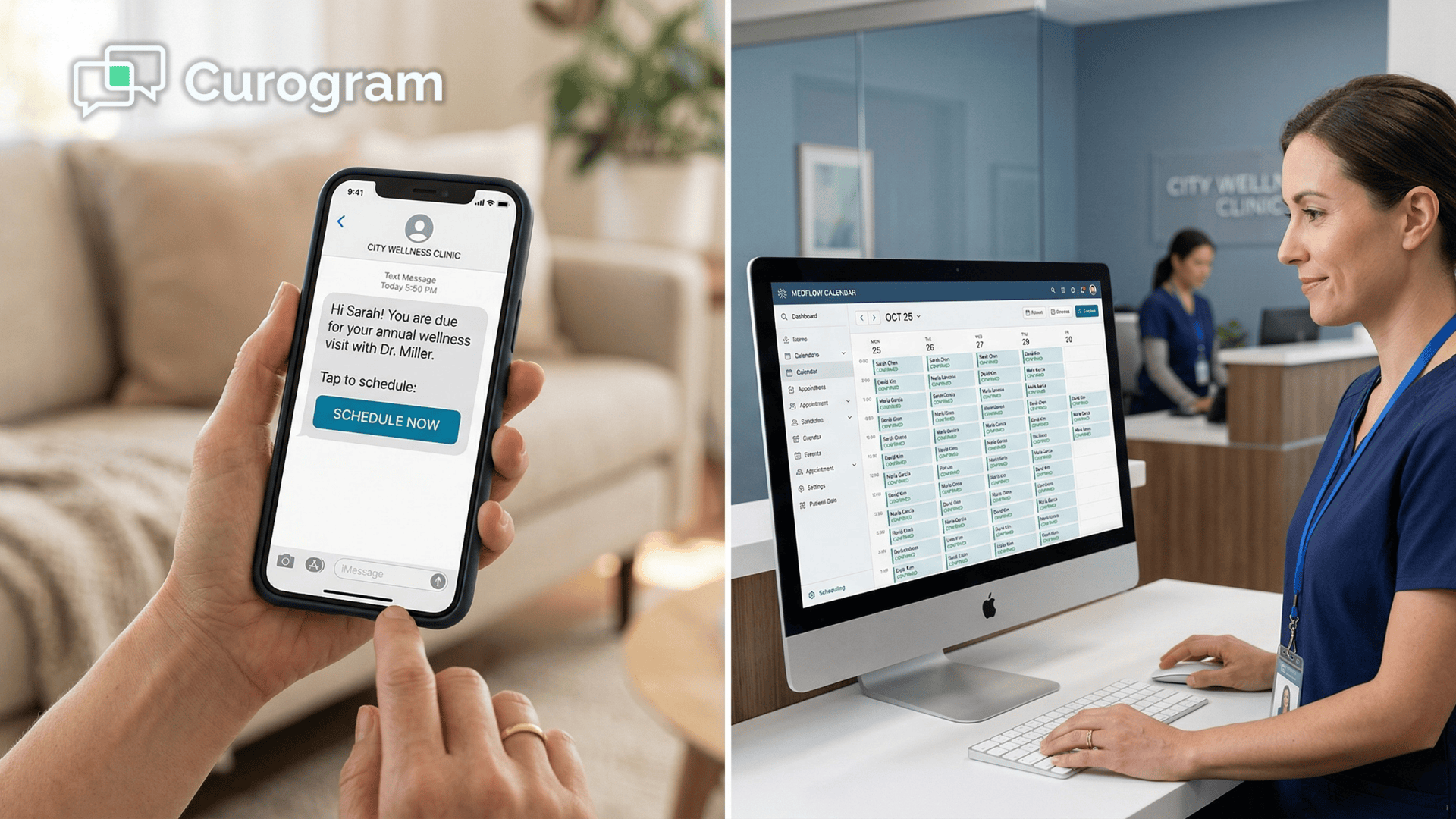
The patient taps the link, selects a time, and the appointment lands in NextGen PM. The entire interaction takes less than 30 seconds.

No phone call required, no portal login needed, no app to download.

98% of text messages are opened, and most are read within 3 minutes of delivery.

Compare that to a mailed letter sitting in a stack on someone's kitchen counter.

Patient recall revenue comparison: text vs. mailed letters for NextGen practices

Smart Recall Sequencing

A single text message is powerful. But not every patient will respond to the first one — not because they're uninterested, but because life is busy and they got distracted.

Curogram's Smart Recall Sequencing handles that automatically.

The follow-up cadence is configurable and built around how patients actually behave:

  • Day 0 — The initial personalized recall text is sent.
  • Day 5 — A gentle follow-up goes out to patients who didn't respond.
  • Day 10 — A final reminder reaches patients who still haven't acted.

Each message is progressively more personal, and patients can opt out at any time with a single reply.

Think about what this means for a campaign already achieving a 35% reconversion rate on the first message alone.

Adding a second and third touch pushes total reconversion meaningfully higher — without printing more letters, spending more on postage, or pulling staff away from other work.

What the Patient Actually Experiences

From the patient's perspective, the recall text feels like a personal nudge from their doctor's office — not a mass outreach campaign. It arrives from a number they recognize. It references the specific type of visit they're due for, whether that's a flu shot, an annual wellness visit, a chronic care follow-up, or a preventive screening.

And it gives them one simple action: tap a link.

The scheduling page that opens is mobile-optimized and requires nothing from the patient.

No account creation. No login credentials. No password reset.

They see available times at their preferred location, pick one, and confirm. It's the lowest-friction scheduling experience you can offer a lapsed patient.

SMS is the channel patients already prefer for healthcare communication. Meeting them there removes every barrier between your recall message and their scheduled appointment.

Reaching Whole Households at Once

For NextGen Enterprise networks that include pediatrics, family medicine, and women's health, text-based recall can target household members through the parent or guardian's mobile number.

Pediatric immunization recalls, adolescent wellness visits, and family preventive care campaigns reach the parent directly — the person who actually makes scheduling decisions — rather than depending on a child to check a portal or open a letter.

For multi-specialty practices managing families across multiple locations, household-level reach extends the impact of every campaign without adding a single step for your team.

Patient scheduling a wellness visit appointment via text recall on smartphone

What a 35% Reconversion Rate Actually Looks Like

The Numbers Behind the Results

One multi-location Curogram client ran a text-based recall campaign and recovered 1,240 patients who had not been seen in 6 or more months.

Of all the patients who received the recall text, 35% converted to a scheduled appointmentwithout a phone call, without a portal login, and without a mailed letter.

Put that in perspective with a direct comparison:

Recall Channel Campaign Size Response Rate Patients Recovered Estimated Cost
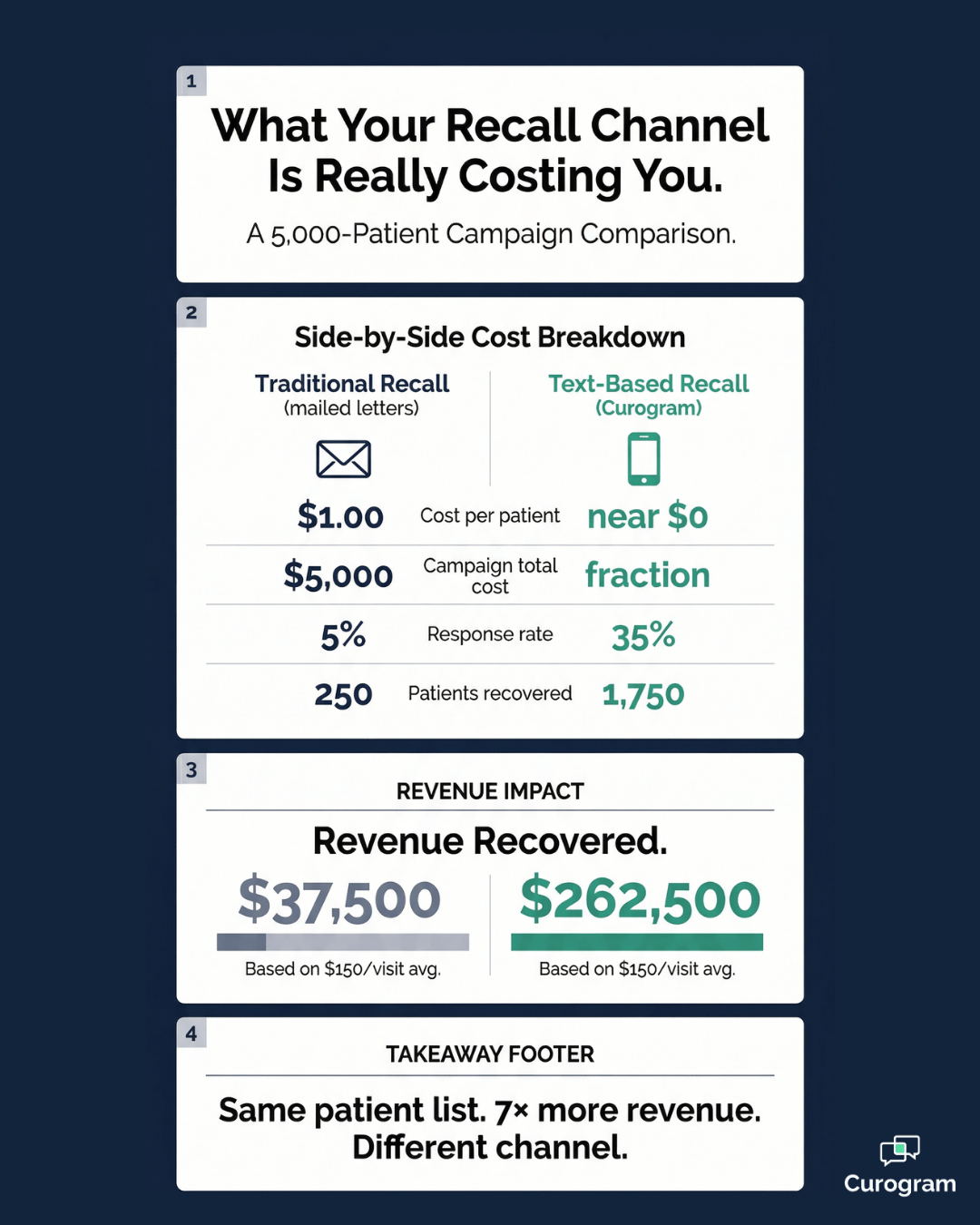
Mailed letters 5,000 patients ~5% ~250 patients ~$5,000
Phone calls (staff time) 5,000 patients ~3–7% ~150–350 patients High labor cost
Text-based recall (Curogram) 5,000 patients ~35% ~1,750 patients Fraction of mailing cost

That's not a marginal improvement. That's a fundamentally different outcome — more patients recovered, at lower cost, with zero additional staff time spent on outreach calls.

For a practice where an annual wellness visit generates $150–$250 in revenue, recovering 1,750 patients instead of 250 represents roughly $225,000 to $375,000 in additional appointments.

The channel decision isn't just an operational one. It's a financial one.

From the Practice Chasing the Patient to the Patient Returning on Their Own

Here's what shifts when you move to text-based outreach: the dynamic changes completely.

Instead of staff leaving voicemails that go unreturned, your practice sends a text and patients respond. Instead of patients feeling chased, they feel cared for.

Reach every patient in seconds. Use mass messaging for urgent closures, health alerts, or clinic news with a 98% open rate with Curogram.

The message arrives, the appointment gets booked, and nobody had to fight the friction of a phone tree or a forgotten portal password.

That gap isn't a rounding error — single-digit response rates from letters and phone calls versus 35%+ reconversion from text-based recall is the difference between a campaign that barely moves the needle and one that meaningfully improves panel utilization, care gap closure, and quality metrics.

The Longer Play — Re-Engagement That Sticks

A patient who schedules through the one-tap recall doesn't just come back for one visit. They re-enter the Curogram communication pipeline automatically, and that re-entry matters.

Here's what the post-recall experience looks like for that patient:

  • They receive an appointment confirmation via text — no portal check required.
  • A pre-visit intake form arrives on their phone before the appointment day.
  • Post-visit follow-up communication flows through the same text-based channel they already responded to.

The recall doesn't just generate a one-time visit — it re-establishes the texting relationship that keeps patients engaged for future care. The lapsed patient becomes a re-engaged patient.

The re-engaged patient stays on schedule. And the practice retains the long-term value of someone who could have quietly drifted away from the panel entirely

Stop Mailing Letters. Start Sending Texts That Work.

Your patients haven't stopped caring about their health. They've stopped responding to channels that ask too much of them.

That's the core insight behind Curogram's one-tap recall for NextGen Enterprise. The patients on your overdue list — the ones due for annual wellness visits, flu shots, preventive screenings, or chronic care follow-ups — are reachable. You just need to reach them the right way.

Text messaging is where they already are. 98% of texts get opened. Most are read within 3 minutes.

When a patient receives a personalized message from their practice's known number with a single tap to schedule, they act on it. A 35% reconversion rate isn't magic. It's what happens when you remove the friction between the patient and the appointment.

Practices that adopt this approach early don't just win on recall metrics.

They improve clinical quality, close care gaps, and retain patients who would have otherwise quietly drifted away. They also free up staff who were previously spending hours on outreach calls that went nowhere.

NextGen Enterprise manages your patient records with precision. Curogram extends that precision to the moment patients need to hear from you — with a text that gets read, a scheduling experience that takes 30 seconds, and a follow-up sequence that doesn't require anyone to pick up the phone.

If your recall campaigns are producing single-digit response rates, the channel is the problem. Not the patient.

Switching to text-based recall is not a major operational overhaul. It integrates directly with NextGen PM.

Your team doesn't need to change how they work. You just need to stop depending on outreach channels patients have moved on from.

Schedule a demo today and see how Curogram's text-based recall can reactivate lapsed patients across your NextGen Enterprise network. One tap for the patient. One conversation to get started.

Frequently Asked Questions

Is the recall text HIPAA-compliant? Does it reveal any patient health information?

Yes, recall texts sent through Curogram are HIPAA-compliant. The messages are carefully designed to avoid disclosing protected health information. A typical recall text reads: "You're due for a visit with [Practice Name]. Tap to schedule." No specific diagnoses, conditions, or treatments are referenced in the outbound message. When patients respond and a two-way conversation begins, all interactions are protected within Curogram's encrypted, HIPAA-compliant platform with full audit logging.

What if a patient doesn't want to receive recall texts?

Every recall text includes a simple opt-out option. Patients can reply STOP at any time to be removed from future outreach, in full compliance with TCPA regulations. Curogram maintains opt-out lists automatically and will not send messages to patients who have unsubscribed. Practices can also pre-exclude patients from recall campaigns based on communication preferences already documented in NextGen PM.

How is the one-tap scheduling link different from the patient portal?

The one-tap link opens a mobile-optimized scheduling page that requires no account, no login, and no app. Patients tap the link, see available times at their preferred location, select a slot, and confirm — the entire process takes under 30 seconds on any smartphone. Scheduling through the NextGen patient portal (PxP/FollowMyHealth), by contrast, requires an active account, remembered login credentials, portal navigation, and locating the scheduling function. For lapsed patients who may not have active portal access, the one-tap link eliminates every barrier between the recall text and the confirmed appointment.

Can recall texts be customized for different visit types — like flu shots versus annual wellness visits?

Yes. Curogram's recall messages are personalized based on the type of care a patient is due for. A patient overdue for a flu shot receives a different message than one due for a chronic care follow-up or an annual wellness visit. This specificity matters — patients are more likely to act when the message feels relevant to them rather than generic. Recall campaigns can also be segmented by care type, provider, or location within a NextGen Enterprise network, giving your team precise control over who receives which message and when.

How does text-based recall fit into a practice's existing NextGen PM workflow?

Curogram integrates directly with NextGen PM, so there's no parallel system to manage. When a patient books through the one-tap recall link, the appointment is written back into the NextGen schedule automatically. Your front desk team sees the appointment the same way they would see any other booking — no manual entry, no workaround. Recall campaigns can be triggered from existing care gap reports or overdue patient lists already generated inside NextGen, which means your team doesn't have to change how they identify patients who need outreach. They just change how they reach them.