


Curogram sends warm, HIPAA-compliant text invitations to inactive consumers at scale, working alongside your EHR without API access.
Behavioral health sees treatment dropout rates of 40–60%. When people leave early, they face higher risk of relapse and crisis. Netsmart's broadcast tools are limited, so recalls often never happen.
One multi-location practice recovered 1,240 consumers with a 35% reconversion rate. This is not just revenue recovery. It is care continuity, delivered with empathy and measurable results.
There is a list inside your practice that no one likes to talk about.
It holds the names of consumers who stopped showing up. Some missed one appointment, then two, then drifted away for good. They didn't decide they were done with care. They just got quiet.
That silence costs more than you think.
In behavioral health, leaving treatment early is rarely a choice. It happens when life gets unstable, symptoms shift, or the next step feels too hard. The person still needs help. No one reaches out, so the gap becomes permanent.
Your staff feels this every day. They know these people by name. They remember the progress that stalled. But calling hundreds of inactive consumers one by one is not realistic with the schedule they already carry.
So the list grows. Quietly. Constantly.
You have probably tried the usual options. Email open rates stay low. The patient portal only reaches people who already log in.
Netsmart documents care well, yet its broadcast messaging is limited. None of these tools were built to reach a thousand quiet consumers at once.
This is where the math gets uncomfortable. Behavioral health carries treatment dropout rates of 40–60%. For a practice serving 2,000 active consumers, that can mean hundreds slipping away each year. Those are stories left unfinished.
There is a better way to reach them, and it lives on the device they check most.
This article shows how Netsmart patient recall campaigns powered by behavioral health SMS bring lost consumers back. You will see how mass texting works, why it fits behavioral health, and what real results look like.
The goal is simple: turn that quiet list into a living path back to care. Most of all, you will see why one short text can reopen a door that felt closed.
How Behavioral Health Loses People Without Noticing
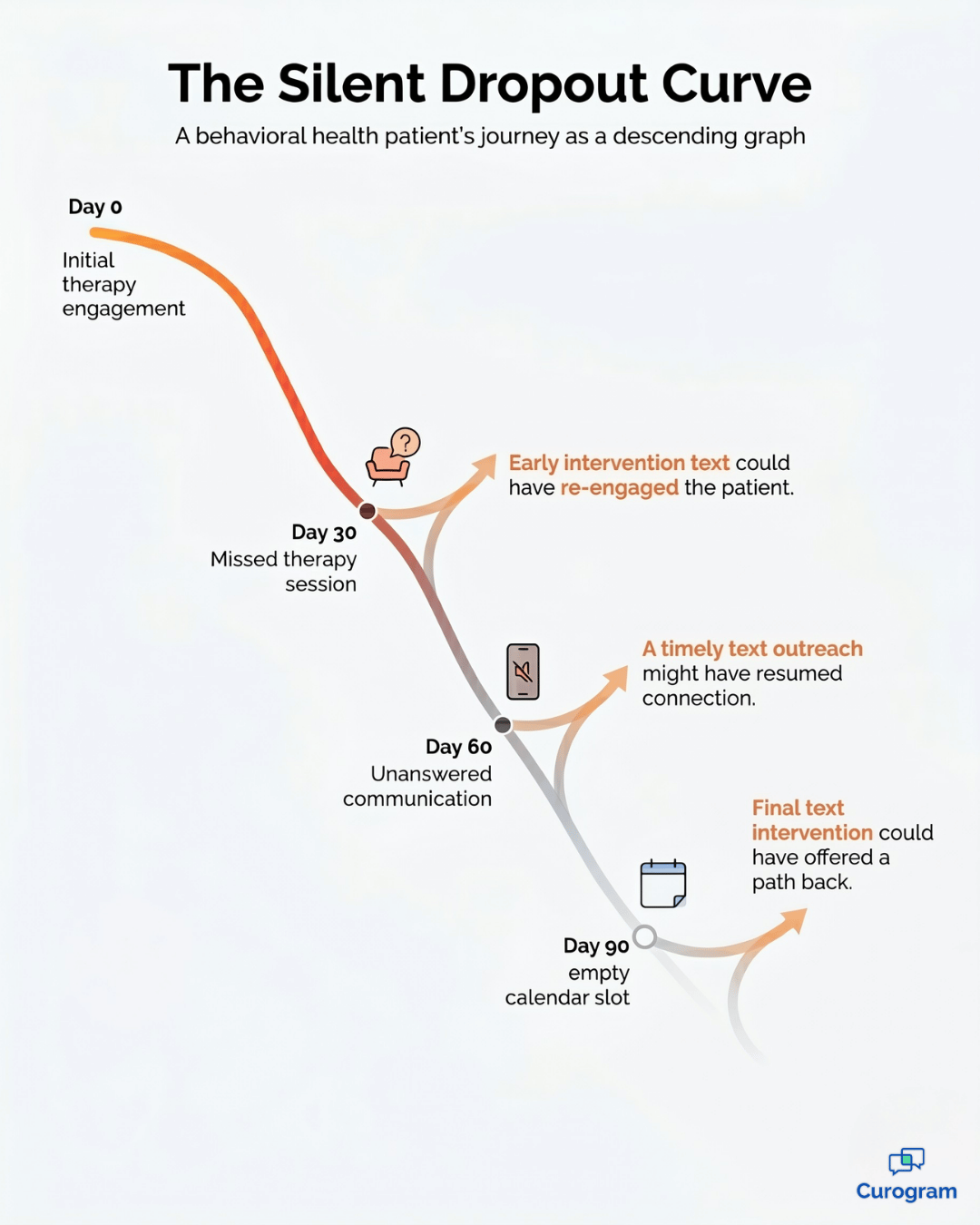
Most people don't quit treatment in a dramatic way. They fade. A canceled session here, a skipped follow-up there, and slowly they fall off the schedule. By the time anyone notices, weeks or months have passed.
The reasons are rarely about motivation. Life gets in the way. Symptoms flare or ease, stigma creeps in, and a ride to the next visit suddenly feels impossible.
The need for care doesn't disappear. The path to it just gets blocked.
Here is what those dropout rates can look like across common behavioral health settings:
| Treatment type | Typical dropout range | What it means for 1,000 consumers |
|---|---|---|
| Outpatient therapy | 40–50% | 400–500 people at risk of leaving |
| Substance use programs | 50–60% | 500–600 people who may not return |
| Medication management | 35–45% | 350–450 people drifting off care |
These numbers are not just data points. Each one is a person who walked in needing help and walked out without a reason to come back.
Why the usual tools fall short
Now think about the tools most organizations rely on to fix this.
Each one hits a ceiling fast:
- Phone calls don't scale — reaching hundreds of inactive consumers by hand can take staff days.
- Email gets ignored, with healthcare open rates often under 25%.
- The portal only works for people who still log in, which the lost-to-care rarely do.
Netsmart handles clinical records with real depth. But it was not designed to re-engage lost patients with Netsmart through large, fast outreach. That leaves a real gap.
So the recall never happens. The list keeps growing. And the people on it stay out of reach.
This isn't a small problem. For many organizations, it is the difference between a full caseload and a struggling one. More importantly, it is the difference between continued care and a consumer in crisis.
That weighs on clinical leaders. They feel responsible for the people they have lost track of.
As one director put it,
"We exist to help these consumers, and we can't even reach them."

How Curogram Turns Recall Into a Simple, Repeatable System
Imagine reaching every inactive consumer on that quiet list in the time it takes to grab a coffee.
That is what Curogram is built to do. It acts as a recall command center, sending warm, HIPAA-compliant texts to hundreds or thousands of people at once.
Replies route straight to your scheduling team for booking.
This is where Curogram mass messaging Netsmart practices rely on becomes a real workflow instead of a wish.
Send the right message to the right people
Not every consumer needs the same outreach.
Curogram's campaign builder lets you target by:
- Last visit date, so you can reach 30, 60, or 90-day lapses
- Program or provider, to keep each message relevant
- Diagnosis category, when it is clinically appropriate
After you pick a segment, you choose a template written in warm, plain language. You can watch response rates, bookings, and reconversion update in real time. You can also set recurring cadences so recalls run on their own.

Works alongside Netsmart, no API needed
Setup is not a technical project. Curogram operates next to Netsmart without API access. You import your consumer contact list, and campaign management lives entirely in Curogram's dashboard. Your existing records stay exactly where they are.
This is why mass messaging Netsmart behavioral health teams can adopt it quickly. There is no long integration to wait on before the first campaign goes out.
Built for the sensitivity behavioral health demands
Tone matters here more than almost anywhere. Recall texts carry no clinical details — just a kind invitation to reconnect. The system is 42 CFR Part 2 compliant for substance use treatment, and every opt-out is respected.
The language stays supportive, never punitive.
"We're here when you're ready" lands very differently than "You missed your appointment."
That small shift is what makes bulk texting behavioral health outreach feel human instead of automated.
What Changes When You Finally Reach Them
The impact shows up fast, and it shows up in numbers you can feel. One multi-location practice used Curogram to run patient recall SMS Netsmart workflows across its inactive list.
The result reframed what recall could be: a 35% appointment reconversion rate.
What 35% looks like in real life
Let's translate that 35% into something concrete. If you text 1,000 lapsed consumers, roughly 350 come back to care.
For your team, that is 350 appointments that would not have existed otherwise. For those 350 people, it is treatment that resumed before a small gap became a crisis.
The time savings are just as real. A phone-based recall of that size could take staff days of dialing and voicemails. With mass texting, the same outreach goes out in under 15 minutes. Your team spends its energy booking returns, not chasing them.
From hoping to actually reaching
But the bigger shift is in mindset. The organization moves from "losing consumers and hoping they come back" to "reaching out with a system that works." Recall stops being wishful thinking. It becomes a routine clinical workflow.
And the outcome reaches further than revenue. Caseloads refill, yes. But more importantly, treatment continuity returns for people who had quietly slipped away.
You meet them where they already are — on their phone — with a message that says you never stopped caring.
Reach the People Still Waiting to Hear From You
Somewhere in your system is a list of consumers who needed care and quietly disappeared. They didn't leave because they were finished. They left because the barriers felt too high, and no one reached out.
You can change that today.
HIPAA-compliant SMS recall campaigns alongside Netsmart let you re-engage inactive consumers at scale. With warm, empathetic outreach, you can reach hundreds or thousands of people in minutes. One practice turned that into a 35% reconversion rate and 1,240 consumers recovered.
Think about what that means for your organization. It is not just another marketing channel. It is care continuity for the people you exist to serve. It is the chance to finish what their treatment started.
Netsmart records the consumer's treatment history with care. Curogram helps you write the next chapter. One documents where someone has been. The other invites them back.
Recall isn't a sales tactic. It's a promise kept.
The tools you have relied on weren't built for this moment. Phone calls don't scale. Email goes unread. The portal only reaches people who already show up.
Curogram was built for the consumers no one else can reach.
Your quiet list does not have to stay quiet. Each name is a person who could be back in care by next week. The only thing standing between them and your team is an outreach tool that finally fits the job.
Schedule a Demo today. Book a recall strategy session and see how Curogram's mass messaging works next to Netsmart, so the people who need you most can hear from you again. One conversation turns a quiet list into a comeback.
Frequently Asked Questions
Yes. Curogram's mass messaging is HIPAA-compliant. Recall texts include no clinical details — just a warm invitation to reconnect. For substance use treatment, messages follow 42 CFR Part 2 confidentiality rules, and every opt-out is honored.
Very little. Your team picks the consumer segment, edits a message template, and hits send. Replies route to scheduling staff for booking. A campaign reaching hundreds of people can go out in under 15 minutes, compared to days of manual phone calls.
One multi-location practice hit a 35% reconversion rate and recovered 1,240 consumers. Your results will vary by population, message tone, and timing. Even so, SMS consistently beats phone, email, and portal outreach for behavioral health re-engagement.
No. Curogram works alongside Netsmart without API access. You import your consumer contact list and manage everything from Curogram's dashboard. Your clinical records stay right where they are in Netsmart.
Start with warm, plain language and skip any clinical details. Segment your list so each message fits the person's history, and keep the tone supportive rather than punitive. Always include an easy opt-out, and space reminders with sensible cadences. Done this way, a recall text reads like a caring check-in, not a sales blast.