Telehealth for Medstreaming: Secure, No-App Imaging Follow-Ups
💡 Traditional telehealth platforms aren’t built for imaging center workflows, creating daily frustration for both staff and patients. Curogram...
11 min read
Aubreigh Lee Daculug
:
January 24, 2026
Table of Contents
Running an imaging center means juggling many moving parts. You schedule scans, manage equipment, and handle results. But one task drains more resources than it should: follow-up visits.
Think about your typical day. A patient comes in for an MRI or CT scan. The radiologist reads the images and writes a report. Then your staff must contact the patient and schedule a follow-up visit.
The patient drives back to your center. A provider spends 10 minutes explaining results that could have been shared virtually. This old workflow wastes time and money.
Patients cancel because they cannot take off work again. Your staff makes dozens of calls to fill appointment slots. Providers see fewer patients because of all these routine follow-ups. Meanwhile, referring physicians wait longer for answers.
The solution is simpler than you think. When you expand access Medstreaming telehealth, you fix these problems. Virtual visits let you deliver results faster.
Patients join from home or work. No travel time. No parking hassles. Your team schedules visits in minutes instead of hours.
The business case is strong. Telehealth cuts your costs per follow-up. You see more patients in the same time. Satisfaction scores improve.
Most importantly, you get paid for more visits because fewer patients skip their appointments. The numbers tell a clear story.
This guide shows you the real telemedicine ROI for imaging centers. You will see how telehealth drives cost savings, revenue gains, and workflow improvements. By the end, you will understand why telehealth is no longer optional.
It is essential for any imaging center that wants to grow.
Follow-up visits seem simple on paper. A patient comes back to discuss results. A provider explains the findings. The visit ends in 15 minutes.
But the real cost hides in all the steps before and after that meeting. Start with scheduling. Your front desk staff must call each patient.
They play phone tag for days. They leave voicemails. They try different phone numbers. Each call takes 5 to 10 minutes.
Multiply that by hundreds of patients per month. You see the problem quickly. The time adds up fast.
Many follow-ups do not require in-person visits. A normal mammogram result does not need a face-to-face meeting. Neither does a routine chest X-ray.
But without telehealth, patients must drive to your center anyway. They take time off work. They pay for parking. All of this for a 10-minute conversation.
When patients often skip unnecessary in-person reviews, the costs pile up differently. Missed follow-ups delay clinical decision-making. Referring doctors cannot move forward with treatment.
Patients worry while they wait. Your center loses revenue from the cancelled appointment. The scheduling team must start the whole process again.
Manual coordination increases administrative overhead with each location you operate. Different centers use different processes. One location calls patients at 8 AM. Another sends letters.
A third tries email. None of these methods work well. Staff members waste time on tasks that should be automatic.
The hidden costs hurt most. Consider what happens when a patient cancels at the last minute. Your provider has a gap in their schedule.
You cannot fill it quickly. That slot represents lost revenue. Now multiply those gaps across all your providers and all your locations.
Manual coordination takes up valuable staff time. Your team members could be helping patients who need immediate assistance. Instead, they spend hours scheduling routine follow-ups. This creates bottlenecks that slow everything down.
Payment collection adds another layer of complexity. When patients come in person, you can collect copays and balances at check-in. When they miss appointments, collecting becomes harder.
You must send bills. Patients ignore them. Your accounts receivable grows. The cycle continues.
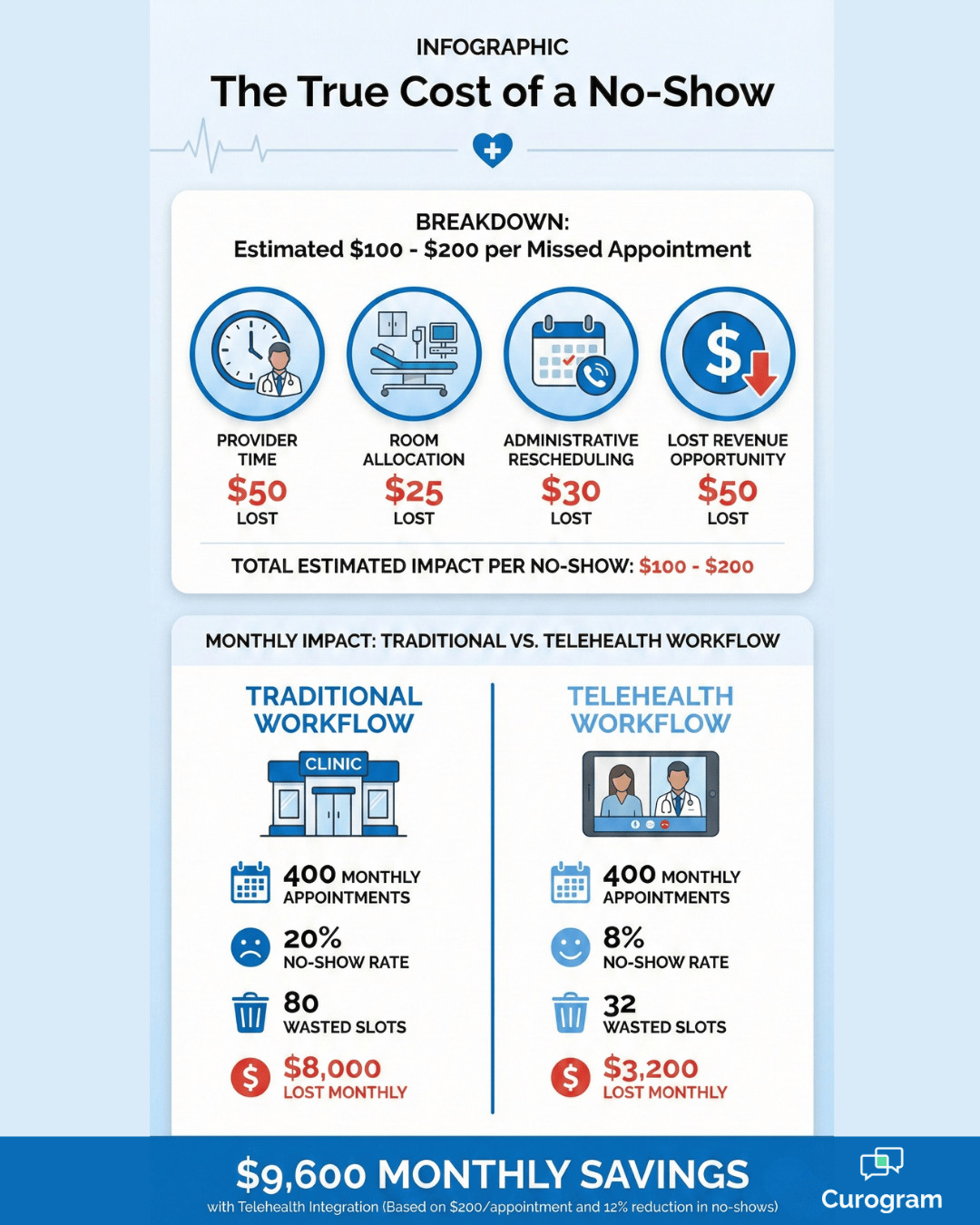
The numbers tell a clear story. Industry studies show that 20% to 30% of follow-up appointments get cancelled or rescheduled. Each rescheduled visit costs your center between $50 and $200 in staff time and lost revenue.
With 500 follow-ups per month, that is $10,000 to $30,000 wasted every single month. Over a year, those losses become enormous. They directly impact your profitability.
Referring physicians feel these delays too. They send patients to you for imaging. They expect quick turnaround. When follow-ups drag on for weeks, they look for faster imaging centers.
You risk losing referral relationships that took years to build. The solution must address all these pain points at once. You need patients to show up more reliably and staff to spend less time coordinating.
Let us look at the real numbers behind traditional follow-up visits. The costs add up faster than most imaging center administrators realize. Every step in the old process drains money from your operation.
Imaging centers handle high call volume just to schedule result reviews. A center completing 500 scans per month may place 400 follow-up calls, consuming 53 staff hours and costing $12,720 annually per location.
Across multiple sites, inconsistent scheduling methods create errors, missed appointments, and empty provider slots—forcing staff to spend more time fixing avoidable issues.
Traditional workflows also slow care. Follow-ups are delayed, referring physicians grow frustrated, continuity suffers, and even a few lost referrals can cost $50,000–$100,000 in annual revenue.
Traditional follow-up workflows actively harm your financial performance. The costs are not just financial. They damage your reputation with both patients and referring physicians.

Telehealth does more than cut costs. It opens new ways to generate revenue that traditional workflows cannot match. When you expand access Medstreaming telehealth, you unlock multiple revenue streams at once.
Telehealth helps imaging centers complete more follow-up visits. Virtual appointments have much lower no-show rates—around 5% to 10% versus 15% to 25% in person. Reducing no-shows on 400 monthly follow-ups can add 48 completed visits, generating about $86,400 in annual revenue.
Virtual visits also increase provider capacity. Follow-ups drop from 30–45 minutes to 15–20 minutes, allowing providers to see more patients per hour and directly boosting revenue.
Faster results delivery improves referral satisfaction. When follow-ups happen within 48 hours, imaging centers become preferred partners. Each new referring physician can add $25,000–$50,000 in annual scan revenue.
Telehealth also improves long-term retention and access. Patients return for future imaging, refer others, and benefit from evening or weekend availability—adding $5,000 to $10,000 per month. Across multi-location networks, shared virtual providers further maximize utilization and revenue.
Insurance reimbursement for telehealth visits now matches in-person rates in most cases. You get paid the same amount whether the visit happens in your office or via video. But your costs are lower for virtual visits. This margin improvement goes straight to your bottom line.
Smart imaging centers track show rates and referral volume to clearly prove telemedicine ROI and guide further investment in virtual care.
Integration with Medstreaming makes everything automatic. When a scan is completed, the system can trigger a follow-up appointment request. No staff time needed.
The patient gets a text message asking them to pick a time. They click a link and choose from available slots. The appointment books itself without any phone calls.
This automation saves dozens of hours per week. Your team no longer makes outbound calls. They handle only the small percentage of patients who have questions. Everyone else schedules themselves without any staff involvement.
This change alone can reduce scheduling costs by 60% to 70%. The time savings let your staff focus on more valuable tasks.
Patients do not need to download an app. They click a link in a text message. The video visit starts right in their phone browser.
This simple approach removes a major barrier. Many people will not download an app for a single 15-minute visit. But everyone can click a link.
Show rates improve dramatically with this frictionless experience. When the barrier to entry is low, compliance goes up. Patients appreciate not having to learn new technology.
They just use their regular phone or computer. This ease of use directly impacts your bottom line through higher attendance rates.
Smart routing connects patients to the right provider based on their scan location. A patient who had an MRI at your north location gets matched with a provider familiar with that facility. This reduces confusion and improves care quality.
Location-aware routing also balances workload across your network. If one location has open appointment slots, the system can route patients there. This optimization ensures no provider sits idle while another is overbooked.
Scheduling errors drop to nearly zero. The system knows which providers read which types of scans. It matches patients accordingly. Your staff no longer needs to manually figure out who should see each patient.
This intelligent automation saves time and prevents mistakes that could delay care. It also improves the patient experience by ensuring they talk to the right expert.
Operational efficiency delivers cost savings that impact every part of your business. Fewer unnecessary in-person visits means less wear on your facilities. You use exam rooms only when truly needed.
This extends the life of your furniture and equipment. You also save on cleaning, utilities, and supplies. These savings add up to thousands of dollars per month.
Reduced workload for scheduling teams transforms how your front office operates. Instead of spending all day on the phone, staff can focus on patient questions and complex cases. Job satisfaction improves.
Turnover drops. You save money on recruiting and training. A stable, experienced team delivers better patient service. This creates a positive cycle of improvement.
Lower patient travel barriers lead to fewer cancellations. Patients cancel less often when they do not need to arrange transportation or take time off work. Bad weather no longer causes a wave of cancellations.
Car trouble does not prevent a follow-up visit. These factors combine to create a more predictable schedule. Predictability lets you plan better and waste less time.
More efficient use of provider time maximizes your most expensive resource. Providers spend less time in transit between exam rooms. They see patients back-to-back without gaps.
This efficiency means each provider generates more revenue per hour worked. You may even be able to serve your current patient volume with fewer provider hours, reducing your payroll costs while maintaining quality care.

Patient experience drives loyalty and referrals. A simple, mobile-friendly virtual experience makes patients feel valued. They appreciate technology that respects their time.
When logging into a virtual visit is easy, patients notice. They compare their experience at your center to other healthcare providers. You stand out when you make things simple.
Faster delivery of important results reduces patient anxiety. Nobody wants to wait days to learn if their scan showed something concerning. Virtual follow-ups can happen within 24 to 48 hours of a scan.
This speed gives patients peace of mind. It also helps them make decisions about their care faster. They can schedule any needed treatments without delay.
Less stress for elderly or mobility-limited patients improves their healthcare experience significantly. These patients often struggle with transportation. They may rely on family members who have work schedules.
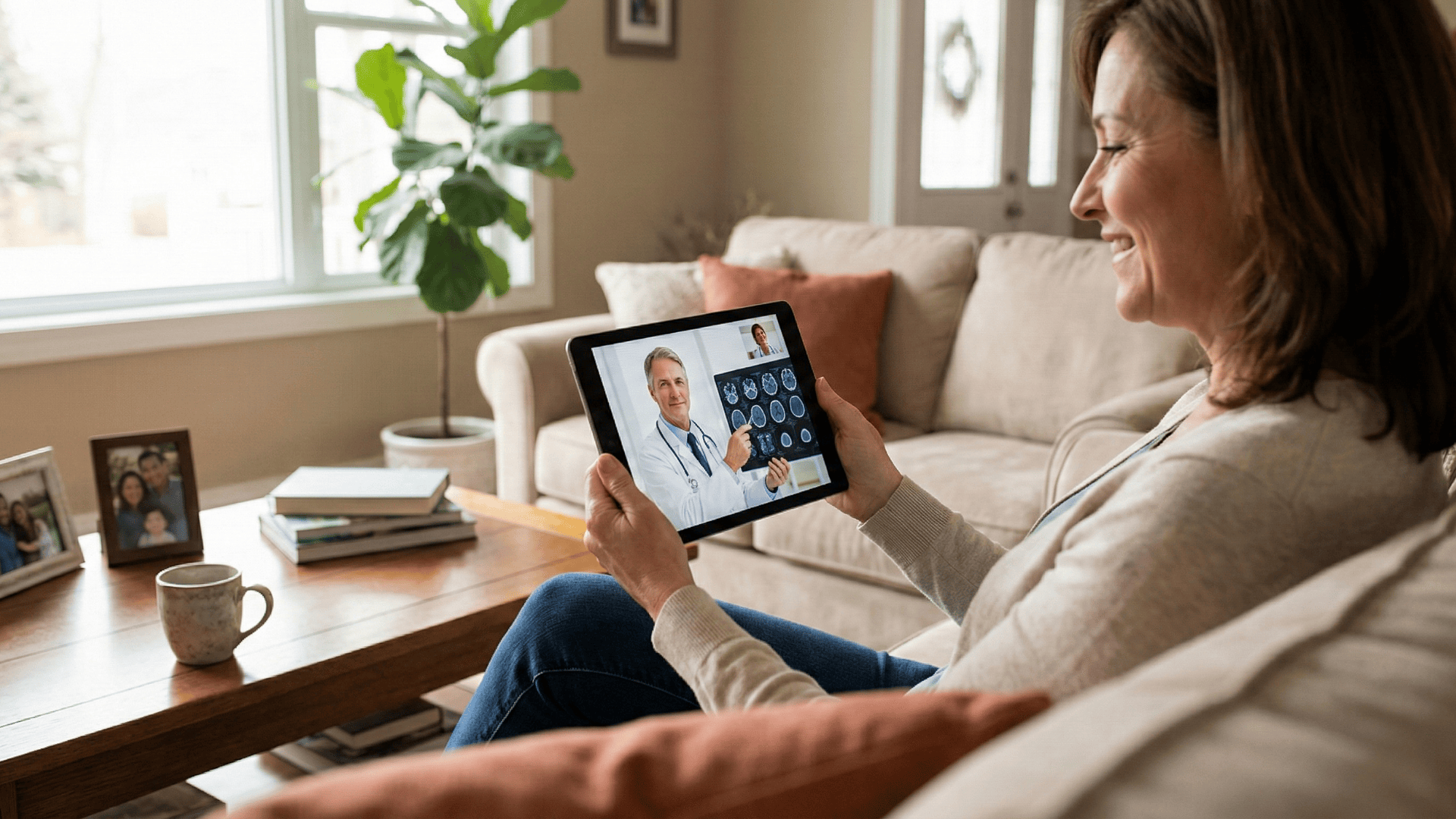
Virtual visits eliminate these barriers. An elderly patient can join from their living room. A family member can be present without taking time off. This accessibility improves health equity.
Stronger patient trust in imaging workflows develops when you demonstrate that you respect their time. Patients remember when a healthcare provider makes their life easier. That positive memory influences their future healthcare choices.
They become advocates for your center. They recommend you to friends and family. They leave glowing reviews online.
Trust also means patients are more likely to complete recommended follow-up scans in the future. If they had a good experience this time, they will not avoid scheduling next time. This compliance benefits both their health and your revenue.
Happy patients are also more understanding when small problems occur. They give you the benefit of the doubt. This goodwill protects your reputation and supports long-term growth.
Large imaging networks see even greater returns from telehealth. Standardized workflows across locations create consistency. Staff can move between sites without retraining, and patients receive the same experience everywhere—strengthening brand trust.
Predictable follow-up volume improves planning. As no-show rates drop, teams can forecast visits and revenue more accurately. Finance leaders gain clearer visibility into cash flow, staffing, and equipment investments.
Telehealth improves capacity planning. Virtual visits remove geographic limits, allowing providers at one location to handle follow-ups for another. This flexibility balances demand and reduces idle time across the network.
Clinical collaboration improves as well. Providers can consult colleagues during virtual visits and bring in specialists when needed, leading to faster diagnoses and fewer patient transfers.
With shared analytics across all sites, network leaders can compare performance, spot issues early, and apply best practices system-wide—raising performance across the entire enterprise.
Why Curogram Delivers the Highest ROI for Medstreaming-Based Imaging Centers
Not all telehealth platforms deliver the same results. Curogram stands out because of its radiology-first design. The platform was built specifically for imaging workflows, not adapted from primary care telehealth.
This focus means every feature supports how imaging centers actually operate. The integration with Medstreaming is seamless. Appointment data flows automatically. Results link directly to virtual visit records.
HIPAA-compliant and secure infrastructure protects your patients and your practice. Security is not an add-on feature. It is built into every level of the platform. All video calls are encrypted.
All data storage meets strict healthcare privacy standards. Your compliance team can rest easy. You will never face penalties for using Curogram.
Zero friction for patients means higher adoption rates. Patients do not download apps. They do not create accounts. They just click a link and join.
This simplicity is rare in healthcare technology. Many platforms burden patients with complicated login processes. Curogram removes all that complexity. The result is engagement rates that exceed industry averages.
Proven success improving follow-up completion rates gives you confidence in your investment. Other imaging centers already use Curogram. They report no-show rates dropping from 20% to 7%. They document staff time savings of 40% or more.
These are not theoretical benefits. They are real results from facilities like yours. You can talk to other Curogram customers about their experiences.
The platform also offers excellent customer support. When you have questions, real people answer quickly. Implementation takes weeks, not months. Training is simple because the interface is intuitive.
Your staff will feel comfortable using Curogram within days. The combination of smart design, robust security, and proven results makes Curogram the clear choice. Your investment pays back faster than with any alternative platform.
When you expand access Medstreaming telehealth through Curogram, you are choosing the platform that delivers the highest telemedicine ROI in the imaging center market.
The case for telehealth is clear. The numbers do not lie. Virtual follow-ups cost less, generate more revenue, and satisfy patients more than traditional in-person visits.
Every month you wait is another month of missed opportunities. Your competitors are already moving to telehealth. They are capturing the patients who want convenient, efficient care.
The good news is that getting started is easier than you think. You do not need to overhaul your entire operation. You can start with a pilot program.
Choose one type of follow-up visit to move virtual. Track the results for 90 days. You will see the improvements immediately.
Your staff will appreciate spending less time on phone calls. Your providers will like seeing more patients without feeling rushed. Your patients will love the convenience.
Most importantly, your financial statements will show the impact. Revenue will increase. Costs will decrease. The return on investment will be obvious.
The imaging centers that thrive in the next decade will be those that embrace hybrid care workflow models. They will blend in-person care with virtual care seamlessly. They will give patients choices.
They will operate efficiently. They will grow faster than centers stuck in old workflows. You can be one of those successful centers.
Now is the time to act. . Book a demo to see Curogram and Medstreaming in action. See for yourself how easy the platform is to use.
Telehealth removes common barriers like travel, time off work, and parking. Patients can join visits from anywhere, often during short breaks. Automatic text reminders and easy rescheduling also help, resulting in completion rates 10% to 20% higher than in-person follow-ups.
Telehealth boosts revenue and cuts costs at the same time. Centers complete more visits, see patients faster, and reduce staff time and facility use. With minimal upfront investment and no facility changes, most centers see positive ROI within three to six months.
Most patients prefer virtual follow-ups for routine results. Surveys show 85% to 90% favor virtual visits for convenience and efficiency. Satisfaction scores typically rise 15% to 25%, especially when patients can choose between virtual and in-person care.
Training is minimal. Front desk staff need about two hours, while providers typically need three to four hours plus a few practice visits. Most teams are fully operational within two weeks, with little IT involvement.
Integrated telehealth automates scheduling and data flow from scan to follow-up. This eliminates manual entry, reduces errors, and saves time. Imaging centers using Curogram with Medstreaming report up to 40% greater efficiency than those using standalone platforms.
💡 Traditional telehealth platforms aren’t built for imaging center workflows, creating daily frustration for both staff and patients. Curogram...
💡 Telehealth in Veradigm helps imaging centers handle pre-exam prep, post-visit consults, and patient coordination more easily. Fewer no-shows...
💡 Expand access with Veradigm telehealth to deliver measurable financial returns for imaging centers. It can reduce cancellations and improve...