How to Reduce Front Desk Call Volume with CollaborateMD
💡 Practices that want to reduce front desk call volume with CollaborateMD can cut phone traffic by up to 50% using 2-way texting through Curogram.
12 min read
Mira Gwehn Revilla
:
February 26, 2026
Think about the last time your phone buzzed with a call from a number you didn't know. Did you pick up? Most people don't. Now think about the last text you got. You probably read it within a few minutes.
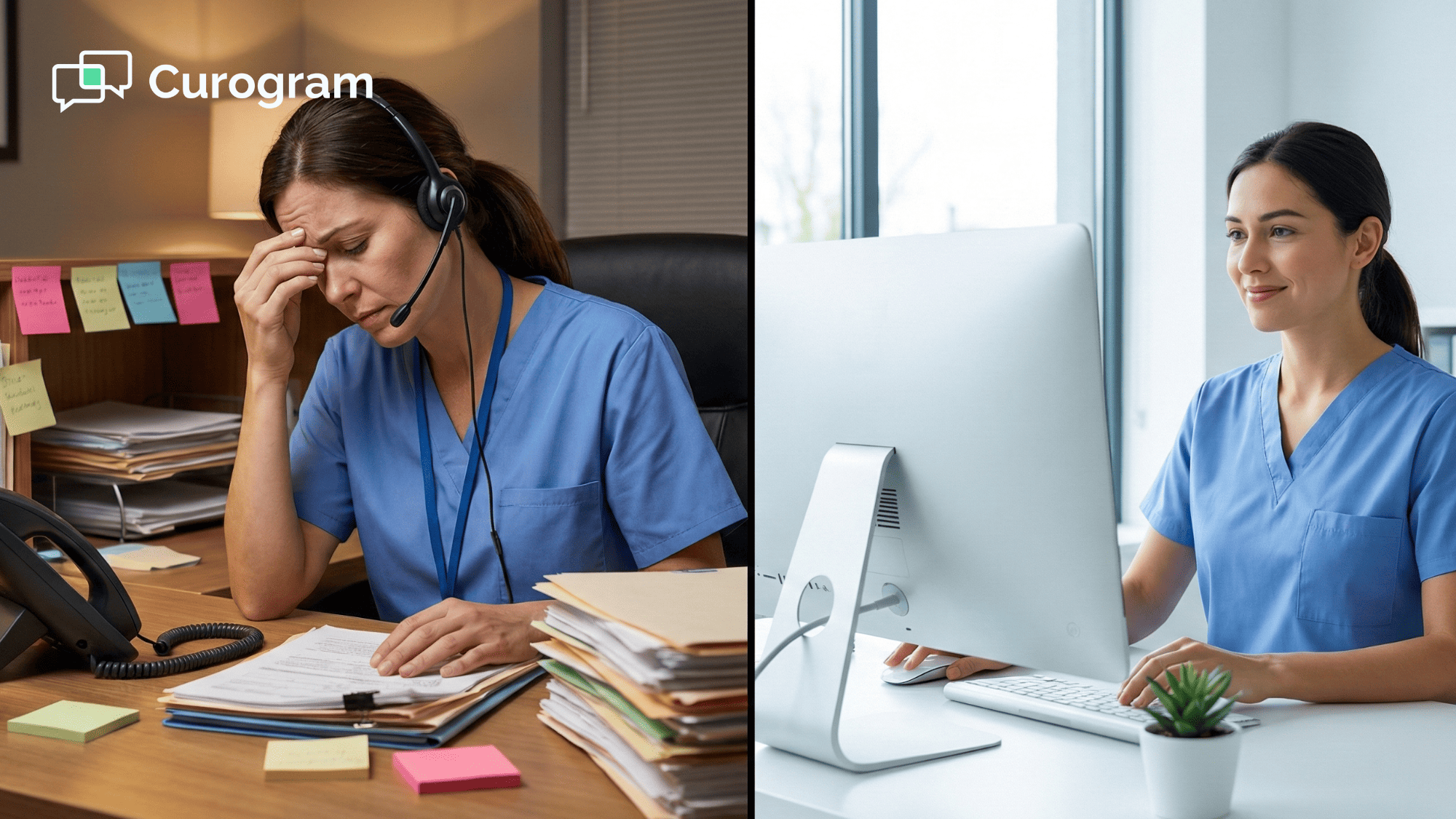
Your patients do the same thing. They dodge calls from unknown numbers. They forget portal passwords. And they never listen to voicemails. Meanwhile, your front desk keeps dialing, leaving messages, and waiting for a call back that may never come.
This is the cycle that traps most MD Systems clinics. The staff works hard, but the tools are working against them. Calls go to spam. Portals sit unused. And every missed message means a missed chance to fill a slot, confirm a visit, or answer a quick question.
The fix is not a bigger call center or a fancier portal. It is a channel your patients already check dozens of times each day: text messaging.
Curogram brings 2-way texting straight into your MD Systems workflow. Patients get a simple text — no app, no login, no download. They reply "Yes" to confirm, type a quick question, or tap a link to pay a bill. On the clinic side, every message shows up inside your MD Systems schedule.
The result? A 98% open rate on messages. Faster replies. Fewer no-shows. And a front desk that can finally breathe.
This article looks at the problem from the patient's point of view. You will see why portals and phone calls fail, how a "no-app" text approach removes the friction, and what a 98% open rate means for your daily operations. If you have been looking for a way to start reducing phone volume in MD Systems clinics, this is where to begin.
Your MD Systems software may already have a patient portal. On paper, it sounds great. Patients log in, view results, send messages, and manage their care. In practice, the portal sits mostly empty.
The reason is simple. Patients forget their login details. A 2019 study published in the Journal of General Internal Medicine found that fewer than one-third of patients who signed up for a portal actually used it on a regular basis.
That gap has not closed much since then. The truth is, asking a patient to make a new account, set a password, and download an app just to confirm a Tuesday appointment is asking too much.
|
Picture a real morning at your clinic: Maria needs to come in for a follow-up. Your front desk sends a portal message. Maria never sees it because she hasn't logged in since her last visit six months ago. So the front desk calls. Maria's phone shows "Spam Likely" and she lets it ring. Next, the team leaves a voicemail. Maria listens to it three hours later, calls back, and gets the hold music. By now, the simple task of confirming one visit has burned 15 minutes of staff time and left Maria annoyed. |
This is what portal fatigue looks like. It is not a tech problem. It is a human behavior problem. People already juggle dozens of logins for banks, streaming apps, and shopping sites.
They will not add one more for their doctor's office. And when the portal fails, the fallback — a phone call — often fails too.
Spam filters make this worse. Carriers like T-Mobile and Verizon have rolled out aggressive call-screening tools. When your clinic number rings a patient's phone, there is a real chance the screen reads "Potential Spam" or "Scam Likely."
Even if you pay for a verified caller ID service, many patients still won't answer a number they don't have saved. The odds of reaching someone by phone on the first try are now below 20%.
This combo — unused portals and blocked calls — creates a wall between your clinic and your patients. The front desk tries over and over. Each attempt adds time and stress.
Over a full day, this kind of voicemail tag eats up hours. Multiply that by five days a week, and you can see why front desk burnout is one of the top reasons staff leave medical offices.
The real cost goes beyond wasted time. Every missed connection is a potential no-show. Every no-show is an empty slot your practice can't fill.
For a clinic that sees 30 patients a day, even a 10% no-show rate means three lost visits. At an average visit value of $150, that is $450 per day or roughly $9,000 per month walking out the door.
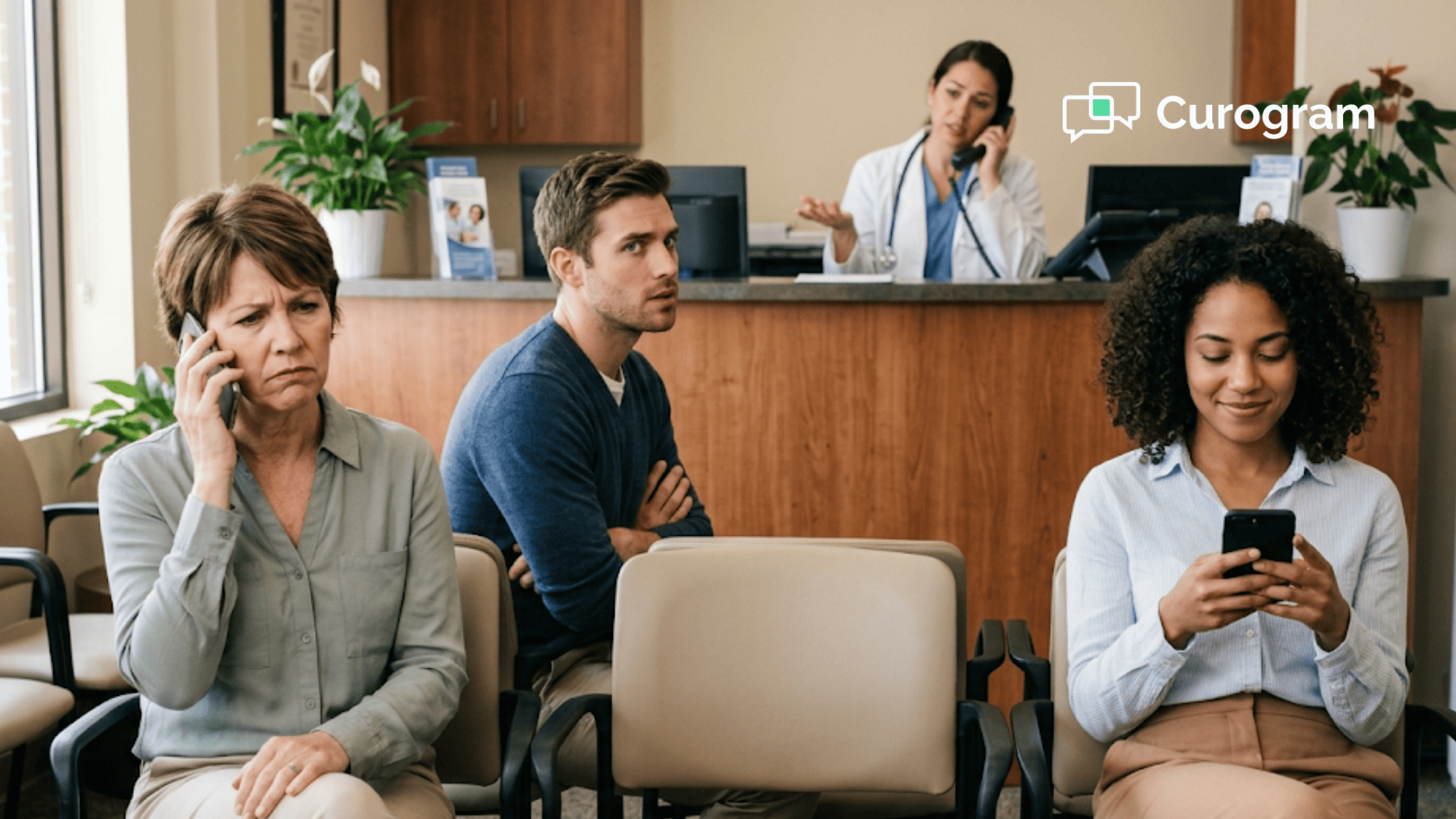
Patients are not ignoring you on purpose. They are simply doing what everyone does now — screening calls and skipping logins. The problem is not a lazy patient. The problem is that the channels you are using create friction at every step.
The good news? You don't need to rip out your portal or stop answering phones. You need to add a channel that meets patients where they already are. That channel is the one sitting in their pocket right now, the same one they use to chat with friends, confirm dinner plans, and get delivery updates.

Curogram adds what you can think of as a modern front porch to your MD Systems setup. Instead of asking patients to come inside a complex portal, you step outside and meet them in a place they already visit hundreds of times a day: their text message inbox.
|
Here is what happens in practice: Your MD Systems schedule flags that a patient has a visit tomorrow. Curogram sends a text to that patient's phone. The message looks just like any other text, sitting right next to messages from friends and family. It might say: "Hi John, you have an appointment tomorrow at 2 PM with Dr. Lopez. Reply YES to confirm or CALL to reschedule." John sees it. He taps "YES." Done. No app to download. No username to remember. No website to navigate. The whole exchange takes about five seconds. |
This is what zero friction looks like. And it is the key to why patient satisfaction with texting far outpaces any other method your office can use.
|
Now, compare that to the traditional way: Your staff calls John. He doesn't answer. They leave a voicemail. John calls back two hours later, but the line is busy. He tries again, gets put on hold, and hangs up. By the end of the day, both John and your staff are frustrated. This kind of back and forth is a textbook case of eliminating voicemail tag — or rather, the need to eliminate it. |
Curogram's 2-way texting does more than confirm visits. Patients can text a question about their medication. They can let the office know they are running late. They can request a refill.
Your staff can send a quick link for a form the patient needs to fill out before their next visit — for example, sending intake forms to the patient's phone before they arrive. Every one of these tasks would normally require a phone call, a hold time, and a transfer. With texting, it takes a single reply.
On the clinic side, this is not a separate app your staff has to check. Every text conversation shows up right inside the MD Systems workflow. When your front desk opens the schedule or the patient chart, the message history is right there. This means no switching between screens, no lost messages, and no guessing about what was said.
|
Let's look at a typical morning: A three-provider clinic might need to confirm 60 appointments for the next day. By phone, that is roughly 60 calls. If each call takes an average of two minutes (including redialing, voicemails, and hold times), that is two hours of phone work. |
With Curogram, the same 60 confirmations go out as a batch of texts. Most patients reply within three minutes. The front desk reviews the replies in about 15 minutes total. That is almost two hours saved in a single task on a single morning.
Those two hours add up. Your staff can use that time for tasks that truly need a human touch, like greeting patients, handling insurance questions, or helping someone who just walked in. This is a direct path to improving medical staff efficiency without adding more bodies to the team.
The beauty of the no-app approach is that it works for every age group. You might think older patients won't text. But Pew Research data shows that 98% of adults in the U.S. own a cell phone, and texting is the most widely used feature across all age groups.
A 70-year-old grandmother who texts her grandkids can reply "YES" to confirm an appointment just as easily as a 25-year-old. Your patients don't need training. They don't need a tutorial. They just need a text. And that is what Curogram delivers, connected directly to your MD Systems platform, every single day.
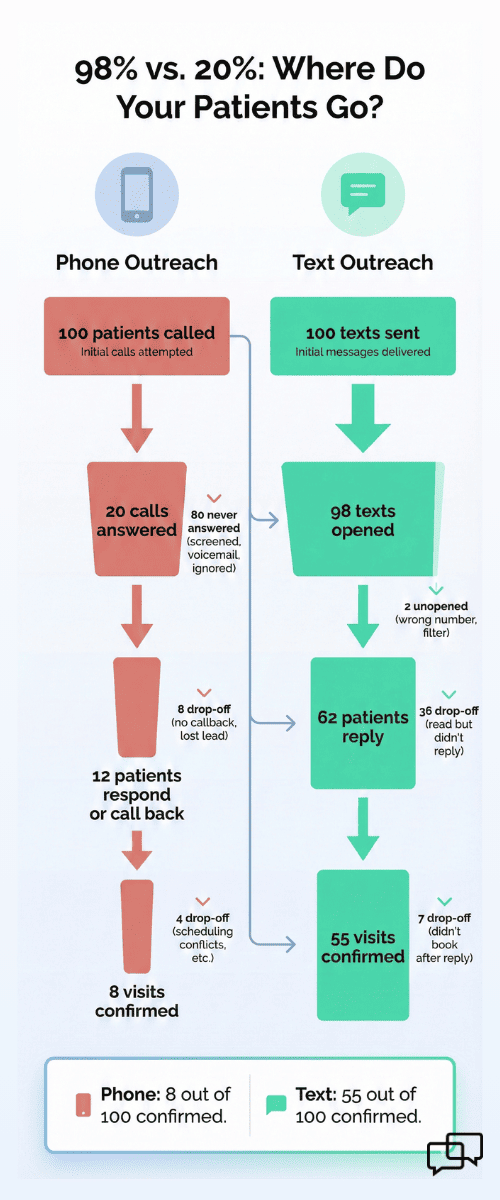
Numbers tell the story better than words ever could. Text messages have a 98% open rate. Most are read within three minutes of landing on a phone. Compare that to email, which hovers around a 20% open rate on a good day.
Compare it to phone calls, where fewer than one in five gets picked up. The gap is massive, and it changes everything about how your MD Systems clinic can reach patients.
|
Let's break down what a 98% open rate means in your day-to-day work: Say, your clinic sends out 100 appointment reminders for the week. With phone calls, you can expect roughly 20 of those patients to actually hear your message on the first try. The other 80 need a second call, a voicemail, or both. With texting, 98 of those 100 patients will at least see the message. Of those, studies show that about 45% reply within the first 90 seconds. That is a response rate your front desk has never seen from any other channel. |
Now, apply that to real workflows. Think about how many times per week your staff chases patients for these common tasks: confirming tomorrow's visit, updating an insurance card, sending pre-visit instructions, collecting a copay balance, or relaying a simple message from the provider.
Each of those touch points is a phone call that might take two to five minutes. With texting, each one becomes a 30-second exchange.
|
Here is a practical example scenario: Say, Dr. Patel's family practice uses MD Systems. Before switching to Curogram, the front desk made about 80 outbound calls per day. After adding 2-way texting, that number dropped to around 25 calls per day. The rest was handled by text. That single change freed up nearly three hours of staff time every day — time that went back to helping patients in the office and keeping the schedule on track. |
This kind of MD Systems call center reduction does not require hiring fewer people. It means the people you already have can do more valuable work.
Instead of redialing a patient who never picks up, your front desk is greeting walk-ins, handling complex insurance calls, or catching up on referral paperwork. The result is a team that feels less stressed and more productive.
Speed matters just as much as reach. When a patient confirms by text in under a minute, your staff knows right away. If a patient cancels, you find out fast enough to fill the slot.
This is where reducing phone volume in MD Systems clinics has a direct impact on revenue. A filled slot is revenue earned. An empty slot is money lost.
|
Let's do some simple math: Say, your clinic averages 25 patients per day and your average visit brings in $150. If you reduce no-shows by just five visits per week through faster text confirmations, that is an extra $750 per week. Over a year, that comes out to $39,000 in revenue you would have lost to empty slots. And that number grows with each added provider. |

Speed also matters for time-sensitive messages. If a patient needs to fast before a blood draw, a text the evening before is far more reliable than a call they may never hear. If the office needs updated insurance info before a visit, a text with a secure link gets it done in minutes instead of days.
If a prescription is ready and the provider wants to check on side effects, a quick text opens the door to a reply the patient can send from the couch, the grocery store, or the car pickup line.
The patient experience shift is just as important as the numbers. When patients get a text from your office, the practice feels modern and accessible. It feels like the kind of place that respects their time.
In a market where patients can choose between multiple clinics within a five-mile radius, that feeling matters. It drives loyalty. It drives reviews. It drives word-of-mouth referrals.
Now, let's talk about what happens after hours: One worry clinics have is that patients will text at 10 PM and expect an instant reply. Curogram handles this with automated after-hours messages.
The patient texts in, and a friendly auto-reply lets them know the office is closed and when they can expect a response. This sets clear boundaries while still making the patient feel heard. No one on your team has to be glued to a phone at night.
This after-hours feature also helps capture messages that would otherwise go to a voicemail box that may not get checked until the next afternoon. With texting, the message is already in the queue when your staff logs in the next morning.
They can scan the overnight texts, triage by urgency, and respond in order. It is a cleaner, faster way to start the day.
The compound effect of all these gains — higher open rates, faster replies, fewer no-shows, and better after-hours coverage — is that your practice runs smoother. The phones ring less.
The schedule stays full. And the patients feel like they are heard, even when the office is closed.
Every week you stick with phone-only outreach, the gap between your clinic and your patients grows wider. Carriers add new spam filters. Patients get more used to screening calls. And portals keep collecting dust.
The clinics that act now are the ones that lock in patient loyalty early. When a patient gets a smooth text experience from your office, they remember it. They tell friends. They leave better reviews. They come back.
The clinics that wait end up playing catch-up. They hire more front desk staff to handle the same call volume. They watch no-show rates climb. They spend more time on the phone and less time on patient care. Front desk burnout gets worse, not better.
Switching to 2-way texting with MD Systems is not a six-month project. Most practices go live within days. Your staff learns the workflow in a single training session. Patients don't need to learn anything at all — they just reply to a text.
The longer you rely on channels patients have already moved away from, the more time and revenue you lose. The fix is simple, fast, and already proven. The only question is when you start.
If you want to see the actual dollar impact, try the Curogram ROI Calculator for Staff Productivity. Simply plug in your monthly appointment volume, average staff time per appointment, and hourly labor cost.
Why Curogram Is Built for MD Systems Clinics
Curogram is not a generic texting app bolted onto your practice. It is a HIPAA-compliant, 2-way patient texting platform designed to integrate directly with your existing EMR — including MD Systems.
When your staff opens the MD Systems schedule, Curogram is right there. Messages, confirmations, and patient replies live inside the same workflow your team already uses. There is no second screen to check. There is no separate inbox to monitor. Everything stays in one place.
Your front desk sends a batch of reminders for tomorrow's appointments. Patients reply by text. Those replies show up on the schedule — confirmed, canceled, or needing a callback. Your staff can scan the board and know exactly where things stand in under a minute.
Beyond scheduling, Curogram handles text-to-pay, digital intake forms, review requests, and secure messaging between providers. Each feature works the same way: simple for the patient, organized for the staff, and logged for compliance.
For offices dealing with high call volumes, Curogram is the fastest path to reducing phone volume in MD Systems clinics. It replaces repetitive outbound calls with automated texts that patients actually read and respond to. The savings in time and effort show up on day one.
Curogram also supports automated smart reminders, which adjust based on the appointment type and patient preferences. A new patient might get a reminder 48 hours out with a link to their intake form. A returning patient might get a simple same-day confirmation. Every message is tailored, not one-size-fits-all.
You cannot force a patient to answer a call from an unknown number. You cannot make them download a portal app. You cannot expect them to remember a password they set once, two years ago. What you can do is send a message to the one device they carry everywhere.
That is the core idea behind adding Curogram to your MD Systems platform. It is not about replacing your phones or shutting down your portal. It is about adding a channel that works the way patients already live their lives.
Texting is the most common activity on those phones. People send and receive texts more than they make calls, check email, or browse the web. When your office sends a text, you are using the most natural, most familiar tool your patient has.
This is not just a tech upgrade. It is a mindset shift. Instead of asking, "Why won't patients pick up?" the question becomes, "How can we reach them in a way they prefer?" The answer has been in their pocket the whole time.
The data is clear. Patients don't answer calls from unknown numbers. They don't use portals. They do read texts — 98% of the time, usually within three minutes.
If your MD Systems clinic is still relying on phone calls as the primary way to reach patients, you are fighting a losing battle.
Every unanswered call costs time, money, and goodwill. Every ignored voicemail is a missed chance to fill a slot, collect a payment, or answer a simple question.
Stop fighting the trend. The clinics that thrive in the next five years will be the ones that match their workflow to patient behavior — not the other way around. Texting is how people want to communicate with the businesses they trust. Your practice should be no different.
Add a modern front door to your existing MD Systems workflow. Book a quick demo today and ee how Curogram works with your MD Systems platform.
You can set up automated "office closed" replies. The patient gets an instant message letting them know the office will respond during business hours. This manages expectations and captures the message so your team can act on it the next morning.
Curogram syncs directly with your MD Systems schedule and patient records. Your team works in the same screen they already use — no extra software to toggle between, and no double data entry.
Texts reach patients instantly and get read within minutes. Phone calls often go to voicemail or spam, creating a delay that makes it harder to confirm or reschedule before the time slot is lost.
💡 Practices that want to reduce front desk call volume with CollaborateMD can cut phone traffic by up to 50% using 2-way texting through Curogram.
💡 HIPAA compliant texting for CollaborateMD lets billing teams replace slow phone calls with instant, secure SMS. Curogram plugs into your RCM...
💡 Patient portal engagement with Prime Clinical Systems often falls short because most patients never log in. Studies show that portals only see...