10 min read

Expand Access & Improve Care with Exa Telehealth

Expand Access & Improve Care with Exa Telehealth
💡 Radiology practices using Exa face a growing challenge. Patients want faster access to their results and easier ways to discuss findings.

Without telehealth options, imaging centers risk losing patients to competitors.

  • Expand access Exa telehealth capabilities without disrupting your workflow
  • Connect patients with radiologists for virtual follow-ups right after scans
  • Drive Exa revenue growth by reducing missed appointments and creating billable consultations
  • Improve patient retention and network efficiency across your organization
Your practice stays competitive while delivering better patient care.

Your imaging center just finished a patient's MRI scan. The results show something you need to talk about. But the patient lives an hour away and works full-time. Setting up an in-person follow-up takes weeks. There's also a 30% chance they won't show up.

This happens every day in radiology practices across the country. Patients want quick answers about their imaging results. But old appointment systems create delays. Your practice loses money from no-shows and missed chances to bill for talks that never happen.

Healthcare has changed a lot in recent years. Patients now expect the same ease from their doctors that they get from other services. They want to connect with doctors through their phones. They want quick answers to questions. They want to avoid extra trips to the office.

Radiology practices that ignore this change risk falling behind. Patients look for imaging centers that offer telehealth. They pick providers who make it easy to talk about results online. They don't want to take time off work for a short in-person talk.

The good news is you can expand access with Exa telehealth without changing everything. Modern telehealth tools work smoothly with your Exa platform. Your staff keeps using the same tools. Patients get the ease they want.

This change does more than make patients happy. It creates new ways to make money through video talks you can bill for. It makes less work for your front desk staff. Most important, it helps patients by making sure they get timely talks about their imaging results.

Let's look at how telehealth with Exa helps imaging practices do well in today's market.

Business Risks Without Telehealth

Running an imaging center without telehealth puts your practice at risk. These risks go beyond unhappy patients. They hurt your income in real ways.

Patient Problems with Result Delays

Patients feel worried after getting scans done. They want to know what the results mean for their health right away. When your practice makes them wait weeks for an in-person appointment, that worry grows.

Today's patients compare their healthcare to other services they use. They can video chat with money advisors, lawyers, and therapists from home. Why should talking about imaging results need a trip to your office?

This unhappiness shows up in online reviews. Patients write about long wait times for result talks. They complain about the hassle of setting up follow-up visits. These bad reviews make it harder to get new patients.

The problem gets worse when results need quick action. A patient might need to start treatment soon. But your next open appointment is three weeks away. They go somewhere else for faster answers. You lose that visit and all future business.

Keeping Fewer Patients

Patient loyalty depends on ease and good care. When your competitors offer telehealth, and you don't, patients have an easy reason to switch. This gets worse over time as more practices add video care.

Losing patients hurts more than many bosses think. Getting a new patient costs five times more than keeping one you have. When patients leave because they want video options, you lose years of future income.

Primary care doctors notice which imaging centers their patients like. They send more patients to practices with easy follow-up options. Losing these relationships hurts your growth.

Lost Chances to Bill for Talks

Every imaging scan creates a chance for a follow-up talk you can bill for. When patients can't easily set up these talks, many just skip them. They might call their regular doctor instead. Or worse, they search for answers online.

No-show rates for in-person visits make this worse. Each missed appointment wastes staff time and resources. You get zero money for that time slot.

Video talks cut no-show rates by a lot. Patients find it much easier to join a video call from home than drive to your office. This simple change can recover thousands of dollars in lost income each month.

The pressure keeps growing. Healthcare networks that use telehealth see real gains in patient happiness and money made. Practices that wait risk losing market share forever.

How Curogram Improves ROI with Telehealth

Adding telehealth through Curogram changes how imaging centers work and make money. The system plugs right into your Exa platform. This makes setup easy and results quick.

Video Talks Cut Missed Follow-Ups

Curogram's telehealth makes follow-up appointments much easier for patients to attend. Instead of spending time on travel, parking, and waiting rooms, patients join video talks from anywhere. This ease means more patients actually show up.

The system sends automatic reminders through text messages. Patients get alerts about upcoming video talks. This cuts the chance they forget or miss their time. These reminders include direct links to join the video call with one click.

Staff spend less time on phone calls checking appointments. The automatic system handles routine messages. This frees up your team to focus on patient care and harder scheduling needs. This time saved often pays for the telehealth tool by itself.

Video talks also remove common blocks to follow-up care. Patients who live far from your building can connect easily. Working people don't need time off. Older patients avoid travel challenges. The result is more complete talks and better health outcomes.

Bigger Reach Brings New Patients

Telehealth lets you serve a bigger area right away. Patients who thought your location was too far suddenly become customers. You can serve suburbs and country areas without opening new buildings.

Marketing works better when you can talk about video talks. Patients search for imaging centers that offer these services. Your practice shows up in more searches and gets more good leads.

Being able to expand access Exa telehealth gives you a clear edge in your market. Practices that offer both great imaging and easy follow-ups win more business from patients and referring doctors.

Word-of-mouth grows when patients have good experiences. Happy patients tell friends and family about the ease of video talks. This free growth delivers steady new patients over time.

More Billable Talks Without Extra Costs

Video talks create new ways to make money without the costs of in-person visits. You don't need extra exam rooms, more staff, or longer hours. The same radiologists can see more patients by doing talks remotely.

Insurance payments for telehealth have grown a lot. Most big payers now cover video talks at rates like in-person visits. This means your practice makes similar money per talk while cutting costs.

The time saved grows over time. Radiologists can fit more talks in the same workday when they cut travel time between exam rooms. Quick follow-ups that might not need a full office visit become doable as short video check-ins.

Curogram's link with Exa keeps workflows smooth. Patient info, imaging results, and talk notes sync automatically. Your team avoids entering data twice and keeps good records across all systems.

The result is clear Exa revenue growth without matching cost increases. More billable talks happen with the same staff and building resources. This better efficiency directly helps your practice's profit and long-term success.

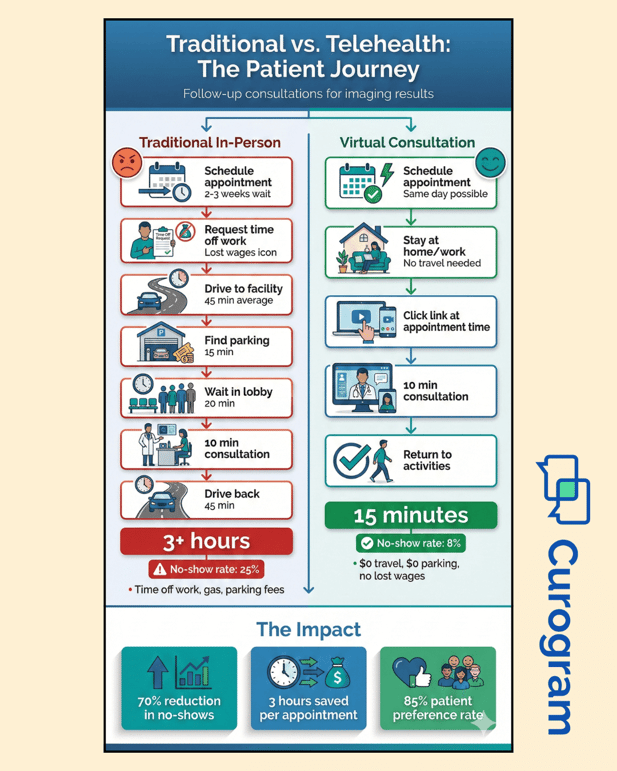
Infographic comparing traditional vs telehealth patient journeys for imaging consultations


Benefits for Executives and IT Leaders

Healthcare executives and IT leaders face tough choices when looking at new technology. They need tools that show real results and work well with current systems. Telehealth platforms built for radiology practices do this well.

Better Patient Keeping Numbers

Board members and healthcare bosses care a lot about patient keeping numbers. These numbers directly affect money made and market position. Telehealth gives solid improvements that show up in quarterly reports.

Patient happiness scores also go up a lot. Healthcare groups track things like Net Promoter Score and patient surveys. Video talk options get good feedback and lift overall scores.

Bosses can show these improvements to stakeholders with confidence. The data shows clear links between telehealth and keeping gains. This makes asking for budget easy and helps with planning.

Edge Over Competition in Patient Demand

Healthcare markets have become very competitive. Patients have more choices than ever. They compare providers based on ease and tech offerings. Groups that don't meet changing wants risk losing market share.

Marketing teams can use telehealth abilities in their campaigns. Talking about video talk options makes your group different from competitors. This message works really well with working people and busy families.

The edge also helps with hiring and keeping doctors. Radiologists and other specialists want to work for groups that invest in modern technology. Offering telehealth tools makes your jobs more attractive to top talent.

Planning ahead benefits from understanding market trends. Telehealth use keeps speeding up across all healthcare areas. Groups that build these abilities now set themselves up for long-term success as patient wants keep changing.

The way to expand access Exa telehealth means more than just adding a feature. It tells patients, referring doctors, and possible employees that your group embraces new ideas and puts patient ease first.

Better Network Efficiency

Healthcare networks run many buildings across different areas. Getting care coordinated and managing resources gets harder as networks grow. Telehealth technology helps solve these work problems.

Radiologists can serve many locations without traveling between sites. A specialist at your main building can do video talks for patients at other locations. This flexibility makes the best use of your most valuable resource: doctor time.

IT leaders like how well it connects with current systems. Modern telehealth platforms link with your Exa imaging system and health records without needing custom work. This smooth connection cuts setup time and ongoing care costs.

Network work benefits from central scheduling and patient talk tools. Admin staff at all locations use the same system. This means patients get the same experience everywhere. Managers can see how things are used and make smart choices about resources.

The security and rule-following features meet big company needs. All talks happen through HIPAA-following channels with full encryption. Logs track every interaction. This supports rule needs and risk management work.

IT teams report smoother setups compared to other healthcare tech. Good telehealth tools give full training materials, quick tech support, and regular updates. These things cut the total cost and reduce problems with clinical work.

Risk Management and Compliance

Healthcare bosses must balance new ideas with risk management and rule following. Telehealth brings up questions about data security, privacy protection, and keeping quality high. Well-built telehealth platforms address these concerns through full rule-following features.

All patient talks should flow through secure, HIPAA-following channels. Good platforms encrypt data when it moves and when it sits. Access controls make sure only allowed people can view patient info. Detailed logs document every interaction.

Quality checking stays the same with video talks. Groups can watch talk quality, track patient outcomes, and keep the same care standards they use for in-person visits. The technology helps rather than hurts clinical excellence.

Legal and rule-following teams like thorough record-keeping abilities. Every video talk should create complete records with timestamps, people involved, and clinical notes. This paperwork supports both quality improvement work and legal protection.

The way to no-show reduction in radiology through telehealth matches broader risk management goals. Better appointment showing up means fewer gaps in care. Patients get timely follow-up on imaging findings. This cuts the risk of missed diagnoses or treatment delays.

ROI Example

An imaging group did about 200 scans per week across all locations. About 35% of patients skipped follow-up talks to discuss results. When patients did set up follow-ups, the no-show rate hit 25%.

So, they added a telehealth tool linked with their Exa system. The rollout took about six weeks. It included training for all front desk staff and radiologists. Patients got info about the new video talk option through automatic messages and during check-in.

Staff learned the system quickly because it was easy to use. Radiologists liked being able to do follow-ups from any location. Patients loved the ease of video talks.

In the first year, the imaging group saw big improvements across many areas. Follow-up talk rates went from 65% to 85% of scans done. Video talks made up 70% of all follow-ups.

No-show rates dropped from 25% to 8% for all scheduled talks. Patients found it much easier to attend video appointments than in-person visits.

The money impact beat expectations. The group did 40 extra billable talks per week. At an average payment rate of $150 per talk, this made $6,000 in new weekly income. Annual income went up by about $312,000.

The total income impact hit about $400,000 per year. This counted both more talks and new patient gains. Operating costs went up very little since video talks needed no extra building space or equipment.

Next Steps

Ready to change your imaging practice with telehealth? The first step is checking how telehealth can work with your Exa system.

Think about asking telehealth providers for a demo. This shows how their platforms work with your current workflow. Look for tools that look at your patient numbers and talk rates to guess your possible ROI.

Take time to research providers who focus on healthcare communications. Find ones who understand the special needs of imaging centers. The right telehealth partner will help you expand access while giving real improvements in both patient care and money made.


Why Healthcare Organizations Choose Curogram

Curogram stands out in the busy telehealth market through its focus on smooth connections and user experience. The platform was built just for healthcare work. It wasn't changed from consumer video tools.

The link with Exa imaging systems happens at a deep tech level. Patient info flows automatically between systems. Radiologists see imaging results and patient history in the same place they use for video talks. This unified way removes the workflow problems common with other telehealth tools.

Staff training needs stay low because Curogram focuses on easy design. Front desk people learn the basics in under an hour. Radiologists adapt quickly since the system copies familiar talk patterns while adding strong features.

Healthcare groups also like Curogram's full support during setup and after. The tech team helps with linking systems and gives ongoing training resources. They answer questions quickly. This support makes sure adoption goes smoothly and gets the most from your tech investment.

Security and rule-following features meet big healthcare needs without making it hard to use. The platform keeps HIPAA compliance automatically. This lets clinical staff focus on patient care rather than tech details.

The pricing fits with the value given. Groups pay based on real use rather than per-user fees. This makes costs predictable. You only pay for what your practice really uses.

Thousands of healthcare providers trust Curogram to give reliable, secure telehealth services. Your group can join them in giving modern, easy care that meets today's patient wants.

Conclusion

The imaging services world has hit a turning point. Patients now expect the same level of ease from healthcare that they get from other service industries. Groups that meet these wants do well. Those that resist change struggle with dropping patient numbers and happiness.

Telehealth means far more than getting new technology. It really improves how your practice gives care and makes money. Video talks remove blocks to follow-up care. This makes sure patients get timely talks about their imaging results.

The money benefits speak clearly through real outcomes. Higher talk rates, fewer no-shows, and bigger patient reach all add to meaningful Exa revenue growth. These improvements happen without matching cost increases or building needs.

Executives gain big advantages that go beyond quick money returns. Better patient keeping strengthens long-term stability. Better reputation brings new patients and referring doctors. Modern tech abilities help hire and keep talented radiologists.

The question facing imaging center leaders isn't whether to add telehealth. Your patients have already decided they want these options. The real question is when you'll set them up and which partner you'll pick for this change.

Curogram's proven track record shows that you can expand access Exa telehealth smoothly and profitably. Groups across the country have already changed their work and improved their money performance through this partnership.

Expand access and improve outcomes with telehealth for Exa. Book a demo today.


Frequently Asked Questions

How does telehealth affect current Exa workflow?

Curogram links smoothly with your current Exa system without messing up how things work now. Your staff keeps using familiar tools while gaining video talk abilities. Patient info syncs automatically between systems. This cuts out entering data twice.

Why do video talks cut no-show rates more than in-person appointments?

Video talks remove common blocks like transportation, parking, and time off work. Patients join video calls from wherever they are at the scheduled time. This ease works especially well for short follow-up talks about imaging results.

How is the quality of care maintained through video talks?

Radiologists have full access to high-quality images, patient histories, and past studies during video calls. The technology makes care better by making follow-up talks more convenient and timely. Quality checking stays the same, with the same watching for talk length, patient happiness, and clinical outcomes.

Video talks often make communication better. Patients feel more comfortable asking questions from home. Radiologists can share screens to point out specific findings. Family members who couldn't attend office visits can join important talks.

What payment can be expected for telehealth talks?

Most big insurance payers now cover video talks at rates like in-person visits. Medicare and Medicaid programs in most states give payment for appropriate telehealth services.

Curogram helps make sure proper coding and records. The platform catches timestamps, people involved, and clinical notes that payers need. This full record-keeping protects income and makes billing simpler.

How quickly can a center see ROI from telehealth?

Most imaging centers see positive returns within the first quarter after setup. Follow-up rates go up within the first month as scheduling becomes more convenient.

Income from extra talks starts flowing right away as video appointments start happening. Long-term benefits keep building over time through better patient keeping and word-of-mouth.


Reducing Check-In Times and Errors with Online Forms in Dolphin

Reducing Check-In Times and Errors with Online Forms in Dolphin

💡 Reduce check-in times in Dolphin with online patient forms that let families handle paperwork at home before appointments. Traditional...

Read More
Reducing Check-In Times and Errors with Online Forms in DrChrono

Reducing Check-In Times and Errors with Online Forms in DrChrono

💡 Reduce check-in times in DrChrono with HIPAA-compliant online forms that eliminate front desk bottlenecks. Small practices using paper intake...

Read More
Reducing Check-In Times and Errors with Online Forms in Office Ally

Reducing Check-In Times and Errors with Online Forms in Office Ally

💡 Reduce check-in times in Office Ally with digital patient forms that streamline your front desk operations. Small practices often struggle with...

Read More