
1 min read
Text-to-Pay in Veradigm with Curogram
 Jo Galvez : Jan 13, 2026, 10:00:00 AM
💡 Text-to-pay in Veradigm helps imaging centers collect payments faster and reduce admin work. This mobile payment method sends secure links...

Medical billing teams face the same problem every day. Patients leave appointments owing money, and collecting those payments takes too much time.
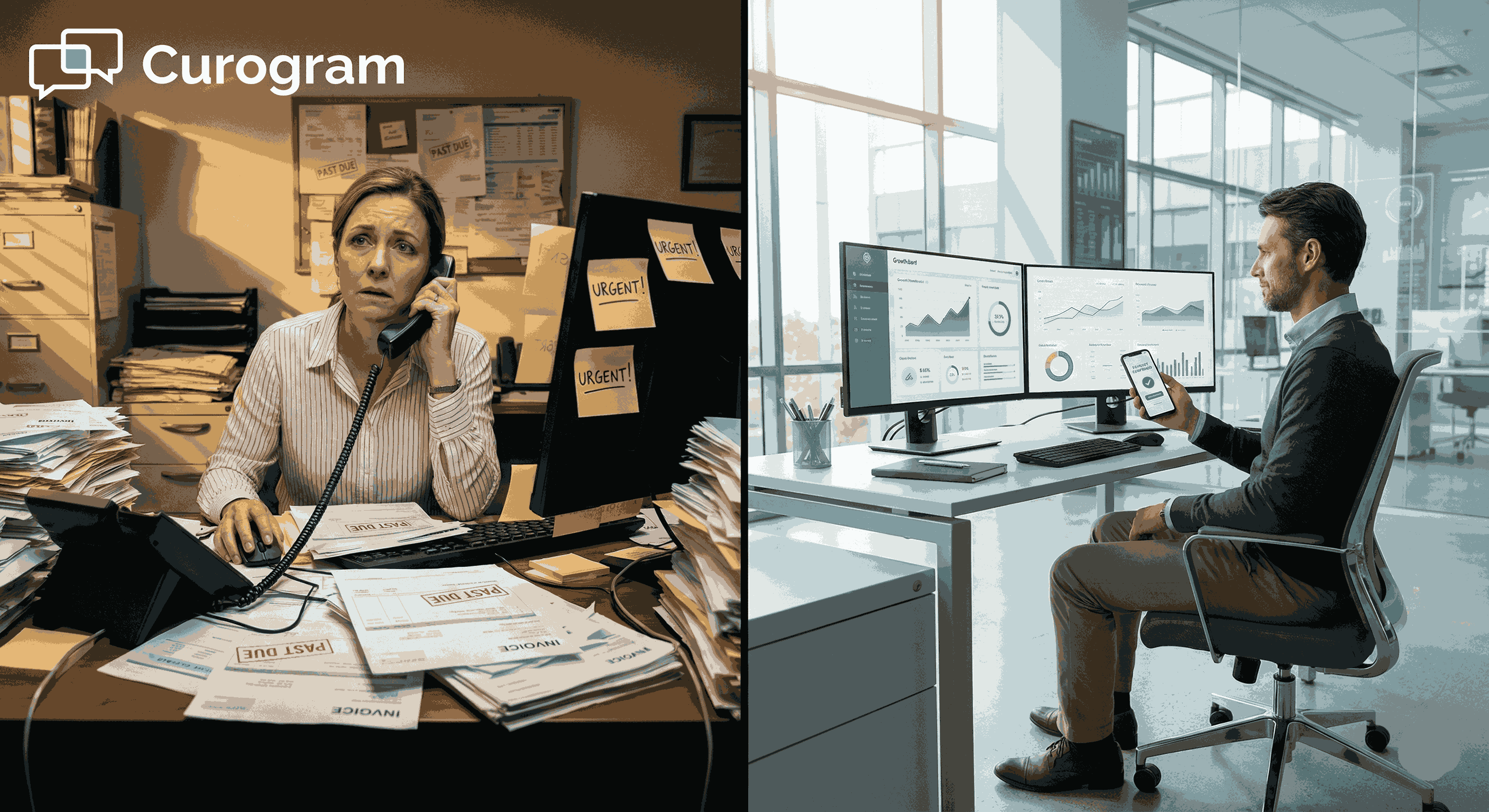
Phone calls go unanswered. Mailed statements sit unopened. Staff members spend hours chasing down small balances. The work never seems to end.
For Meditab IMS teams, this challenge affects the entire revenue cycle. Manual billing processes create delays. Patients forget about their balances. Collections slow down, and accounts age.
The problem isn't just about money. It's about time. Every minute spent on billing follow-ups is a minute taken away from other tasks. Staff burnout increases. Patients get frustrated with repeated calls.
Traditional billing methods weren't built for today's patients. Most people expect to handle tasks on their phones. They want quick, simple ways to pay. But many practices still rely on old systems that require multiple steps.
Patient payment workflows offer a different approach. These workflows automate routine billing tasks. They send payment requests at the right time, through the right channel. Patients receive secure links they can use to pay immediately.
The shift from manual to automated workflows changes how billing teams work. Instead of making calls and stuffing envelopes, staff can focus on cases that need human attention. Complex billing issues, insurance denials, and patient questions get proper care.
Workflows also create consistency. Every patient gets the same clear payment experience. Every location follows the same process. This standardization reduces errors and improves outcomes.
For Meditab IMS users, workflow-based payment systems integrate with existing tools. Teams don't need to learn completely new software. The payment process fits naturally into daily operations.
This article explains how patient payment workflows work. It covers the key features that make them effective. It also shows why Meditab IMS teams are moving away from manual billing and toward automated systems that save time and improve collections.
Payment collection isn't separate from patient care. It's part of the overall experience. When billing processes are smooth, patients feel respected. When they're clunky, patients get annoyed.
Manual billing creates friction at every step. Staff must look up account balances, make phone calls, and track responses. Patients must answer calls during work hours or wait for statements in the mail. The process takes days or weeks.
This delay costs practices money. The longer a balance sits unpaid, the less likely it gets collected. Studies show that collection rates drop significantly after 30 days. After 90 days, many balances become nearly impossible to collect.
Workflow-based payment processes solve these problems. They trigger payment requests automatically based on specific events. When a visit ends, the system sends a payment link. When a copay is due, the patient gets a text message.
Phone-based payment outreach creates multiple problems. Patients don't always answer calls from unknown numbers. Calling takes staff time. Patients may not have payment information handy during the call.
Paper statements and mailed invoices add delay to the process. A statement must be printed, stuffed, and mailed. The patient receives it days later. Then they must write a check or call to pay. Each step reduces the chance of payment.
Manual billing requires multiple touches for each patient. Staff must review accounts, decide who to contact, and execute the outreach. After initial contact, they must track responses and follow up again.
This multi-step process creates bottlenecks. Only so many calls can be made in a day. As patient volume grows, the billing team struggles to keep up.
Payment workflows must be clear and repeatable. Every staff member should understand how they work. Every patient should receive the same experience. Automation replaces ad hoc billing outreach with systematic processes.
Standard workflows also make training easier. New staff members learn one process instead of many different approaches. This reduces onboarding time and improves accuracy.
Post-visit balances are the most common payment trigger. When a patient checks out, the system calculates any remaining balance. If there's an amount due, it sends a payment request.
Copay requests happen at appointment confirmation. The system reminds patients that a copay is required. This prepayment reduces check-in delays and improves collections.
Telehealth visit charges work the same way. After the video appointment ends, the system calculates charges and sends a payment link.
Creating Trigger Logic That Works
The key to effective triggers is timing. Payment requests should arrive when patients are most likely to pay. Right after a visit is ideal. Days later is less effective.
Standardizing Payment Messagess
Clear balance context helps patients understand what they owe. The message should state the visit date, the service provided, and the amount due. This removes confusion and speeds payment.
Patient-friendly language makes a big difference. Instead of "Account 12345 has an outstanding balance," the message says "You have a $25 copay from your January 10 visit."
Payment messages should be short. Most people scan text messages quickly. A brief, clear message gets better results than a long explanation. The message should include a call to action like "Click here to pay."
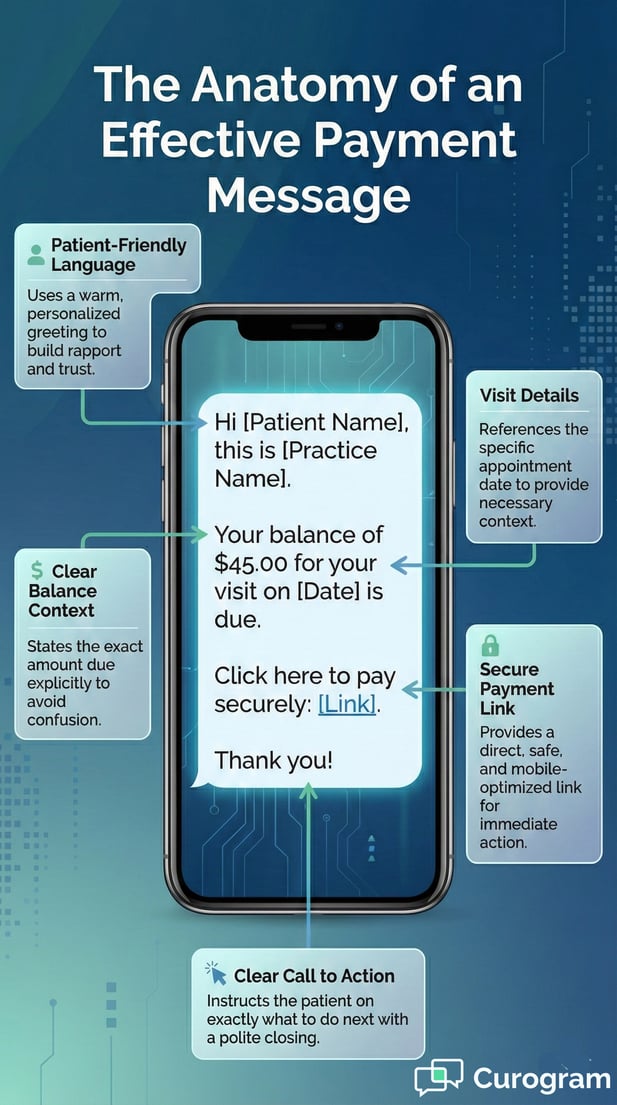
Mobile payment links reduce friction in the billing process. Instead of logging into a portal or calling the office, patients click a link. The payment page opens on their phone. They enter card information and complete the transaction in seconds.
This simplicity matters because most people carry their phones everywhere. They check text messages throughout the day. A payment link in a text message meets patients where they already are.
Patients pay at their convenience. They don't need to wait for office hours. They don't need to find a computer. They can pay while waiting in line, during lunch, or at home in the evening.
Text-to-pay also reduces the mental burden of remembering to pay. When the request arrives via text, patients can act immediately. They don't need to add "pay medical bill" to their to-do list.
Sending Secure Payment Links
No portal logins required is a key advantage. Many patients forget their portal passwords. Others never created an account in the first place. Text-to-pay bypasses this barrier entirely.
Faster completion results from this simplicity. Studies show that removing friction from payment processes significantly increases completion rates. Every extra step causes some patients to abandon the process.
Security remains a priority. The payment link leads to a secure page where card information is encrypted. The text message itself contains no sensitive data.
How Text-to-Pay Links Are Generated
When a payment trigger fires, the system creates a unique payment link. This link is tied to the specific patient and balance. It expires after a set period to maintain security.
Reduced payment delays happen because patients receive requests immediately. They don't wait days for a statement. They can pay while the visit is still fresh in their mind.
Improved completion rates result from the convenience factor. When paying is easy, more patients do it. When it's complicated, many patients put it off and eventually forget.
Days in accounts receivable decrease when payment workflows are automated. Faster payment means cash comes in sooner. This improves practice cash flow and reduces the need for aggressive collections later.
Manual follow-ups consume staff time that could be spent on higher-value tasks. Every phone call takes several minutes. Many calls go unanswered, requiring additional attempts. The time adds up quickly.
Automated workflows reduce repetitive tasks by handling routine payment requests. Staff don't need to decide who to contact or when. They don't need to dial numbers or leave voicemails. The system manages all of this.
This shift frees up significant time. A billing team that previously spent hours on payment calls can redirect that time elsewhere.
Fewer outbound calls means staff can focus on cases that actually need phone contact. Some billing issues require conversation, but routine payment requests don't. Text-to-pay handles the simple cases automatically.
Reduced mailing costs add up over time. Printing, envelopes, and postage seem small per statement. But multiply those costs by thousands of patients per year. The savings become substantial.
Calculating Time Savings from Automation
Consider a practice that sends 100 payment requests per day. If each phone call takes 5 minutes, that's over 8 hours of staff time daily. Automation recovers that time completely.
More time for exceptions means difficult cases get proper attention. Some patients have complicated insurance situations. Others face financial hardship. These cases need human judgment and empathy.
Complex billing needs include insurance appeals, payment plan negotiations, and charity care applications. These tasks require skill and cannot be fully automated.
Multi-location practices need consistent payment workflows across all sites. When each location uses different processes, the patient experience varies. This inconsistency creates confusion and reduces collections.
Centralized processes reduce variation by applying the same rules everywhere. A patient visiting any location gets the same payment experience.
Consistent patient experience matters for multi-location practices. Patients may visit different locations for different services. They expect the same billing process regardless of which office they visit.
Improved oversight comes from centralization. When all locations use the same system, reporting becomes simpler.
Scaling Payment Workflows to New Locations
When a practice opens a new location, automated workflows deploy instantly. There's no need to train staff on complicated billing procedures. The system handles payment requests from day one.
Shared visibility means everyone sees the same information. Central billing staff can view payment status for any location. They can identify patterns and address systemic issues.
Predictable workflows make capacity planning easier. When processes are standardized, managers can forecast workload more accurately.
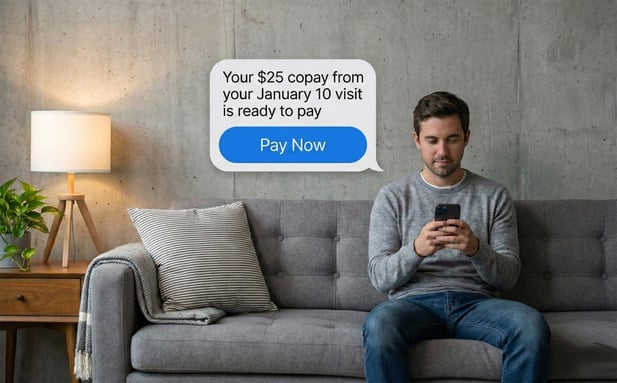
Payment messages may include sensitive information like visit dates and service types. This information is protected under HIPAA rules. Practices must ensure payment workflows comply with all regulations.
Text messaging can be HIPAA-compliant when done correctly. The key is using platforms designed for healthcare communication.
Secure delivery ensures messages reach only the intended patient. The platform verifies phone numbers and uses encryption during transmission. Messages don't sit on unsecured servers.
Protected patient data means all information remains confidential. The payment link itself is secure. The transaction page uses proper encryption.
Different text platforms offer different security levels. Standard SMS is not secure enough for healthcare. HIPAA-compliant platforms use additional protections like end-to-end encryption.
Centralized payment records make audits easier. All transactions are logged in one place. Auditors can review activity without gathering information from multiple systems.
Clear accountability comes from proper tracking. The system records when messages were sent, when patients paid, and who accessed payment information.
Audit readiness requires planning. The system must capture all required information from the start. Adding audit trails after the fact is difficult or impossible.
Built for ambulatory and community care settings, Curogram understands the unique needs of Meditab IMS users. The platform integrates smoothly with existing workflows without requiring major changes.
Easy to adopt across billing teams means minimal training is required. Staff can start using text-to-pay quickly. The interface is simple and mirrors tools they already know.
Designed for compliance and scale, Curogram handles HIPAA requirements automatically. As practices grow, the platform grows with them. There's no need to switch systems as patient volume increases.
Centralized oversight gives revenue cycle managers full visibility. They can monitor payment activity across all locations from one dashboard. Reports show trends and highlight problems.
Reliable delivery ensures payment requests reach patients consistently. The platform maintains high delivery rates and provides delivery confirmation.
Manual data transfer between systems creates errors and delays. Automated integration eliminates these problems. When a visit ends in Meditab IMS, Curogram receives the information instantly.
Simpler payments benefit everyone. Patients pay faster and more easily. Staff spend less time on follow-ups. Cash flow improves for the practice.
Fewer follow-ups reduce staff workload significantly. The time saved can be reinvested in better patient service. Complex billing cases get the attention they need.
For Meditab IMS teams, workflow-based payment systems represent a major improvement over manual processes. The technology exists and works. Practices just need to implement it.
Start by identifying the highest-volume payment scenarios. Post-visit balances and copays are usually good candidates. Automate these first and measure the results.
Track key metrics to measure success. Monitor days in A/R, collection rates, and staff time spent on billing. These numbers should improve steadily after implementing automated workflows.
The future of medical billing is automated and patient-friendly. Practices that embrace this change will have a competitive advantage. They'll collect faster, operate more efficiently, and provide better service.
Book a demo to see how Curogram supports better care workflows with Meditab IMS.
1 min read
Jo Galvez : Jan 13, 2026, 10:00:00 AM
💡 Text-to-pay in Veradigm helps imaging centers collect payments faster and reduce admin work. This mobile payment method sends secure links...
1 min read
Jo Galvez : Jan 12, 2026, 6:00:01 AM
💡 Text-to-pay changes how imaging centers handle billing. This system lets centers collect payments from Veradigm users through simple text links.
1 min read
Jo Galvez : Jan 12, 2026, 8:00:01 AM
💡 Text-to-pay helps imaging centers improve cash flow with Veradigm by speeding up payment collection. It cuts down the time patients take to pay...