
Digital Intake Workflows for Meditab IMS Teams
💡 Digital intake workflows for Meditab IMS teams replace paper forms with automated online systems. These workflows help front desk staff save time...
Table of Contents
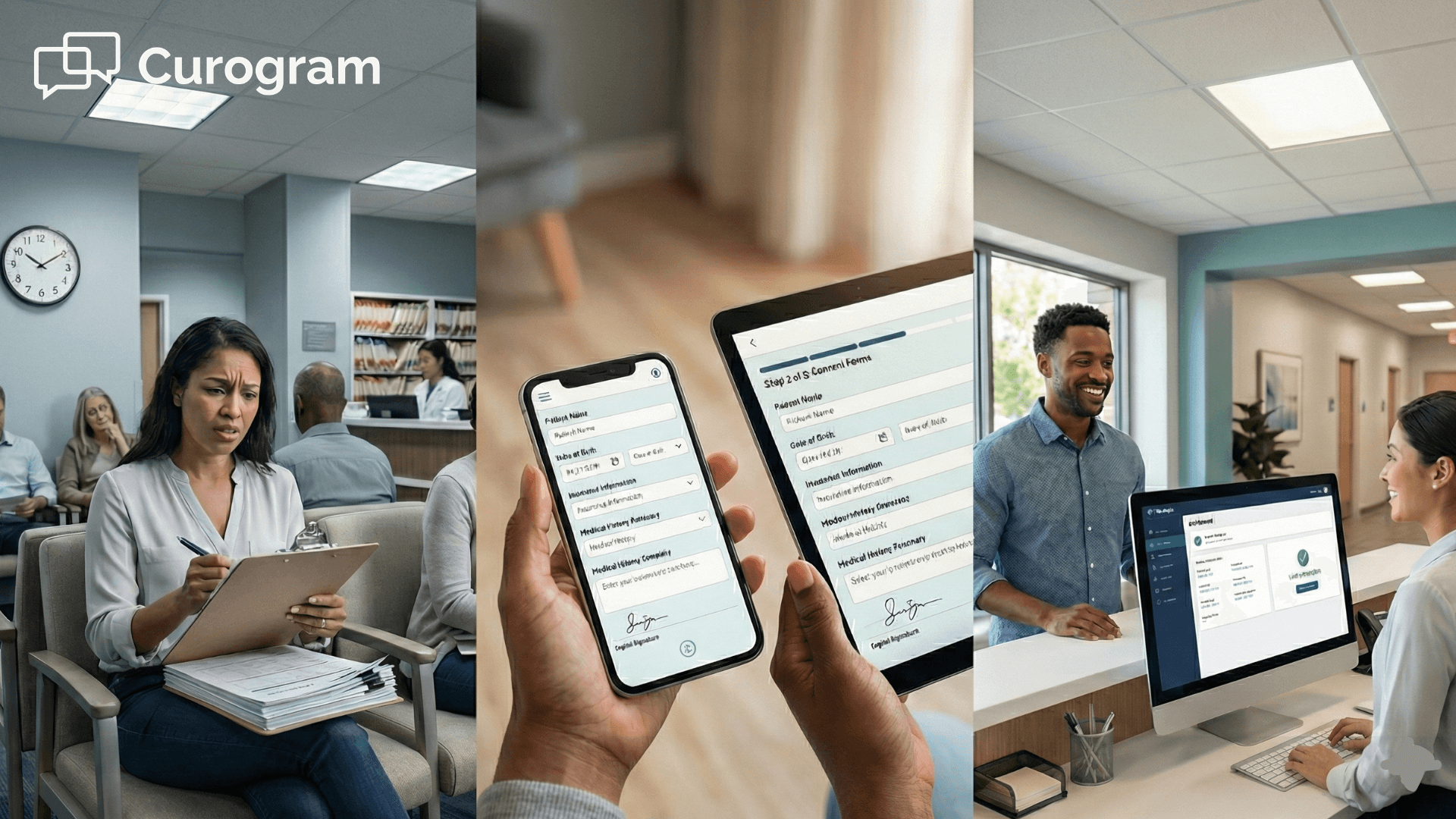
Every day, clinics face the same problem. Patients arrive and wait. They fill out forms on clipboards. Staff members type data into systems. The whole process takes time and creates stress.
For Meditab IMS organizations, this intake process affects everything. It impacts how fast patients get care. It determines how well staff can do their jobs. It shapes the entire day's workflow.
Traditional paper-based intake creates real costs. Staff spend hours entering data. Patients wait longer than needed. Errors slip through. Forms get lost or filled out wrong. The clinic falls behind schedule.
But there's a better way. Digital patient forms change how intake works. They let patients complete forms at home, on their phones. The data goes straight into Meditab IMS. No more clipboards or typing. No more delays.
This shift helps in many ways. It saves staff time. It improves data accuracy. It makes patients happier. Most of all, it makes patient access workflows run smoothly from start to finish.
The impact goes beyond convenience. Better intake efficiency means clinics can see more patients. Staff feel less stressed. Visits start on time. The whole practice works better.
In this article, we'll look at how digital intake transforms operations. We'll explore the real costs of old methods and the benefits of new ones. We'll show you what patient intake efficiency for Meditab IMS organizations truly means in practice.
Patient intake sets the tone for every visit. When it works well, everything flows. When it doesn't, problems pile up fast. For Meditab IMS organizations, intake efficiency directly affects daily operations and patient satisfaction.
The way clinics handle intake shapes their entire workflow. Delays at check-in create a ripple effect. They push back appointment times. They make patients wait. They stress out the staff. Over time, these small delays add up to big problems.
Bad intake processes cost more than time. They drain resources and hurt morale. Understanding these costs helps clinics see why change matters.
Long wait times frustrate patients. They arrive on time but sit for 20 or 30 minutes. They watch other patients pile up in the lobby. They see staff rushing around with clipboards.
This waiting happens because paper intake takes time. Each patient needs to read through multiple pages. They must answer dozens of questions. Staff then need to review each form and type the data into Meditab IMS. The whole process creates a bottleneck.
When intake slows down, appointments get delayed. A provider scheduled for 2:00 PM might not start until 2:20. That delay affects every patient after them. By day's end, the clinic runs 45 minutes behind schedule.
These delays hurt patient experience. People take time off work for appointments. They arrange childcare. They plan their day around a specific time. When clinics run late, it shows a lack of respect for their time.
Front desk staff bear the brunt of intake problems. They juggle multiple tasks at once. They greet patients, hand out forms, and answer phones. They also need to check forms for missing info and enter data.
This workload creates stress. Staff feel rushed and overwhelmed. They make mistakes when typing. They miss fields that patients left blank. They have to call patients later to get missing details.
Stress affects job satisfaction. Staff members who wanted to help patients ended up doing data entry instead. They spend more time with keyboards than with people. This wasn't what they signed up for.
Paper forms invite errors. Patients write illegibly. They skip questions by mistake. They put info in the wrong fields. Staff then need to decipher handwriting and guess at unclear answers.
When data gets entered wrong, rework follows. A misspelled name needs correction. A wrong date of birth triggers insurance problems. An incomplete medical history means calling the patient back.
Each error costs time and money. Staff must track down correct info. They need to update multiple systems. They might need to resubmit insurance claims. The whole process wastes resources that could go toward patient care.
These intake problems don't stay isolated. They spread through the entire clinic. Providers see fewer patients because intake takes longer. Revenue drops because the schedule can't fill up. Staff turnover increases because people burn out.
The operational costs compound over time. What starts as a 5-minute delay per patient becomes hours of wasted time per week. What seems like a small error rate becomes dozens of callbacks per month.
For Meditab IMS organizations, these costs add up across locations. Multiply one clinic's problems by five or ten sites. The inefficiency becomes a system-wide drain on resources and reputation.
Patient intake efficiency for Meditab IMS organizations isn't just about speed. It's about building a foundation that supports quality care. When intake works right, everything else follows.
Digital forms transform how clinics collect patient information. Instead of paper and pens, patients use their phones or computers. They complete forms before their visit, from home or work. This simple shift changes everything about the intake process.
Online patient forms connect directly to Meditab IMS. The data flows automatically into patient records. No typing required. No paper to lose. No handwriting to decode. The information arrives clean, complete, and ready to use.
The biggest impact shows up on visit day. Patients who filled out forms in advance walk straight to check-in. They confirm their info and go to the waiting area. The whole process takes two minutes instead of 20.
Faster Patient Processing
Speed matters at check-in. When five patients arrive within 10 minutes, things get chaotic. With paper forms, staff scramble to hand out clipboards. They answer questions about which fields to fill. They wait for patients to finish writing.
Digital forms eliminate this chaos. Most patients arrive with forms already done. Staff just verify identity and insurance. They check that the data looks correct in the system. Then the patient heads to their appointment.
This faster processing helps everyone. Patients spend less time in the lobby. Staff handle more people without feeling rushed. The waiting room stays calm instead of crowded. Visit times stay on track.
The time savings add up quickly. A clinic that sees 50 patients per day saves 15 minutes per patient on average. That's 12.5 hours of time saved daily. Staff can use that time for other important tasks.
Better Schedule Adherence
When intake runs smoothly, schedules work as planned. A 2:00 PM appointment actually starts at 2:00 PM. Providers move from patient to patient on time. The whole day flows without delays.
This consistency benefits both patients and providers. Patients don't waste time waiting. Providers don't feel rushed or behind. Everyone experiences a more organized, professional environment.
Improving Data Completeness and Accuracy
Quality data matters as much as speed. Online forms help clinics collect better information with fewer mistakes. The technology guides patients through each field and catches errors before they become problems.
Digital forms include smart features. Required fields must be filled in. Date formats stay consistent. Phone numbers need the right number of digits. Patients can't submit until everything looks correct.
This validation prevents common errors. No more blank insurance fields. No more dates written as text. No more missing emergency contacts. The system ensures every submission has the basics covered.
Staff notice the difference immediately. They spend less time chasing down missing info. They don't need to call patients after appointments. The data arrives completely the first time.
Clearer Information
Handwriting causes many intake problems. Staff squint at messy writing. They guess whether that's a '5' or an 'S'. They wonder if the patient meant to write something different.
Typed text eliminates these issues. Every letter appears clearly. Names are spelled correctly. Addresses are formatted properly. Medical history details come through without confusion.
This clarity helps providers, too. They can read patient information confidently. They don't need to double-check basics. They focus on medical care instead of data interpretation.
Fewer Follow-up Questions
Incomplete forms create extra work. Staff must reach out to patients. They leave messages or send emails. They wait for responses. The whole cycle delays care and wastes time.
Online forms reduce these callbacks significantly. Most submissions arrive 100% complete. When questions do arise, they're specific and rare. Staff handle exceptions rather than routine gaps.
For Meditab IMS organizations, this improvement in data quality supports better patient access workflows. Clean data means smoother processes throughout the entire care journey.

Administrative tasks consume a huge portion of clinic resources. Staff spend hours each day on intake-related work. This time costs money and takes away from patient-facing activities. Digital intake changes this equation dramatically.
The shift to online forms doesn't just make things faster. It fundamentally reduces how much work staff need to do. Tasks that used to take 10 minutes now happen automatically. Work that required two people now needs just one.
Data entry represents one of the biggest time drains in healthcare. Every paper form requires manual typing. Every field needs attention. Every line must be checked and double-checked. This work never ends.
Think about what happens with paper intake. A patient fills out three pages of forms. That's roughly 50-75 data points. Someone must type each one into Meditab IMS. They need to verify spelling, especially for names. They must format phone numbers and addresses correctly.
This typing takes 5-8 minutes per patient on average. For a clinic seeing 40 patients daily, that's 3-5 hours of pure data entry work. One full staff member spends their entire day just typing what patients already wrote.
Digital forms eliminate this entire step. Patients enter their own data. The system validates it. The information flows directly into the EMR. Zero typing required.
The time savings are immediate and measurable. That staff member who spent all day typing can now focus on patient support. They can handle insurance questions. They can help with scheduling. They can actually interact with people.
Errors create their own workload. When data gets entered incorrectly, someone must fix it. They need to locate the mistake. They must find the correct information. They have to update multiple places where the error spread.
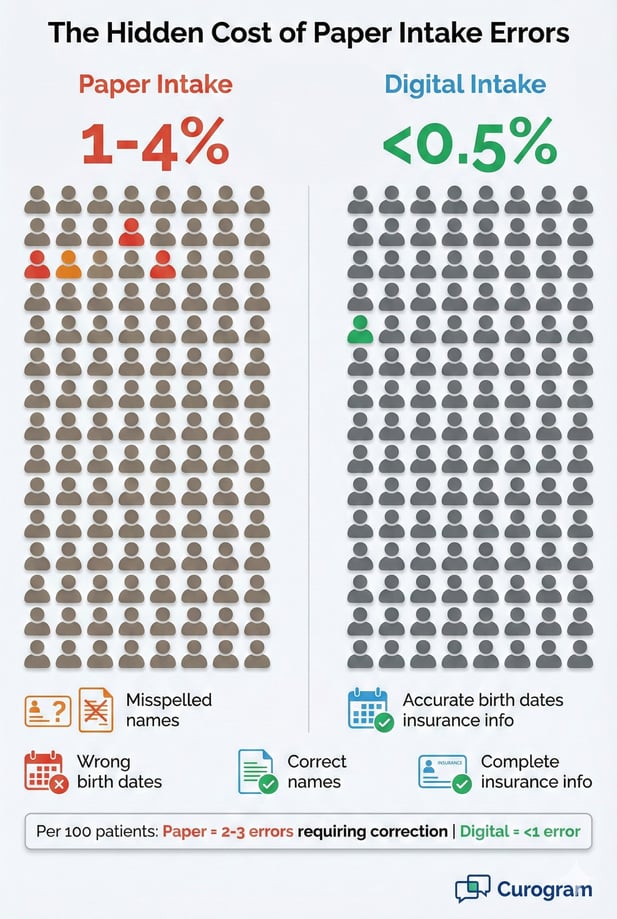
Paper intake generates errors constantly. A survey found that manual data entry produces error rates between 1-4%. With 75 data points per patient, that means 1-3 mistakes per form. Some errors are minor, like a wrong middle initial. Others cause real problems, like incorrect birth dates that make insurance claims fail.
Each error requires attention. Staff must review claim rejections. They contact patients for verification. They resubmit corrected information. The whole process takes 10-15 minutes per error.
Digital forms cut error rates dramatically. Validation catches problems before submission. Patients see their data and can spot mistakes. The system formats everything consistently. Error rates drop to less than 0.5%, and the errors that remain are usually patient mistakes, not transcription issues.
This reduction saves substantial time. Fewer errors mean less rework. Staff spend their time on productive tasks instead of fixing preventable mistakes.
Patient information changes over time. People move, switch jobs, change insurance, or update phone numbers. With paper systems, tracking these changes creates work.
Patients often don't mention changes until check-in. Staff must then grab the paper form, mark up the old info, and type the new details. If the change affects insurance, they need to verify coverage on the spot. The whole process disrupts workflow.
Online forms make updates easier. Patients can submit changes anytime. The system tracks what changed and when. Staff review updates in batches rather than handling them one by one at check-in.
When administrative work decreases, staff can redirect their energy. They have time for tasks that actually help patients. This shift improves both job satisfaction and service quality.
Some patients need extra help. They have questions about billing. They don't understand their insurance. They need guidance on the next steps after their visit. These conversations require time and attention.
When staff are buried in data entry, they can't provide this support. They rush through interactions. They hand out information sheets instead of explaining things. Patients leave confused.
Digital intake frees up capacity for these important conversations. Staff can sit down with patients who need help. They can explain insurance benefits clearly. They can walk through post-visit instructions. They can actually support people.
The quality of service improves when staff aren't overwhelmed. They greet patients warmly instead of hurriedly. They notice when someone looks confused. They take time to answer questions thoroughly.
This better service shows up in patient satisfaction scores. People notice when staff seem calm and helpful. They appreciate getting real attention instead of rushed treatment. These positive experiences build loyalty and trust.
For Meditab IMS organizations, reducing administrative workload through patient intake efficiency creates a better workplace. Staff feel less stressed. They enjoy their jobs more. They provide better care. Everyone benefits from the change.
Clinic flow determines how many patients receive care each day. When intake works efficiently, the entire schedule runs smoothly. Providers stay on time, patients move through quickly, and the day feels manageable instead of chaotic.
Check-in sets the pace for everything that follows. Long check-ins create delays that cascade through the schedule. Short check-ins keep things moving.
Faster Patient Processing
Traditional check-in involves multiple steps. Staff greet the patient, hand out forms, wait for completion, review for missing fields, and then enter data. Even when everything goes smoothly, this takes 15-20 minutes.
Digital intake compresses this timeline. Patients arrive with forms completed. Staff verify identity and insurance in 2-3 minutes. The patient heads to the exam room. The whole process feels effortless.
This speed matters most during busy periods. Between 8-10 AM, many clinics see a rush of patients. With paper intake, staff struggle to keep up. With digital intake, they handle the rush without stress.
Better Schedule Adherence
A schedule only works if appointments start on time. Each delay pushes back everything after it. By afternoon, small morning delays become big problems.
Efficient intake prevents these delays. Patients are ready at their appointment time. Providers move smoothly from one visit to the next. The schedule works as designed.
Consistency builds trust. Patients want to know their 3:00 PM appointment means 3:00 PM. Staff want predictable workflows. Providers want to know they'll finish their day at a reasonable hour.
When patient intake efficiency for Meditab IMS organizations improves, operations become more predictable. Staff know what to expect each day. They don't face surprise delays or unexpected bottlenecks. They can plan their work and pace themselves accordingly.
This predictability also helps with staffing. Clinics can right-size their teams. They don't need extra people to handle intake chaos. They can deploy staff where they're actually needed.
Patient experience starts before the visit. How people feel about intake affects their overall impression. Digital forms improve this experience in several ways.
Check-in anxiety is real. Patients worry about arriving late, finding the office, and getting everything done on time. Adding form-filling to these concerns increases stress.
Online forms let patients complete intake on their own schedule. They can fill out forms the night before while watching TV. They can do it during lunch at work. They choose when they have time and focus.
This flexibility reduces stress significantly. Patients arrive calm instead of rushed. They're ready for their appointment instead of worrying about paperwork.
Better preparation leads to better visits. When patients think through their health history carefully, they provide more complete information. When providers have this information in advance, they can plan more effectively.
Patients filling out forms at home can look up details they might forget under pressure. They can check medication names. They can confirm dates of previous procedures. They can gather family health history. This thoroughness improves the quality of information providers receive.
When patient access workflows include digital intake, the entire care experience improves. Patients feel respected and prepared. Providers have better information. Visits accomplish more in less time.

Healthcare organizations must protect patient information. HIPAA sets strict rules about how data gets collected and stored. Many consumer tools don't meet these standards, creating risk for clinics that use them.
Not all digital forms are created equal. Regular online form tools lack proper security. They don't encrypt data correctly. They don't track who accesses information. They can't meet healthcare compliance requirements.
HIPAA-compliant intake platforms use encryption from the moment patients start typing. Data transmits securely to servers. It is stored in protected databases. Access logs track every view and change.
This security matters for patient trust. People share sensitive health information. They need confidence that their data stays private. Proper security measures provide that confidence.
For Meditab IMS organizations, compliance isn't optional. It's a fundamental requirement. Digital intake must meet HIPAA standards while still delivering efficiency gains.
Proper systems control who sees patient data. Only authorized staff can access intake forms. Every access gets logged. Administrators can review who looked at what and when.
This access control prevents unauthorized viewing. It creates accountability. It helps organizations respond if questions arise about data handling.
Healthcare organizations face regular audits. Auditors want to see how patient data flows through systems. They check for proper procedures and controls. Good digital intake systems make these audits easier.
Digital systems create automatic records. They track when forms were sent, opened, and completed. They log data changes. They maintain version history. All this information lives in one place.
When auditors ask questions, staff can pull reports quickly. They can show exactly what happened and when. They can demonstrate proper procedures. This documentation protects the organization.
Investment in digital intake pays off in measurable ways. Organizations can track time savings, error reductions, and cost avoidance. These metrics prove the value of change.
Every hour saved represents real value. If digital intake saves 5 hours of data entry daily, that's 25 hours per week. Over a year, that's 1,300 hours. At $20 per hour, that's $26,000 in labor costs avoided.
Organizations can either reduce staffing needs or redirect staff to higher-value work. Either choice creates value. Fewer hours spent on manual tasks means more capacity for growth.
When clinics run more efficiently, they can serve more patients. An extra 2-3 patients per day across multiple providers adds up quickly. More visits mean more revenue.
Improved patient intake efficiency for Meditab IMS organizations shows up in access metrics. Third-party available drops. Same-day capacity increases. Patient satisfaction scores improve. These improvements create lasting value for the organization.
Curogram understands the needs of ambulatory and community care settings. The platform was built specifically for organizations that use Meditab IMS. It handles the real-world challenges these clinics face every day.
Organizations need solutions that work across multiple locations. Curogram provides centralized management while allowing site-level customization. Forms stay consistent, but clinics can adapt to local needs.
Getting started doesn't require months of implementation. Curogram integrates directly with Meditab IMS. The setup process focuses on configuring forms and workflows, not wrestling with technical complexities.
This also helps with the progress of staff training. The interface is intuitive. Most team members learn the basics in less than an hour. This quick adoption means benefits start immediately.
HIPAA compliance is built into the platform, not added as an afterthought. Encryption, access controls, and audit logging work automatically. Organizations don't need to worry about security gaps.
The platform also supports BAA requirements. Curogram takes responsibility for protecting patient data. This partnership approach gives organizations confidence in their compliance posture.
Digital intake must work consistently. Patients need to access forms anytime. Data must flow reliably into Meditab IMS. System uptime matters.
Curogram maintains high reliability standards. The platform handles peak usage without slowdowns. Technical support responds quickly when questions arise. Organizations can depend on the system working when they need it.
For organizations focused on patient intake efficiency for Meditab IMS organizations, Curogram provides the tools needed to transform operations while maintaining compliance and reliability.
Patient intake creates the foundation for every clinic visit. When it works well, benefits flow through the entire organization. Staff feel less stressed. Patients have better experiences. Operations run more smoothly.
The shift to digital intake isn't just about technology. It's about respecting patient time. It's about giving staff the capacity to do their jobs well. It's about building operations that scale efficiently.
Organizations that still rely on paper intake face mounting challenges. The delays accumulate. The errors pile up. The staff stress grows. These problems won't fix themselves. They require a fundamental change in approach.
Digital forms address these challenges directly. They eliminate manual data entry. They catch errors before submission. They let patients work at their own pace. They integrate seamlessly with Meditab IMS.
The benefits extend beyond efficiency. Better patient access workflows improve satisfaction scores. Reduced administrative burden lowers costs. Improved data quality supports better care decisions. The entire organization performs at a higher level.
Compliance remains secure throughout the transition. HIPAA-compliant platforms protect patient data automatically. Access controls maintain proper oversight. Audit trails document everything. Organizations gain efficiency without sacrificing security.
The ROI calculation makes sense from multiple angles. Time savings translate to cost avoidance. Better throughput creates revenue opportunities. Improved staff satisfaction reduces turnover. Better patient experience builds loyalty.
For Meditab IMS organizations, the path forward is clear. Digital intake represents essential infrastructure, not optional convenience. It's the foundation that supports growth and quality care.
Organizations that embrace patient intake efficiency for Meditab IMS organizations position themselves for success. They build operations that scale. They create patient experiences that stand out. They give staff the tools they need to excel.
The technology exists. The benefits are proven. The implementation path is straightforward. What remains is the decision to act. Organizations that move now will gain advantages that compound over time.
Digital intake isn't the future. It's the present. Organizations still using paper are falling behind competitors who made the change. The gap widens with each passing month.
The question isn't whether to improve intake efficiency. It's when. Every day delayed is another day of unnecessary costs and missed opportunities.
Book a demo to see how Curogram supports better care workflows with Meditab IMS.
Digital intake eliminates manual data entry because patients enter their own information. Staff don't need to type from paper forms or decipher handwriting. The system validates data automatically, catching errors before submission. This means less rework and fewer callbacks to patients for missing details.
Patients can complete online forms on their own schedule, from home or work. They don't feel rushed at check-in. They can take time to look up medication names or medical history details. The forms also guide them through each section, making the process less confusing than paper.
When patients arrive with forms already complete, check-in takes 2-3 minutes instead of 15-20 minutes. This keeps appointments on schedule. Providers can see patients at their appointed times. The entire day runs more smoothly without intake bottlenecks.
HIPAA-compliant systems use encryption to protect data during transmission and storage. They control who can access patient information and log all access attempts. They also sign Business Associate Agreements and maintain proper security policies. Regular consumer tools lack these protections.
Implementation typically takes 2-4 weeks, depending on organization size. This includes form configuration, Meditab IMS integration, and staff training. Most team members learn the system in less than an hour. Benefits start immediately once the system goes live.
💡 Digital intake workflows for Meditab IMS teams replace paper forms with automated online systems. These workflows help front desk staff save time...
💡 Online patient forms for Meditab IMS practices help clinics move faster and work smarter. These digital tools let patients fill out intake forms...
💡 Online patient forms cut costs and boost revenue for imaging centers using Veradigm. They reduce the admin workload on Veradigm while making care...