11 min read

The ROI of Online Patient Forms for GE Centricity Clinics

The ROI of Online Patient Forms for GE Centricity Clinics
💡 GE Centricity clinics achieve measurable returns by switching to online patient forms. Digital intake eliminates paper handling and cuts labor costs tied to manual data entry. 
  • Improve data accuracy and speed up check-in with direct system integration
  • See more patients daily without adding staff through faster room turnover
  • Lower admin workload, fewer billing errors, and better revenue protection
The investment pays for itself through reduced operational friction and higher patient satisfaction scores. 

Your front desk handles hundreds of forms each week. Staff members type the same information multiple times. Patients wait while clerks transcribe handwritten answers into your system. This cycle wastes time and money.

For GE Centricity clinics, paper-based intake creates hidden costs that add up fast. Every form that enters your practice manually costs you in labor, supplies, and storage. Errors in transcription lead to billing delays and incomplete patient records. When your imaging department lacks critical details, studies get postponed or repeated.

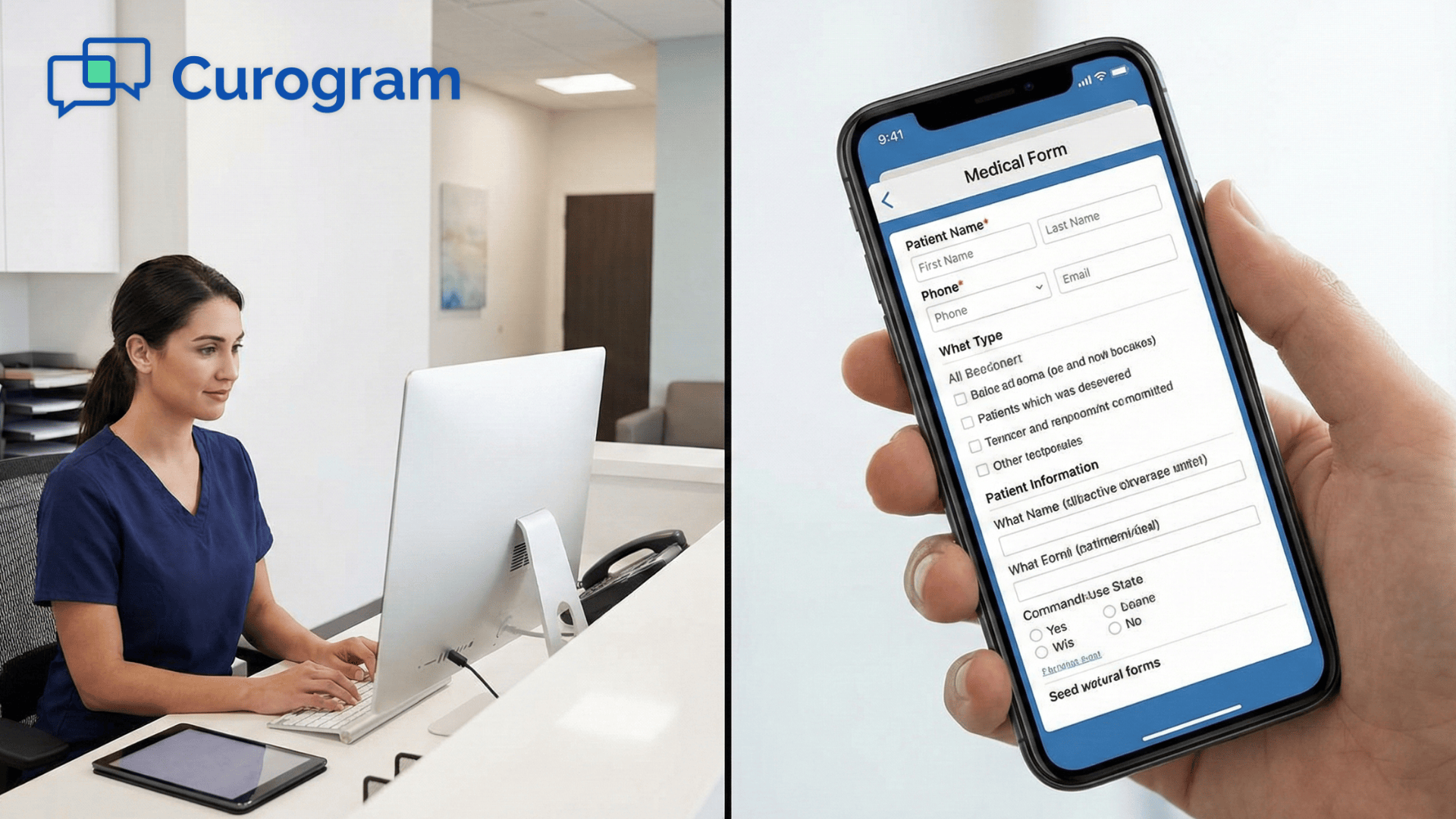
The shift to online patient forms delivers immediate returns. Digital intake removes paper from your workflow entirely. Patients fill out forms on their phones before appointments. Information flows directly into GE Centricity without manual entry. Your staff focuses on patient care instead of data entry.

Smart clinics track their return on investment from day one. They measure time saved at check-in. They count fewer transcription errors in patient charts. They calculate higher daily patient volume with the same staff size. These metrics prove that digital forms pay for themselves quickly.

This guide shows you the real financial impact of online forms for GE Centricity practices. You will learn where costs hide in manual workflows. You will see how automation reduces your admin workload. You will understand why integration matters for clean data. Most importantly, you will discover measurable ways that digital intake protects revenue and improves your bottom line.

The numbers speak clearly. Clinics that eliminate paper intake see faster check-in, better accuracy, and higher patient satisfaction. Your practice can achieve the same results with the right approach to digital forms.

Why Intake Efficiency Directly Impacts Operational Costs for GE Centricity Clinics

Every patient who walks through your door triggers a series of administrative tasks. Forms must be distributed, completed, collected, and entered into your system. Each step requires staff time. Each delay extends the check-in process. Each error creates rework that compounds the problem.

High patient volume amplifies every inefficiency in your intake process. A clinic seeing 100 patients daily cannot afford five extra minutes per check-in. That adds up to more than eight hours of lost productivity every single day. Scale that across multiple locations and the waste becomes staggering.

GE Centricity users face unique challenges because of their diverse patient populations:

  • Radiology departments handle urgent imaging requests alongside scheduled procedures
  • Specialty clinics coordinate care across multiple providers
  • Primary care offices manage everything from routine checkups to complex chronic conditions

Each scenario demands different forms and information.

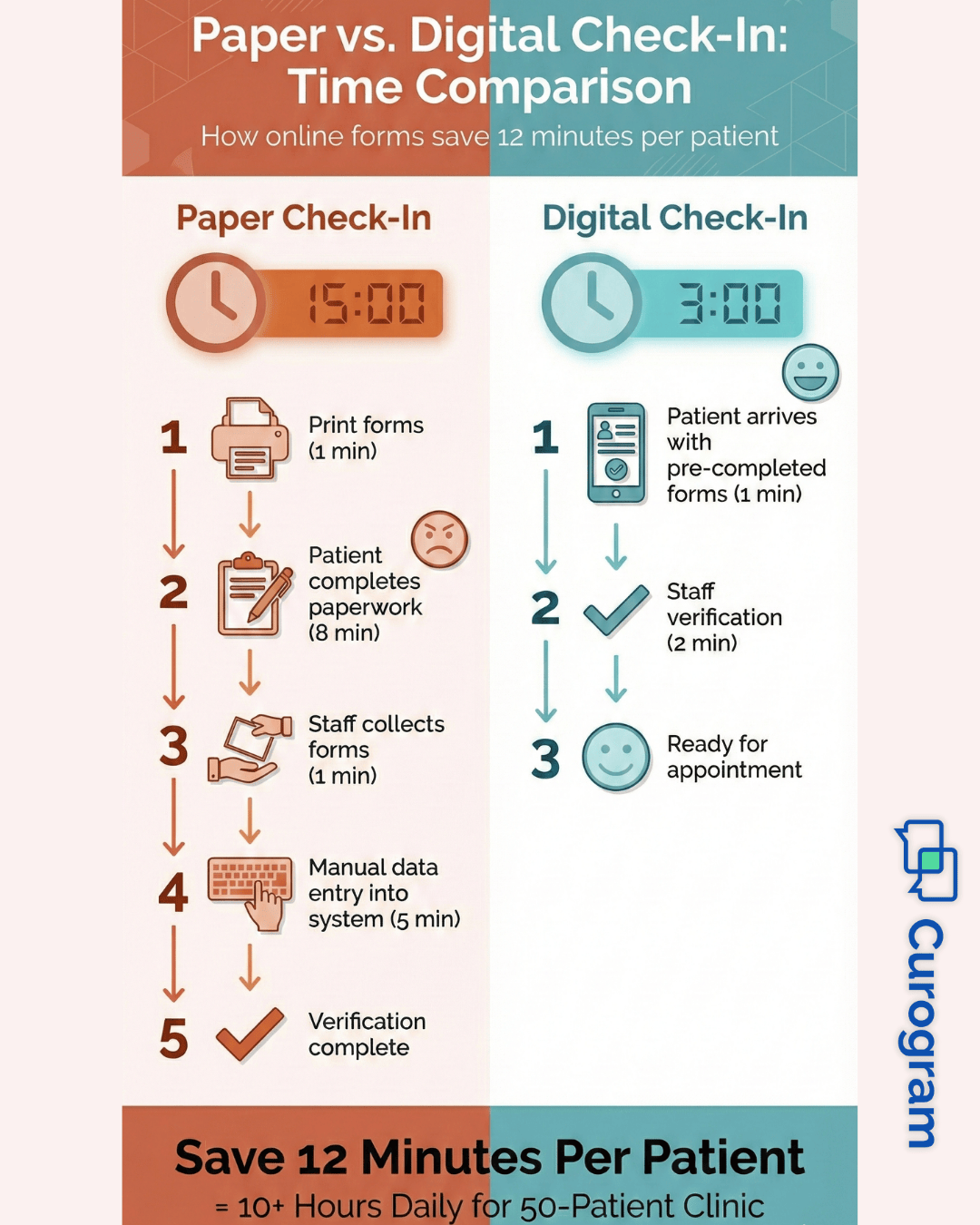
Manual workflows consume substantial staff time in predictable ways. Your front desk staff spends 10 to 15 minutes per patient managing paperwork. They print forms, hand them to patients, answer questions about required fields, collect completed forms, and then type everything into GE Centricity. This cycle repeats dozens of times each day.

The cost calculation is straightforward. A medical assistant earning $18 per hour who spends 12 minutes on intake for each of 40 patients costs your practice $144 daily just in labor for data entry. That totals more than $37,000 annually for a single staff member handling one task. Most clinics employ multiple people performing similar work.

Multi-location operations multiply these inefficiencies across every site. A practice with five locations wastes $185,000 yearly on manual intake labor alone. That figure does not include paper costs, storage space, or the wages paid to staff who manage and organize physical forms. It also excludes the hidden expense of errors that require correction.

Paper handling creates additional overhead that often goes unmeasured:

  • Forms must be ordered, stored, organized, and eventually destroyed according to compliance requirements
  • Filing cabinets occupy valuable square footage
  • Staff members search through stacks of paper to locate specific documents
  • Misfiled forms disappear entirely, forcing patients to complete duplicates

Transcription introduces errors that trigger expensive downstream consequences. A single digit wrong in an insurance ID delays billing. Missing allergy information risks patient safety and potential liability. Incomplete medical history forces providers to spend extra time gathering details during the appointment. Each mistake reduces the time available for patient care.

Your GE Centricity system already handles complex workflows efficiently when data enters correctly. The problem lies in the manual bridge between paper forms and digital records. Every handwritten form represents a bottleneck that slows your entire operation. Removing that bottleneck delivers immediate cost savings across your practice.

Smart practices recognize that intake efficiency affects every department. Faster check-in means shorter wait times. Accurate data means fewer billing rejections. Complete information means better clinical decisions. The return on investment starts at your front desk but extends throughout your organization.

Financial Costs of Paper-Based and Manual Intake Workflows

The true cost of paper intake extends far beyond forms and printer toner. Labor represents the largest expense, hiding in daily routines that seem normal until you calculate the total hours wasted.

Staff time dedicated to transcription adds up faster than most administrators realize. A front desk employee processing 30 forms daily at eight minutes each equals four hours of pure transcription work. At $20 per hour, this single task costs $1,600 monthly. Multiply this across your team and locations.

Delays in patient throughput create a ripple effect that damages revenue potential:

  • Check-in taking 15 minutes instead of five shifts your entire schedule backward
  • Appointments run late and providers see fewer patients
  • Lost revenue from even two fewer patients daily can exceed $100,000 annually

Paper forms contribute to supply expenses that never stop accumulating. Printing costs, paper stock, toner cartridges, and form updates add up to several thousand dollars annually. Storage for completed forms requires space that could serve other purposes.

Errors lead to expensive rework that compounds labor costs. A billing specialist discovers an insurance ID was transcribed incorrectly. Claims get rejected. This cycle wastes 20 to 30 minutes per occurrence. With even modest error rates, practices spend hours weekly fixing preventable mistakes.

For radiology and imaging departments using GE Centricity, missing information creates particularly costly problems. A patient arrives for a CT scan but the intake form lacks kidney function details. The appointment must be rescheduled. The imaging room sits empty during a time slot that could have generated $800 in revenue.

The opportunity cost of manual intake often exceeds direct expenses. Your most skilled front desk staff spend their time typing instead of engaging with patients. This reduces patient satisfaction and makes it harder to build strong relationships.

Calculating your true cost requires tracking both obvious and hidden expenses:

  • Direct labor hours spent on forms
  • Supply costs and storage space
  • Revenue impact of slower throughput
  • Error correction time and lost goodwill

The total usually shocks clinic administrators who see the complete picture for the first time.

How Online Patient Forms Reduce Administrative Costs

Digital forms eliminate the manual labor that drives up your operational expenses. When patients complete information online before appointments, data flows directly into GE Centricity without staff intervention. This automated data collection removes the most time-consuming part of your intake process entirely.

The transformation starts with how patients receive and complete forms. Instead of arriving early to fill out paperwork in your waiting room, they get a secure link via text or email. They complete forms on their phone, tablet, or computer at their convenience. This shift moves the work outside your clinic walls and off your staff's to-do list.

Patients enter their own information with better accuracy than staff transcribing handwritten forms. Autocomplete features help them spell difficult terms correctly. Required field validation ensures nothing gets skipped. The data arrives in your system clean and complete.

No paper handling means immediate cost savings across multiple categories:

  • Stop ordering printed forms that become outdated when regulations change
  • Eliminate toner and printer maintenance tied to form production
  • Reclaim storage space currently occupied by file cabinets
  • End the ongoing expense of secure document destruction

The impact on front desk operations becomes visible within days. Staff members who previously spent 40% of their shift on data entry can redirect that time to higher-value activities. They greet patients warmly instead of rushing through paperwork. They schedule follow-up appointments and coordinate referrals.

Many clinics discover they can handle higher patient volume without adding administrative staff. The labor savings from eliminating manual data entry often equal the capacity of a full-time position. A practice considering hiring another front desk employee might find that online forms solve their capacity problem at a fraction of the cost.

The math works in favor of digital forms even for smaller practices. Consider a clinic with three front desk staff members who each spend two hours daily on form-related tasks. That totals six hours of labor every day. At $18 per hour with 30% benefits loading, the cost reaches $140 daily. Over a year, that equals more than $36,000 in labor devoted solely to managing paper forms.

For GE Centricity users, integration capabilities make the difference between basic digital forms and truly efficient automation. Forms that sync directly with your EMR eliminate the need for any manual transfer. Patient demographics, insurance information, medical history, and consent documents all populate the correct fields automatically.

The reduction in data entry errors delivers financial benefits that extend beyond saved labor:

  • Accurate information means fewer billing rejections from insurance companies
  • Claims process faster when patient details match insurance records perfectly
  • Revenue cycle accelerates because clean data moves through every stage without delays

Compliance becomes simpler when forms are digital and standardized. You ensure every patient receives the same required disclosures. You capture necessary signatures electronically with full audit trails. You update forms instantly across all locations when regulations change.

Multi-location practices gain enormous efficiency from centralized form management:

  • Create templates once and deploy them to every site
  • Updates propagate instantly across all locations
  • Reports aggregate data across all locations
  • Consistent workflows regardless of which office a patient visits

Smart practices track their cost reduction systematically after implementing digital forms. They measure average check-in time before and after. They calculate labor hours saved per week. They monitor error rates in patient records. These measurements prove the value of the investment and guide future improvements.

Reduce admin workload GE Centricity - mid

GE Centricity Integration Advantages That Improve ROI

True integration with GE Centricity transforms online forms from a convenience into a strategic asset. When patient information moves seamlessly between systems, you eliminate the duplicate work that undermines ROI for basic digital forms. The right integration architecture delivers value that standalone form tools cannot match.

EMR-Aligned Form Delivery and Routing

Smart form systems read your GE Centricity schedule and send the right forms to the right patients automatically. A patient scheduled for radiology receives imaging-specific questions about contrast allergies and kidney function. A new patient gets comprehensive intake forms including insurance verification and medical history. A returning patient sees only updated consent forms or condition-specific questionnaires.

This intelligent routing eliminates staff time spent deciding which forms each patient needs. It prevents the confusion that occurs when patients receive generic form packets that do not match their appointment type. It ensures every specialty department gets the specific information required for safe, efficient care.

Accurate Patient Matching for Clean Data

Integration prevents duplicate patient records that plague practices using disconnected systems. When forms sync with GE Centricity, the system matches incoming data to existing patient charts using consistent identifiers. Names, dates of birth, and contact information align perfectly. Your database stays clean instead of accumulating multiple entries for the same person.

Clean data improves every downstream process. Billing staff spend less time resolving duplicate accounts. Providers see complete patient histories instead of fragmented records. Analytics and reporting become reliable because your data foundation is solid. The time saved on data cleanup alone often justifies the integration investment.

Reduced Need for Manual Intake Coordination

Manual coordination between form systems and GE Centricity creates endless opportunities for errors and delays. Staff must remember to check multiple systems. They copy information between platforms. They reconcile discrepancies when data does not match. Each handoff introduces risk and consumes time.

True integration eliminates these coordination tasks entirely. Forms send data to GE Centricity automatically upon completion. Updates sync in real time so everyone sees current information. Staff simply verify that data arrived correctly instead of manually transferring it. This automation removes a major source of inefficiency and error from your workflow.

Revenue Protection for Radiology and Specialty Departments

Specialty departments face unique challenges that make complete intake information critical for revenue protection. Imaging centers cannot proceed with studies when safety data is missing. Procedure rooms sit idle when consent forms are incomplete. Every delay directly impacts billable revenue.

Fewer Incomplete Studies Due to Missing Information

Digital forms with required field validation ensure technologists have every detail needed before starting a procedure. Contrast protocols, prior imaging results, and relevant clinical history all reach the department before the patient arrives. Studies proceed on schedule instead of stopping midway through when critical information surfaces.

Reduced Delays That Impact Throughput

When forms are complete before appointments, your department can maintain optimal throughput. Technologists spend their time performing scans instead of hunting for missing data. The schedule runs on time because delays from incomplete intake disappear. Higher throughput means more billable procedures per day without extending hours or adding equipment.

More Billable Visits Completed on Schedule

Complete information prevents cancellations that destroy revenue. Patients who would have needed rescheduling due to missing forms can proceed as planned. Your team completes every scheduled appointment instead of losing revenue to preventable gaps. Over time, this improved completion rate significantly impacts your bottom line.

Why Curogram Delivers the Best ROI for Online Forms

Curogram stands out among patient engagement platforms because it was built specifically to reduce admin workload for practices using systems like GE Centricity. Our HIPAA-compliant online forms integrate seamlessly with your workflow, delivering measurable returns from day one.

Fast deployment means you start seeing benefits within days instead of months. Our implementation team configures forms tailored to your specialty and connects them to GE Centricity quickly. Your staff receive focused training that gets them productive immediately.

Built for enterprise scalability, Curogram grows with your practice without requiring system overhauls. Add new locations with a few clicks. Deploy additional form types as your needs evolve. Our infrastructure scales automatically so you never outgrow the platform.

Radiology and specialty-ready templates let you launch forms immediately without starting from scratch. We include pre-built forms for common imaging protocols, procedure consent, and specialty-specific intake. Customize them to match your exact requirements, or use them as-is to get started fast.

Our customers report average check-in time reductions of 60% or more. They eliminate hours of data entry work weekly. These results translate directly to your bottom line through lower labor costs, higher throughput, and better revenue protection.

Conclusion

The financial case for online patient forms is clear when you add up the costs of manual intake. Your practice loses thousands of dollars monthly to labor waste, errors, and delays that digital automation eliminates entirely. The longer you continue with paper processes, the more revenue you leave on the table.

GE Centricity clinics have unique needs that generic form solutions cannot address properly. You require specialty-specific forms that capture the right clinical details. You need integration that keeps your EMR data clean and current. You want faster check-in that lets you serve more patients without adding staff. These goals demand a purpose-built solution designed for your workflow.

The return on investment starts immediately when forms integrate correctly with your systems. Patients complete information before arrival. Staff skip data entry and move straight to patient interaction. Providers get complete histories that support better care decisions. Your revenue cycle speeds up because billing information enters your system accurately the first time.

Multi-location practices gain even greater benefits from standardized digital forms. Every site uses the same templates and workflows. Training new staff becomes simpler. Data quality improves across your entire organization. Administrative costs drop as a percentage of revenue while patient satisfaction rises.

The time to act is now. Every day with manual intake costs your practice money and creates frustration for patients and staff. Modern form technology removes these problems while delivering measurable financial returns. Your competitors are already moving to digital workflows. Staying with paper puts you at a disadvantage that grows larger each month.

Book a demo to See Curogram + GE Centricity in Action.

Frequently Asked Questions

How much time can online patient forms save for a typical GE Centricity clinic?

Most clinics save between 5 to 12 minutes per patient at check-in when switching to online forms. This translates to 4 to 10 hours of staff time daily for a practice seeing 50 patients. Over a year, this equals thousands of hours that can be redirected to patient care, scheduling, or other revenue-generating activities. The exact savings depend on your current processes and how thoroughly you implement digital intake across all appointment types.

Why does GE Centricity integration matter more than just using any digital form tool?

Integration ensures data flows automatically into the correct patient charts without manual transfer. When forms sync directly with GE Centricity, your staff avoid the double work of collecting information digitally but still typing it into your EMR. True integration also prevents duplicate patient records, maintains data accuracy, and enables intelligent form routing based on appointment types. Without integration, you eliminate paper but still keep most of the labor waste.

How quickly can a multi-location practice see positive ROI from online patient forms?

Most multi-location practices achieve positive ROI within three to six months. The larger your operation, the faster you see returns because labor savings multiply across every site. A practice with five locations might save $15,000 monthly in reduced data entry costs alone. Implementation typically takes two to four weeks, and the monthly platform cost is usually a fraction of the labor savings. The exact timeline depends on your patient volume, current staffing levels, and how completely you transition away from paper.

How do online forms improve data accuracy compared to paper intake?

Digital forms improve accuracy in several ways. Required field validation prevents patients from skipping critical information. Autocomplete features help patients spell medications and conditions correctly. Patients enter their own insurance details instead of staff trying to read handwritten numbers. There is no transcription step where staff might misread handwriting or type information incorrectly. The result is cleaner data that leads to faster billing, fewer claim rejections, and more complete medical records for better clinical decisions.

What specific benefits do radiology departments gain from online patient forms integrated with GE Centricity?

Radiology departments need complete safety information before starting imaging procedures. Online forms with required field validation ensure technologists have contrast allergy details, kidney function data, pregnancy status, and prior imaging results before the patient arrives. This completeness prevents study delays, reduces canceled appointments, and eliminates the need to repeat scans due to missing clinical information. The department maintains higher throughput because every patient is properly prepared, which directly protects revenue from lost procedure time.


Reducing Admin Workload and Boosting ROI with Online Forms in Veradigm

Reducing Admin Workload and Boosting ROI with Online Forms in Veradigm

💡 Online patient forms cut costs and boost revenue for imaging centers using Veradigm. They reduce the admin workload on Veradigm while making care...

Read More
Online Patient Forms for GE Centricity | Curogram

Online Patient Forms for GE Centricity | Curogram

💡 Online patient forms in GE Centricity help specialty clinics cut down wait times and reduce errors. GE Centricity digital intake connects...

Read More
Online Patient Forms in StreamlineMD: Faster Imaging Intake

Online Patient Forms in StreamlineMD: Faster Imaging Intake

💡 Online patient forms in StreamlineMD help radiology, vascular, and IR practices cut check-in time and boost exam readiness. Curogram's digital...

Read More