
Text-Link Intake for Prime Clinical | Retire the Clipboard
 Jo Galvez : Aug 6, 2026, 4:00:00 PM
Clipboards cost 15–30 min of data entry per patient. Text-link intake for Prime Clinical practices — done before arrival. Schedule a demo.
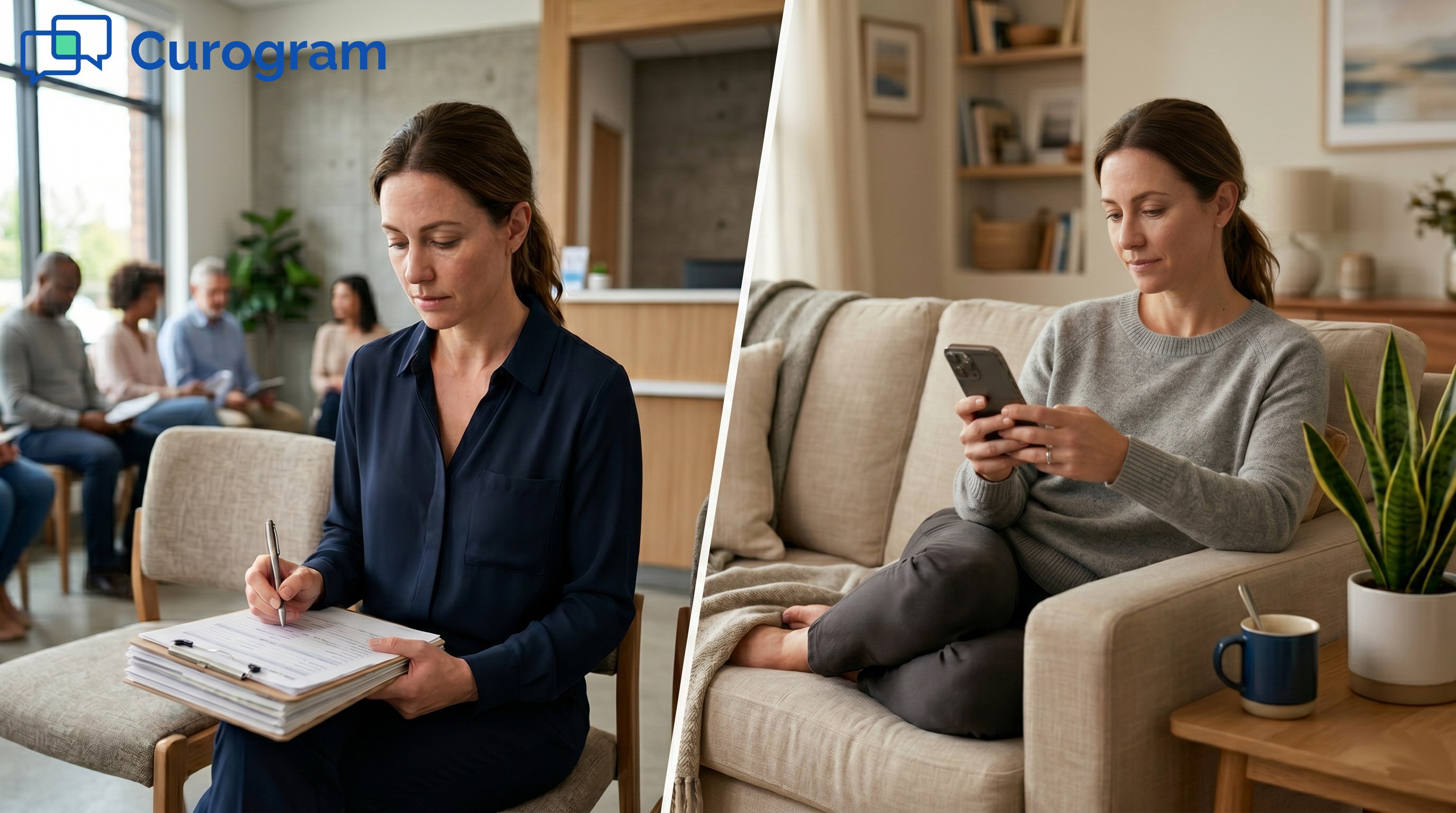
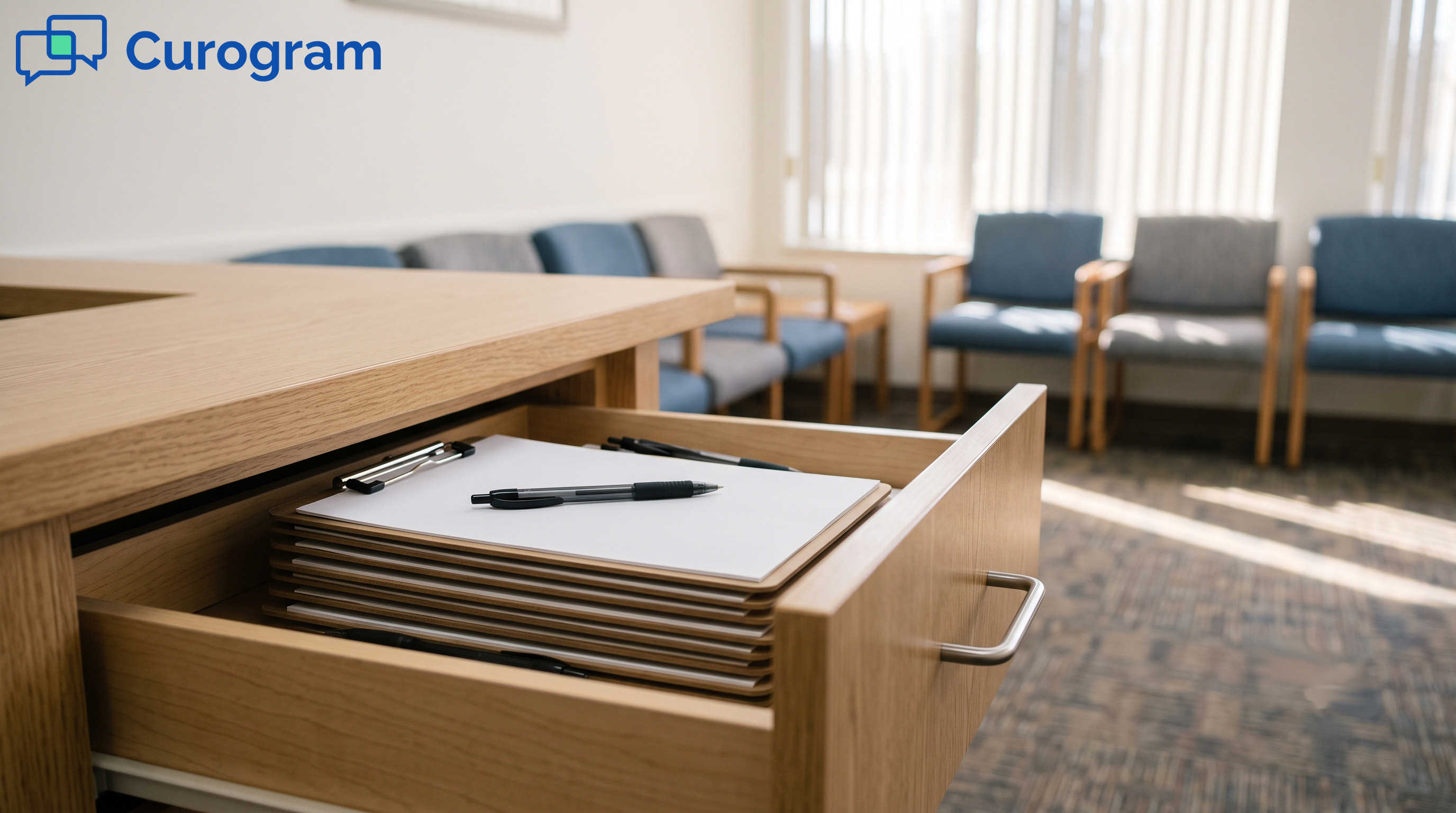
Sarah books a 2 p.m. doctor visit. She rushes from work and gets there ten minutes early. The front desk hands her a stack of paper forms.
She sits down with a pen and starts writing. The same details she gave last year. The same answers she has given many times before.
This scene plays out daily in every GE Centricity practice still on paper. Most clinics push 300 to 500 check-ins through this same setup.
Each patient fills out 15 to 20 pages. The forms ask for data the clinic already has in Centricity.
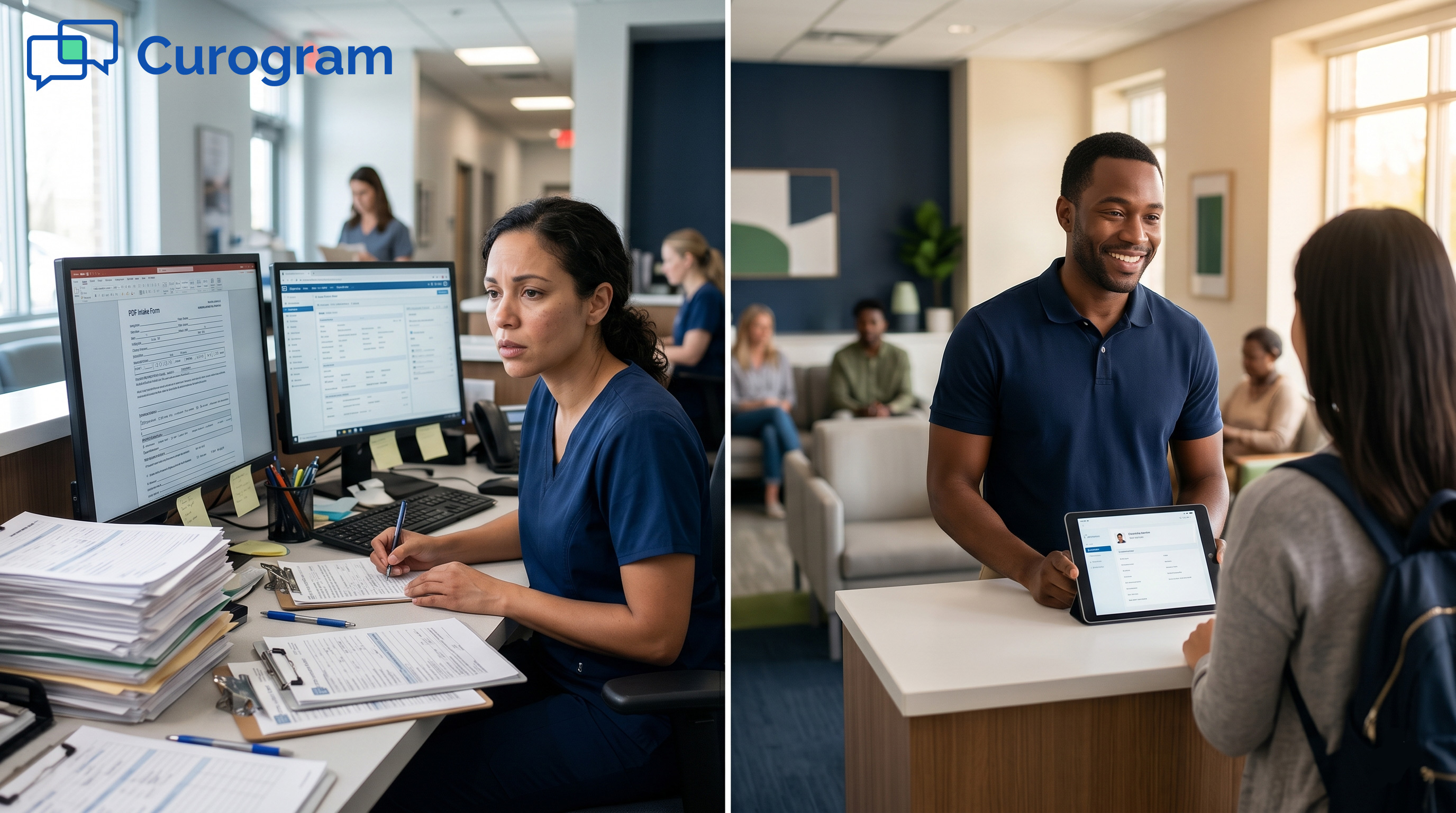
The cost is high but quiet. Patients waste 15 to 20 minutes on busywork. Staff spend hours typing the same info into Centricity. Bills get rejected when errors slip in.
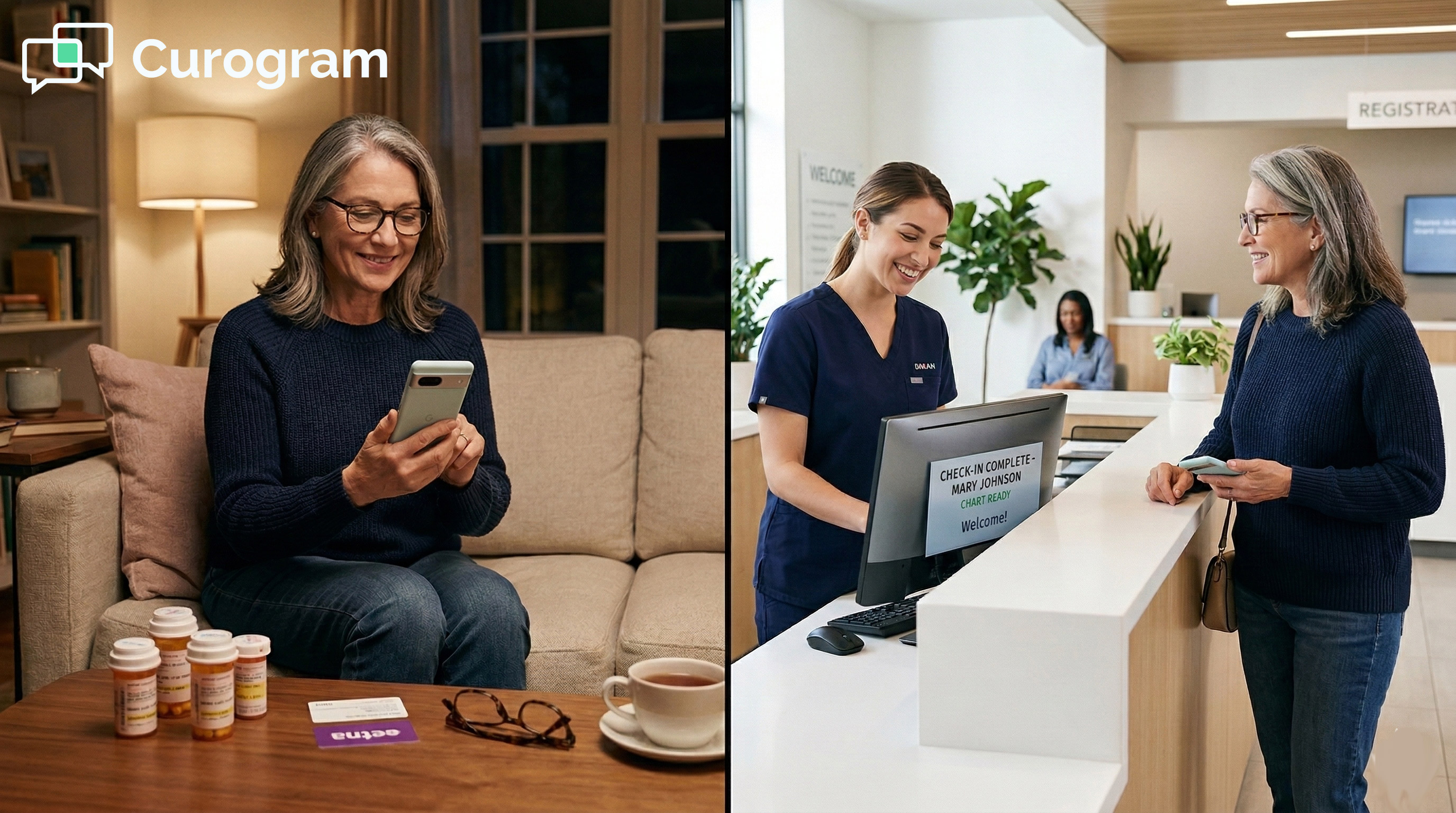
Now picture the same patient with a text link the night before. She taps it on her phone over dinner. Her name, address, insurance, and meds are already filled in. She updates one new pill and hits submit in 90 seconds.
The next day she walks in and sits down at the front desk. No clipboard hand-off. No 20-minute wait to write the same answers again. The visit starts on time and her mood is calm.
This is the shift Curogram brings to GE Centricity clinics. The full guide on secure digital intake forms for Centricity covers the broader setup. This article zooms in on the patient side of the change.
The clipboard burden is not just a staff problem. It is the first thing a patient touches at every visit. Fixing it changes how the whole clinic feels.
We will walk through three things in this guide. First, the lobby trip versus the pre-visit trip. Second, how SMS forms work for FQHC, elderly, and working patients. Third, why faster forms also mean safer care for everyone.
The gap between paper intake and digital intake is bigger than most clinic leaders think. Same patient, same forms, two very different feelings. Below, we map both journeys side by side so you can see where the friction lives.
A paper check-in is a chain of small frustrations stacked on top of each other. None is huge alone. Together they ruin the start of the visit.
Patients walk in and get a clipboard with 8 to 12 pages. The print is small. The words are full of legal and medical terms. Most people read slowly through the first page just to figure out what is being asked.
Then comes the hunt for details. Where is the insurance card? What was the old dose of that pill?
Patients wave a hand to ask staff to explain a line. Staff stop their work to help, then go back to their queue.
After 15 to 20 minutes of writing, the patient hands the clipboard back. A staff member skims for missing parts. Half the time, the form gets handed back to fix. The check-in is now late.
Long pre-visit stress raises blood pressure and dulls focus. A frustrated patient gives shorter answers and forgets symptoms. Clinical time gets less useful. Patient satisfaction scores reflect the lobby trip, not just the care.
The same task done by SMS feels almost invisible to the patient. The form meets them where they already are, on their phone, on their own time.
Sarah gets a text 24 hours before her visit. It says: “Hi Sarah, your visit with Dr. Martinez is tomorrow at 2 p.m., finish your intake in 2 to 3 minutes at this link.”
She taps the link during a lunch break.
The form opens on her phone with most fields already filled in. Name, date of birth, address, insurance, meds, and allergies are pulled straight from Centricity.
She updates one new med and a new symptom. The form checks her work in real time and flags one blank field.
She fixes it and hits submit. She gets a quick thank-you text. The whole thing took 90 seconds, done from her own couch with her insurance card in her hand.
When Sarah arrives, the front desk greets her by name. No paper. She sits down and the medical assistant calls her in.
The visit starts on time. Sarah feels respected and unhurried. That feeling carries into the exam room.
The speed and quality gap shows up in the numbers right away. Below is a quick view of how paper and SMS forms compare across the same patient base.
|
Metric |
Paper Forms in the Lobby |
SMS Pre-Visit Forms |
|---|---|---|
|
Time to finish per patient |
15 to 20 minutes |
2 to 3 minutes |
|
First-pass completion rate |
65% to 70% |
95% or higher |
|
Place of completion |
Plastic chair in waiting room |
Phone, on the patient's time |
|
Re-entry into Centricity |
Manual, prone to errors |
Auto-flow via HL7 |
Based on Curogram client data from clinical settings, the speed jump is roughly 5x to 10x. Quality goes up by 25 to 30 points.
That is the difference between forms that need rework and forms that flow straight into the chart.
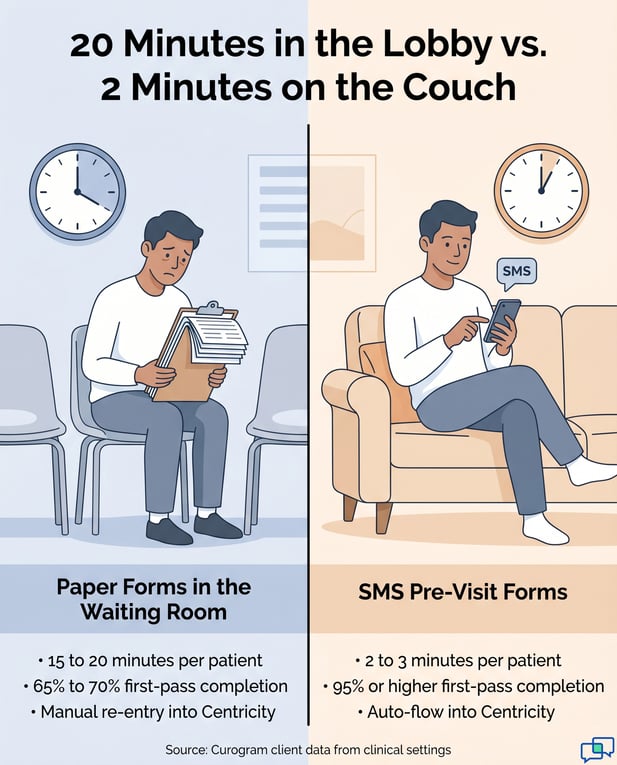
The biggest fear with going digital is that some patients will get left behind. The data says the opposite when SMS is the carrier. Texts work where apps and portals fail. Below, we look at three patient groups that gain the most.
Federally Qualified Health Centers serve patients with thin margins, mixed languages, and patchy internet at home. Paper intake is one of the bigger barriers for these patients. SMS forms remove most of that load.
SMS rides on cell signal, not on home Wi-Fi. A patient with a budget phone and no data plan can still get the text.
The form opens in the default browser, with no app to install or login to remember. This matters for River Valley FQHC, where many patients lack steady home internet.
The forms also skip the need to carry old paperwork. Past data is already pulled from Centricity. Patients no longer dig for an insurance card or guess at a med name. That alone removes a huge source of stress.
Curogram forms run in 40+ languages, including Spanish, Vietnamese, Mandarin, and Arabic. A Spanish-speaking patient gets the text in Spanish. Every label and prompt shows in Spanish.
The form data flows into Centricity with a language tag. Staff can then line up a translator for the visit.
This group is often blamed for not being able to handle digital forms. The truth is the opposite when the design is right. Mobile forms with big text and pre-filled fields are easier than tiny print on a clipboard.
On a phone, text scales up. The patient can zoom or use the system font size. Paper forms cannot do that. Pre-filled data also lowers the brain load, since the patient is reviewing, not remembering.
For elderly patients with a caregiver, the SMS link can be shared with the family helper. The caregiver fills it in at home, in private. That is more dignified than a caregiver reading over the patient's shoulder in a crowded lobby.
If a patient cannot use a phone at all, staff can step in. They use the SMS form data in a staff entry mode at check-in. The pre-filled fields cut entry time. No one is shamed for not being a digital native.
Working patients have the least time and the lowest patience for lobby paperwork. Pre-visit forms hand them their time back.
A worker books a 1 p.m. visit during a 30-minute lunch break. With paper, 20 of those 30 minutes go to the clipboard.
With SMS, the form is done the night before. The full 30-minute slot is for actual care.
When intake is done before the visit, check-in is fast. The patient goes straight to the exam room. Visits stay on schedule.
Clinical staff are not stuck waiting on paperwork. Patient experience goes up because the day runs on time.
Speed and ease are only half the story. The bigger win is that the data flowing into Centricity is cleaner and safer. Below are three areas where pre-visit digital intake protects both the patient and the practice.
Paper forms hide errors. Digital forms with real-time checks surface them before the patient leaves the couch. That changes what the clinician sees in the chart.
If a patient marks an allergy that conflicts with last year's record, the form flags it. The patient sees a quick note asking them to confirm. The fix happens before the visit, not in the middle of it.
That one small change saves real time in the exam room. The clinician is not paused to chase down a missing field. Visits feel calmer and stay on track.
Allergies are one of the highest-stakes intake fields. Paper sections are often skipped or hard to read. Digital forms make the field required, so patients must confirm or mark none known.
Clinical staff can trust what they see in Centricity. That trust shapes safer prescribing during the visit. It also lowers the risk of a bad reaction after the patient goes home.
Med lists drive a lot of clinical choices. Pre-visit digital intake keeps that list tight and current.
The med list pulls in from Centricity. The patient sees what the chart shows and updates only what has changed.
The clinician then sees a list confirmed by the patient 24 hours before the visit. No more guessing during a rushed check-in.
With a confirmed med list in hand, the clinician can prep ahead. They can spot a drug interaction risk or plan a refill before the patient walks in.
Visits feel more focused as a result. Patients often say so in post-visit surveys. The clinician feels less rushed, too, which lifts the mood of the whole team.
Billing is where data quality pays off the fastest. Digital intake cuts the back-and-forth that clogs up the revenue cycle.
If insurance changes, the patient updates it on the form. The form checks the format in real time. The new info flows into Centricity, ready to use. Billing staff starts with clean data, not a guess from a paper form.
Bad insurance data is a top driver of claim denials and rework. Cleaner intake means cleaner claims.
Based on Curogram client data from clinical settings, Kern Gastro saw claim rework drop sharply after moving to digital intake.
Patients also get fewer surprise bills. That builds trust and lifts how the whole clinic is rated online. Good reviews lead to more new patients, which closes the loop.
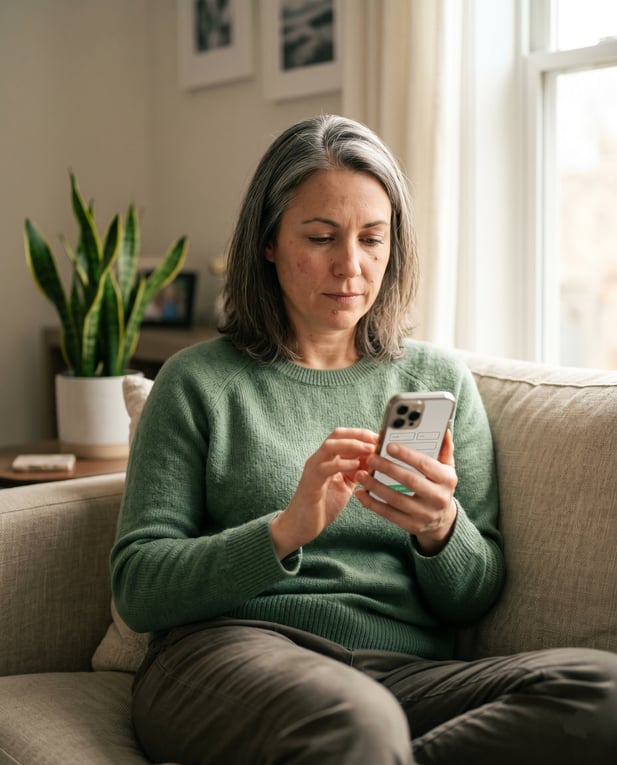
The patient story is the simplest way to see why digital intake matters. Sarah's old visit started with 20 minutes of paperwork. Her new visit starts with a warm hello. That is the entire shift in one image.
The math behind it is just as clean. Forms drop from 20 minutes to 2 or 3 minutes. First-pass completion jumps from around 65% to over 95%. Manual re-entry into Centricity goes away.
Staff get hours of their day back to focus on patients. Front desk teams stop being human data entry machines. They become the warm first face of the clinic instead.
And the patients who gain the most are the ones often left out of digital plans. FQHC patients, elderly patients, and working patients all see less friction, not more. SMS reaches them where they already are. Multilingual support meets them in their own language.
Clinical safety also goes up, which is the part many leaders do not expect. Allergy fields are required and med lists are confirmed by the patient. Insurance details are validated in real time. Errors get caught before the patient walks through the door.
That last point matters for the billing team most of all. Fewer bad claims means less rework. Less rework means more revenue. It also means fewer angry calls from patients about wrong bills.
Practices on GE Centricity often hear they need a full EHR migration to fix intake. That is not true. Better patient mobile form completion in the GE Centricity pre-visit digital intake experience is live in 2 to 4 weeks. It sits on top of the system you already run.
The clinics that move first will also set the bar in their market. Word travels fast when a visit goes smoothly. Word travels even faster when one does not.
The clipboard is not a small problem. It is the first thing every patient touches at every visit. Fixing it shifts the whole feel of the practice.
Patients tell friends. Reviews climb. Referrals come in. Based on Curogram client data from clinical settings, digital intake lifts patient satisfaction scores within 60 days.
For the front desk team, the change is just as real. Staff burnout drops. Turnover drops. The whole front office runs cleaner.
None of this asks the patient to do more. It asks them to do less, on their own time, in their own pocket. That is the heart of good design.
If your clinic is still handing out clipboards in 2026, the gap with modern care is widening every month.
The fix is faster and cheaper than most leaders think. Patients are ready, and staff are ready. Centricity is ready to receive the data, too.
Give Your Patients a Better Intake Experience. Schedule a demo today.
 Jo Galvez : Aug 6, 2026, 4:00:00 PM
Clipboards cost 15–30 min of data entry per patient. Text-link intake for Prime Clinical practices — done before arrival. Schedule a demo.
 Jo Galvez : Mar 9, 2026, 4:00:00 PM
eCW patients complete intake forms via text before arrival. Curogram digital forms deliver the check-in experience patients prefer.
 Jo Galvez : May 27, 2026, 3:00:00 PM
Opus EHR intake data does not auto-populate into patient records. Curogram sends forms via text, completed before arrival. No re-entry. No clipboards.