11 min read

Protecting the Plan of Care: Why a Full Schedule Matters

Protecting the Plan of Care: Why a Full Schedule Matters
💡 Therapist utilization in pediatric therapy directly affects whether children meet the goals set in their Plan of Care. When a session goes unfilled, a child loses the repetition and consistency their brain needs to make lasting progress.  

Clinics using Curogram with Fusion Web Clinic can fill those gaps automatically via 2-way SMS, keeping every therapist's schedule full and every child on track. 

A cancellation is not a neutral event. For children in speech, occupational, or physical therapy, missing even one session can mean slipping back on skills they worked hard to build. 

Curogram bridges the gap between Fusion's goal-tracking data and the real-world attendance needed to hit those goals. 

By automating the waitlist and cancellation workflow, clinics can sustain higher caseloads, protect pediatric plan of care adherence, and give every child on the waitlist a faster path to the care they need.

Every therapist who works with children knows what it feels like to see a child fall behind. One week of missed sessions can undo two weeks of hard-won progress.

That is the real cost of an unfilled appointment slot — not just a line item on a revenue report, but a child who has to start over.

For pediatric clinic owners and clinical directors using Fusion Web Clinic by Ensora, the schedule is not just a logistical tool.

It is a clinical document. Every slot represents a prescribed dose of therapy. When that dose is not delivered, the importance of therapy frequency becomes painfully clear in the child's next session.

The good news is that the problem is solvable — and it does not require hiring more staff or overhauling your entire operation.

Curogram's 2-way SMS workflow connects directly with Fusion to fill cancellations fast, pulling from your waitlist automatically so that no hour of therapy time goes to waste.

This article is for clinic directors and owners who understand that a full schedule is not about squeezing out more revenue. It is about making sure the children in your care receive the full treatment their therapists prescribed.

Let's look at why that matters — clinically, operationally, and for the long-term reputation of your practice.

Therapy Is a Dosage, Not Just a Schedule

When a pediatric therapist documents a treatment frequency in Fusion Web Clinic — say, two sessions per week — that number is not a suggestion. It is a clinical decision based on the child's diagnosis, developmental stage, and the goals outlined in their Plan of Care.

Think of it the way you would think about a medication prescription. Skipping doses has consequences.

Most parents understand this concept once it is framed clearly.

The challenge is that the urgency of a missed therapy session is less visible than a missed dose of medication.

There is no empty pill bottle to signal that something went wrong. The regression shows up gradually — in the therapist's notes, in goal timelines that keep slipping, in a child who seems stuck.

Why Consistency Is a Neurological Requirement

The importance of therapy frequency is especially pronounced in pediatric settings because children's nervous systems are actively developing.

Neuroplasticity — the brain's ability to form new pathways — is most powerful when interventions are consistent and repetitive.

A single missed session can disrupt the pattern of practice a child needs to lock in a new motor skill, sound production, or sensory regulation strategy.

Research in pediatric developmental therapy consistently shows that the interval between sessions matters just as much as what happens during them.

When the gap between visits stretches from one week to two or three, the brain starts to lose the thread. Skills that were emerging become unstable. Patterns that were forming begin to fade.

The next session cannot simply pick up where the last one left off.

What makes this especially frustrating is the ripple effect. When a child misses a session, their therapist often spends the first part of the next visit essentially playing catch-up — reviewing what was lost rather than building on what was gained.

That catch-up time comes at the expense of forward progress, and it compounds across the full length of the Plan of Care.

The Hidden Cost on Your Clinical Team

There is also a human cost that does not show up in productivity reports. Therapists go into this field to help kids reach milestones.

When inconsistent attendance prevents that from happening, it contributes to professional burnout.

The most common triggers include:

  • Watching a child regress on a skill they had recently mastered
  • Spending session time re-establishing a baseline instead of advancing toward new goals
  • Feeling unable to deliver the care documented in Fusion because attendance won't hold steady

Protecting the schedule protects your team as much as your patients. When therapists can see continuous progress in their caseloads, the work feels worth it — and retention improves alongside outcomes.

Therapist turnover in pediatric settings is already a serious operational challenge, as highlighted in recent pediatric health care workforce data.

When a clinician leaves, their caseload does not disappear — it gets redistributed, which puts pressure on the rest of the team and can push waitlists even longer.

Keeping therapists engaged and professionally fulfilled is not a soft concern. It is a core part of running a sustainable clinic.

Clinical Impact of Missed Sessions by Therapy Type

Therapy Type Prescribed Frequency Risk of Missed Session Common Regression Pattern
Speech Therapy 2–3x per week High Loss of phoneme clarity; reverts to prior articulation habits
Occupational Therapy 1–2x per week Moderate–High Reduced fine motor control; sensory dysregulation returns
Physical Therapy 2x per week High Gait or strength gains diminish; compensatory movement returns
ABA Therapy 3–5x per week Very High Behavioral patterns revert quickly without consistent reinforcement

Note: Frequency recommendations are general clinical guidelines and may vary based on individual plans of care.

Turning Empty Slots into Moments of Progress

Every pediatric clinic has a waitlist. That list represents families who have already gone through the referral process, received a diagnosis, and are actively waiting for care.

When a therapist sits with an open slot because of a same-day cancellation, those families are still waiting — and their children are still falling behind.

The math here is straightforward, but its clinical weight often gets framed only in revenue terms. An open slot is not just lost income — it is a missed treatment opportunity for a child who may have been waiting months for consistent care.

Every unfilled hour is a decision, even if no one consciously made it.

Therapy dosage chart showing session frequency and regression risk by pediatric therapy type

How Curogram Closes the Gap

This is what we mean when we talk about therapist utilization in pediatric therapy.

If a therapist's schedule runs at 80% capacity because of unfilled cancellations, 20% of their clinical potential is simply evaporating.

That is not a scheduling inconvenience — it is a clinical impact of cancellations felt by real children who needed that time.

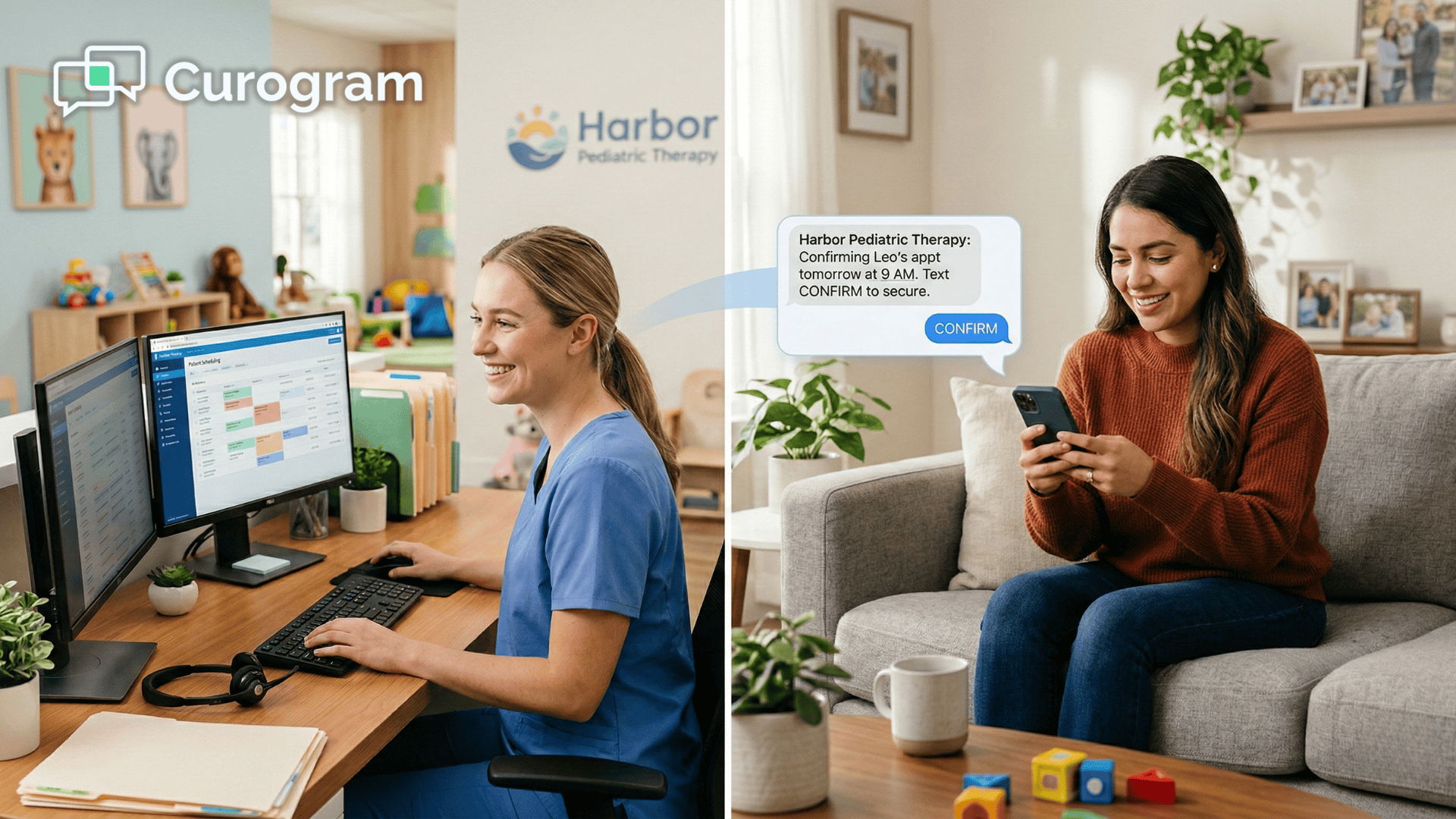
Curogram solves this by automating the outreach. When a cancellation comes in, the system immediately sends an SMS to families on the waitlist, offering them the open slot in real time.

There is no manual phone tree, no staff member spending 20 minutes leaving voicemails, and no slot going unfilled because the call came in too late to act on.

Speed matters here more than most clinic directors realize. A cancellation that comes in at 8 AM can be filled by 8:05 AM if the right system is in place.

Without automation, that same cancellation often stays open because staff are managing the front desk, answering phones, or handling intake — not working the waitlist. By the time someone gets to it, the window has closed.

Based on our internal data, clinics using Curogram's automated reminder and waitlist workflows see no-show rates that are 53% lower than the industry average.

That kind of consistency keeps clinical momentum moving forward — not just for individual children, but for the practice as a whole. And when your waitlist turns over faster, you can accept new referrals sooner, which matters enormously for the families still waiting at the door.

Sustaining Higher Caseloads Without Burning Out Your Staff

There is another operational benefit that tends to get overlooked:

Efficient waitlist management allows clinics to care for more families without immediately adding headcount.

When every available hour of therapy is being used, you are getting full value from your existing team. That is a meaningful difference when the cost and timeline of hiring a new therapist is measured in months, not days.

It also creates a better experience for families who are waiting.

A waitlist that moves slowly breeds frustration and sometimes causes families to seek care elsewhere.

A clinic with an active, well-managed waitlist — one where families hear from you quickly when a slot opens — feels responsive and organized.

That reputation carries weight in the community, especially among the pediatricians and specialists who send you referrals.

Schedule Utilization: With vs. Without Waitlist Automation

Metric Without Automation With Curogram
Avg. therapist utilization rate ~78–82% ~90–95%
Time to fill a cancellation slot 20–45 minutes (phone calls) Under 3 minutes (automated SMS)
Waitlist family response rate Low (voicemail fatigue) High (98% SMS open rate)
No-show rate vs. industry avg. At or above industry average Up to 53% lower (based on our internal data)
Impact on monthly revenue Lost revenue per unfilled slot 10–20% revenue increase (based on our internal data)

When Fusion Tracks Goals and Curogram Drives Attendance, Kids Win

Most clinical directors are already strong at the documentation side of care. Goal tracking, session notes, progress updates — Fusion Web Clinic handles all of it.

The breakdown usually happens in the gap between what is planned and what actually gets delivered. That gap is an attendance problem, and it needs an attendance solution.

Two Tools, One Shared Purpose

Fusion Web Clinic is built for clinical precision. It stores the Plan of Care, tracks goal progress, documents session notes, and gives therapists a clear picture of where each child stands. It is the source of truth for everything clinical.

But Fusion cannot pick up the phone — or in this case, send the text — when a cancellation creates a gap in the schedule.

That is where Curogram comes in. Fusion Web Clinic goal tracking shows you where a child needs to be. Curogram makes sure the child actually shows up so that progress can happen.

The two tools are complementary:

One manages the clinical data, the other removes the logistical friction that keeps that data from moving forward.

Think of it this way:

Fusion tells you the child needs to reach a specific speech milestone by a certain date.

Curogram is what ensures the sessions required to hit that milestone actually take place. Without both pieces working together, even the most detailed Plan of Care becomes aspirational rather than achievable.

What a Full Schedule Does for Your EMR Data

When your schedule stays full, your productivity reports inside Fusion reflect a high-performing clinic — one where therapists are seeing their full caseloads, goals are being updated regularly, and outcomes are trending in the right direction.

A schedule riddled with no-show gaps makes it harder to demonstrate clinical effectiveness, both internally and to referral partners.

This matters beyond internal reporting. When pediatricians and developmental specialists evaluate where to send their patients, they pay attention to outcomes.

A clinic that can point to consistent goal attainment rates — backed by complete session data in Fusion — has a stronger case than one whose records are full of gaps and incomplete progress notes. Your EMR is, in effect, your clinical resume.

There is a reputation dimension here too. When kids are consistently attending sessions and meeting their milestones, the word spreads. Parents talk to each other — in pediatrician waiting rooms, in school pickup lines, in the online parent groups where therapy recommendations travel fast.

Clinics that deliver consistent results earn the kind of community trust that turns into a steady stream of referrals. Pediatric therapy attendance software that works quietly in the background is a big part of what makes that possible.

It is also worth noting what happens at review time.

When a child's Plan of Care is up for reassessment, having a complete attendance record supports a clear, evidence-based conversation about progress.

If sessions were missed, that history complicates the picture. If sessions were kept, the data speaks for itself.

Parent receiving SMS slot offer at pediatric therapy clinic front desk

How Better Communication Keeps Parents Committed to the Plan

Parents of children in therapy are juggling a lot. Work schedules, siblings, transportation challenges, and the emotional weight of managing a child's developmental needs — these all create real barriers to consistent attendance.

The easier your clinic makes it to stay committed, the more likely parents are to follow through on the full Plan of Care.

It is also worth recognizing that many parents feel a quiet sense of guilt when they miss a session. They know it matters.

Life just gets in the way. The clinics that respond to that reality with easy, clear, low-friction communication are the ones that turn one-time cancellations into reschedules rather than prolonged absences.

From Logistical Tool to Clinical Partnership

When a parent receives a 2-way SMS offering them a cancellation slot, it does more than fill your schedule.

It sends a message:

This clinic is paying attention to your child's progress. That kind of responsiveness creates a sense of partnership.

Parents feel like the clinic is actively fighting for their child's care, not just managing a calendar.

That perception matters. Parents who feel supported by their child's clinic are more likely to prioritize attendance, less likely to switch providers, and more likely to recommend the clinic to others.

The communication experience becomes part of the clinical experience — and in pediatric therapy, trust between clinician and family is not a bonus feature. It is a treatment variable.

The 2-way format also creates room for meaningful micro-communications.

A brief follow-up message — something like

"We're so glad you could make it — keeping [Child's Name] on track with their speech goals this week really matters" — reinforces why consistency is important without ever feeling heavy-handed.

Parents are reminded of the clinical purpose behind every appointment, not just the time on the calendar.

Small Frictions, Big Consequences

Here is what most clinics underestimate: the reason parents no-show is rarely indifference. They forget. They get overwhelmed. They mean to reschedule but the process feels like too many steps.

Two-way texting removes those frictions one by one:

  • A reminder arrives at the right time, so they do not forget
  • A reply to confirm or cancel takes seconds, not a phone call
  • A reschedule offer arrives the moment a slot opens, so the gap does not grow

Over time, this kind of communication builds pediatric plan of care adherence into the relationship itself. Families who feel informed, valued, and connected to their child's progress are far less likely to let a cancellation turn into a prolonged absence.

There is also a broader consistency effect. When parents interact regularly with your clinic through text — not just for reminders, but for offers, updates, and acknowledgments — the relationship stays warm even in the weeks between sessions.

That ongoing presence reduces the psychological distance between appointments, which makes showing up feel like a priority rather than an interruption.

Some clinics worry that too many messages will feel intrusive. In practice, the opposite tends to be true. Parents appreciate being kept in the loop, especially when the messages are relevant and easy to respond to.

A well-timed text about an available slot or an upcoming session feels like service, not noise.

Your Schedule Is Your Most Powerful Clinical Tool — Protect It

A full schedule is not a vanity metric. It is the mechanism through which your therapists deliver the care your patients need. Every empty slot is a missed dose of therapy for a child who is already waiting for progress.

Clinics that use Curogram alongside Fusion Web Clinic do not have to choose between clinical quality and operational efficiency. The two go hand in hand.

When the schedule stays full, therapists can focus on outcomes instead of playing catch-up.

When parents stay engaged through consistent, clear communication, adherence improves. And when the waitlist turns over faster, more families in your community get access to care sooner.

The prevent therapy regression piece is straightforward: if a child attends every prescribed session, they have the best possible chance of meeting their goals on time.

That is the whole point. Everything else — the referrals, the reputation, the revenue — follows naturally from that one outcome.

If your clinic is still relying on phone calls to manage cancellations and waitlists, you are leaving clinical capacity on the table. Curogram's 2-way SMS workflow for Fusion Web Clinic makes it simple to keep your schedule full, your therapists productive, and your patients progressing.

Schedule a demo today and see how Curogram helps pediatric clinics like yours protect the Plan of Care — one filled slot at a time.


Frequently Asked Questions

How does filling cancellations improve our clinical reputation?

When you consistently fill cancellation slots, your overall waitlist moves faster. That means you can accept new referrals sooner rather than turning families away. Pediatricians refer to clinics that actually have room for new patients — and by keeping your schedule full, you signal that your clinic is both in demand and organized enough to serve more families. Over time, that combination of capacity and consistency builds a reputation that generates referrals on its own.

Does Curogram help track therapist productivity?

Curogram does not replace Fusion's productivity reporting — it feeds it. By keeping the schedule full, your session data inside Fusion will reflect a clinic operating at peak capacity rather than one hampered by no-show holes. When your therapists are seeing their full caseloads and documenting consistent progress, your EMR data tells the story of a high-performing practice. That is the picture you want when reviewing performance internally or sharing outcomes with referral partners.

Is it better to leave a slot empty or fill it with a new patient?

It is always better to fill the slot. Whether it goes to a makeup session for an existing patient, a first evaluation for a child on the waitlist, or even a telehealth check-in, every hour of therapy delivered is a step toward a better clinical outcome for someone. An empty slot, by contrast, is lost time that no one recovers — not the child, not the therapist, and not the clinic. Even partial sessions have value when weighed against the alternative.

What if families on the waitlist are slow to respond to SMS offers?

That is exactly why having a prioritized waitlist matters. Curogram allows you to reach multiple families simultaneously, so if the first family does not respond within a set window, the slot can be offered to the next one automatically. Based on our internal research, SMS messages have a 98% open rate — far higher than phone calls or emails — which means most families see the offer almost immediately. The key is having a well-organized waitlist ready to go.

How does 2-way texting support pediatric plan of care adherence specifically?

It removes friction from every step of the attendance process. Parents can confirm, cancel, or reschedule with a single text reply. When rescheduling is easy, they do it instead of just no-showing. When reminders are timely and clear, they remember the appointment. And when the communication feels personal rather than automated, they feel more invested in following through. All of those small moments of ease add up to better attendance and stronger Plan of Care adherence over time.


Surgical Strike Texting: How to Fill Cancellations in Under 3 Minutes

Surgical Strike Texting: How to Fill Cancellations in Under 3 Minutes

💡 The fastest way to fill pediatric therapy cancellations is by sending a targeted group text to 5 to 10 waitlisted families at once — instead of...

Read More
Prevent Regression: Consistent Attendance Boosts Therapy Outcomes

Prevent Regression: Consistent Attendance Boosts Therapy Outcomes

💡 The most reliable way to prevent clinical regression in pediatric therapy is to maintain consistent session attendance — every week, as...

Read More
The Mom-Link: 2-Way Texting for Fusion Web Clinic Pediatric Parents

The Mom-Link: 2-Way Texting for Fusion Web Clinic Pediatric Parents

💡 The best 2-way texting integration for Fusion Web Clinic that keeps pediatric parents engaged is Curogram. It gives therapy clinics a direct SMS...

Read More