6 min read

Retiring the Phone Tree: Why Manual Calling Fails

Retiring the Phone Tree: Why Manual Calling Fails
💡 Mass texting for eKyros centers replaces the outdated phone tree with a single broadcast message that reaches everyone in under a minute.

Instead of spending 90 minutes dialing 40 people one at a time, center directors can notify their entire community with one click.

Curogram integrates with eKyros so you can filter by group—like a parenting class or volunteer roster—and send a private, HIPAA compliant text to each person.

Replies go straight to a one-on-one conversation with the center, not a messy group chat.

This approach saves staff hours, protects patient privacy, and keeps your community informed when plans change at the last minute.

It's 7:00 a.m. A pipe burst overnight. You have classes starting in two hours. You grab the emergency call list and start dialing.

That is the reality for many eKyros clinics and non-profit health centers today. When something urgent happens, staff fall back on the old phone tree. One person calls three people. Those three people each call five more. It sounds simple. But it breaks down fast.

Someone does not answer. An entire branch of the tree goes dark. Five families show up to a flooded building with their kids. The people who tried to help spent two hours on the phone instead of dealing with the actual problem.

There is a better way. Mass messaging efficiency for eKyros clinics is not just a tech upgrade. It is a way to protect your staff's time, serve your community faster, and make sure no one is ever left out of the loop.

Curogram connects directly with eKyros so you can send a single broadcast SMS to any group in your system. Active volunteers. Parenting class attendees. Patients with upcoming appointments. One message. One click. Everyone informed.

In a non-profit setting, time is just as valuable as money. Every hour spent on manual calls is an hour taken away from the mission. Replacing phone trees with SMS is not just smarter, it is more respectful of everyone involved.

This article walks through why the phone tree fails, how broadcast texting for clinics solves those problems step by step, and what makes Curogram the right fit for the work eKyros centers do every day.

Why the Manual Dial Is Working Against You

The phone tree made sense before smartphones. It spread the workload and kept one person from making 50 calls. But that model depends on a chain, and chains break.

A snowstorm rolls in. The clinic director pulls out the emergency list and starts calling. For staff seeking information on crisis planning, this scenario highlights why relying solely on phone trees can fail.

The first volunteer is at work and does not see her phone. Her five contacts never get the message. Now you have people driving in dangerous weather to a building that will not open.

The Hidden Cost Nobody Tracks

Most centers never add up what the phone tree actually costs in staff time. It is easy to treat it as "just part of the job." But when you look closely, the numbers tell a different story.

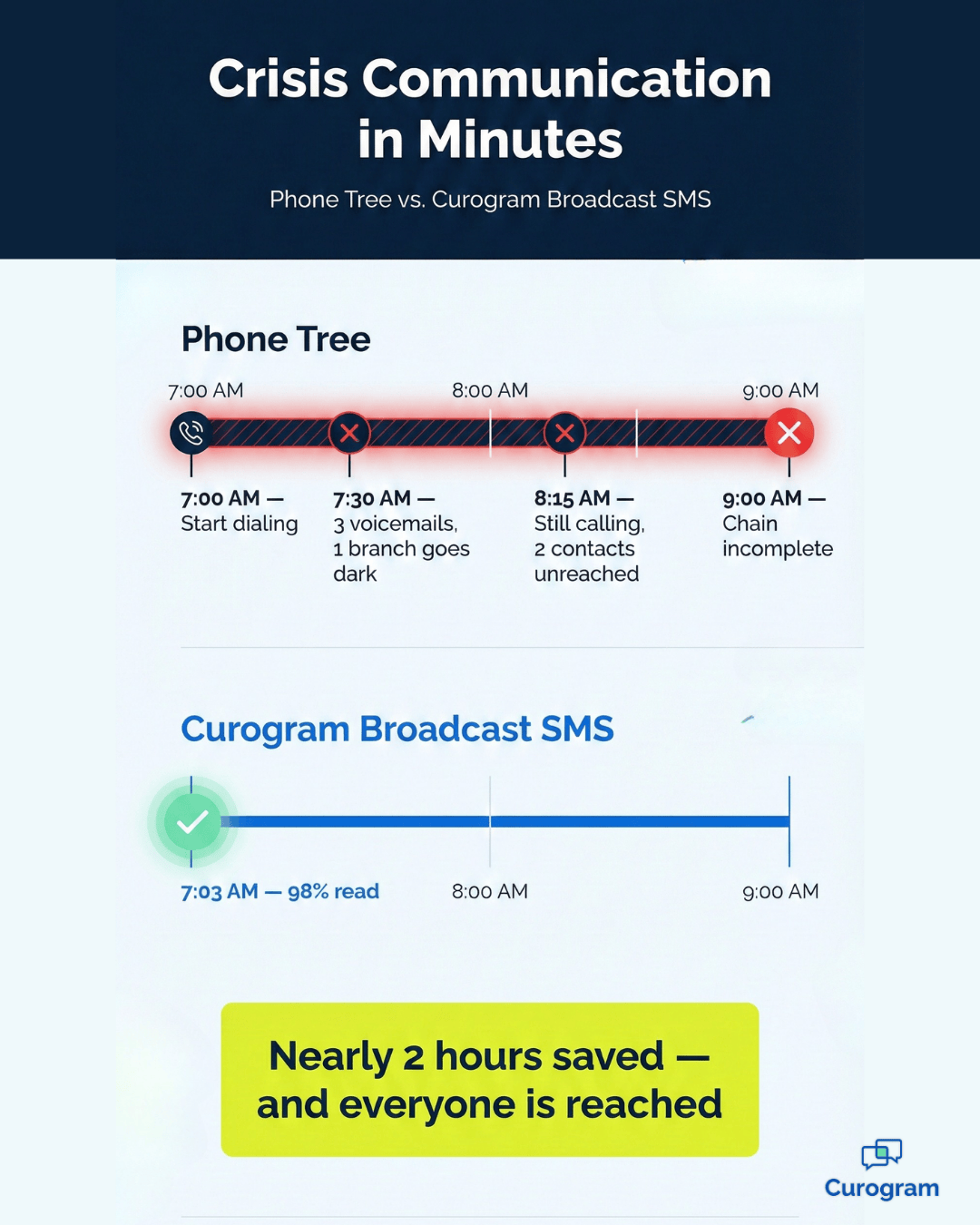
Consider a typical urgent situation. A staff member spends 30 minutes making calls. Three of those calls go to voicemail. She follows up an hour later. By the time the chain completes, two hours have passed and two contacts were never reached. That time was borrowed from actual mission work.

The manual dial fails in predictable ways every time:

  • One missed call can cut off an entire branch of the tree
  • Outdated lists mean texts and calls go to the wrong people
  • Staff energy is spent on logistics, not on the people who need help
  • There is no way to confirm who actually received the message

eKyros patient communication should not hinge on whether someone picks up their phone at the right moment. Non-profit operational efficiency means finding the weak link in your workflow and replacing it with something that actually works. The manual dial is that link.

How Broadcast Texting Replaces the Chain with a Net

Instead of a chain, think of a net. A chain is only as strong as its weakest link. If one person does not answer, the entire sequence breaks. A net, however, does not rely on a single point of failure.

One message reaches everyone at the same time, with no one depending on someone else to pass it along. That is what replacing phone trees with SMS looks like in practice.

This shift changes more than speed. It changes reliability. With a phone tree, you are hoping each person completes their part. With broadcast texting, delivery happens simultaneously and independently. One missed reply does not block the rest of the group from receiving the information.

Text messages have a 98% open rate, and most people read a text within three minutes of receiving it.

Compare that to voicemails, which often go unheard for hours or are deleted without being checked. In time-sensitive clinic operations, minutes matter. Broadcast texting ensures your message is seen when it needs to be seen.

It also creates a clear communication trail. Instead of wondering who was reached, staff can see replies and engagement directly in the dashboard. That visibility adds accountability and confidence to every urgent announcement.

Timeline comparing phone tree vs Curogram broadcast SMS during a clinic emergency

The Three-Step Workflow

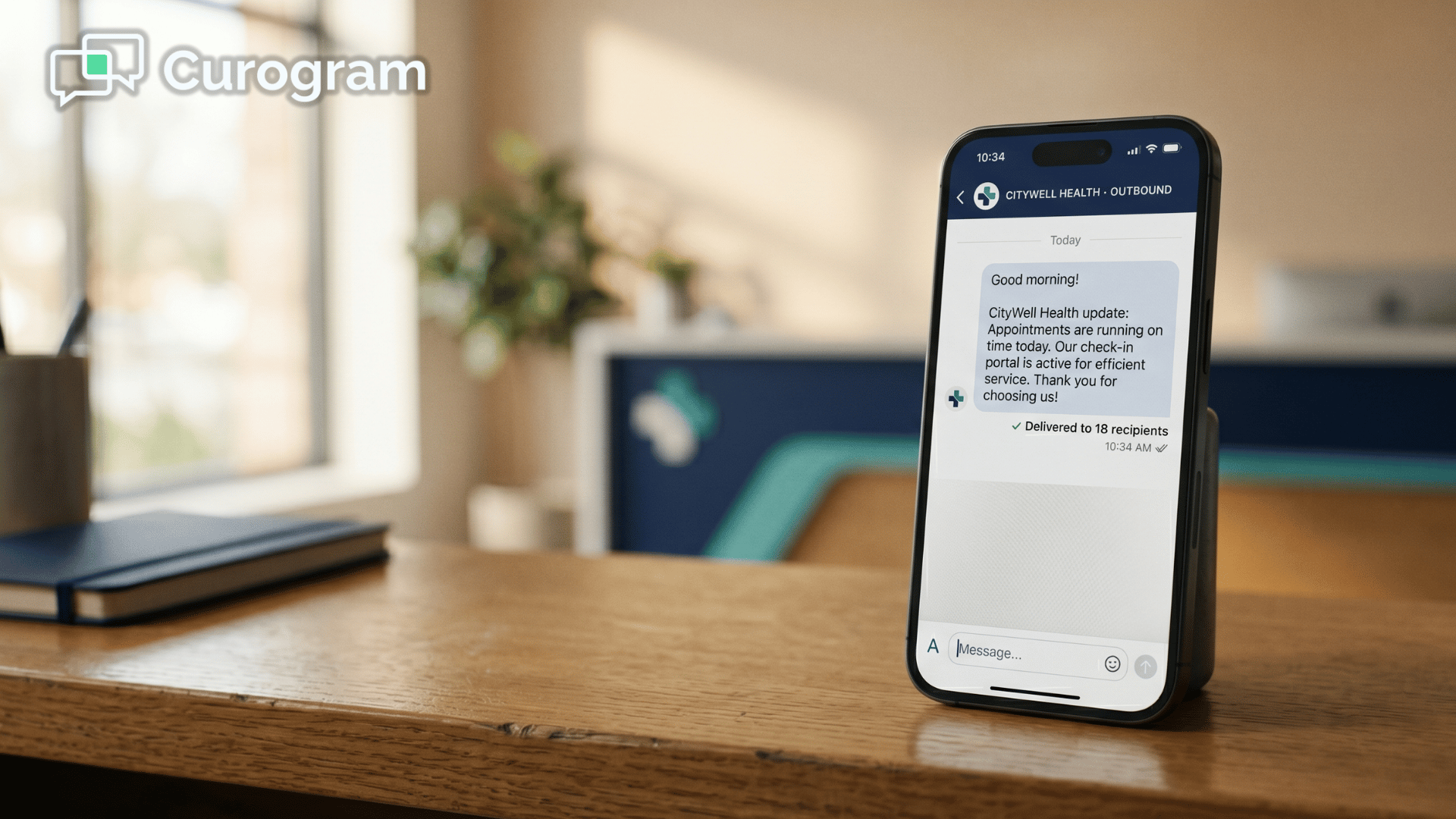
With Curogram connected to your eKyros data, sending a mass message takes less than two minutes. This streamlined workflow is ideal for mass texting for eKyros users, and any staff member can do it without training.

Step 1 - Filter:  Select a contact group from your eKyros sync, such as active volunteers, Thursday class attendees, or all current patients.

Step 2- Type: Write your message. Keep it short and clear.

For example:

"Urgent: Center closed tonight due to a facility issue. All classes cancelled."

Step 3- Send: Click once. Every person on the list receives the message individually within seconds.

In the pipe burst example, that means 50 people receive a message before 7:15 a.m. The crisis is managed before it becomes a disaster. Staff can focus on the actual problem instead of staying on the phone.

Not Just for Emergencies

Broadcast texting is just as useful for everyday communication as it is for urgent situations. Any time you need to reach a defined group quickly, the same tool applies.

Class reminders, schedule changes, volunteer callouts, supply drives, event updates. All of these take the same three steps. The more your team uses it, the more natural it becomes, and the less time everyone wastes on phone tag.

Privacy, Clean Lists, and No Group Chat Chaos

One concern clinics often raise is privacy. When you send a group message, does everyone see each other's replies? With Curogram, the answer is no. Each message is sent individually, functioning like a blind carbon copy (BCC) email rather than a group thread.

If a volunteer replies saying she can come help clean up, that message lands privately in your Curogram dashboard. The other 49 people on the list never see it. No accidental sharing of phone numbers. No off-topic replies clogging everyone's phones. HIPAA privacy stays intact throughout.

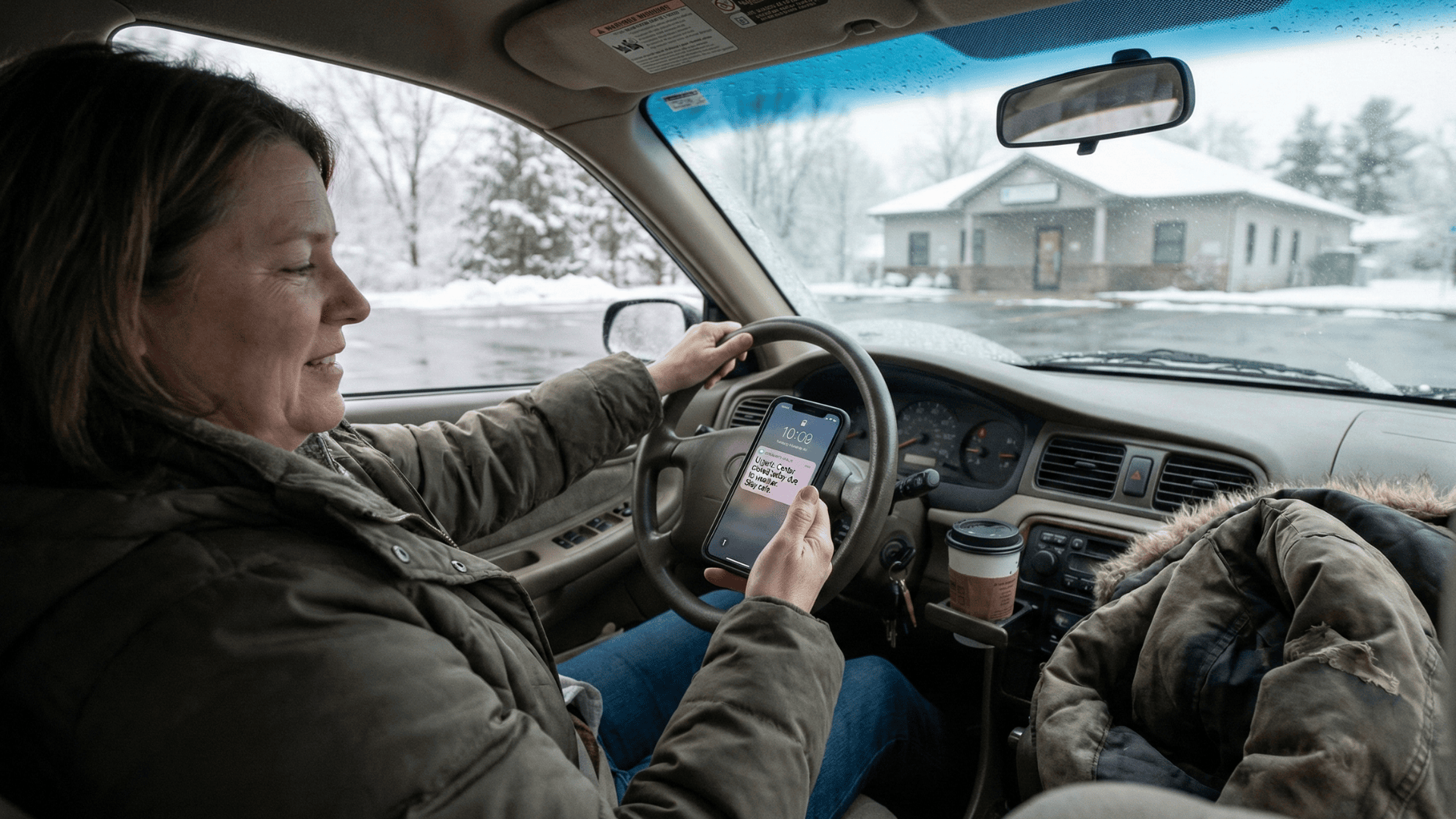
Patient reading urgent clinic closure text message on their phone in a parked car

Why List Quality Matters More Than You Think

Outdated contact lists are a silent drain on non-profit operations. Most centers running paper lists or spreadsheets have no easy way to remove people who have moved, changed roles, or stopped volunteering.

The result is wasted messages, bounced numbers, and occasional awkward moments when someone who left two years ago gets a call.

Because Curogram syncs directly with eKyros, your contact groups stay current without any manual cleanup. When a volunteer's record is updated in eKyros, that change flows through to Curogram automatically. Your lists are always working with the most accurate information you have.

Where Volunteer Management Software Pays Off

This is exactly where the value of having connected systems becomes clear. Volunteer management software works best when the communication layer is tied to the same data. You are not juggling two separate tools or copying names from one system into another.

The result is less admin work, fewer errors, and more confidence that the right people are getting the right messages. Your team can focus on the mission instead of managing spreadsheets.

Frequently Asked Questions 

How does mass messaging work with eKyros?

Curogram syncs directly with your eKyros database, allowing staff to filter and select specific contact groups—such as active volunteers, class attendees, or patients with upcoming appointments.

Once selected, you write one message and send it as an individual broadcast SMS to everyone in that group at the same time. There is no need to manually copy numbers or maintain separate lists.

Will recipients see each other’s replies in a group message?

No. Messages are sent individually, not as a group thread. If someone replies, their response appears privately in your Curogram dashboard. Other recipients do not see it.

This prevents group chat confusion, protects personal contact information, and supports HIPAA-compliant communication for clinics and non-profit health centers.

Is broadcast texting only useful for emergencies?

Not at all. While it is powerful for urgent closures or last-minute changes, broadcast SMS is just as effective for everyday communication.

Clinics can use it for class reminders, volunteer coordination, appointment updates, supply drive announcements, and event notifications. Any time you need to reach a defined group quickly and reliably, mass messaging improves efficiency over manual phone trees.

Respecting the Mission Means Respecting Everyone's Time

Non-profit centers operate with fewer resources than most organizations. Every minute your staff spends dialing down a list is a minute not spent serving the families who need you. That is not a small thing. In a mission-driven environment, time is not just a scheduling concern — it is a stewardship issue.

How your team spends its hours directly affects how many people you can help.

Manual phone trees quietly drain that time. Even when they “work,” they require follow-ups, voicemails, and repeated explanations. In urgent moments, they also add stress to an already tense situation. Staff should be solving problems, not chasing unanswered calls.

The phone tree was never a great system. It was simply the best option available for a long time. But communication expectations have changed. People respond faster to texts than to voicemails, and they expect updates in real time.

Holding onto an outdated system does not protect your workflow — it slows it down.

Replacing the phone tree with automated broadcast SMS is one of the simplest upgrades a center can make. It is faster, more reliable, and far more private. One message reaches everyone at once. R

eplies come back individually. There are no broken chains, no confusion about who called whom, and no uncertainty about whether the message got through.

Curogram is built to work alongside tools like eKyros, not replace them. The goal is to strengthen your existing system by adding a communication layer that matches the pace and urgency of real-world clinic operations.

Your data stays synced. Your lists stay clean. Your workflow becomes simpler instead of more complicated.

When your communication is as reliable as your mission, the whole center runs better. Volunteers feel informed. Patients feel considered. Staff feel supported instead of overwhelmed.

Retire the list. Replace the chain with something stronger. 

Schedule a demo today and see how Curogram can automate mass communication for your eKyros center.