5 min read

Improving Cash Flow and Reducing A/R with Text-to-Pay in Dolphin

Improving Cash Flow and Reducing A/R with Text-to-Pay in Dolphin
💡 Many practices struggle to improve cash flow Dolphin text-to-pay can support when payments are delayed or hard to collect.
  • Delayed balances increase A/R and reduce financial predictability.
  • Manual billing raises staff workload and operating costs.
  • Patients expect faster, simpler ways to pay.
  • Digital payments help stabilize monthly revenue.
This blog explains the risks of delayed payments, how text-to-pay improves ROI, benefits for finance leaders, and a real revenue example.

Cash flow problems rarely start with one large unpaid bill. They grow slowly through small delays that add up over time. Patients intend to pay, but busy schedules, mailed statements, and forgotten balances often push payments further out.

For practices using Dolphin, this delay creates pressure across the organization. Finance teams wait longer to close the books. Leaders lose confidence in monthly projections. Staff spend more time following up instead of focusing on higher-value work.

Outdated payment methods play a major role in this issue. When patients must log into portals or mail checks, payments often fall behind. These barriers increase accounts receivable and raise administrative costs.

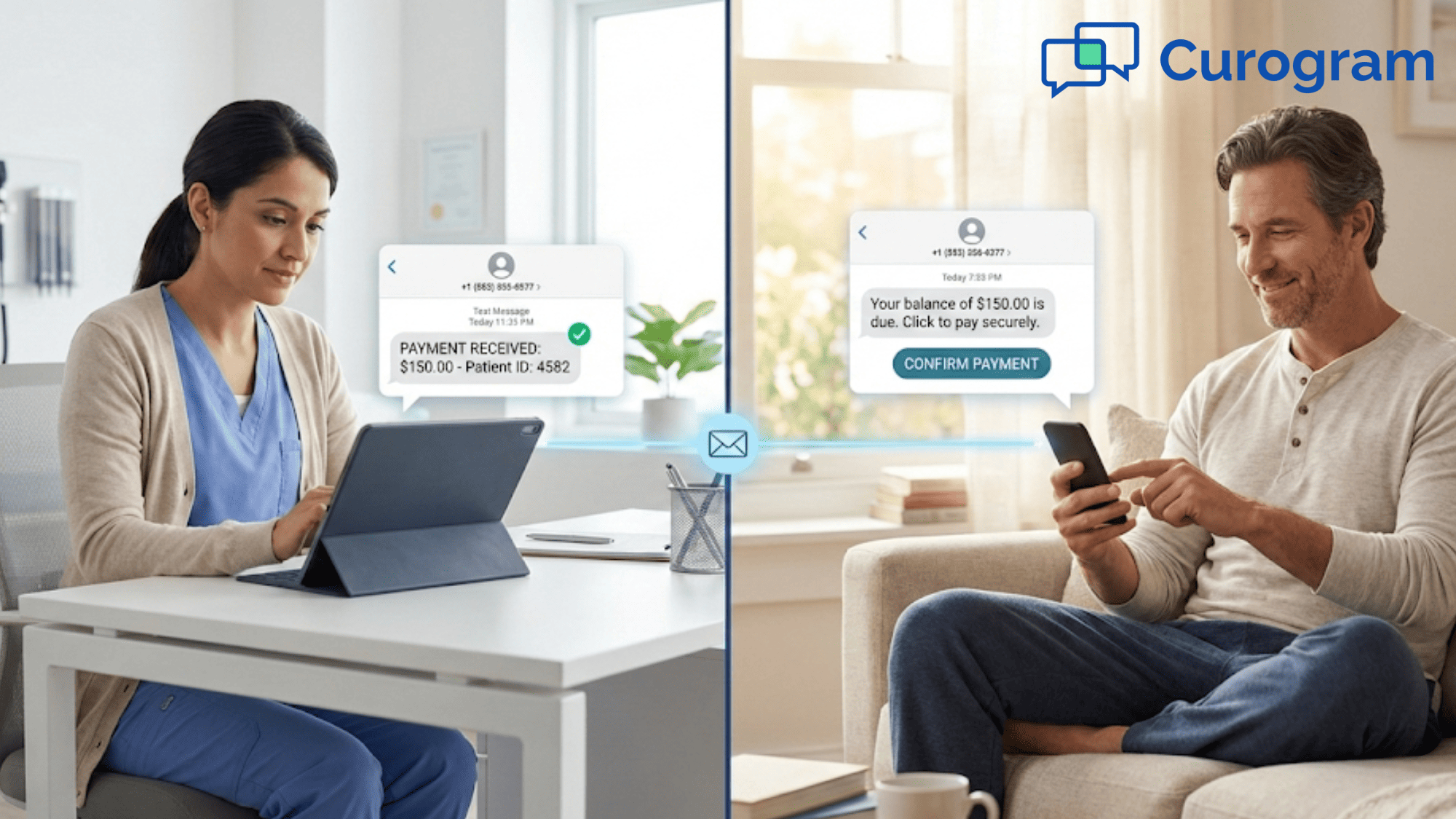
Text-to-pay offers a simpler approach. Patients receive secure payment options on devices they already use. This removes friction and shortens the time between care and payment.

To improve cash flow Dolphin text-to-pay solutions help practices collect balances faster while reducing strain on billing teams. The result is steadier revenue, lower A/R days, and improved patient satisfaction.

This blog explores the business risks of delayed payments, how text-to-pay improves return on investment, and why executives and finance leaders see strong value in digital billing. It also includes a real ROI example and clear next steps.

The goal is to show how modern payment options strengthen financial health without adding complexity.


Business Risks Without Text-to-Pay

When payments are delayed, cash flow becomes unpredictable. Practices may deliver care on time but wait weeks or months to receive payment. This gap makes planning more difficult.

High A/R balances are a common result. As days outstanding increase, the chance of full collection drops. Older balances are harder to recover.

Billing teams face higher workloads in these situations. Staff spend time sending reminders, answering payment questions, and tracking balances. This increases labor costs.

Manual billing also raises error risk. Paper statements and phone payments can lead to missed records or delays. These issues further slow collections.

Patient frustration grows as well. Many patients expect digital payment options similar to other services they use. When healthcare billing feels outdated, satisfaction declines.

For ortho and dental groups, these risks are amplified. Higher treatment costs mean larger balances. Delays directly impact the ortho/dental revenue cycle.

Without text-to-pay, practices rely on methods that no longer match patient behavior. This mismatch increases A/R and weakens financial stability.

Over time, delayed payments limit growth. Leaders may postpone investments due to uncertain cash flow. Text-to-pay helps reduce this risk.


How Curogram Improves ROI with Text-to-Pay

Text-to-pay shortens the payment timeline. Patients receive secure payment options quickly and can act without extra steps. This improves collection speed.

Reducing A/R days leads to more predictable cash flow. When payments arrive sooner, monthly revenue stabilizes. This supports better forecasting.

Administrative costs also decline. Billing teams spend less time on follow-up and manual processing. This frees staff for higher-value tasks.

Curogram supports secure payment delivery. HIPAA and PCI compliance protect patient data and build trust. Patients feel confident completing transactions.

Digital payments fit naturally into patient routines. Paying by phone is familiar and convenient. This increases completion rates.

For Dolphin users, text-to-pay integrates without disrupting existing systems. Adoption is smooth and scalable.

To improve cash flow Dolphin text-to-pay strategies deliver measurable ROI by combining faster collections with lower overhead.

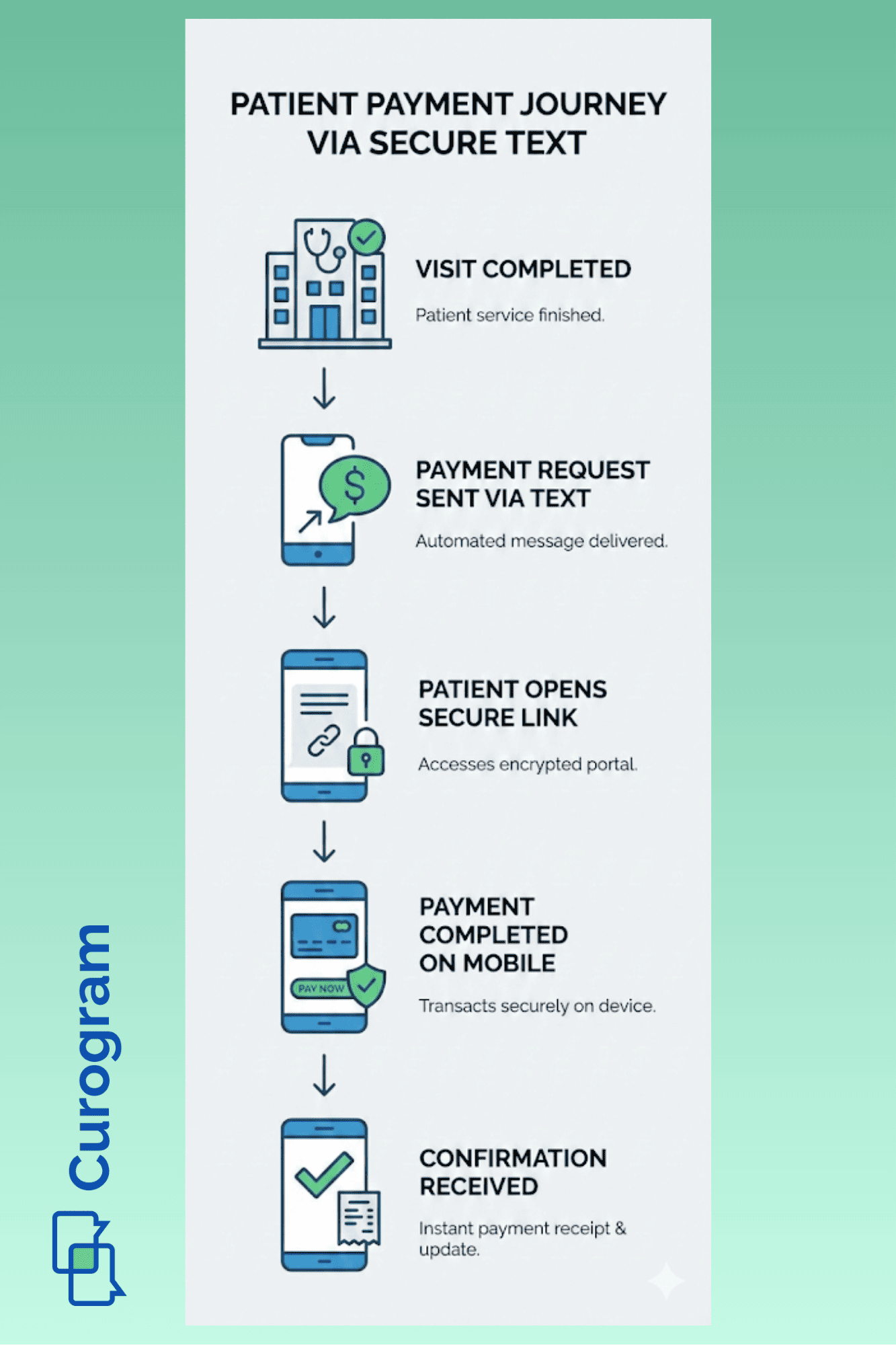
 Patient payment journey showing secure text-to-pay from visit completion to payment confirmation


Benefits for Executives and Finance Leaders

Executives prioritize financial stability. Text-to-pay supports this by reducing delays and improving visibility into incoming revenue.

Lower A/R improves confidence in projections. Finance leaders can plan budgets with greater accuracy. This reduces financial stress.

Cost per payment collected also drops. Fewer staff hours are needed to manage billing. This improves margins.

For multi-location groups, consistency matters. Digital payments standardize collection across sites. This simplifies reporting.

Text-to-pay also supports competitive positioning. Patients prefer practices that offer modern billing options. This improves retention.

In ortho and dental settings, large balances are common. Faster payments strengthen the entire ortho/dental revenue cycle.

Finance leaders gain better insight into performance. Shorter A/R cycles reveal true revenue trends. Decisions become data-driven.

Security remains critical. Compliance reduces risk while protecting trust. Leaders avoid costly breaches.

Overall, text-to-pay aligns financial goals with patient expectations. This creates long-term value.


ROI Example

An imaging network using Dolphin struggled with long A/R cycles. Payments often arrived late, affecting cash flow.

After adopting text-to-pay, A/R days dropped by 25%. Annual collections increased by $500K.

Staff time spent on billing follow-ups decreased. Revenue became more predictable.
The ROI was clear within the first year.


Next Steps

Start by reviewing current A/R days. Identify where delays occur.

Assess patient payment preferences. Digital options often perform better.

Use these insights to evaluate whether text-to-pay can support stronger cash flow and patient satisfaction.


How Curogram Supports Text-to-Pay for Dolphin Users


Curogram helps practices update how they collect payments without disrupting daily operations. Secure text-based payments work alongside existing systems, so teams do not need to change how they work.

For Dolphin users, this means balances are collected faster and A/R starts to shrink. Billing teams spend less time chasing payments and more time on higher-value tasks.

Patients also benefit from a simpler way to pay. When billing feels easy and familiar, trust grows and payments are completed sooner.

Together, these improvements help practices strengthen cash flow and create a smoother billing experience that supports long-term stability.


Conclusion

Delayed payments create stress across healthcare organizations. They affect planning, staffing, and growth. Over time, financial uncertainty can hold practices back.

Text-to-pay offers a clear solution. It aligns billing with how patients prefer to pay. Payments arrive sooner and with less effort from staff.

To improve cash flow, Dolphin text-to-pay strategies supported by Curogram help reduce A/R and stabilize revenue. Finance teams gain better control and visibility.

Executives benefit from lower costs and clearer financial insight. Patients benefit from simpler, more convenient payment options.

By modernizing billing with Curogram, practices strengthen both financial health and patient trust. The result is sustainable growth built on reliable cash flow.

Boost cash flow and patient satisfaction with text-to-pay for Dolphin. Book your demo today.


Frequently Asked Questions

How does text-to-pay reduce A/R?
Text-to-pay makes it easier for patients to complete payments right away. When payment links arrive on a phone, patients do not need to log into portals or mail checks. Fewer steps mean fewer delays. As a result, balances are cleared faster and A/R begins to shrink.
Why do digital payments improve cash flow?
Digital payments shorten the time between care and payment. Patients can pay as soon as they receive a request, instead of waiting days or weeks. This steady flow of payments makes monthly revenue more predictable. Practices gain better control over their finances.
How does this help ortho and dental practices?

Ortho and dental visits often involve higher balances that take longer to collect. Text-to-pay helps patients manage these payments more easily. When larger balances are paid sooner, cash flow improves. This strengthens the overall revenue cycle for these practices.

Why is patient trust important for billing?

Patients are more likely to pay when they trust the billing process. Clear communication and secure payment options reduce hesitation. When patients feel confident, they are less likely to delay or ignore bills. Trust leads to higher completion rates.

How can finance leaders measure ROI?

Finance leaders can track changes in A/R days before and after using text-to-pay. Faster collections and fewer overdue balances show clear progress. Comparing monthly collections over time highlights revenue improvements. These metrics help confirm return on investment.


Improving Cash Flow with Text-to-Pay in Cloud 9

Improving Cash Flow with Text-to-Pay in Cloud 9

💡 Improving cash flow is a top priority for orthodontic and dental practices using Cloud 9. Many teams still rely on paper bills, mailed...

Read More
Text-to-Pay in Konica Minolta Exa with Curogram

Text-to-Pay in Konica Minolta Exa with Curogram

💡 Text-to-pay in Konica Minolta Exa lets radiology centers collect payments quickly and securely. Using mobile-friendly text links, radiology...

Read More
How Tebra Clinics Can Use Text-to-Pay to Improve Collections

How Tebra Clinics Can Use Text-to-Pay to Improve Collections

💡 Traditional billing can take weeks and cost clinics thousands in unpaid balances. Tebra users can modernize this process with text-to-pay...

Read More