Reduce Behavioral Health No-Shows: The ROI for Opus EHR Users
💡 Behavioral health facilities can reduce no-shows and boost revenue using automated SMS reminders with Opus EHR. Cut missed sessions by up to...
10 min read
Aubreigh Lee Daculug
:
February 9, 2026
A dermatologist walked into an empty procedure room at 10:30 AM on a Tuesday, knowing something had to change.
The patient—a Botox consultation worth $600—had simply vanished. No call. No text. Just an empty chair where revenue should have been. This happened three times that day alone. By Friday, seven appointments had evaporated into no-shows. That's over $3,000 in a single week.
"We were sending email reminders through CureMD," the practice manager explained. "Patients would get them three days out, one day out, even the morning of their appointment.
But they'd still ghost us. Our front desk was calling everyone manually just to hear 'Oh yeah, I'll be there'—and half of them still didn't show."
This dermatology practice wasn't unique. Across the country, medical offices face the same ghost schedule problem. Your calendar looks perfect on paper. But without actual patient confirmations, it's just wishful thinking printed on a screen.
The healthcare industry loses an estimated $150 billion annually to missed appointments. For individual practices, the damage compounds daily. Empty slots can't be filled last minute. Staff time gets wasted on phone tag. Revenue evaporates because you can't bill for an empty room.
Then this practice discovered something that changed everything: automated appointment reminders for CureMD workflows that use SMS instead of email.
Not just passive notifications, but active requests that demand a reply. Within 90 days, the no-show rate dropped from 12% to 3.8%. The practice recovered nearly $80,000 in annual revenue from appointments that previously disappeared.
This is the story of how text message confirmations are solving the ghost schedule crisis—and why practices using CureMD SMS appointment confirmation are seeing results that email reminders could never deliver.
Let's be honest about email appointment reminders: they don't work. Not because they're poorly designed, but because patients have learned to ignore them.
A practice manager at a busy cardiology clinic in Phoenix saw this pattern play out every single day. "We'd send beautiful, branded emails with all the appointment details. Time, date, provider name, preparation instructions. Everything a patient could possibly need."
The problem? Patients would glance at those emails while scrolling through dozens of other messages. No action required means no action taken. The reminder becomes just another piece of digital clutter.
Healthcare email open rates hover around 20-30% according to industry data. That means roughly 70% of your carefully crafted reminders never get seen at all.
They land in inboxes already stuffed with promotions, newsletters, and work messages. Your appointment reminder competes with everything from Amazon shipping updates to urgent project deadlines.
Even when patients do open the email, there's no mechanism forcing them to acknowledge it. They read it, think "I should remember that," and immediately forget. Three days later, they're genuinely surprised when your office calls asking where they are.
A dermatologist in Seattle described the schedule before SMS confirmations as "Swiss cheese—full of holes you can't predict or fill."
The practice books 40 patients daily. With a 10% no-show rate, that's four random gaps punched throughout the day. Maybe it's the 9 AM skin cancer screening. Maybe the 2 PM cosmetic consultation. You won't know until they don't show up.
"The worst part is you can't fill those slots," the dermatologist explained. "By the time you realize someone's not coming, everyone else is already committed. That appointment time just dies. And with it dies $300, $500, sometimes $800 in procedure revenue."
For dermatology appointment reminders in CureMD, the stakes are especially high. Many procedures require extensive prep—numbing creams applied 30 minutes early, fasting for certain tests, specific skincare routines in the days before treatment.
When patients no-show, all that preparation becomes wasted effort.
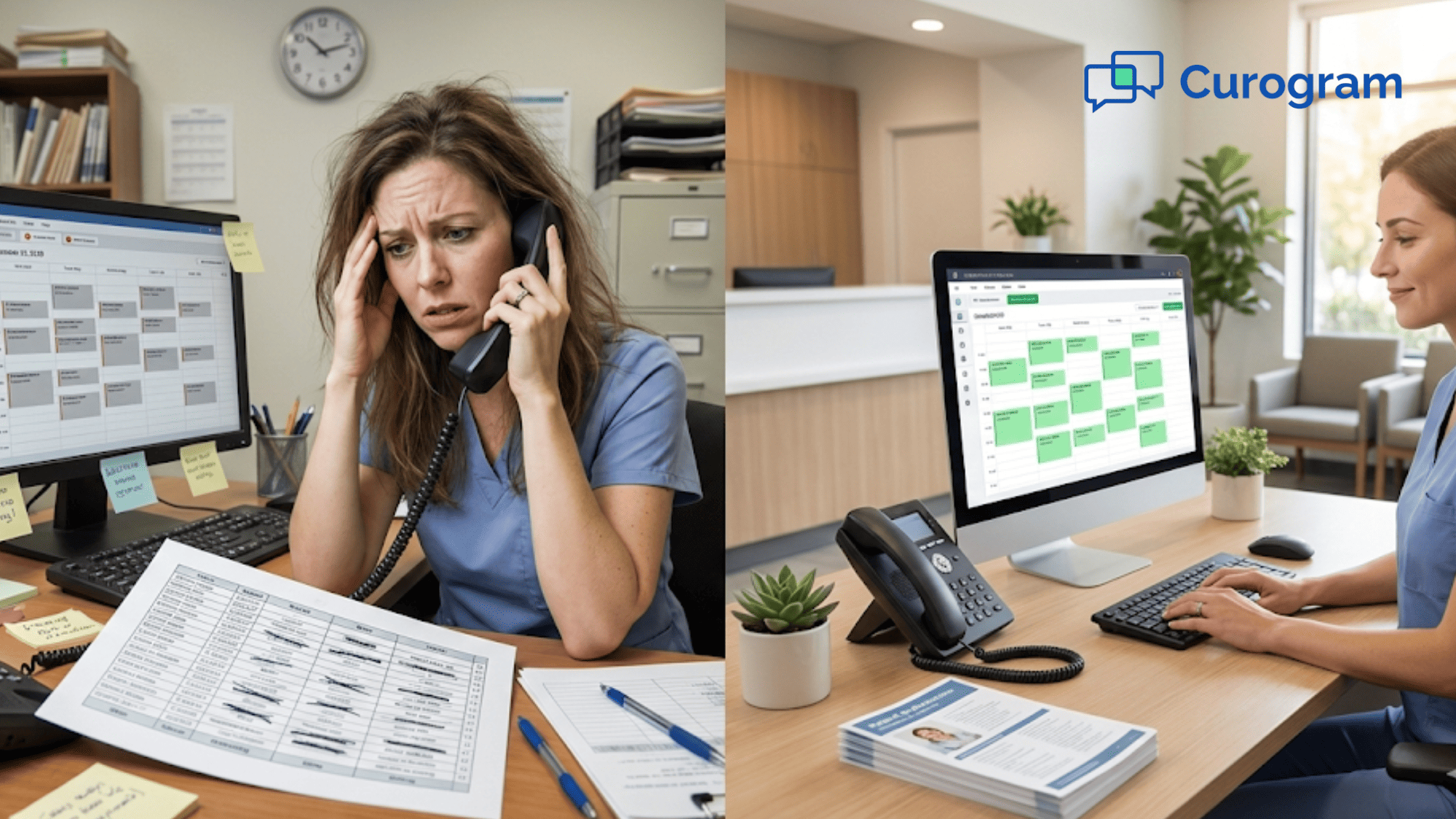
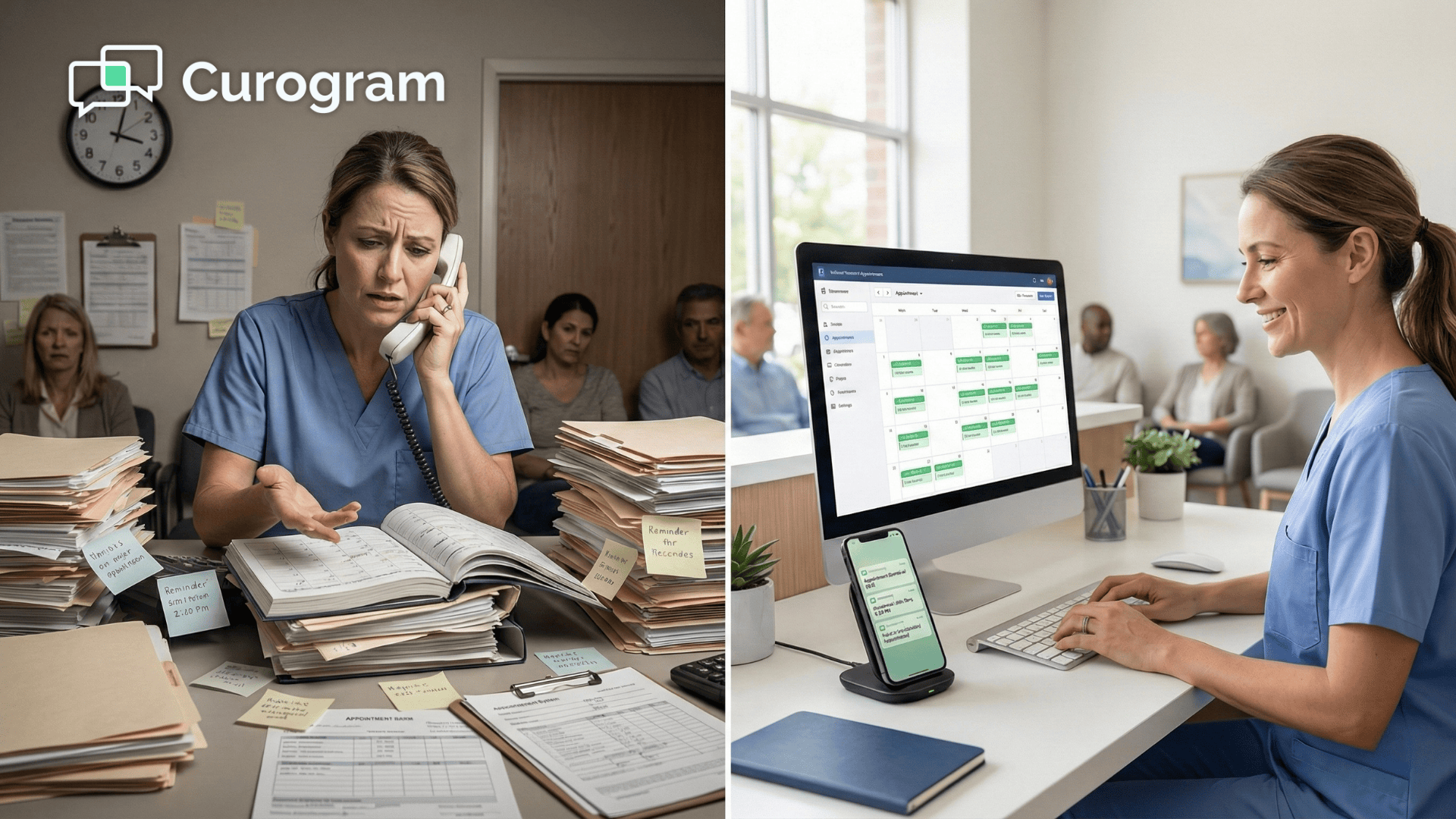
Faced with unreliable email reminders, practices fall back on the oldest tool in the book: phone calls. One front desk team was spending three hours every afternoon calling patients scheduled for the next day.
The results were depressing:
The manual confirmation process consumed staff time without actually solving the problem. This low-value work burns out talented team members.
Front desk staff didn't train for healthcare to spend their afternoons on hold, listening to dial tones. They want to help patients navigate complex medical systems, not chase down appointment confirmations like bill collectors.

Here's what changed for one dermatology practice: they stopped telling patients about their appointments and started asking them to confirm.
The difference seems small. It's revolutionary.
The Psychology of Micro-Commitments
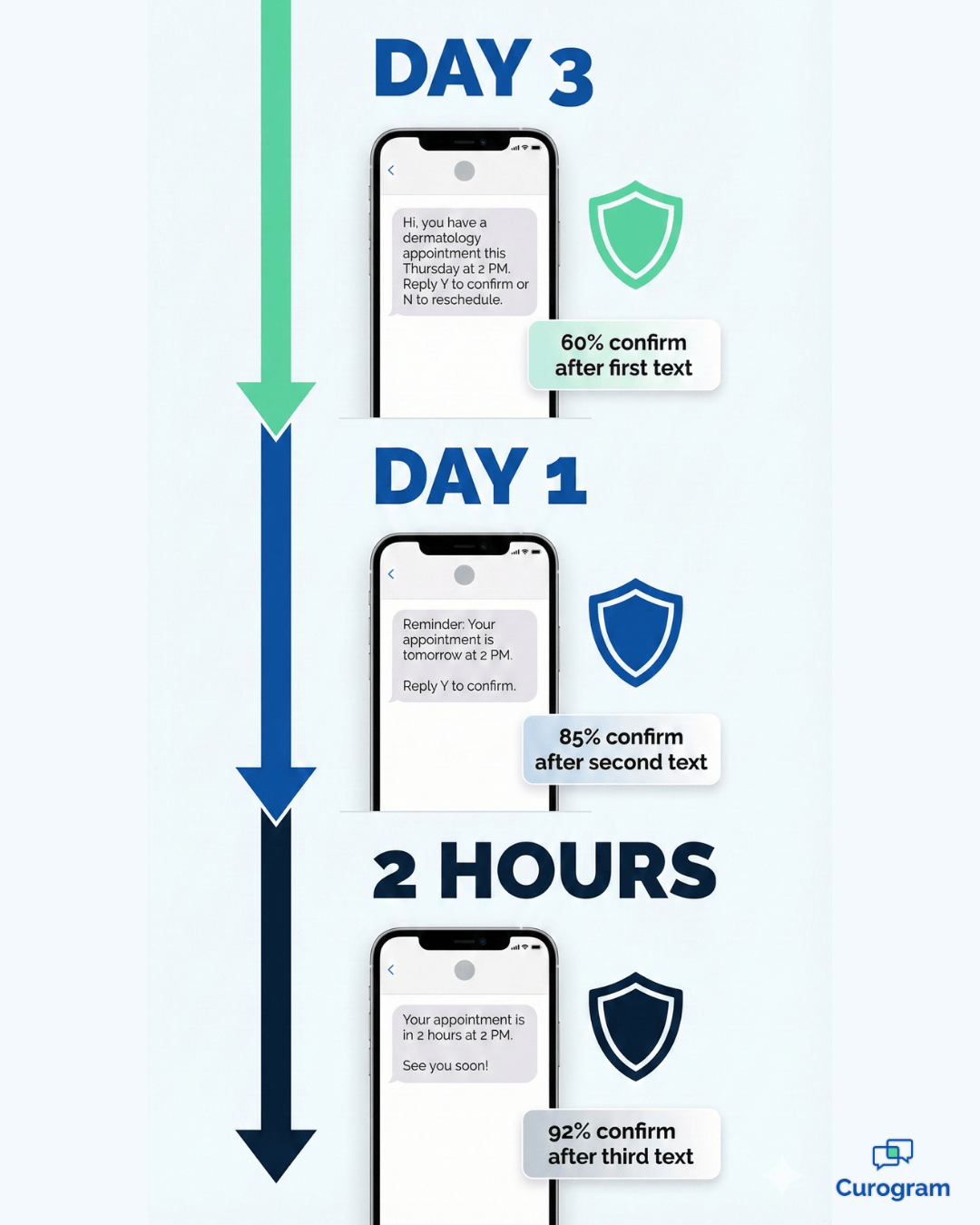
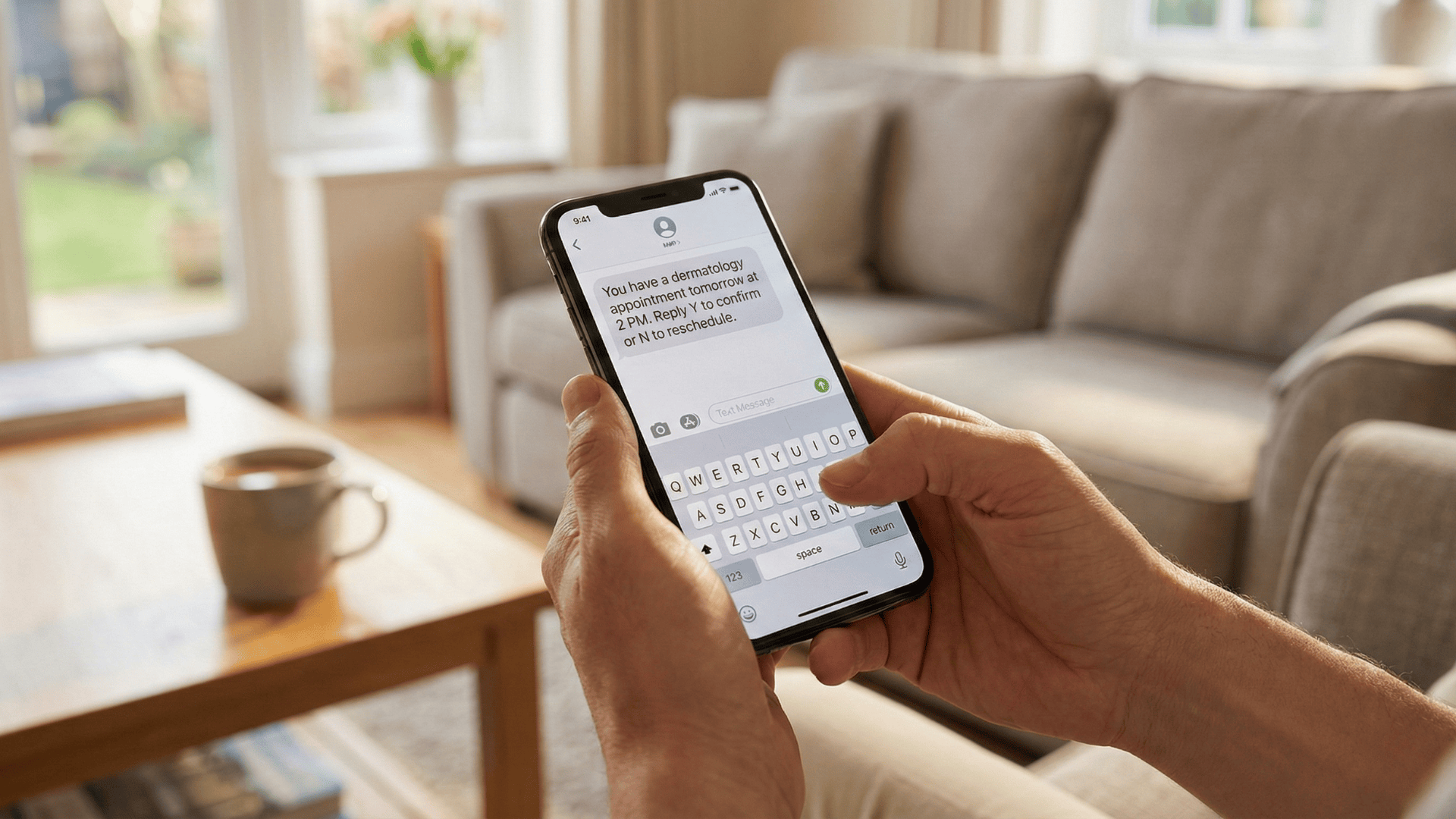
Three days before each appointment, patients now receive a text message: "Hi, you have a dermatology appointment this Thursday at 2 PM. Reply Y to confirm or N to reschedule."
That simple question triggers what behavioral psychologists call a micro-commitment. When a patient pulls out their phone, types the letter Y, and hits send, they're not just acknowledging information. They're making a promise.
"The difference in attendance is night and day," one provider noted. "When people actively confirm, they show up. It's like the act of typing Y and sending it creates a psychological contract."
Text messages get read within three minutes on average. Compare that to email, which might sit unread for hours or days. The SMS response rate hits 90% or higher. Patients reply immediately because texting feels natural and takes two seconds.
Smart Templates for Every Specialty
Different medical specialties need different preparation instructions. Dermatology appointment reminders for CureMD now include procedure-specific details: "Please arrive 15 minutes early for numbing cream application. Reply Y to confirm."
Cardiology practices send fasting reminders: "Your stress test is tomorrow at 9 AM. Remember to fast for 12 hours beforehand. Reply Y if you're all set."
An oncology clinic in Atlanta includes parking instructions: "Your infusion appointment is Monday at 10 AM. Free parking available in Lot C. Reply Y to confirm."
The beauty of automated appointment reminders for CureMD workflows is that you set these templates up once. The system pulls appointment types from CureMD and matches them to the right template automatically. No manual customization needed for each patient.
The 2-Way Sync Magic
This is where the 2-way sync scheduler for CureMD becomes absolutely critical—and where most reminder systems fall short.
When a patient replies Y to confirm their appointment, the system doesn't just log that response in some separate database. It writes the confirmation directly back to CureMD in real-time. The appointment status changes from "Scheduled" to "Confirmed" automatically.
Many practices use color coding. Confirmed appointments turn green on the schedule. Unconfirmed appointments stay white.
Cancellations show up red. "I can look at my schedule for tomorrow and immediately see which patients are locked in," one physician explained. "It takes five seconds to assess the entire day."
If a patient replies N, the system marks the appointment as "Cancelled" or "Needs Reschedule." The front desk gets an instant alert on their computer screens. They can immediately reach out to reschedule or—and this is key—open that slot to the waitlist.
"We fill about 75% of cancelled slots using waitlist blasts," one practice manager reported. "Usually within an hour. What would have been lost revenue becomes a confirmed patient visit.
The schedule stays full even when life happens and people need to cancel."

A multi-specialty medical center in Austin, Texas didn't believe the hype about SMS confirmations at first. They had tried everything—automated voice calls, email campaigns, even text reminders from their old system that didn't sync with CureMD.
Nothing moved the needle on their 14.2% no-show rate. That industry-average number represented 28-30 empty appointments every single day across their 200+ daily patient volume.
From Skepticism to $1.2 Million Recovery
The operations director agreed to a 90-day trial of automated appointment reminders for CureMD workflows with full 2-way sync integration.
The results shocked the entire team. "Within the first month, we saw our no-show rate drop to 8%. By month two, it was at 6%. After 90 days, we stabilized at 4.91%." That's a 65% reduction in missed appointments.
The finance team pulled the revenue numbers. With their average appointment value of $250, those prevented no-shows recovered approximately $1.2 million in annual revenue. "That's real money that was walking out our door—or more accurately, not walking through it."
The practice expanded the system across all departments. Internal medicine, cardiology, orthopedics, women's health—every specialty now uses the same CureMD SMS appointment confirmation workflow.
Small Practice, Big Impact
You don't need to be a 200-patient-per-day operation to see meaningful results. A solo dermatology practice in Seattle runs much leaner—about 30 patients daily.
Before implementing SMS confirmations, the practice faced 4-5 no-shows weekly. With an average appointment value of $300, that's $1,200-1,500 in lost weekly revenue. Over a year, roughly $65,000 was vanishing through empty appointment slots.
After switching to text confirmations, no-shows dropped to 1-2 per week. "I'm recovering about $45,000 annually," the provider calculated. "For a solo practice, that's significant. It's the difference between hiring another assistant or not. Between upgrading equipment or waiting another year."
What the Data Actually Shows
Beyond individual success stories, the aggregate data tells a compelling story about how reduce no-shows CureMD strategies actually perform:
One cardiology clinic in Phoenix tracked something beyond revenue: staff hours reclaimed. Before SMS confirmations, the front desk team spent 15 hours weekly on manual confirmation calls.
That's nearly two full workdays consumed by phone tag. After implementation, that dropped to 2-3 hours weekly—just following up with the small percentage of patients who don't respond to texts.
"Those 12 reclaimed hours go toward patient care," the practice manager explained. "Insurance verification, helping people navigate bills, answering clinical questions. High-value work that actually helps patients instead of just chasing confirmations."
Staff morale improved too. Team members stopped dreading afternoon confirmation sessions. They could focus on why they got into healthcare in the first place.
The Revenue Recovery Calculator: See Your Numbers
Let's break down what these improvements actually mean for your practice's bottom line. Here's the math across different practice sizes:
Annual Revenue Recovery by Practice Size
| Practice Size | Daily Patients | No-Show Rate Before | No-Show Rate After | Weekly Revenue Lost Before | Weekly Revenue Lost After | Annual Recovery |
|---|---|---|---|---|---|---|
| Solo Practice | 30 | 10% | 3.8% | $4,500 | $1,650 | $148,200 |
| Medium Practice | 80 | 14.2% | 4.91% | $14,250 | $4,875 | $487,500 |
| Large Multi-Specialty | 200 | 14.2% | 4.91% | $35,500 | $12,250 | $1,209,000 |
Assumes average appointment value of $250-300 and 65% reduction in no-show rate
One cardiology clinic in Phoenix tracked something beyond revenue: staff hours reclaimed. Before SMS confirmations, the front desk team spent 15 hours weekly on manual confirmation calls.
That's nearly two full workdays consumed by phone tag. After implementation, that dropped to 2-3 hours weekly—just following up with the small percentage of patients who don't respond to texts.
"Those 12 reclaimed hours go toward patient care," the practice manager explained. "Insurance verification, helping people navigate bills, answering clinical questions.
High-value work that actually helps patients instead of just chasing confirmations." At an average front desk hourly rate of $18, that's $21,996 in annual staff cost savings—or the equivalent of hiring a part-time medical assistant.
The Waitlist Revenue Multiplier
One practice tracks waitlist fill rate religiously. Of the 3-4 cancellations received weekly, the waitlist blast fills about 75% of them.
"That's three extra patients per week who wouldn't have been seen otherwise," the practice owner noted. "At an average of $400 per cosmetic consultation, we're talking about an additional $62,400 annually just from filling cancelled slots."
The system works because it operates at text-message speed. A patient cancels at 10 AM. The waitlist blast goes out at 10:01 AM. Someone responds at 10:07 AM. The slot is filled by 10:15 AM. The entire process takes 15 minutes instead of hours of phone calls.
Can we customize the timing of the texts?
Absolutely. Most practices use what we call the "three-touch defense strategy"—one text three days before the appointment, another the day before, and a final reminder two hours out. But you control every aspect of that timing.
Some dermatology practices send an extra reminder for procedures requiring numbing cream: "Don't forget to apply numbing cream 45 minutes before your appointment."
Cardiology clinics add a fasting reminder 24 hours before stress tests. The system lets you build custom cadences by appointment type, so different procedures get different reminder sequences.
Does it handle multiple languages?
Yes, and it happens automatically. The system reads each patient's preferred language from their CureMD profile and sends reminders in that language. Spanish, Vietnamese, Chinese, Tagalog—whatever languages your patient population speaks.
You create templates once in each language. After that, the matching happens behind the scenes.
A Spanish-speaking patient gets "Responda S para confirmar," while an English-speaking patient sees "Reply Y to confirm." No manual selection required. The system just knows.
What happens if a patient cancels via text?
The moment a patient replies N, several things happen automatically. First, the appointment status in CureMD changes to "Cancelled" or "Needs Reschedule"—whatever status your practice uses. Second, your front desk gets an instant alert on their screens.
Third—and this is where it gets powerful—the system can trigger a waitlist blast to other patients. "A slot just opened tomorrow at 2 PM. Reply Y within 30 minutes to claim it."
The first patient to respond gets the appointment. Practices fill about 75% of cancelled slots this way, usually within an hour. What would have been lost revenue becomes a confirmed patient visit.
How does the 2-way sync work with CureMD?
Think of it as a continuous conversation between the reminder system and CureMD. The system reads your CureMD appointment data to know when to send reminders. When patients respond, those confirmations or cancellations write directly back to CureMD in real-time.
Appointment statuses update automatically without anyone touching them. "Scheduled" becomes "Confirmed" when patients reply Y. "Scheduled" becomes "Cancelled" when they reply N.
Some practices use color coding—green for confirmed, red for cancelled, white for no response yet. You can see your entire day's confirmation status at a glance without clicking into individual appointments.
Is this HIPAA compliant?
Yes. The system uses encrypted messaging for all patient communications and includes proper Business Associate Agreements. It follows every HIPAA security requirement.
The reminders are carefully worded to avoid specific medical details. They'll reference "your dermatology appointment" or "your stress test" without mentioning diagnoses, medications, or procedures.
Patients who need detailed information can access it through a secure portal link included in the message. This keeps the text message compliant while still providing useful information.
Medical practices don't walk into empty procedure rooms anymore when they implement the right system. When providers check their schedules each morning, they see green confirmed appointments stretching through the day.
No question marks. No crossed fingers. Just patients who said Y and actually mean it.
The ghost schedule problem isn't inevitable. It's a choice—between passive information delivery and active confirmation requests.
Between email reminders that disappear into inboxes and text messages that demand immediate responses. Between hoping patients remember and knowing they've committed.
Email reminders fail because they don't ask patients to do anything. They inform. They notify. They remind. But they don't create the psychological micro-commitment that turns scheduled appointments into confirmed visits.
Automated appointment reminders for CureMD workflows using SMS change the equation. Patients receive a direct question that requires a direct answer. Reply Y or N. This system drives appointment optimization by ensuring every slot is either confirmed or quickly reallocated.
That simple action creates accountability. When someone types Y and hits send, they're making a promise to themselves as much as to your practice.
The 2-way sync scheduler for CureMD ensures that promise translates into schedule certainty. Confirmations write back to your system automatically. You see exactly who's coming before the day starts. Staff stops playing phone tag. Revenue stops evaporating through empty slots.
The results from real practices tell the story better than any marketing copy could. One medical center recovered $1.2 million annually.
A solo practice reclaimed $45,000. Front desk teams got 12 hours back every week. Waitlists fill 75% of cancellations within an hour.
These aren't outliers. They're the new standard for practices that refuse to accept no-shows as an inevitable cost of doing business.
Your CureMD system can do this right now. The technology exists. The integration works. The templates are customizable for dermatology appointment reminders, cardiology prep instructions, oncology check-ins—whatever your specialty requires.
Every empty appointment slot represents revenue that should have been yours. Every hour your staff spends on confirmation calls is time stolen from patient care. Every no-show is a failure of your reminder system, not your patients.
Schedule a demo and run the No-Show Calculator with your practice's real numbers. Input your current no-show rate and daily patient volume. The calculator will show you exactly how much revenue you're losing monthly and annually.
💡 Behavioral health facilities can reduce no-shows and boost revenue using automated SMS reminders with Opus EHR. Cut missed sessions by up to...
💡 Behavioral health and addiction treatment centers can cut no-shows by up to 30% using Opus EHR automated reminders through Curogram. Real-time...
💡 Reducing patient no-shows for CureMD practices starts with one simple change: 2-way SMS reminders. Practices that add text-based reminders see up...