12 min read

Is Texting Patients HIPAA Compliant for CollaborateMD Billing Teams?

Is Texting Patients HIPAA Compliant for CollaborateMD Billing Teams?
💡 Using 2-way texting to verify patient details helps CollaborateMD users fix "unclean" claims before they go out, cutting denial rates tied to simple data errors.
  • About 20% of claims get denied due to wrong patient info like typos or old insurance cards
  • Texting patients for updated insurance photos takes minutes, not days
  • Pre-claim scrubbing via SMS catches errors before the claim hits the payer
  • Clean data means faster first-pass approvals and shorter A/R cycles
  • Curogram's secure SMS platform works alongside CollaborateMD to keep data accurate
By using text-based checks before billing, RCM teams can speed up cash flow and let billing staff focus on complex appeals instead of chasing down basic info.

A claim gets denied. Your billing team digs into it. The reason? A wrong Member ID. One digit off. The patient got a new card two months ago, but nobody updated the file.

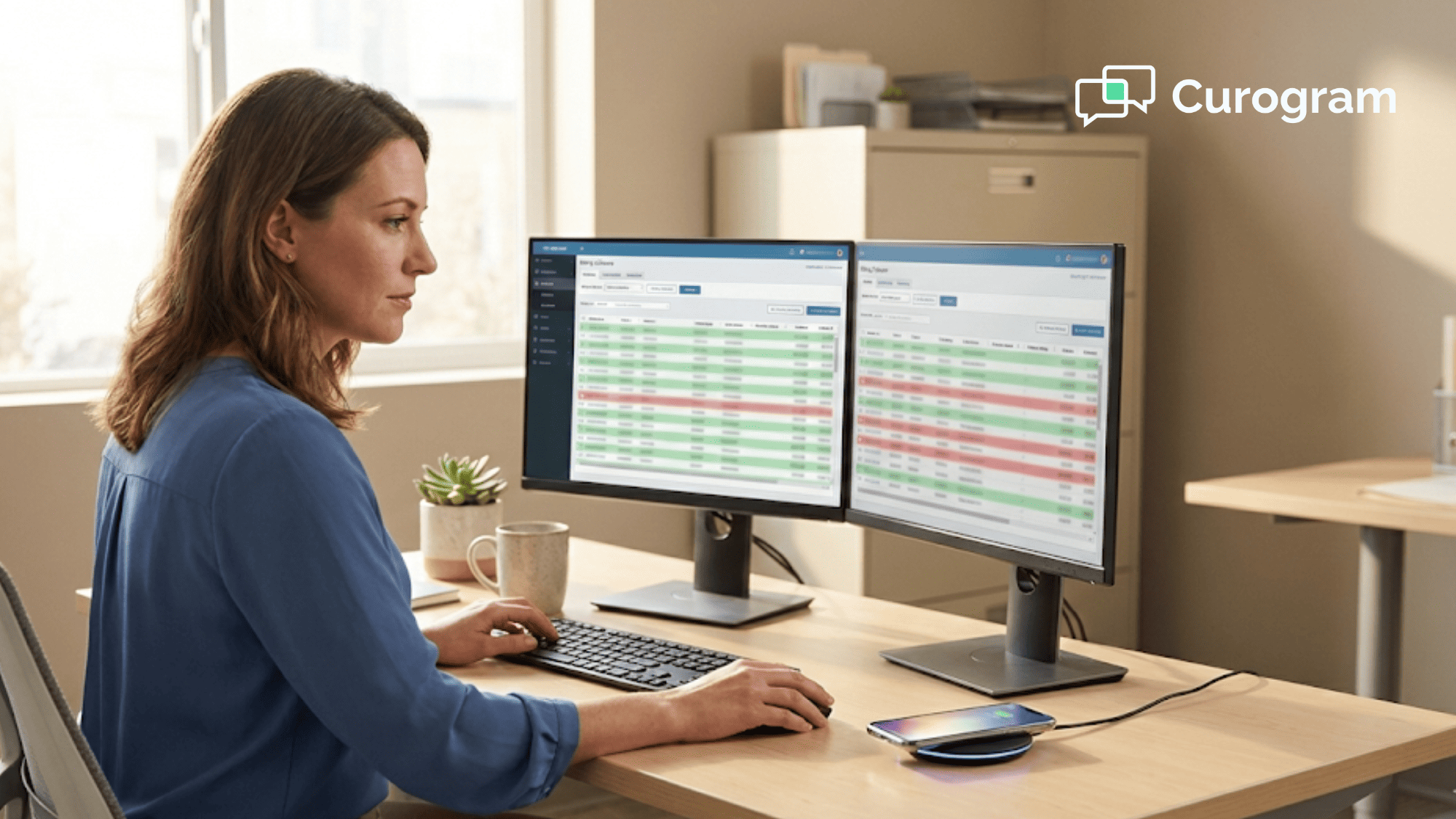
This happens every day in practices that use CollaborateMD. The billing engine is strong. It can scrub codes and flag errors. But it can't fix bad data that humans type in at the front desk.

Here's the thing most RCM teams miss: The fastest way to clean up claims is not better coding. It's better data. And the fastest way to get better data is to text the patient and ask for it.

If you've ever asked yourself whether is texting patients HIPAA compliant CollaborateMD can support, the answer is yes, with the right tools. A platform like Curogram lets your staff send a quick text to ask for an updated insurance card photo. The patient snaps a picture and sends it back in minutes. No phone tag. No voicemail. No waiting.

This "pre-claim scrubbing" method stops dirty data before it enters your system. Instead of finding errors after a denial, you catch them before the claim is ever filed. That means fewer rejections, faster payments, and less wasted staff time.

In this article, we'll break down exactly how texting works as a data tool for CollaborateMD users. You'll learn why bad data is so costly, how secure SMS for doctors can fix it, and what kind of results real practices have seen.

Whether you manage billing for a small clinic or a large group, this guide will show you a simple path to cleaner claims and faster collections.

The Hidden Cost of "Dirty Data" in CollaborateMD

Your CollaborateMD billing engine is only as good as the data you feed it. Bad info at the front desk leads to denied claims, wasted staff hours, and revenue stuck in limbo for weeks. The worst part? Most of these errors are small typos and outdated details that a quick text could have fixed in minutes.

The "Garbage In, Garbage Out" Problem

CollaborateMD is built to handle the heavy lifting of medical billing. It checks codes, formats claims, and pushes them to payers with speed. But there's one thing it can't do: fix wrong info that was entered by a human at check-in.

Think of it like a GPS. It can find the best route, but only if you type in the right address. If the address is wrong, the GPS sends you to the wrong place. The same thing happens with claims.

A front desk staffer types a Member ID with one wrong digit. Or the patient's plan changed, but the old group number is still on file. Maybe the date of birth was entered wrong during a rushed morning. These small errors seem harmless. They're not.

When CollaborateMD sends that claim to the payer, the payer's system looks for a match. If the Member ID, group number, or date of birth doesn't match, the claim comes back as denied. It doesn't matter that the service was real or the codes were correct. The data didn't match, so the payer says no.

The Denial Loop

Now comes the costly part. A denied claim doesn't just go away. It kicks off a long chain of work that drains time and money from your practice.

Here's what the denial loop looks like in real life:

The claim goes out with wrong data. Two to four weeks later, it comes back denied. A billing staffer has to pull the file and figure out what went wrong. Then they need to call the patient to get the right info. The patient might not answer. They might need a few follow-up calls. Once the billing team gets the right data, they update the file and resubmit.


From start to finish, this loop can stretch the payment cycle by 30 to 45 extra days. During that time, your practice has done the work but hasn't been paid. And your billing staff spent hours on a problem that a simple text could have solved in five minutes.

Multiply that by dozens of claims each month. The lost revenue and wasted labor add up fast. For a mid-size practice filing 500 claims per month, even a 10% denial rate means 50 claims stuck in this loop. If the average claim value is $150, that's $7,500 held up every month.

The Persona Pain

For billing managers, this problem is deeply personal. You know the codes are right. You know the service was done. But the claim still comes back marked "Member not found" or "Subscriber ID does not match."

It's not a clinical error. It's not a coding error. It's a data entry error, and it could have been caught before the claim was ever sent.

Picture this:

A patient came in for a follow-up visit last Tuesday. At check-in, the front desk copied the insurance info from the last visit. But the patient switched plans at the start of the year. The old card info is now useless. The claim goes out, and two weeks later it bounces.

A billing manager who follows CollaborateMD HIPAA messaging rules knows that a quick, secure text before the visit could have caught this. A simple message like "Hi Maria, can you reply with a photo of your current insurance card?" would have taken 30 seconds. Instead, the practice is now 30 days behind on that payment.


This is the hidden tax of dirty data. It's not flashy. It's not dramatic. But it quietly bleeds revenue from practices every single month. The good news is that it's also one of the easiest problems to fix.

The Solution: Texting as a Data Integrity Tool

Most people think of texting as a way to remind patients about visits. But texting can do much more than that. When used the right way, it becomes a powerful tool for keeping patient data clean and accurate before a claim is ever built.

Spot-Check Verification

Your RCM team reviews a patient file and notices something is off. Maybe the insurance group number field is blank. Maybe the address looks outdated. In the past, the next step was a phone call. And we all know how that goes: ringing, voicemail, a message left, and then waiting.

With a platform like Curogram, the staffer can send a text right from the dashboard. The message is simple and clear:

"Hi Sarah, your insurance info looks incomplete. Please reply with a photo of your current card."

Most patients see a text within minutes. Many reply within the hour.


This kind of spot-check works great for files flagged during pre-billing review. Instead of holding a claim or sending it out and hoping for the best, your team gets the answer fast. The file is updated, the claim goes out clean, and the payer approves it on the first pass.

Patient consent for texting is gathered at intake, so your team is already cleared to reach out. This makes the process smooth and fully above board from a compliance standpoint.

Secure Image Capture

One of the biggest game-changers is the ability to capture insurance card images by text. Curogram uses a "Magic Link" approach.

The patient gets a text with a secure link. They tap it, snap a photo of their card with their phone camera, and submit it. No app download needed.

The image shows up in the Curogram dashboard right away. From there, your billing staff can pull the details and enter them into CollaborateMD. You now have a clear, current copy of the card on file. 

Because the link uses encrypted medical messaging, the data stays safe in transit. The photo is not sent through plain SMS. It travels through a secure channel, which keeps your practice in line with HIPAA rules. This is what makes it a safe choice for any office that wants to avoid HIPAA fines texting can cause when done without the right tools.

Patient using smartphone to photograph their health insurance card on a table for their medical office

Proactive Date-of-Birth and Address Checks

You don't have to wait for an error to show up. Smart practices use automated texts to scrub files before the patient even walks in the door.

Here's how it works:

The day before a visit, the system sends a text: "Hi James, we want to make sure your info is up to date. Please confirm your date of birth and current address by replying to this text." If the patient replies with new info, the file is updated before billing even starts.


This proactive step catches changes that patients forget to mention at check-in. People move. They change jobs. They switch plans. But they rarely think to call their doctor's office when those things happen. A simple text prompt bridges that gap.

For practices that batch-bill at the end of the week, these checks are even more valuable. By the time billing reviews the file, the data is already fresh. The claim is built on solid info from day one.

This approach treats texting not as a courtesy tool but as a core part of your revenue cycle. It's a low-cost step that prevents high-cost problems. And when you pair it with the billing power of CollaborateMD, you get clean claims that move through the system with fewer bumps.

The Financial Impact: Lower DSO, Higher Collections

Clean data isn't just a nice-to-have. It directly affects how fast your practice gets paid and how much revenue you actually collect. When you use texting to fix patient info before claims go out, the numbers shift in your favor across the board.

Accelerating Cash Flow with First-Pass Yield

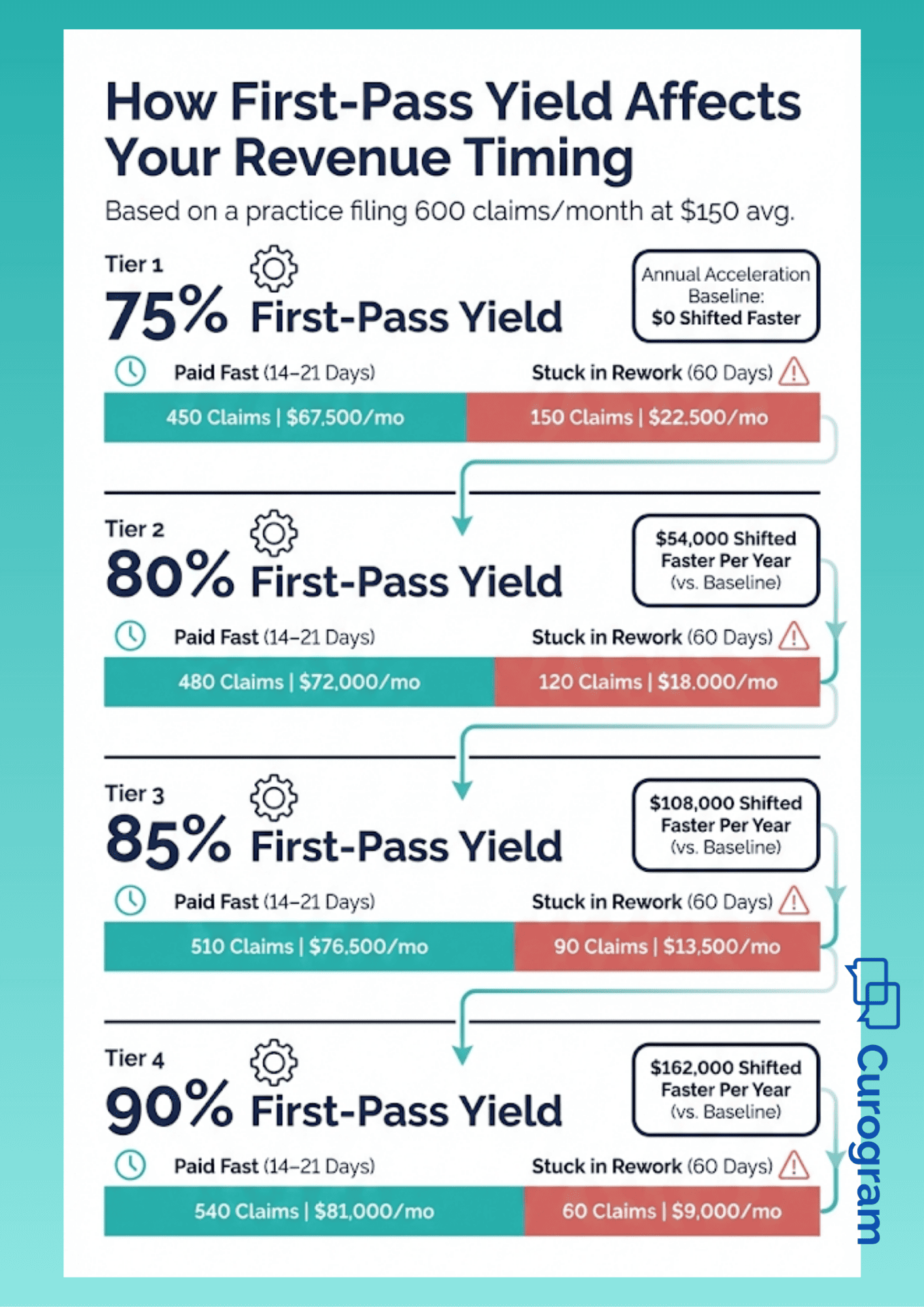
In billing, there's a metric called "First Pass Yield." It measures how many claims get approved by the payer on the first try, with no rework. The higher your first-pass rate, the faster your cash flow.

When a claim passes the payer on the first attempt, payment can arrive in as few as 14 to 21 days. When a claim is denied and must be reworked, that timeline jumps to 45 to 60 days or more. That's an extra month or two where your practice has done the work but hasn't seen a dime.

Let's walk through a simple example:

Say, your practice sends out 600 claims per month. With a 20% denial rate, 120 claims bounce. If you fix just half of those denials by using pre-claim texting to catch data errors, that's 60 claims that now pass on the first try.

At an average claim value of $150, those 60 claims are worth $9,000. Instead of waiting 60 days for that money, you get it in 14 to 21 days. Over a year, that adds up to $108,000 in revenue that moves through your cycle faster. Your Days Sales Outstanding (DSO) drops, and your cash on hand goes up.


Now, imagine you push that further. With steady use of pre-visit text checks, your denial rate for data errors could drop even more. Some practices see their first-pass rate climb from 75% to 90% or higher once they start cleaning files before billing.

The Real Cost of Rework

Denials don't just slow down revenue. They create labor costs that eat into your margin. Every denied claim requires someone on your team to research the error, contact the patient, update the file, and resubmit the claim.

Let's put real numbers to it:

A billing staffer earns roughly $20 per hour. Reworking a single denied claim takes about 20 to 30 minutes when you factor in the research, the phone calls, and the resubmission. That's $7 to $10 per claim in labor alone.

With 120 denied claims per month, you're spending $840 to $1,200 each month just on rework labor. That's $10,000 to $14,400 per year in staff time spent fixing problems that could have been avoided with a text message.


And that's just the direct cost. There's also the chance cost. Every minute your billing team spends on rework is a minute they're not spending on higher-value tasks like complex appeals, underpayment reviews, or payer contract follow-ups.

Staff Focus Shift

When your team isn't buried in rework, they can do the work that actually grows revenue. Think about what your most skilled billing staff could do if they had 10 to 15 extra hours per month.

They could review payer contracts to spot underpayments. They could work on appeals for high-dollar claims that were denied for clinical reasons. They could audit charge capture to make sure every service is billed. These are the tasks that move the needle on revenue.

Instead, many RCM teams are stuck in a reactive cycle. They spend most of their time chasing patients for basic info like insurance card numbers and updated addresses. This is work that secure SMS for doctors and billing teams can handle in seconds.

By shifting data collection to automated text-based outreach, you free up your staff to focus on the work that requires skill and judgment. The routine stuff gets handled by the system. The complex stuff gets handled by people.

Visual breakdown of how clean claims improve revenue timing in medical billing from 75% to 90% first-pass yield

Atlas Medical Center Proof

This isn't just theory. Real practices have seen real results from this approach. Atlas Medical Center, a Curogram client, improved their overall workflow by using texting to better manage patient data and cut down on back-and-forth phone calls.

By streamlining how they gathered info from patients, Atlas Medical Center saw a 10-20% increase in revenue. That jump came from a mix of factors: fewer missed visits, faster billing cycles, and cleaner claims that passed on the first try.

The key lesson from their case is simple. Better data starts with better tools for talking to patients. When patients can reply to a text in 30 seconds instead of sitting on hold for 10 minutes, they're far more likely to send the info you need.

How DSO Drops with Cleaner Data

DSO, or Days Sales Outstanding, measures how long it takes to collect payment after a service is done. A high DSO means your money is tied up. A low DSO means cash is flowing into your practice faster.

Industry data puts the average DSO for medical practices at around 40 to 50 days. Practices with high denial rates can see DSO climb to 60 or even 70 days. Every extra day is money sitting in limbo.

Pre-claim texting attacks DSO at the source. By catching data errors before submission, you remove one of the top reasons claims get stuck. The claim goes out right the first time, the payer processes it without a hitch, and the payment lands in your account faster.

For example:

If your DSO is currently 55 days and you reduce data-related denials by half, you might see DSO drop to 42 or 45 days. That 10-day improvement means your practice has access to tens of thousands of dollars in revenue sooner each quarter.

When you combine that with the labor savings from fewer reworks and the higher output from your billing team, the total financial impact is clear.


Pre-claim texting through a platform like Curogram isn't just a convenience feature. It's a revenue tool that pays for itself many times over.

Get Paid Faster with Better Data

The fastest way to improve your CollaborateMD billing results isn't just better coding. It's better data going into the system from the start.

Every denial caused by a wrong Member ID, an old insurance plan, or a mistyped date of birth is a delay that costs your practice time and money. These are not complex payer disputes. They're simple data problems with a simple fix.

Texting gives your team a direct line to patients for quick, painless data checks. A message takes seconds to send. Patients reply fast. The file gets updated before the claim is built. That's it. No phone tag. No rework. No 30-day delay.

What Clean Data Actually Gets You

Accurate data means clean claims. Clean claims mean faster payments. Faster payments mean a healthier revenue cycle and less stress for your billing team.

With CollaborateMD, your first-pass rate goes up, which means fewer claims get sent back. Your DSO drops because payments arrive weeks sooner. Your staff stops wasting hours on rework and starts focusing on appeals and underpayment reviews. And your practice collects more of what it's owed, faster.

This isn't a big system overhaul. It's a small change in your workflow that creates a big shift in your results.


Why Curogram Is Built for This


Curogram was designed to solve the exact problems that slow down medical billing. It's not a general texting app. It's a HIPAA-compliant 2-way texting platform built for healthcare workflows, including revenue cycle support.

It's secure. All patient messages flow through encrypted channels. When a patient sends a photo of their insurance card through a Curogram Magic Link, that image is protected from end to end. This is true encrypted medical messaging, not just regular SMS.

Staff training takes about 10 minutes. The platform feels just like texting on your phone, so front desk and billing teams pick it up right away. There's no steep learning curve or long setup process.

Curogram connects to your workflow. Curogram works alongside CollaborateMD and other practice management systems. Your team can trigger texts from the dashboard, receive patient replies in real time, and pull updated info straight into the billing file.

It also handles patient consent for texting the right way. Consent is gathered during intake, so your team is always compliant when they reach out. There's no guesswork about whether you're allowed to text a patient.

The platform does more than just claims cleanup. Curogram also supports appointment reminders, review requests, text-to-pay, and online patient forms. It's a one-stop platform that boosts the whole front office, not just one task.

For practices that want to avoid HIPAA fines texting violations can trigger, Curogram provides the safety net. You get the speed of texting with the security your practice needs.

Conclusion

Claim denials caused by bad data are one of the most fixable problems in medical billing. You don't need a new billing system. You don't need extra staff. You need a better way to talk to patients before the claim goes out.

That's what texting does. It turns a slow, painful process into a fast, simple one. A text goes out, the patient replies, the file is updated, and the claim is built on solid data. The payer approves it on the first pass, and your practice gets paid on time.

CollaborateMD gives you a strong billing engine. Curogram gives you the clean data to fuel it. Together, they create a workflow where claims move fast and denials from admin errors drop sharply.

If you're a billing manager tired of seeing "Member not found" on your rejection reports, this is the fix. If you're an office manager who wants your front desk to stop drowning in phone calls, this is the fix. If you're a practice owner who wants shorter A/R cycles and faster revenue, this is the fix.

The practices that win at billing in 2026 won't just be the ones with the best codes. They'll be the ones with the best data. And the easiest way to get better data is to ask for it, quickly and securely, by text.

Start with a demo. See how Curogram works with CollaborateMD. Watch how a single text can save your team 30 minutes of rework. Once you see it, you won't go back to phone calls.

Start with a quick demo today. See how Curogram works with CollaborateMD and watch how a single text can save your team 30 minutes of rework.


Frequently Asked Questions

How does texting patients before billing reduce claim denials in CollaborateMD?
Texting lets your team ask patients for updated insurance cards, date of birth, and address before the claim is built. This catches data errors that cause most admin-related denials, so the claim passes on the first try.
Why is a secure link better than regular SMS for collecting insurance card photos?
Regular SMS is not encrypted, so sending patient data through it can violate HIPAA rules. A secure Magic Link routes the photo through an encrypted channel, keeping the data safe and your practice compliant.
How quickly do patients typically respond to text requests for updated info?

Most patients read texts within a few minutes and reply within one to two hours. Compare that to phone calls, which often take multiple attempts over several days before you reach the patient.

Why should billing teams use pre-visit texts instead of asking for updates at check-in?

Check-in is rushed and staff may forget to ask. Pre-visit texts give patients time to find their card, snap a photo, and reply at their own pace, so the file is already updated before they arrive.

How does cleaning patient data before billing affect Days Sales Outstanding?

When claims pass on the first try, payment arrives in 14 to 21 days instead of 45 to 60. This can drop your DSO by 10 or more days, which means faster access to revenue each billing cycle.


Reduce Claim Denials in CollaborateMD with Digital Intake

Reduce Claim Denials in CollaborateMD with Digital Intake

💡 Medical practices can reduce claim denials in CollaborateMD by using digital intake forms that remove manual data entry errors. About 20% of...

Read More
HIPAA-Compliant Texting in DrChrono with Curogram

HIPAA-Compliant Texting in DrChrono with Curogram

💡 HIPAA-compliant texting in DrChrono is transforming patient communications. It empowers clinics to securely text patients without worsening...

Read More
HIPAA Compliant Texting for CollaborateMD: End Phone Tag

HIPAA Compliant Texting for CollaborateMD: End Phone Tag

💡 HIPAA compliant texting for CollaborateMD lets billing teams replace slow phone calls with instant, secure SMS. Curogram plugs into your RCM...

Read More