
Confirm or Reschedule by Text, No Phone Call
 Jo Galvez : Jul 3, 2026, 9:00:01 AM
Patients get a reminder but can't reply, so they no-show. See how CollaborateMD two-way reminders let patients confirm or reschedule with just one...
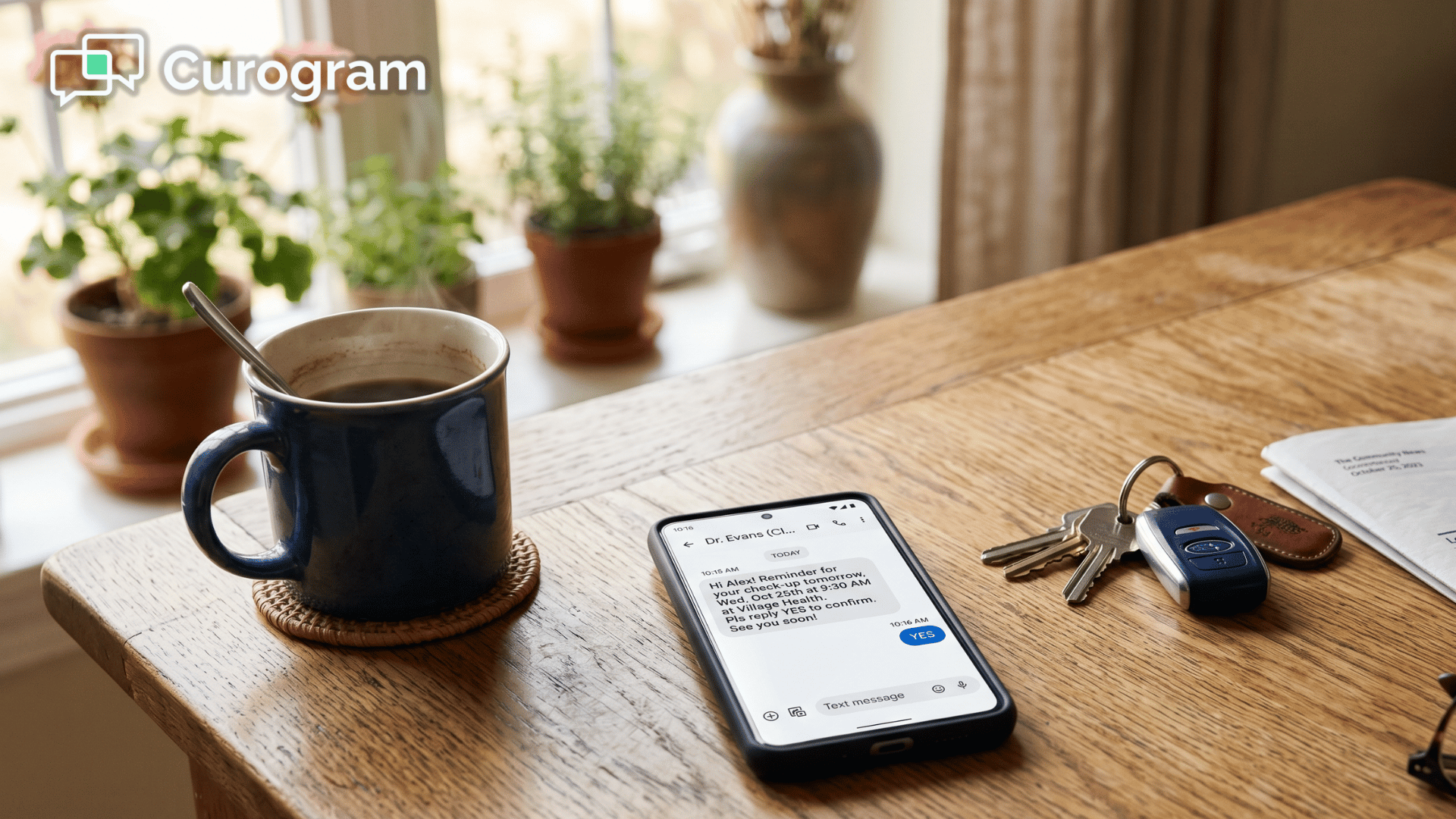
Your front desk did everything right. The reminder went out two days early, generated automatically by the system, exactly as scheduled. And still, the 9 a.m. chair sits empty.
That empty chair represents more than a gap in the day. It is lost revenue, a slot nobody can fill on short notice, and a patient who may not rebook for several weeks. Practices that rely on automated reminders inside CharmHealth expect fewer of these moments, not more uncertainty.
Here is the part that genuinely stings: most reminders only travel in one direction.
The email goes out, and then it disappears into the noise. Sometimes it lands in a spam folder, and sometimes it sits unread beneath twenty other messages all competing for attention.
Either way, the patient has no obvious way to respond, and your team cannot tell who is actually coming until appointment time finally arrives.
It sounds like outreach. It feels like guessing.
Think about your own inbox for a moment.
How many appointment emails have you skimmed past and immediately forgotten?
Now imagine receiving a short, personal text instead — something you could acknowledge in seconds without opening anything.
That small difference is the entire story. Patients ignore email reminders almost reflexively, yet they read their text messages nearly every single time. So when a reminder appears as an ordinary message they can answer with one word, the confirmation simply happens on its own.
This is exactly where two-way text appointment confirmations for CharmHealth patients change the underlying math. No portal login, no exhausting phone tag, and no black hole between the reminder and the visit itself.
The result is a schedule you can genuinely trust before the day even begins. You finally know who is arriving, who needs to move, and which slots are truly open.
Most appointment reminders are built like a megaphone. They broadcast a message and then walk away. Nothing is expected of the patient, and nothing ever comes back to the practice.
That is the one-way reminder, and it is quietly expensive. The email reaches the inbox in theory, but patients rarely open it. Even when they do, there is no way to reply and lock in the visit.
So the reminder goes out, and then comes the silence. The patient means to call but forgets. The email slips into spam. Your team has no signal either way until the appointment time arrives, or doesn't.
It is silence dressed up as outreach.
The cost is real. One-way reminders create a black hole with no confirmation, which feeds no-show rates of 10% to 30% and the lost revenue that follows.
When patients ignore email reminders, every unanswered message is a coin flip on whether the chair fills.
Here is the contrast in plain terms.
| What happens | One-way email reminder | Two-way text reminder |
|---|---|---|
| Gets opened | Rarely | Almost always |
| Patient can reply | No | Yes, in one tap |
| Confirms the slot | No clear signal | Instant confirmation |
| You know who's coming | Only at the door | Before the day starts |
The table makes the gap obvious. A reminder that cannot listen is only doing half the job. For your team, that missing half is the difference between a planned day and a guessing game.
The fix is not louder reminders. It is reminders that invite a reply.
Curogram reaches patients in the text thread they already read, then gives them a simple way to respond. The feature is a set of smart reminders — a sequenced text the patient can answer to confirm or move a visit, with no app and no login.
Here is how the flow works, start to finish.
Notice what is missing from that list:
No portal, no download, and no new habit anyone has to learn.
A text appointment confirmation patients can send in seconds keeps the experience personal while your records stay clean and accurate underneath.
The write-back matters as much as the reply. The same secure connection that powers confirmations writing themselves back to your CharmHealth schedule keeps every change in sync, and it runs on the same HIPAA-compliant two-way texting your practice can trust.
For families and older patients, replying "C" to confirm is effortless. It respects their time and feels like a person reaching out, not a machine.
When the reminder can listen, the numbers move quickly. The shift is small for the patient and large for the practice.
Around 98% |
| The SMS reminder open rate, measured against single-digit email and portal engagement. |
14.26% to 4.91% |
| The no-show drop at a comparable practice after switching patients to two-way text confirmations. |
Read those two lines together and the pattern is clear. Texts get seen, and seen reminders get answered. That is how practices reduce no-shows with text, and CharmHealth keeps running underneath the whole time.
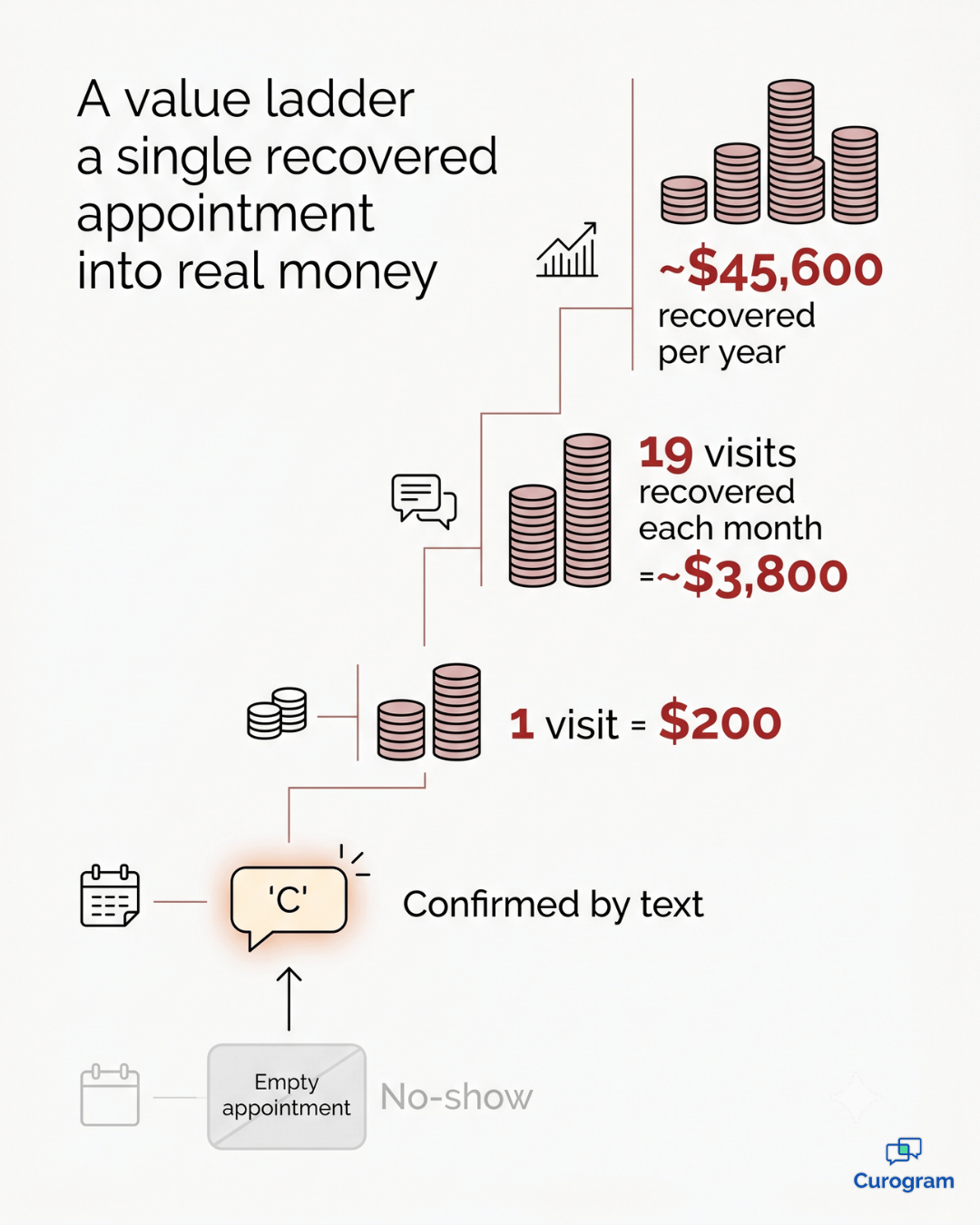
Now translate it into real money. Say your practice books 200 visits a month at $200 each.
| No-show rate | Monthly no-shows | Monthly revenue lost |
|---|---|---|
| 14.26% (before) | ~29 visits | ~$5,800 |
| 4.91% (after) | ~10 visits | ~$2,000 |
That gap is roughly 19 recovered visits a month, or about $3,800 back in your pocket. Over a year, that is close to $45,600 you were quietly losing to silence.
This means a one-tap appointment confirmation is not just a convenience. It is a revenue line.
And a confirmed visit opens the next door, too. Once a patient says yes, that is the natural moment to collect a copay by text before they ever walk in.
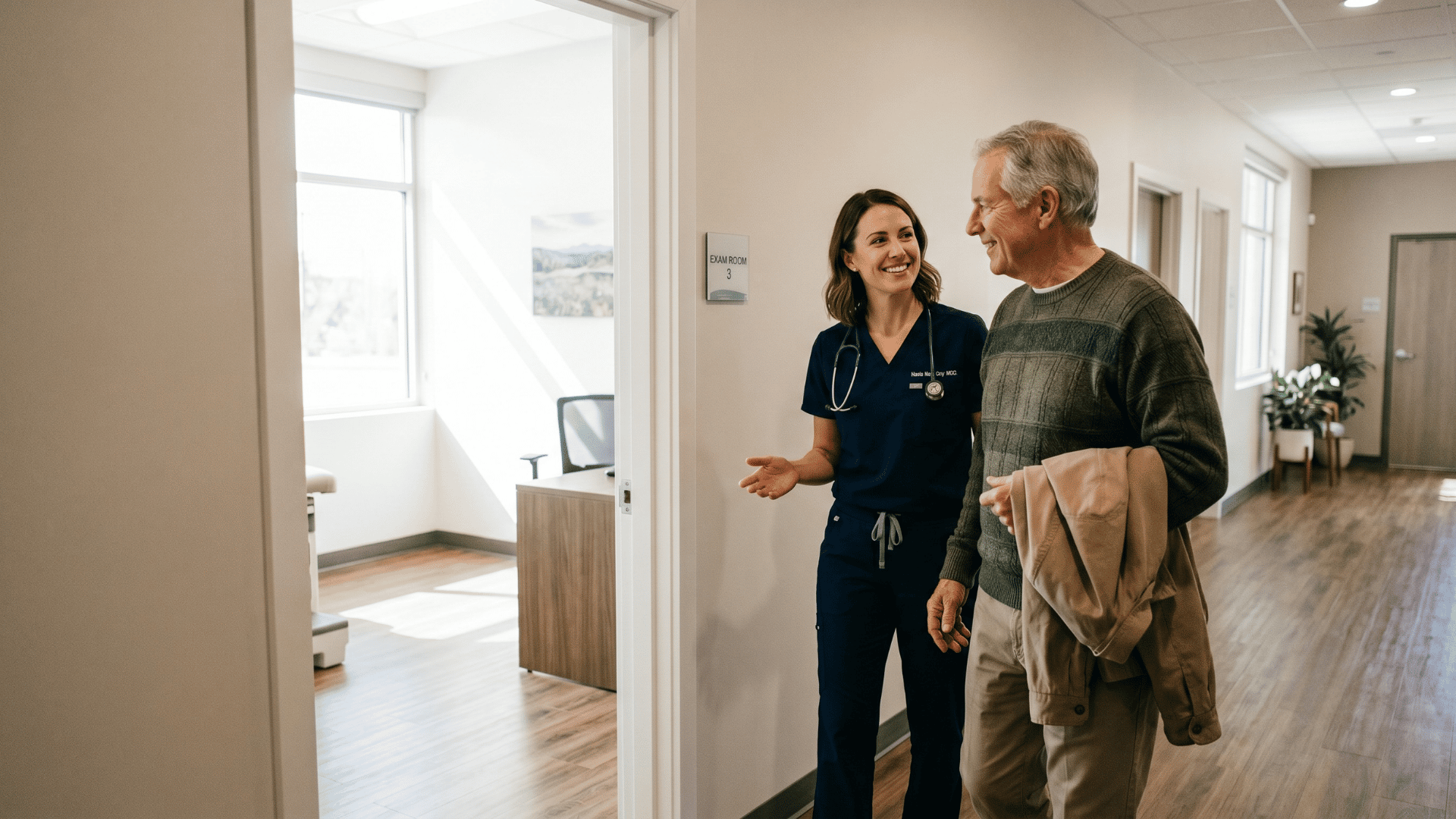
For your team, the win is even simpler. The schedule confirms itself, and the day starts with answers instead of question marks.
Behind every empty chair is a string of phone calls nobody enjoys making. Confirmation calls. Voicemails that vanish. Call-backs that only lead to more voicemails.
Two-way text quietly shortens that loop to almost nothing. When patients confirm themselves, your team stops playing endless phone tag and starts working from a schedule that is already settled.
Here is what gradually disappears from the daily to-do list:
Add it all up and the time savings become genuinely meaningful. If your front desk spends even 10 minutes a day chasing confirmations, that is roughly 5 hours every month, or about 60 hours a year, returned to your staff.
For your team, that is time redirected from the telephone toward the patients standing right in front of them.
A reminder only helps if someone actually answers it. One-way email cannot do that. A text can.
That is the quiet shift behind this approach. CharmHealth still runs your charts, your scheduling, and your records, exactly as it does today. Curogram simply relocates the reminder into the one channel patients genuinely watch — their text thread — and gives them an effortless way to reply.
CharmHealth keeps the record. Curogram earns the reply.
The difference shows up almost immediately. When patients can confirm or move a visit in seconds, your schedule stops being a daily guessing game. You walk into each morning already knowing who is coming and which appointment slots are truly open.
And the underlying math is genuinely hard to ignore. A few recovered visits each month, at $150 to $300 apiece, can add up to thousands of dollars you were previously losing to silence.
For most practices, that comfortably covers the cost of the change several times over.
There is no app for patients to download and no unfamiliar habit anyone has to teach them. They already text constantly. You are simply choosing to meet them there.
So the real question is not whether texting works. It is how many empty chairs you are willing to keep explaining away.
If you are ready to see the full flow — from the first text reminder to a confirmed visit written back into your calendar — we will walk you through every step. You will see exactly what your patients receive and how little your team has to do.
Schedule a Demo with our team, and we will tailor the walkthrough to how your practice runs today.
 Jo Galvez : Jul 3, 2026, 9:00:01 AM
Patients get a reminder but can't reply, so they no-show. See how CollaborateMD two-way reminders let patients confirm or reschedule with just one...
 Jo Galvez : Jun 25, 2026, 2:00:00 PM
One-way reminders don’t stop no-shows. See how Curogram lets Azalea Health patients confirm or reschedule by text — Atlas cut no-shows from 14% to 5%.
 Aubreigh Lee Daculug : Jul 2, 2026, 2:00:00 PM
Skip confirmation calls. CharmHealth updates schedules from text replies automatically. Comparable clinics hit 1,100+/mo. Book a demo.