9 min read
Google Reviews & Patient Acquisition for Cerbo Integrative Care
Mira Gwehn Revilla
:
June 8, 2026
- 90% of new patient leads see your Google Business Profile before your website (based on our internal research).
- Research-driven patients often read many reviews before booking a costly first visit.
- Cerbo has no native tool to request, track, or reply to reviews.
- Curogram sends automated review requests by text right after each visit.
- One practice earned 1,064 new 5-star reviews in just 3 months (based on our internal data).
A great integrative practice can still lose patients it never meets. The reason is simple. Most people judge your practice on Google long before they call. They read your reviews, count them, and check the dates.
Google reviews drive patient acquisition for Cerbo integrative medicine practices more than almost any other channel. About 90% of new patient leads see your Google Business Profile before they open your website (based on our internal research). What they find there shapes the choice.
Integrative and functional medicine patients do their homework. They often spend weeks reading about their condition and comparing providers. By the time they search, they want proof. They read review after review before booking a first visit that can cost $350 to $500 out of pocket.
Here is the problem. Cerbo is built for clinical depth, not online reputation. It gives you no tools to request, manage, or reply to Google reviews. So your profile can lag far behind your care.
This gap has a name: the Credibility Gap. Your current patients love you. Yet your profile might show 47 reviews, a 4.2 rating, and a top review from someone who never showed up. To a researching patient, that profile does not say "great care." It says "maybe not."
Curogram changes the story. Its automated text-based review system turns happy visits into public proof. One multi-location practice earned 1,064 new 5-star reviews in just 3 months (based on our internal data).
For Cerbo practices chasing high-value patients, your Google profile is not a side project. It is the front door.
The Villain: The Credibility Gap
An integrative medicine patient is not a casual shopper. She has often spent weeks studying her own health. She has compared treatment styles and read about providers. By the time she searches, she knows what she wants.
She wants a doctor who listens. She wants a root-cause approach. She wants the care her last doctor did not give. Her first look at your practice is not your website. It is your Google Business Profile.
What she sees there decides everything. Star rating. Review count. Review dates. The words other patients used. That snapshot tells her to click through or scroll past.
Now walk through her choice. She has had chronic fatigue for two years. Her old doctor ran a few labs and said she was "normal." She has researched functional medicine for three months. She is ready to book.
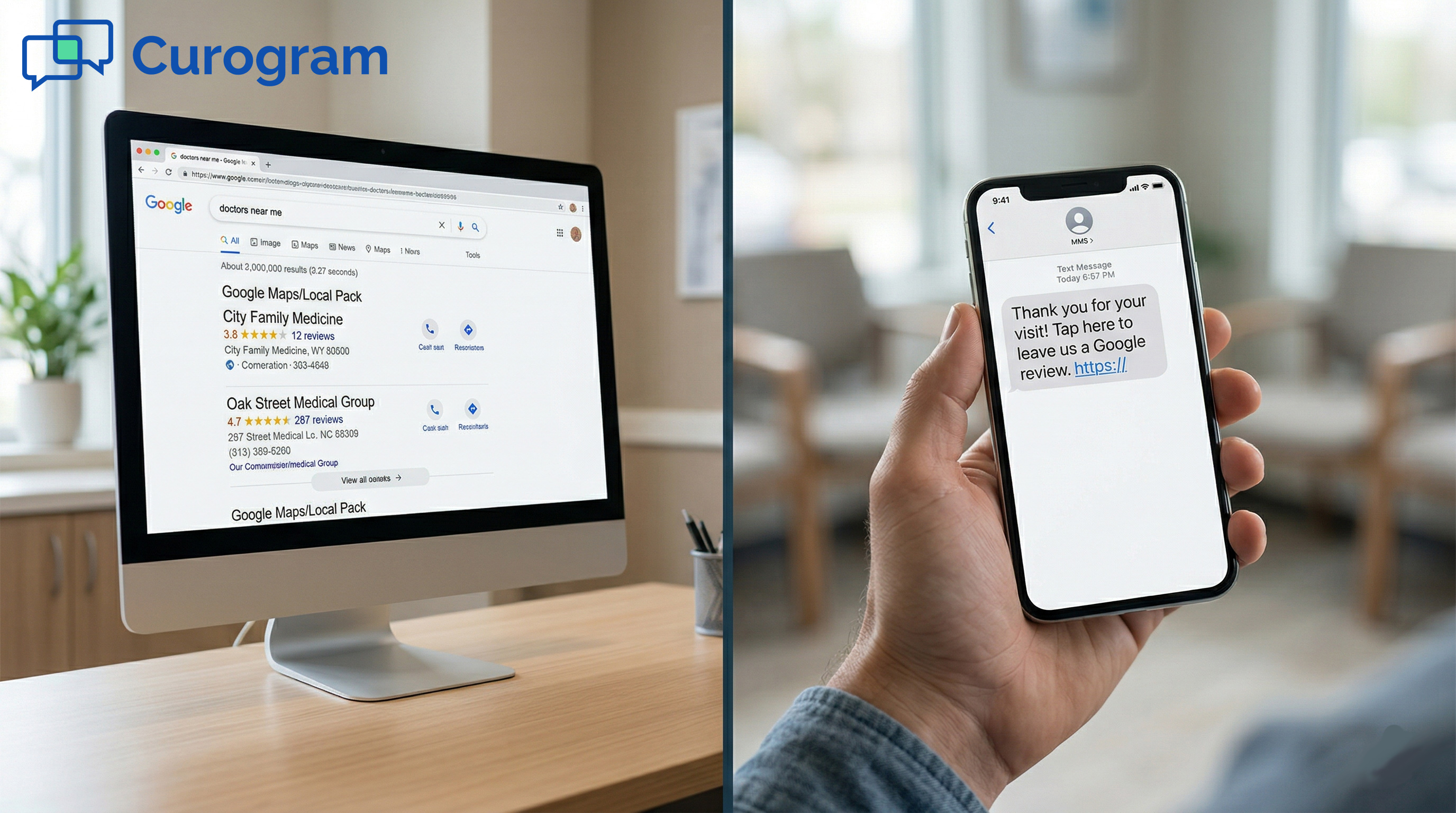
She searches Google. Three practices appear:
- Practice A: 312 reviews, 4.8 stars, a review from two days ago about beating chronic fatigue.
- Practice B (the Cerbo practice with better outcomes): 47 reviews, 4.2 stars, last review in January, top review a one-star rant from a no-show.
- Practice C: 189 reviews, 4.6 stars, recent and steady.
She clicks Practice A. She never opens Practice B's site. She never learns about its 90-minute visits or custom protocols. The Cerbo practice lost a patient it was built to help. Not for poor care. For thin reviews.
The Hidden Cost of a Thin Profile
People want proof before they trust a rating. A handful of reviews rarely clears that bar. Healthcare raises the bar even higher, because the stakes feel personal.
Integrative patients invest more than money. They invest hope. Many arrive after conventional care let them down. They need strong social proof that this provider will be different.
So a profile with 47 reviews fails a quiet test. The patient thinks, "If only 47 people spoke up in five years, how good can this really be?" Strong online reviews fuel functional medicine new patient growth. Weak ones quietly stall it.
The loss runs deeper than one booking. Each integrative patient often refers two or three friends. These are tight, health-minded circles. Lose the first patient, and you can lose the whole chain.
What it Feels Like from Her Side
She is not choosing a coffee shop. She has been let down before. She is spending money her insurance will not cover. She needs to feel safe.
She wants to read patients like her. Same symptoms. Same worries. Real stories, told in detail. A sparse profile cannot give her that comfort.
So she picks the practice with 312 reviews. Not because it is better, but because it feels safer. This is patient decision-making at work, and Google reviews shape it for DPC and concierge practices too.
Your clinical excellence is invisible at the exact moment she looks. That is the Credibility Gap. The care is real. The trust signals are missing. Your Cerbo practice can hold a strong Google reputation and patient trust offline, while the profile says little online.

The Guide: The Trust Signal
Curogram is the Trust Signal. It bridges the space between great care and a weak profile. It does this by growing review volume, recency, and detail. These are the very things research-driven patients look for.
The method is simple. After a visit, Curogram sends an automated review request by text. Text is the channel patients already use with your office. They get one tap to reach your Google review page.
Leaving a review becomes as easy as the care that earned it. No friction. No hunting. Just a quick, kind nudge at the right moment.
A Review Path that Takes under Two Minutes
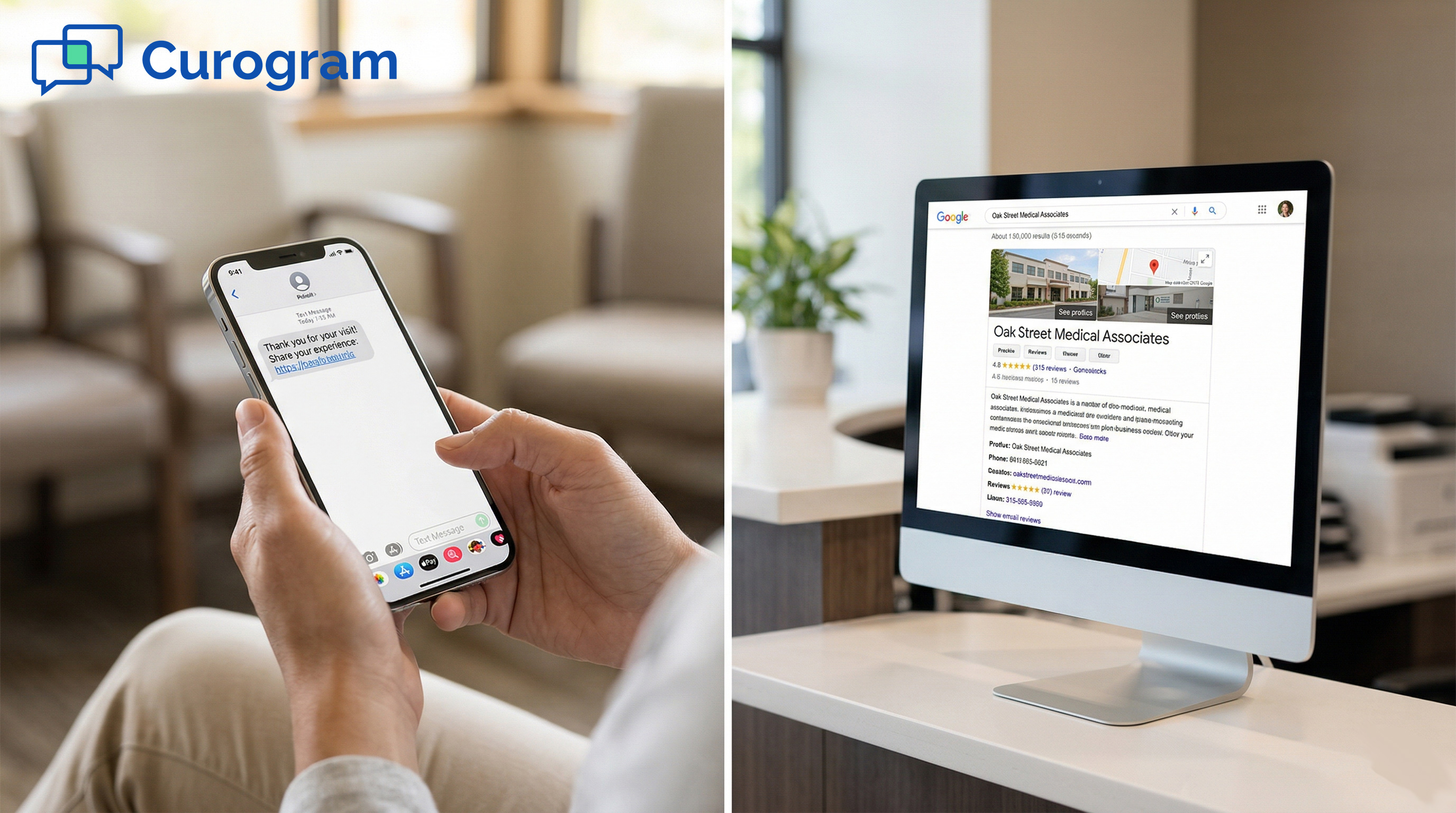
Walk through the steps from the patient's side. After a 90-minute visit, she gets a text. It thanks her and asks her to share her experience if it was good.
Below the note sits a direct link to the Google review form. She taps it. She writes a few lines, picks 5 stars, and posts. Total time: under two minutes.
No app to download. No login to remember. No detour through Google Maps. The path from "I felt cared for" to "here is my public review" stays as short as possible. That is why text requests beat email, where most messages go unopened.
Why Timing and Channel Matter
Curogram pulls visit data from Cerbo through an API. The review request goes out within hours of the appointment. That is when the visit is fresh and the good feeling is strong.
The channel choice is just as key. Your patient already booked, filled forms, and got reminders by text. So a text review request feels normal, not pushy. Cerbo EHR handles the clinical record, while Curogram manages the Google Business Profile side that integrative medicine practices need.
This consistency builds trust. The request feels like part of the care, not a sales pitch.
Why This Fits Integrative Medicine So Well
These patients are not quiet. They are advocates. When a provider truly listens and treats the whole person, they want to tell people.
They post in health groups and online forums. They share tips with friends fighting the same battles. A text review request points that energy to the highest-impact place: Google.
The reviews they write are rich and convincing. Not "great doctor, recommend." Instead: "Dr. Chen spent 90 minutes on my fatigue, reviewed my supplements, and built a plan for the root cause."
That detail is exactly what the next patient is searching for. One honest story can do more than any ad. It speaks the same language the reader already uses.
The Success: The Trusted Practice
Here is what this looks like in real life. A multi-location practice used Curogram's automated review requests. In just 3 months, it earned 1,064 new 5-star reviews (based on our internal data).
About 90% of its patients left a 5-star review when asked at the right time. Over a longer stretch, the same practice grew its total reviews from under 1,000 to more than 8,000 (based on our internal data). The profile went from quiet to busy.
But raw count was not the only win. The recency changed too. The profile moved from "last review three months ago" to "three new reviews this week." Fresh reviews carry real weight.
BrightLocal research shows that most consumers focus on recent reviews. Many trust only those posted in the last few weeks. For integrative patients making big, costly choices, recency is not a bonus. It is the signal that tips the scale.
|
What the profile shows |
Before Curogram |
After Curogram |
|
Total reviews |
47 |
294+ |
|
Star rating |
4.2 |
4.9 |
|
Most recent review |
3 months ago |
Yesterday |
|
Review detail |
"Good doctor" |
Full stories about real results |
|
Patient's first read |
"Maybe not" |
"This feels right" |
These shifts also help you get found. Review volume affects local search ranking in healthcare, and Cerbo alone cannot move that number.
Google weighs how many reviews you have, how good they are, and how fresh they stay. A steady flow tells Google your practice is active and trusted.
What Strong Reviews Actually Say
Volume and recency open the door. Specific reviews close the sale. A vague "great doctor" does little. A detailed story does the heavy lifting.
Strong integrative reviews tend to name real things:
- The exact symptom, like fatigue, gut issues, or Hashimoto's.
- The length and depth of the first visit.
- The personal plan, such as labs, supplements, or diet changes.
- The result, like more energy or fewer flare-ups.
This detail lets the next patient see herself in the words. She thinks, "That sounds like me." That moment of recognition is what turns a reader into a booking.
From the Credibility Gap to the Trusted Practice
The change is more than cosmetic. Your profile starts to match your care. A stale, thin listing becomes a rich, recent record of patient wins.
Now a searching patient sees a 4.8-plus rating. She sees hundreds of reviews. She reads detailed stories about personal treatment. She sees a review from this week.
The profile becomes part of the care story. Before she calls, she already believes you are different. The booking call is no longer a cold pitch. It is a patient confirming a choice the reviews already helped her make.
The After Picture: A Self-Feeding Loop
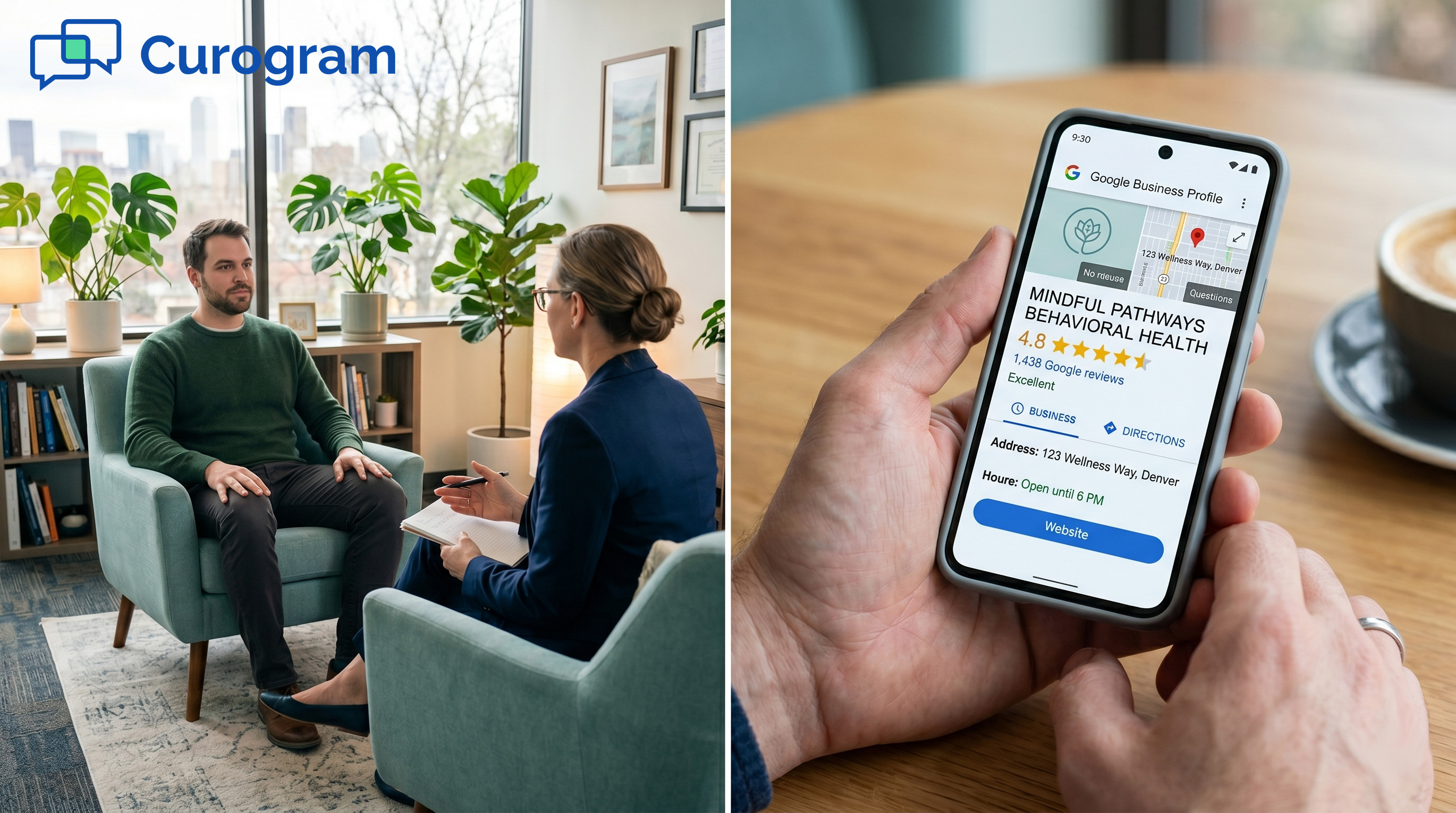
A woman researches functional medicine for autoimmune symptoms. It is a quiet Sunday evening, and she is on her phone. She finds a Cerbo practice with 294 reviews and a 4.9 rating.
The top review, posted yesterday, describes real progress with Hashimoto's. She keeps reading. Three more reviews tell the same story. Personal care, a thorough first visit, a provider who truly listened.
She feels something rare after years of conventional care: confidence. She books a $450 first visit that same evening. She arrives Thursday already trusting the practice. The visit beats her hopes.
A few hours later, she gets a text. It thanks her and offers a quick link to leave a review. She writes three full paragraphs about her experience. It takes her two minutes.
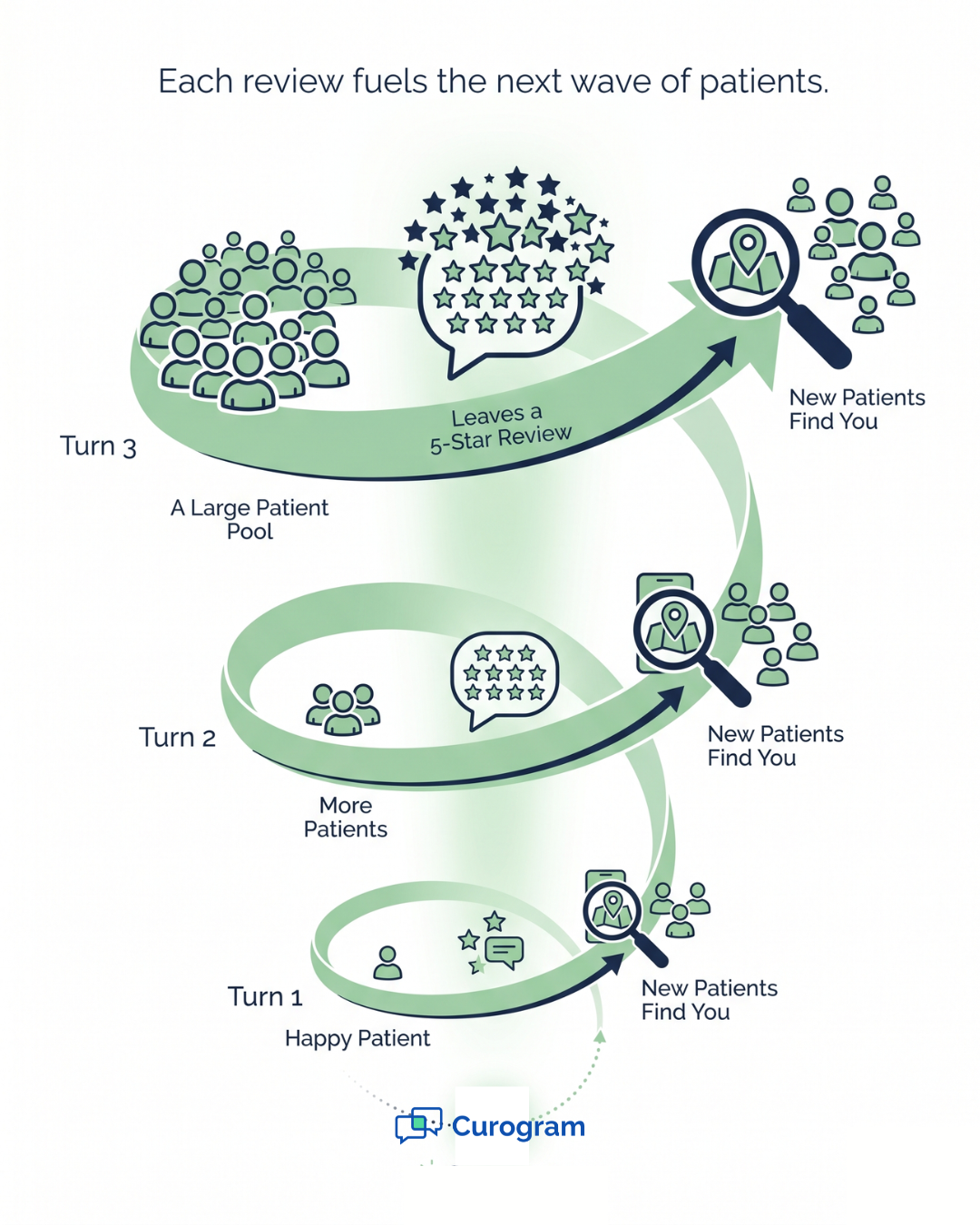
The next week, another patient reads her words. That patient books too. The loop that was once broken now feeds itself. Great care creates honest reviews, honest reviews attract the right patients, and those patients create more reviews.
There is a quiet financial story here too. Say each new patient books a $450 first visit. Win just ten extra patients a month from a stronger profile. That is $4,500 in new monthly revenue, before any follow-up care or referrals.
Now add the referral chain. Each happy integrative patient often sends two or three friends. Ten new patients can seed twenty or more downstream visits.
The profile keeps paying you back long after the first review. This is the Trusted Practice: your online reputation finally matches the care in your exam room.

How Curogram Turns One Happy Visit into Steady Growth
Cerbo is built for your clinical work. It holds your charts, labs, and protocols. It does not grow your Google profile. That is the job Curogram was made for.
Here is how the two work together. Cerbo records the visit. Curogram reads that visit data through a secure API. Within hours, it sends a friendly review request by text.
The patient gets one tap to your Google review page. No app. No login. No detour. Most patients finish in under two minutes, while the good feeling is still fresh.
The system is smart about timing and choice. It only asks after a completed visit. Patients can opt out anytime by replying STOP, in line with TCPA rules. You can also skip sensitive visit types from the workflow.
The results speak for themselves. One multi-location practice earned 1,064 new 5-star reviews in just 3 months (based on our internal data). About 90% of asked patients left a 5-star review.
Why does this matter so much for integrative care? Because your patients are your best marketing. They already tell friends about you. Curogram simply helps them tell Google too.
The payoff compounds. More reviews lift your local search ranking. Higher ranking brings more new patients. More patients means more visits, which means more reviews.
Best of all, your front desk does nothing extra. No chasing. No awkward asks at checkout. The requests go out on their own, every day, for every eligible visit.
Conclusion: Your Patients Are Already Your Best Marketing — Let Them Prove It
Your care speaks for itself in the exam room. The trouble is that future patients cannot see it yet. Curogram fixes that.
It turns each happy visit into a public review. It builds the volume, recency, and detail that research-driven patients need. In short, it turns today's satisfaction into tomorrow's new patient.
Think of it this way. Cerbo is for your clinical depth, the charts and protocols that drive real results. Curogram is for your credibility, the reviews that make those results easy to see.
Your patients are already telling their friends about you. The only gap is Google. Help them share their story where the next patient is looking.
This is not about working harder. The requests go out on their own, by text, right after each visit. Your front desk stays focused on patients, not on chasing reviews.
The results are real. One practice earned 1,064 new 5-star reviews in just 3 months (based on our internal data). That is the kind of profile that turns researchers into booked patients.
Your patients already love your care — now make Google show it. Book a Cerbo integration demo and get a clear view of the gap you're leaving on the table.
Frequently Asked Questions
They often invest weeks of research and hundreds of dollars in a cash-pay first visit. Strong, recent reviews give the social proof they need to trust a new provider and feel safe booking.
Most practices see movement within 4 to 8 weeks. Google rewards steady review volume, good ratings, and fresh dates. As new reviews arrive each week, your profile signals an active, trusted practice.
Texts get opened almost every time, while most marketing emails are ignored. Patients already text your office for reminders and forms, so a review request by text feels natural, not like spam.
Requests only go out after a completed visit. Patients can opt out anytime by replying STOP, in line with TCPA rules. You can also exclude sensitive visit types from the workflow.
Cerbo is built for clinical work, like charting and protocols. It has no native tools to request, track, or reply to Google reviews. Curogram adds that missing layer through a secure integration.