One Text to a Video Visit: No App Telemedicine on Athenahealth
💡 An Athenahealth patient video visit powered by Curogram lets patients tap a single text link and see their provider in 60 seconds — no app, no...
9 min read
Aubreigh Lee Daculug
:
March 23, 2026
The rural patient telemedicine experience has a technology problem that no one talks about enough. Telehealth was designed to close the distance gap between patients and their providers.
But for the people who need it most — elderly patients, those with mobility issues, and anyone living 40 miles from the nearest clinic — the setup process itself became a new wall.
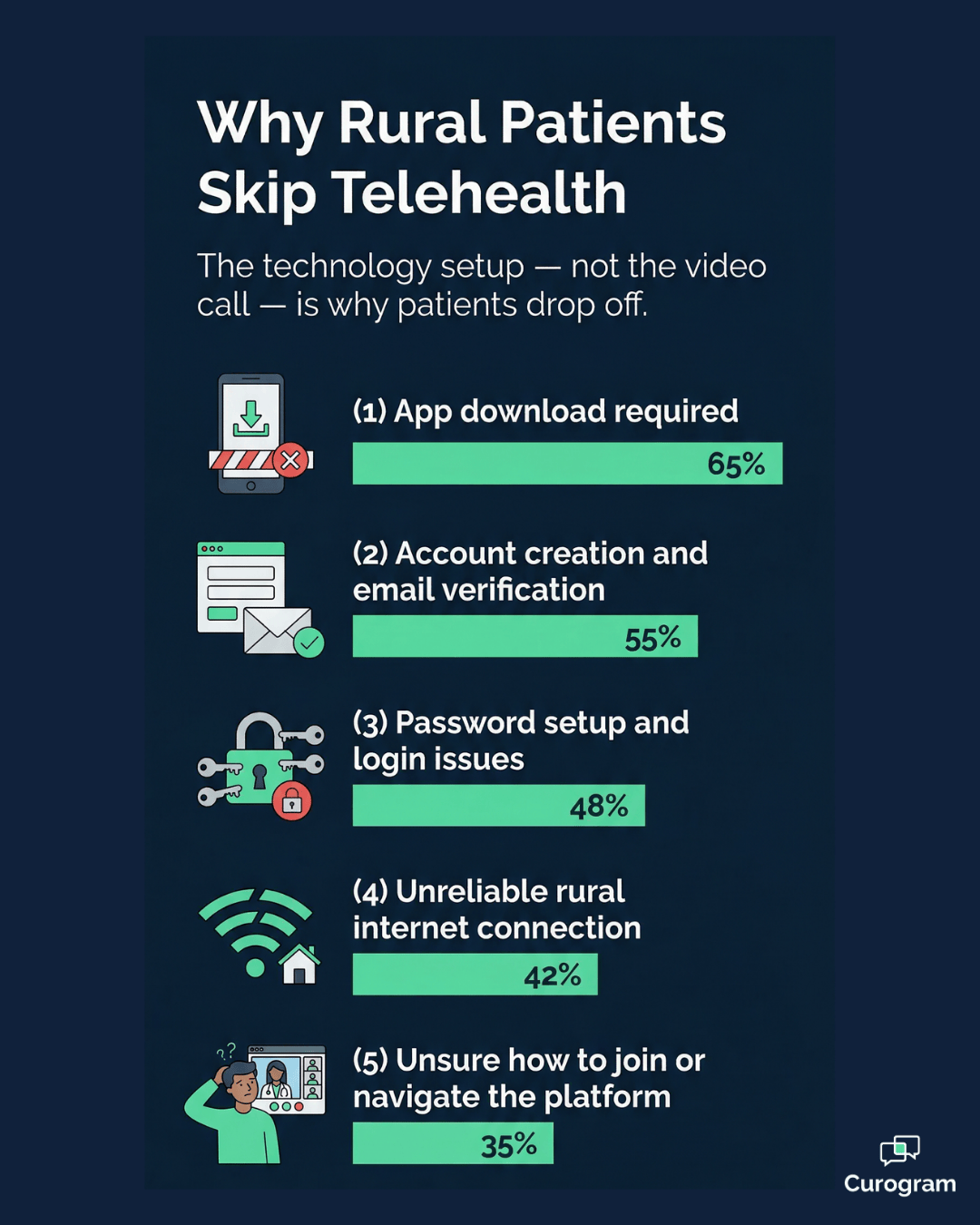
Traditional video visit platforms ask patients to download an app, create an email-verified account, set a password, and navigate a login screen — before they ever see their doctor.
For a 78-year-old whose grandson set up the phone, that is not a minor inconvenience. It is a reason to skip the visit entirely.
Curogram changes this for Azalea Health practices. The platform sends a single text message to the patient at appointment time.
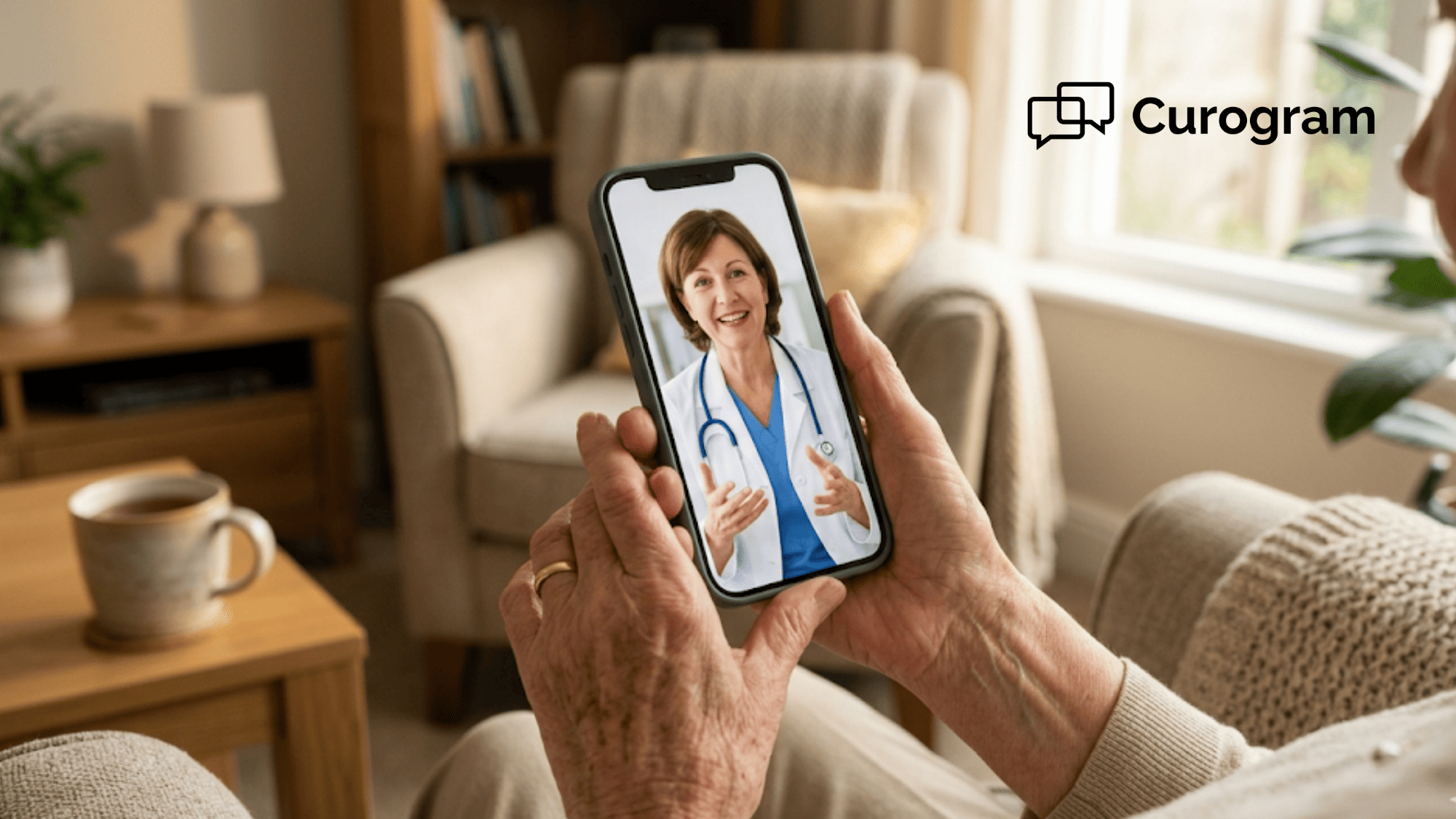
They tap the link inside it. Their doctor appears on screen. That is the entire text-based telehealth patient experience — and it works even for patients who have never used a video call in their lives.
This article explains why rural patients — especially older and low-tech patients — choose a text video visit over driving to the clinic, and how Azalea Health practices are using Curogram to make that possible.
Telemedicine was supposed to solve access problems for patients who cannot get to the clinic. Instead,
Traditional platforms created a new access problem:
Technology complexity. The patients who live farthest from the clinic — who are often the oldest and least tech-experienced — are the exact patients who struggle most with app-based telehealth setups, a well-documented barrier in virtual care adoption.
It is worth spelling out what that gap actually looks like in a rural practice. A patient 45 minutes away receives a telemedicine invitation from their provider. They want to use it.
They open the email, see the instructions, and hit the first wall:
"Download the app."
For many rural patients — especially those over 65 — that sentence alone ends the visit before it begins.
Consider Mr. Birdwell, an 80-year-old veteran with congestive heart failure who lives alone 40 minutes from his FQHC. His provider wants weekly check-ins during a medication change.
The clinic offers telemedicine — but the instructions that arrive look like this:
Mr. Birdwell does not know his Apple ID. He does not have an email address. His grandson set up the phone and put it in a case with "don't touch the settings" written on a sticky note. He calls the clinic and says he will come in when he can.
Three weeks pass. His ankles swell. He ends up in the emergency room.
This is not a rare edge case. Clinic staff across rural markets report spending 15 to 20 minutes on the phone trying to walk patients through app setup before a scheduled visit. Some calls end with the visit abandoned.
Others end with the patient agreeing to come in person — adding cost, adding time, and undoing the entire point of offering telehealth.
Rural healthcare serves a disproportionately elderly population. Many patients are 65 and older — and a significant share are well past 75.
These patients text their families every day. It is the one digital skill most have fully mastered. But asking them to navigate an app store, verify an email, and manage a new password has nothing to do with seeing their doctor.
Each extra step loses patients who were otherwise ready to show up.
There is also a trust dimension here that app-based platforms overlook. When a patient has to create a new account on an unfamiliar platform, they often hesitate — unsure whether it is safe, whether it will charge them, or whether they are doing it right.
That hesitation is not a technology failure. It is a reasonable response to being asked to do something unfamiliar and unsupported in the moment.
The insight that traditional platforms have missed is simple: patients do not hate telemedicine — they hate the setup — the same friction explored in why patient portals fail.
Rural patients who say
"I cannot do video visits" usually mean they cannot figure out the app. Remove the app, and they will show up.
That is the real patient preference when the choice is telemedicine vs driving to an FQHC — ease wins every time.

Curogram's text-based telemedicine for Azalea Health eliminates every step between the patient and their provider — except one.
The patient's phone buzzes at appointment time with a text:
"Tap here to start your visit with Dr. Patel." They tap. The video loads in their browser. The doctor appears. The visit starts.
No app to download, no account to create, no password to remember, no login screen to navigate.
This telehealth patient texting approach works because it meets patients at the exact technology skill level they already have. Texting is native to most patients, regardless of age. They do not need to learn anything new.
The link in the text is no different from the link a family member might send them to a funny video — except this one connects them to their doctor.
The platform's Zero-Setup Video Visit is engineered around one question:
Could a 78-year-old who only texts and makes phone calls do this without help?
The video interface launches the camera and microphone automatically.
The screen is clean, with large controls and a single clear "end visit" button.
If the patient accidentally closes the browser, tapping the original text link re-joins the visit instantly — no error messages, no lost connection warning to decipher.
Low bandwidth is another reality in rural areas — where home broadband access remains uneven — that most telemedicine platforms ignore.
Curogram's video visit is optimized for spotty connections — it adjusts quality automatically and keeps the call stable on slower rural networks.
This matters enormously for elderly patient video visits in communities where broadband access is limited or unreliable.
This is what grandma-proof telemedicine looks like in practice. It is not a marketing phrase — it is a design standard. If the platform works for the patient who only uses their phone for texts and calls, it works for everyone.
Rural patient virtual visit accessibility through Curogram is built on that principle, and Azalea Health practices benefit directly from it.
Curogram syncs with Azalea Health so the telemedicine visit appears in the patient's chart alongside their in-person visits.
Providers document in the same EHR workflow they already use — no separate system to log into, no duplicate charting. The HIPAA encryption, video encoding, and EHR integration all happen invisibly in the background.
Staff benefit from this too. Scheduling a text-based video visit takes the same steps as scheduling any other appointment inside Azalea Health. There is no separate telemedicine module to manage, no new link generation process, no third-party portal to maintain.
Curogram handles the patient-facing delivery automatically once the appointment is set. From the patient's perspective, they tapped a text and saw their doctor. From the staff's perspective, they scheduled a visit and it happened.
That seamlessness on both ends is what makes adoption sustainable — not just for one champion on the team, but across the entire front desk.

Text-based telemedicine achieves dramatically higher patient adoption than app-based platforms in rural and elderly populations. Curogram's approach reaches over 40% response rates on appointment text reminders — and because there is no setup required, patients who would otherwise skip a video visit actually complete it.
Across Azalea Health practices using the platform, this contributes to no-show reductions of up to 53%.
Those numbers translate directly to revenue. A rural clinic with 20 providers and a 15% no-show rate can lose tens of thousands of dollars each month in unfilled appointment slots. When patients can join a visit by tapping a text — from home, without a car, without a caregiver — those slots get filled. Continuity of care improves. A
nd the patients who need the most consistent monitoring are no longer the first to fall off the schedule.
The transformation shifts the entire dynamic of how patients relate to virtual care. Telemedicine stops being a technology challenge that patients dread and becomes a positive experience they ask for by name.
Elderly patients who were convinced they "could not do technology" discover they can see their doctor from their kitchen table. Patients with mobility limitations no longer face the choice between their health and a difficult drive.
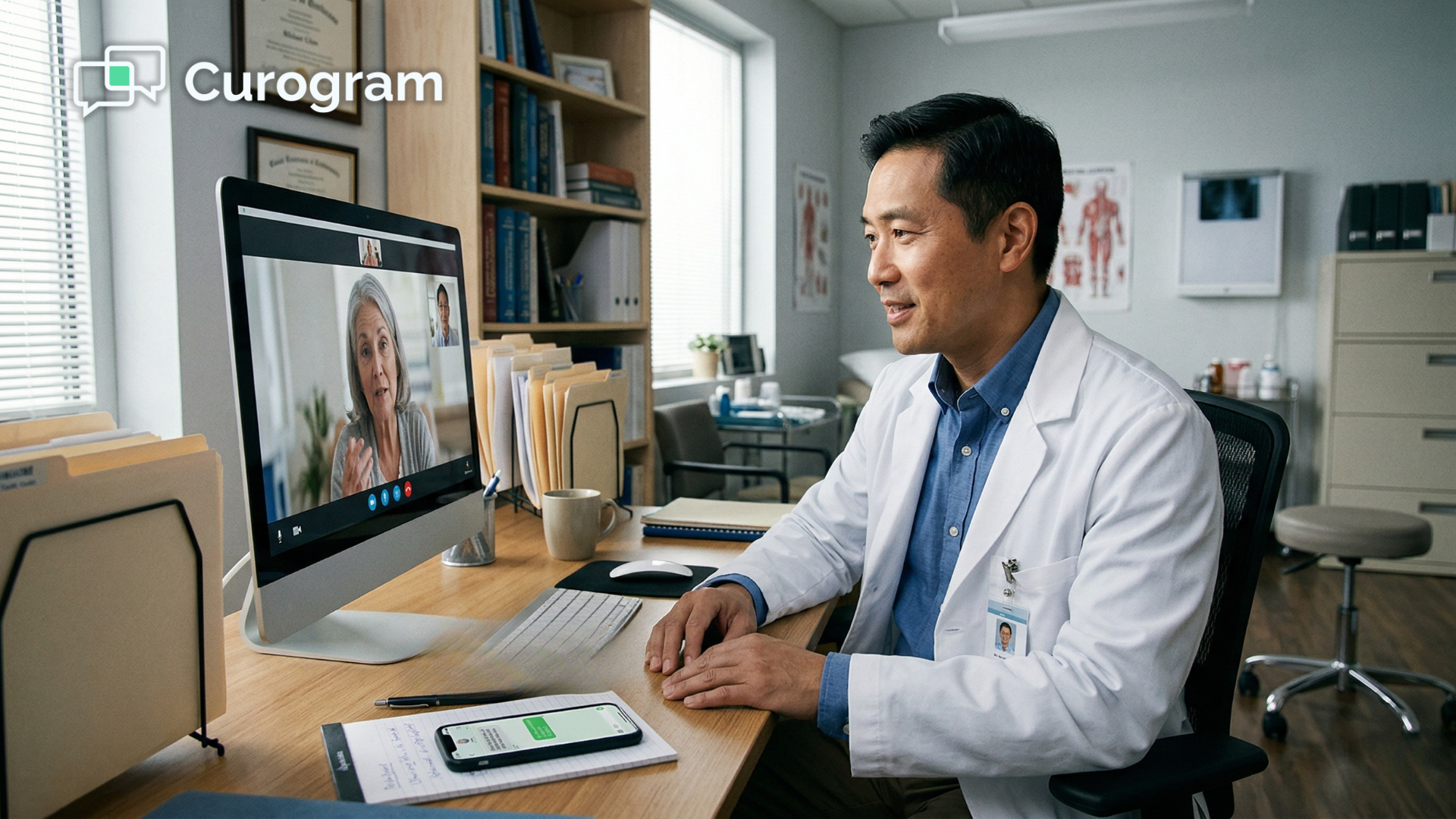
Front desk staff notice it too. Instead of spending the first five minutes of a telemedicine appointment troubleshooting a patient's login, they spend that time on actual care coordination.
Patient satisfaction scores improve.
Staff morale improves.
And the clinic's telemedicine utilization rate climbs — not because the technology changed dramatically, but because the barrier to using it finally came down.
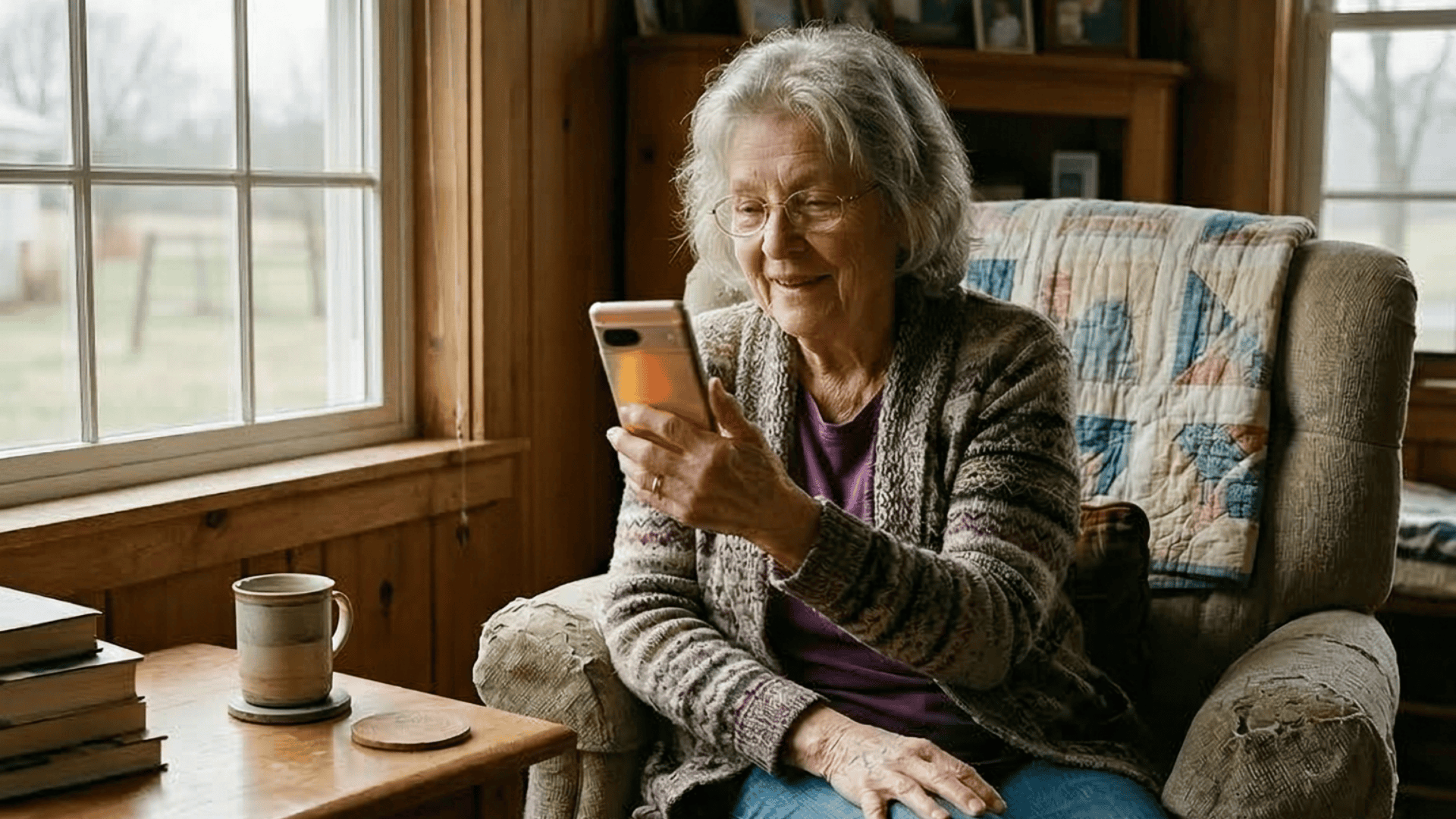
Mrs. Hattie Mae Williams is an 82-year-old patient at a rural Critical Access Hospital on Azalea Health. She had not seen her provider in five months because she stopped driving after a fall, and her daughter works full-time and could not take her in.
The clinic tried their previous telemedicine platform, but Mrs. Williams could not get past the app download screen. Her provider had flagged her chart twice as a high-priority follow-up. She remained unreachable.
After switching to Curogram, the clinic sent a text at her appointment time: "Tap here to see Dr. Chen."
Her daughter had shown her once: "When you get a text from the clinic, just tap the blue link."
Mrs. Williams tapped. Dr. Chen appeared on her screen. They talked for 12 minutes about her blood pressure, her medications, and her mobility. She has since completed four consecutive monthly visits from her kitchen — her longest streak of continuous care in two years.
She told her daughter after the first visit: "The doctor came to my phone. I did not even have to put on real shoes." That sentence captures what no-app, no-download telemedicine actually delivers — not just convenience, but dignity. Patients like Mrs. Williams do not want to be a burden. The
y do not want to ask for rides. They want to manage their own care. Curogram lets them do exactly that, at no extra technology cost to themselves.
Your rural patients are not avoiding you. They are avoiding the drive, the app, and the password. When you remove those barriers with a single text link, your oldest, farthest, and most loyal patients start showing up again — on screen, from home, right on schedule.
Curogram's text-based telemedicine for Azalea Health practices delivers virtual visits at the only technology skill level that reaches every rural patient: tapping a text message.
No apps. No accounts. No passwords. Just a text, a tap, and a doctor on screen. For elderly patients, patients with limited mobility, and anyone in a community where the nearest clinic is a 45-minute drive, that one tap is the difference between staying in care and falling through the cracks.
Azalea Health manages your clinical records and scheduling. Curogram manages the patient's access to you — when the road is too far, the weather is too bad, or the body is too tired to make the drive.
Together, they ensure every patient can see their doctor, whether they walk through the door or tap a link from their couch.
When they tap it and see their doctor without calling for help, you will understand why we call it grandma-proof telemedicine.
Schedule a demo today and see how Curogram fits inside your Azalea Health workflow — in less time than it takes to explain an app download to a patient over the phone.
Patients need a phone with a web browser and a camera for the video visit. This includes most smartphones, even older models. For patients with basic flip phones or phones without cameras, Curogram can fall back to an audio-only phone call visit — which is still significantly more convenient than driving to the clinic. The text link also works on tablets for patients who prefer a larger screen.
Some patients prefer to keep their camera off and have an audio-only conversation while the provider's camera stays on. Curogram supports this setup. In practice, most patients who were initially camera-shy become comfortable after their first visit when they realize it feels just like a FaceTime call with a family member — casual, relaxed, and from the comfort of their own home.
Absolutely. The text message arrives on the patient's phone, and a family member can tap the link for them. Many patients have a son, daughter, or grandchild show them the process once: "When you get a text from the clinic, tap the blue link." After one demonstration, most patients can do it on their own. The simplicity of the one-tap process is designed so the explanation takes 10 seconds, not 10 minutes.
Yes. The text message itself contains only a link — no protected health information is sent over SMS. Once the patient taps the link, the visit takes place inside an encrypted, HIPAA-compliant video environment. Curogram's platform separates the delivery mechanism (the text link) from the secure visit experience (the encrypted video session), so practices stay compliant without sacrificing simplicity for the patient.
Curogram notifies the provider when the patient enters the virtual waiting room after tapping their link. The provider sees a clear "patient has joined" indicator inside their Azalea Health workflow before launching the video call. If the patient has not joined within a set window, the platform can automatically send a follow-up text reminder — prompting them to tap again without the need for a staff member to call.
💡 An Athenahealth patient video visit powered by Curogram lets patients tap a single text link and see their provider in 60 seconds — no app, no...
💡 eClinicalWorks patient telemedicine without app downloads works through a single text message link. Patients tap it, their phone browser opens,...
💡 Rural clinic staff on Azalea Health can use text-based telemedicine to reduce no-shows and keep their schedules full. When a patient calls to...