7 min read

Win Back Lapsed athenahealth Patients With One Text

Win Back Lapsed athenahealth Patients With One Text
 💡 Bringing lapsed athenahealth patients back with text outreach works because patients actually read their texts. Recall letters end up in the recycling bin. Robocalls get screened, and portal messages sit behind forgotten passwords.

Curogram sends a warm, personal text from the clinic's own number. It names the patient's location, provider, and overdue visit type, pulled from visit history. The patient simply replies "YES," and staff find a convenient time, ending "The Silent Goodbye."

In one multi-location practice, 35% of patients who received a Curogram recall text booked within a month. Recall messages alone brought back 1,240 patients.

Nobody formally breaks up with their doctor.

There's no angry phone call and no final conversation at the front desk. A patient cancels an appointment, fully intending to reschedule, and then everyday life takes over. Weeks turn into months, and the plan slowly fades.

Meanwhile, your network relies on the recall routine it has used for decades. It mails a reminder letter, sends a robocall, and posts a note to a portal the patient hasn't opened in years.

None of it lands.

Here's the truth about why patients ignore letters, robocalls, and portal messages.

They aren't rejecting your care. They've simply trained themselves to tune out those channels, the same way they tune out junk mail and unknown numbers.

The patient assumes nobody noticed they disappeared, while your staff assumes they moved on. A care gap quietly widens in the silence.

That's "The Silent Goodbye." It's one of the most common ways medical practices lose patients, and it rarely shows up in a report until the panel has already shrunk.

For multi-location athenahealth networks, the stakes multiply. Every location keeps its own list of overdue patients, and each missed return means lost revenue, a missed chance to catch problems early, and often a patient who ends up at an urgent care center down the street.

The solution isn't sending more letters. It's choosing a better channel.

Bringing lapsed athenahealth patients back with text outreach works because people actually read their text messages.

A short, friendly note from the clinic's familiar number feels like a personal check-in, not a marketing campaign. When returning requires only one reply, far more patients follow through.

Below, you'll learn why traditional recall falls short, how Curogram turns recall into a two-way text conversation, and what happens when patients finally get an invitation they can answer.

The Silent Goodbye: How Patients Drift Away Without a Word

Most patient loss isn't a deliberate choice. It's gradual drift. Patients rarely leave a network because they're unhappy. They slip away because nothing brought them back at the right moment.

The problem is that most recall programs still depend on the channels people ignore most. Paper letters and automated phone calls made sense twenty years ago. Today, many people sort their mail over the recycling bin and let unknown numbers go to voicemail.

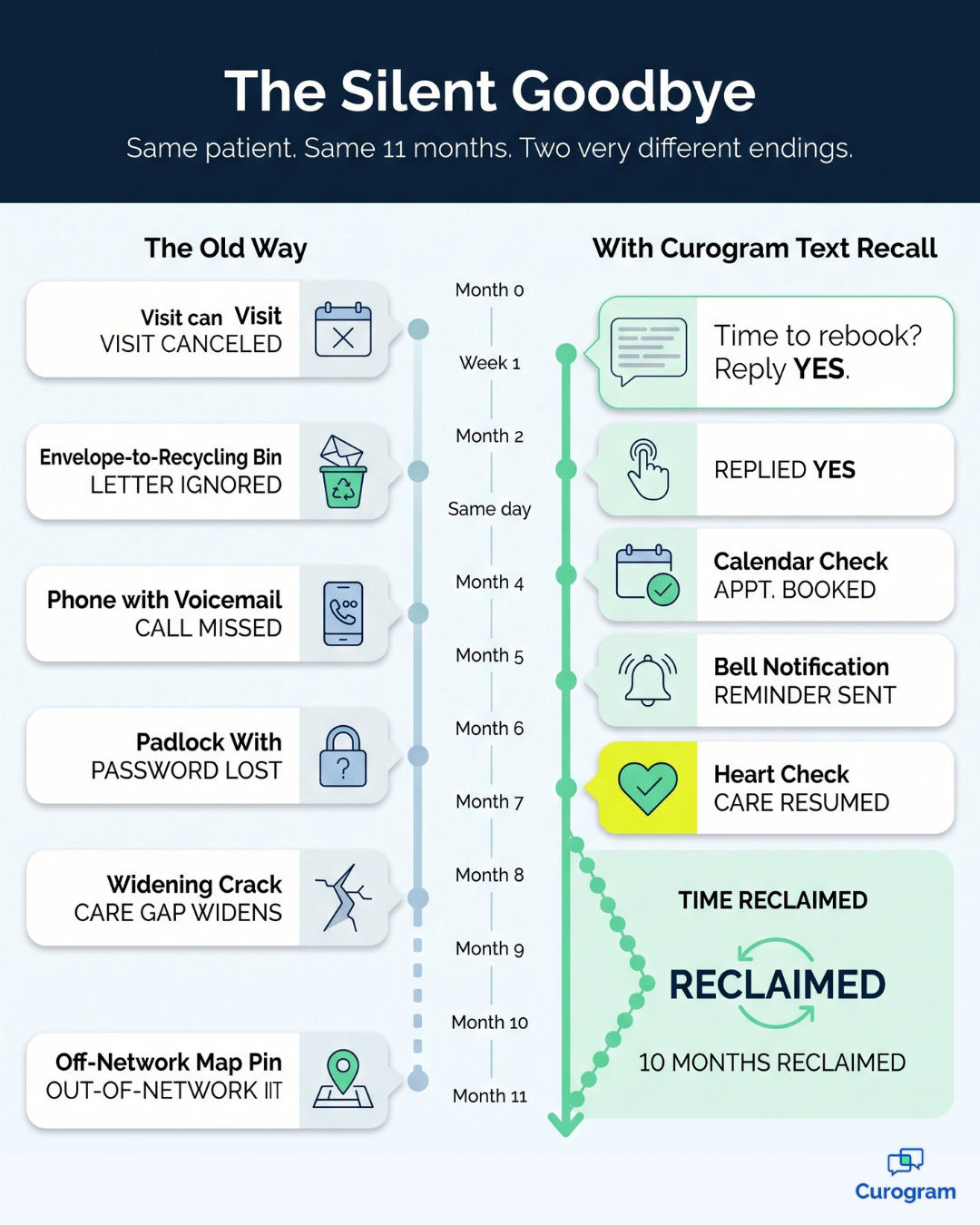
Diane's Eleven-Month Delay

Consider Diane, a hypothetical patient at a primary care clinic within a larger network. She skipped her annual physical last spring because of a work trip. She fully planned to rebook it.

For eleven months, that appointment stayed on her mental to-do list. Her recall letter arrived between a credit card offer and a clothing catalog. By dinnertime, it was in the recycling bin.

Then an ad popped up on her phone for an urgent care center that let her book in two taps. She scheduled immediately, and your network never found out.

Unheard Outreach Feels Like Silence

From the patient's side, a letter she never opened and no letter at all feel exactly the same. Either way, the message she receives is that nobody noticed she stopped coming.

That slowly wears down trust. Patients begin to see the network as a place that mails paperwork, not a practice that truly cares whether they show up.

The Cost Hides in Care Gaps

The most serious damage is clinical. A missed annual visit can mean an unchecked blood pressure, a delayed cancer screening, or an abnormal lab result that nobody followed up on.

These problems don't disappear on their own. They tend to surface later, often worse, and often in another provider's exam room. For your network, that means lost appointments today and a sicker, more costly patient in the future.

Meet the Panel Recovery Engine: Recall That Shows Up Where Patients Look

Curogram works as "The Panel Recovery Engine" for athenahealth networks. Instead of mailing an invite patients won't open, it sends one to the place they check dozens of times a day: their text messages.

That matters because texts actually get read. Curogram's SMS messages see a 98% open rate, so your invite reliably reaches the patient. In practice, recall shifts from hoping patients notice your message to knowing they did.

Here's what arrives on Diane's phone:

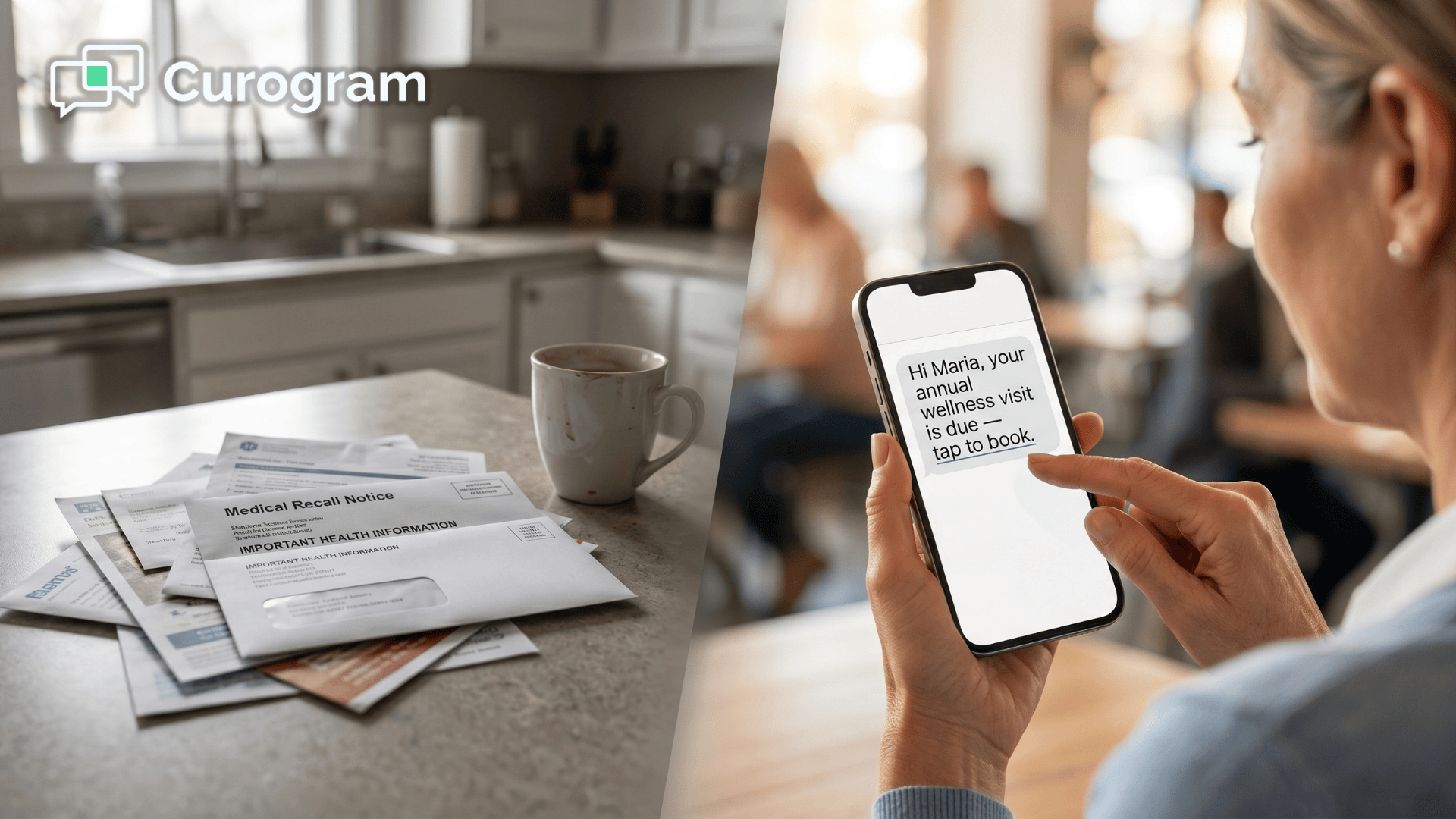
"Hi Diane, it's been over a year since your last visit at Northside Primary Care. Reply YES and we'll find you a time."

That's the care gap text, patient view: a familiar clinic, a clear reason, and one easy path back. It reads like a note from someone who remembers her, because that's exactly what it is.

Here's how the process works behind the scenes:

  1. Identify overdue patients. Curogram uses visit history to find patients who are overdue, sorted by location, provider, and visit type.
  2. Personalize every message. Each overdue visit reminder text names the patient's own clinic and visit type. There's no generic blast and no sensitive health detail.
  3. Send from a recognizable number. Messages come from the location's own phone number, so patients know the sender and don't assume it's spam.
  4. Convert replies into appointments. Rebooking by text reply takes one word. Staff respond with open times instead of playing phone tag.
  5. Protect the new appointment. Once scheduled, the visit enters your standard reminder sequence, so it's less likely to become a no-show.

For busy adults, this removes every step between meaning to return and actually returning. There's no letter to keep, no phone call to make, and no forgotten password to reset.

That's what a good patient win-back message experience should feel like: brief, personal, and easy.

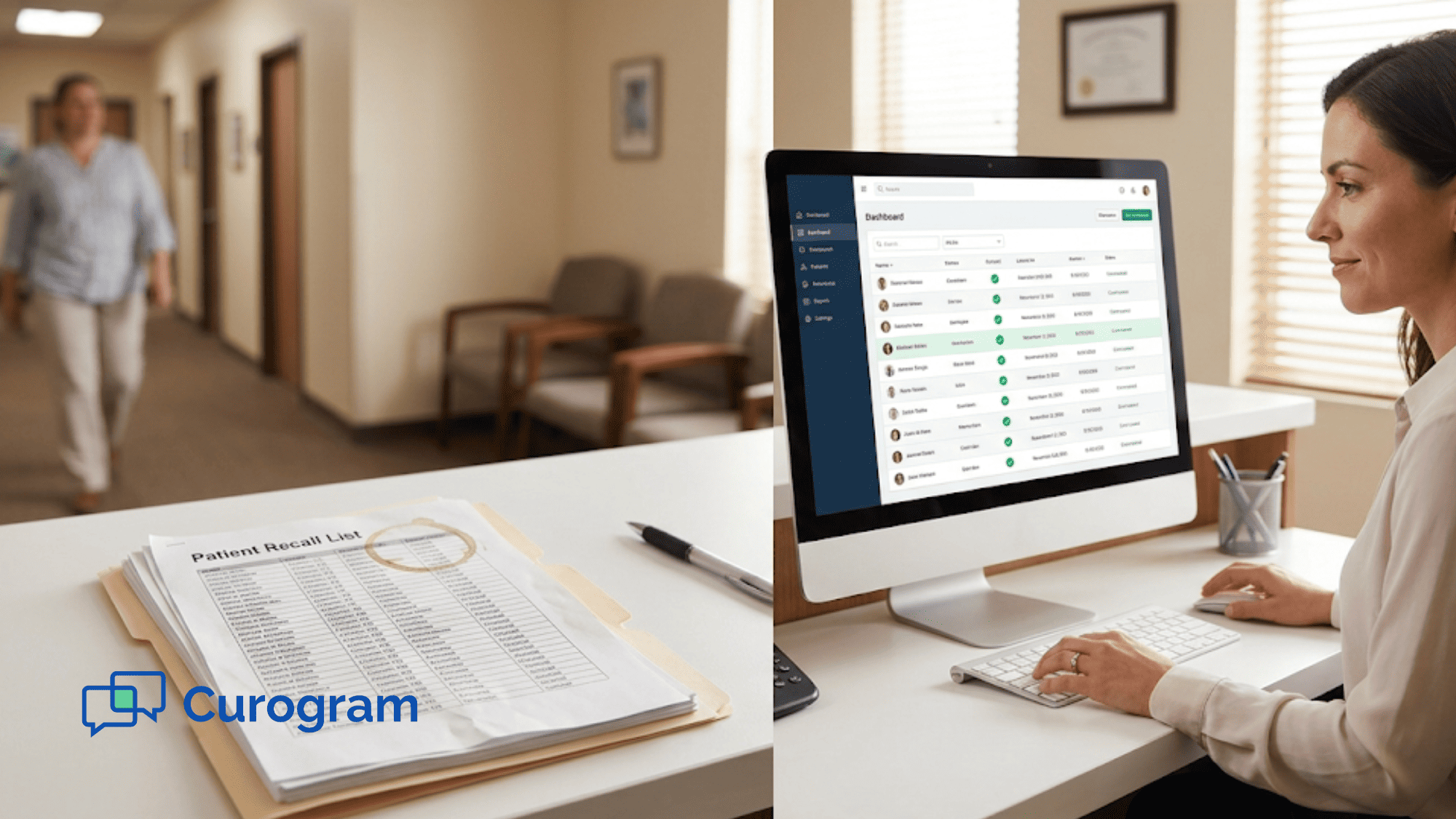
Across multiple locations, you build a welcome back outreach network that follows one consistent playbook. Each clinic keeps its own number and local personality, while your team runs recall from one platform instead of juggling separate mailers at every site.

Timeline showing how lapsed patients drift away vs. rebooking through a text recall message

What Happens When the Invite Finally Reaches Patients

The results reveal something important:

Most lapsed patients intended to return all along, and they simply needed a message that actually reached them.

In one multi-location practice, 35% of existing patients who received a Curogram recall text scheduled an appointment within a month. Recall messages alone brought 1,240 patients back through the door.

What could similar results mean for your network?

Here's an illustrative example with sample numbers, not client data:

Recall Math Illustrative Network
Lapsed patients texted 3,000
Booking rate (from Curogram case study) 35%
Patients rebooked 1,050
Average visit value (example figure) $150
Revenue recovered from one campaign $157,500

This means a single recall campaign could fill more than 1,000 open slots with patients who already know your clinics. For your team, that's revenue you'd otherwise hand to an urgent care center or a rival practice.

The numbers only tell part of the story, though, because the shift in how patients perceive your organization matters just as much.

A mailed letter says, "We're the network that sends paperwork." A personal text says, "We're the practice that noticed you were gone." In many ways, the outreach itself starts to repair the relationship.

The final outcome is straightforward. Patients get the visit they kept putting off, their care picks back up, and the visit happens inside your network instead of a stranger's.

Five Habits of Recall Texts Patients Actually Welcome

The right channel gets your message noticed, but the details determine whether patients actually reply.

How you write the text, when you send it, and which patients receive it all influence the response.

  • Start with the right segment. Organize patients by how overdue they are and which appointment type they missed. A patient who skipped a routine physical needs a different message than someone overdue for an ongoing chronic care check-in.
  • Keep it short and warm. Use the patient's first name and the clinic name they already recognize. One or two sentences is usually enough, and a clear "reply YES" works better than a lengthy explanation.
  • Leave out sensitive details. Reference the visit type in general terms, and never include a diagnosis or test result. The goal is a friendly reminder that stays private even if someone else glances at the screen.
  • Space your messages out. One text, followed by a gentle reminder a couple of weeks later, is usually plenty. Anything more frequent starts to feel like promotional marketing, which is exactly the impression you're trying to avoid.
  • Honor opt-outs right away. Make it simple to reply STOP, and document the outcome whenever a patient has relocated or switched providers. More accurate data makes every future campaign more effective.

Here's a practical test before any campaign goes out.

Would this message sound natural coming from a front desk team member who personally remembers the patient? If the answer is yes, you're ready to send it.

Invite Patients Home in the One Channel They Still Read

Your lapsed patients aren't gone. Most of them are one friendly text message away from becoming active patients again.

The letters were never going to accomplish that, and neither were the robocalls. Those channels require patients to notice, save, and eventually call back, and busy people rarely complete that entire sequence.

Think about the last thousand recall letters your network mailed. Where are they today? Most ended up in recycling bins or at the bottom of a kitchen drawer, and every one represented a patient you genuinely wanted back. Each one also cost postage, printing, and staff time.

Now consider what a short, personal text could have accomplished instead, for far less effort.

Here's a useful way to think about it. athenaOne holds your memory of the patient, including their history, their last appointment, and the care they're due for. Curogram delivers their reminder that you remember, right where they already look.

Those two roles complement each other. Your EHR identifies who is overdue, while Curogram makes sure the patient knows you noticed and makes returning as simple as typing "YES."

That's the foundation of successful patient reactivation. You don't need a larger mailing budget or additional staff hours on the phone. You need a message that arrives, feels personal, and asks for almost nothing in return.

The payoff appears quickly: more scheduled appointments, fewer care gaps, and stronger relationships between patients and the clinics that serve them, across every location.

So approach recall differently this time, and replace the silent goodbye with a genuine conversation that begins with one friendly text.

Schedule a Demo with Curogram and watch a recall campaign move from care gap list to booked appointment in about fifteen minutes. Your patients are ready to come back, so give them an easy way to say yes.


Frequently Asked Questions

Will patients find recall texts intrusive?

Done well, the opposite is true. A relevant, personal check-in from their own clinic reads as attentive care. Messages are sent rarely and with context, and patients can opt out with one word, which is honored right away.

How does the message know what to reference?

The context comes from the patient's visit history, including location, provider, and visit type. That keeps the message accurate without putting sensitive health details in the text.

What if a patient has moved or switched providers?

A quick reply lets them tell you. Curogram records the outcome so they aren't contacted again. That keeps your panel data cleaner than returned mail ever could.

How quickly do patients respond to recall texts?

Faster than most practices expect. In one multi-location practice, 35% of patients who got a Curogram recall text booked a visit within a month. Because texts are read within minutes, many replies come in the same day.

Are recall texts HIPAA compliant?

Curogram is a HIPAA-compliant communication platform built for healthcare. Recall texts are written to avoid sensitive details like diagnoses or test results. They share only what the patient needs to know to book a visit.