
12 min read

Athenahealth Patient Conversations vs. Curogram Texting

Athenahealth Patient Conversations vs. Curogram Texting
 💡 Athenahealth Patient Conversations vs. Curogram texting compares Athenahealth's new AI-agent-led native messaging with a dedicated two-way texting platform that layers onto athenaOne. Announced on February 19, 2026, it brings practice-initiated two-way SMS, secure web chat, and AI agents that answer routine questions inside athenaOne.

Protected health information moves out of the text thread into a secure chat session. Curogram runs alongside it. The layer covers HIPAA-compliant two-way texting in plain SMS with no app or portal step, plus a shared team inbox your front desk controls.

It also adds mass texting, digital intake, text-to-pay, review requests, and telehealth links. As of July 2026, Athenahealth has published no general availability notice for the texting feature. You keep athenaOne either way.

athenahealth shipped native two-way texting on February 19, 2026. Within days, practice managers running athenaOne started asking their messaging vendors a blunt question: are you still necessary?

Patient Conversations deserves credit. It's real, it's built into athenaOne, and it gives practices practice-initiated two-way SMS, secure web chat, and AI agents that field common questions without a staff member touching the thread.

For an athenaOne practice that has been running patient communication on phone calls and portal messages, that's a meaningful upgrade.

Roughly 39% of patients already text their practice, according to research athenahealth cites in its own patient communication materials. Patient demand for the channel has been settled for years. This launch changes who supplies it, and how much of the surrounding front desk workflow arrives with it.

Where it stops is a matter of design, not of rollout timing. athenahealth built Patient Conversations as an AI front door that hands protected health information off to a secure web chat session.

Curogram was built from the front desk backward. Your staff owns every thread, in plain SMS, with intake, payments, recalls, and review requests attached to the same conversation.

You keep athenaOne either way. Curogram connects with athenaOne and never replaces it, so nobody is asking you to switch systems.

The practical question for a practice manager is narrower: which conversations do your staff need to own, and which ones can an AI agent close at 11 p.m. without anyone reading them?

The sections below cover what the native feature verifiably does as of July 2026, where its edges sit, and a twelve-row side-by-side. They also cover what athenahealth practices running Curogram post today: confirmation rates above 75%, and no-show rates 53% below the industry average.

What Patient Conversations Actually Is (The Accurate Rundown)

Most coverage of the February launch stopped at the headline. The specifics decide whether you need anything else, so let's get them right.

Part Of athenahealth's Agentic Communication Suite

Patient Conversations arrived on February 19, 2026 as one piece of a larger AI-native patient engagement release inside athenaOne.

The same announcement included Waitlist Scheduling, which spots cancellations and texts patients to fill the slot, and an Intelligent Patient Assistant for the patient portal and athenaPatient app.

Paul Brient, athenahealth's chief product and operations officer, framed the release around AI assistants handling routine interactions so care teams handle fewer of them.

That framing matters for your evaluation. Patient Conversations was designed as an AI front door for patient questions, with staff standing behind it.

Two-Way Texting With A Secure Web Chat Handoff

athenahealth's own description is specific. Patient Conversations includes practice-initiated two-way texting within athenaOne, with secure web chat handoff for protected health information. It also covers automated delivery of lab and test results, appointment reminders, and outreach when a patient needs to take an action.

Two words carry weight there. Practice-initiated means the thread starts on your side. Handoff means that once an exchange turns clinical, the patient moves out of the SMS thread and into a secure web chat session.

Both choices are defensible. athenahealth is keeping protected health information out of unencrypted SMS by moving the exchange to a channel it controls. The tradeoff lands on the patient, who has to leave a text thread they already had open.

Where The Conversation Lives Inside athenaOne

Conversations sit inside athenaOne with a documentation trail, so the exchange lands in the system your billers and providers already work in. No second login for staff. No sync job to watch. For a practice that has spent years rekeying portal messages into the chart, that alone is worth something.

Red River Family Practice in Austin beta-tested the tools. Practice manager Lesley Terry told athenahealth the texting cut phone volume and backlog by letting staff resolve conversations without putting patients on hold.

Rollout Status As Of July 2026

The texting feature was in alpha at announcement, with broad availability targeted for the first half of 2026. Multilingual voice for the virtual front desk assistant is slated for the second half of the year. Enhanced self-scheduling, where patients describe what they need in plain language, is also a second-half item.

As of July 2026, athenahealth has published no general availability announcement for Patient Conversations texting. Check your athenaOne release notes and your account manager before you plan around it. Availability may vary by practice and plan.

What It Does Well

Four things about the native approach are hard to beat with any add-on. Pretending otherwise would make this comparison useless to you.

No Integration To Buy, No Second Vendor To Onboard

Every third-party messaging tool starts with a connection: credentials, a patient sync, a test batch, someone watching whether appointments flow. Patient Conversations skips all of it. This is athenahealth code running in athenahealth's system.

For a two-provider practice with no IT staff and no budget line for patient communication, that removes the most common reason messaging projects die, which is that nobody owned the setup. Enablement should arrive through standard athenaOne updates. Confirm plan inclusion and pricing with your account rep, since athenahealth has published neither.

AI Agents Absorb Questions That Never Needed A Person

Front desk phone logs repeat themselves, answering the same questions again and again. What time is my appointment? Do you take my insurance? Where do I park?

athenahealth's agents answer that class of question around the clock, without a staff member reading anything. A parking question answered by a bot at 9 p.m. is a call your Monday morning never receives.

Deflection is real value, and Curogram does not claim to replace it. Deflection works best on questions with one correct answer. Anything that needs a decision, like moving a slot or disputing a balance, still lands with a person.

The Record Stays In One Place

Documentation continuity is underrated until an audit makes it urgent. Messages exchanged in Patient Conversations carry a trail inside athenaOne. Providers see the exchange next to the encounter, billers see it next to the claim.

Native embedding wins this one outright, and we'll say so plainly. Curogram syncs patient and appointment data from athenaOne into a shared inbox, and that sync runs one direction.

Practices that need every message stamped automatically into the chart should weigh that honestly during evaluation.

Where Native Alone Will Hold Up

A solo dermatologist seeing 25 patients a day, with a front desk that answers every call by the second ring, may need nothing else. Same for a practice whose messaging need stops at reminders, results delivery, and repeat questions.

Those practices should enable Patient Conversations when it reaches them and stop there. Adding a layer to a workflow that isn't straining is spend without return.


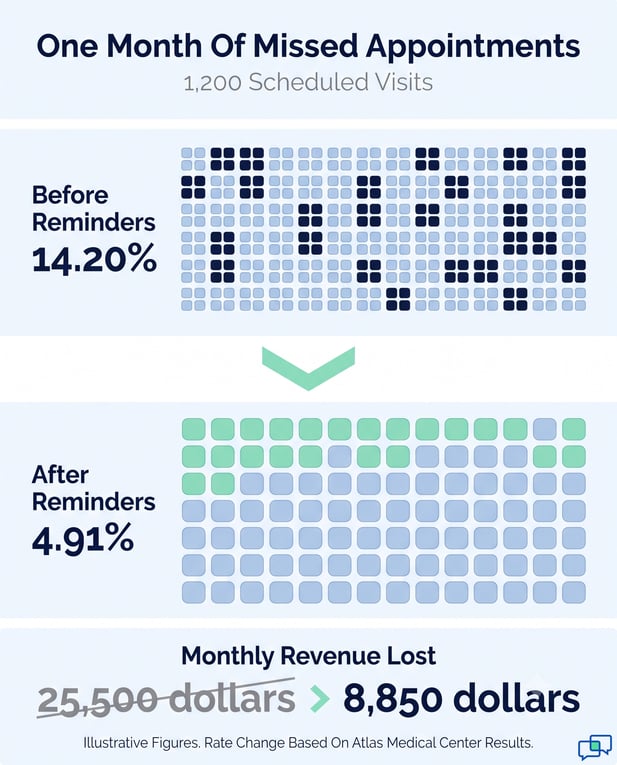
Chart showing missed clinic appointment rates dropping from 14.2% to 4.9% with text reminders

Where The Native Texting Stops (Structural Limits, Not Alpha Gripes)

Each limit below traces back to a design decision, so none of them close automatically when the rollout finishes. All four were checked against athenahealth's published materials in July 2026.

The PHI Handoff Pulls Patients Out Of The Text Thread

athenahealth's model routes sensitive content into secure web chat. Walk the real sequence for a patient asking about a biopsy result:

1. The patient texts your practice number: did my biopsy come back?

2. The AI agent recognizes clinical content and offers a secure web chat link.

3. The patient taps the link, loads a chat page, and authenticates.

4. Your staff answers there, in a session separate from the SMS thread.

5. The patient closes the chat. The next question restarts the loop.

Steps 3 and 4 are where response rates go. Every added tap costs you replies, and the patients who drop off are usually the ones you most needed to reach. Older patients and patients on shared devices drop off hardest.

Curogram keeps that same exchange in the thread the patient is already in. Two-way texting runs over plain SMS with no app, no portal login, and no chat window, under a signed BAA and SOC 2 Type II controls.

Practices set templates and disclaimer language at the account level, which is also where the rules that govern secure patient text messaging get applied consistently across staff.

AI-Agent-First Versus Staff-First Ownership

athenahealth routes patient messages through AI agents, with handoff to staff when the agent cannot resolve the request. Curogram routes every message to people first.

That changes what your front desk sees each morning. Incoming texts land in a shared team inbox. Any staff member can pick up a thread, assign it to a colleague, see who replied last, and set after-hours handling. Nothing gets answered on your behalf before a person reads it.

Which model you want depends on volume and risk tolerance. High-volume practices drowning in repeat questions gain from deflection.

Practices where a mishandled reschedule creates a clinical problem, oncology and high-risk obstetrics among them, usually want eyes on every thread. Curogram also sends from your practice line, so replies land where patients expect them.

Workflow Breadth Beyond The Conversation

athenahealth's published description covers two-way texting, secure web chat, results delivery, appointment reminders, and action-needed outreach.

Waitlist Scheduling handles cancellation backfill. Checked against those materials in July 2026, the Patient Conversations documentation does not describe:

  • Mass or broadcast texting to a filtered patient segment for provider call-outs, closures, or recall campaigns

  • Automated Google review requests after a completed visit

  • Digital intake forms delivered by text and returned before arrival

  • Text-to-pay for outstanding balances

  • Telehealth links sent by SMS

  • Internal secure messaging between staff and between offices

Each of those is a standard line item in Curogram. A practice that adopts Patient Conversations for texting still shops for the rest.

Rollout Maturity, Stated Plainly

Alpha at announcement. Broad availability targeted for the first half of 2026. No published GA notice as of July 2026.

Timing moves, and any limit tied only to timing will close on its own. The handoff design, the agent-first routing, and the workflow scope sit deeper than a release schedule. Judge the native feature on those three.

If Patient Conversations is already live in your instance, run it against two weeks of your real message volume before deciding anything.

Side-By-Side Comparison Table

Twelve workflows, checked against athenahealth's published materials and Curogram's live feature set in July 2026.

Rows marked not described mean athenahealth has not documented the capability as part of Patient Conversations, which is different from confirming it will never exist.

Workflow

Patient Conversations

athenaOne + Curogram

Two-way texting in plain SMS

Yes, practice-initiated

Yes, staff or patient can start the thread

PHI handling

Handoff to secure web chat

Templates and disclaimers set at account level, thread stays in SMS

Shared team inbox

Not described

Yes, with assignment and after-hours routing

AI agents answering routine questions

Yes, around the clock

No, staff-first by design

Automated reminders and confirmation tracking

Yes

Yes, >75% average confirmation rate

Mass or broadcast texting

Not described

Yes, to filtered patient segments

Digital intake forms

Not described

Yes, sent and returned by text

Text-to-pay

Not described

Yes

Review management

Not described

Yes, automated Google review requests

Telehealth links by SMS

Not described

Yes

HIPAA and BAA

Yes, under athenahealth's BAA

Yes, HIPAA and SOC 2 Type II, BAA signed

Relationship to athenaOne

Runs inside athenaOne

Runs alongside athenaOne, one-way data sync from athenaOne


Verdict: Rows 1 through 4 settle most evaluations. If the web chat handoff and agent-first routing suit how your practice works, the native feature covers your messaging. If your staff needs to own the thread and you want the rest of the workflow on the same rail, you add Curogram on top of athenaOne.

The Cost Of Waiting Out The Rollout

The problem worth naming is the communication gap during and after the rollout. athenahealth is not the villain here. A five-month hold on a decision is.

What The Phone Line Costs While You Wait

Front desks at multi-provider groups field 80 or more calls a day. Most are short. Confirm an appointment, reschedule, ask about a balance, request a form. Each occupies a person for two to four minutes including the wrap-up.

Run that at 80 calls and three minutes each: four hours a day of staff time on exchanges a text thread resolves in twenty seconds of typing.

Curogram clients report phone volume dropping by as much as 50% after moving those exchanges to SMS, based on our internal data.

The review request nobody sent is the quieter cost. Your front desk had three patients to reschedule and a phone that wouldn't stop, so the post-visit survey never went out. That happens every day the rollout hasn't reached you.

No-Show Math While The Rollout Finishes

Illustrative math for a mid-size practice: 1,200 scheduled visits a month, a 14.20% no-show rate, and an average visit value of $150. That works out to roughly 170 missed slots and about $25,500 in monthly revenue that never arrives.

Atlas Medical Center started at that same rate. Three months on Curogram's automated reminders and confirmations brought them to 4.91%, roughly three times better than the industry average, based on our internal data. Applied to the illustration above, 170 missed slots becomes about 59.

None of that math waits for a release schedule. It runs every month, on your current volume, whether or not Patient Conversations has reached your instance.

The Evaluation Hold Has A Price

Practices that paused messaging decisions in February are five months into a pause with no GA date attached to it. Every month of missed confirmations, unsent recalls, and unrequested reviews is a month you don't recover.

Running Curogram alongside athenaOne forecloses nothing. It connects with athenaOne rather than replacing any part of it, so enabling Patient Conversations later changes nothing about your EHR or your charts. Our full breakdown of texting with athenahealth covers the integration mechanics in more detail

What athenahealth Practices Get With Curogram Today

These numbers are running now, alongside athenaOne, independent of anyone's release schedule.

Confirmations And No-Shows

Curogram clients average a confirmation rate above 75%, with no-show rates 53% below the industry average, based on our internal data.

Covina Arthritic Clinic confirms more than 1,100 appointments a month through automated reminders, with replies processed in real time and no manual follow-up calls.

Atlas Medical Center moved from 14.20% to 4.91% in three months. Text messages get opened at rates near 98%, which is why patient texting outperform the voicemails they replace.

Reviews And Reactivated Patients

One multi-location practice collected 1,064 new five-star Google reviews in three months using automated post-visit surveys tied to Google Reviews, with 90% of responding patients leaving five stars, based on our internal data. For a practice where Google is the first thing a new patient sees, that shows up directly in new patient volume.

SMS recalls at another multi-location client brought back 1,240 patients from recall messages alone, at a 35% reconversion rate within a month. Those appointments filled slots that would have sat empty.

What The Front Desk Does Differently

Staff work from one shared inbox instead of a phone queue. A schedule change reaches 90 affected patients in one send rather than 90 calls. Intake forms arrive completed before the patient sits down. Balances get paid from a text link.

None of this replaces athenaOne. Your schedule, charts, and claims stay exactly where they are. Curogram for athenahealth practices pulls patient and appointment data from athenaOne and gives your staff a communication layer on top of it.

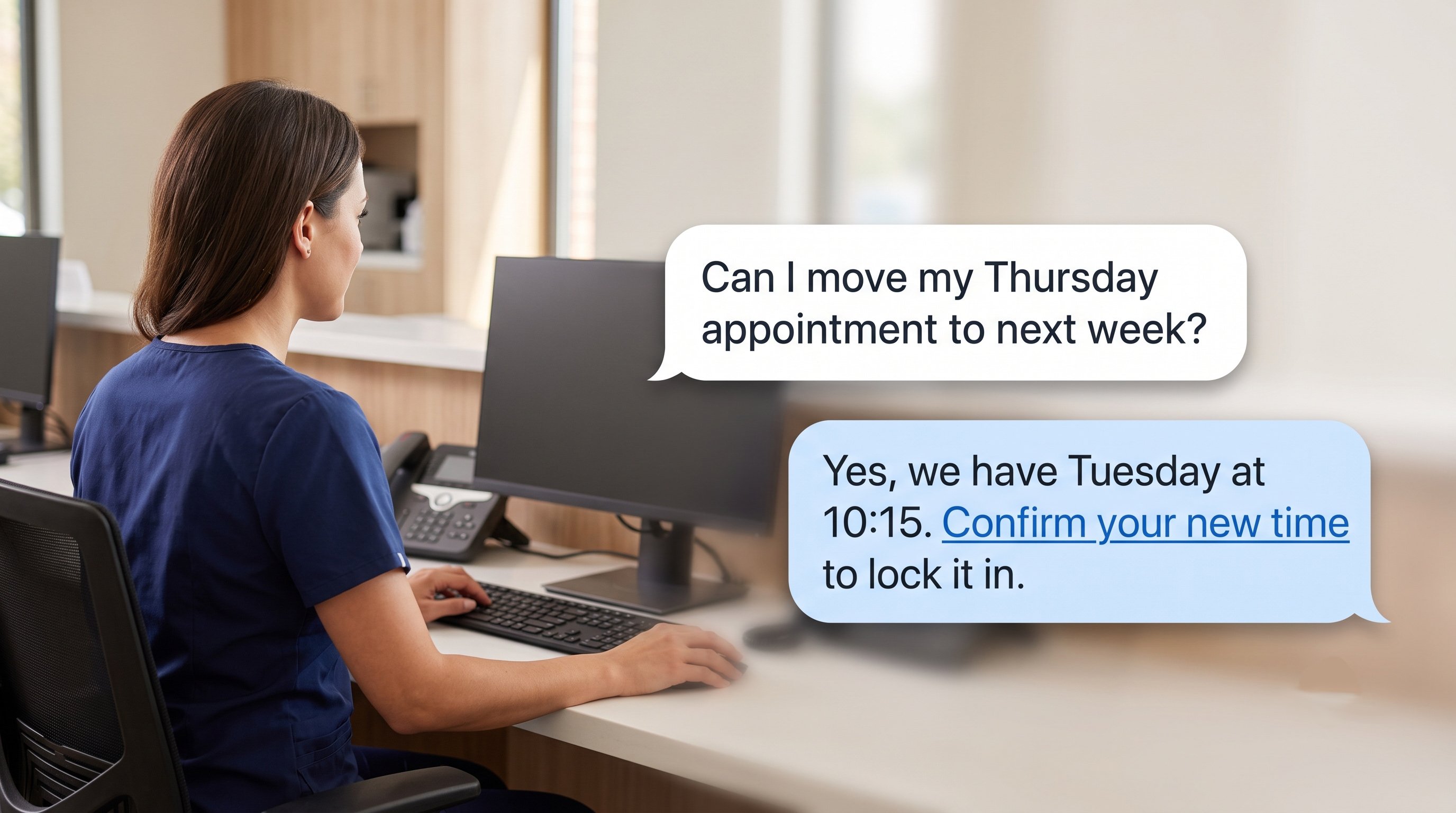
Clinic receptionist at workstation with text bubbles showing SMS appointment rescheduling

When Native Is Enough, And When It Isn't

Segment honestly and the answer usually falls out in ten minutes.

Patient Conversations Alone Will Likely Serve You

  • Your goal is deflecting routine inbound questions inside athenaOne

  • Message volume is low enough that a shared inbox would sit mostly idle

  • You have no need for mass texting, intake, payments, or review collection

  • Your patients accept moving into a secure web chat for anything clinical

  • You have no appetite for a second vendor relationship

You Will Want Curogram Layered On Top

  • Your front desk needs to own conversations, with assignment and after-hours handling

  • You send schedule changes, closures, or recall campaigns to patient segments

  • You want intake, text-to-pay, review requests, and telehealth links on the same thread

  • Keeping patients in plain SMS matters more to you than routing them into web chat

  • You want the workflow running this quarter rather than on athenahealth's release schedule

Our read: Patient Conversations fits practices whose messaging problem is inbound question volume. Curogram fits practices whose messaging problem is outbound workflow. Most multi-provider athenaOne groups have both problems, which is why the two coexist rather than compete.

Conclusion: Keep athenaOne, And Add The Layer Where The Native Feature Stops

athenahealth built something worth having. Patient Conversations puts two-way texting inside athenaOne, answers repeat questions without staff, and keeps the record in one chart. Practices that mainly needed those three things should enable it and move on.

The rest of the front desk workload sits outside that design. Mass texting for a provider call-out. A recall campaign to 400 overdue patients. An intake form sent Thursday for a Monday visit.

A balance paid from a text link. A review request that fires after the visit closes. Each of those is a separate product category, and each is running in athenahealth practices today.

None of it requires a bet on which vendor wins. Curogram pulls from athenaOne, adds a layer beside it, and leaves your charts, claims, and schedule untouched.

If Patient Conversations reaches your instance next quarter and covers more than we expect, you keep it and drop whatever it duplicates.

We would rather you evaluate this with your numbers than ours. Pull one month of front desk call volume. Check your current no-show rate against the 4.91% Atlas Medical Center reached in three months.

Count the review requests your staff actually sent last month, not the ones your process says they should have.

That exercise takes about twenty minutes and settles the question better than any comparison table, including this one.

Book a demo and we will walk your athenaOne setup with you, show what connects, and tell you plainly where Patient Conversations already covers what you need. Curogram works alongside athenaOne. Nothing gets replaced.


Frequently Asked Questions

How does athenahealth Patient Conversations handle protected health information in a text thread?

athenahealth moves sensitive content out of SMS and into a secure web chat session. The patient taps a link and authenticates before staff respond, which adds steps between the question asked and the answer received.

What does athenahealth Patient Conversations include as of July 2026?

Practice-initiated two-way texting inside athenaOne, secure web chat, AI agents answering routine questions, automated results delivery, and appointment reminders. Texting entered alpha in February 2026, with no published general availability announcement since then.

How can a practice tell whether Patient Conversations has reached its athenaOne instance?

Check your athenaOne release notes and ask your athenahealth account manager directly. Availability has rolled out in stages since February 2026, so two practices on the same version may see different features enabled.

Why do athenahealth practices add Curogram when native texting already exists?

Curogram covers workflow the native feature does not describe: mass texting, digital intake, text-to-pay, automated review requests, telehealth links, and a shared inbox where staff own each thread in plain SMS.

How does Curogram connect with athenaOne without replacing it?

Curogram pulls patient and appointment data from athenaOne in one direction and adds a communication layer beside it. Your schedule, charts, and claims stay in athenaOne, and staff avoid duplicate data entry.

What do patients need to install before texting a practice that uses Curogram?

Nothing at all. Messages arrive as ordinary SMS from your practice number, so patients reply from their default texting app with no download, no portal login, and no web chat session.


HIPAA-Compliant Texting for Athenahealth Users: A Complete Guide

HIPAA-Compliant Texting for Athenahealth Users: A Complete Guide

💡HIPAA-compliant texting for Athenahealth users lets clinics communicate securely with patients. Staff can send reminders, instructions, and...

Read More
How Athenahealth Users Improve Patient Communication w/ Text Messaging

How Athenahealth Users Improve Patient Communication w/ Text Messaging

💡 Effective communication is the backbone of patient care. Yet many Athenahealth clinics still rely on outdated methods like calls and voicemails....

Read More
The ROI of Appointment Reminders for Athenahealth Clinics

The ROI of Appointment Reminders for Athenahealth Clinics

💡 No-shows can cost Athenahealth clinics thousands every month. Appointment reminders can prevent missed visits and deliver measurable ROI....

Read More