
1 min read
Boosting Patient Engagement with Mass Texting in InSync EMR
💡 Many behavioral health organizations use InSync for documentation and scheduling. Mass texting in InSync helps clinics reach people quickly and...
8 min read

Send announcements and reminders at the right time.
Create Allscripts patient campaigns that follow your calendar needs.
Support seasonal outreach for preventive care and wellness visits.
Reduce missed appointments with quick, clear text updates.
Help patients feel informed without overwhelming them.
Give staff fewer repetitive phone tasks and more predictable workflows.
Curogram supports compliant communication in Allscripts PM for stronger campaigns without extra stress.
Communication shapes the way patients experience your organization. When people know what to expect, they feel more prepared for their visits. Yet many clinics still depend on long call lists or scattered messages to reach patients. These methods create delays and frustration for staff who already manage busy days.
Mass texting gives you a different path. It allows you to boost engagement across large groups of patients with consistency. Messages arrive where people already look many times each day. They can respond quickly or ask simple follow up questions without waiting on hold. This makes communication feel more natural and manageable for your staff.
In this article, we discuss why manual outreach falls short and how mass texting can help. You will find practical steps you can take to strengthen your own outreach strategy. The goal is not to overwhelm your organization with technology. Instead, it's to use HIPAA-compliant communication that supports your team members and patients
Manual outreach depends on staff time, memory, and constant repetition. In our previous blog, we discussed how mass texting in Allscripts can make a difference for clinics.
You may call patients about schedule changes or upcoming visits, but it is difficult to reach everyone. Phone lines get busy. Voicemails go unheard. Staff feel stretched thin as lists grow faster than they can complete them. Even with the best intentions, important messages can slip through the cracks.
Calling patient after patient takes time and emotional energy. Staff often repeat the same instructions many times a day. When the waiting room is full or the phones are ringing, outreach tasks may be postponed. This pattern creates backlogs that feel overwhelming. The more staff fall behind, the harder it becomes to regain control.
Manual work also leads to inconsistent documentation. Not every call is logged the same way. Some conversations may not be recorded at all. This can create confusion for other team members who later review the patient's record in Allscripts PM.
Many people screen calls from unknown numbers or cannot answer during work hours. Even when messages are left, patients may not hear them until later. Some never listen. This gap means that important updates, reminders, or instructions do not reach them in time. When people do not receive or understand messages, missed appointments increase.
Patients often prefer text. It is quick, quiet, and easy to reference again later. When outreach is limited to calls, you miss the chance to meet people in the communication style they use every day.
Without automation, outreach timing depends on staff capacity. Some messages go out early in the day. Others go out too late to be helpful. When reminders arrive unpredictably, they lose effectiveness. A stable outreach system helps patients develop trust. They know when to expect updates and what they will contain.
Unpredictable timing also affects clinic operations. Staff cannot plan their workload because the outreach cycle changes each day. A structured system helps build clear rhythms that support both patients and teams.
Curogram helps you manage outreach in a way that feels organized and dependable. Instead of relying only on manual steps, you can create structured workflows that match the natural rhythm of your Allscripts PM schedule. These workflows help you boost engagement Allscripts mass texting by delivering the right messages to the right groups at the right time.
Allscripts patient campaigns allow you to group people by visit type, condition, age range, or other factors. Curogram uses these groups to send text messages that feel relevant instead of generic. For example, you can remind all patients due for annual wellness visits or flu shots. You can also reach parents whose children need sports physicals before school starts.
This targeted approach increases the chance that people will read and respond to your messages. It gives staff a way to plan ahead rather than react to changing schedules day by day.
Many health organizations rely on seasonal outreach at key points in the year. Fall may bring flu shots. Spring may bring back to school reminders. Certain months may focus on preventive screenings. Curogram helps you deliver these campaigns with consistency by aligning them with your Allscripts PM patient lists.
When seasonal outreach becomes predictable, patients begin to expect helpful reminders from your team. This pattern supports stronger engagement and reduces last minute rushes that strain your schedule.
Mass texting gives you visibility into how patients respond. You can see which messages were delivered, read, or replied to. You can measure how outreach affects cancellations, reschedules, and visit completion rates. Over time, this information helps you refine your strategy.
Curogram’s structured approach also helps reduce confusion among staff. Everyone sees the same message history. There is no guessing about whether a reminder was sent or whether a patient responded. Shared information supports better teamwork and fewer repeated tasks.
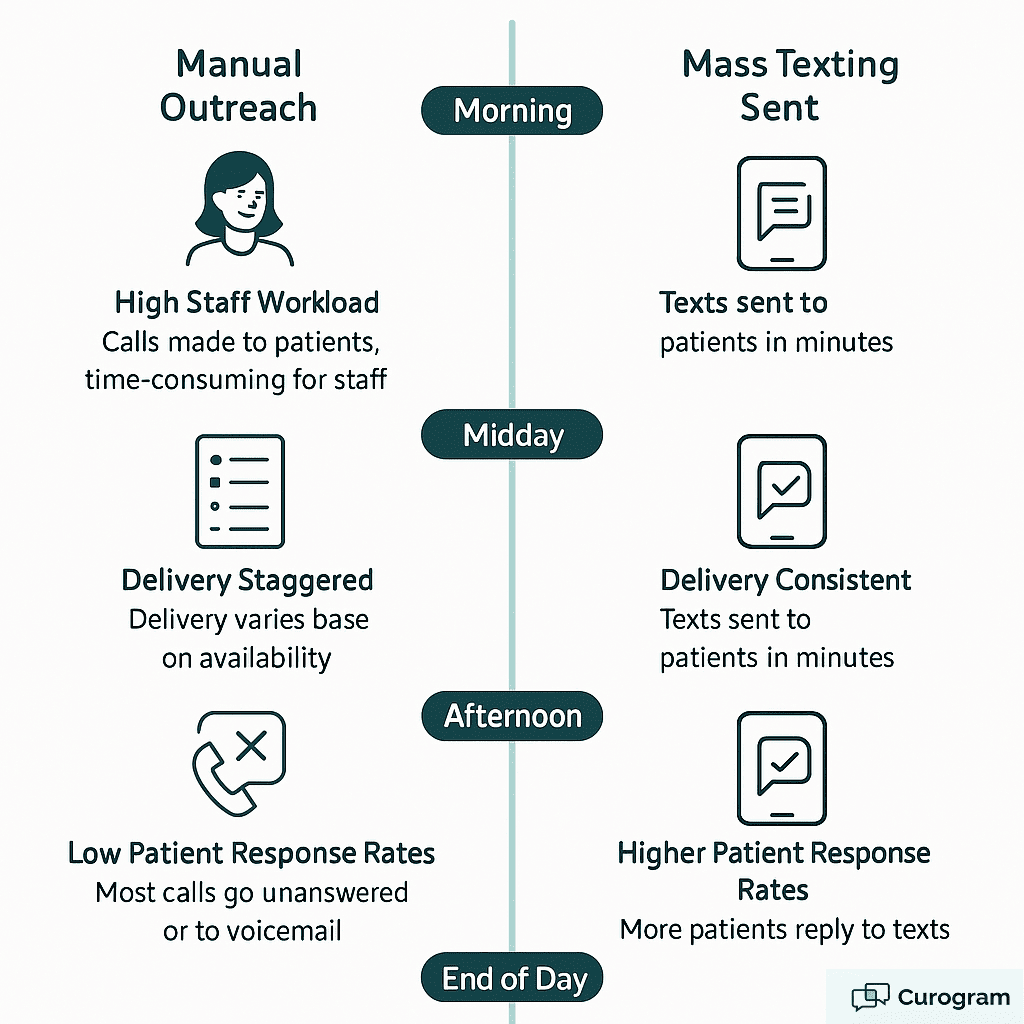
Mass texting integrated into Allscripts PM creates benefits that reach across clinical, operational, and leadership teams. These benefits appear slowly at first. Over time, they build into lasting improvements in efficiency, clarity, and patient experience. When you use texting to boost engagement Allscripts mass texting, you give your organization a foundation for stable communication.
Front office staff spend much of their day on the phone. They answer questions, confirm appointments, and relay instructions. This workload grows quickly when schedules change or when seasonal outreach becomes busy. Mass texting helps shift much of this communication into a simpler channel. Patients receive updates automatically, which reduces call volume.
With fewer calls, staff can focus on people standing in front of them. They can give more thoughtful support to patients with complex needs. They can also document interactions more accurately because they have more time and attention to spend on each task.
Providers depend on steady visit flow to maintain high quality care. When patients miss appointments, the schedule becomes unpredictable. Mass texting helps reduce these gaps by sending timely reminders. Patients know when they should arrive and what they should bring. This leads to better prepared visits and fewer last minute cancellations.
Over months, providers may notice a calmer rhythm in their workday. They spend less time waiting for patients to arrive. They can plan their time more confidently. This stable environment helps support better conversations and stronger patient relationships.
Care coordinators often bridge the gap between providers and patients. They help with chronic disease management, follow up plans, and preventive care tasks. Mass texting helps them reach people more easily. When messages are delivered reliably, coordinators can focus on higher level work instead of constant manual outreach.
Structured outreach also helps them track who responded. They can follow up with specific individuals who need extra help. This selective approach allows them to spend time where it will make the most difference.
Administrators value processes that can be measured and improved. Mass texting fits this need well. Changes in patient response rates, no show rates, and scheduling patterns become visible through Allscripts patient campaigns. These patterns help leaders understand what is working and what needs adjustment.
Efficiency gains also support staff morale. When communication becomes predictable, teams feel less reactive. They experience fewer moments of urgency. They can plan their day with more confidence and less surprise.
Large organizations with multiple locations face added challenges. Each site may communicate in different ways. Patients may receive messages that vary in timing or tone. Mass texting helps unify these patterns. Templates and schedules create consistency across the entire enterprise.
Patients receive the same quality of communication no matter where they are seen. Staff can support one another more easily because they share a common messaging structure. Leaders can compare performance across sites without worrying about major differences in outreach practices.
Mass texting creates a steady flow of communication data. Leaders, coordinators, and analysts can review trends in engagement. For example, they may see which seasonal outreach messages improve visit attendance. They may notice which appointment reminders lead to fewer cancellations.
When data is easy to view and interpret, departments can make decisions based on proof instead of guesswork. Over time, these insights help refine care delivery and resource allocation. They also support a learning culture where the organization evolves in response to real patient behavior.
Imagine a busy multi site organization preparing for flu season. Historically, front office staff spent many hours calling patients about flu shot clinics. They worked through long lists and left many voicemails. Even with their effort, turnout varied across locations. Leadership wanted a more predictable way to plan staff needs and vaccine supply.
The organization created a seasonal outreach campaign using Allscripts patient campaigns through Curogram. They grouped patients by age and risk category. They sent clear messages about clinic dates, locations, and what to expect. Within days, responses began to rise. Patients asked questions, confirmed attendance, and rescheduled when needed.
Staff felt less pressure because the bulk of outreach happened automatically. Providers saw fuller schedules. Administrators could plan vaccine shipments with greater confidence. This example shows how structured texting can transform seasonal outreach into a smoother, calmer process.
Start by reviewing your current outreach methods. Identify which messages cause the most frustration or require the most repeated effort. Look at how often patients miss appointments or misunderstand instructions. These patterns help you see where mass texting in Allscripts could make the biggest difference.
Next, choose one outreach area to pilot. It could be appointment reminders, preventive care outreach, or seasonal messaging. Build a small campaign with clear goals. Involve staff who will use the system so they understand the process and can share concerns early.
Finally, measure your results over several weeks. Track changes in response rates, no shows, or scheduling bottlenecks. Use this information to adjust your strategy and expand to other departments when ready.
Curogram helps organizations communicate with patients in a way that feels organized and dependable. It connects with Allscripts PM to support mass texting workflows that follow your daily schedule. Instead of scattered outreach, you can use targeted Allscripts patient campaigns that reach people at the right moment. This structure helps reduce missed appointments and improves clarity for everyone involved.
For staff, Curogram provides a shared space where messages are logged and easy to review. When someone replies, teams do not have to search through different devices or apps. They see message histories in one place. This helps reduce duplicate work and confusion.
For leaders, Curogram supports transparency and consistency. Outreach patterns become measurable. Campaigns can follow organizational policies instead of personal habits. Over time, this stability strengthens both workflow efficiency and patient trust. Curogram helps support communication so teams can spend more time focusing on care.
When messaging is clear and predictable, patients feel supported. Mass texting inside Allscripts PM helps you reach patients where they already are. It gives staff a calmer workflow and helps providers maintain steadier schedules.
By using structured texting to boost engagement, you reduce the burden of phone calls. You help patients remember appointments and understand instructions. You support seasonal outreach that once felt rushed. You also create patterns that your organization can measure and improve over time.
You do not need to change everything at once. Start small with one campaign. Learn from early results. Build from there. Curogram can be your partner in communication so your staff can focus on providing care.
Want to see how easy it is to set up mass texting? Book a quick demo today.

1 min read
💡 Many behavioral health organizations use InSync for documentation and scheduling. Mass texting in InSync helps clinics reach people quickly and...

1 min read
💡 Mass texting in Allscripts PM helps enterprise groups reach patients quickly and consistently. Clinics use it for closures, policy changes,...

1 min read
💡 Patient notifications in Cloud 9 ortho are made easier with secure mass texting. Text messaging enables clinics to reach parents and teens where...