
10 min read

AdvancedMD Text-to-Pay | Collect Post-Visit Balances in Two Taps

AdvancedMD Text-to-Pay | Collect Post-Visit Balances in Two Taps
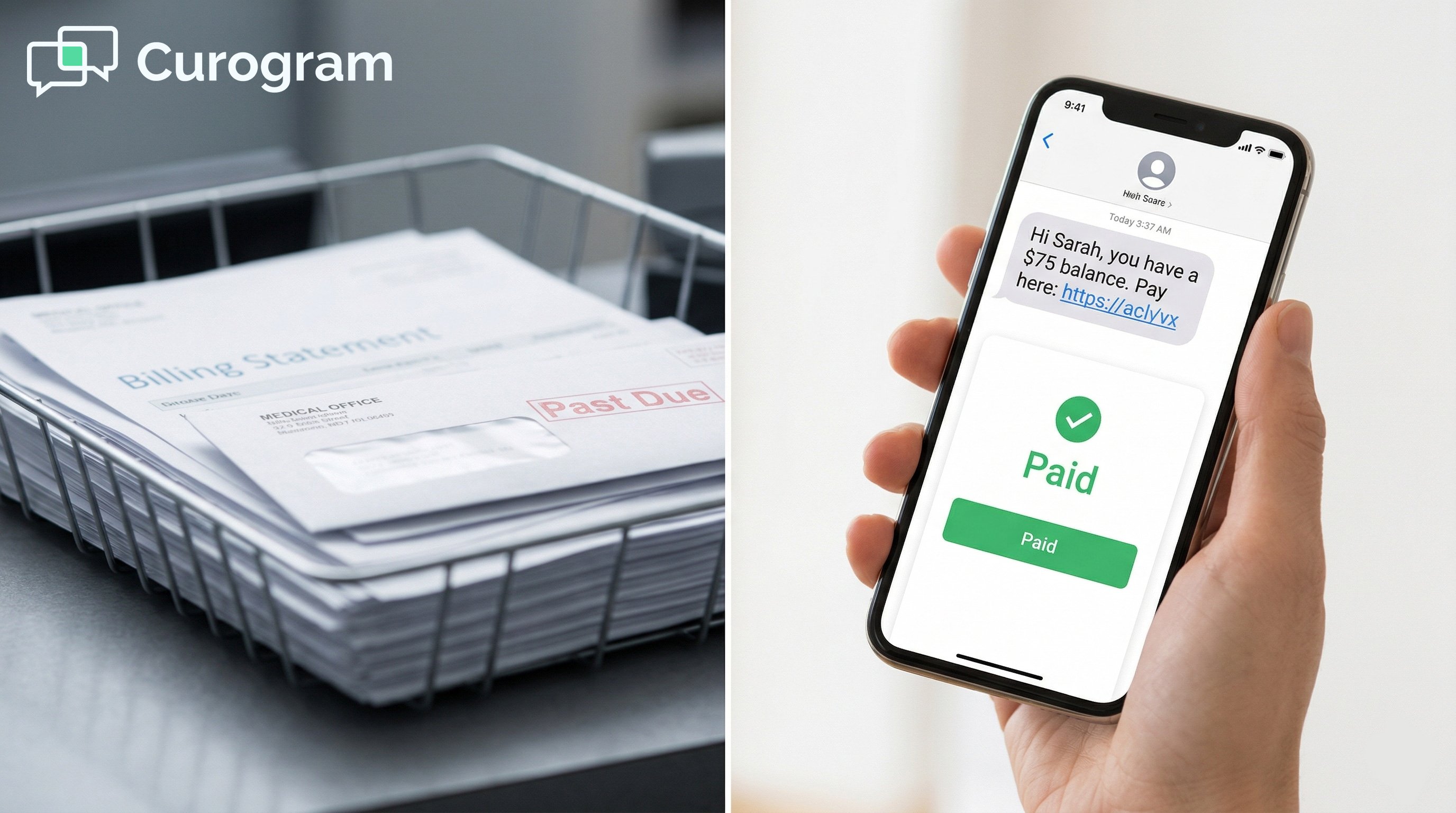
💡 AdvancedMD text-to-pay, powered by Curogram, sends patients a secure SMS payment link right after their visit. No portal login. No paper statement. Patients pay in two taps from their phones, and post-visit balances get collected in the same week instead of sitting in A/R for 30 to 90 days.

AdvancedMD Pay is built for in-office payments. The PAX A920 terminal and credit card on file tools handle checkout well. But post-visit billing depends on paper statements and portal-based bill pay.

Paper statements cost up to $1,000 per month and collect from only 20% of patients. Portal login friction stops most patients from finishing online bill pay.

Curogram fills the gap. An SMS payment link lands on the patient's phone. They tap. They pay. Collections that used to take months now happen within days.

Your patients pay for coffee, groceries, and rideshares on their phones without a second thought. So why does collecting a $50 copay take 90 days?

It's not a willingness problem. It's a channel problem.

AdvancedMD text-to-pay, powered by Curogram, fixes that gap. It sends a secure SMS payment link to each patient right after their visit.

There's no portal to log into. No paper bill to open. The patient taps the link, sees their balance, and pays in two taps. Same week. Balance collected.

AdvancedMD Pay is strong at the checkout desk. The PAX A920 terminal handles point-of-service payments.

Credit card on file management takes care of no-shows and cancellations. Online bill pay lives in the patient portal. For the patient standing in front of you, the payment experience works.

The gap opens the moment they leave.

Post-visit billing depends on two channels: paper statements and portal-based bill pay. Paper statements cost up to $1,000 per month to print, stuff, and mail. They collect from about 20% of patients. The other 80% never act on them.

Portal bill pay requires patients to remember their login, find the billing tab, and complete the payment. Each extra step is a chance to drop off. Most patients stop before they reach the payment screen.

The result is a growing A/R aging report. Staff spend hours chasing balances that patients never intended to skip.

Revenue gets written off. And the service delivered weeks ago still hasn't been paid for.

The practice deserved that revenue. The patient intended to pay. The billing channel just made it too hard.

Curogram's two-tap payment channel changes that picture. This article covers why post-visit collections fail and how a simple SMS payment link accelerates balance collection, right from the patient's phone.

The Villain: The Statement They Never Open

The problem with post-visit collections isn't patient attitude. It's channel design. The two billing methods that most practices rely on were built before mobile payments existed.

Neither one matches how patients manage money today. The patients who stay unpaid aren't refusing to pay. They're failing to complete a process that was never designed with them in mind.

Why Post-Visit Collections Break Down

AdvancedMD Pay creates a strong in-office payment workflow. The PAX A920 terminal, credit card on file management, and automated no-show charges keep checkout running smoothly. But not every balance is collectible at checkout.

Insurance takes time to process. Patient responsibility amounts often aren't confirmed until the claim is fully adjudicated, which can take 5 to 14 days.

That delay pushes balances into the billing queue. Once they're there, the practice has two tools to collect them: paper statements and portal-based bill pay. Both have serious weaknesses.

The In-Office Advantage Stops at the Door

At checkout, AdvancedMD Pay gives billing staff everything they need. Copays, co-insurance, and known balances get collected on the spot.

But for balances that depend on insurance processing, the patient leaves before the final amount is confirmed. Those balances get queued for a billing cycle that may not reach the patient for days or weeks. By then, the visit is already fading from memory.

Why Delayed Billing Raises the Risk

Every day between a service and a payment request raises the risk of non-payment. Patients forget the visit. They misplace the statement. They put off the portal login until later, and later never comes.

Balances addressed within 30 days collect at much higher rates than those left to age past 60 or 90 days. The longer the gap, the lower the odds.

The True Cost of Paper and Portals

Paper statements feel like a safe default. They're familiar. They've been around forever. But the numbers behind them are hard to defend.

A typical AdvancedMD practice spends $800 to $1,000 per month printing, stuffing envelopes, and mailing patient statements.

The first statement goes out after insurance processes. If there's no response, a second goes out 30 days later. Then a third.

Each round costs more money and adds more time. After two or three statement cycles, 60 to 90 days may have passed since the original visit.

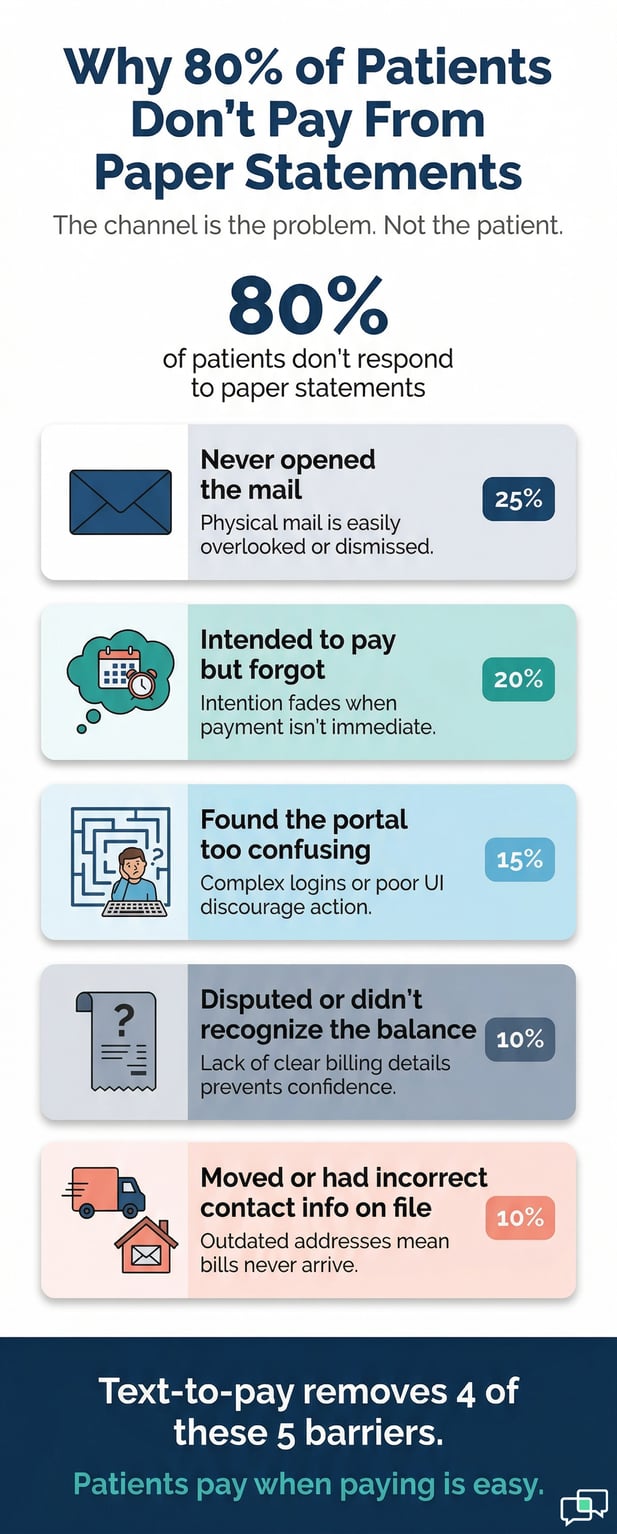
The practice has spent $3 to $5 per patient on statements alone. Based on our internal data, paper statements collect from only about 20% of the patients who receive them. That means 80% of patients don't pay, despite the cost of reaching them.

The paper statement problem at a glance:

Billing Method

Avg. Monthly Cost

Avg. Collection Rate

Time to Payment

Paper statements

$800 to $1,000

~20%

30 to 90+ days

Portal bill pay

Low direct cost

Low adoption

Unpredictable

Text-to-pay (Curogram)

Fraction of statement cost

Significantly higher

Same week


What Paper Statements Actually Cost

At $800 to $1,000 per month, a practice can spend up to $12,000 a year on statements that fail 4 out of 5 times. That figure doesn't include staff time for statement prep, postage runs, or follow-up calls.

It also doesn't count the cost of writing off balances that never convert after three billing cycles. The real price of paper-based billing is far higher than the printing invoice suggests.

Why Portal Bill Pay Doesn't Stick

The patient portal offers online bill pay as an alternative. But portal adoption is low, and for good reason.

To pay online, a patient must have an active account, remember their login, navigate to the billing section, and complete the payment. That's at least four steps before anything happens.

For someone trying to pay a $60 balance on their lunch break, four steps is three too many. Most patients drop off before they reach the payment screen.    

Infographic: why 80% of patients don’t pay paper bills, listing top 5 barriers to payment

The Guide: The Two-Tap Payment Channel

Fixing the post-visit collection gap doesn't require more statements or a better portal. It requires a payment channel that meets patients where they already are: on their phones. Curogram's two-tap payment channel delivers exactly that.

How the Two-Tap Payment Works

Curogram's text-to-pay feature sends a secure SMS payment link to the patient after their visit. The text lands on the same phone they check more than 150 times a day.

When it arrives, the patient taps the link. A mobile-optimized, secure payment page opens. It shows the exact balance owed and the available payment methods.

The patient enters their card details, or taps Apple Pay or Google Pay for instant checkout. Payment processes right away. A confirmation goes to the patient. The funds go to the practice.

From receiving the text to confirmed payment: under 60 seconds. No portal login. No paper. No call to billing. No check to write. This is how patients already pay for everything else in their lives. A text payment link puts medical billing in the same category.

From Text to Confirmed Payment in Seconds

No account setup is needed. No password to remember. The secure payment page is built for mobile and works on any phone without an app download.

Apple Pay and Google Pay make checkout even faster. The whole process takes less than a minute. For a patient who gets a text between meetings, it's easy to tap and pay before the next one starts.

Flexible Timing for Accurate Billing

Practices can configure when the SMS payment link goes out. Options include sending it right after the visit, after insurance processes, and the patient's responsibility is confirmed, or on a set schedule for recurring balances.

This flexibility means patients always see the correct amount owed. No billing confusion. No need to correct and resend. One text, one accurate balance, one payment.

How It Works With AdvancedMD Pay

Curogram's two-tap payment channel doesn't compete with AdvancedMD Pay. It extends it. In-office payments still run through the PAX A920 terminal and existing checkout workflows.

Credit card on file management and automated charges stay exactly as they are. Curogram adds the remote, post-visit collection layer that fills the gap.

When a patient leaves with a balance, the billing team sends a payment link via text. The patient pays from their phone. The payment is reconciled with their account in AdvancedMD.

The two tools divide the workload cleanly: AdvancedMD Pay owns the checkout desk, Curogram handles everything after the patient walks out the door.

Adding the Channel That Was Missing

AdvancedMD Pay is built for the moment of service. Curogram is built for the moment of billing. Together, they cover the full payment cycle.

In-person collections stay strong. Post-visit collections improve. Revenue that used to sit in A/R for weeks gets collected in days.

Cutting Statement Costs in the First Cycle

Every patient who pays via text is one fewer paper statement to print and mail. For practices spending $800 to $1,000 per month on statements, the savings show up fast.

A practice that collects 60% of post-visit balances through text-to-pay removes 60% of its statement volume. Less printing. Less postage. Less staff prep time. More cash collected sooner. The return is visible in the first billing cycle.  


The Success: Paid Before the Statement Prints

Switching to text-based billing changes more than the collection rate. It changes the timeline, the workload, and the patient experience. The benefits show up fast, and they compound over time.

Faster Collections, Shorter A/R Cycles

Text-based payment links collect balances within days of the visit. When the text arrives while the visit is still fresh, patients know what the charge is for.

They remember the service. The balance feels clear and expected, not like a surprise from the past.

Based on our internal research, practices that adopt SMS patient billing with text-to-pay see a drop in A/R balances beyond 30 days within the first billing cycle.

Balances that used to age past 60 or 90 days start clearing faster. Some are resolved before the paper statement would have even been printed.

The window for collecting a post-visit balance is widest right after the visit. A well-timed text payment link catches patients when they're most willing to act.

What Changes in the First Billing Cycle

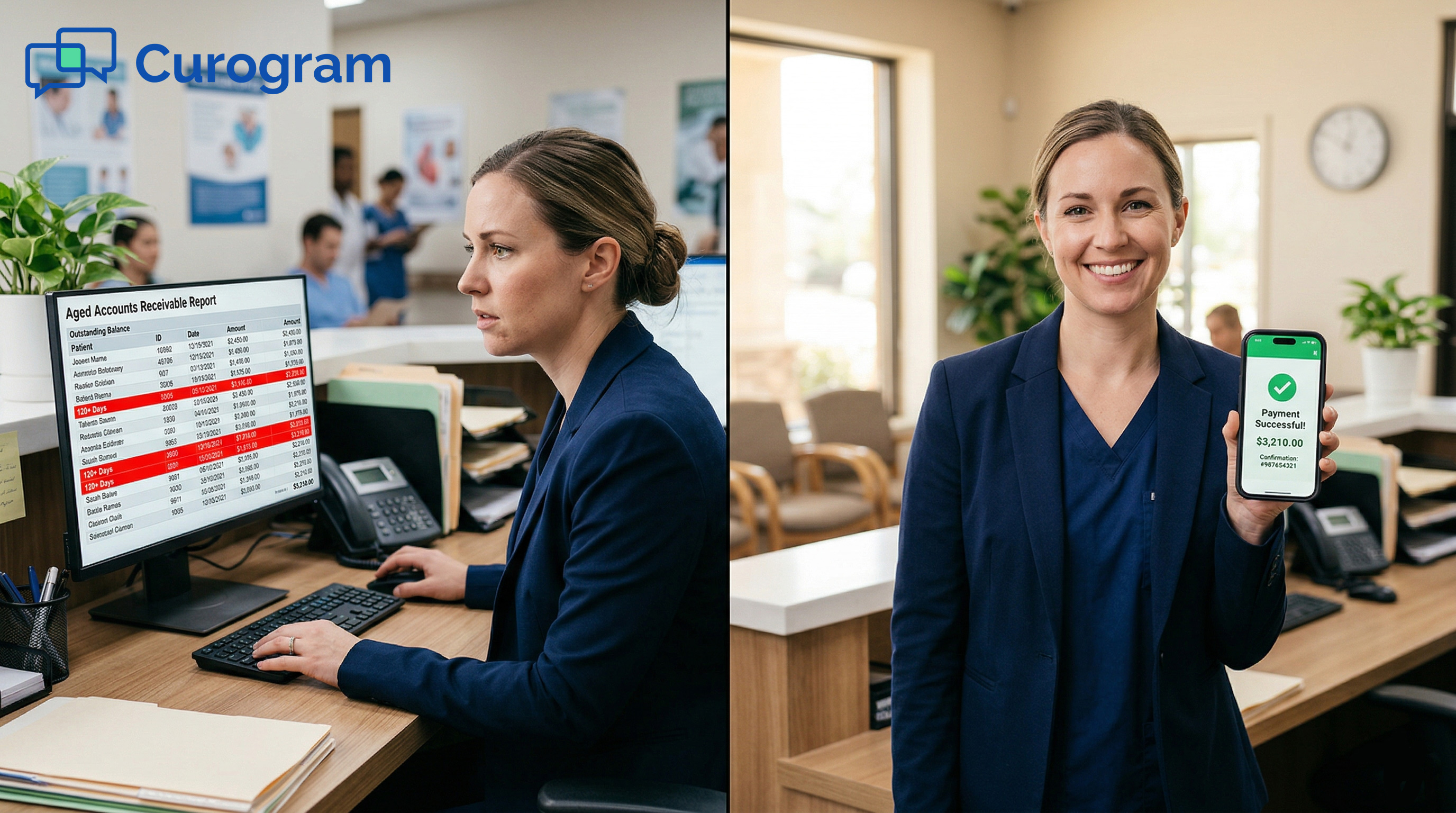
The A/R aging report starts to shrink. Fewer balances enter the 30-day bucket. Fewer still make it to 60 or 90 days. Staff spend less time on outbound collection calls.

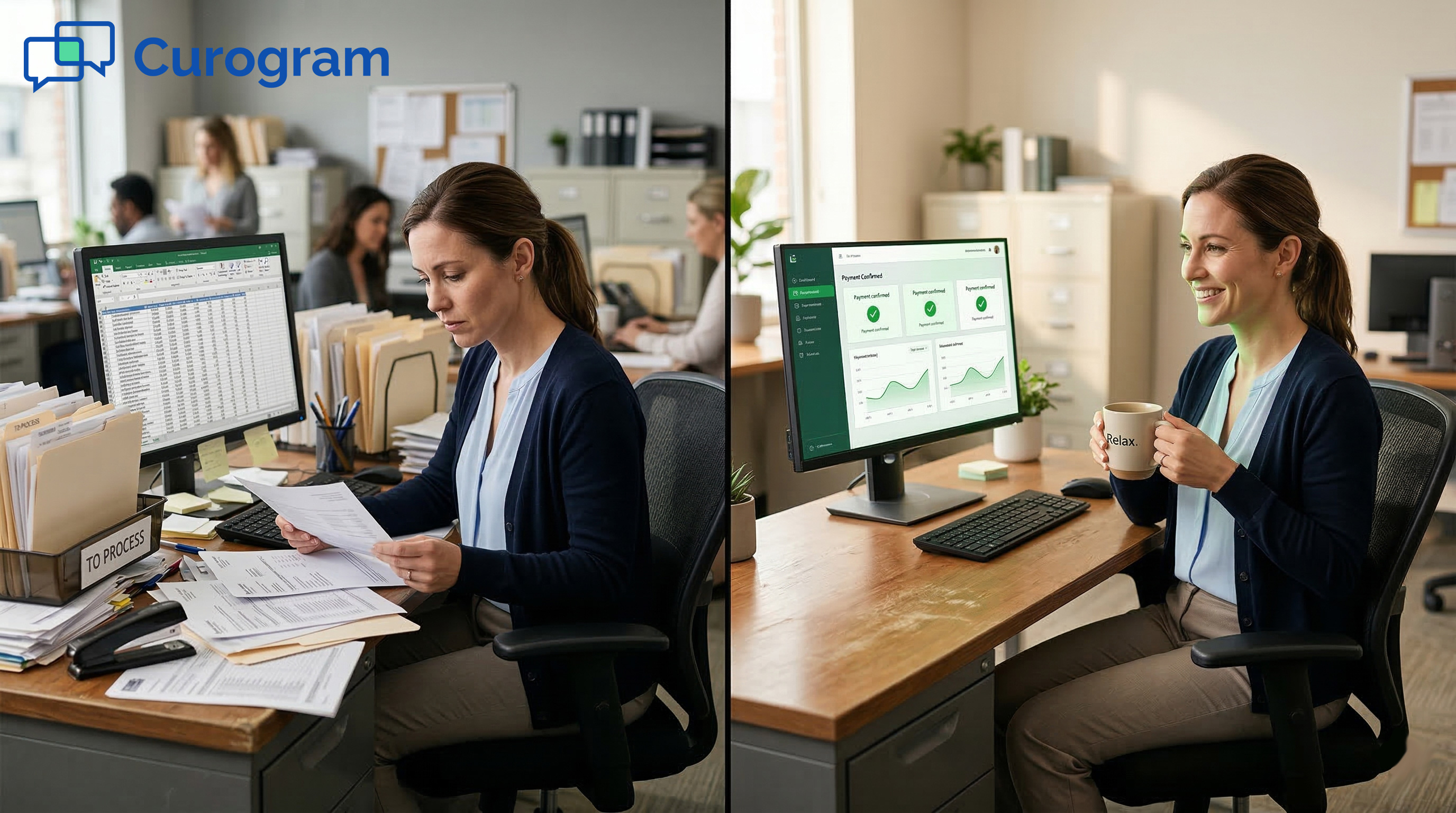
The billing team shifts from chasing past-due accounts to managing current revenue. That's a better use of time, and the results show up quickly in the numbers.

Why Timing Wins Every Time

The data is consistent: balances addressed quickly collect at much higher rates. A balance that's two days old is far easier to collect than one that's 60 days old.

At 60 days, the patient may have forgotten the visit. At 90 days, many practices begin writing off the balance or sending it to collections, both of which cost money and strain the patient relationship.

A text payment link arrives while the connection between the visit and the bill is still clear. That timing produces collection rates that paper billing cycles simply can't match.

From Billing Cycles to Billing Moments

The shift from paper to text-based billing isn't just a speed upgrade. It simplifies the entire billing model.

Instead of a multi-step process (send statement, wait 30 days, send a second statement, wait again, call, repeat), billing becomes a single moment: send text, get paid.

That structural change has real effects on the practice. Staff who used to coordinate multiple statement rounds now focus on first-contact collection.

Billing managers who reviewed long aged A/R reports spend that time on current accounts instead. The work gets simpler. The outcomes improve.

What Changes for Your Team

Follow-up calls drop. Aged A/R review time shrinks. Staff no longer need to track the same patient through three billing cycles. One text handles the initial billing.

A follow-up text handles any non-responses. The escalation path is faster and cleaner than the paper-based process, and it requires less staff effort at every step.

What Changes for Your Patients

Patients receive a clear, simple bill they can pay in under a minute. No confusing statement codes. No portal to log into. No check to write. The billing experience feels easy, not adversarial.

Patients who find billing easy are more likely to pay right away and more likely to return for care. A smooth payment process is also a positive touch point in the overall patient experience, one that most practices overlook when thinking about satisfaction scores.

A smiling woman on a couch using her smartphone, highlighting the ease of text-to-pay solutions

The Payment Channel Patients Actually Use

Post-visit billing doesn't have to be expensive and slow. Patients have phones. Secure payment technology exists. The only step left is to use a billing channel that patients will actually respond to.

AdvancedMD Pay handles in-office payments well. The checkout process is solid, and the tools for in-person collections are strong.

But when a patient leaves with a balance, the practice needs a reliable way to collect it without paper or portal friction. Paper and portals don't deliver that reliability.

Paper statements cost practices up to $1,000 per month to send. They collect from only 20% of patients. The other 80% of patients you spent money to reach never pay from a statement.

Together, paper and portal billing create what many billing managers know as the A/R aging spiral. Balances age past 30, 60, and 90 days.

Each passing month reduces the odds of collection. Staff hours go toward chasing payments that grow less likely by the week.

Curogram's AdvancedMD text-to-pay sends patients a secure SMS payment link after the visit. No portal needed. No paper required.

The patient taps the link and pays in two taps. Post-visit balance collection that used to take 30 to 90 days now happens in the same week.

Your patients already pay for everyday things on their phones in seconds. A text payment link fits right into that habit. The friction between 'I should pay this' and 'payment confirmed' drops from four steps to two taps.

That reduction in effort is what drives higher collection rates. It's not just a technology upgrade. It's a behavior match.

Think about what a 20% paper statement collection rate really means. You're spending on printing, postage, and staff time to reach 100 patients. 80 of them don't pay. You've now spent money on 100 statements, collected from 20, and still have 80 open balances to chase.

Shifting even half of that billing volume to text-to-pay changes the math immediately. Fewer statements. Higher collection rates. Lower costs. More revenue collected before the A/R clock starts ticking.

Curogram works with AdvancedMD Pay, not against it. Your in-office payment workflow stays in place. You add the post-visit collection channel that your current setup is missing. The PAX terminal handles checkout. Curogram handles everything after the patient walks out.

Schedule a demo if you want to see how text-to-pay performs for a practice like yours.


Frequently Asked Questions

How does Curogram keep patient payment data secure?

Curogram's payment links open a secure, PCI-compliant payment page hosted by a certified payment processor. The patient's card details are encrypted from end to end. No card data is stored in the text message or on the practice's systems. Apple Pay and Google Pay add another layer of tokenized security, so sensitive card numbers are never transmitted at all.

How can a practice control when payment links go out to patients?

Curogram's text-to-pay feature supports flexible delivery timing. Practices can send the link right after the visit, after insurance adjudicates and the patient's responsibility is confirmed, or on a scheduled cadence for installment payments. This means patients always receive accurate balance amounts. There's no need to correct a link or rebill because the timing was off.

Why do patients respond to text payment links more than paper statements?

Patients check their phones far more often than they check their mail. A text arrives in the same place where they shop, book rides, and transfer money. The payment page is mobile-optimized, requires no login, and takes under 60 seconds to complete. Paper statements require the patient to open mail, locate the return envelope, write a check, find a stamp, and mail it. The effort gap between the two channels explains the collection rate gap.

How does text-to-pay work alongside AdvancedMD Pay without disrupting current workflows?

Curogram's text-to-pay is an add-on channel, not a replacement. In-office payments still run through the PAX A920 terminal and existing checkout processes. Credit card on file management and automated no-show charges remain unchanged. Curogram simply adds the post-visit, remote collection layer. Billing staff send a payment link when a balance exists after the visit. Everything else in the AdvancedMD workflow stays the same.

Why do A/R balances age so quickly when practices rely on paper statements?

Paper statement cycles are slow by design. The first statement goes out after insurance adjudicates, which may take 5 to 14 days. If the patient doesn't respond, a second statement goes out 30 days later. By the time the practice follows up, 60 to 90 days may have passed since the visit. At that point, patients often don't recall the service, and the likelihood of payment drops sharply. Text-to-pay breaks this cycle by reaching the patient within days of the visit, before the balance has a chance to age.