
Contactless Patient & Hospital Check-In: The Ultimate Guide
Discover how contactless patient and hospital check-in improves safety, efficiency, and patient experience with seamless implementation.
4 min read

Picture a Monday morning waiting room. The phone is ringing, three patients walk in within two minutes of each other, and your front desk staff is trying to remember who got there first.
Now multiply that by every morning, every week, all year. Small mix-ups add up fast. A patient gets called out of order, another wonders if anyone noticed they arrived, and your staff spends more time managing chaos than actually helping people.
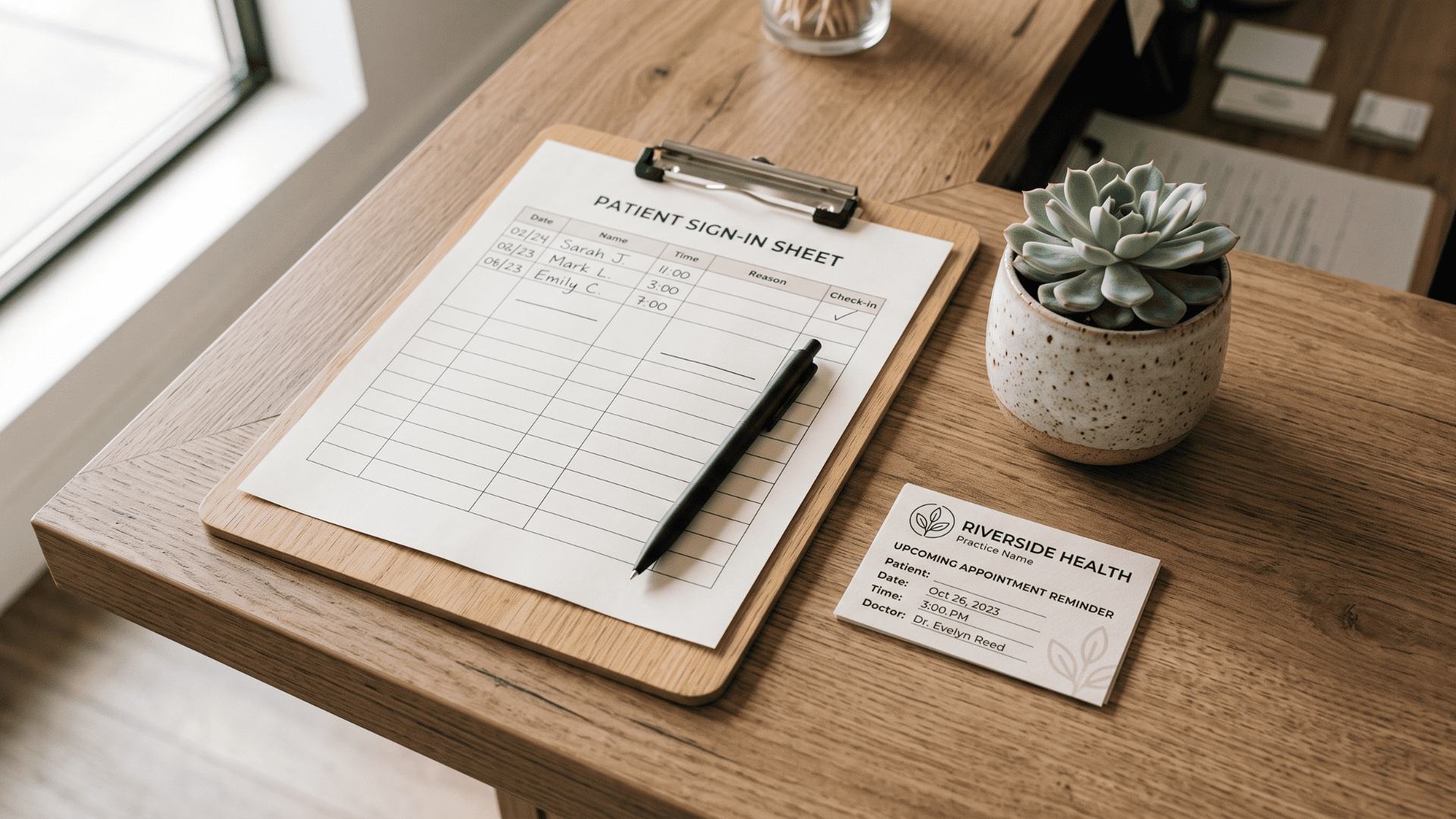
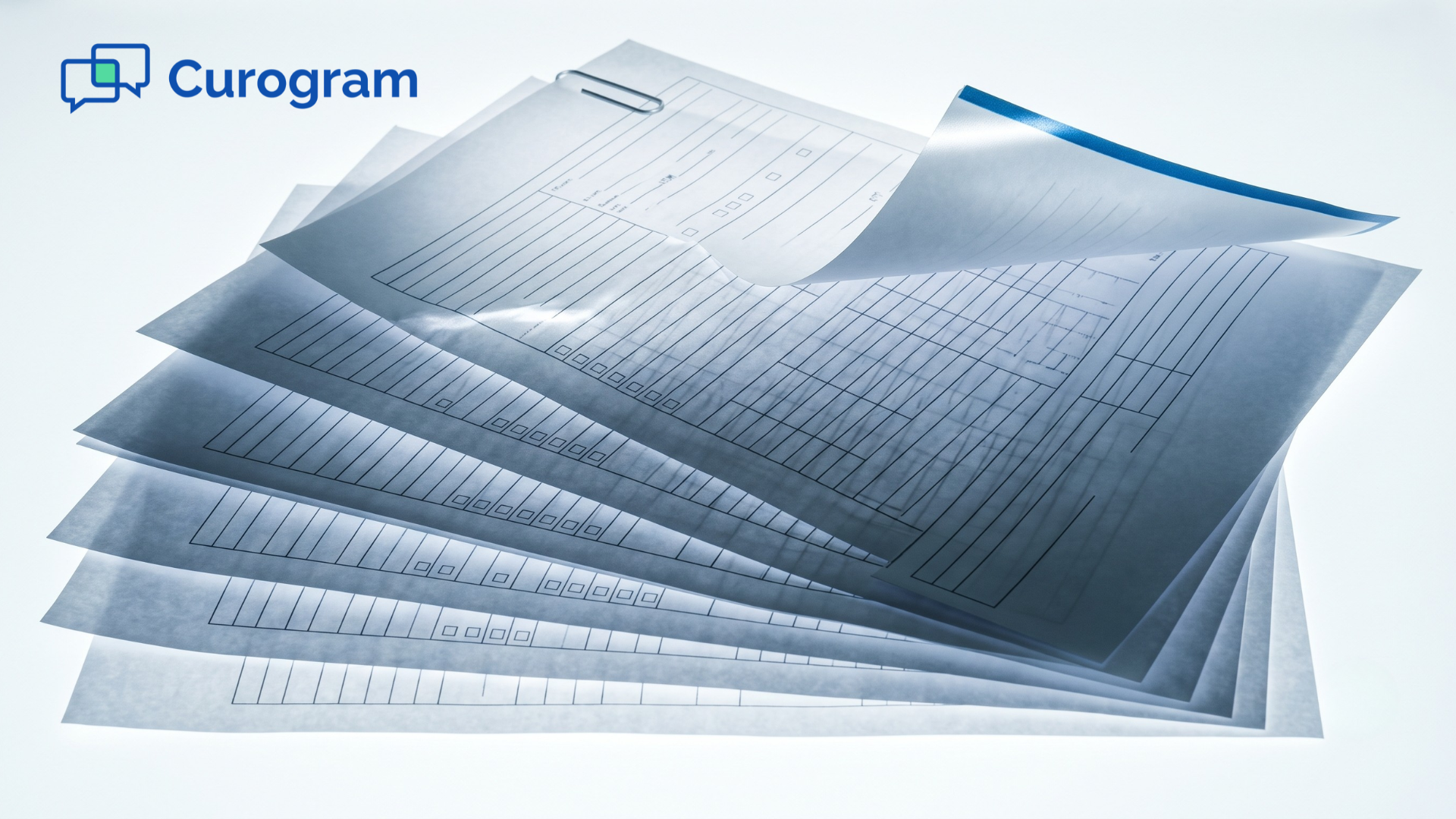
A patient sign-in sheet printable solves that exact problem. It's a simple document that lets patients log their own name, arrival time, and appointment details the moment they walk through your door, so nothing depends on your staff remembering every face.
It sounds like a small thing. It isn't. A clear, consistent sign-in process protects your practice from scheduling errors, keeps your records straight, and sets the tone for a visit that feels organized instead of rushed.
This article covers what a patient sign-in sheet printable should include, the different types clinics use, and why this small piece of paper still matters in a healthcare world that's moving toward digital tools.
A patient sign in sheet printable is a document used by clinics, hospitals, and other healthcare institutions to keep track of the basic details of their visiting patients.
On the document, patients can list their names and arrival times. This allows the clinic’s administrative staff to monitor more efficiently who has arrived for their appointment and with whom they are scheduled to meet.
There are a few common types of patient sign-in sheets:
Daily Patient Sign-In: This is the standard format used for everyday appointments in a clinic or doctor's office. It logs patients chronologically as they arrive.
Healthcare Event Sign-In: This sheet is used when a facility is organizing an event, like a health fair or vaccination clinic, and needs to track attendees.
Emergency Department Sign-In: This version is used in emergency units and may contain more fields to help triage patients based on their time of arrival.
Our sign-in sheet is already dated and ready for daily use. Download it, print it, and set it at your front desk before your next patient walks in. It takes less than a minute to set up and keeps your morning check-ins running smoothly.
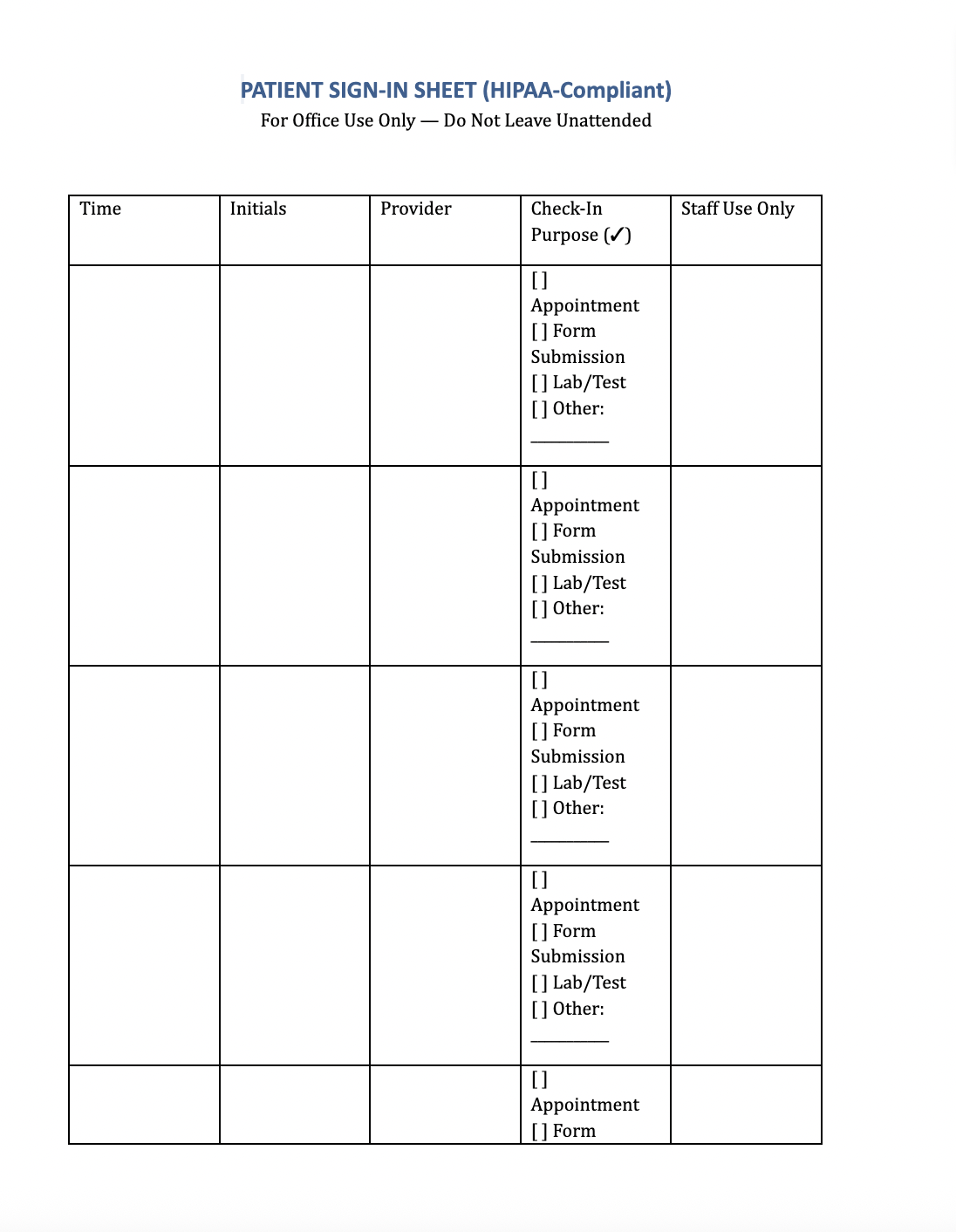

Every clinic runs a little differently, but a solid patient sign-in sheet printable should always include a few core fields. Leave one out, and you risk gaps in your records or confusion at the front desk.
Here's what a standard template needs:
Keep it simple. The easier the sheet is to fill out, the faster patients can check in, and the less time your staff spends fixing mistakes later.
|
One easy mistake to avoid: Never ask patients to write their reason for the visit on a shared sign-in sheet. Anyone sitting in the waiting room could read it, which puts your practice at risk of a HIPAA violation. Stick to name, arrival time, and appointment time only, and you'll keep both your patients and your practice protected. |
A patient sign-in sheet does more than just track arrivals.
Here's what it can do for your practice:
When patients handle their own check-in, staff spend less time asking basic questions and more time on calls, billing, and scheduling. For a busy practice, that small shift can add up to real time savings over a week.
A patient sign-in sheet printable seems like a small piece of paper, but it does a lot of quiet work. It keeps your front desk organized, protects patient privacy, and gives your staff one less thing to track by memory during a busy shift.
Do you need a patient sign-in sheet printable to track visiting and appointment times? We have several free, ready-to-print options you can download today, no cost and no complicated setup required. Print one out, set it at your front desk, and see how much smoother check-in feels by the end of the week.
Of course, paper is only part of the picture. Most practices still deal with missed calls, no-shows, and manual appointment reminders long after the sign-in sheet does its job. That's where a digital communication platform can pick up where paper leaves off, automating the parts of patient outreach that eat up your staff's time.
If you're ready to go further and cut down on phone calls, no-shows, and manual check-in altogether, book a demo and see how Curogram can modernize your patient communication and front desk workflow with a personalized dem
Discover how contactless patient and hospital check-in improves safety, efficiency, and patient experience with seamless implementation.
Discover everything you need to know about the patient intake process—from definitions to digital tools that make it seamless.

Choose from 55+ patient satisfaction survey questions and learn which rating scales, delivery channels, and send windows produce the best response...