
 Carylee Gali
7 Efficiencies Created by Telehealth Technology
Telehealth offers a variety of different benefits, including improved patient care and healthcare quality. Here are 5 others.
Your patients now book flights, order groceries, and manage their finances from their phones. Then they call your office and wait on hold to schedule a visit three weeks out. That gap is where patient expectations start to slip, and practices everywhere are working to close it.
Healthcare delivery keeps changing, and so do the people it serves. Patients now compare their medical care to every other service in their daily lives, and they want quick access, clear answers, and less time sitting in waiting rooms. When a practice can't offer that experience, many patients will look for one that can.
That's exactly where telehealth comes in. Telehealth covers a wide range of tools, from live video visits to remote imaging transfers and home health monitoring. Each one gives patients a convenient way to reach your team without the drive, the wait, or the time away from work.
For your practice, the payoff goes beyond convenience. Telehealth expands access to your services and supports better continuity of care. It also helps you build stronger relationships with the individuals you treat. Patients who feel heard and supported tend to stay engaged, keep their appointments, and return when they need care again.
Still, not every practice knows where telehealth adds the most value. Some see it as a backup for when in-person visits aren't possible, while others aren't sure how it fits with their current workflows or patient communication tools.
This guide breaks down the top 3 ways telehealth helps you better meet patient expectations. You'll see how it creates faster access to care and reduces unnecessary office visits. You'll also learn how it keeps patients connected to your team between appointments. Finally, we'll explore, step by step, how a HIPAA-compliant platform like Curogram can help you put these benefits into practice.
The first thing most patients want is easy access to care. Telehealth helps you deliver that without adding more exam rooms or staff hours.
Some telehealth providers offer 24-hour access to doctors and specialists, day or night. Patients with urgent but non-emergency concerns can reach a clinician without rushing to a clinic. True emergencies still call for 911 or the nearest emergency room, but virtual care can handle many of the questions that come up after hours.
Telehealth is especially helpful for patients in rural areas. For someone who lives miles from the nearest clinic, a virtual visit can turn a half-day trip into a short call. It also keeps patients off the road during snowstorms, hailstorms, and other unsafe conditions.
Sick patients don't want to drive to your office and sit in a waiting room for an hour. With telehealth, they can easily schedule an appointment and see their doctor from home. Virtual visits also fit into tight schedules, so patients may not need to take time off work or find child care. That makes it easier for them to keep every appointment while still managing work and family.
Lack of health insurance can keep some people from getting primary care. Telehealth can help lower that barrier. Some telehealth services offer cash-pay visits that don't require insurance or a referral, so patients can pay as they go.
In the past, patients had to visit a clinic for routine checks like blood pressure or glucose readings. Today, smart devices with sensors and activity trackers let providers track many of these numbers from afar. This approach is called remote patient monitoring (RPM), and it can track weight, blood pressure, blood sugar, blood oxygen, heart rate, and other vital signs.
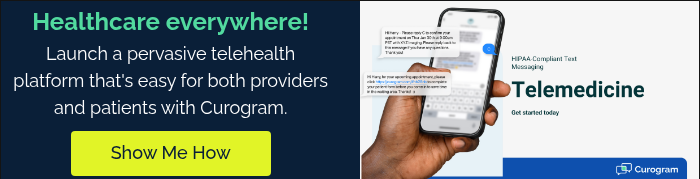
Here's how RPM can work for a patient recovering from surgery:
Telehealth works even better when it connects to your electronic health record (EHR). An integrated EHR telehealth platform lets providers view a patient's chart during a virtual visit and make informed treatment choices. It can also cut down on manual data entry and keep records in one place. Integrating EHR solutions enhances patient care and improves your practice's interoperability.
|
Offering telehealth only helps if patients know about it. Many patients never ask about virtual visits because they assume their practice doesn't offer them. Mention telehealth in appointment reminders, on your website, and at check-out. Spell out which visits work well online, such as follow-ups, medication reviews, and test results. A short, clear message at the right time can do more than a full ad campaign. |
Patients expect to share their concerns and hear back from their providers without long delays. Phone tag and voicemail rarely meet that bar. Text messaging gives your practice a faster way to stay in touch.
When you add 2-way texting to your telehealth strategy, you can:
That last point matters. Curogram client data from clinical settings shows a 98% SMS open rate, so your messages are far more likely to be seen than a voicemail or email.
Texting patients between visits also shows that your care doesn't stop when they leave the office. It shows your commitment to staying connected and supporting their health needs. That sense of care, concern, and compassion is often what patients remember most.
To meet patient expectations today, you need to offer telehealth and make sure patients know it's there. They should also know which services it covers, so they can tell when a virtual visit is the right fit.
A trusted platform like Curogram makes that easier. It helps you give care from afar and keep strong bonds with patients, even at a distance. It's also HIPAA compliant, with built-in safeguards that help keep patient data safe in every chat.
Many providers use Curogram to talk with patients, share health details securely, and support virtual care, all from one dashboard. As HIPAA-compliant medical software, it helps your team build better ways to manage patients. The result is clearer communication and a better patient experience.
Patient expectations aren't going back to the way they were. People want care that respects their time, fits their schedules, and keeps them in the loop. Practices that deliver on those needs are the ones patients trust, recommend, and return to.
Telehealth gives you a practical way to meet that standard. Virtual visits make it easier for patients to get appointments, whether they live across town or hours away. Remote patient monitoring lets your team track recovery and chronic conditions without asking patients to travel for every check. Secure 2-way texting keeps the conversation going between visits, so patients never feel forgotten.
Each of these benefits supports the others. Faster access means fewer missed visits. Fewer unnecessary trips mean more time for the patients who truly need to be seen in person. Better continuity of care means patients feel supported at every step, not just during a 15-minute appointment.
The key is choosing tools that work together. Telehealth runs more smoothly when it connects with your EHR and patient messaging in one secure system. That way, your staff spends less time switching between apps and more time helping patients.
It also helps to start small. Pick one or two visit types that work well virtually, such as follow-ups or medication reviews. Let patients know the option exists, gather feedback, and expand from there. Small, steady changes are easier to adopt than a full overhaul.
Curogram brings HIPAA-compliant patient communication and virtual care tools together on one platform. It's built to help your team stay connected with patients, reduce manual work, and deliver the kind of experience patients now expect.
Want to see how it could work for your practice? Book a demo of Curogram's patient communication platform and explore how your team can start meeting patient expectations with less effort.
Telehealth offers a variety of different benefits, including improved patient care and healthcare quality. Here are 5 others.

 Michael Hsu : 2/8/22, 6:08 AM
Telemedicine is gaining acceptance in the U.S., helping providers safely deliver healthcare services to patients remotely using technology.
 Michael Hsu : 6/20/20, 10:49 AM
The provider's ultimate guide to telemedicine in Maryland. Learn how to streamline your telehealth business and keep ahead of the competition.